
What's on this page
- Furnace repair cost: what heating fixes run
- Furnace ignitor and flame sensor cost
- Draft inducer, pressure switch, and gas valve cost
- Electric furnace repair cost
- The cracked heat exchanger
- What HVAC repair actually costs
- What drives the cost of an HVAC repair
- The part versus labor split
- Common HVAC repairs and their illustrative cost
- What you can safely check before you call
- Capacitor replacement cost
- Contactor replacement cost
- Thermostat replacement cost
- Air conditioner repair cost
- Refrigerant recharge and leak repair cost
- Blower motor replacement cost
- Condenser fan motor and control board cost
- Compressor replacement cost
- Heat pump repair cost
- When poor airflow is the ducts, not the equipment
- The service call or diagnostic fee
- What an HVAC repair estimate should itemize
- Emergency and after-hours pricing
- Warranty status: check it before you approve
- How system age changes the math
- The repair versus replace threshold
- What replacing a heating and cooling system costs
- When replacement is not the question: unsafe faults
- Where the money goes on a typical repair
- Illustrative repair cost by fix
- A worked example: a summer no-cool call
- A second example: a furnace that will not light
- How to save on HVAC repair
- Common mistakes when paying for HVAC repair
- The bottom line
Short answer: HVAC repair cost is a ladder rather than one price. Small electrical and consumable fixes such as an ignitor, flame sensor or capacitor run an illustrative low hundreds, while a blower motor, coil, heat exchanger or compressor climbs into four figures. Every quote splits into the part, the labor to fit it and a service fee, and emergency, after-hours and peak-season calls carry a premium.
Furnace repair prices, and HVAC repair cost generally, are numbers that arrive at the worst possible moment. The furnace goes silent on the coldest night of the year, the air conditioner quits during a heat wave, and suddenly you are holding a figure you have no way to sanity check. The trouble is that HVAC repair is not one price at all. It spans a cheap consumable part swapped in ten minutes and a compressor or heat exchanger job that costs enough to make you reconsider the whole system, and the same fix carries very different bills depending on your region, your equipment, and the hour you picked up the phone.
This cost file breaks heating and cooling repair down into the fixes homeowners actually face and puts an honest illustrative range on each one. It opens on the heating side, pricing a furnace ignitor, a flame sensor, a draft inducer, an electric furnace element, and a cracked heat exchanger, then works through the cooling side from a capacitor to refrigerant work, a blower motor, and a compressor. It explains what drives the number, the part against labor split, the service call fee, the emergency premium, and how system age reshapes the whole calculation, then sets out an explicit repair or replace threshold and prices the replacement side so you can compare the two. Where this cost file prices the fix, our companion on HVAC maintenance covers keeping the system healthy so you face fewer of these calls, and the job cost estimator turns the ranges here into a ballpark for your own repair.
Key takeaways
- Heating and cooling repair is a ladder, not a price: small electrical and consumable fixes run an illustrative low hundreds, while a blower motor, a coil, a heat exchanger, or a compressor climbs into four figures.
- Every quote splits into a part, the labor to fit it, and a service or diagnostic fee. Labor and access, not the part alone, drive most of the swing between two quotes for the same job.
- Emergency, after hours, and peak season service carries a premium, so a fault caught early in the shoulder season is often the same repair at a much lower price.
- The repair or replace call has two competing rules of thumb, the half of replacement rule and the quote times age rule. They often disagree, and the tie breakers are warranty, prior repairs, and the condition of the rest of the system.
- Safety faults sit outside the arithmetic. A combustion, gas, carbon monoxide, or burning smell problem gets fixed or the equipment gets shut down, whatever the cost comparison says.
Furnace repair cost: what heating fixes run
Furnace repair prices are a ladder rather than a single figure, and the rungs sit further apart than most homeowners expect. At the bottom are the consumable and safety parts behind most no heat calls, where the component costs less than the visit that diagnoses it. In the middle are the parts that move or meter combustion, where both the component and the hours climb. At the top sits the heat exchanger, which is a safety fault rather than a comfort one and usually turns into a replacement conversation instead of a repair. The heating table comes first on this page because a furnace is what most people are looking at when they arrive here in January, and the cooling side follows further down. Every range below covers the part and the labor before the service or diagnostic fee, which is priced separately later.
| Furnace repair | Typical symptom | Illustrative installed range |
|---|---|---|
| Flame sensor | Furnace lights, then shuts down after seconds | $80 to $250 |
| Thermostat | No response at all from the system | $100 to $400 |
| Hot surface ignitor | Furnace runs the sequence but never lights | $150 to $400 |
| Pressure or limit switch | Furnace locks out on a fault code | $150 to $450 |
| Condensate blockage | High efficiency furnace shuts down, water present | $150 to $450 |
| Sequencer or element relay | Electric furnace elements never stage on, or never stage off | $150 to $450 |
| Electric furnace heating element | Blower runs on an electric furnace but the air stays cool | $250 to $600 |
| Control board | Erratic behavior or no sequence at all | $300 to $700 |
| Draft inducer motor | Loud noise on startup, or no startup | $400 to $900 |
| Gas valve | No gas to the burners despite a good ignitor | $400 to $900 |
| Blower motor | No air at the vents, furnace overheats and cycles | $400 to $1,200 |
| Heat exchanger | Cracked core, a safety fault, not a comfort one | $1,000 to $3,500 |
Read the heating table the same way as the whole system table further down. The top half is where most winter calls actually land, and the total is dominated by the visit rather than the component. The bottom half is where the repair or replace threshold starts to bite, especially on an older furnace. If your quote sits in the bottom two rows, price a replacement beside it before you approve anything, and use the job cost estimator to put both figures side by side.
Furnace ignitor and flame sensor cost
Two small parts account for a large share of no heat calls, and both are inexpensive. The ignitor is the component that lights the burners on a gas furnace, and hot surface ignitors are consumable parts that glow at high temperature and eventually crack or burn out, which is why a furnace can stop lighting with everything else intact. The illustrative installed range for an ignitor is roughly $150 to $400. The flame sensor is a related safety part that confirms the burner has actually lit and shuts the gas off if it has not, and when it gets coated in residue the furnace lights and then quickly shuts down again. Cleaning or replacing it is an illustrative $80 to $250.
Both sit at the cheap, quick end of the ladder, so the cost is mostly diagnosis and labor, and both are common enough that many technicians carry them on the truck. They matter out of proportion to their price because a furnace that will not light on a cold night feels like a catastrophe while the actual fix is frequently one of these small consumables. The caution is the same as on the cooling side: a no heat call that jumps straight to a control board or a full furnace replacement, without first checking the cheap and common culprits, is a quote to question and a reason to get a second opinion.
Draft inducer, pressure switch, and gas valve cost
The middle of the furnace ladder holds the parts that move or meter combustion, and they cost more because the components themselves are more substantial and reaching them takes longer. The draft inducer is the small fan that pulls combustion gases through the heat exchanger and out the flue before the burners light, and when its motor or bearings fail the furnace either makes an alarming noise on startup or refuses to start at all. An illustrative installed range is roughly $400 to $900.
The pressure switch is the safety device that confirms the inducer is actually drawing before allowing ignition, and a limit switch performs a similar job on temperature. Both are inexpensive, an illustrative $150 to $450 installed, but they matter for a different reason: they are frequently blamed for a fault they are correctly reporting. A pressure switch that keeps opening may be doing its job because the flue is blocked or the inducer is weak, and replacing the switch without finding out why it tripped is the classic way to pay twice.
The gas valve meters gas to the burners and runs an illustrative $400 to $900 installed. It is a part a homeowner must never attempt, and a technician replacing one should be testing gas pressure afterward rather than simply swapping and leaving. Ask what the diagnosis was, not just what the part is, on any of these three.
Electric furnace repair cost
Everything above assumes a gas furnace, and homes without gas service commonly heat with an electric furnace instead, which fails in completely different places. There is no burner, no ignitor, no flame sensor, no gas valve, and no flue, so none of the combustion repairs priced above apply. What an electric furnace has instead is a bank of resistance heating elements, sequencers or relays that switch those elements on in stages, a transformer and control board, high limit switches that cut power if the cabinet overheats, and the same blower motor any forced air system uses.
Three faults bring a technician out often enough to price separately. A failed heating element is the classic complaint of weak or no heat while the blower keeps running, and replacing one is an illustrative $250 to $600 installed, with the spread reflecting how many elements the furnace carries and how much of the cabinet has to come apart to reach them. A sequencer or element relay, the part that stages the elements on and off so the whole bank does not strike at once, is cheaper at an illustrative $150 to $450, and its symptoms are elements that never energize or that stay energized after the call for heat ends. A high limit switch sits in the same illustrative $150 to $450 band and behaves exactly like its gas side cousin: it gets blamed for a fault it is correctly reporting, and a limit that keeps opening usually means restricted airflow rather than a bad switch.
Two things make an electric furnace repair read differently on the bill. The parts are inexpensive, so the visit and the diagnosis are most of the total on all three of these fixes, which puts electric heating faults firmly on the bottom rungs of the ladder. But an electric furnace draws heavy current, so a no heat fault can also live in the breaker, the disconnect, or the supply wiring rather than in the furnace at all, and that is electrical work priced the way our electrician cost file sets out rather than an HVAC repair. Ask which of the two you are being quoted for. If the machine itself is the question rather than one part, our furnace replacement cost file prices an electric furnace swap against a gas one.
The cracked heat exchanger
The heat exchanger is the metal core that separates the combustion gases from the air your ducts distribute, and a crack in it is not a comfort problem, it is a safety one, because it creates a path for combustion products including carbon monoxide to reach the air in your house. A technician who finds one will usually shut the furnace down and red tag it, and that is the correct response, not an upsell.
The illustrative installed range for a heat exchanger replacement is roughly $1,000 to $3,500, and the wide spread reflects both the part and the amount of the furnace that has to come apart to reach it. That figure is why this repair so rarely happens. On a furnace still inside its manufacturer warranty the part may be covered while you pay the labor, which can make the repair worth doing. On an older furnace out of warranty, the repair reaches a large enough share of a replacement that most homeowners replace the furnace instead, and our furnace replacement cost file prices that side by furnace type.
One thing this decision is not is a reason to keep running the furnace while you shop. A confirmed cracked heat exchanger means the furnace stays off until it is repaired or replaced, and if you need heat in the meantime, ask about temporary heating rather than restarting it. If you have any suspicion of carbon monoxide, leave the house and call the gas utility or emergency services first, then worry about the quote.
What HVAC repair actually costs
The heating ladder above is one half of a larger shape, because no single HVAC repair cost exists and any source handing you one flat number is hiding the range that actually matters. The whole system version of the ladder runs the same way. At the bottom sit the small electrical, control, and consumable parts, a capacitor, a contactor, a thermostat, a furnace ignitor, a flame sensor, where the part is inexpensive and the labor is short, so the whole repair lands in an illustrative low hundreds range.
In the middle sit the motors, the gas side components, and refrigerant work, where either the part or the labor climbs and the bill moves toward the mid hundreds and up. At the top sit the compressor, the evaporator coil, and the heat exchanger, where a costly part meets heavy labor and the total reaches well into four figures.
Where you land on that ladder is not random, and most of this cost file is about the factors that place you on it. The specific part that failed sets the floor, but the labor to reach and replace it, the service call to diagnose it, the hour you called, and the age and design of your system all move the final figure. Heating repair and cooling repair share this shape exactly, which is why the ladder works for a furnace, an air conditioner, and a heat pump alike. Keep it in mind as you read: the point is never a single number but knowing which rung a given repair sits on and why, so a quote either matches your expectation or gives you a specific reason to ask questions.
What drives the cost of an HVAC repair
Four forces set almost every heating and cooling repair bill, and learning to see them separately is what lets you read a quote instead of just reacting to the total. The first is the part itself. A run capacitor or a flame sensor is a cheap commodity component, while a compressor, a heat exchanger, or a variable speed blower motor is an expensive and sometimes model specific part, and that raw cost is the floor under the repair.
The second force is labor, and it drives more of the swing than most homeowners expect. Two repairs with similar part costs bill very differently if one part sits behind an access panel and the other is buried inside a sealed refrigerant circuit that must be recovered, opened, and recharged, or inside a furnace cabinet that has to be substantially disassembled. Labor rates also vary by market, which is why the same repair costs more in a high cost metro than a rural county, a pattern our note on how much it costs to hire a trade pro explains in depth.
The third force is timing. An emergency, after hours, or peak season call carries a premium over a scheduled shoulder season visit for identical work. The fourth is your system: an older unit, a discontinued model, equipment squeezed into a tight attic or crawl space, or a design that uses a refrigerant being phased down (see the EPA’s HFC phasedown page) can raise both the part price and the hours. Read any quote as the sum of these four rather than one mysterious number.
The part versus labor split
It helps to hold a rough sense of how a typical repair divides between the part, the labor, and the fees, because that split is where the surprises hide. On many small and mid size repairs the part is a minority of the bill, with labor and the service call making up the larger share, which is exactly why a quote can feel high next to a part you found online for a fraction of it. That gap is not automatically a markup problem. It reflects the diagnosis, the skilled installation, the warranty on the work, and the overhead of a licensed company that shows up when you call.
The split flips as you climb the ladder. On the priciest repairs, a compressor, a coil, a heat exchanger, the expensive part starts to dominate even though the labor is also heavy. Knowing which side of the split a repair sits on tells you where to focus. On a small repair, comparing quotes is really comparing labor rates and fees. On a big repair, the part cost and the diagnosis behind it deserve a second opinion, because a misdiagnosis at that end of the ladder is expensive. The chart later in this cost file puts illustrative shares on a typical split so you can see the shape.
Common HVAC repairs and their illustrative cost
Below is a reference table of the repairs homeowners face most often across heating and cooling, with an illustrative installed cost range that covers the part and the labor to fit it, before any service or diagnostic fee, which the sections below price on its own. Read every figure as a starting point that varies by region, brand, system age, and access, not as a quote. The ranges overlap on purpose, because an easy version of a repair and an awkward one are genuinely different jobs. Use the table to know roughly which rung a fix sits on, then get a written quote for your specific equipment.
| Repair | What it is | Illustrative installed range |
|---|---|---|
| Flame sensor | Safety part that confirms the burner has lit | $80 to $250 |
| Thermostat | The control on the wall, basic to smart | $100 to $400 |
| Capacitor | Cheap electrical part that helps a motor start and run | $130 to $400 |
| Contactor | Electrical switch that powers the outdoor unit | $150 to $400 |
| Furnace ignitor | The part that lights the burners on a gas furnace | $150 to $400 |
| Condensate pump or blocked drain | Clearing or replacing the condensate path | $150 to $450 |
| Pressure or limit switch | Safety switches that stop the furnace on a fault | $150 to $450 |
| Sequencer or element relay | Stages the elements on an electric furnace | $150 to $450 |
| Electric furnace heating element | The resistance element that makes the heat | $250 to $600 |
| Capacitor plus contactor | Common pair on a no start outdoor unit | $250 to $600 |
| Refrigerant charge | Recovering and recharging, once the leak is addressed | $200 to $700 |
| Condenser fan motor | The fan motor in the outdoor unit | $300 to $700 |
| Control or circuit board | The system's main control board | $300 to $700 |
| Draft inducer motor | The furnace fan that pulls combustion gases through | $400 to $900 |
| Gas valve | The valve that meters gas to the burners | $400 to $900 |
| Blower motor | The indoor motor that moves air through the ducts | $400 to $1,200 |
| Refrigerant leak repair | Finding and sealing the leak, plus recharge | $500 to $1,600 |
| Reversing valve | Heat pump part that switches heating and cooling | $600 to $1,800 |
| Evaporator coil | The indoor coil, a major sealed system repair | $650 to $2,500 |
| Compressor | The heart of the outdoor unit, the priciest cooling repair | $1,300 to $3,000 |
| Heat exchanger | The furnace core, usually a replacement conversation | $1,000 to $3,500 |
The pattern to notice is the two clusters. The electrical, control, and consumable parts near the top of the table are inexpensive and quick, which is why a no heat call that turns out to be a flame sensor is a relief. The sealed system, gas side, and motor repairs near the bottom are the ones that force the harder conversation, and the sections below take the most common of them one at a time.
What you can safely check before you call
A small number of checks are genuinely safe for a homeowner, and running them before you book can occasionally save an entire service call. Keep the list short and stop where it ends. Everything past it involves live electrical circuits, gas, combustion, or a sealed refrigerant circuit, and it belongs with a licensed technician.
- The air filter. A filter choked with dust starves airflow and causes weak output, short cycling, and in cold weather a furnace that overheats and shuts itself down. Swapping it is a two minute job, it is the single most common self fix, and it costs a few dollars.
- The thermostat settings and batteries. Confirm the mode, the setpoint, and the schedule are what you think they are, and change the batteries if it takes them. A blank or unresponsive thermostat is worth ruling out before you pay anyone to look at it.
- The breakers and switches. Check the breaker for the indoor and outdoor units, and check the service switch near the furnace or air handler, which looks like a light switch and gets flipped off by accident. Reset a tripped breaker once. If it trips again, stop and call, because a breaker that keeps tripping is reporting a fault, not misbehaving.
- The condensate drain. A blocked condensate line backs water up and trips a safety switch that shuts cooling down. Clearing a visible blockage and emptying a full pan is reasonable homeowner work, and it prevents water damage as well as a callout.
- Clearance around the outdoor unit. Rake out leaves and clear grass, and give the unit breathing room on all sides. If a shrub or a tree has genuinely grown into it, that is grounds work rather than HVAC work, and our tree removal cost file prices the larger version of that job.
That is the whole list. Do not open electrical panels, do not test or replace a capacitor, do not attempt anything on the burners or the flue, and never connect gauges to or add refrigerant to a sealed system, which is licensed work requiring certification and equipment under the EPA’s Section 608 technician certification rules. If you want a broader framework for where the line sits on any trade job, our DIY or hire walkthrough is the one to read.
Capacitor replacement cost
A capacitor is the most common inexpensive cooling repair, and it is worth understanding because it is also the one most easily oversold. The capacitor is a small cylindrical electrical component that stores and releases the jolt of energy a motor needs to start and keep running. When it weakens or fails, the outdoor unit may hum without starting, the fan may not spin, or the system may struggle and trip. The part itself is a cheap commodity component, which is why the illustrative installed range sits low, roughly $130 to $400 for the part and the labor, before the service call.
Because the part is so inexpensive, the honest version of this repair is mostly diagnosis and labor. A technician tests the capacitor, confirms it is out of specification, and swaps it in minutes. Where homeowners overpay is when a capacitor failure gets bundled into a vague, much larger quote, or when the low part cost is padded with an outsize labor charge. Questioning the itemization here is legitimate: a capacitor is a known cheap part, so a four figure quote built around one deserves a second opinion. That said, a failing capacitor left alone can strain and burn out the far more expensive motor it serves, so it is a repair worth doing promptly once confirmed. It is also a part a homeowner should never touch, because a capacitor can hold a dangerous charge after power is off.
Contactor replacement cost
The contactor is the capacitor’s frequent companion on a no start call, and the two are often quoted together. It is an electrically operated switch that closes to send power to the outdoor unit’s compressor and fan when the thermostat calls for cooling. Over years of clicking closed thousands of times its contacts pit, corrode, or stick, and insects are a surprisingly common culprit, crawling in and fouling the contacts. A failed contactor can leave the outdoor unit dead, or in the sticking case leave it running when it should be off. The illustrative installed range runs roughly $150 to $400.
Like the capacitor, the contactor is a cheap part, so this repair is mostly diagnosis and labor, and the same caution applies to an oversized quote built around it. Because a weak capacitor and a worn contactor often show up together on an aging outdoor unit, a technician diagnosing a no start will frequently test both, and replacing the pair on one visit, an illustrative $250 to $600 together, saves a second trip charge. That bundling is reasonable when both parts genuinely test bad. It is worth a question when only one has failed and the other is being replaced while the technician is already there on an otherwise healthy unit.
Thermostat replacement cost
Not every no heat or no cool problem lives inside the equipment. Sometimes the fault is the thermostat on the wall, and because it is the cheapest and most accessible part of the system, it is worth ruling out early. A thermostat can fail outright, lose its calibration, or simply be a basic model the homeowner wants to upgrade. The illustrative installed range is wide, roughly $100 to $400, driven almost entirely by which thermostat you choose. A basic like for like replacement sits at the low end, while a smart or learning thermostat with professional installation and setup sits at the high end.
The range is about the part rather than the labor because swapping a thermostat is quick for a technician. The judgment call is whether the thermostat is actually the problem. A system that will not respond can be a dead thermostat, but it can equally be a tripped breaker, a blown low voltage fuse, a failed capacitor, or a safety switch doing its job, so the value of a diagnosis is confirming the thermostat is the fault before you replace it. That is the same figure our furnace replacement cost file uses when a new thermostat rides along with bigger work, which keeps the two pages consistent.
Air conditioner repair cost
Cooling repair splits along the same lines as heating repair, with a cluster of cheap electrical faults and a much smaller number of expensive sealed system ones. The most common summer no cool call resolves at the cheap end: a failed capacitor, a pitted contactor, a tripped safety, a blocked condensate line, or a filthy filter starving airflow. Those land in the illustrative $130 to $600 band before the visit fee, and most of that total is the technician’s time.
The middle of the cooling ladder holds the fan motors and the control board, an illustrative $300 to $700 each installed, and the blower motor at $400 to $1,200. The top holds the sealed system work: a refrigerant leak repair at an illustrative $500 to $1,600, an evaporator coil at $650 to $2,500, and a compressor at $1,300 to $3,000. The gap between those two ends is the entire reason a diagnosis is worth paying for.
Window and portable units are a different question, because their repair economics rarely justify a service call at all. When a room unit fails, the honest comparison is usually against a new one, and our window air conditioner cost file prices that side by capacity.
Refrigerant recharge and leak repair cost
Refrigerant is where HVAC repair pricing becomes genuinely confusing, so it is worth slowing down. When a system is low on refrigerant, homeowners often expect a quick cheap top off, but the honest picture is different. Refrigerant is not consumed in normal operation. A system that runs low has a leak somewhere, so charging it without finding the leak is a temporary patch that will fail again, and paying for repeated charges is paying for the same problem more than once.
The cost splits into two parts. Recovering and recharging the system carries an illustrative range of roughly $200 to $700 depending on how much refrigerant the system holds and which type it uses, and older systems running a refrigerant that is being phased down cost more as that refrigerant grows scarce. Finding and repairing the leak is separate work, an illustrative $500 to $1,600 or more depending on where the leak sits, and a leak in the evaporator coil can mean replacing the coil itself at $650 to $2,500.
Two safety points close this section. Refrigerant work is licensed, certified work, and it is not something a homeowner should attempt with a store bought can or a set of gauges. Handling and recovery are regulated and the rules change over time, so confirm what currently applies with a licensed technician rather than trusting any figure written here. A refrigerant problem on an older system also opens the repair or replace conversation quickly, because a leak search plus a coil plus a charge can reach a meaningful share of a new system.
Blower motor replacement cost
The blower motor is the indoor motor that pushes conditioned air through your ducts, and it works in both heating and cooling, so when it fails you lose airflow entirely. Symptoms range from no air at the vents to weak airflow, overheating, or unusual noises. The illustrative installed range is roughly $400 to $1,200, and the wide spread comes down to the motor type. A standard single speed motor sits at the lower end, while a modern variable speed or electronically commutated motor, common on higher efficiency systems, is a more expensive part and pushes toward the top of the range.
This repair sits in the middle of the ladder because both sides are meaningful: the motor is not trivially cheap, and reaching it can involve pulling the blower assembly out of the cabinet. It is worth confirming the diagnosis, because weak airflow has several possible causes, including a clogged filter, a failing capacitor that serves the motor, a control fault, or closed and blocked registers, before the motor itself is condemned. A good technician rules out the cheap causes first. Because the blower is central to the whole system, this is a repair usually worth making on a sound system, though on an aging one it is another data point in the replacement decision.
Condenser fan motor and control board cost
Two mid ladder parts turn up often enough to be worth their own note. The condenser fan motor is the fan in the outdoor unit that pushes heat out of the coil, and when it fails the compressor can run without shedding heat, which is how a cheap failure becomes an expensive one if it goes unnoticed. The illustrative installed range is roughly $300 to $700, and the usual symptom is an outdoor unit that hums with a still fan or a system that cools briefly and then trips.
The control or circuit board is the system’s brain, an illustrative $300 to $700 installed, and it is the part most likely to be blamed without evidence. Boards do fail, especially after a power surge or years of heat, but a board is also a convenient explanation for a fault nobody has fully traced. Before approving one, ask what specifically the board failed to do and what was ruled out first, in the same spirit our note on avoiding contractor scams applies to trade work generally.
Neither of these is a homeowner repair. Both sit behind live electrical connections, and a condenser fan motor also involves the capacitor that serves it, which can hold a charge with the power off.
Compressor replacement cost
The compressor is the heart of a central air conditioner or heat pump, the pump that circulates refrigerant and does the actual work of moving heat, and it is the single most expensive common cooling repair. When it fails the system cannot cool at all. The illustrative installed range is roughly $1,300 to $3,000 and can go higher, because the part is costly and the job is labor heavy sealed system work: recovering the refrigerant, removing and installing the compressor, evacuating and recharging the system, then testing it.
The compressor is the repair that most often tips a homeowner toward replacement, and for good reason. When it fails on a system that has already had other repairs, the quote reaches a large share of new cooling equipment, and the same conditions that killed the compressor tend to still be present afterward. One detail can change the math completely: if the compressor is still under a manufacturer parts warranty, the part may be covered while you pay the labor, which can turn a replacement level quote back into a repair level one. Check the warranty status before deciding, and treat any compressor quote as the trigger to get a replacement quote alongside it.
Heat pump repair cost
A heat pump is an air conditioner that can run in reverse, so it inherits every cooling repair on this page and adds a few of its own. Everything in the cooling sections applies: capacitors, contactors, fan motors, control boards, refrigerant leaks, coils, and compressors all cost about what they cost on a conventional air conditioner, and the illustrative ranges in the main table hold.
The additions are the parts that make reversal possible. The reversing valve is the component that switches the refrigerant flow between heating and cooling, and replacing one is sealed system work at an illustrative $600 to $1,800 installed. The defrost control, which decides when to melt frost off the outdoor coil in cold weather, sits with the other boards at an illustrative $300 to $700. A heat pump that heats but will not cool, or cools but will not heat, is the classic reversing valve symptom and is worth a careful diagnosis rather than a guess, because the repair is expensive enough to be worth confirming.
Heat pumps also change the replacement comparison. Because one machine does both jobs, a heat pump repair should be compared against the cost of new equipment that heats and cools, not against a furnace alone. Our new HVAC system cost file sets those figures out side by side.
When poor airflow is the ducts, not the equipment
Some repair quotes are aimed at the wrong half of the system. Weak airflow, rooms that never reach temperature, and equipment that short cycles can all come from ducts rather than from the furnace or the air conditioner, and replacing a motor will not fix a duct problem. Leaky joints, a crushed or disconnected run, an undersized return, or registers that have been closed off all starve the system, and the equipment then works harder and fails sooner.
Duct work is its own scope with its own pricing, and it varies so much by house that no honest single figure exists for a repair. A localized fix, sealing accessible joints or reconnecting a run in a basement or crawl space, is modest work. Reworking or replacing a duct network is a project on the scale of an equipment replacement, which is how our new HVAC system cost file treats it.
The useful move is simply to ask. If a technician proposes a motor or a full system because of airflow, ask what the ducts were found to be doing and whether static pressure was measured. A repair aimed at the symptom rather than the cause is the most expensive kind, and it is exactly what the itemized estimate in the next sections is meant to expose.
The service call or diagnostic fee
Almost every HVAC repair starts with a service call or diagnostic fee, the charge for sending a technician to your home and identifying the problem, and understanding it prevents a common misunderstanding. The illustrative amount commonly sits in the low hundreds of dollars for a standard visit and higher for after hours or emergency calls, though it varies enough between companies and markets that the only reliable number is the one you are quoted when you book.
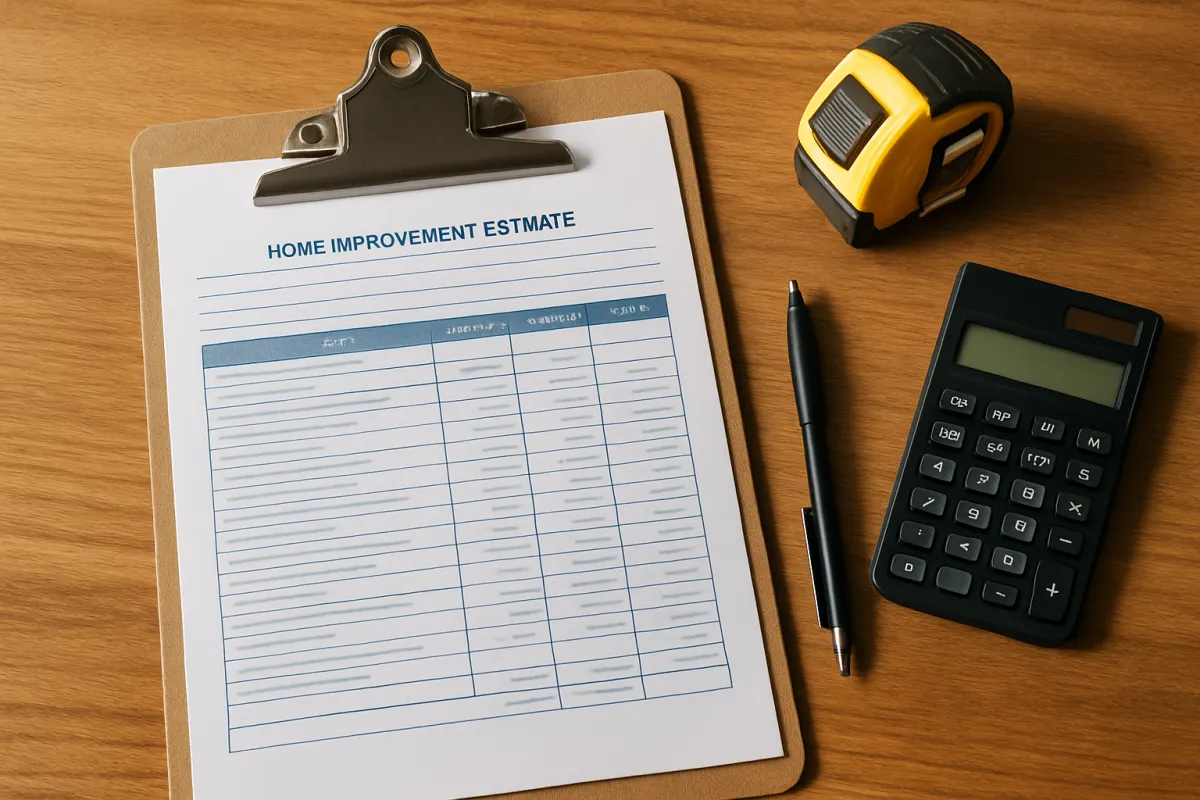
This fee is not a scam. It is how a legitimate company pays for the time, fuel, and expertise of diagnosis, and a clear written diagnosis is genuinely worth paying for. The detail worth asking about is whether the fee applies toward the repair. Many companies waive or credit it if you approve the work with them, so it functions partly as a deposit rather than a pure add on, but not all do, so confirm before the visit. Where the fee turns into a problem is the bait and switch: a suspiciously cheap advertised fee used to get in the door, followed by pressure for a large and vaguely justified repair. A fair company gives you a written diagnosis and an itemized quote you can take away and compare, which is exactly what our note on comparing quotes recommends for any trade work.
What an HVAC repair estimate should itemize
An HVAC repair estimate is a short document, which makes it easy to check, and the things it leaves out are usually the things that cost you. Six items should be visible on the page. First, the diagnosed fault in plain words, not just the proposed fix, so a second company can evaluate the reasoning rather than only the price. Second, the part, named and priced on its own line. Third, the labor, stated as hours at a rate or as a flat rate for the task.
Fourth, the service or diagnostic fee, with a clear statement of whether it is credited against the work. Fifth, warranty in two parts: whether the failed component is still covered by any manufacturer parts warranty, and what warranty the company puts on its own labor and on the new part. Sixth, the contingency, meaning what happens to the price if something else is found once the equipment is open, which matters most on sealed system and furnace cabinet work.
Anything optional belongs on its own line you can accept or strike, whether that is a coil clean, a duct repair, a surge protector, or a maintenance plan. None of those are automatically padding, and some are worth taking. The discipline is visibility. An estimate you can carry to another company and compare line by line is doing its job, and a lump sum that resists that comparison is the warning sign. The same reading habits our manual on reading a contractor estimate sets out for larger projects apply unchanged to a one page repair quote.
Emergency and after-hours pricing
The same repair does not always cost the same, and timing is the biggest reason. Emergency, after hours, weekend, and holiday service carries a premium because you are paying for a technician outside normal hours and for priority on the day your system fails. That premium takes different shapes by company, a higher flat trip fee, a multiplied labor rate, or a minimum charge, and it tends to be steepest during a heat wave or a cold snap when everyone is calling at once.
The practical consequence is that the hour you call moves the bill meaningfully. An identical capacitor or ignitor replacement can cost noticeably more at nine in the evening on a holiday weekend than at ten on a Tuesday morning, and on a small repair the difference is often on the order of an extra hundred dollars once the premium works through the labor. That is not price gouging by itself, since it reflects real overtime and real scarcity, but it does create a genuine incentive to plan.
Where a failure is a true emergency, no heat in dangerous cold, no cooling for a vulnerable household, a gas smell, a burning smell, or water spreading across a floor, pay the premium and call. Where the system is limping rather than dead and nobody is at risk, it is usually worth asking whether a scheduled next day visit at standard rates is safe to wait for, and letting the company tell you.
Warranty status: check it before you approve
Warranty is the single cheapest thing to check and the one homeowners most often skip. Manufacturer parts warranties on heating and cooling equipment typically run for a period from installation, often with registration conditions attached, and the terms vary by manufacturer, by model, and by whether the original owner still lives in the house. Because they vary that much, this cost file gives you the mechanism rather than a number: find the model and serial number on the equipment label, and ask the manufacturer or a dealer to look up the coverage before you approve an expensive part.
The reason it matters is arithmetic. A covered compressor, coil, or heat exchanger turns a replacement level quote into a labor only bill, which can move the repair or replace decision entirely. A covered part also changes who should do the work, since some warranties require an authorized installer, and using the wrong company can void the coverage you were counting on.
Two other kinds of cover are worth separating. A company labor warranty is what the repairing company puts on its own work and the part it supplied, and it is a fair question to ask before choosing between two similar bids. A home warranty or service contract is a different product entirely, sold for a monthly or annual fee plus a per visit charge, with its own limits, exclusions, and rules about which failures qualify. Read what is actually covered before relying on it, because coverage and pricing differ by provider.
How system age changes the math
Age is the quiet variable that reshapes every repair decision, and it works in two directions at once. First, age raises the odds and the cost of repairs: older systems are more likely to need work, more likely to use a refrigerant that is being phased down and has grown expensive, and more likely to have parts that are harder to source. Second, and more importantly, age changes what a given repair is worth. The same $1,500 repair is an easy yes on a five year old system and a hard question on a fifteen year old one.
This cost file deliberately does not publish an expected lifespan figure for furnaces, air conditioners, or heat pumps, and the reason is honesty rather than caution. Service life depends on the equipment, the climate, the installation quality, the run hours, and the maintenance history, and a single number applied to all of those would be a confident fake specific rather than useful information. What you can do is ask the technician in front of the equipment what condition the rest of it is in and what they expect from it, and weigh that against the quote.
What age gives you is a direction rather than a verdict. A big repair on an old system is not only about whether the repair is fairly priced. It is about whether the money is better spent extending aging equipment or put toward new equipment, which is what the next section makes explicit.
The repair versus replace threshold
Two rules of thumb circulate for the repair or replace call. Neither is official, neither is published by anyone with authority, and they disagree often enough that the disagreement is itself informative.
The half of replacement rule. Compare the repair quote against what replacing that same equipment would cost. When the repair reaches roughly half of it, replacement usually wins, because you are spending a large share of a new system to extend an old one. When the repair is a small fraction, repair wins easily.
The quote times age rule. Multiply the repair quote by the system age in years and compare the product against a threshold in the low five figures, commonly $5,000. A $400 repair on a ten year old system scores 4,000 and reads as repair. A $2,000 repair on the same system scores 20,000 and reads as replace.
Run both. When they agree, you have your answer. When they disagree, which happens across most of the middle of the range, break the tie on four things: whether the failed part is still under manufacturer warranty, how many prior repairs the system has already had, whether it uses a refrigerant that is being phased down and costs more each year, and what the technician says about the condition of the components that have not failed yet.
One category sits outside this arithmetic entirely. A safety fault is not a budgeting question. A cracked heat exchanger, a gas leak, a carbon monoxide concern, a burning smell, or repeated breaker trips means the equipment is shut down and fixed or replaced, and no threshold rule licenses running it while you shop. Put your own figures into the job cost estimator and the companion on this page to see both rules calculated on your numbers at once.
What replacing a heating and cooling system costs
Half the threshold is the replacement figure, so it needs to be a real number rather than a shrug. On existing ductwork, replacing a gas furnace alone commonly runs an illustrative $3,500 to $7,500 installed, central air conditioning alone an illustrative $4,000 to $8,000, both together as a matched system an illustrative $8,000 to $16,000, and a heat pump, which does both jobs from one machine, an illustrative $6,000 to $14,000. Ductwork that has to be added or replaced is its own scope on top of any of these, commonly an illustrative $3,000 to $8,000. Those bands are why a $400 repair is never a replacement question and a $2,500 one usually is.
That is deliberately as far as this cost file takes replacement. The bands only have to be good enough to hold your repair quote against the matching scope: a compressor quote against new cooling equipment, a heat exchanger quote against a new furnace, an electric furnace fault against an electric furnace swap, and a heat pump repair against equipment that heats and cools. Everything that actually decides a replacement price, the sizing, the efficiency tier, the brand, the venting, the ductwork, the permits, and the incentives that change what you finally pay, belongs to the two cost files written for it. Our new HVAC system cost file prices the full replacement ladder including the high efficiency tier, and our furnace replacement cost file breaks the heating half down by gas, electric, oil, and condensing furnace. Take the quote there rather than trying to settle a replacement decision on a repair page.
When replacement is not the question: unsafe faults
Some faults take the cost comparison off the table, and it is worth being blunt about which ones. A confirmed cracked heat exchanger, a gas leak, a carbon monoxide alarm or symptoms consistent with one, a burning or electrical smell, visible scorching around wiring, a breaker that trips repeatedly on the same circuit, or a flooding condensate failure spreading water near electrical equipment all mean the same thing: the system comes off and stays off until a licensed technician has dealt with it.
Nothing in the threshold section licenses running unsafe equipment while you gather quotes. If a technician red tags a furnace, the red tag is the finding, not a sales tactic, and the correct response is to arrange temporary heat rather than to restart the unit. If you suspect carbon monoxide, leave the house first and call the gas utility or emergency services, as the CPSC’s carbon monoxide information center advises, then deal with the quote afterward.
The same logic works in reverse. A safety fault does not force replacement either. Sometimes the safe repair is affordable and obviously worth doing, and the arithmetic then resumes normally. What the safety category removes is only one option, the option of doing nothing for a while, which is the one homeowners reach for when the number is uncomfortable. Everything else, second opinions, itemized quotes, warranty checks, comparing repair against replacement, stays available and is still worth doing.
Where the money goes on a typical repair
To make the split concrete, here is an illustrative breakdown of where the money goes on a typical mid size repair, the kind where a motor or a mid tier component is being replaced. The shares are illustrative and shift with the specific job, but the pattern is instructive: on many repairs the labor and the service call together are a larger slice than the part itself, which is exactly why a quote can feel high relative to the price of the component.
Where the money goes on a typical HVAC repair
Illustrative breakdown of a mid size repair, summing to 100. Small electrical and consumable fixes tilt further toward labor and fees; a compressor or heat exchanger tilts toward the part.
Shares are illustrative and vary by repair. On a cheap electrical fix the part shrinks toward nothing and labor and fees dominate; on a compressor the part grows to lead the bar.
Read the bar as the reason a second opinion is worth it on big repairs and mostly about labor on small ones. When the part is a minority of the bill, comparing quotes is really comparing labor rates, fees, and honesty. When the part dominates, as on a compressor, a coil, or a heat exchanger, the part cost and the diagnosis behind it are what a second quote should scrutinize.
Illustrative repair cost by fix
Stacking the common repairs side by side shows how wide the ladder is, from a capacitor you barely notice on the bill to a compressor or heat exchanger that rivals a share of new equipment. The chart below uses an illustrative midpoint for each repair so you can see the relative scale at a glance. The point is the shape, not the exact figures: the cheap electrical and consumable fixes cluster near the bottom, and the sealed system and combustion core repairs stand alone at the top.
Illustrative midpoint cost by common HVAC repair
Installed midpoint estimates for common heating and cooling repairs. Your region, brand, system age, and access set where you actually land.
Illustrative installed midpoints, not quotes. The gap between the consumable fixes and the top two bars is the whole reason a diagnosis matters: the cause determines which end of this chart you are on.
Two readings matter. First, the diagnosis is what places you on this chart, so paying for a clear diagnosis is paying to know whether you face a $200 relief or a $2,200 decision. Second, the top two bars are the ones that open the replacement conversation, because a repair that large on aging equipment is often the point where new equipment becomes the better spend. Put your own repair figure into the estimator to see where it sits.
A worked example: a summer no-cool call
Walk one illustrative scenario through the whole framework to see how the pieces fit, using the same arithmetic the companion on this page runs. It is July, and a homeowner’s twelve year old central air conditioner stops cooling on a hot afternoon. The house is uncomfortable but nobody is at risk, so they skip the emergency call and book a next morning visit at standard rates. That single choice is the first place they save money.
The technician charges a $110 service call to diagnose, and finds a failed run capacitor on an outdoor unit that hums without starting. With a capacitor midpoint of $200 at standard rates plus that fee, the repair reads an illustrative $270 to $370, a midpoint of about $320. Run the threshold rules on it. Against an illustrative $12,000 full system replacement, the repair is about three percent, nowhere near the half of replacement line. The quote times age rule gives 320 multiplied by 12, about 3,840, comfortably under the $5,000 threshold. Both rules say repair, and they are obviously right. The homeowner takes the itemized quote, sees the part, the labor, and the credited fee broken out, and approves it.
Now change one variable. Suppose the diagnosis had been a failed compressor instead. With a $2,200 midpoint at standard rates plus the same fee, the repair reads an illustrative $1,870 to $2,970, a midpoint of about $2,420. Compared against new cooling equipment at an illustrative $6,000, that is about forty percent, under the half line, so the first rule still says repair. But 2,420 multiplied by 12 is roughly 29,040, far over the $5,000 threshold, so the second rule says replace. The rules disagree, which is the honest signal to stop and look at the tie breakers: the compressor warranty, the refrigerant type, prior repairs, and what the technician says about the coil and the outdoor unit. Same house, same call, a completely different decision, and the difference is entirely which rung the diagnosis revealed. Rebuild either version on your own numbers with the job cost estimator and the companion on this page.
A second example: a furnace that will not light
Run the heating side through the same arithmetic, because the numbers land differently. It is January, the furnace in a sixteen year old system stops producing heat overnight, and the house is getting cold enough that the homeowner treats it as urgent and pays for an emergency visit. Their local diagnostic fee is $140.
The technician finds a failed draft inducer motor, a $650 midpoint repair. At the emergency rate the job reads an illustrative $868 to $1,323 including the fee, a midpoint of about $1,096. Booked as a scheduled visit instead, the same repair would have read roughly $660 to $985, so the emergency premium cost somewhere in the region of $200 to $340 on this job. That is a real number, and on a January night with no heat it was worth paying.
Now the threshold. Against an illustrative $5,500 furnace replacement, the repair is about twenty percent, well under the half line, so the first rule says repair. The quote times age rule gives 1,096 multiplied by 16, about 17,528, far over $5,000, so the second rule says replace. Disagreement again, and again the tie breakers decide. This furnace has already had two prior repairs and is out of warranty, which pushes toward replacement, but the technician reports the heat exchanger and the blower in good condition, which pushes back toward repair. The homeowner takes the repair now, because the house needs heat tonight, and books a replacement quote for the spring shoulder season when prices and scheduling are easier. That is often the right answer when the rules split.
How to save on HVAC repair
Holding down repair cost is less about haggling and more about a handful of habits that keep repairs small, honest, and correctly diagnosed. None of them require you to become an expert, and together they meaningfully lower what you pay over the life of a system.
- Get more than one written quote on anything beyond trivial. The spread between companies on the same repair can be wide, and a second opinion is especially worth it before approving an expensive component like a compressor, a coil, or a heat exchanger. A quick capacitor swap does not need three bids; a four figure repair does.
- Ask for an itemized quote. A quote that separates the part, the labor, and the service call lets you see what you are paying for and spot an outsize charge on a cheap part. Vague lump sums are where overpaying hides.
- Confirm whether the diagnostic fee applies to the work. Many companies credit it toward an approved repair, which changes the real cost of the visit. Ask before you book, not after.
- Avoid the peak season emergency premium when it is safe to. A next day scheduled visit at standard rates can cost meaningfully less than an after hours call, so keep the emergency call for genuine emergencies and let the company help you judge which it is.
- Check warranty status before approving a big repair. A part still under a manufacturer warranty can turn a replacement level quote back into a labor only bill, but only if you check first, and some warranties require an authorized installer.
- Run both threshold rules before approving four figures. Comparing the repair against replacement cost and against the quote times age takes a minute and stops you spending heavily on equipment that should be replaced instead.
- Keep up with maintenance and change the filter. Routine upkeep catches weak parts early and keeps small repairs small, which is the cheapest long term lever you have. Our HVAC maintenance checklist is the companion to this cost file for exactly that reason.
None of these are about squeezing a technician on price. They are about buying the right repair, correctly diagnosed, at a fair and transparent rate.
Common mistakes when paying for HVAC repair
Most of the money homeowners lose on heating and cooling repair traces back to the same short list of avoidable mistakes, and every one is easy to sidestep once you know it.
- Approving a big repair on the first quote. The spread on expensive repairs is wide, and skipping the second opinion is where people most often overpay. Take the itemized quote and compare it.
- Reacting to the total instead of reading the split. A quote is a part, labor, and fees. Not separating them means you cannot tell a fair labor charge from a padded one, or a cheap part from an expensive one.
- Ignoring system age and the replacement figure. Pouring a large repair into aging equipment without pricing a replacement alongside it is the classic way to spend well and gain little.
- Charging refrigerant without fixing the leak. A top off that skips the leak is a patch that will fail again, so paying for repeated charges is paying for the same problem twice.
- Replacing a switch that was doing its job. A pressure switch, a limit switch, or a safety that keeps tripping is usually reporting a real fault. Swapping it without finding the cause is how a cheap repair becomes two repairs.
- Calling an emergency for a non emergency, or the reverse. Paying the after hours premium when a next day visit would have been safe is avoidable money, and waiting out a gas smell or a carbon monoxide concern to save the premium is the far worse version of the same mistake.
- Skipping maintenance and paying in repairs. The cheapest repair is the one you avoid, and neglecting upkeep trades a small predictable cost for larger surprise ones. Deciding what to handle yourself is easier with our DIY versus hire framework, and the same repair economics show up on other equipment, as our water heater repair note shows.
Every one of these is prevented by the same discipline: get the diagnosis, read the itemized quote, run the repair against the replacement figure, and reserve the emergency premium for real emergencies.
The bottom line
Heating and cooling repair cost is a ladder, not a number. At the bottom sit the cheap consumable and electrical fixes, a flame sensor, a capacitor, a contactor, a thermostat, a furnace ignitor, that turn a frightening no heat or no cool call into an illustrative low hundreds relief. In the middle sit the motors, the gas side parts, and refrigerant work. At the top sit the compressor, the evaporator coil, and the heat exchanger, the repairs large enough to make replacement a real question. Knowing which rung a repair sits on, and why, is what lets you read a quote instead of reacting to it.
When a quote does reach four figures, run both threshold rules, compare the repair against the illustrative $3,500 to $16,000 replacement bands rather than against nothing, and break a tie on warranty, prior repairs, refrigerant type, and the condition of what has not failed yet. Keep the safety category separate: a cracked heat exchanger, a gas or carbon monoxide concern, a burning smell, or a repeatedly tripping breaker means the equipment stays off until a licensed technician has dealt with it, whatever the arithmetic says. Do all of that, and the moment the system quits stops being a moment of panic and becomes a decision you can make clearly. Every figure in this cost file is illustrative, so let the quotes for your own equipment, not any published range, be the number you act on.
ProsNook publishes this cost file to help homeowners understand heating and cooling repair pricing, and it is not professional, safety, or repair advice. Every dollar figure, range, percentage, and threshold rule here is illustrative and will differ with your equipment, brand, region, system age, and what is actually diagnosed on site, so treat them as a framework rather than a quote and always get more than one written estimate for your own system. Work involving refrigerant, natural gas, combustion, or electrical repair is licensed, regulated, and hazardous, and it belongs with a qualified technician regardless of confidence. Treat a gas odour, a carbon monoxide alarm, a burning smell, scorching, or water spreading near electrical equipment as an emergency and act on it before you think about cost. Confirm warranty coverage, current refrigerant rules, and local equipment pricing with qualified professionals before making any repair or replacement decision.
Frequently asked questions
How much does a furnace repair cost?
Furnace repair spans a very wide band, so the honest answer is a ladder rather than an average. The small consumable parts that cause most no-heat calls sit low: a flame sensor clean or swap is an illustrative $80 to $250 installed, and a hot surface ignitor an illustrative $150 to $400. The mid rungs hold the moving and gas-side parts, roughly $400 to $900 for a draft inducer motor or a gas valve and $400 to $1,200 for a blower motor. At the top sits a cracked heat exchanger, an illustrative $1,000 to $3,500, which on most older furnaces turns into a replacement conversation instead. Every figure here is illustrative and shifts with your region, your furnace, and how hard the part is to reach, so let a written quote for your own equipment be the number you act on.
How much does an HVAC repair cost on average?
There is no useful single average, because HVAC repair covers everything from a cheap electrical part swapped in minutes to a job that rivals a share of a new system. A common illustrative middle for a routine residential repair lands in the low hundreds of dollars once you count the part, the labor, and the service call. Small electrical and control fixes such as a capacitor, a contactor, or an ignitor sit near the bottom of that band, while a blower motor, a coil, a heat exchanger, or a compressor climbs into four figures. Region, brand, system age, and access all move the figure, which is why the only number that applies to your situation is a written quote. Get more than one before approving anything past a trivial fix.
What is the most expensive HVAC repair?
On the cooling side the compressor is usually the single most expensive repair, with an illustrative installed cost that commonly reaches well into four figures because the part is costly and the work is labor heavy sealed system work. On the heating side the equivalent is a cracked heat exchanger. A leaking evaporator coil sits in the same top tier. What makes these repairs matter is not only their own price: when the priciest component fails, the quote often reaches a large enough share of a new system that replacement becomes the more sensible spend. Treat any quote in that range as the trigger to price a replacement alongside it, so you are comparing the two honestly rather than reacting to one number in isolation.
When should I replace instead of repair my heating and air conditioning system?
Two rules of thumb circulate, neither of them official, and they are best used to frame the question rather than answer it. The first compares the repair quote against what replacing that same equipment would cost, and leans toward replacement when the repair approaches about half of it. The second multiplies the repair quote by the system age in years and leans toward replacement when the product clears a threshold in the low five figures. They frequently disagree, which is the honest signal that you are in the middle of the range and the tie breakers matter: warranty status, how many prior repairs the system has had, whether it uses a refrigerant that is being phased down, and what the technician says about the rest of the equipment. Safety faults sit outside the arithmetic entirely and get fixed or the equipment gets shut down.
Why is refrigerant so expensive to recharge?
A refrigerant charge costs more than the raw refrigerant suggests, and the illustrative price varies with how much your system holds and which refrigerant it uses. Older systems often run a refrigerant type that is being phased down and has grown scarcer and pricier over time, and the work itself is licensed, certified, equipment heavy work rather than a top up anyone can do. Just as important, refrigerant is not consumed in normal operation: a system that is low has a leak, so charging it without finding that leak is a patch that will need repeating. A responsible technician diagnoses the leak first, which is why the real conversation is about leak repair rather than topping off. Refrigerant handling is regulated and the rules change, so confirm the current requirements with a licensed technician rather than relying on any figure here.
How much is an HVAC service call or diagnostic fee?
Most companies charge a service call or diagnostic fee to send a technician out and identify the fault, and the illustrative amount commonly falls in the low hundreds of dollars, higher for after hours or emergency visits. Many companies apply that fee toward the repair if you approve the work with them, so it functions partly as a deposit rather than a pure add on, but not all do, so ask directly when you book. The fee is how a legitimate company covers the time and expertise of diagnosis, and paying it for a clear written diagnosis is reasonable. Where it becomes a problem is when a suspiciously cheap advertised fee is used to get in the door and is followed by pressure for a large, vaguely justified repair.
Why do emergency HVAC repairs cost more?
Emergency, after hours, weekend, and holiday service typically carries a premium because you are paying for a technician outside normal hours and for priority on the day your system fails. The illustrative premium varies by company, from a higher flat trip fee to a multiplied labor rate to a minimum charge, and it tends to be steepest during a heat wave or a cold snap when demand for service spikes. The practical consequence is that the same repair often costs meaningfully more as an emergency call than as a scheduled visit. That is also the argument for catching problems early: a weak part found in the shoulder season is a scheduled repair, while the same part failing in July is an emergency call at peak price. When the failure is genuinely unsafe, pay the premium and call.
How much does electric furnace repair cost?
An electric furnace has no burner, ignitor, flame sensor, gas valve, or flue, so none of the combustion repairs apply to it and the common faults sit elsewhere. Replacing a failed heating element, the usual cause of weak or no heat while the blower keeps running, is an illustrative $250 to $600 installed, and the spread reflects how many elements the furnace carries and how much of the cabinet has to come apart. A sequencer or element relay, which stages the elements on and off, is an illustrative $150 to $450, and a high limit switch sits in the same band. Because those parts are inexpensive, the visit and the diagnosis are most of the bill on all three. A fault in the breaker, the disconnect, or the supply wiring is electrical work rather than HVAC work and is priced differently, so ask which one you are being quoted for.
How much does it cost to replace a heating and air conditioning system?
Replacing both halves together as a matched system commonly runs an illustrative $8,000 to $16,000 installed on existing ductwork, against an illustrative $3,500 to $7,500 for a gas furnace alone, $4,000 to $8,000 for central air conditioning alone, and $6,000 to $14,000 for a heat pump that does both jobs from one machine. Ductwork that has to be added or replaced is its own scope on top, commonly an illustrative $3,000 to $8,000. Those bands exist here only so you can hold a repair quote against the right scope. Sizing, efficiency tier, brand, venting, and incentives are what actually decide a replacement price, and they belong with the cost files written for them rather than with a repair page.
What should an HVAC repair estimate include?
A usable repair estimate names the fault it diagnosed, not just the fix it proposes, and then separates the part, the labor, and the service or diagnostic fee so you can see what each is costing. It should state whether the diagnostic fee is credited against the work, whether the part is covered by any remaining manufacturer warranty, what warranty the company puts on its own labor, and what happens to the price if the technician finds something else once the equipment is open. Anything optional, such as a coil clean or a duct repair, belongs on its own line you can accept or strike rather than folded silently into a single number. An estimate you can carry to a second company and compare line by line is the whole point, and a lump sum that resists that comparison is the warning sign.