What's on this page
- How much does it cost to replace a window
- Average cost to replace windows in a house
- Cost to replace windows per window
- Vinyl vs wood vs fiberglass window cost
- Window style cost: double-hung, casement, bay, picture
- What actually drives a window’s price
- Full-frame replacement versus insert
- How much to replace all windows in a 2000 sq ft house
- Labor’s share of a window job
- Energy savings from new windows
- Replacement versus repair
- Does replacing windows add value
- Permits and code for window replacement
- DIY versus pro window installation
- How to get and compare window quotes
- Where to save and where not to
- A worked example: 10 windows, vinyl versus wood
- Common window-replacement mistakes
- The bottom line
Short answer: Replacing windows commonly runs an illustrative $450 to $1,500 per window installed, so a whole-house project of 10 windows lands roughly $6,000 to $15,000 in many markets. Vinyl and aluminum sit near the low end, fiberglass in the middle and wood at the top, and window count rather than home square footage drives the total. A full-frame replacement costs more than a pocket insert but fixes rot and reseals the opening.
The cost to replace windows comes down to two things far more than any national average: how many windows you are replacing and what each one is made of. A single vinyl unit and a large custom wood window can be a thousand dollars apart before anyone has picked up a tool, and a house has anywhere from a handful of openings to two dozen, so the whole-project number swings from the price of a good appliance to the price of a small remodel. Neither figure is wrong. What separates them is the material, the size and style of each window, the glass package inside it, how the crew installs it, and your local labor market.
Illustratively, the cost to replace windows commonly runs about $450 to $1,500 per window installed, so a whole-house project of 10 windows lands roughly $6,000 to $15,000 in many markets. Vinyl sits near the low end, wood near the high end, and your size, glass, and install type move every figure inside that band.
This cost file prices the job the way an installer actually thinks about it: per window first, then multiplied by the count, with material, style, glass, and install type named honestly rather than buried in one headline number. Our earlier contractor cost file laid out how any trade price is assembled from labor, materials, overhead, and profit, and this one applies that anatomy to windows, where the per-unit price and the sheer number of units both matter. When you are ready to weigh the bids you gather, our quote-comparison manual is the sibling to keep open. Count your own windows in the job cost estimator as you read, and the ranges below turn into numbers you can plan around.
Key takeaways
- Illustratively, replacement windows commonly run about $450 to $1,500 each installed, so a 10-window house lands roughly $6,000 to $15,000, with material and size setting most of the spread.
- Window count, not home square footage, drives the whole-house total: count your actual openings and multiply by a per-window band for the material you want.
- Frame material is the biggest lever: aluminum and vinyl at the low end, fiberglass in the middle, wood at the top, each buying a different balance of cost, upkeep, and look.
- A full-frame replacement costs more than a pocket insert but fixes rot and lets the crew reseal the opening, so the cheaper insert is not always the better value.
- New windows recoup a partial share at resale, never the whole cost, so justify them with comfort and energy savings as much as with money back.
How much does it cost to replace a window
Priced one window at a time, the honest range is wide because a replacement window is not one product. As an illustrative guide, a single unit commonly runs about $450 to $1,500 fully installed, and almost all of the spread inside that band is material and size. A basic vinyl double-hung of ordinary dimensions sits near the bottom, a mid-grade fiberglass unit lands in the middle, and a large wood window with an upgraded glass package sits at the top. The number you actually pay depends on which of those you are buying, not on a blended average that mixes them all together.
Doing several windows at once usually improves the per-window price, and it is worth understanding why. An installer mobilizes a crew, sets up, protects the room, and cleans up once whether they replace one window or eight, so the fixed cost of showing up is spread across more units when you batch the work. That is the reason replacing a single window in isolation can feel expensive relative to the per-unit cost of doing a whole floor, and why many homeowners wait and do a whole side of the house or the whole home in one project.
The practical takeaway is to price the individual window first, then think about the count. If you know that the vinyl unit you want lands around $600 installed and the wood one you love lands around $1,300, you can multiply by however many openings you plan to do and get a planning number in seconds. The estimator does exactly that, so you can set the count and the material and watch the total build rather than guessing from a headline range.
Average cost to replace windows in a house
Zoom out to the whole house and one fact reorganizes everything: the total scales with the number of windows, not with the home’s floor area. A typical single-family home has somewhere around 10 to 20 windows, and where you land in that count matters more than almost any other single input. Using an illustrative middle figure of roughly $700 to $1,000 per window installed for mid-grade vinyl or fiberglass, a 10-window house lands around $7,000 to $12,000 and a 20-window house roughly double that, before premium materials or specialty shapes enter the picture.
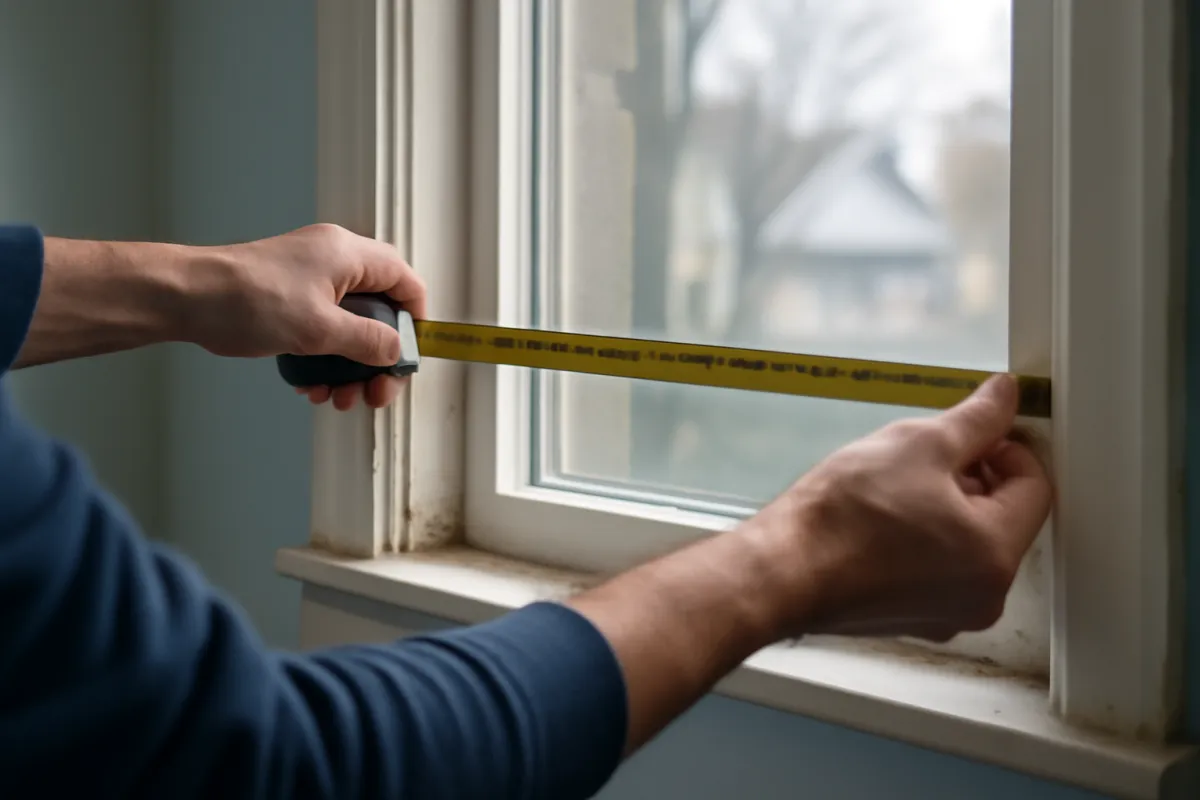
Because the count is the driver, the fastest way to estimate your own project is to walk the house and count the openings, then multiply by a per-window band that matches the material you want. This beats reaching for a national average, which cannot see whether your house has 11 windows or 23, and cannot know whether you want budget vinyl or custom wood. The average is a starting point for a conversation, not a number you can budget against, and two homes on the same street with different window counts and materials will have honestly different totals.
Keep in mind that whole-house pricing usually earns a modest per-window discount over doing one at a time, and that large or specialty windows within the count carry their own premium. A single oversized picture window or a bay unit can cost as much as several ordinary double-hungs, so the average per window in a house with one big feature window will run higher than a house of uniform standard openings. Count, size, and material together, not floor area, are what build the whole-house figure.
Cost to replace windows per window
The portable way to carry a window budget is per window, because it is the number that travels across houses of different sizes. As an illustrative guide, budget aluminum and basic vinyl units land around $400 to $700 installed, mid-grade vinyl and fiberglass roughly $600 to $1,100, and wood or premium units often $1,000 to $1,500 or more, with large and specialty shapes higher still. Multiply your chosen band by the number of openings and you have a whole-house estimate you can hold against any quote.
Per-window pricing is also the figure most useful for comparing two bids on the same house, because it strips out the count and shows what each installer is charging to supply and set one unit. If one bid works out to $650 per window and another to $1,050 for the same material and the same openings, that gap is a real question to ask, not noise. It usually points to a difference in the window line and glass package, the install type, or how much of the trim and finish work each installer folded into the price.
What the per-window number cannot show on its own is the character of each opening, and that is its limit. A standard second-floor double-hung and a ground-floor bay window of the same house do not cost the same to replace, because one is a simple swap and the other is a large, heavy, structurally involved unit. Use per-window pricing to sanity-check bids and build a whole-house estimate, then read the scope opening by opening, because a single feature window can move the average more than the material choice does.
Vinyl vs wood vs fiberglass window cost
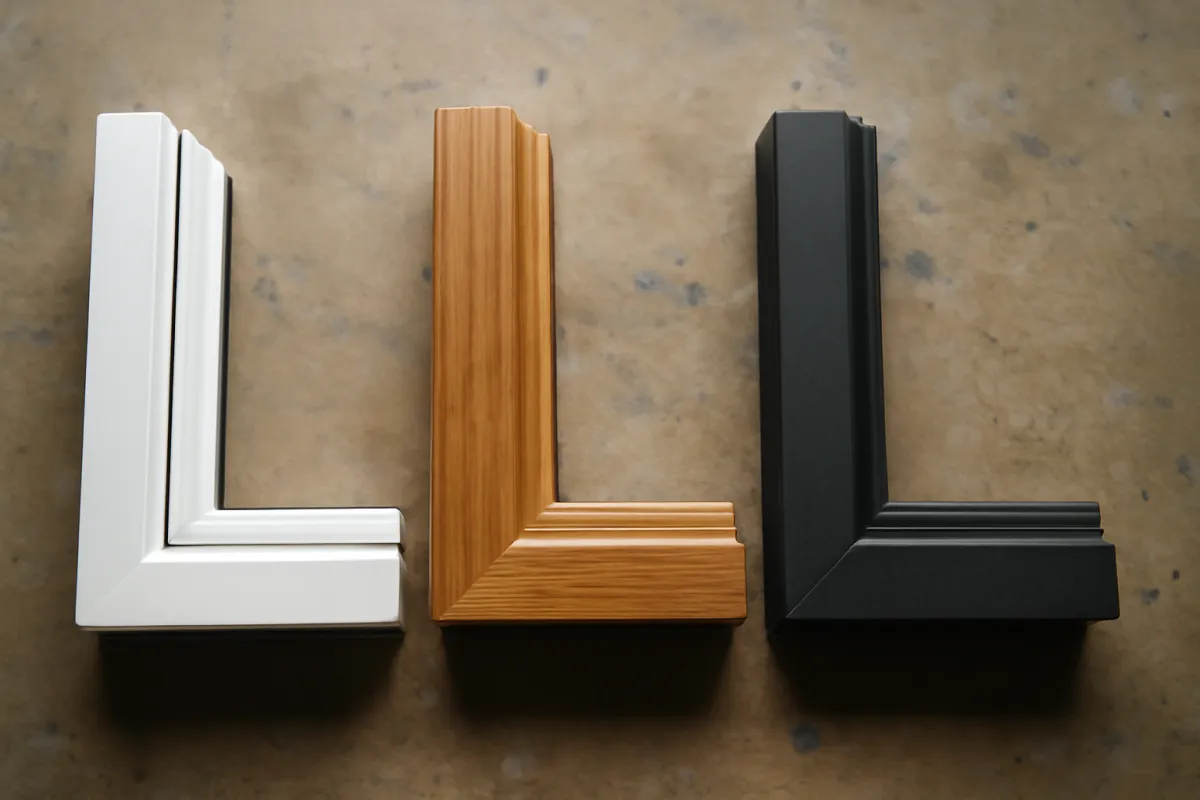
Frame material is the single biggest lever on a window’s price, and each common material buys a different balance of cost, upkeep, and appearance. Vinyl is generally the most affordable and the most popular for replacement work: low maintenance, decent efficiency, and widely available, though it offers fewer finish options and cannot be refinished if you tire of the color. Fiberglass sits in the middle to upper range, valued for strength, dimensional stability across temperature swings, and the ability to be painted, which makes it a frequent step up from vinyl for homeowners who want more durability and finish flexibility.
Wood is usually the most expensive up front and asks the most in maintenance, since it must be sealed or painted and protected from moisture, but many homeowners choose it for the warmth and look, especially in older or higher-end homes where vinyl would feel out of place. Aluminum is inexpensive and strong but conducts heat readily, so unassisted aluminum is uncommon in cold climates unless it is thermally broken to slow that heat transfer. The chart below prices one standard-size window across the four materials so you can feel the spread at a glance.
Illustrative cost per window by material (standard size, installed)
One standard replacement window, four frame materials, mid-grade glass, insert install. Every window and market differs.
Illustrative installed cost for the same standard window in four materials. Larger sizes, upgraded glass, specialty shapes, and full-frame installation push every bar higher; premium wood lines sit off the top of this chart.
Read those bars as the shape of the decision, not as your quote. The gap between vinyl and wood is not a rounding difference, it is a choice about budget, upkeep, and how the house should look. Anchor on the material band that fits your home and your plans, then use the sections that follow to adjust for size, style, glass, and install type. The estimator treats material as its own field so you can see the swing directly across your own window count.
Window style cost: double-hung, casement, bay, picture
Beyond material, the style of window changes both the price and the labor, because some units are simple rectangles and others are large or mechanically involved. Double-hung windows, where both sashes slide vertically, are the workhorse of American homes and usually the most economical style to replace, since they are common, standard, and quick to set. Casement windows, which crank open on a hinge, tend to cost a bit more because of the operating hardware and the tighter seal they achieve, and sliders fall near double-hungs on price.
Bay and bow windows are a different category entirely: they project out from the wall, combine several units into one assembly, and often involve structural support, a roof or seat board, and far more labor, so a single bay window can cost as much as several ordinary windows combined. Picture windows, which are large fixed panes that do not open, can be inexpensive per square foot of glass because they have no moving parts, but a very large picture window is heavy, sometimes needs more than one installer to set safely, and the glass itself is a bigger cost.
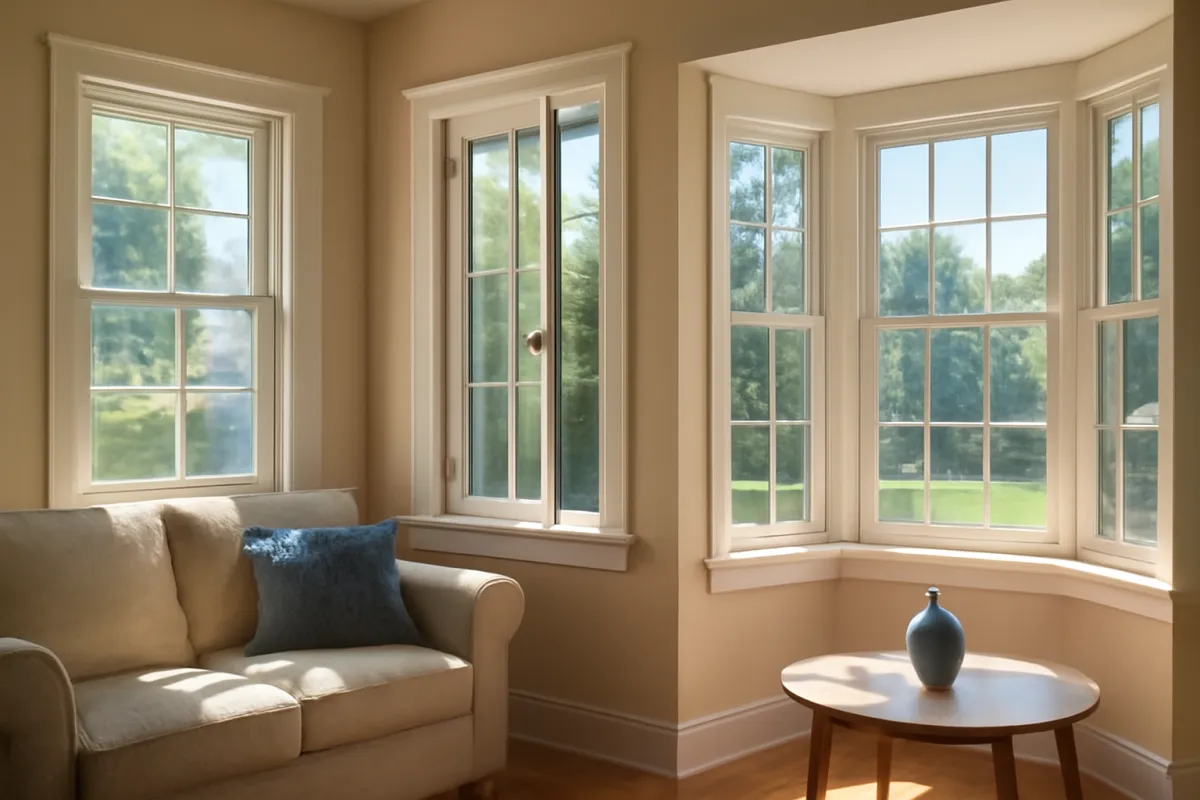
The practical move is to price your house by its actual mix of styles rather than a single average. A home that is all standard double-hungs will land toward the lower per-window figures, while a home with a big bay in the living room, a bank of casements in the kitchen, and specialty shapes elsewhere will run higher even at the same material grade. When you count your openings for the estimator, note which are simple and which are large or specialty, because that mix shapes the total as much as the material does.
What actually drives a window’s price
A handful of levers set each window’s price, and knowing their order of impact is most of the budgeting battle. First is material, already covered, which moves the number more than anything else. Second is size: a window is priced substantially by its dimensions, so a large opening costs more than a small one in the same material, and oversized or specialty sizes carry a premium because they may be custom-ordered rather than pulled from stock. Third is style, the double-hung-versus-bay spread the last section described.
Fourth is the glass package, which is easy to overlook and genuinely matters. Modern replacement windows are typically double-glazed, and upgrades like a low-emissivity (low-E) coating, argon gas fill between the panes, and triple glazing improve efficiency and comfort while adding cost. Fifth is install type, the pocket-insert-versus-full-frame decision covered in the next section, which can move a single window’s installed price by a meaningful margin. Sixth is install complexity: a ground-floor window is easier and cheaper than one that needs staging or a lift, and old rotted or out-of-square openings take more labor to make right.
Our contractor cost file walks through how labor rates set the floor under all of this, and windows are no exception. The practical takeaway is to price those levers in order rather than fixating on brand names: fix the material and size first, then choose the glass package deliberately, then decide insert versus full-frame, and only then worry about which specific product line you prefer. A homeowner who starts by shopping brands has anchored on a minor lever while the ones that actually move the budget go unexamined. The estimator lets you turn the biggest dials, material, size, and install type, so they move first.
Full-frame replacement versus insert
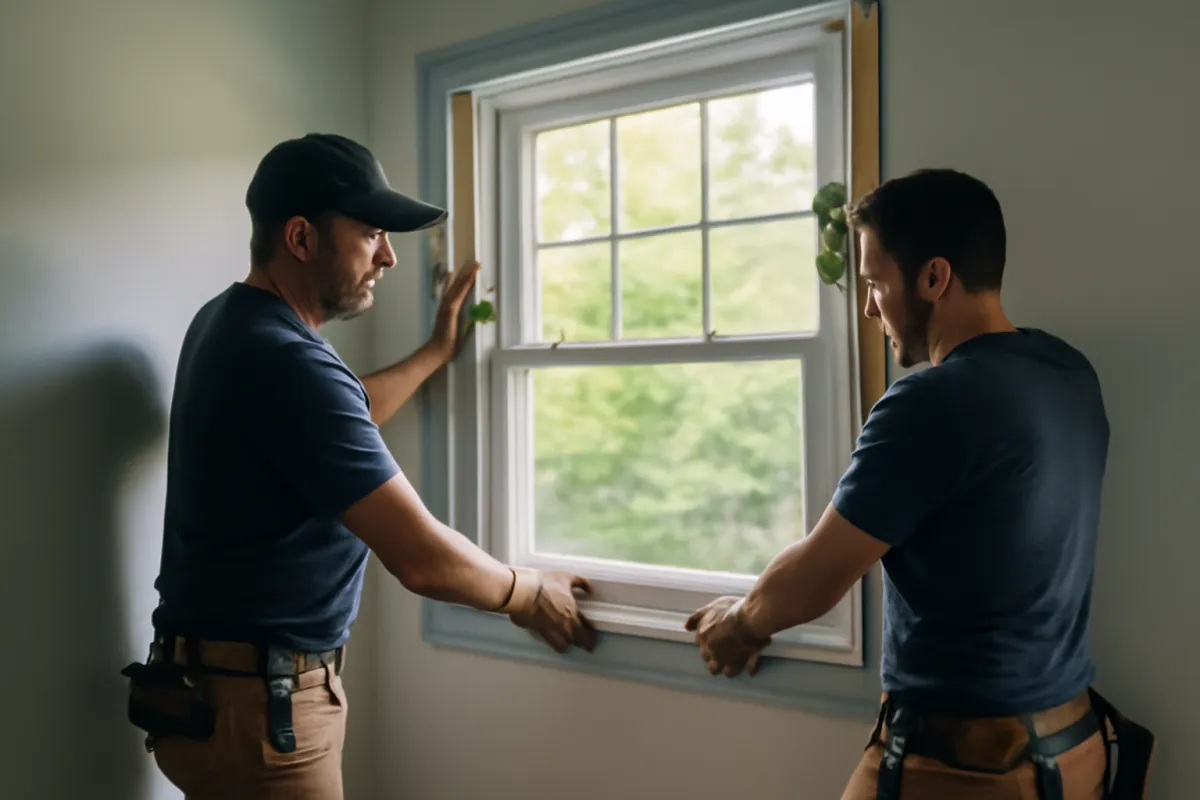
One install decision quietly shapes both the price and the value of a window job: a pocket insert or a full-frame replacement. An insert, also called a pocket or retrofit replacement, fits a new window inside the existing frame, leaving the exterior trim and interior casing in place. It is faster, less invasive, and cheaper, because the crew is not tearing out and rebuilding the opening, which is exactly why the lower bid on a house often assumes inserts whether or not the word appears on the page.
A full-frame replacement removes the entire old window down to the rough opening, including the frame, and installs a new unit with fresh flashing, insulation, and trim. It costs more today because you pay for the extra tear-out and finish labor, but it is the right call when the existing frame is rotted, when the openings are out of square, or when you want to reseal and re-flash the opening properly against water. If the old frames are sound, an insert can be the sensible, economical choice; if they are failing, an insert traps the problem behind a new window that will still leak or rot at the edges.
The two are not interchangeable, and a quote that is silent about which one it assumes has left out a fact that can move the price by a large margin. The same discipline our quote-comparison manual teaches applies directly: make every installer state whether they are pricing inserts or full-frame work, because two bids that look far apart are often just quoting two different jobs. The estimator treats install type as its own toggle so you can see the swing before you gather a single quote.
How much to replace all windows in a 2000 sq ft house
Square footage is a rough proxy that homeowners reach for, but it is the window count that actually sets the total, and a 2,000-square-foot home commonly has somewhere around 12 to 18 windows depending on its age, style, and layout. Older homes tend to have more, smaller windows; newer open-plan homes sometimes have fewer, larger ones. The right first step is always to count your actual openings rather than trust the square-footage shortcut, because two 2,000-square-foot homes can differ by half a dozen windows.
Taking an illustrative middle of about 15 windows at roughly $700 to $1,000 each installed for mid-grade vinyl or fiberglass, the whole-house project lands somewhere around $10,000 to $15,000. Choose budget vinyl and the number falls toward the bottom of that band or below it; choose wood, upgrade the glass, or move to full-frame replacement and it climbs above the top. A single bay or a bank of large windows within that count can add a noticeable premium on its own, which is why the count alone is a starting point that the size and style mix then adjusts.
The reliable move is to build the estimate from your own numbers: count the openings, note the large or specialty ones, pick the material band you want, and multiply. That is precisely what the estimator does, so instead of trusting a square-footage rule of thumb you can set 15 windows in vinyl and watch the total, then flip to wood or bump the size and see the range move. A number built from your actual window count is the one to carry into every quote conversation, because it is the language the installer will price in.
Labor’s share of a window job
Assemble the pieces and the shape of a window budget comes into focus, and it splits between the windows themselves, the installation labor, and the smaller costs around the job. The proportions below are illustrative for a typical vinyl or fiberglass replacement, with the windows and glass, the installation labor, and the removal, permits, and disposal shown as their own bands so you can see where the money actually lives.
Where a window-replacement budget goes
Illustrative shares for a typical mid-grade vinyl or fiberglass whole-house replacement.
Shares shift with material and scope: a premium wood or triple-glazed job tilts harder toward the window band, while full-frame replacement, upper-floor access, and rotted openings grow the labor band. Structural work on a bay or bow window is added on top.
Two readings matter here. First, the windows themselves are usually the largest band on a replacement job, which is why the material and glass choices move the total so much and why upgrading from vinyl to wood swells the biggest slice on the bar. Second, labor is a substantial minority that grows with the difficulty of the install, so full-frame work, second-floor access, and old out-of-square openings push the labor band up even when the windows are the same. Our general contractor cost file explains how that installation labor and any coordinating fee are priced, which is useful when a window job is bundled into a larger project. Budget from the whole bar, and remember that structural work on a bay or bow window sits on top of every band rather than inside one.
Energy savings from new windows
Efficiency is one of the main reasons homeowners replace windows, and it is worth understanding what the savings realistically look like. New double-glazed windows with a low-E coating and gas fill reduce the heat that escapes in winter and enters in summer, which trims heating and cooling bills and makes rooms more comfortable and less drafty. The comfort gain is immediate and easy to feel; the dollar savings are real but usually modest relative to the up-front cost, which is why energy savings alone rarely pay back a window project in a few years.
The payback math depends heavily on what you are replacing. Swapping old, single-pane, or failing windows for modern efficient units can produce a meaningful drop in energy use, because the starting point was so poor. Replacing already-decent double-pane windows that are merely dated produces a much smaller efficiency gain, so the case for that project rests more on look, operation, and maintenance than on energy math. Framed as commonly cited illustration, simple payback periods for the energy portion alone often run many years, which means new windows are better understood as a comfort and long-term-value upgrade than as a fast energy investment.
The honest way to weigh efficiency is to treat it as one benefit among several rather than the whole justification. Lower bills, quieter rooms, less draft, easier operation, and no more fogged or stuck sashes all arrive together, and the energy savings are one line in that ledger. If a salesperson leans entirely on energy savings to justify a premium package, ask for the assumptions behind the payback claim, because the number is sensitive to your climate, your old windows, and the efficiency of the new ones, and generic payback promises rarely survive contact with a specific house.
Replacement versus repair
Not every window problem is a replacement, and spending replacement money on a window that needs a repair, or patching a window that is finished, are equally expensive mistakes in opposite directions. Lean toward a repair when the problem is a single failed part on an otherwise sound window: a broken sash cord, worn weatherstripping, a cracked pane in a single-pane window, or a latch that no longer closes are usually fixable for a fraction of a replacement, and there is no reason to replace a whole unit over one part.
Lean toward a replacement when the signs are systemic rather than spot. Fogging or moisture between the panes of a double-glazed window signals a failed seal that generally cannot be repaired and defeats the insulating gas fill. Rotted wood frames, windows painted or swollen shut, widespread drafts, and single-pane windows you want to upgrade for comfort and efficiency all point toward replacement. A window near the end of its life with several failing units is usually throwing good money after bad if patched one repair at a time, because the next failure is already forming in the unit next to it.
The honest middle ground is that some windows are judgment calls, and that is exactly when an inspection earns its keep. A mostly sound house with one or two problem windows rarely justifies replacing them all at once, while a house full of tired, drafty, single-pane windows is a candidate for a whole-house project even if each individual unit could technically limp along. Age, the pattern of the problems, and how long you plan to keep the home should all weigh on the call, and none of them should be rushed by a sales pitch to replace everything.
Does replacing windows add value
New windows commonly recoup a meaningful but partial share of their cost at resale, and understanding that the share is only partial keeps expectations honest. The money back is real, but it is rarely a full return on the day you sell. ProsNook does not publish a recovery percentage for window replacement, and the reason is worth stating plainly: the figures that circulate come from national surveys whose averages move with the market, the material, the region, and how tired the old windows were, so none of them is a promise about your specific home. An agent or appraiser who knows your market can tell you how replaced windows are actually being credited there, and that is the only recovery figure worth planning against.
The stronger case for new windows is usually not the resale multiple but the value you get while you live in the home. Lower energy bills, quieter and more comfortable rooms, easier operation, and better curb appeal all accrue every year you stay, and buyers value not inheriting a house full of failing windows even when the appraisal does not fully credit the upgrade. A house with obviously failing, fogged, or drafty windows can be harder to sell and can invite price negotiation, so sound windows sometimes protect value as much as they add it.
The practical way to use the resale angle is to let it justify sound, mid-grade choices rather than the most expensive units available. A reasonable vinyl or fiberglass replacement that recovers a good share and delivers years of comfort is usually the value play; a premium wood package chosen mainly for resale rarely returns its premium at sale. Weigh recovery as one factor among several, alongside how long you will own the home and how much the comfort and efficiency are worth to you now, and the decision tends to make itself.
Permits and code for window replacement
A window job often needs a permit, and it is easy to forget until it matters. Many jurisdictions require a permit for window replacement, especially for full-frame work, any change to the size of an opening, or work that touches the structure, while some allow a simple like-for-like insert replacement without one. The rule is local, so the reliable move is to ask your installer how permits are handled and confirm it against your own municipality rather than assuming either way.
Permits matter beyond the fee, because they trigger an inspection to code, and windows carry a few code requirements worth knowing. Egress rules require that bedrooms have a window large enough to climb out of in an emergency, so replacing a bedroom window with a smaller unit or one that opens less can run afoul of code. Safety glazing, tempered glass, is required near doors, tubs and showers, stairs, and low to the floor, so windows in those locations must meet the standard. A permitted job gets these details checked; an unpermitted one leaves them to chance.
A reputable installer typically knows the local rule and pulls the permit as part of the job, folding the fee into the price and scheduling the inspection. A bid that quietly skips a required permit to look cheaper is trading a small saving for a real risk: an inspection failure, a problem at resale when the work shows up as unpermitted, or an egress or safety-glazing miss that becomes a hazard. Confirm how permits are handled before you sign, and treat an installer who wants to skip a required one as a warning about how they run the rest of the job.
DIY versus pro window installation
Window replacement is one of the jobs where the do-it-yourself math usually favors hiring a professional, and it is worth being clear about why. Setting a window correctly means getting it level, plumb, and square in the opening, sealing and flashing it against water, insulating the gaps, and finishing the trim so it looks right and keeps weather out. A window that is set even slightly out of true can bind, leak, or fail early, and the failure often shows up as water damage inside the wall months later, where it is expensive to find and fix.
The tools, the lifting of large units, the second-floor access, and the flashing detail all push most window work toward the pro column, and a mistake is costly enough that the labor is usually money well spent. A confident DIYer might handle a single, small, ground-floor insert in a sound opening, and doing so saves the installation labor, but the savings are modest against the risk on anything larger, higher, or involving full-frame work. Manufacturer warranties can also depend on professional installation, so a self-installed window may forfeit coverage it would otherwise carry.
The honest framing is that windows are usually a pro job, and the decision is less about capability than about consequence. The downside of a botched deck board is a wobbly board; the downside of a botched window is water in the wall. If the budget is tight, the better lever is usually the material and the count, doing fewer windows now in a sound mid-grade material, rather than doing the installation yourself to save labor on a job where the install quality is most of what you are buying.
How to get and compare window quotes
Window quotes are easy to gather and easy to misread, because the units look similar on paper and the important differences hide in words like “insert,” “full-frame,” “low-E,” and “custom size.” Start by getting at least three written quotes from licensed, insured installers who each measured every opening, since a window job’s cost rides on the count, the sizes, and the condition of the openings that no phone estimate can fully judge. A number offered without anyone measuring is a guess that will be revised once someone walks the house.
Then make every quote describe the same scope so the totals mean something. A trustworthy window bid should name the number of windows and their sizes, the exact product line and material, the glass package including any low-E or gas fill, whether the price is for inserts or full-frame replacement, the trim and finish work included inside and out, and the warranty on both the units and the installation. Everything our quote-comparison manual teaches applies directly, because two window bids most often differ on the install type, the glass upgrade, and the finish work, not on the color of the frame.
Finally, be suspicious of the outlier. A quote far under the others is rarely a bargain: it commonly means inserts instead of full-frame where full-frame is needed, a thinner glass package, a stripped-down product line, or the interior and exterior finish work quietly left to be added later. Normalize every bid to the same scope, re-read the install-type and glass lines, and hold the results against your own figure from the estimator. The honest bids tend to converge once they describe the same job, and the one that moves most when normalized is the one that had the most left unsaid.
Where to save and where not to
Once you understand the levers, you can choose where to trim a window budget without buying a regret. The safest place to save is usually the material and the product tier: a sound mid-grade vinyl or fiberglass window in a standard style delivers most of the comfort and efficiency of a premium unit at a lower price, and choosing it over a top-of-line wood package is the biggest honest saving available on most projects. Doing the whole house at once rather than one window at a time also saves on the per-window mobilization cost, and standard sizes cost less than custom-ordered specialty shapes.
The places not to save are the ones that protect the money you spend. Skimping on the installation is the classic false economy, because a cheap install that leaks or sets a window out of square can ruin an expensive window and damage the wall around it, so the quality of the install is not the place to shop for the lowest number. Cutting the glass package below what your climate needs trades a small up-front saving for years of higher energy bills and less comfort. And accepting an insert where full-frame is warranted, over rotted or out-of-square openings, saves today and traps a problem behind the new window.
The general shape of window wisdom is that the leverage is in the choices you make before the job starts: the material tier, the count and timing, the glass package matched to your climate, and the install type matched to the condition of your openings. Spend deliberately on the things that determine whether the windows perform and last, save on the tier and the extras that are genuinely optional, and let the estimator show you how each of those choices moves the total before you commit to a single quote.
A worked example: 10 windows, vinyl versus wood
Take one ordinary project, replacing 10 standard windows in a typical home, and cost it two ways so the material decision becomes concrete. Every figure is illustrative; the structure is the lesson. Both versions assume standard-size double-hung windows, a mid-grade low-E glass package, and pocket-insert installation in sound openings, so the only thing changing is the frame material.
Vinyl, about $6,500. Ten standard vinyl double-hungs at roughly $650 each installed comes to about $6,500, with the removal, basic trim, and disposal folded into that per-window price. This is the value play for most homeowners: low maintenance, solid efficiency with the low-E glass, and a total that lands like a large appliance purchase rather than a remodel. The trade-off is fewer finish options and a look that reads as practical rather than premium, which suits many homes perfectly well.
Wood, about $13,000. The same 10 openings in wood at roughly $1,300 each installed comes to about $13,000, reflecting the material’s higher cost and the finish work it invites. It should look warmer and more in keeping with an older or higher-end home, and it can be refinished down the road, but it asks for maintenance vinyl does not and doubles the project’s price. If the openings had turned out rotted, full-frame replacement would add meaningfully to either figure, and a bay or specialty window among the ten would push its own line well above the standard per-window number.
The lesson is in the material and the count, not a national average. On the same 10 openings, the frame choice alone nearly doubles the total, which is why counting your windows and picking a material band tells you more than any headline range. Run your own count and material through the estimator, toggle insert versus full-frame, and the same comparison prices itself around your house instead of this illustrative one.
Common window-replacement mistakes
The recurring failures, collected for prevention.
- Budgeting from square footage instead of window count. The total scales with the number of openings, not the home’s floor area; count your actual windows and multiply by a per-window band.
- Ignoring the insert-versus-full-frame decision. A quote that does not say which one it assumes can be off by a large margin, and an insert over a rotted opening traps the problem behind a new window.
- Shopping brand before material and glass. The frame material, the size, and the glass package move the price far more than which specific product line you pick.
- Skimping on the installation. A cheap install that leaks or sets a window out of true can ruin an expensive unit and damage the wall, so the install quality is the wrong place to chase the lowest bid.
- Expecting energy savings to pay it all back fast. New windows are a comfort and long-term-value upgrade more than a quick energy investment; treat aggressive payback claims skeptically.
- Overpaying for resale. Recovery is partial and never the full cost, so a premium package chosen mainly for resale rarely returns its premium.
- Skipping the permit. Many jurisdictions require one, and it triggers egress and safety-glazing checks that protect you; an installer who wants to skip a required permit is a warning sign.
Each mistake is cheap to avoid before the job starts and expensive to fix once the windows are set, which is the general shape of window wisdom: the leverage is in the material, the count, the glass, and the install type, all decided before the first unit is ordered.
The bottom line
The cost to replace windows is set by how many windows you are replacing and what each one is made of, and the honest way to price it is per window first, then multiplied by your actual count. Illustratively, a single replacement window runs about $450 to $1,500 installed, so a 10-window house lands roughly $6,000 to $15,000 and a larger or premium project climbs from there. Material is the biggest single lever, with aluminum and vinyl at the low end, fiberglass in the middle, and wood at the top, while size, style, the glass package, and the insert-versus-full-frame decision move every figure inside those bands.
Then buy the work like a professional: count your openings, note the large and specialty ones, pick a material band that fits your home and your plans, and match the glass package to your climate and the install type to the condition of your frames. Get at least three written quotes from licensed, insured installers who measured every window, make each bid describe the same scope down to the install type, glass, and finish work, and treat any bid far below the others as a question to ask rather than a bargain to grab. Justify the project with the comfort, quiet, and energy savings you gain while you live there as much as with the partial money back at resale, and spend deliberately on the install quality that determines whether the windows last. The homeowners who come out of a window project satisfied are not the ones who found the lowest number; they are the ones who counted their windows, chose a sound material, insisted on the right install, and never let a cheap bid quietly swap full-frame work for an insert over a rotted opening. That is the whole recipe, and none of it requires luck.
This cost file exists to explain how window-replacement prices are built, not to price your specific home, and nothing in it replaces a written estimate from a licensed, insured window installer who has measured your openings in person. Every dollar figure, per-window rate, and energy-payback figure above is illustration only: your real cost shifts with the number and size of your windows, the frame material and glass package, the style of each unit, whether you choose inserts or full-frame replacement, the condition of your openings, local labor rates, and the season. Permit rules, egress requirements, and safety-glazing codes are local and are described here in general terms only, so confirm what your own jurisdiction requires before the work begins. Gather several detailed written quotes on the same scope, verify licensing and insurance, read both the product and installation warranties, and treat any bid far below the others as a question to ask rather than a bargain to grab.
Frequently asked questions
How much does it cost to replace windows?
The honest answer is set by two things far more than any national average: how many windows you are replacing and what each one is made of. As an illustrative guide, a single replacement window commonly runs about $450 to $1,500 installed, with budget vinyl near the low end and large wood units near the high end. A whole-house project of roughly 10 windows therefore lands somewhere around $6,000 to $15,000 in many markets, though larger or premium jobs run well past that. Treat every figure here as a starting range, because your real price shifts with the window material, the size and style of each unit, the glass package, whether the crew does a simple insert or a full-frame replacement, and your local labor market.
How much does it cost to replace a single window?
Priced one at a time, a standard replacement window illustratively runs about $450 to $1,500 fully installed, and the spread inside that band is mostly material and size. A basic vinyl double-hung of ordinary size sits near the bottom, a mid-grade fiberglass unit lands in the middle, and a large wood window with an upgraded glass package sits at the top. Per-window pricing usually improves a little when you do several at once, because the crew mobilizes, sets up, and cleans up a single time rather than returning for each opening. That is why replacing one window in isolation can feel expensive relative to the per-unit cost of doing a whole floor, and why many homeowners batch the work.
What is the average cost to replace all the windows in a house?
A typical single-family home has somewhere around 10 to 20 windows, so the whole-house number scales with that count more than with the home's square footage. Using an illustrative middle figure of roughly $700 to $1,000 per window installed for mid-grade vinyl or fiberglass, a 10-window house lands around $7,000 to $12,000 and a 20-window house roughly double that, before premium materials, large or specialty shapes, and full-frame work push the number higher. Because the count drives the total, the fastest way to estimate your own project is to walk the house, count the openings, and multiply by a per-window band that matches the material you want, rather than reaching for a single national average.
Is vinyl, wood, or fiberglass cheaper for replacement windows?
Vinyl is generally the most affordable of the common frame materials, which is why it dominates replacement work, and it needs little maintenance, though it offers fewer finish options and cannot be refinished. Fiberglass sits in the middle to upper range, prized for strength, stable performance across temperature swings, and the ability to be painted. Wood is usually the most expensive up front and demands the most upkeep, but many homeowners choose it for the look and warmth, especially in older or higher-end homes. Aluminum is inexpensive and strong but conducts heat, so it is less common in cold climates unless it is thermally broken. As an illustrative ranking, expect aluminum and vinyl at the low end, fiberglass in the middle, and wood at the top.
Does replacing windows add value to a home?
New windows commonly recoup a meaningful but partial share of their cost at resale, which means the money back is real but rarely a full return on the day you sell. ProsNook publishes no recovery percentage here, because the figures that circulate are national survey averages that move with the market, the material, and how tired the old windows were. The stronger case is usually not the resale multiple but the combination of lower energy bills, quieter and more comfortable rooms, and better curb appeal while you live there, plus the appeal to buyers of not inheriting a house full of failing windows. Treat resale recovery as one factor among several, use it to justify sound mid-grade choices rather than the most expensive units, and remember that recovery figures are national illustrations that vary widely by market and by how tired the old windows were.
How much does it cost to replace all the windows in a 2,000 sq ft house?
Square footage is a rough proxy here, because it is the window count that sets the price, and a 2,000-square-foot home commonly has somewhere around 12 to 18 windows depending on its age, style, and layout. Taking an illustrative middle of about 15 windows at roughly $700 to $1,000 each installed for mid-grade vinyl or fiberglass, the whole-house project lands somewhere around $10,000 to $15,000, with premium materials, large or specialty units, and full-frame replacement pushing it higher and a smaller count or budget vinyl pulling it lower. The reliable move is to count your actual openings rather than trust the square-footage shortcut, then multiply by a per-window band for the material you want.
Should I repair or replace my windows?
Repair often makes sense for a single failed part on an otherwise sound window: a broken sash cord, worn weatherstripping, a cracked pane in a single-pane window, or hardware that no longer latches are usually fixable for a fraction of a replacement. Lean toward replacement when the problems are systemic rather than spot: fogging between the panes of a double-glazed unit signals a failed seal that cannot be repaired, rotted wood frames, windows painted shut or badly drafty throughout the house, and single-pane windows you want to upgrade for comfort and efficiency. A window near the end of its life with several failing units is usually throwing good money after bad if patched one repair at a time, while a mostly sound house with one or two problem windows rarely justifies replacing them all.
Do I need a permit to replace windows?
Often yes, and it depends on your jurisdiction and the scope of the work. Many areas require a permit for window replacement, especially for full-frame replacement, any change to the size of the opening, or work that touches the structure, while some allow simple like-for-like insert replacements without one. Permits matter beyond the fee: they trigger an inspection to code, which for windows can include egress requirements in bedrooms and safety glazing near doors, tubs, and floors. A reputable installer typically knows the local rule and pulls the permit as part of the job, and a bid that skips a required permit to look cheaper is trading a small saving for a code and resale complication later, so confirm how permits are handled before you sign.