What's on this page
- Metal roof cost starts with the roofing square
- Illustrative metal roof cost per square foot and per square
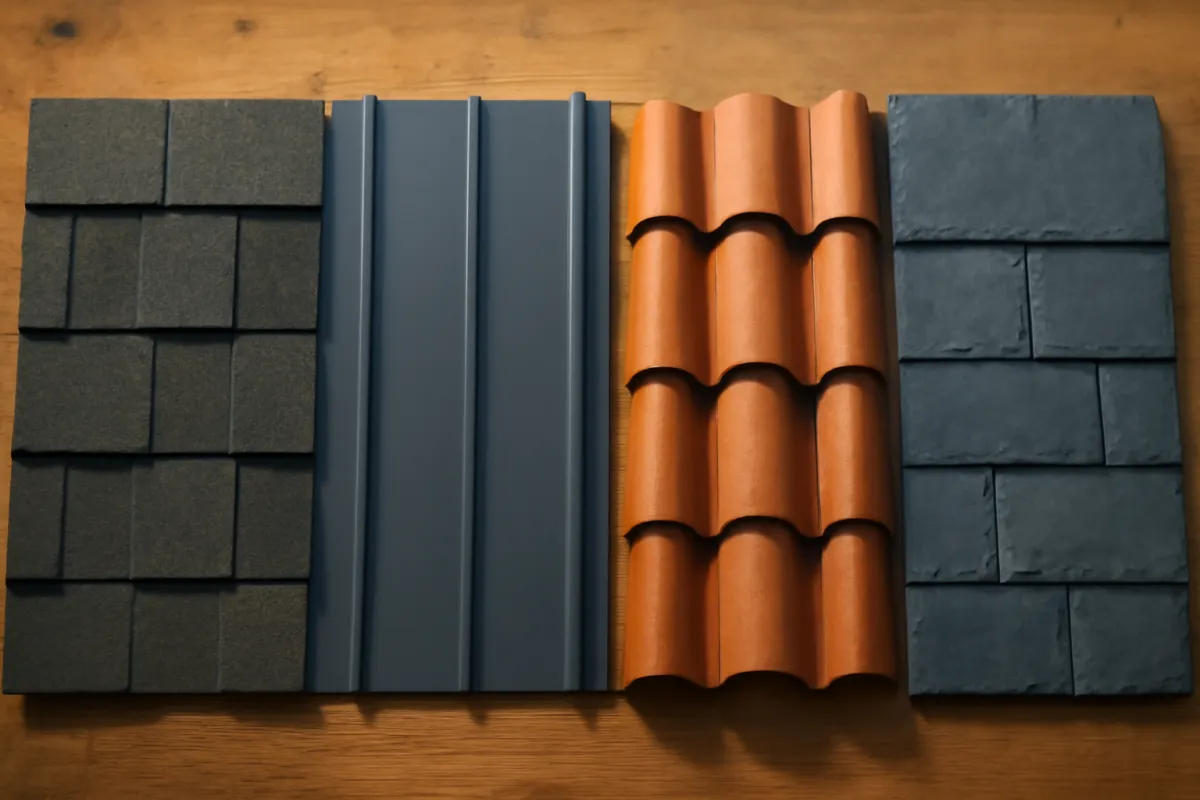
- Metal roof cost by type
- Standing seam metal roof cost
- Metal shingles and metal tile cost
- Corrugated and ribbed metal roof cost
- Stone-coated steel roof cost
- Material and labor: where a metal roof cost goes
- What drives a metal roof’s price
- Roof pitch and complexity
- Metal gauge and panel thickness
- Coating and finish
- Metal roof vs asphalt shingle cost
- Metal roof lifespan versus asphalt
- The pros of a metal roof
- The cons of a metal roof
- Is a metal roof worth it?
- How to pay for a metal roof
- Estimating your metal roof size
- A worked example: one 2,000 sq ft metal roof
- Getting and comparing metal roof quotes
- Common metal roof cost mistakes
- The bottom line
Short answer: A metal roof commonly runs an illustrative $350 to $1,700 per square installed, where one square is 100 square feet, depending on the type. Budget corrugated steel can rival a good asphalt job, while standing-seam and stone-coated systems cost two to three times a mid-grade shingle roof. On a typical home that lands around $20,000 to $40,000 installed, with type, gauge and coating driving the spread.
Roofing with metal has moved from barns and mountain cabins to ordinary suburban streets, and the first question every homeowner asks is what a metal roof actually costs. The honest answer is that metal is not one product at one price: it runs from budget corrugated steel that can rival a good asphalt job to standing-seam and stone-coated systems that cost two or three times as much, and each buys a different balance of price, lifespan, and looks. A ribbed-steel roof on a simple house can land near the price of mid-grade shingles, while the same house in premium standing seam can rival a small remodel, and neither figure is wrong. What separates them is the metal type, the panel gauge, the coating, and the size and shape of your roof.
This cost file prices roofing with metal the way a roofer thinks about it: in squares, by type, with the material and labor split named honestly rather than buried under one headline number. It is the metal-specific companion to our broader roof replacement cost file, which prices every roofing material side by side, and it leans on the labor-and-materials anatomy laid out in our contractor cost file. When you are ready to choose a crew, pair it with our checklist on how to hire a roofing contractor. Sketch your own roof in the job cost estimator as you read, and the ranges below turn into numbers you can plan around.
Key takeaways
- Roofers price in squares: one square equals 100 square feet of roof surface, and metal commonly runs roughly $350 to $1,700 per square installed, illustratively, depending on the type.
- Metal roofing is not one product: budget corrugated steel can rival a good asphalt job, while standing-seam and stone-coated systems commonly cost two to three times a mid-grade shingle roof.
- On a typical home, a metal roof illustratively lands around $20,000 to $40,000 installed, with the type, gauge, and coating driving most of the spread.
- Metal tilts the bill toward materials: on a standing-seam job the material band often becomes the largest slice, where asphalt splits closer to half labor.
- The real decision is cheaper-now versus lasts-longer: asphalt lasts around 25 to 30 years, metal often 40 to 70, so metal can outlast two or three asphalt roofs.
Metal roof cost starts with the roofing square
Before any metal number makes sense, you need the unit roofers actually price in, because it is not the square foot most homeowners reach for. A roofing square is 100 square feet of roof surface, and it is the currency the whole trade runs on: panels are ordered by it, underlayment is measured in it, and labor is often estimated per square. When a roofer glances at a house and says “that is about a twenty-five square roof,” they have told a fellow tradesperson almost everything they need to price the job in any material, metal included.
The reason the square matters to your metal budget is that it is roof surface, not floor area, and the two are never the same on a pitched roof. A house with a 2,000-square-foot footprint does not have 2,000 square feet of roof, because the roof planes tilt, and a tilted plane covering a given footprint is larger than the flat ground beneath it. Depending on steepness, that 2,000-square-foot footprint might be 22, 25, or 28 squares of actual surface, and every one of those squares carries a metal panel that costs real money.
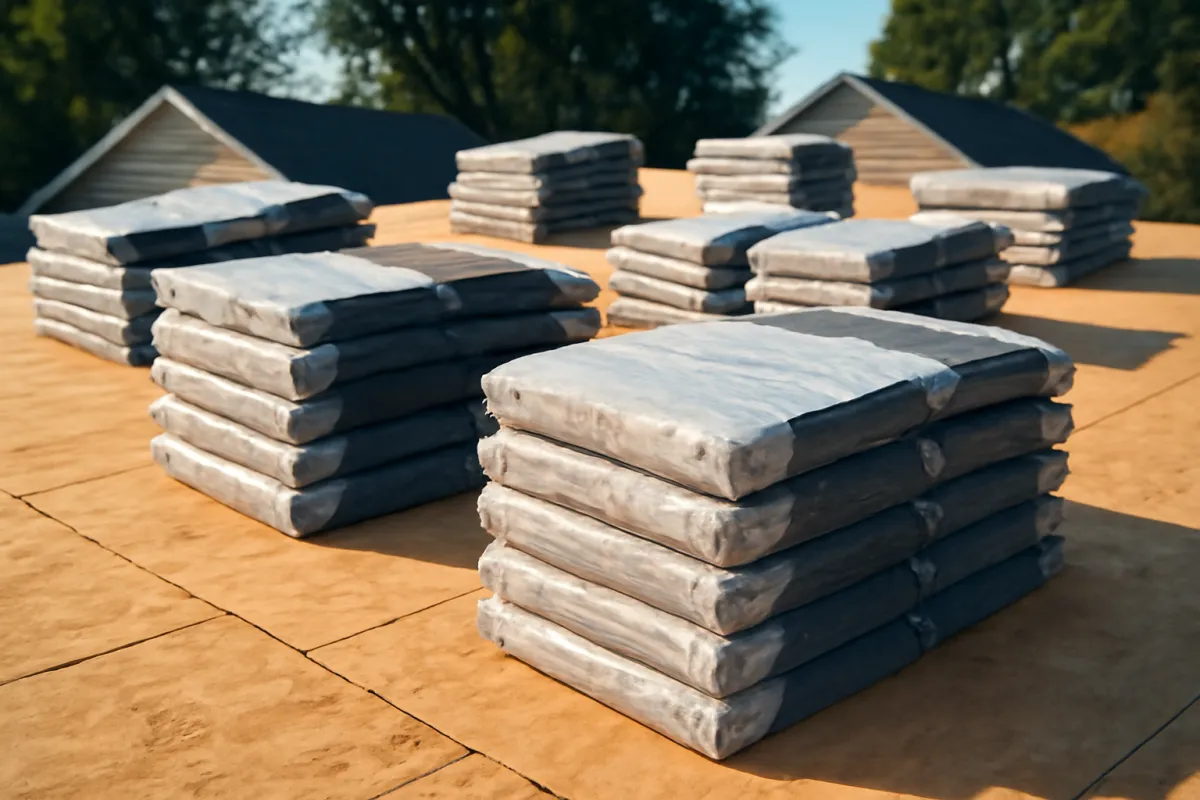
The practical payoff is that once you can think in squares, a metal quote stops being a mystery. A roofer who names the square count, the pitch, and the metal type has given you the three numbers that build the price, and you can hold their per-square figure against the illustrative bands below. Anyone who quotes a flat total without ever naming a square count has skipped the step that makes the number checkable, which is worth noticing before you sign a five-figure contract.
Illustrative metal roof cost per square foot and per square
The portable way to carry a metal-roof budget is per square, because it travels between roofs of different sizes. As an illustrative guide, roofing with metal runs roughly $350 to $1,700 per square installed, which is a wide band precisely because metal spans budget steel to premium systems. Divide by 100 and you have the per-square-foot version: about $3.50 to $17 per square foot of roof surface. Corrugated and ribbed steel sit at the low end, metal shingles and standing seam in the middle and upper-middle, and stone-coated steel near the top.
Per-square-foot is the figure most useful for comparing two bids on the same roof, because it strips out size and shows what each roofer charges to cover a unit of your specific surface. If one standing-seam bid works out to $11 per square foot and another to $15 for the same panel and the same square count, that gap is a real question to ask, not noise. It usually points to a difference in the gauge, the coating, the concealed-fastener system, the trim and flashing package, or how much of the tear-off and decking risk each roofer priced in.
What the per-foot number cannot show is the character of the roof, and that is its limit. A simple gable and a cut-up roof of the same surface area, full of valleys, dormers, hips, and penetrations, do not cost the same per foot, because metal panels have to be cut, bent, and flashed around every one of those details, and metal is less forgiving of complexity than shingles. Use per-square and per-square-foot to sanity-check bids on your own roof, then read the scope, because two metal roofs with the same footage can be very different jobs.
Metal roof cost by type
Metal roofing sorts into a handful of common types, and the type you choose is the single biggest lever on the price, much as material tier is for roofing overall. The table below prices each common type per square and for one illustrative 25-square roof, alongside an architectural asphalt row for reference, so you can see the spread and the lifespan trade-off at a glance. Every figure is illustration, not a quote, and a real roof adjusts for pitch, complexity, gauge, coating, and region on top of the type.
| Metal type | Illustrative cost per square, installed | Illustrative 25-square roof | Typical lifespan |
|---|---|---|---|
| Corrugated / ribbed steel | $350 to $700 | $9,000 to $18,000 | 30 to 45 years |
| Metal shingles or tiles | $700 to $1,100 | $18,000 to $27,000 | 40 to 60 years |
| Standing seam | $1,000 to $1,600 | $25,000 to $40,000 | 40 to 70 years |
| Stone-coated steel | $1,100 to $1,700 | $28,000 to $42,000 | 40 to 70 years |
| Architectural asphalt (reference) | $450 to $700 | $11,000 to $18,000 | 25 to 30 years |
The chart below plots the midpoint of each type on one illustrative 25-square roof so the spread is easy to feel. The bars hold the roof size constant and vary only the metal type, which is the cleanest way to see how much the choice of system moves the number. Read them as the shape of the decision, not as your quote.
Illustrative metal roof cost by type (25-square roof)
One roof surface, midpoint installed totals, decking assumed sound. Every roof and market differs.
Illustrative midpoint totals for the same 25-square roof. Steeper pitch, more valleys and penetrations, a heavier gauge, and a premium coating push every bar higher; copper or zinc would sit off the top of this chart.
Anchor on the type band that fits your budget and your plans for the home, then use the sections that follow to adjust for the things the chart holds still. The estimator lets you set your own roof size, pitch, and material instead of a single blended average, so the ranges above become numbers shaped around your actual roof.
Standing seam metal roof cost
Standing seam is the type most people picture when they imagine a premium metal roof: long vertical panels with raised, interlocking seams and no fasteners visible on the surface, because the fasteners are concealed under the seams. As an illustrative guide, standing seam commonly runs roughly $1,000 to $1,600 per square installed, or about $25,000 to $40,000 on a 25-square roof, which places it at two to three times a mid-grade asphalt job. It is the metal type that most reliably reaches the long end of the lifespan band, commonly 40 to 70 years, because those hidden fasteners are not exposed to weather.
The price reflects both the material and the labor. Standing-seam panels are often formed to length, sometimes on site with a portable roll-former, and installing them demands precise measuring, cutting, and seaming that a wider exposed-fastener panel does not. The concealed clips that let the metal expand and contract without loosening are part of what makes the system last, and part of what makes it slower to install. On a complex roof with many hips, valleys, and penetrations, that careful labor is where a standing-seam bid climbs, because every transition is custom flashing rather than a lapped panel.
For a homeowner weighing types, standing seam is the choice when longevity and a clean, modern look matter most and the budget can absorb the premium. It sheds snow, resists wind and fire, and hides its fasteners so there is little to maintain, which is much of its appeal for a long-term home. Run your own square count through the job cost estimator with the standing-seam figure to see where your specific roof lands before any roofer visits.
Metal shingles and metal tile cost
Not all metal roofing comes in long panels. Metal shingles and metal tiles are stamped or formed pieces designed to mimic the look of asphalt shingles, wood shakes, clay tile, or slate, while weighing a fraction of what real tile or slate does. Illustratively, metal shingles commonly run roughly $700 to $1,100 per square installed, or about $18,000 to $27,000 on a 25-square roof, sitting between budget corrugated steel and standing seam on price. They commonly last around 40 to 60 years, and their interlocking design conceals most fasteners, which helps longevity.
Their appeal is aesthetic and structural at once. A homeowner who wants the durability of metal without the industrial look of vertical panels, or who wants the appearance of slate on a structure that cannot carry slate’s weight, is the natural buyer, because metal shingles deliver a traditional roofline at a small fraction of slate or tile weight. That light weight can matter on an older home whose framing was never designed for a heavy covering, and it can simplify installation over an existing structure.
The trade-off is that the piece-by-piece installation is more labor-intensive than snapping down wide panels, which is part of why metal shingles are not the cheapest metal option despite using less metal per square than some systems. Detailing around valleys, dormers, and penetrations again drives the labor, as it does with every metal type. If the goal is the look of a conventional roof with a metal lifespan, metal shingles are the type built for it, and the estimator will price them against the alternatives on your own roof.
Corrugated and ribbed metal roof cost
Corrugated and ribbed steel panels are the budget end of metal roofing, and they are what makes “metal on a house” achievable for a homeowner who cannot stretch to standing seam. These are wide, exposed-fastener panels, the ones driven straight through the face of the metal with screws and rubber washers rather than concealed clips, and that simplicity is exactly why they are cheaper to buy and faster to install. Illustratively, corrugated and ribbed steel commonly runs roughly $350 to $700 per square installed, or about $9,000 to $18,000 on a 25-square roof, which can land close to a mid-grade asphalt job on a simple roof.
The savings come with a real trade-off centered on those exposed fasteners. The screws and their rubber washers are the system’s wear point: over decades of thermal expansion, contraction, and weather, washers can dry out and fasteners can back out or need resealing, so an exposed-fastener roof carries a maintenance tail that a concealed-fastener standing seam does not. The lifespan, commonly 30 to 45 years, is still far beyond asphalt, but it sits at the shorter end of the metal band for this reason, and it depends heavily on the fasteners being maintained.
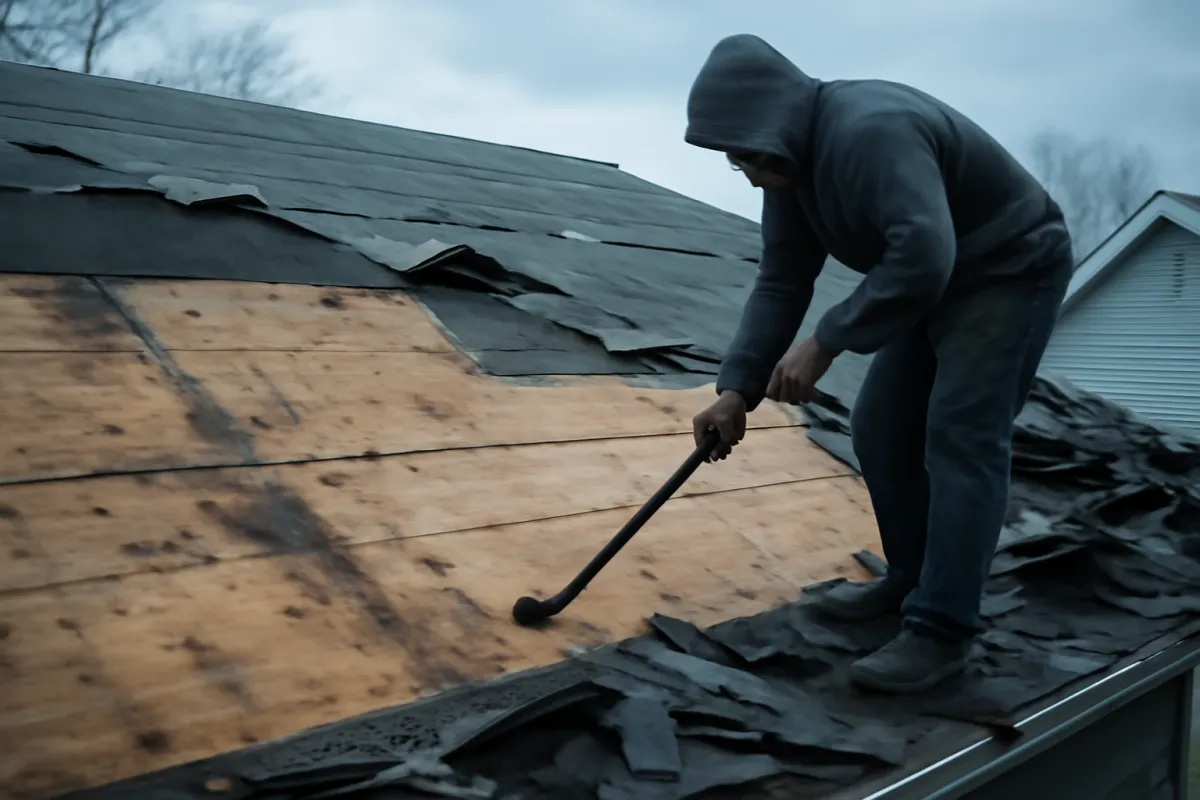
For a large, simple roof, an outbuilding, or a homeowner who wants metal’s longevity on a tight budget, corrugated or ribbed steel is usually the answer, and it is the type that makes the metal-versus-asphalt price gap smallest. Just weigh the exposed-fastener maintenance against the hands-off standing-seam system before deciding that cheapest up front is cheapest over the life of the roof.
Stone-coated steel roof cost
Stone-coated steel sits at the premium end of the common types, a steel panel or tile coated with a layer of stone granules that gives it the texture and color depth of asphalt shingle, wood shake, or clay tile while keeping a steel core underneath. Illustratively, stone-coated steel commonly runs roughly $1,100 to $1,700 per square installed, or about $28,000 to $42,000 on a 25-square roof, which places it at or near the top of the residential metal range. It commonly lasts 40 to 70 years, and the stone coating both hides fasteners and helps the roof resist wind, hail, and fire.
Its appeal is a blend of durability and curb appeal. A homeowner who wants a metal roof that does not read as metal from the street, and who lives in a region where wind, hail, or fire resistance carries real weight, is the natural buyer, because stone-coated steel offers a traditional appearance with a metal lifespan and strong performance in severe weather. In some regions those performance ratings can matter for insurance considerations, though that is region-specific and worth confirming with your own insurer rather than assuming.
The cost reflects the layered construction and the more involved installation, which again climbs on cut-up roofs where every valley and penetration is custom detailed. Stone-coated steel is the type to consider when the goal is a premium, traditional look with metal durability and the budget can carry the top of the range. As with every type, price your own square count in the estimator rather than assuming this illustrative band matches your roof.
Material and labor: where a metal roof cost goes
Assemble the pieces and the shape of a metal-roof budget comes into focus, and it splits differently from an asphalt job. Where a shingle replacement lands close to half labor, a metal roof tilts harder toward materials, because the panels, trim, clips, and fasteners cost multiples of asphalt while the labor, though real and skilled, does not scale up as sharply. The proportions below are illustrative for a typical standing-seam installation with sound decking, shown as material, labor, and tear-off plus accessories so you can see where the money actually lives.
Where a standing-seam metal roof cost goes
Illustrative shares for a typical standing-seam installation with sound decking.
Shares shift with type and roof: a budget corrugated job tilts back toward labor and a smaller material band, while a steep, cut-up roof or extra tear-off layers grow the labor and tear-off slices. Decking repair, when found, is added on top of all three.
Two readings matter here. First, because the material band is the largest slice on a metal roof, the metal type, the gauge, and the coating you choose move the total more than they would on an asphalt job, which is why the type table above spans such a wide range. Second, labor is still a substantial share and it is skilled labor: metal demands precise cutting, bending, and seaming, so your local labor market and the roof’s steepness and complexity still move the price meaningfully. Budget from the whole bar, and remember that decking repair, when it appears, sits on top of every band rather than inside one, exactly as our roof replacement cost file describes for any covering.
What drives a metal roof’s price
Beyond the type, a handful of levers set the total, and knowing their order of impact is most of the budgeting battle. First is roof size in squares, which scales the whole job. Second is metal type, already covered, which is the biggest single swing after size. Third is pitch, or steepness: a steep roof is slower and more dangerous to work on, needs extra fall protection and staging, and has more surface per footprint, so it costs more on both counts.
Fourth is complexity: valleys, hips, dormers, skylights, chimneys, and vents each mean cutting, bending, and custom flashing that a plain gable never demands, and metal is less forgiving of complexity than shingles because each transition is fabricated rather than lapped. Fifth is gauge and coating, the thickness of the metal and the quality of its finish, which move both price and lifespan. Sixth is tear-off and decking, because stripping old layers and replacing any rotted sheathing is labor and disposal that happens before the first panel goes down. Seventh is region and season, the local labor market and time of year.
The practical takeaway is to price those levers in order rather than fixating on the panel aisle. Fix the square count, then choose the type, then account for pitch and complexity, then the gauge and coating, and hold a cushion for decking no one can see yet. A homeowner who starts by shopping panel colors has anchored on the least consequential lever while size, type, and complexity, the ones that actually set the number, go unexamined. The estimator lets you turn the size and pitch dials so the biggest levers move first.
Roof pitch and complexity
Pitch and complexity deserve their own section because they move a metal roof’s price more than most homeowners expect, and they interact. Pitch is steepness, and it raises cost two ways at once: a steeper plane is physically larger than the footprint it covers, so there are more squares to buy, and it is slower and more hazardous to work on, so the labor per square rises as crews add staging, harnesses, and care. A low-slope roof and a steep one over the same footprint are genuinely different jobs, and the steep one carries a premium on both the material and the labor side.
Complexity is the shape of the roof, and metal is where complexity bites hardest. A simple gable is two large planes a crew can panel quickly, while a cut-up roof full of valleys, hips, dormers, and penetrations forces the crew to cut, bend, and flash metal around every transition, and each of those details is fabricated by hand rather than lapped like a shingle. Two roofs with the same square count can cost very differently once one has six valleys and three dormers and the other has none, because the labor lives in the details, not the flat field.
The practical move is to be honest about your roof’s shape before you read the first quote. If your roof is simple, the lower end of each type’s range is realistic; if it is steep and cut up, expect to sit toward the top, and expect metal to punish that complexity more than asphalt would. When you compare bids, check that each roofer priced the same pitch and the same detail count, because a bid that quietly assumed a simpler roof is not cheaper, it is describing a different job, which is the same discipline our quote-comparison manual teaches for every trade.
Metal gauge and panel thickness
Gauge is the metal-specific lever most homeowners have never heard of, and it quietly shapes both price and durability. Gauge is the thickness of the steel, and the numbering runs backward: a lower gauge number means thicker, heavier, more expensive metal, and a higher number means thinner and cheaper. A residential standing-seam roof might use a heavier gauge for a robust, dent-resistant panel, while a budget corrugated roof might use a thinner one to hit its price. The difference is not just cost: a thicker panel resists denting from hail and foot traffic, holds its shape over long spans, and generally lasts longer.
The material also matters alongside the gauge. Most residential metal roofing is steel, either galvanized or coated with a zinc-aluminum alloy for corrosion resistance, because steel offers the best balance of strength and price. Aluminum costs more but resists corrosion especially well, which is why it shows up near coastlines where salt air attacks steel. Copper and zinc are premium architectural metals that last generations and develop a distinctive patina, but they sit far above the ranges in this cost file and are usually reserved for accents or high-end custom work.
For budgeting, the takeaway is to ask each roofer what gauge and what base metal they quoted, and to compare like with like. A standing-seam bid that comes in noticeably cheaper may be using a thinner gauge that dents more easily and may not reach the top of the lifespan band, which is a real difference hiding inside two totals that look comparable. Gauge is one of the lines a careful metal quote names and a thin one leaves vague, so treat its absence as a question to ask rather than a detail to skip.
Coating and finish
If gauge is the metal’s body, the coating is its skin, and it does more for the roof’s lifespan and appearance than almost anything else you can see. Bare steel would rust, so metal roofing is protected by a metallic coating such as galvanized zinc or a zinc-aluminum alloy, and then usually a paint finish on top. The quality of that paint system is a real price and performance lever: premium finishes resist fading, chalking, and weathering for decades and often carry long finish warranties, while cheaper finishes can fade or chalk years sooner, which shows most on dark or vivid colors.
The finish is also where much of a metal roof’s energy story lives. Many metal roofs use reflective or specially pigmented coatings that bounce a share of the sun’s heat rather than absorbing it, which can ease cooling loads in hot, sunny climates (the EPA’s cool roofs page explains the reflectance effect), and metal’s low thermal mass means it does not hold heat the way some materials do. These energy effects are real but modest and highly climate-dependent, so treat any specific saving as illustrative and confirm it for your own home and region rather than assuming a headline figure.
For budgeting, the coating is another line to compare across bids, because two panels of the same gauge and type can carry very different finish systems at very different prices. Ask what coating and paint system each quote includes and what the finish warranty covers, since a premium finish is part of why one standing-seam bid costs more than another, and it is part of what you are buying when you pay for the top of a type’s range. A cheaper finish is not automatically wrong, but it should be a choice you made knowingly, not a surprise you discover when the color fades.
Metal roof vs asphalt shingle cost
The comparison most homeowners actually want is metal versus asphalt shingles, and it is really a comparison across time rather than a single number. Up front, asphalt wins decisively: a mid-grade architectural shingle roof illustratively lands around $11,000 to $18,000 on a 25-square roof, while standing-seam metal on the same roof runs roughly $25,000 to $40,000, and stone-coated steel higher still. Only budget corrugated steel, at roughly $9,000 to $18,000, closes the gap on the day of the invoice, and even then usually sits at or above the asphalt price once labor is counted.
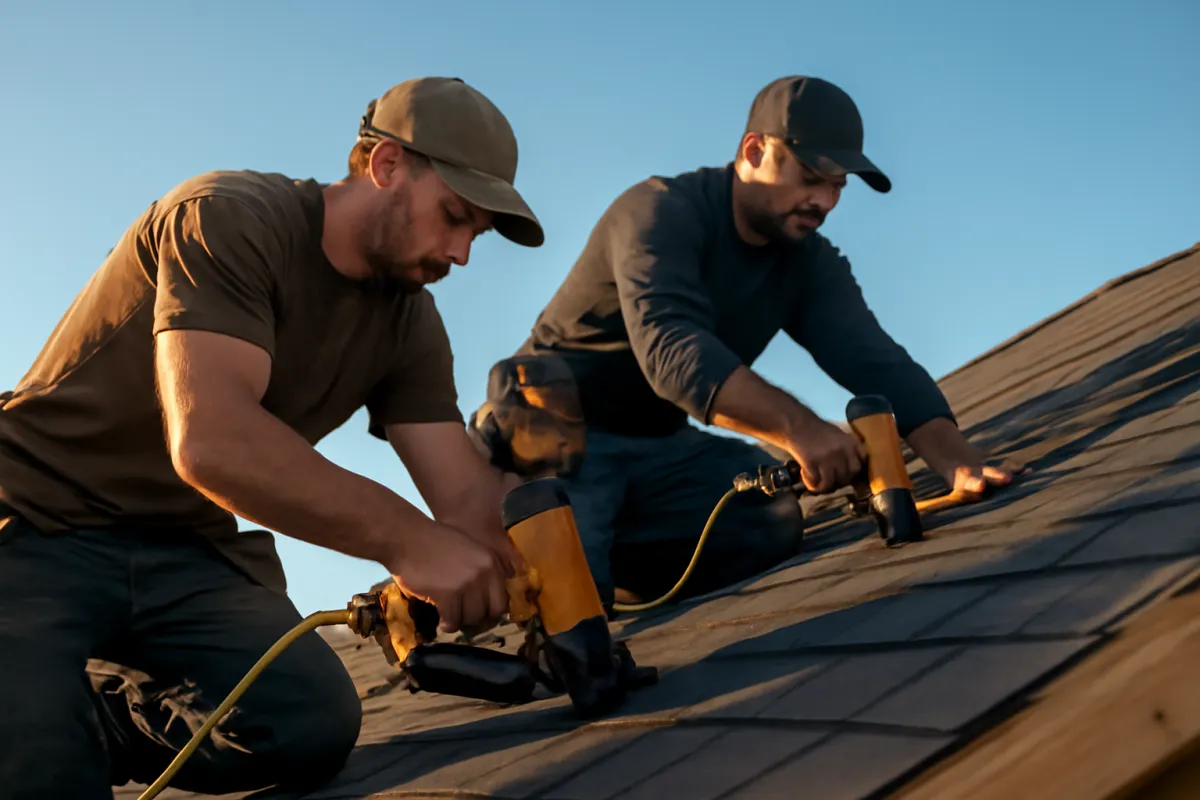
Stretch the horizon and the math shifts. Architectural asphalt commonly lasts 25 to 30 years while metal often lasts 40 to 70, which means that over a long ownership you might buy one metal roof where you would otherwise buy two, or nearly three, asphalt roofs. Add metal’s resistance to fire and wind, its snow-shedding, and the possibility of insurance or energy considerations in some regions, and the lifetime picture can favor metal even though the sticker does not. On these illustrative figures the two coverings can converge or even cross over decades, though the metal premium is paid now and the savings arrive slowly.
The honest framing is cheaper-now versus lasts-longer rather than better versus worse. If you expect to sell within a decade, asphalt’s far lower cost and the fact that the buyer inherits the shorter clock usually make it the rational choice. If this is your long-term home and the budget can absorb the premium, metal can be the better lifetime value and the last roof you buy. Run your own footprint and pitch through the job cost estimator, flip between the metal and asphalt figures, and the gap you see is the premium you weigh against the extra decades.
Metal roof lifespan versus asphalt
Lifespan is the number that makes the whole metal argument work, so it is worth stating carefully and honestly. As broad illustrative figures, standard 3-tab asphalt commonly lasts around 15 to 20 years, architectural shingles roughly 25 to 30, while quality metal commonly lasts 40 to 70 years depending on the type, gauge, coating, and installation. Standing seam and stone-coated steel reach the long end because their fasteners are concealed, while exposed-fastener corrugated and ribbed panels sit somewhat shorter, commonly 30 to 45 years, because those fasteners and washers are wear points.
Those numbers are the reason a metal roof that costs two to three times an asphalt one can still pencil out over decades. If you buy a 50-year metal roof once where you would have bought two 25-year asphalt roofs, the up-front premium is spread across a horizon long enough that the annual cost of ownership can come out close, even before you count metal’s weather resistance and lower maintenance. The catch is that the savings are spread across a very long time, so they only accrue to an owner who stays, which is why the decision turns on your horizon.
Two honest caveats keep this from becoming a sales pitch. First, lifespan depends heavily on installation and on the gauge and coating: a cheap panel installed poorly will not reach the top of the range, so the crew and the specification matter as much as the material category. Second, few homeowners actually keep a house for 50 years, so the lifetime argument is strongest for a genuine forever home and weakest for a house you expect to sell, where much of the extra life is inherited by the next owner rather than enjoyed by you.
The pros of a metal roof
Metal roofing earns its price with a genuine list of advantages, and it is worth naming them plainly rather than as marketing. The headline is longevity: a metal roof commonly lasts two to three times as long as asphalt, which is the foundation of its lifetime-cost case. Alongside that comes durability and weather resistance: metal resists fire, sheds snow and rain, and stands up to high winds better than many coverings, and stone-coated and heavier-gauge systems resist hail and impact well, which in some regions can matter for insurance considerations.
The second cluster of advantages is about performance and upkeep. Metal is low maintenance, especially concealed-fastener systems that have little exposed hardware to service, so beyond periodic inspection there is not much to do. It can be energy-favorable in hot, sunny climates, because reflective and specially pigmented coatings bounce some solar heat and metal does not store heat the way heavier materials do, though those effects are modest and climate-dependent. Metal is also lightweight compared with tile or slate, so it rarely demands structural reinforcement and can sometimes go over an existing roof.
Finally there are the softer benefits. Metal is recyclable at the end of its long life and is often made with recycled content, which appeals to environmentally minded homeowners. It offers a range of looks, from the clean modern lines of standing seam to metal shingles and stone-coated tiles that mimic shake, slate, or clay. None of these advantages is free, and the up-front premium is real, but for the right owner on the right home the combination of decades of life, low upkeep, and strong weather performance is exactly what the extra cost is buying.
The cons of a metal roof
An honest cost file names the drawbacks as clearly as the benefits, because the right decision needs both. The first and largest con is up-front cost: metal simply costs more than asphalt to install, often two to three times as much for premium types, and that premium is paid now while the savings arrive slowly over decades. For many budgets that sticker price is the end of the conversation, and there is nothing wrong with choosing asphalt when the metal premium does not fit or the ownership horizon is short.
A second cluster of cons is practical. Denting is a real possibility on thinner-gauge panels from large hail or heavy impact, which is why gauge matters. Expansion and contraction must be accommodated by the fastening system, and on exposed-fastener corrugated roofs the fasteners and washers are a maintenance tail that can need resealing decades in. Repairs and later matching can be harder than with shingles, because a damaged panel may be more involved to replace than swapping a few shingles, and finding an exact color and profile match years later is not always easy.
The remaining cons are smaller but worth knowing. The noise worry is largely a myth for a properly decked and insulated residential roof, as covered in the FAQs, but a poorly assembled roof or a bare-panel structure can indeed be loud. Installation expertise matters more than with asphalt, since metal is less forgiving of a careless crew, so the pool of truly skilled metal installers in your area may be smaller and the wrong crew can undermine the whole investment. Weigh these against the advantages honestly, because metal is an excellent roof for the right owner and an overpriced one for the wrong situation.
Is a metal roof worth it?
The worth-it question has no universal answer, and any confident yes or no is selling something, so the honest approach is to name the factors that decide it for your situation. The single biggest factor is your ownership horizon. Metal’s advantage is longevity, and longevity only pays the owner who stays: on a genuine forever home you may buy one roof instead of two or three and enjoy decades of durability, while on a house you expect to sell within a decade you pay the full premium now and hand most of the extra life to the next owner, rarely recovering the difference at sale.
The second factor is your budget and financing. Metal is worth it only if the up-front premium fits without straining the rest of your finances, because a roof bought on painful terms is not a bargain no matter how long it lasts. The third is your climate and risk: in regions with wildfire, heavy snow, high wind, or frequent hail, metal’s weather performance carries real, sometimes insurance-relevant value that a mild climate does not reward as much. The fourth is aesthetics and preference, since metal is a long commitment to a look you will live under for decades.
Put those together and the pattern is clear. Metal tends to be worth it for a long-term owner, on a home in a demanding climate, with a budget that absorbs the premium and a preference for the look and the low maintenance. It tends not to be worth the premium for a short-term owner on a tight budget in a mild climate, where cheaper asphalt does the job and the buyer inherits the clock. Frame the decision as cheaper-now versus lasts-longer, weigh your own horizon, and let the estimator show you the actual dollar gap you are deciding about.
How to pay for a metal roof
Because a metal roof is a five-figure project, how you pay for it is part of the cost decision, and the honest goal is to fund it without turning a durable asset into a financial strain. The cleanest option is cash or savings, which avoids interest entirely and is worth building toward when a roof is a known future expense rather than an emergency. Planning ahead is exactly what our note on planning a home renovation budget is built for, and a roof nearing the end of its life is a predictable line to save against before it fails.
When savings will not cover it, homeowners commonly turn to financing, and the general categories are worth understanding rather than any specific product or rate. A home equity loan or line of credit uses the house as collateral and often carries lower rates than unsecured borrowing, but it puts the home at risk if payments falter. A personal loan is unsecured and faster but usually carries higher rates. Contractor or manufacturer financing can be convenient and sometimes offers promotional terms, but the rate and fees vary widely and deserve the same scrutiny as any loan. Rates, terms, and program details change constantly, so confirm current figures with the lender rather than relying on any number here.
The prudent posture is to treat financing as a tool with a real cost, not a way to ignore the price. Compare the total cost of borrowing, not just the monthly payment, watch for fees and prepayment penalties, and be especially wary of any roofer whose pitch leans harder on easy financing than on the quality of the work, which our checklist on hiring a roofing contractor flags as a caution. This is educational information, not financial advice, so weigh your options with a qualified professional and choose the funding that fits your budget rather than the one that closes the sale fastest.
Estimating your metal roof size
You do not need to climb a ladder to get a rough sense of your roof’s size, and a ballpark helps you read the first metal quote with open eyes. Start with your home’s footprint, the ground-floor area the roof covers, which you can approximate from the house dimensions or a property record. A single-story home’s footprint is close to its floor area; a two-story home’s roof covers only the footprint, roughly half the total floor area, which trips up many first estimates and matters just as much for metal as for any covering.
Then apply a pitch multiplier, because the roof surface is larger than the footprint by an amount that grows with steepness. As illustrative multipliers, a low-slope roof adds roughly 5 percent to the footprint, a common medium pitch adds around 20 to 25 percent, and a steep roof can add 40 percent or more. Multiply the footprint by the appropriate factor to estimate roof surface, then divide by 100 to get squares. A 2,000-square-foot footprint at a medium pitch works out to roughly 2,400 to 2,500 square feet of roof, or about 24 to 25 squares, the figure the type table above is built around.
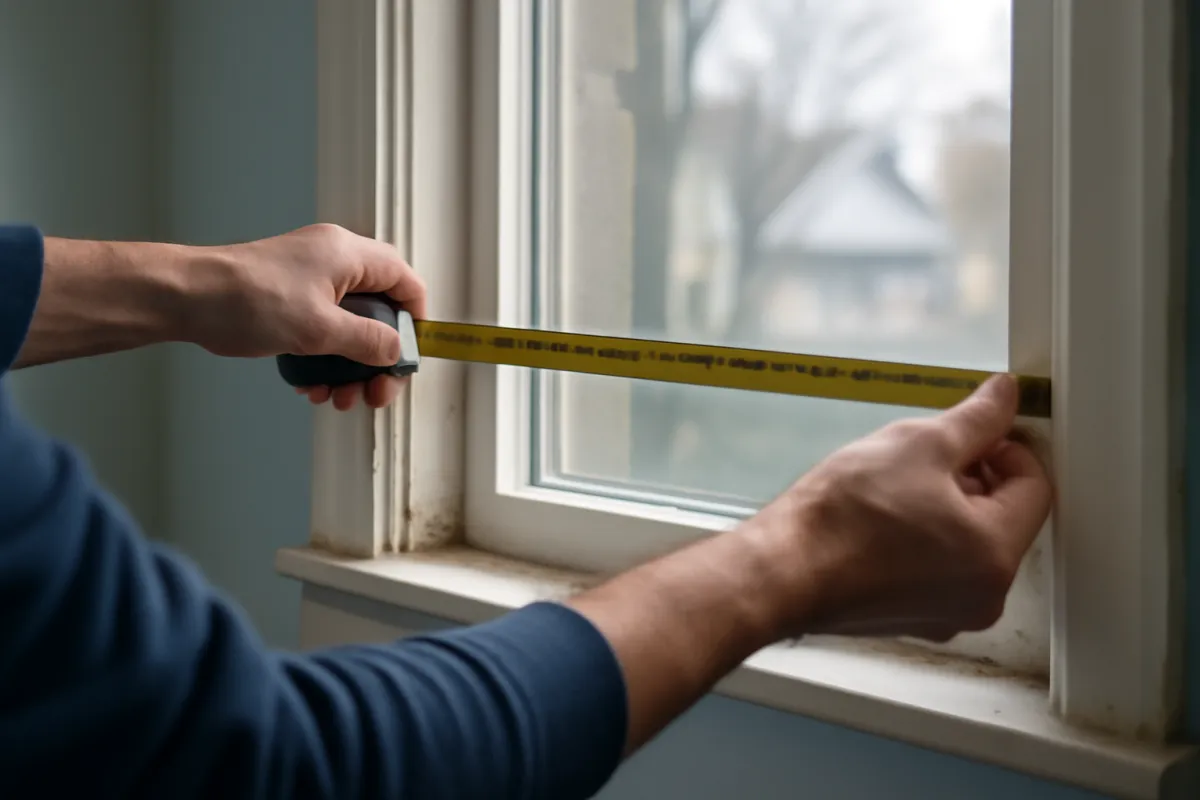
That estimate is a sanity-check tool, and its value is catching a wildly off number early. If your rough math says 25 squares and a roofer quotes as though it were 40, that is a conversation worth having before anything else. The estimator builds this footprint-times-pitch step in, so you can turn your own footprint and steepness into a square count and an illustrative metal range in a few seconds, then carry that figure into every quote you gather.
A worked example: one 2,000 sq ft metal roof
Take one ordinary roof, a 2,000-square-foot footprint at a common medium pitch, and cost it in metal so the numbers become concrete. Every figure is illustrative; the structure is the lesson. At a medium pitch, that footprint works out to roughly 25 squares of roof surface, and the job assumes a full tear-off of one old layer with decking that turns out mostly sound.
Corrugated steel, about $14,000. Twenty-five squares of exposed-fastener ribbed steel at roughly $550 per square installed comes to about $13,750, with the tear-off, disposal, underlayment, trim, and permit folded into that per-square price. This is the budget path into metal, landing close to a mid-grade asphalt job, and it should last around 30 to 45 years, with the exposed fasteners the thing to inspect and maintain down the road.
Standing seam, about $30,000. The same 25 squares in standing-seam steel at roughly $1,200 per square installed comes to about $30,000, reflecting the concealed-fastener system, the more exacting installation, and the longer lifespan of 40 to 70 years. It is more than double the corrugated figure and roughly two to three times a comparable asphalt roof, but it is close to maintenance-free and is the metal most likely to be the last roof the house needs.
The lesson is in the type and the horizon, not a single number. Corrugated wins clearly on up-front price and makes metal affordable; standing seam costs far more now but buys the longest life and the least upkeep. The tie is broken by how long you will own the home, whether the budget can carry the premium, and how much you value the hands-off durability. Run your own footprint, pitch, and metal type through the estimator, and the same comparison prices itself around your roof instead of this illustrative one.
Getting and comparing metal roof quotes
Metal quotes are easy to gather and easy to misread, because the panels look similar on paper and the important differences hide in words like “gauge,” “coating,” “concealed fastener,” and “tear-off.” Start by getting at least three written quotes from licensed, insured roofers who each got onto or carefully measured the roof, and, ideally, who install metal regularly, since metal is less forgiving than asphalt and the pool of truly skilled metal installers is smaller. A number offered without anyone seeing the roof is a guess that will be revised once someone climbs up.
Then make every quote describe the same scope so the totals mean something. A trustworthy metal-roofing bid should name the square count and pitch, the metal type and product line, the gauge and coating, whether the fasteners are exposed or concealed, whether the price includes a full tear-off or an overlay, how decking repair is priced if it is needed, the underlayment and flashing, the trim package, and the permit and disposal costs, along with both the material and workmanship warranties. Everything our quote-comparison manual teaches applies directly, because two metal bids most often differ on the gauge, the coating, and the fastener system, not on the color.
Finally, be suspicious of the outlier. A metal quote far under the others is rarely a bargain: it commonly means a thinner gauge, a cheaper coating, an exposed-fastener system quoted against a concealed one, an overlay instead of a tear-off, or decking repair quietly left out. Normalize every bid to the same scope, re-read the gauge, coating, and tear-off lines, and hold the results against your own figure from the estimator. Our checklist on hiring a roofing contractor walks through verifying the crew behind the number, which matters even more for metal than for asphalt.
Common metal roof cost mistakes
The recurring failures, collected for prevention.
- Budgeting from floor area instead of roof surface. A pitched roof is larger than the footprint it covers; price in squares of actual surface, not the home’s square footage, or the metal estimate starts low.
- Comparing metal types by color instead of system. The type, gauge, coating, and fastener design set the price and the lifespan; the color is the last and least consequential choice.
- Assuming all metal is one price. Budget corrugated steel and premium standing seam can differ by three times or more, so quoting “a metal roof” without naming the type tells you almost nothing.
- Ignoring gauge and coating. A cheaper standing-seam bid may use a thinner gauge or a lesser finish that dents sooner or fades faster, a real difference hidden inside two similar-looking totals.
- Overlooking exposed-fastener maintenance. Corrugated and ribbed roofs save money up front but carry a fastener-and-washer maintenance tail; weigh it against a hands-off concealed-fastener system.
- Treating metal as cheaper up front. Metal almost always costs more than asphalt today; its case is lifetime cost, so the decision turns on how long you will own the home, not the sticker.
- Skipping the tear-off and decking questions. Whether the bid is an overlay or a tear-off, and how it prices rotted decking, moves the number as much on a metal job as on any other.
Each mistake is cheap to avoid before the job starts and expensive to fix once the panels are on, which is the general shape of roofing wisdom: the leverage is in the scope, the specification, and the crew, all decided before the first panel is fastened.
The bottom line
A metal roof costs what its size, its type, its gauge and coating, and your local labor market say it costs, and the honest way to price it is in squares by type rather than a single headline number. Illustratively, roofing with metal runs roughly $350 to $1,700 per square installed, landing a typical home somewhere around $20,000 to $40,000, with budget corrugated steel near a good asphalt job and premium standing-seam and stone-coated systems two to three times that. The type is the biggest single lever after size, but gauge, coating, pitch, and complexity move the number more than most homeowners expect, and none of them show up in a color brochure.
Then buy the work like a professional: get at least three written quotes from licensed, insured roofers who install metal and who saw the roof, make every bid name the same square count, type, gauge, coating, fastener system, tear-off, and warranties, and hold a cushion for the decking no one can see yet. Choose the type by your time horizon and your climate, budget corrugated if you want metal’s life on a tight budget, standing seam or stone-coated if this is home for the long run, and let the lifetime-cost math rather than the sticker alone decide whether the premium is worth it. The homeowners who come out of a metal roof satisfied are not the ones who found the lowest number; they are the ones who understood that metal is a system priced by the square and the type, matched the choice to how long they will stay, and never let a cheap bid quietly swap a thinner gauge or a lesser coating into the roof over their heads. That is the whole recipe, and none of it requires luck.
This cost file exists to explain how roofing-with-metal prices are built, not to price your specific roof, and nothing in it replaces a written estimate from a licensed, insured roofing contractor who has inspected your roof in person. Every dollar figure, per-square rate, gauge reference, and lifespan above is illustration only: your real cost shifts with your roof size and pitch, its complexity, the metal type, the gauge and coating, the number of old layers to remove, the hidden condition of the decking, local labor rates, and the season. Energy savings, weather-performance ratings, and any insurance considerations tied to metal roofing are region-specific and are described here in general terms only, so confirm them with your own insurer and utility rather than assuming. Financing options and their rates change constantly and are offered as education, not financial advice; compare the full cost of any loan with a qualified professional. Gather several detailed written quotes on the same scope, verify licensing and insurance, read both the material and workmanship warranties, and treat any bid far below the others as a question to ask rather than a bargain to grab.
Frequently asked questions
How much does a metal roof cost?
As an illustrative guide, a metal roof on a typical single-family home commonly lands somewhere around $20,000 to $40,000 installed, though the honest range is wide because metal is not one product. The cheapest metal, exposed-fastener corrugated or ribbed steel, can run close to a mid-grade asphalt job on a simple roof, while standing-seam and stone-coated steel sit two to three times an asphalt price. Roofers price in squares, where one square equals 100 square feet of roof surface, and metal commonly runs roughly $350 to $1,700 per square installed depending on the type. Treat every figure here as a starting range, because your real price shifts with your roof size, its pitch and complexity, the panel gauge and coating you choose, and your local labor market, so gather several written quotes before you budget.
How much does a metal roof cost per square foot?
Priced by the square foot of actual roof surface, roofing with metal illustratively runs about $3.50 to $17 per square foot installed, which is the same as roughly $350 to $1,700 per roofing square. Corrugated or ribbed steel sits at the low end, near $3.50 to $7 per square foot, metal shingles and standing seam climb to roughly $9 to $16, and stone-coated steel can run higher still. The per-square-foot number is useful for comparing two bids on the same roof, but it hides real differences: a steep, cut-up roof with many valleys costs more per foot than a simple gable, and the panel gauge and finish move the figure as much as the metal type does. Use per-square-foot as a sanity check, then read each quote line by line.
Is a metal roof cheaper than shingles?
Up front, almost never. On the day of the invoice a metal roof usually costs more than asphalt shingles, with standing-seam and stone-coated systems commonly running two to three times a mid-grade shingle job, and even budget corrugated metal tends to sit at or above an architectural asphalt price once labor is counted. Where metal can pull ahead is over the life of the house: architectural shingles commonly last around 25 to 30 years while metal often lasts 40 to 70, so across several decades you may buy one metal roof where you would have bought two asphalt ones. Whether that makes metal cheaper depends entirely on how long you own the home, so treat it as a lifetime-cost question rather than a sticker-price one.
How long does a metal roof last?
As broad illustrative figures, a quality metal roof commonly lasts around 40 to 70 years, and the exact number tracks the type, the gauge, and the coating far more than the brand name. Standing seam and stone-coated steel sit at the long end of that band, exposed-fastener corrugated and ribbed panels somewhat shorter because the visible fasteners and their rubber washers are wear points that may need attention decades in. By comparison, standard 3-tab asphalt commonly lasts around 15 to 20 years and architectural shingles roughly 25 to 30, which is why the metal-versus-asphalt decision is really a decision about time horizon. Coating quality and correct installation matter enormously, so a cheap panel installed poorly will not reach the top of that range.
What is the cheapest type of metal roof?
Exposed-fastener corrugated or ribbed steel is almost always the least expensive metal roofing, illustratively running roughly $350 to $700 per square installed, which can land close to a mid-grade asphalt job on a simple roof. It is cheaper because the panels are wider and faster to install and the fasteners drive straight through the face of the panel rather than being concealed, which saves labor. The trade-off is that those exposed fasteners and their rubber washers are the system's weak point over time and may need resealing or replacement decades into the roof's life. If the lowest possible metal price is the goal, ribbed steel is usually it, but weigh the long-term maintenance against the pricier concealed-fastener standing seam before deciding.
Is a metal roof worth the extra cost?
It depends almost entirely on how long you plan to own the home and how much you value durability, so there is no universal answer. If this is a long-term or forever home, the case for metal is strongest: you may buy one roof instead of two or three, and you gain decades of fire resistance, wind resistance, and snow-shedding along the way, which can also matter for insurance in some regions. If you expect to sell within a decade, the shorter-lived and much cheaper asphalt roof is often the more rational financial choice, since the buyer inherits the shorter clock and you never recover the full premium at sale. Frame it as cheaper-now versus lasts-longer rather than good versus bad, and let your ownership horizon and budget break the tie.
Does a metal roof make the house noisy in rain?
This is the most common worry and it is largely a myth for a properly installed residential metal roof. Modern metal roofing is typically installed over solid decking and underlayment, often with an attic and insulation beneath, which dampens sound so that rain on a finished metal roof is usually no louder than on an asphalt one and is sometimes described as pleasant. The loud-drumming image comes from bare metal panels mounted on open framing with nothing underneath, as on a barn or carport, which is a very different assembly. If noise is a concern, ask the roofer about the decking, underlayment, and any additional sound-deadening layers, but for a standard home installation it is rarely the problem people expect.
Can you put a metal roof over existing shingles?
Sometimes, and it is one way metal roofing controls cost, but it is not automatically the right move. Some metal systems can be installed over a single existing layer of asphalt shingles using furring strips or a slip sheet, which skips the tear-off labor and disposal and lowers the up-front number. The catches are real: local codes limit the total number of roof layers, laying metal over old shingles hides the decking so any rot stays undiscovered, and the uneven surface underneath can telegraph through some panel types or void a manufacturer warranty. Many roofers still recommend a full tear-off so the decking can be inspected and the new roof starts on a clean, flat surface, so ask each contractor whether they quoted an overlay or a tear-off and why, because the two are not the same job.