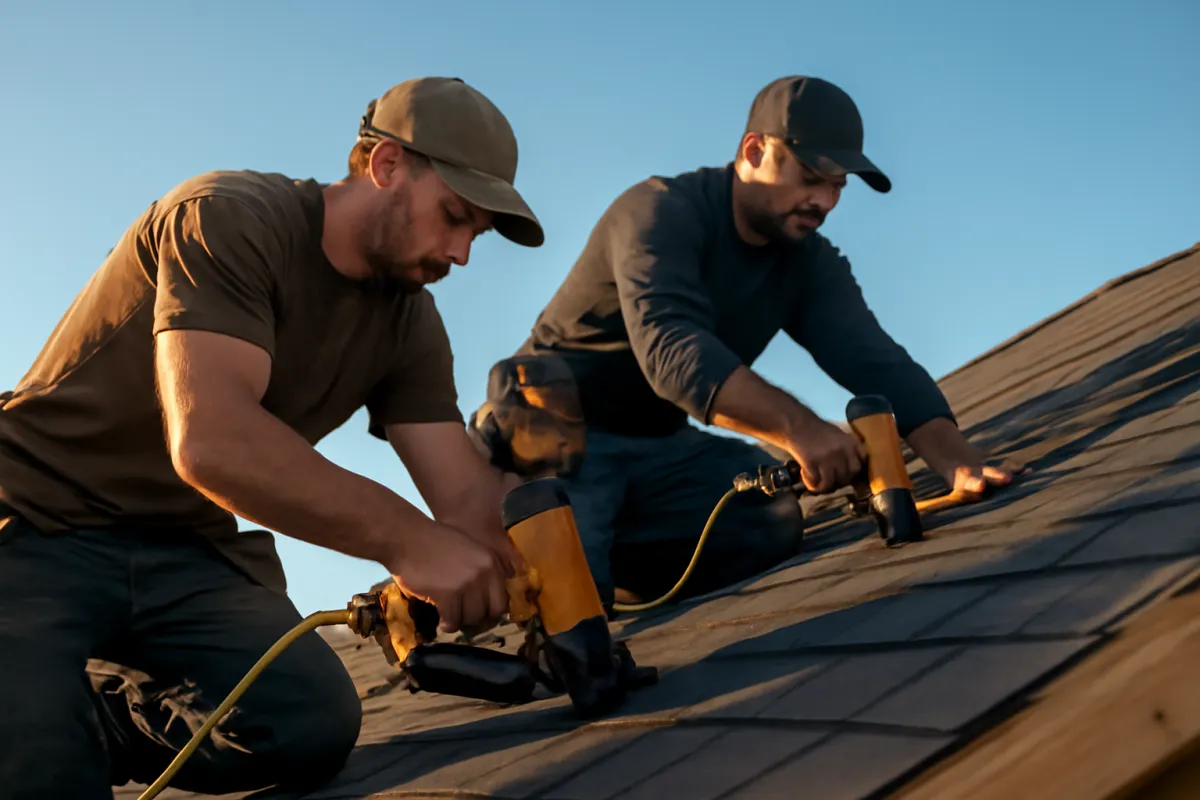
What's on this page
- The roofing square is how pros price a roof
- The headline ranges: illustrative cost by size and material
- Asphalt shingle roof replacement cost
- Average roof replacement cost by home size
- Cost per square and per square foot by material
- The material tiers, from asphalt to slate
- What actually drives a roof’s price
- Tear-off versus overlay
- The decking and underlayment surprise
- Where a roof-replacement cost goes
- Permits, disposal, and the costs around the roof
- Estimating your roof size before anyone visits
- Signs you need a full replacement versus a repair
- Asphalt versus metal: cheaper now versus lasts longer
- Insurance and storm-damage claims
- How to get and compare roofing quotes
- Warranties and what they actually cover
- Seasonal pricing and timing your roof
- A worked example: one 2,000 sq ft roof, asphalt versus metal
- Common roof-replacement mistakes
- The bottom line
Short answer: An asphalt shingle roof replacement commonly runs about $450 to $700 per square installed, illustratively, where one square is 100 square feet, so a straightforward job on a typical home lands roughly $8,000 to $15,000. Metal, tile and slate can run two to four times that. Pitch, complexity, tear-off layers and decking repair move the number more than most homeowners expect, and hidden decking rot is the common mid-job surprise.
Asphalt shingle roof replacement cost is the number most homeowners are really asking about, since asphalt covers the majority of American houses, and it is also the number you will hear quoted thousands of dollars apart, all of it delivered with total confidence, because a roof is not one product at one price. It is a system, sized in a unit most homeowners have never heard of, priced by a material menu that runs from budget asphalt to century-lasting slate, and shadowed by problems no one can see until the old roof comes off. A modest asphalt job can cost about what a decent used car does, while the same house in tile or slate can rival a small kitchen remodel, and neither figure is wrong. What separates them is roof size, pitch, complexity, the material you choose, and whether the wood underneath turns out to be sound.
This cost file prices the job the way a roofer actually thinks about it: in squares, by material, with tear-off and decking and labor named honestly rather than buried in a single headline number. It covers the asphalt shingle cost most homeowners need first, then average roof replacement costs by home size, then the premium tiers for anyone weighing metal or tile. Our earlier contractor cost file laid out how any trade price is assembled from labor, materials, overhead, and profit, and this one applies that anatomy to a roof, where the hidden-condition risk is higher than on almost any other home job. When you are ready to weigh the bids you gather, our quote-comparison manual is the sibling to keep open. Sketch your own roof in the job cost estimator as you read, and the ranges below turn into numbers you can plan around.
Key takeaways
- Roofers price in squares: one square equals 100 square feet of roof surface, and a mid-grade asphalt job commonly runs about $450 to $700 per square installed, illustratively.
- A straightforward asphalt replacement on a typical home lands roughly $8,000 to $15,000; metal, tile, and slate can run two to four times that.
- Material choice is the biggest lever, but pitch, complexity, tear-off layers, and decking repair move the number more than most homeowners expect.
- Tear-off costs more today than an overlay but lets the crew inspect and fix the decking, the wood layer whose hidden rot is the most common mid-job surprise.
- Cheaper-now versus lasts-longer is the real material decision: asphalt is cheapest to install, metal and tile cost far more but can outlast two or three asphalt roofs.
The roofing square is how pros price a roof
Before any number makes sense, you need the unit roofers actually use, because it is not the square foot most people reach for. A roofing square is 100 square feet of roof surface, and it is the currency the whole trade runs on: shingles are packaged and sold by it, underlayment is measured in it, and labor is often estimated per square. When a roofer glances at a house and says “that is about a twenty-five square roof,” they have just told a fellow tradesperson almost everything they need to price it.
The reason the square matters to you is that it is roof surface, not floor area, and the two are never the same on a pitched roof. A house with a 2,000-square-foot footprint does not have 2,000 square feet of roof, because the roof planes tilt, and a tilted plane covering a given footprint is larger than the flat ground beneath it. Depending on how steep the roof is, that 2,000-square-foot footprint might be 22, 25, or 28 squares of actual surface once the pitch is counted, and every one of those squares costs money to cover.
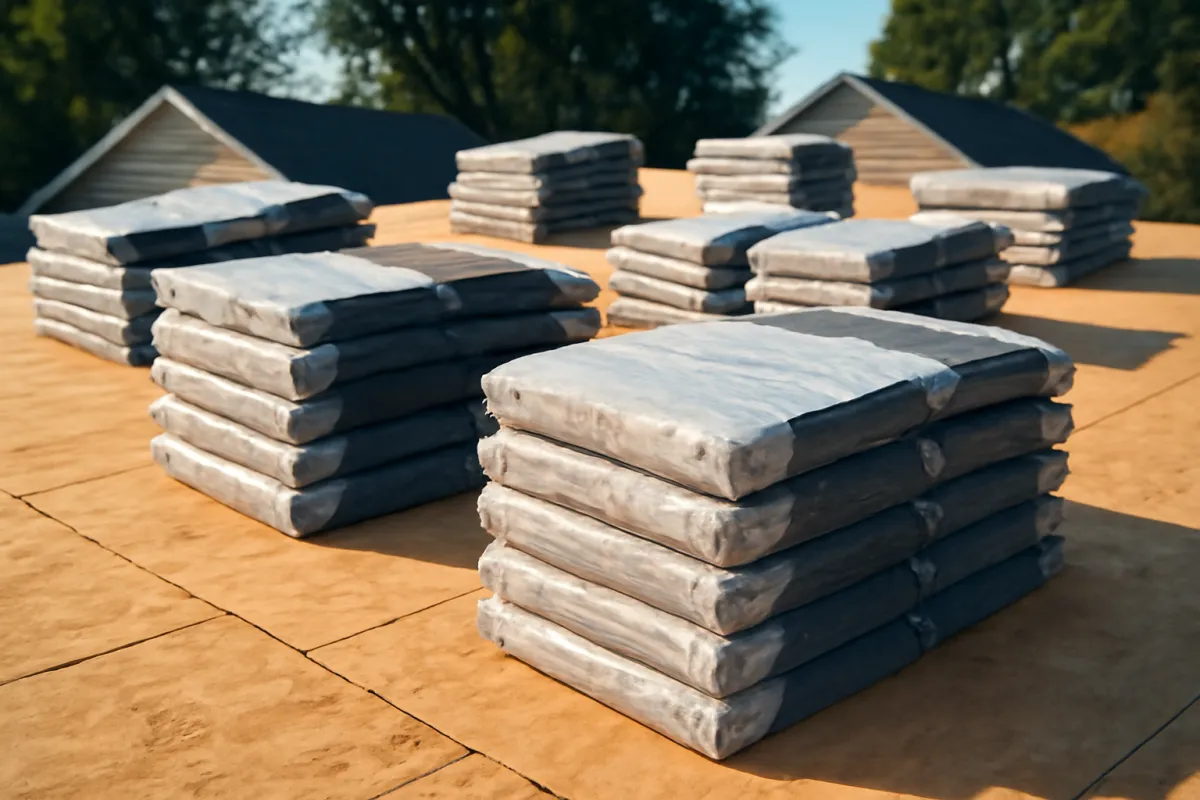
The practical payoff is that once you can think in squares, a quote stops being a mystery. A roofer who tells you the square count, the pitch, and the material has given you the three numbers that build the price, and you can hold their per-square figure against the illustrative bands below. Anyone who quotes a flat total without ever naming a square count has skipped the step that makes the number checkable, which is worth noticing before you sign.
The headline ranges: illustrative cost by size and material
With the unit in hand, the headline is simple to state and easy to misuse. As an illustrative guide, a straightforward asphalt-shingle replacement on a typical single-family home commonly lands somewhere around $8,000 to $15,000, with small simple roofs below that band and large or complex ones above it. That range assumes a full tear-off, a mid-grade architectural shingle, and decking that turns out to be mostly sound. Change the material and the whole picture shifts, because material is the single biggest lever on a roof’s price.
The chart below prices one illustrative 2,000-square-foot roof across four common materials so you can see the spread at a glance. The bars hold the roof size constant and vary only the material, which is the cleanest way to feel how much the choice of covering moves the number. Every figure is illustration, not a quote, and a real roof adjusts for pitch, complexity, tear-off, and region on top of the material.
Illustrative roof-replacement cost by material (2,000 sq ft roof)
One roof surface, four coverings, full tear-off, decking assumed sound. Every roof and market differs.
Illustrative installed totals for the same 2,000-square-foot roof. Steeper pitch, more valleys and penetrations, extra tear-off layers, and decking repair push every bar higher; slate would sit off the top of this chart.
Read those bars as the shape of the decision, not as your quote. The gap between asphalt and tile is not a rounding difference, it is a fork in the road that changes what the rest of the roof costs and how long it lasts. Anchor on the material band that fits your budget and your plans for the home, then use the sections that follow to adjust for the things the chart holds still. The estimator lets you set your own roof size, pitch, and material instead of a single blended average.
Asphalt shingle roof replacement cost
Asphalt shingle roof replacement cost deserves its own section because asphalt is what most houses wear, and the cost of asphalt roof replacement is the figure the rest of the material menu gets measured against. As an illustrative guide, a full asphalt tear-off and replacement on a typical single-family home lands around $8,000 to $15,000, priced per roofing square rather than per house. Standard 3-tab shingles commonly run about $350 to $500 per square installed, and mid-grade architectural shingles about $450 to $700 per square, which works out to roughly $3.50 to $5.00 and $4.50 to $7.00 per square foot of roof surface.
The two shingle grades are the first real decision inside the asphalt tier. 3-tab shingles are flat, single-layer, and the cheapest thing a licensed roofer will put on a house, commonly rated around 15 to 20 years. Architectural shingles, also called dimensional or laminated, bond two layers together so the tabs cast shadow lines, weigh more per square, resist wind better, and commonly last roughly 25 to 30 years. The step up costs a modest amount per square, on the order of $100 to $200 in these illustrative bands, which is why architectural has become the default on most replacements: it buys close to a decade of extra life for a single-digit percentage of the total job.
What sits inside a per-square asphalt price matters as much as the number. A complete quote at $450 to $700 per square normally includes the tear-off of one existing layer, disposal of the debris, new underlayment, drip edge, flashing and pipe boots, ridge venting, the fasteners, the labor, and the permit. Strip any of those out and the per-square figure falls without the job getting cheaper in any real sense. A second old layer to remove, a steep pitch, a roof full of valleys and dormers, or an upgrade to an impact-rated or designer shingle all push the same house toward the top of the band or past it.
Two comparisons keep the asphalt number honest. First, decking repair sits on top of every asphalt price here, because no one can see the wood until the old roof is off. Second, if you are weighing whether to spend more once instead of less twice, our metal roof cost file prices the durable alternative on the same per-square basis, so the two sit side by side rather than in different units. Sketch your own square count in the job cost estimator, pick the shingle grade, and the band above prices itself around your roof.
Average roof replacement cost by home size
Average roof replacement costs are usually quoted against home size, and that framing is useful as long as you remember what it hides: roofers price roof surface, not floor area. The chart below converts common home footprints into an illustrative architectural-asphalt total, assuming a medium pitch, a full tear-off of one layer, and sound decking. It is the same arithmetic used throughout this cost file, footprint times a pitch multiplier, divided by 100 for squares, multiplied by a per-square rate.
Illustrative average roof replacement cost by home footprint
Architectural asphalt shingles, medium pitch, full tear-off of one layer, decking assumed sound. Bars show the midpoint of each range.
Footprints, not total floor area. Around each midpoint sits a range: roughly $6,000 to $9,000 at 1,000 sq ft, $8,500 to $13,000 at 1,500, $11,000 to $17,500 at 2,000, $14,000 to $22,000 at 2,500, and $17,000 to $26,000 at 3,000. Metal or tile multiplies every bar.
The two-story correction is where most home-size averages go wrong. A 2,000-square-foot two-story house often sits on a footprint closer to 1,000 square feet, so it needs roughly half the roof of a 2,000-square-foot ranch and belongs on the first bar rather than the third. Read the chart by footprint, the ground area the roof actually covers, and a typical cost for roof replacement stops drifting by thousands depending on how the house was measured. Steepness moves the same footprint too: a low-slope roof adds about 5 percent to the footprint, a medium pitch 20 to 25 percent, and a steep roof 40 percent or more.
Three adjustments turn an average into your number. Complexity raises the per-square rate, because valleys, dormers, skylights, and chimneys mean cutting and flashing that a plain gable never demands. Tear-off layers add labor and disposal for every extra layer stripped. Material multiplies everything, since standing-seam metal or tile can run two to four times the asphalt bar. Once you have a working range, our checklist on how to hire a roofing contractor covers verifying the crew who will quote against it, and the estimator lets you set your own footprint, pitch, material, and layer count instead of reading an average built on someone else’s house.
Cost per square and per square foot by material
The portable way to carry a roof budget is per square, because it is the number that travels between roofs of different sizes. As an illustrative guide, standard 3-tab asphalt runs roughly $350 to $500 per square installed, mid-grade architectural shingles about $450 to $700, standing-seam metal often $1,000 to $1,600, and tile frequently $1,000 to $2,000 or more, with slate higher still. Divide by 100 and you have the per-square-foot version: architectural asphalt at, say, $5.50 per square foot of roof surface, metal at $12, and so on.
Per-square-foot is the figure most useful for comparing two bids on the same roof, because it strips out size and shows what each roofer is charging to cover a unit of your specific surface. If one bid works out to $5 per square foot and another to $8 for the same material and the same square count, that gap is a real question to ask, not noise. It usually points to a difference in the shingle grade, the underlayment, the tear-off assumption, or how much of the decking-repair risk each roofer has priced in.
What the per-foot number cannot show is the character of the roof, and that is its limit. A simple gable roof and a cut-up roof of the same surface area, full of valleys, dormers, hips, and penetrations, do not cost the same per foot, because the complicated one takes far more cutting, flashing, and careful labor per square. Use per-square and per-square-foot to sanity-check bids on your own roof, then read the scope, because two roofs with the same footage can still be very different jobs.
The material tiers, from asphalt to slate
Roofing materials sort into rough tiers, and each buys a different balance of up-front cost, lifespan, and weight. Standard 3-tab asphalt shingles are the budget floor: cheapest to buy and install, lightest, and the shortest-lived, commonly lasting around 15 to 20 years. They are the default for a reason, but they are also the tier a low bid leans on. Architectural (dimensional) shingles are the mid-grade workhorse most replacements use now, costing modestly more than 3-tab, lasting roughly 25 to 30 years, and looking substantially better because the layered tabs cast shadow lines.
Standing-seam metal is the step up in both price and lifespan: two to three times the cost of asphalt, but commonly lasting 40 to 70 years, shedding snow and resisting fire, and often qualifying for insurance or energy considerations in some regions. Clay and concrete tile and natural slate are the premium tier, beautiful and extraordinarily long-lived, with tile lasting 50 years or more and slate sometimes a century, but they are the most expensive to buy, the slowest to install, and heavy enough that the structure sometimes needs reinforcing to carry them.
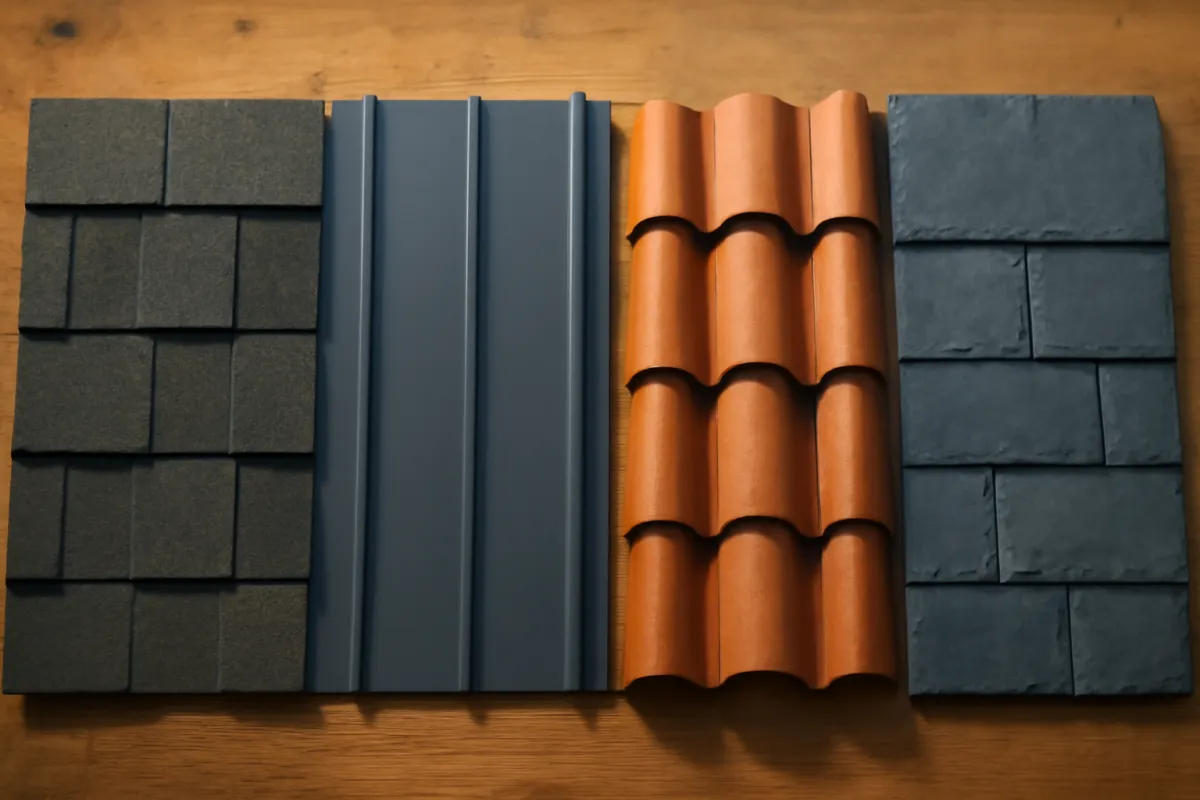
The tier decision is really a decision about time horizon and weight, not just taste. If you plan to sell soon, architectural asphalt gives the best look for the money and the buyer inherits the shorter clock. If this is your long-term home, metal or tile can be the better lifetime value despite the sticker shock, provided the structure can carry the weight and the budget can absorb the up-front cost. The estimator treats material as its own field so you can see the tier swing directly.
What actually drives a roof’s price
Beyond material, a handful of levers set the total, and knowing their order of impact is most of the budgeting battle. First is roof size in squares, which scales the whole job. Second is pitch, or steepness: a steep roof is slower and more dangerous to work on, sometimes needs extra fall protection and staging, and has more surface per footprint, so it costs more on both counts. Third is complexity: valleys, hips, dormers, skylights, chimneys, and vents each mean cutting, flashing, and detail work that a plain gable never demands.
Fourth is tear-off layers, because stripping two old layers of shingles is more labor and more disposal than stripping one. Fifth is decking condition, the wildcard that no one can price until the roof is open, since rotted or soft sheathing must be replaced before new roofing goes on. Sixth is material, already covered, and seventh is region and season, the local labor market and time of year that shift the same job’s price across town lines and across the calendar. Our contractor cost file walks through how labor rates set the floor under all of this.
The practical takeaway is to price those levers in order rather than fixating on the material aisle. Fix the square count, then account for pitch and complexity, then the number of tear-off layers, then hold a cushion for decking, and only then compare material grades. A homeowner who starts by shopping shingle brands has anchored on one lever while the ones that more often blow a budget, complexity and decking, go unexamined. The estimator lets you turn the size and pitch dials so the biggest levers move first.
Tear-off versus overlay
One early decision quietly shapes both the price and the value of the job: tear off the old roof, or lay the new one over it. An overlay, also called a re-cover, leaves the existing shingles in place and installs new ones on top. It skips the labor of stripping the old roof and the cost of hauling it away, so the up-front number is genuinely lower, which is exactly why a cheap bid is often an overlay bid whether or not the word appears on the page.
The savings come with real strings. Most building codes allow only two total layers of asphalt shingles, so an overlay is a one-time move and forecloses the option next time. More importantly, laying new shingles over old ones hides the decking, which means any rot or soft sheathing stays buried and undiscovered until it fails. The added weight stresses the structure, the new shingles telegraph the bumps and worn spots of the old ones, and they often wear faster for lying over an uneven, hotter surface. Some manufacturers and warranties will not honor an overlay at all.
A full tear-off costs more today because you pay for the stripping labor and the disposal, but it is usually the better value across the life of the roof. It lets the crew see and repair the decking, install fresh underlayment on a clean surface, start the new roof’s clock honestly, and deliver the full expected lifespan the material is rated for. When a low bid and a higher bid seem far apart, the tear-off-versus-overlay line is one of the first places the gap is hiding, and it is worth making every roofer state which one they quoted.
The decking and underlayment surprise
If a roof replacement is going to blow past its estimate, the decking is the usual culprit, and it deserves its own place in your budget before the job even starts. The decking, or sheathing, is the layer of wood, plywood on newer homes and plank boards on older ones, that everything else is fastened to. On top of it goes the underlayment, a water-resistant barrier beneath the shingles, and then the roofing itself. The decking is completely hidden until the old roof comes off, which is what makes it the classic mid-job surprise.
Here is how the surprise happens. If the old roof has been leaking, even slowly, water reaches the decking and some of it rots, delaminates, or goes soft and spongy. That wood cannot hold nails or support new roofing, so it has to be replaced before the crew can go on, and there is no way to know how much is bad until the roof is stripped and the boards are in view. Careful roofers price this honestly by naming a per-sheet rate for plywood replacement in the quote, so if they find, say, six bad sheets, you know the add-on rate in advance rather than negotiating from the ladder.
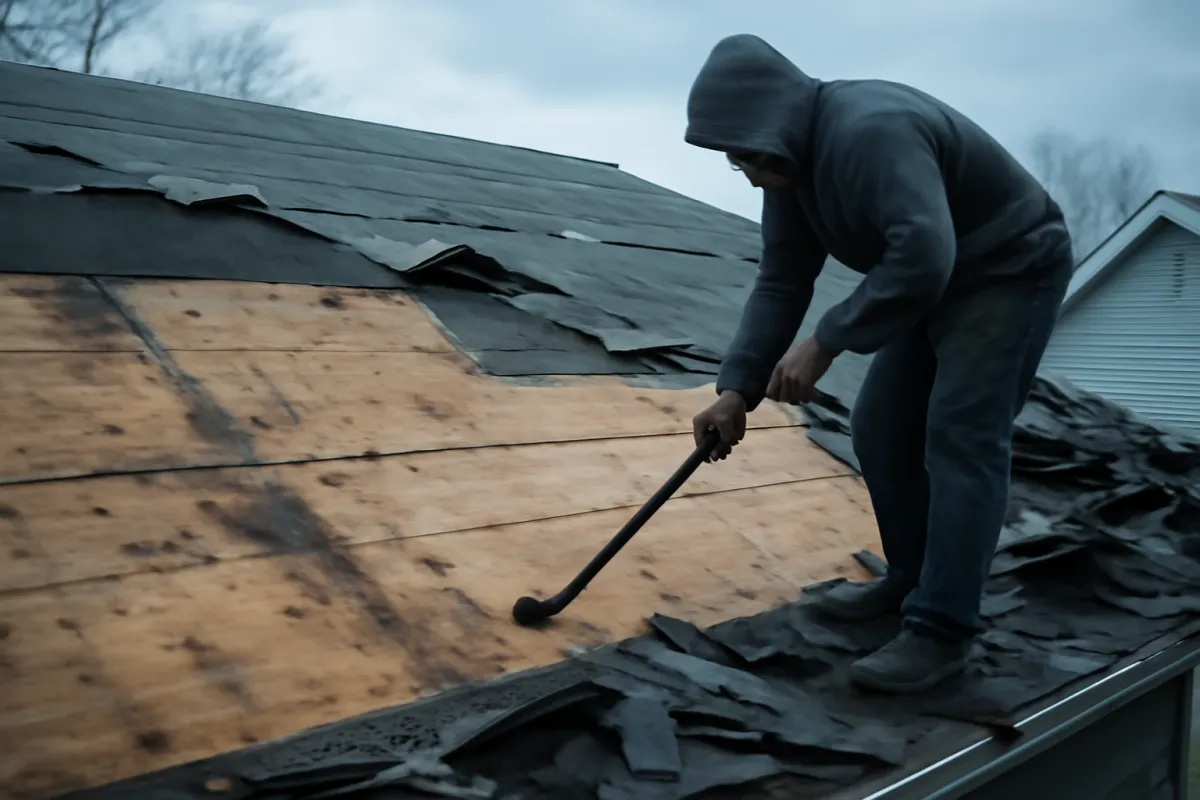
The defense is to expect it and fund it. Set aside a cushion, commonly 10 to 15 percent of the roof budget, specifically so that a few bad sheets are an inconvenience rather than a crisis, and read every quote for how decking repair is priced. A bid that is silent on decking is not cheaper, it is just quieter about a cost that may well arrive. The same discipline our quote-comparison manual teaches applies here: the number a roofer cannot yet see is the one you most want spelled out in writing.
Where a roof-replacement cost goes
Assemble the pieces and the shape of a roof budget comes into focus, and it splits more evenly between labor and materials than many homeowners guess. The proportions below are illustrative for a typical asphalt tear-off and replacement, with the material, the installation labor, and the tear-off, disposal, and permits shown as their own bands so you can see where the money actually lives.
Where a roof-replacement cost goes
Illustrative shares for a typical asphalt tear-off and replacement with sound decking.
Shares shift with material and roof: a metal or tile job tilts harder toward materials, while a steep, cut-up roof or extra tear-off layers grow the labor and tear-off bands. Decking repair, when found, is added on top of all three.
Two readings matter here. First, labor and the tear-off it includes are close to half the bill on an asphalt job, which is why your local labor market and the roof’s steepness and complexity move the price as much as the shingle choice does. Second, the material band grows with the tier: on a metal, tile, or slate roof the material slice swells and can become the largest band, because those coverings cost multiples of asphalt while the labor, though real, does not scale up as sharply. Budget from the whole bar, and remember that decking repair, when it appears, sits on top of every band rather than inside one.
Permits, disposal, and the costs around the roof
A roof replacement is not only shingles and labor, and the costs that ring the job are easy to forget until they show up on the invoice. Most jurisdictions require a permit to replace a roof, and the fee varies by location and by the value of the work, but it is a real line and a sign that the job will be inspected to code. A roofer pulling the permit is generally what you want, because it keeps the work on the record and the inspection on your side; a bid that skips the permit to look cheaper is trading a small saving for a code and resale headache later.
Disposal is the other reliable extra. Tearing off an old roof produces a startling amount of heavy debris, and it commonly leaves in a dumpster the roofer stages in the driveway, with the haul-away and dump fees folded into the price. Multiple old layers mean more tonnage and a higher disposal cost, which is part of why tear-off bids run above overlay bids. Reputable crews also budget time for cleanup, running a magnetic sweep for stray nails so your yard and driveway are safe afterward.
Beyond those, small accessory costs add up: new flashing around chimneys and walls, replacement of pipe boots and vents, ridge venting, drip edge, and the ice-and-water shield many climates require along eaves and valleys. None is huge alone, but together they are why a roof is quoted as a system rather than a pile of shingles. When you compare bids, check that these accessories are named rather than assumed, because a quote that leaves them off is not cheaper, it has just deferred the conversation.
Estimating your roof size before anyone visits
You do not need to climb a ladder to get a rough sense of your roof’s size, and a ballpark helps you read the first quote with open eyes. Start with your home’s footprint, the ground-floor area the roof covers, which you can approximate from the house dimensions or a property record. A single-story home’s footprint is close to its floor area; a two-story home’s roof covers only the footprint, roughly half the total floor area, which trips up many first estimates.
Then apply a pitch multiplier, because the roof surface is larger than the footprint by an amount that grows with steepness. As illustrative multipliers, a low-slope roof adds roughly 5 percent to the footprint, a common medium pitch adds around 20 to 25 percent, and a steep roof can add 40 percent or more. Multiply the footprint by the appropriate factor to estimate roof surface, then divide by 100 to get squares. A 2,000-square-foot footprint at a medium pitch works out to roughly 2,400 to 2,500 square feet of roof, or about 24 to 25 squares.
That estimate is a sanity-check tool, not a quote, and its whole value is catching a wildly off number early. If your rough math says 25 squares and a roofer quotes as though it were 40, that is a conversation worth having before anything else. The estimator builds this footprint-times-pitch step in, so you can turn your own footprint and steepness into a square count and an illustrative range in a few seconds, then carry that figure into every quote you gather.
Signs you need a full replacement versus a repair
Not every roof problem is a replacement, and spending replacement money on a roof that needs a repair, or patching a roof that is finished, are equally expensive mistakes in opposite directions. Lean toward a repair when the damage is localized and the roof is otherwise within its expected life: a handful of shingles blown off in a storm, a single leak traced to a flashing detail, or a cracked pipe boot are the kinds of problems a competent roofer can fix for a fraction of a full job.
Lean toward a full replacement when the signs are systemic rather than spot. Widespread curling, cupping, or blistering shingles; bald patches where the protective granules have worn away and are filling the gutters; multiple leaks or daylight visible from the attic; and a roof simply at or past its rated age all point the same direction. A roof near the end of its lifespan that has started to leak in several places is usually throwing good money after bad if patched, because the next leak is already forming somewhere you cannot see.
The honest middle ground is that some roofs are judgment calls, and that is exactly when a reputable inspection earns its keep. A trustworthy roofer will tell you when a repair still makes sense rather than reflexively selling a replacement, and a second opinion is cheap insurance when the recommendation is a five-figure job. Age, the pattern of the damage, and how long you plan to keep the home should all weigh on the call, and none of them should be rushed by a sales pitch.
Asphalt versus metal: cheaper now versus lasts longer
The most consequential material decision most homeowners face is asphalt versus metal, and it is really a decision about time. Asphalt wins decisively on up-front cost, illustratively landing an average home around $8,000 to $15,000 for architectural shingles. Metal costs two to three times that today, which is a real barrier and often the end of the conversation for a tight budget. On the day of the invoice, asphalt is the obvious value.
Stretch the horizon and the math shifts. Architectural asphalt commonly lasts 25 to 30 years, while standing-seam metal often lasts 40 to 70, which means that over a long ownership you might buy one metal roof where you would otherwise buy two, or nearly three, asphalt roofs. Add metal’s resistance to fire and wind, its snow-shedding, and the possibility of insurance or energy considerations in some regions, and the lifetime picture can favor metal even though the sticker does not. The premium is not paying for luxury so much as for time.
The decision, then, turns on how long you will own the home and whether the up-front cost fits now. If you expect to sell within a decade, asphalt’s lower cost and the fact that the buyer inherits the shorter clock usually make it the rational choice. If this is your forever home and the budget can absorb the premium, metal or tile can be the better lifetime value and the last roof you buy. Neither answer is universally right, which is why framing it as cheaper-now versus lasts-longer, rather than good versus bad, is the honest way to choose.
Insurance and storm-damage claims
A roof is one of the few home systems your insurance may help replace, and knowing when it does can be worth thousands. The general principle is that homeowners policies commonly cover sudden damage from a covered peril, such as hail, high wind, or a tree falling on the roof, and generally do not cover a roof that simply wore out from age and ordinary weather, which is treated as maintenance. Cause, not age, is usually the hinge the claim turns on.
When a storm is involved, the process rewards prompt, documented action. Photograph the damage with dates, keep any receipts for emergency tarping or repairs, and file the claim promptly, since many policies have time limits. Many homeowners have a reputable roofer inspect and document the damage before the insurance adjuster visits, so there is an independent record, though you should be wary of any contractor who promises to make the claim disappear or to waive your deductible, which can cross into territory your policy forbids. Coverage may be paid on a replacement-cost or a depreciated basis depending on the policy, which changes what lands in your pocket.
The honest caveat is that this is policy-specific and jurisdiction-specific, and nothing here should stand in for your own insurer’s answer. Read your declarations page for how roof claims are handled, ask directly whether damage from a given cause would be covered and on what basis, and understand your deductible before you assume a claim is worth filing. Insurance can turn a catastrophic roof into a deductible-sized event, but only for the causes your specific policy names, so confirm the details rather than counting on a general rule.
How to get and compare roofing quotes
Roofing quotes are easy to gather and easy to misread, because the shingles look similar on paper and the important differences hide in words like “tear-off,” “decking,” and “underlayment.” Start by getting at least three written quotes from licensed, insured roofers who each got onto or carefully measured the roof, since a roof’s cost rides on pitch, complexity, and condition that no phone or satellite estimate can fully judge. A number offered without anyone seeing the roof is a guess that will be revised once someone climbs up.
Then make every quote describe the same scope so the totals mean something. A trustworthy roofing bid should name the square count, the exact material and product line, whether the price includes a full tear-off or an overlay, how decking repair is priced if it is needed, the underlayment and flashing being used, the permit and disposal costs, and the warranty. Everything our quote-comparison manual teaches applies directly, because two roofing bids most often differ on the tear-off line, the decking allowance, and the material grade, not on the color you picked.
Finally, be suspicious of the outlier. A quote far under the others is rarely a bargain: it commonly means an overlay instead of a tear-off, a thinner shingle, a skipped ice-and-water shield, or decking repair quietly left out to be added later. Normalize every bid to the same scope, re-read the tear-off and decking lines, and hold the results against your own figure from the estimator. The honest bids tend to converge once they describe the same job, and the one that moves most when normalized is the one that had the most left unsaid.
Warranties and what they actually cover
A roof carries two different warranties, and confusing them is how homeowners end up surprised when a problem appears. The manufacturer’s warranty covers the roofing material itself against defects, and its length tracks the tier, from a couple of decades on basic shingles to lifetime-limited coverage on premium products. The catch is that a material warranty covers the shingle, not the installation, and it is often prorated so its value declines over the years, and it can be voided entirely by an overlay or by installation that does not follow the manufacturer’s specification.
The workmanship warranty is the roofer’s own promise to stand behind the installation, and in day-to-day terms it often matters more, because most roof problems are leaks at flashing, valleys, and penetrations, which are installation details rather than material defects. Workmanship coverage varies widely, from a token year or two to a decade or more, and it is only as good as the company still being in business when you need it. A long workmanship warranty from an established, insured roofer is worth real money; the same words from a company that may not exist next season are worth much less.
The practical move is to read both warranties before you sign and to weigh them as part of the price, not an afterthought. Ask what voids the manufacturer’s coverage, whether it is prorated, and what the workmanship warranty actually covers and for how long. A slightly higher bid from a roofer with a strong workmanship warranty and a track record can be the better value than a lower bid whose paper promises outlast the company making them, which is the same lesson about terms being prices too that runs through comparing any contractor’s bid.
Seasonal pricing and timing your roof
Roofing has a season, and where you land in it can move both the price and the wait. Late spring through early fall is peak demand in most climates, because the weather cooperates and homeowners schedule ahead of winter, so crews are busiest, calendars are fullest, and prices sit at their firmest. A roof that can wait for the shoulder season, late fall or late winter in milder regions, sometimes catches a slower crew and a more negotiable number, though the trade-off is a tighter weather window and less scheduling flexibility.
The counterweight is that a roof is not a project to defer past its usefulness for a modest seasonal discount. A roof that is actively leaking or has failed is doing damage every week it waits, to the decking, the insulation, and the rooms below, and that damage can dwarf any off-season saving. The seasonal-timing play is for a roof near the end of its life that you are replacing proactively, where you have the luxury of choosing when; it is not a reason to nurse a failing roof through another storm season.
If timing is flexible, the practical approach is to gather quotes in the off-peak window and ask directly whether scheduling in a slower month changes the price. Some roofers will move on the number to keep a crew busy; others hold firm regardless. Either way, the same rule applies as with every lever in this cost file: get the timing decision in writing as part of the scope, so a promised off-season rate does not quietly become a peak-season invoice by the time the crew arrives.
A worked example: one 2,000 sq ft roof, asphalt versus metal
Take one ordinary roof, a 2,000-square-foot footprint at a common medium pitch, and cost it two ways so the cheaper-now-versus-lasts-longer choice becomes concrete. Every figure is illustrative; the structure is the lesson. At a medium pitch, that footprint works out to roughly 25 squares of roof surface, and both jobs assume a full tear-off of one old layer with decking that turns out mostly sound.
Asphalt, about $13,000. Twenty-five squares of mid-grade architectural shingle at roughly $500 per square installed comes to about $12,500, with the tear-off, disposal, underlayment, flashing, and permit folded into that per-square price. Add a modest decking-repair cushion for a few bad sheets and the number lands near $13,000. The roof should last around 25 to 30 years, which means that over a 50-year horizon you would likely buy it roughly twice, so call it about $26,000 of roofing across that span, before inflation.
Metal, about $30,000. The same 25 squares in standing-seam metal at roughly $1,200 per square installed comes to about $30,000, reflecting the material’s higher cost and the more exacting installation. It should last 40 to 70 years, so across the same 50-year horizon you would likely buy it once. The up-front cost is more than double the asphalt job, but the lifetime cost is broadly comparable, and the metal roof spends those decades resisting wind and fire and shedding snow in ways the asphalt does not.
The lesson is in the horizon, not the sticker. On the day of the invoice, asphalt wins clearly and by a wide margin. Stretched across the life of the house, the two converge, and the tie is broken by how long you will own the home, whether the budget can carry the premium now, and how much you value the durability. Run your own footprint and pitch through the estimator, pick the material, and the same comparison prices itself around your roof instead of this illustrative one.
Common roof-replacement mistakes
The recurring failures, collected for prevention.
- Budgeting from floor area instead of roof surface. A pitched roof is larger than the footprint it covers; price in squares of actual surface, not the home’s square footage, or the estimate starts low.
- Taking the cheapest bid at face value. A quote far under the others usually means an overlay instead of a tear-off, a thinner shingle, or decking repair left out, not a genuine bargain.
- Choosing an overlay to save money. Skipping the tear-off hides the decking, adds weight, shortens the new roof’s life, and can void warranties; the up-front saving often costs more later.
- Not budgeting for decking repair. The wood under the roof is invisible until tear-off; set aside a cushion and make every quote name a per-sheet replacement rate.
- Ignoring pitch and complexity. Valleys, dormers, steepness, and penetrations drive labor as much as size does, so two roofs of equal area can cost very differently.
- Assuming insurance will pay. Policies commonly cover sudden storm damage, not age-related wear; confirm cause, coverage basis, and deductible with your own insurer before counting on a claim.
- Overlooking the workmanship warranty. Most leaks are installation details, not material defects, so the roofer’s own warranty and staying power often matter more than the shingle’s paper.
Each mistake is cheap to avoid before the job starts and expensive to fix once the shingles are on, which is the general shape of roofing wisdom: the leverage is in the scope and the inspection, decided before the first bundle is opened.
The bottom line
A roof costs what its size, its steepness, its material, and your local labor market say it costs, and the honest way to price it is in squares rather than guesses. Illustratively, a straightforward asphalt replacement on a typical home lands around $8,000 to $15,000, roughly $450 to $700 per square for mid-grade architectural shingles, while metal, tile, and slate climb to multiples of that in exchange for decades more life. Material is the biggest single lever, but pitch, complexity, tear-off layers, and the decking hiding under the old roof move the number more than most homeowners expect, and none of them show up in a shingle brochure.
Then buy the work like a professional: get at least three written quotes from licensed, insured roofers who saw the roof, make every bid describe the same scope down to the tear-off, decking, underlayment, permits, and warranty, and hold a cushion for the decking no one can see yet. Choose the material by your time horizon, cheaper-now asphalt if you will sell soon, lasts-longer metal or tile if this is home for the long run, and let the season and the warranty terms weigh on the decision rather than the sticker alone. The homeowners who come out of a roof replacement satisfied are not the ones who found the lowest number; they are the ones who understood that a roof is a system priced by the square, insisted on a tear-off and an inspection, and never let a cheap bid quietly skip the parts that disappear under the shingles. That is the whole recipe, and none of it requires luck.
This cost file exists to explain how roof-replacement prices are built, not to price your specific roof, and nothing in it replaces a written estimate from a licensed, insured roofing contractor who has inspected your roof in person. Every dollar figure, per-square rate, and lifespan above is illustration only: your real cost shifts with your roof size and pitch, its complexity, the number of old layers to remove, the hidden condition of the decking, the material you choose, local labor rates, and the season. Insurance coverage for roof damage is entirely policy-specific and is described here in general terms only, so confirm what your own policy covers, on what basis, and with what deductible before relying on a claim. Gather several detailed written quotes on the same scope, verify licensing and insurance, read both the material and workmanship warranties, and treat any bid far below the others as a question to ask rather than a bargain to grab.
Frequently asked questions
How much does it cost to replace a roof?
The honest answer is set by two things far more than any national average: how much roof there is and what you cover it with. As an illustrative guide, a straightforward asphalt-shingle replacement on a typical single-family home commonly lands somewhere around $8,000 to $15,000, while the same house in metal, tile, or slate can run two to four times that. Roofers price in squares, where one square equals 100 square feet of roof surface, and a common mid-grade architectural shingle job runs roughly $450 to $700 per square installed. Treat every figure here as a starting range, because your real price shifts with your roof size, its pitch and complexity, how many old layers must come off, whether the decking underneath is sound, and your local labor market.
What is a roofing square and why does it matter?
A roofing square is the unit professionals price and order in, and it equals 100 square feet of actual roof surface, not floor area. A roof that covers a 2,000-square-foot footprint is usually more than 2,000 square feet of surface once pitch is counted, so it might be 22 to 28 squares rather than 20. Materials are sold and quoted by the square, and labor is often estimated per square too, which is why a roofer who has walked or measured your roof can price it quickly once they know the square count, the pitch, and the material. Knowing the term lets you read a quote in the same language the roofer wrote it in, and lets you sanity-check a per-square price against the illustrative bands in this cost file.
How much does a roof cost per square foot?
Priced by the square foot of roof surface, a common mid-grade asphalt job illustratively runs about $4.50 to $7.00 per square foot installed, which is the same thing as roughly $450 to $700 per roofing square. Metal climbs to something like $10 to $16 per square foot in many markets, and premium tile or slate can run well past that. The per-square-foot number is useful for comparing bids on the same roof, but it hides real differences: a steep, cut-up roof with many valleys costs more per foot than a simple gable, and a roof that needs decking repair or multiple tear-off layers carries costs a clean per-foot figure never shows. Use per-square-foot as a sanity check, then read the quote line by line.
Is it cheaper to put a new roof over the old one?
Going over the existing shingles, called an overlay or a re-cover, skips the tear-off labor and disposal cost, so the up-front number is genuinely lower, illustratively saving a meaningful slice of the job. The catch is that most building codes allow only two total layers of asphalt shingles, an overlay hides the condition of the decking underneath so rot goes undiscovered, the added weight can stress the structure, and the new shingles lie over old bumps and often wear faster. Many roofers and manufacturers discourage overlays for those reasons, and some warranties will not cover them. A full tear-off costs more today but lets the crew inspect and repair the decking, start clean, and give you the full expected lifespan, which is usually the better value over the life of the roof.
What happens if the roofers find rotten decking?
This is the single most common mid-job surprise, and it is worth budgeting for before it happens. The decking is the wood layer, usually plywood or older plank boards, that the roof material is fastened to, and it stays hidden until the old roof comes off. If water has been getting past a failing roof, some of that decking may be rotted, delaminated, or soft, and it has to be replaced before new roofing goes on, because good shingles nailed to bad wood will not hold or last. Decking repair is commonly billed as an add-on, often per sheet of plywood plus labor, and because no one can see it until the tear-off, most careful quotes name a per-sheet rate for replacement rather than pretending the problem cannot exist. Set aside a cushion so a few bad sheets are an inconvenience, not a crisis.
Does homeowners insurance pay for a new roof?
Sometimes, and the deciding factor is usually cause rather than age. Homeowners policies commonly cover roof damage from a sudden, covered peril such as a hail storm, wind, or a fallen tree, and in that case the insurer may pay to repair or replace the damaged roof minus your deductible, sometimes on a depreciated basis depending on the policy. What insurance generally does not cover is a roof that simply wore out from age and normal weather, since that is considered maintenance, not a sudden loss. If you believe storm damage is involved, document it with photos and dates, file promptly, and consider having a reputable roofer inspect before the adjuster visits, but treat coverage as policy-specific and confirm the details with your own insurer rather than assuming.
How long does a new roof last, and which material lasts longest?
Lifespan tracks the material and is the heart of the cheaper-now-versus-lasts-longer decision. As broad illustrative figures, standard 3-tab asphalt shingles commonly last around 15 to 20 years, architectural shingles roughly 25 to 30, standing-seam metal often 40 to 70, and tile or slate can last 50 to 100 years or more, sometimes outliving the house's other systems. That is why a metal or tile roof that costs two to three times an asphalt one can still pencil out over decades: you may buy one metal roof where you would have bought two or three asphalt roofs. The trade-off is that the savings are spread across a very long horizon, so the right call depends on how long you plan to own the home and whether the higher up-front cost fits the budget now.
What is the asphalt shingle roof replacement cost per square?
Asphalt shingle roof replacement cost is quoted per roofing square, where one square covers 100 square feet of roof surface. As an illustrative guide, standard 3-tab shingles commonly run about $350 to $500 per square installed and mid-grade architectural shingles about $450 to $700 per square, which is roughly $3.50 to $5.00 and $4.50 to $7.00 per square foot of roof surface. Those per-square figures usually fold in the tear-off of one old layer, underlayment, flashing, disposal, and the permit, which is why a per-square number is only comparable between bids that assume the same scope. Multiply your square count by the band that matches the shingle grade you want, then hold a cushion on top for decking repair that nobody can price until the old roof is off.
What is the average roof replacement cost by home size?
Average roof replacement costs scale with roof surface rather than with the home's floor area, so home size is a starting point rather than an answer. Illustratively, a 1,000-square-foot footprint at a common medium pitch works out to roughly 12 to 13 squares and lands somewhere around $6,000 to $9,000 in architectural asphalt, a 2,000-square-foot footprint to about 25 squares and roughly $11,000 to $17,500, and a 3,000-square-foot footprint to about 37 squares and roughly $17,000 to $26,000. A two-story home is the common trap, because a 2,000-square-foot two-story house often sits on a footprint near 1,000 square feet and needs far less roof than its floor area suggests. Steeper pitch, more valleys and dormers, extra tear-off layers, and a premium material all push a given home size above these bands.
What is a typical cost for roof replacement on an average home?
A typical cost for roof replacement on an average single-family home with architectural asphalt shingles illustratively lands in the $8,000 to $15,000 band, with small simple roofs below it and large or cut-up roofs above it. That figure assumes a full tear-off of one existing layer, a mid-grade shingle, and decking that turns out to be mostly sound once the old roof comes off. The same house covered in standing-seam metal, tile, or slate commonly runs two to four times that, which is why the material choice moves the total more than any other single decision. Treat the band as a planning anchor rather than a quote, and replace it with real numbers as soon as licensed, insured roofers have measured your roof and priced the same written scope.
How do I compare roofing quotes fairly?
Get at least three written quotes from licensed, insured roofers who each climbed onto or carefully measured the roof, and make every bid describe the same scope so the totals are comparable. The bid should name the square count, the exact material and product line, whether the price includes a full tear-off, how decking repair is priced if it is needed, the underlayment and flashing being used, permit and disposal costs, and the warranty. Everything our quote-comparison manual teaches applies directly here, because two roofing bids most often differ on the tear-off line, the decking-repair allowance, and the material grade, not on the color. A quote far below the others is usually not a bargain: it commonly means an overlay instead of a tear-off, a thinner shingle, a skipped underlayment upgrade, or decking repair quietly left out.
How do I calculate roofing cost using square footage and a free calculator?
The estimator embedded in this cost file does the arithmetic for you, and the same math works with a calculator app and your own numbers. Start with your home's footprint in square feet, the ground-floor area the roof covers. Multiply by a pitch factor, illustratively about 1.05 for a low slope, 1.20 to 1.25 for a common medium pitch, and 1.40 or more for a steep roof, to estimate the roof's actual surface. Divide that surface by 100 to get roofing squares, then multiply by the per-square rate band for the material grade you want. A 2,000-square-foot footprint at a medium pitch works out to roughly 24 to 25 squares, which at $450 to $700 per square for architectural shingles lands near $11,000 to $17,500, matching the range in the chart above. Treat the result as a planning figure to hold against a written quote, not a substitute for one.