What's on this page
- What a water heater repair usually involves
- Reading the symptom before calling anyone
- The leak that ends the conversation
- What common repairs cost
- What a repair bill is made of
- Repair or replace: making the call
- What is reasonable to do yourself
- What belongs with a licensed professional
- Getting and comparing repair quotes
- Reading the estimate
- Emergency against scheduled work
- Maintenance that prevents most repairs
- A worked example
- Electric unit failures in detail
- Gas unit failures in detail
- Tankless repairs work differently
- Hard water and why it drives repair frequency
- Warranty, and what it usually excludes
- When the problem is sizing rather than a fault
- Where the unit sits, and why it changes the bill
- Documenting the problem before the visit
- Common mistakes that make repairs cost more
- What to expect on the day
- The bottom line
Short answer: Most common water heater repairs fall in an illustrative range of roughly $150 to $600 including parts and labour: a thermocouple near $215, a thermostat near $225, a relief valve near $250, an electric element near $275 and a gas control valve near $450, against roughly $1,800 for a full replacement. A leaking tank body is not repairable; under about eight years usually repair, past ten to twelve usually replace.
Water heater repairs cover a fairly small set of failures, and most of them are far cheaper than the replacement that homeowners often assume is coming. A thermostat, a heating element, a thermocouple, or a relief valve can restore hot water for a fraction of what a new unit costs. The exception is a leaking tank, which is not a repair at all.
This walkthrough covers what each symptom usually points to, what the common fixes cost, which jobs are reasonable to attempt and which are not, and the point at which repairing an older tank stops making financial sense. Every figure below is illustrative and internally consistent for the worked examples, not a quote for your home.
Key takeaways
- Most common repairs fall in an illustrative range of roughly $150 to $600 including parts and labour.
- A leaking tank is not repairable; corrosion through the shell means replacement regardless of age.
- Age is the deciding variable: under about eight years usually repair, past ten to twelve usually replace.
- Sediment is behind a large share of noise and capacity complaints, and flushing is the cheapest preventive step.
- Gas control, venting, and electrical supply work belongs with a licensed professional, not a homeowner.
What a water heater repair usually involves
A storage tank water heater is a simple appliance: a lined steel tank, a heat source, a thermostat controlling it, a sacrificial anode rod protecting the lining, an inlet dip tube, and a temperature and pressure relief valve as a safety device. Nearly every repair involves one of those parts.
That simplicity is good news. When a water heater stops producing hot water, the cause is usually a component that costs a modest amount and can be swapped in a single visit rather than a failure of the appliance as a whole. The parts that fail most often are also the parts designed to be replaceable.
The failure that breaks this pattern is corrosion of the tank itself. The steel tank is protected by a glass lining and by the anode rod, which corrodes preferentially so the tank does not. When the anode is exhausted and not replaced, corrosion moves to the tank, and once it breaches the shell there is no repair. That is why anode replacement is the maintenance item with the largest effect on how long the unit lasts.
Our companion article on what it costs to replace a water heater covers the replacement side in detail, including code upgrades and disposal.
Reading the symptom before calling anyone
Being able to describe the symptom precisely is worth real money, because it shortens diagnosis and makes quotes comparable. The common presentations fall into a handful of categories.
No hot water at all. On electric units this usually points to a tripped breaker, a tripped high-limit reset, or a failed upper element. On gas units it typically means the pilot is out, the thermocouple has failed, or the gas control valve has failed.
Hot water runs out quickly. Usually sediment reducing effective tank volume, a failed lower element on an electric unit, or a broken dip tube. Occasionally the unit is simply undersized for how the household has changed.
Water is too hot or scalding. Usually a thermostat set too high or a thermostat that has failed closed. This one matters for safety as well as comfort, since scald risk rises sharply above about 120 degrees Fahrenheit.
Rust-coloured or smelly water. Discolouration can indicate tank corrosion or a depleted anode rod. A sulphur smell is often a reaction between the anode and bacteria in the water rather than a fault in the appliance, and it is sometimes resolved by changing anode type.
Popping, rumbling, or kettling noises. Almost always sediment. Water trapped under a sediment layer boils and forces its way through, producing the noise.
Water on the floor. The one symptom that changes the decision entirely, covered below.
The leak that ends the conversation
Not every leak means a new water heater, and the distinction is worth knowing before you accept a replacement quote.
Water at a threaded fitting, a union, or a supply connection is usually a connection problem and is generally repairable. Water discharging from the temperature and pressure relief valve may indicate a failed valve, or it may indicate excessive pressure or temperature in the system, which is a genuine safety signal worth investigating rather than simply capping. Water pooling in the drain pan from a condensate line on a high-efficiency unit may be a drainage issue rather than a tank fault.
Water seeping from the body of the tank itself is different. It means corrosion has perforated the shell. There is no patch, no weld, and no sealant that constitutes a repair on a pressurised domestic hot water tank, and any contractor proposing one is proposing something you should decline.
If the tank is leaking, the useful next steps are to shut off the cold water supply to the unit, cut power at the breaker or set a gas unit to its pilot or off position according to the manufacturer’s instructions, and arrange replacement. A slow seep can become a fast failure without much warning.
What common repairs cost
Illustrative repair costs against a full replacement
Illustrative mid-range figures including parts and labour for a standard, accessible tank unit. Regional rates vary widely. Not a quote.
The gap between the top bar and the rest is the whole argument for diagnosing before replacing. Most component failures cost well under a fifth of a replacement, which is why a replacement quote offered without a diagnosis deserves a second opinion.
Two things move these figures. Accessibility is the first: a unit in an open garage is quicker to work on than one in a tight attic or a crawl space, and labour reflects that. Timing is the second, since after-hours and weekend emergency rates typically carry a premium.
What a repair bill is made of
Illustrative composition of a routine repair bill
Illustrative split for a mid-range component replacement during normal working hours.
Because parts are often the smallest share, the price difference between two quotes usually reflects labour rates and call-out policy rather than component quality. Asking whether the diagnostic fee is credited against the work is one of the more useful questions you can ask on the phone.
Repair or replace: making the call
Three inputs settle most decisions.
Age. Find the manufacturer’s label and read the serial number, which usually encodes the build date. A tank under about eight years old is generally worth repairing. Past ten to twelve, a significant repair is money spent on an appliance near the end of its expected life.
The failure type. Components are repairable. A perforated tank is not. That single distinction overrides the others.
Repair cost against replacement. A common rule of thumb is that if a repair approaches half the cost of replacement on an older unit, replacement usually wins. On a young unit the same repair is straightforwardly worth doing.
There is a fourth consideration that is easy to overlook: whether you would change specification anyway. If the household has outgrown the tank, or you were considering a tankless unit, a failure is a natural decision point rather than a purely financial one. Our article on tankless water heater installation cost covers what that switch involves, which is usually more than swapping one box for another.
What is reasonable to do yourself
A confident homeowner can generally handle a short list safely, following the manufacturer’s printed instructions for the specific model.
Relighting a standing pilot on a gas unit, where the manufacturer provides a lighting procedure on the appliance itself. Resetting a tripped high-limit switch on an electric unit, though a switch that trips repeatedly is a symptom rather than a nuisance and needs diagnosis. Flushing sediment from the tank, which is the highest-value routine task. Testing the temperature and pressure relief valve by lifting the lever briefly and confirming it discharges and reseats. Adjusting the thermostat setting to a safer temperature.
Each of these is genuinely useful, and flushing in particular addresses the cause behind a meaningful share of noise and capacity complaints.
What belongs with a licensed professional
Anything involving the gas control valve, gas supply piping, or the burner assembly. Anything involving venting or flue, where an error can produce carbon monoxide. Anything involving the electrical supply or the wiring inside the junction box. Replacing heating elements, which requires draining the tank and working with high-voltage connections. Anode rod replacement, which is sometimes straightforward and sometimes requires breaking a seized fitting on a full tank. And any diagnosis you are not confident about.
Two further points are worth stating plainly. If you smell gas, do not troubleshoot: leave the building and call the gas utility from outside. And many jurisdictions require permits and licensed work for gas and electrical connections, with unpermitted work potentially affecting insurance and complicating a future sale.
Getting and comparing repair quotes
For a straightforward repair, one competent plumber is usually enough. For anything approaching replacement territory, more than one quote is worth the delay.
Useful questions before anyone visits: what the service call fee is and whether it is credited against the repair if you proceed; whether the quote covers parts and labour or parts only; what the warranty on the repair itself is; and whether they are licensed and insured for the work. Our guides on vetting a contractor, finding a good contractor, and comparing contractor quotes cover the process in general terms.
Be specific when you describe the symptom. “No hot water, electric unit, breaker is on, reset button clicked and it tripped again” leads to a faster and more accurate visit than “the water heater is broken”, and it makes two quotes genuinely comparable.
Reading the estimate
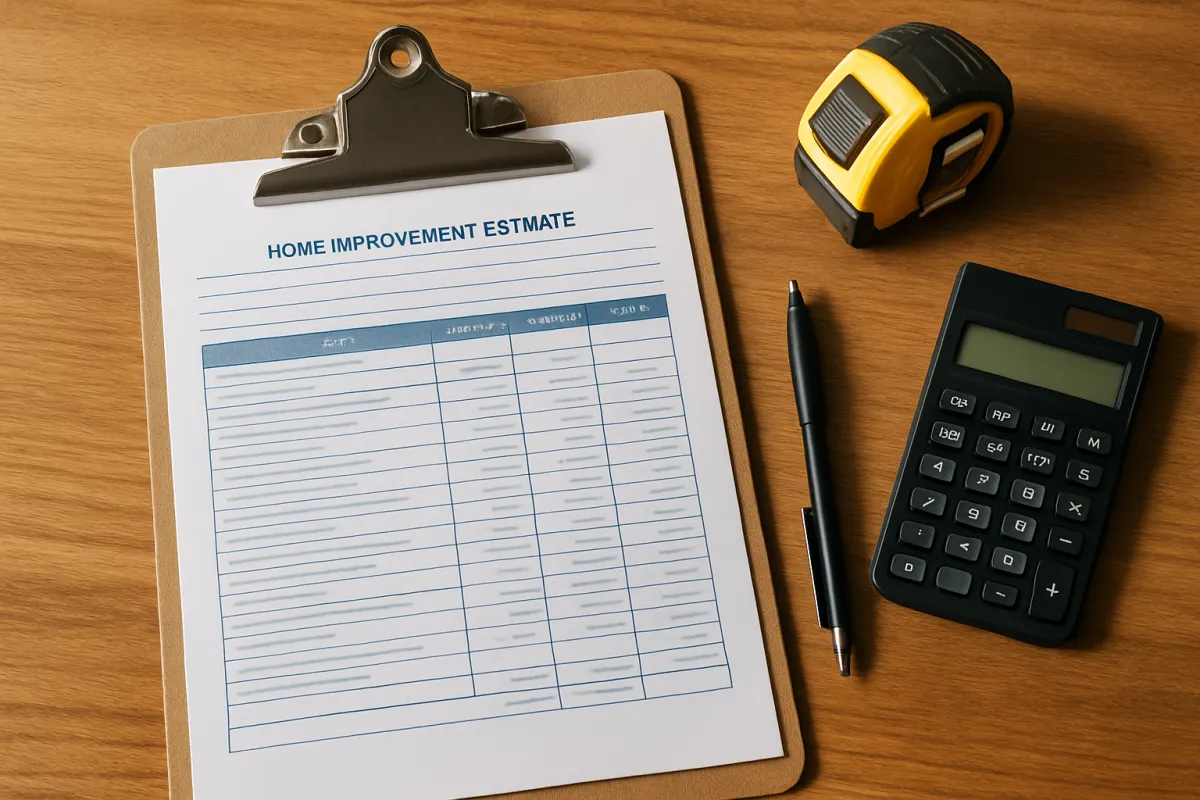
A useful repair estimate names the component being replaced, separates parts from labour, states the call-out fee and whether it is credited, and gives a warranty period on the work. If a replacement is being recommended instead, it should say why: age, a specific diagnosis, or a failure that cannot be repaired.
Be cautious with an estimate that jumps to replacement without a diagnosis, that bundles unrelated work into an urgent repair, or that pressures an immediate decision on a unit that is not actively leaking. Our article on reading a contractor estimate covers the general anatomy, and how to avoid contractor scams covers the pressure patterns worth recognising.
Emergency against scheduled work
Emergency call-outs cost more, and sometimes that is money well spent. An actively leaking tank, water near electrical connections, or a suspected gas issue are situations where waiting is the expensive option.
No hot water on a Saturday evening, with a dry floor and no gas smell, is usually not an emergency in the technical sense. It is uncomfortable, but paying an after-hours premium to restore hot water a day earlier is a choice rather than a necessity. Knowing which situation you are in prevents paying emergency rates for a scheduled problem.
If you do need to wait, shutting off the cold water supply to the unit limits the consequences of a leak developing overnight.
Maintenance that prevents most repairs
Flushing the tank periodically removes sediment, which addresses the noise complaints, protects capacity, and reduces stress on the burner or lower element. Frequency depends on water hardness, and annually is a common illustrative starting point.
Checking the anode rod every few years and replacing it when substantially depleted is the single item with the largest effect on tank life, because it is the part that determines whether corrosion attacks the rod or the tank.
Testing the relief valve annually confirms the safety device works. Keeping the thermostat at a sensible setting reduces both scald risk and standing energy loss. And keeping the area around the unit clear improves combustion air on gas units and makes service visits quicker.
Our HVAC maintenance guide covers the same preventive logic across other home systems, and HVAC repair costs offers a comparison point for how service pricing tends to be structured.
A worked example
An eight-year-old 50-gallon electric tank produces a small amount of hot water that runs out within a few minutes. The breaker is on and the reset has not tripped.
The symptom points to a failed lower heating element, with sediment as a secondary suspect. A plumber attends for a service call fee in the region of $90, diagnoses a failed lower element, and quotes roughly $275 including parts and labour, crediting the call fee against the work.
At eight years old with a repairable component failure, this is a straightforward repair. The alternative, an $1,800 replacement, would be spending roughly six and a half times as much on a tank that has years of expected service left. The plumber also notes heavy sediment and recommends a flush, which addresses the likely reason the element burned out.
Change one variable. If the same tank were thirteen years old, the same $275 repair on an appliance at the end of its service life is a poorer use of money, and the sensible conversation becomes about replacement specification rather than about the element.
Electric unit failures in detail
An electric storage heater has two thermostats and usually two heating elements, upper and lower, wired so they do not draw simultaneously. Understanding that arrangement explains most electric symptoms.
The upper thermostat carries a high-limit safety switch, often called the ECO, with a visible reset button. If water temperature exceeds a safe threshold, it cuts power. A single trip can follow a one-off event, but a switch that trips repeatedly is reporting a real fault, commonly a thermostat that has failed closed or an element that has partially shorted. Repeatedly resetting it without diagnosis defeats a safety device.
Element failure is the most common electric repair. A burned-out upper element usually produces no hot water at all, because the upper thermostat prioritises that element. A burned-out lower element usually produces a small quantity of hot water that runs out quickly, because only the upper portion of the tank is being heated. That difference is a useful self-diagnosis: how much hot water you get points to which element failed.
Elements fail more quickly in hard water and in tanks with heavy sediment, because scale accumulates on the element and causes it to overheat. This is why a plumber replacing an element often recommends a flush at the same time: fitting a new element into a tank full of sediment invites a repeat visit.
Element replacement requires isolating power at the breaker, draining the tank, and removing the old element, which can be seized in place after years of scale. It is a routine job for a professional and a genuinely risky one for an untrained homeowner, because the connections are high voltage and the tank must be refilled and purged of air before power is restored to avoid dry-firing the new element.
Gas unit failures in detail
A gas storage heater has a burner, a gas control valve with an integrated thermostat, a pilot or electronic ignition, a thermocouple or flame sensor, and a flue.
The thermocouple is the component that fails most often. It sits in the pilot flame and generates a small voltage that holds the gas valve open. When it degrades, the valve closes as designed and the pilot will not stay lit. This is a safety feature working correctly rather than a defect, and it is an inexpensive part.
A pilot that will not stay lit despite a new thermocouple often points to a draft problem, a blocked pilot orifice, or insufficient combustion air. Newer units frequently include a flammable vapour ignition resistant assembly with a sealed combustion chamber and a screen at the base, and a clogged screen restricts air and causes exactly this symptom. Cleaning it is straightforward for a professional and easy to overlook.
Gas control valve failure is the more expensive gas repair. The valve integrates the thermostat and the safety shutoff, and when it fails it is replaced as a unit rather than repaired.
Venting deserves particular attention because the risk is not just an appliance that does not work. A blocked, corroded, or improperly sloped flue can allow combustion products including carbon monoxide into the building. Any sign of soot, scorching around the draft hood, or a pilot that blows out repeatedly warrants professional inspection rather than another attempt at relighting. A working carbon monoxide alarm on the same level as a gas appliance is a reasonable precaution regardless.
Tankless repairs work differently
Tankless units fail in a different pattern, and the repair economics differ too.
Scale is the dominant issue. Because a tankless unit heats water rapidly through a compact heat exchanger, mineral deposits build there rather than in a tank, and scale reduces flow and efficiency before triggering error codes. Most manufacturers specify periodic descaling, and in hard water areas skipping it is the most common route to a service call.
Tankless units are also more diagnosable. They typically report numeric error codes, and the code narrows the fault quickly, which shortens diagnosis and makes quotes easier to compare. Ask for the code when you call.
Component costs are generally higher than tank equivalents, and some parts are manufacturer specific rather than generic, which can mean ordering rather than fitting on the first visit. Against that, tankless units often last considerably longer and their heat exchangers are frequently covered by long manufacturer warranties, so a well-maintained unit can be worth repairing at an age where a tank would be replaced.
The other difference is the failure mode. A tankless unit does not have a tank to corrode through, so the catastrophic leak that ends a storage heater’s life is not the same risk. Our guide to tankless installation cost covers the trade in more detail.
Hard water and why it drives repair frequency
If you are calling a plumber about the same appliance repeatedly, water chemistry is the most likely underlying cause.
Hard water carries dissolved calcium and magnesium. When heated, those minerals precipitate and settle, forming sediment in a tank and scale on elements and heat exchangers. The results are the noises, the reduced capacity, the shortened element life, and the accelerated tank corrosion described throughout this walkthrough.
Two responses are worth considering. Increasing flush frequency is the cheap one, and in a hard water area more than once a year can be justified. Treating the water is the structural one, and while a softener is a meaningful expense, it changes the failure rate of every water-using appliance in the house rather than just the heater.
The anode rod also depletes faster in aggressive water, which is why the inspection interval matters more in hard water areas. A rod checked every few years and replaced when spent is inexpensive; a tank replaced early because the rod was never checked is not.
If you do not know your water hardness, many utilities publish it, and inexpensive test strips are widely available. It is a useful number to know before deciding whether a recurring problem is bad luck or a pattern.
Warranty, and what it usually excludes
Before authorising a paid repair, find the model and serial number on the manufacturer’s label and check the warranty status. It takes a few minutes and occasionally saves the entire cost of a part.
Manufacturer warranties commonly cover the tank for a longer period than the components, with illustrative ranges often cited between six and twelve years on tanks and shorter on parts. The consistent limitation is that they typically cover the part alone and not the labour to diagnose and fit it, so a covered failure still produces a bill.
Coverage often depends on conditions people are unaware of: professional installation, correct venting and relief valve setup, sometimes evidence of maintenance, and in many cases registration of the unit after purchase. Warranties are also generally tied to the original purchaser and original installation address, which matters if you bought the house with the unit already fitted.
Home warranty or service contracts are separate products entirely, with their own deductibles, caps, exclusions, and usually a requirement to use an approved contractor. Calling your own plumber first can void a claim, so if you hold such a contract, check the process before you make the call.
When the problem is sizing rather than a fault
Sometimes nothing is broken. A tank that has always run out of hot water, or one that started running short after the household changed, may simply be undersized.
Storage capacity is only part of it. First-hour rating, which reflects how much hot water the unit can deliver in the first hour of heavy use, is often more relevant to how a household actually experiences hot water than tank volume alone. Recovery rate, how quickly the unit reheats, matters for back-to-back demand.
Household changes that produce this complaint include a new occupant, a switch to a higher-flow shower head, a new appliance drawing hot water, or simply teenagers. A plumber diagnosing “no fault found” on a unit that never quite keeps up is often correct.
The responses are to raise the thermostat modestly within safe limits, to stagger heavy demand, to increase capacity at the next replacement, or to consider a tankless unit where continuous supply matters more than stored volume. None of these is a repair, which is why recognising the situation prevents paying for one.
Where the unit sits, and why it changes the bill
Access is one of the least discussed inputs into a repair quote and one of the most consistent.
A unit in an open garage or basement with clearance on all sides is quick to work on. Draining, removing an element, or swapping a gas valve are all straightforward when there is room to stand.
A unit in a closet with a door narrower than the tank, in an attic with limited headroom, or in a crawl space changes the calculation. The same repair takes longer, may need a second person, and in some cases the tank cannot be removed at all without work on the surrounding structure. Attic installations add a further consideration: a leak there causes far more damage than one in a garage, which is why drain pans and properly routed drain lines matter more in that location.
Multi-storey and apartment installations can add access coordination, and shared walls or ceilings raise the stakes on any water escape.
None of this changes what is wrong with the appliance, but it does explain why two quotes for the same nominal repair can differ, and why a plumber may ask where the unit is before quoting anything. If you are describing the problem by phone, saying where the unit sits and how it is accessed will get you a more accurate number.
Documenting the problem before the visit
A short amount of preparation makes a repair visit faster, which on an hourly trade usually means cheaper.
Photograph the manufacturer’s label showing model and serial number, and have it ready. It identifies the unit, its age, its capacity, and its warranty position without anyone hunting behind the tank.
Note when the symptom started, whether it appeared suddenly or gradually, and whether anything changed around the same time, such as a power cut, plumbing work elsewhere, or a change in household demand. Gradual decline and sudden failure point in different directions.
Record any error codes on a tankless or electronically controlled unit, and note whether the reset has tripped and how often.
Check the obvious first so the visit does not begin there: the breaker on an electric unit, the gas supply valve on a gas unit, and whether other hot water outlets in the house behave the same way. A problem at one tap only is a fixture problem, not a water heater problem, and that is a distinction worth making before anyone charges for a call-out.
Finally, clear the space around the unit. It costs nothing and it is time you would otherwise be paying for.
Common mistakes that make repairs cost more
Repeatedly resetting a tripped high-limit switch without diagnosing why it tripped. The switch is a safety device reporting a fault, and overriding it can turn a thermostat replacement into a larger problem.
Ignoring noise. Rumbling is sediment, sediment shortens element life and accelerates corrosion, and a flush is inexpensive compared with the failures that sediment eventually causes.
Accepting a replacement quote without a diagnosis. The difference between a component repair and a new unit is large enough to justify a second opinion whenever the first visit jumps straight to replacement on a tank that is not leaking.
Skipping the anode rod. It is the least glamorous maintenance item and the one that most directly determines whether the tank reaches its expected service life.
Turning the thermostat up to compensate for running short. It raises scald risk and standing losses without addressing the cause, which is usually sediment, a failed element, or undersizing.
Buying a part online to save money and asking a plumber to fit it. Many firms decline, most will not warrant the part, and diagnosis by guesswork often means buying the wrong component.
Leaving a small leak. Water near gas burners or electrical connections is a hazard, and a seep from the tank body is a warning that the shell has been breached.
What to expect on the day
A routine repair visit follows a predictable shape, and knowing it helps you judge whether a visit is going well.
The plumber confirms the symptom, checks the obvious supply items, and reads the label. On an electric unit they will isolate power and test the thermostats and elements for continuity. On a gas unit they will observe the pilot and burner behaviour and check the thermocouple and venting. On a tankless unit they will read the error history.
Diagnosis on a straightforward fault is usually quick. If the component is a common one, most plumbers carry thermostats, elements, thermocouples, and relief valves on the van, and the repair happens in the same visit. A gas control valve or a manufacturer-specific tankless part may need ordering.
Expect the tank to be drained for element or anode work, which takes time proportional to tank size and drain access, and expect a refill and purge afterwards. Restoring power before the tank is full and purged risks destroying a new element immediately, so a plumber taking care over that sequence is doing the job properly rather than padding it.
Before they leave, ask what failed and why, whether anything else is near the end of its life, and what the warranty on the work is. The answer to the second question is what tells you whether you are looking at a repaired appliance or a sequence of visits.
The bottom line
Most water heater failures are component failures, and most component failures cost well under a fifth of a replacement. Diagnosing before replacing is where the savings are, which is why a replacement quote given without a diagnosis is worth a second opinion.
The exceptions are firm. A leaking tank means replacement. An old tank facing a significant repair usually means replacement. And gas, venting, and electrical work means a licensed professional regardless of how straightforward it looks.
Describe the symptom precisely, ask whether the diagnostic fee is credited, get the estimate itemised, and flush the tank once the hot water is back. That last step is the one most likely to keep you from reading this article again next year.
ProsNook is independent of the trades it covers and earns nothing from any contractor you contact, which is why this walkthrough can say plainly that a leaking tank is not repairable and that a replacement quote without a diagnosis deserves a second opinion. Everything above is general guidance rather than professional, safety, or code advice: every cost, range, and service life figure is a rounded illustration written to show the shape of the decision, not a quote, and real prices vary by region, by unit type, by access, and by local code requirements. Water heaters combine stored pressure with gas or high-voltage electricity; if you smell gas, leave and call your utility from outside. Confirm any repair or replacement scope in writing with a licensed, insured plumber who has inspected your actual unit, and check permit requirements with your local authority before work begins.
Frequently asked questions
How much do water heater repairs typically cost?
Most common water heater repairs fall into an illustrative range of roughly $150 to $600 including parts and labour, with the specific job driving the figure. Replacing a thermostat, thermocouple, or anode rod usually sits at the lower end, a heating element in the middle, and a gas control valve toward the top. Those figures generally include a service call or diagnostic fee, which many plumbers apply and some credit against the repair if you proceed. A full replacement is a different order of cost, commonly cited in illustrative ranges well above $1,000 depending on tank type, size, and code requirements. Prices vary considerably by region, by how accessible the unit is, and by whether the visit is scheduled or an emergency, so treat these as orientation rather than a quote.
Is it worth repairing a water heater or should I replace it?
The usual test combines age, repair cost, and failure type. A tank under about eight years old with a failed component is generally worth repairing, because the repair is a fraction of replacement and the tank has years left. A tank past roughly ten to twelve years facing a significant repair is usually better replaced, since you would be investing in an appliance near the end of its expected service life. The decisive factor is the failure itself: a leaking tank is not repairable and means replacement regardless of age, while thermostats, elements, valves, and thermocouples are all routine repairs. A common rule of thumb is that if the repair approaches half the replacement cost on an older unit, replacement is the better use of the money.
Why is there no hot water at all?
On an electric unit the most common causes are a tripped breaker, a tripped high-limit reset switch on the upper thermostat, or a failed upper heating element. On a gas unit the usual causes are a pilot light that has gone out, a failed thermocouple that shuts the gas valve as a safety measure, or a failed gas control valve. Some of the first checks are safe for a homeowner, including looking at the breaker and confirming the gas supply is on. Anything involving opening the gas control, testing components, or working inside the electrical panel is work for a licensed professional. If you smell gas at any point, do not troubleshoot: leave and call your gas utility from outside.
Why does my hot water run out so quickly?
Running out faster than it used to usually points to one of three things. Sediment buildup at the bottom of the tank reduces the volume available for hot water and insulates the burner or lower element from the water, which is common in hard water areas and is the main reason flushing is recommended. A failed lower heating element on an electric unit means only the upper element is working, which typically produces a small amount of hot water that runs out quickly. A failed dip tube can allow incoming cold water to mix at the top of the tank rather than being delivered to the bottom. Household demand growing over time is also a genuine explanation, in which case the unit may simply be undersized rather than faulty.
Can I repair a water heater myself?
Some tasks are reasonable for a confident homeowner, including relighting a standing pilot following the manufacturer's printed instructions, flushing sediment from the tank, testing the temperature and pressure relief valve, and resetting a tripped high-limit switch. Others should not be attempted without training: anything involving the gas control valve, gas supply piping, venting, or the electrical supply carries real risk of fire, carbon monoxide exposure, scalding, or electrocution. Water heaters combine water, gas or high-voltage electricity, and stored pressure, which is an unusually unforgiving combination. Many jurisdictions also require permits and licensed work for gas and electrical connections, and unpermitted work can affect insurance. When in doubt, the diagnostic fee is cheaper than the alternatives.
How long should a water heater last?
A conventional storage tank water heater is commonly cited as lasting somewhere in the range of eight to twelve years, with tankless units often quoted considerably longer. Actual service life depends heavily on water hardness, whether the anode rod has been replaced when depleted, whether the tank has been flushed periodically, and the quality of the original installation. A unit that has never been maintained in a hard water area can fail early, while a maintained unit in soft water can exceed the range. Checking the serial number on the manufacturer's label usually reveals the build date, which is worth knowing before you authorise a significant repair on a tank whose age you have been guessing at.
Is a leaking water heater an emergency?
It depends on where the leak is. Water coming from the tank itself generally means internal corrosion has breached the shell, which is not repairable and calls for replacement, and a breached tank can fail progressively or suddenly. Water at a fitting, union, or the temperature and pressure relief valve is often a repairable connection or valve issue rather than a failed tank. Either way, water near a gas burner or electrical connection is a hazard, and a substantial leak can cause significant property damage quickly. If water is actively escaping, shutting off the water supply to the unit and cutting power or gas to it are reasonable first steps, followed by a call to a licensed plumber.
Does a home warranty or manufacturer warranty cover water heater repairs?
Manufacturer warranties typically cover the tank and sometimes specific components for a defined period, commonly cited in illustrative ranges of six to twelve years for the tank and shorter for parts, but they usually cover the part alone rather than the labour to fit it. Coverage often depends on the unit having been installed by a licensed professional and, in some cases, on maintenance having been performed. Home warranty or service contracts are separate products with their own exclusions, deductibles, and rules about which contractor may perform the work. Before authorising a paid repair, it is worth locating the model and serial number, checking the manufacturer's warranty status, and reading what any service contract actually covers, since using an unapproved contractor can void a claim.