What's on this page
- What an electrical panel upgrade actually costs
- Like-for-like panel swap
- Upgrading to 200-amp service
- Upgrading to 400-amp service
- Subpanel installation
- Why a load calculation matters more than age or square footage
- Service entrance conductors and the meter base
- Utility coordination, the variable no flat number can predict
- Where the money goes on a 100-to-200-amp upgrade
- A worked example: a 1950s home preparing for an EV charger
- Permits, inspections, and why this is not optional
- Rebates, incentives, and why this file names no specific program
- Signs an older panel needs attention regardless of amperage
- Insurance and panel age
- How to compare electrical panel upgrade quotes
- Planning a panel upgrade around other projects
- What happens during the actual work
- The DIY boundary
- EV chargers and other large loads: sizing the upgrade correctly
- Common mistakes
- The bottom line
Short answer: Electrical panel upgrade cost commonly runs an illustrative $1,200 to $2,500 for a like-for-like swap at the same amperage, $2,000 to $4,500 to upgrade from 100 or 150 amp to 200 amp service, and $3,500 to $7,000 or more for 400 amp service. Whether your utility also has to upgrade the service drop or meter is the single factor most likely to push your real number above the panel-and-labor estimate alone.
Electrical panel upgrade cost is set first by which job you are actually doing, a simple swap, a full amperage increase, or a standalone subpanel, and second by whether the work stops at your panel or extends to the utility’s equipment feeding it. ProsNook prices this cost file the way a licensed electrician actually scopes the job: by amperage target, by what drives the price beyond the panel itself, and by the permit and utility coordination steps that a rushed quote sometimes skips. Price your own current and target amperage in the job cost estimator as you read, and treat every figure below as a planning range to check against your own load calculation rather than a quote.
Key takeaways
- Illustratively, a like-for-like panel swap commonly runs $1,200 to $2,500, an upgrade to 200 amp service $2,000 to $4,500, and an upgrade to 400 amp service $3,500 to $7,000 or more, with a standalone subpanel at $900 to $2,500.
- A load calculation, performed by a licensed electrician, is the honest basis for deciding whether you need more amperage at all, not square footage, home age, or a general rule of thumb.
- Whether your utility needs to upgrade the service drop or meter base is the factor most likely to move your total beyond the panel-and-labor estimate, and it is utility-specific, not something a flat number can predict.
- A tripping breaker is a safety feature working correctly, not an emergency by itself; scorching, a burning smell, or a breaker that will not reset are the signs that warrant an electrician promptly.
- Panel work is permitted and inspected in virtually every jurisdiction because it protects the whole house; an electrician who pulls the permit as standard practice is a good sign, not an upsell.
What an electrical panel upgrade actually costs
The honest starting point is that “panel upgrade cost” covers several genuinely different jobs, and the number changes meaningfully depending on which one you need. As an illustrative framework for this cost file, a like-for-like swap, replacing an aging or failing panel with a new one at the same amperage in the same location, commonly runs $1,200 to $2,500. An upgrade from 100 or 150 amp service to 200 amp, the most common upgrade homeowners request, commonly runs $2,000 to $4,500. An upgrade to 400 amp service, typically for larger homes, heavy electrical loads or significant additions, commonly runs $3,500 to $7,000 or more. A standalone subpanel installed without touching the main service commonly runs $900 to $2,500.
None of those figures is a quote. They exist so that when an electrician names a number, you can tell roughly which job it reflects, and notice when a quoted price seems disconnected from the scope being described.
Like-for-like panel swap
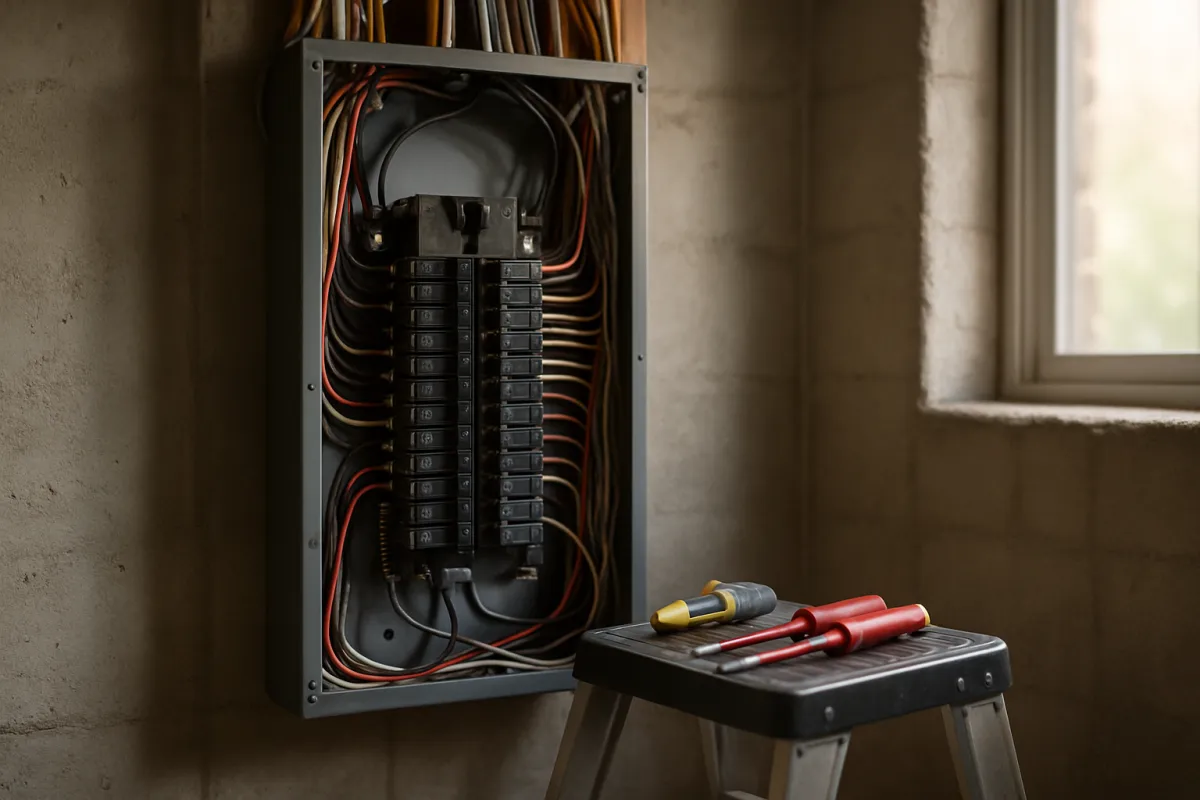
A like-for-like swap replaces an existing panel, often one that is decades old, uses discontinued or recalled breaker types, shows signs of wear, or has simply reached the end of its practical service life, with a new panel of the same amperage in the same physical location. No service upgrade, no new conductors from the utility, and no change in your home’s total available power; you are replacing the box, not increasing its capacity.
Illustratively, this swap commonly runs $1,200 to $2,500, reflecting the panel itself, breakers, labor to disconnect and reconnect every circuit, and the permit and inspection that panel work requires nearly everywhere. This is frequently the right call for a panel that is failing or uses obsolete parts but is otherwise adequately sized for the household’s actual electrical load, and it is worth confirming that sizing assumption with a load calculation rather than assuming the old amperage is automatically still correct simply because it has worked so far.
Upgrading to 200-amp service
Upgrading from 100 or 150 amp to 200 amp service is the most commonly requested panel job, usually driven by a household’s electrical demand outgrowing what the existing service was ever sized for: an electric vehicle charger, a heat pump or central air conditioning, an electric range, a hot tub, or simply a modern household’s accumulated appliance and device load against a service designed for an earlier era’s expectations.
Illustratively, this upgrade commonly runs $2,000 to $4,500, covering the new 200-amp panel and breakers, labor to install and tie in the new main breaker and grounding, and the permit and inspection that makes the work official rather than merely finished. The number can move meaningfully higher if the service entrance conductors, the wires running from the meter to the panel, also need upsizing to carry the increased amperage, which is a common companion item on an older home rather than an optional add, and it is the single factor most responsible for a 200-amp upgrade landing at the top of its range rather than the bottom.
Upgrading to 400-amp service
A 400-amp service is typically reserved for larger homes, homes with unusually heavy electrical demand, or properties planning significant additions like a shop, a detached accessory dwelling, or multiple high-draw appliances and EV chargers. It is a meaningfully bigger undertaking than a 200-amp upgrade, often involving larger conductors, a bigger meter base, and sometimes a pair of 200-amp panels fed from a single 400-amp service rather than one large panel.
Illustratively, this upgrade commonly runs $3,500 to $7,000 or more, scaling with how much of the surrounding infrastructure, conductors, meter base, grounding, has to change alongside the panel itself. This is a job worth getting a load calculation for before committing to, since 400-amp service is a genuine commitment few households actually need compared with the number who assume bigger is simply better, and the gap between what a load calculation supports and what a homeowner initially requested is, in this category specifically, more often downward than upward.
Subpanel installation
A subpanel adds circuit capacity for a specific area, a garage, a workshop, a finished basement, or an addition, by running a feeder from the main panel to a secondary panel located nearer the new load, without touching the main service itself. This only works if the main service already has enough spare capacity to support the added subpanel’s load, which a licensed electrician’s load calculation determines.
Illustratively, a subpanel installation commonly runs $900 to $2,500, moving with the subpanel’s size, the distance and routing of the feeder from the main panel, and whether the subpanel itself requires new conduit, trenching for an outbuilding, or straightforward interior routing. For a household whose main service has room to spare, a subpanel is often the more cost-effective answer than a full service upgrade for adding capacity to one specific area, and it is worth raising as an option explicitly with any electrician quoting a project, since some default straight to recommending a full service upgrade without first checking whether a subpanel would actually solve the stated need on its own.
Why a load calculation matters more than age or square footage
The decision to upgrade should rest on an actual load calculation rather than a general impression that an older home “probably needs it.” A licensed electrician performs this calculation by adding up a home’s existing circuits and appliances, factoring in diversity (not everything runs at once), and comparing the result against the panel’s rated capacity and any planned future additions like an EV charger or an electrification project.
This matters because panel age and square footage are both unreliable proxies. A smaller, older home with modest electrical demand and a 100-amp panel in good condition may have genuine headroom left, while a larger home with a full panel, an EV charger wish, and plans for an electric range conversion may have real capacity problems despite a newer-looking panel. Ask any electrician quoting an upgrade whether they performed a load calculation or are recommending based on the panel’s age and a general rule of thumb; the calculation is the honest basis for the recommendation.
A load calculation also protects you from the opposite mistake: assuming you need a bigger service than you actually do, simply because a neighbor or a contractor suggested it as a default. Some homeowners are quoted a 200-amp upgrade as a near-automatic recommendation regardless of their actual usage, which is not necessarily wrong, since 200 amp has become a reasonable modern baseline, but it is worth being able to see the arithmetic behind the recommendation rather than accepting it purely on the strength of being told it is standard practice now.
Service entrance conductors and the meter base
A panel upgrade frequently involves more than the panel itself. The service entrance conductors, the wires carrying power from the utility connection point to the panel, have to be rated for the new amperage, and on an older home upgrading from 100 to 200 amp, these conductors commonly need replacing alongside the panel. The meter base, the enclosure housing the utility’s meter, may also need to be upgraded to accept the higher amperage.
Illustratively, this conductor and meter base work, when needed, adds $500 to $1,500 on top of the panel and labor figures above, and it is one of the most commonly underestimated parts of a panel upgrade quote that only covers the panel itself. Ask directly whether a quote includes the service entrance conductors and meter base, or assumes they are already adequate, since that assumption is sometimes wrong on a home old enough to need the upgrade in the first place.
Utility coordination, the variable no flat number can predict
Depending on what your upgrade requires, your utility may need to upgrade the service drop, the wires running from the utility’s pole or underground connection to your home, or coordinate a temporary disconnect and reconnect during the work. Utility involvement, scheduling, and any associated cost vary enormously by utility company and by what the specific job requires, which is why this cost file deliberately states no flat figure for it.
The practical step is to ask your electrician early in the process whether your planned upgrade will require utility coordination, and to contact your utility directly to understand their process, typical timeline, and whether any cost falls to you. Some utilities handle their portion of a standard upgrade at no charge as a matter of policy; others pass through real costs or scheduling delays. Treat this as a genuine unknown to resolve before committing to a project timeline, not as a line item you can estimate from a national average.
Illustrative installed cost by job type
Midpoint figures for a typical residential project. Bar widths are drawn from each value against the highest, $5,200 upgrade to 400-amp service.
Illustrative midpoints, not quotes. A home needing new service entrance conductors or a meter base upgrade alongside the panel will land above its category's midpoint.
Where the money goes on a 100-to-200-amp upgrade
Breaking a typical 100-to-200-amp upgrade into its parts shows why the panel’s own price tag is only part of the number. Using an illustrative midpoint project, the new panel and breakers account for roughly 35 percent of the total, installation labor including tie-in and grounding for about 35 percent, permit and inspection for about 10 percent, and meter base or service entrance work for the remaining 20 percent.
Where the money goes on a 100-to-200-amp upgrade
Shares of an illustrative midpoint project, summing to 100.
A home whose meter base and conductors already support 200 amp shrinks that slice to near zero; an older home needing both grows it meaningfully.
A worked example: a 1950s home preparing for an EV charger
Numbers become useful stacked together. Take a fully illustrative example: a home built in the 1950s still running on its original 100-amp service, with the homeowner planning to add an EV charger and a new electric range in the coming year. An electrician’s load calculation confirms the existing 100-amp service has no meaningful headroom for the planned additions, and recommends an upgrade to 200 amp.
The new 200-amp panel and breakers run an illustrative $1,400. Installation labor, including removing the old panel, installing the new one, the main breaker tie-in and grounding, runs $1,300. The permit and final inspection run $300. Because the home’s original meter base cannot accept 200-amp service, the utility is involved in upgrading the meter base and coordinating a brief service disconnect, adding $500. The total comes to roughly $3,500, inside the 200-amp upgrade band.
Had this same home needed no meter base work, because a prior owner had already upgraded the service entrance for an unrelated reason, the total would have landed closer to $3,000, near the bottom of the band instead of the middle, which illustrates how much that one line item alone can move the final number even when every other part of the job stays identical.
Run your own current and target amperage, and whether your meter base needs attention, through the estimator to see your version of this math.
Permits, inspections, and why this is not optional
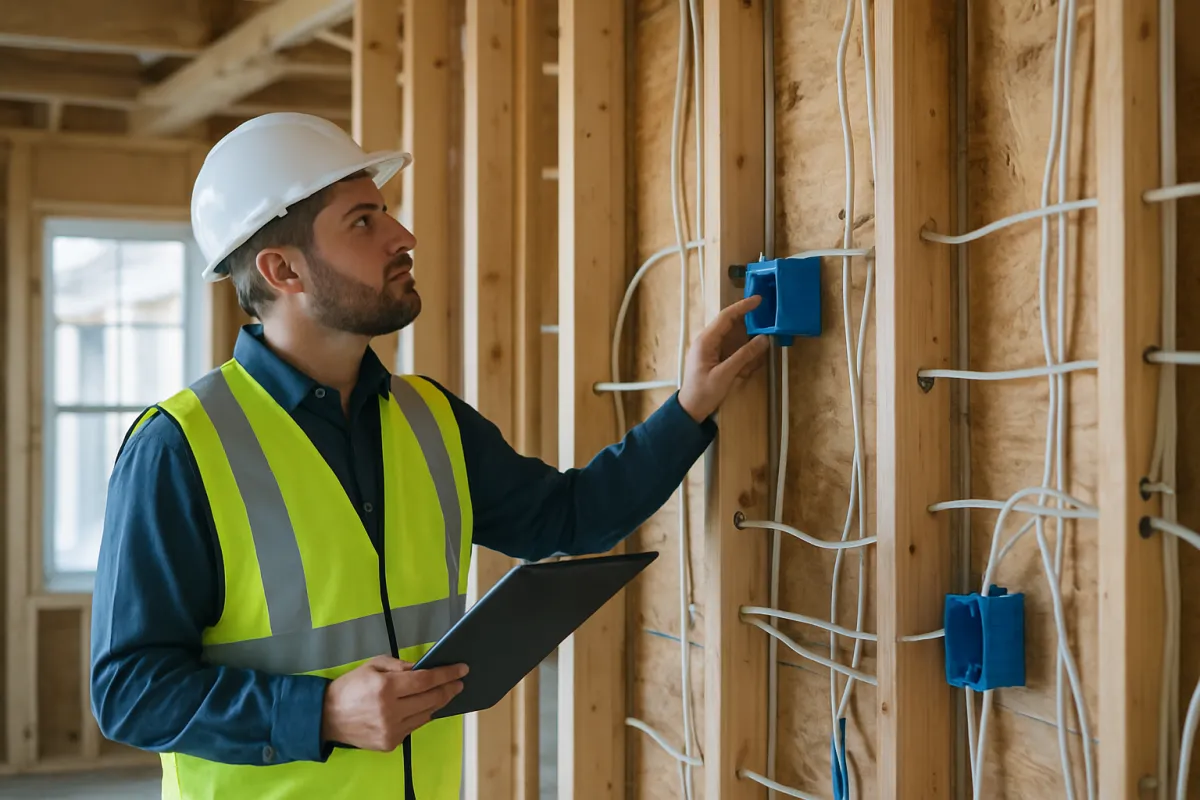
Panel work is permitted and inspected in virtually every jurisdiction because the panel and its main disconnect protect the entire house’s electrical system, and a mistake here is a fire and shock hazard rather than a cosmetic one. Permit fees and the specific inspection process are set locally and vary meaningfully by municipality, so this cost file states no specific national figure; confirm the requirement and fee with your local building department.
A licensed electrician pulling the permit and scheduling the required inspection as standard practice is a sign of a legitimate contractor rather than unnecessary red tape, and it protects you directly: unpermitted electrical work can create real problems at a future home sale, with an insurance claim, or in the rare event something goes wrong and the work is found to be unpermitted. Our permit walkthrough covers the general mechanics of dealing with a permitting office, and the same discipline applies here as on any permitted trade: ask who is pulling it, when, and confirm the final inspection actually happened rather than assuming it did because the job looks finished.
Rebates, incentives, and why this file names no specific program
Utility rebates and energy efficiency incentive programs for panel upgrades do exist in some areas, particularly tied to electrification projects like a heat pump or EV charger installation, but program availability, eligibility and dollar amounts vary by location, change over time, and are frequently tied to legislation and funding that shift from year to year. Naming a specific program or dollar figure here would risk stating something stale or locally inaccurate by the time you read it.
The honest approach is to ask your electrician which programs they have seen applied locally, contact your utility directly about current offerings, and confirm final eligibility and figures with the official program administrator or a tax professional before counting on any specific amount in your project budget.
Signs an older panel needs attention regardless of amperage
Separate from the amperage question entirely, some panel conditions warrant replacement or at least a prompt professional assessment on their own merits, regardless of whether more capacity is also needed. Certain older panel brands and models have known, documented safety issues, including some whose breakers have a documented history of failing to trip when they should, which is a genuine fire risk rather than a theoretical one; an electrician can identify whether your specific panel brand and model falls into this category.
Warm or discolored areas on the panel’s exterior, a burning smell near the panel, visible rust or corrosion inside when a cover is removed, or breakers that feel loose or do not seat firmly are all signs worth an electrician’s prompt attention. A panel still using fuses rather than circuit breakers, increasingly rare but still found in some older homes, is generally considered outdated enough to warrant replacement on its own, independent of any amperage upgrade, both because fuses are less convenient to reset and because homeowners insurance carriers increasingly flag fuse-based service as a liability concern at renewal.
None of these signs alone means the sky is falling, and a panel can show one minor issue and still be serviceable for years with a targeted repair. But any combination of several of these signs, especially on a panel original to an older home, is worth a licensed electrician’s in-person assessment rather than continued monitoring from a distance.
Insurance and panel age
Homeowners insurance carriers have increasingly scrutinized electrical panel age and type during underwriting and at renewal, particularly for certain older panel brands associated with documented safety issues, and for any home still running fuse-based service rather than circuit breakers. Some carriers now require an electrical inspection or a panel upgrade as a condition of coverage or renewal on an older home, which can turn what started as a voluntary capacity upgrade into something closer to a required one.
If you are buying an older home, ask your insurance agent during the quoting process whether the home’s panel, once you know its age and brand, will affect your coverage eligibility or premium, since this is a cost and a timeline consideration worth knowing before closing rather than after a renewal notice arrives with an unexpected condition attached. If you already own an older home and are shopping panel upgrade quotes for capacity reasons, it is worth asking your current insurer the same question, since an upgrade you were already planning might also resolve or prevent an insurance issue you were not yet aware of.
How to compare electrical panel upgrade quotes
Panel upgrade quotes are hard to compare because they can quietly differ in scope. Before comparing totals, confirm each bid states the target amperage, whether service entrance conductors and the meter base are included or assumed adequate, whether utility coordination is anticipated and who is responsible for scheduling it, the panel brand and breaker type being installed, the permit and inspection arrangement, and the warranty on parts and labor.
Be specifically cautious of a quote that is meaningfully lower than others without explaining why; it is worth confirming directly whether it has simply excluded the conductor or meter base work a more complete quote included, since a bid missing that scope will look like the best deal right up until it is the one that needs a change order mid-project. Our quote comparison walkthrough covers the general discipline of reading bids by their exclusions rather than their totals, and our contractor vetting guide covers confirming licensing, which matters especially for panel work given the safety stakes involved.
Planning a panel upgrade around other projects
A panel upgrade rarely happens in isolation from everything else going on with a home’s electrical needs, and sequencing it thoughtfully against other planned work can save real money and avoid redundant labor. If you are planning a kitchen remodel, a home addition, an EV charger installation, or converting to electric appliances as part of a larger renovation, having the panel assessed and upgraded before or during that work, rather than after, avoids paying for a second mobilization and lets the new circuits for that project be run directly from capacity that already exists rather than through a temporary workaround.
Our home addition cost file and our kitchen remodel cost file both cover projects that commonly trigger exactly this kind of electrical capacity question, and coordinating the panel assessment early in planning for either one is worth raising with your general contractor or electrician at the first planning conversation rather than discovering the need for a panel upgrade mid-project when a load calculation is finally performed.
The same logic applies in reverse for a planned addition that will clearly need more capacity: it is more efficient to size and install the panel upgrade once, accounting for the full planned future load, than to upgrade once for a current need and again a few years later for an addition that was already on the horizon when the first upgrade happened. Ask your electrician to size the load calculation around your realistic plans for the next five to ten years, not just your current household’s exact present-day usage.
What happens during the actual work
Knowing roughly what a panel upgrade day looks like helps set realistic expectations for the disruption involved. The electrician will shut off power to the home, which is unavoidable since the main panel is the single point every circuit in the house passes through; this outage commonly lasts several hours on a straightforward swap and can extend through most or all of a day on a more involved service upgrade, particularly one requiring utility coordination.
The old panel is removed, and depending on the scope, the service entrance conductors may be disconnected and replaced as well. The new panel is mounted, the main breaker and all individual circuit breakers are installed and labeled, and every existing circuit is reconnected to its new breaker, a process that takes real time on a panel with many circuits since each one is handled individually rather than in bulk. Grounding and bonding are verified and, where needed, upgraded to current code requirements, since grounding standards have evolved and an older panel’s grounding arrangement sometimes needs updating as part of the same job even on an otherwise straightforward swap.
Once everything is connected, the electrician tests each circuit, restores power, and confirms everything is working correctly before the local inspector is called for the required inspection. Plan for the power outage by charging devices in advance, having a plan for refrigerated food if the outage runs long, and, if you work from home, scheduling the work for a day when a several-hour internet and power outage is tolerable rather than during a critical work commitment.
The DIY boundary
Panel work sits firmly on the licensed-electrician side of the line for a reason that has nothing to do with difficulty alone: the panel is the point in your home’s electrical system where a mistake can cause a fire or a fatal shock, and it is also the point most jurisdictions specifically require licensed work and inspection for, meaning DIY panel work is commonly illegal to perform without the appropriate license, not merely inadvisable. Our handyman cost file covers the general line between work a handyman can legally perform and work that requires a licensed trade, and panel and service work sits squarely on the licensed side of that line everywhere it is discussed. Even a homeowner permitted by their local code to perform certain electrical work on their own property, which some jurisdictions do allow for an owner-occupied home with the correct permit, should weigh that legal allowance against the genuine risk of a mistake at the one point in the house where an error affects every circuit at once, not just the one being worked on.
EV chargers and other large loads: sizing the upgrade correctly
An electric vehicle charger is one of the most common single triggers for a panel upgrade request today, and it is worth understanding why it has this effect even on a home that otherwise feels electrically adequate. A Level 2 home EV charger, the kind that charges meaningfully faster than a standard outlet, typically draws a substantial, continuous load for extended periods, often several hours at a stretch, which is a different demand profile from most household appliances that cycle on and off.
On a panel already near its calculated capacity, adding that continuous draw is frequently the single item that pushes a load calculation from adequate to insufficient, even when the home’s other appliances and circuits have not changed at all. This is why a homeowner planning to add an EV charger, even one who has never had any electrical capacity complaints before, should get a load calculation done specifically with the charger’s draw included, rather than assuming an otherwise unremarkable electrical history means no upgrade will be needed.
The same logic applies to other large, continuous or near-continuous loads: a hot tub, a heat pump replacing a gas furnace, an electric vehicle charger, or an all-electric kitchen range and oven combination. Any of these, especially two or more together on the same service, is worth running through a proper load calculation before assuming your existing panel has room, since the mental model of “the lights still work fine” says nothing about whether the panel has margin for a new continuous load layered on top of everything already running.
Common mistakes
A handful of errors account for most of the frustration homeowners report with panel upgrades. Assuming a bigger panel is automatically the right call without a load calculation is the most common, and it can mean paying for 400-amp capacity a household will never approach using. Accepting a quote that covers only the panel without asking whether the service entrance conductors or meter base also need work is a close second, and it is the single most common source of a project costing more than the original estimate once work begins.
Not asking about utility coordination early, then discovering mid-project that the utility’s scheduling adds weeks to the timeline, is a third. And skipping the permit to save time or money is a mistake with consequences that surface later, at a home sale or an insurance claim, rather than immediately, which makes it easy to underweight in the moment.
A final common mistake is planning a panel upgrade in isolation from a known future project, like a kitchen remodel or an addition, that will need its own electrical capacity within the next year or two. Upgrading once for a current, narrow need and again shortly after for a predictable future one means paying for two mobilizations and two rounds of labor where one properly sized job would have covered both, a pattern worth avoiding by simply asking your electrician to size the load calculation around your realistic near-term plans rather than only today’s exact usage.
The bottom line
Electrical panel upgrade cost is set first by which job you actually need, a like-for-like swap, a 200 or 400-amp service increase, or a standalone subpanel, and second by whether your home’s service entrance conductors, meter base and utility connection can support the new amperage without additional work. Illustratively, a like-for-like swap commonly runs $1,200 to $2,500, an upgrade to 200 amp $2,000 to $4,500, an upgrade to 400 amp $3,500 to $7,000 or more, and a standalone subpanel $900 to $2,500.
Get a licensed electrician’s load calculation before deciding how much amperage you actually need, ask explicitly whether a quote includes the meter base and service entrance work or assumes it is unnecessary, and confirm utility coordination requirements before you set a project timeline. Every figure here is illustration, and your real cost will move with your home’s existing infrastructure, your utility, local labor rates and the scope your load calculation actually supports, so let a written quote built on that calculation, sized for your realistic plans over the next several years rather than only today’s exact usage, be the number you act on.
ProsNook publishes this cost file to explain how a residential electrical panel upgrade is scoped, priced and permitted, and it is educational material rather than electrical, engineering or legal advice. No figure here is a quote: every dollar band, midpoint, share and worked total is illustration only, and your real cost will move with your home’s existing service, conductors and meter base, your utility’s requirements, local labor and permit fees, and the amperage your load calculation actually supports. Electrical work, especially at the panel and service level, is dangerous to perform without training and is restricted by code and licensing requirements in virtually every jurisdiction; engage a licensed electrician and verify their license with the issuing authority. Permit requirements and fees, utility coordination processes, and any rebate or incentive programs are all set locally or by your utility and change over time, so confirm current rules directly with your building department, your utility and, for any tax-related incentive, a qualified tax professional before relying on them in your budget.
Frequently asked questions
How much does it cost to upgrade an electrical panel?
As an illustrative guide, a like-for-like panel swap at the same amperage commonly runs about $1,200 to $2,500, upgrading from 100 or 150 amp service to 200 amp commonly runs about $2,000 to $4,500, and upgrading to 400 amp service for a larger home or heavy electrical load commonly runs $3,500 to $7,000 or more. A standalone subpanel, added without touching the main service, commonly runs $900 to $2,500. The honest range depends heavily on whether your utility also has to upgrade the service drop or meter, which is a cost many homeowners do not anticipate until an electrician actually inspects the existing setup.
How do I know if I need a 200-amp panel?
The signal is usually load, not age: breakers that trip repeatedly under normal use, a panel that is already full with no open slots for a needed circuit, plans to add an electric vehicle charger, an electric range, a heat pump or central air, a hot tub, or a home addition, or a home still running on 60 or 100 amp service that predates the appliance load typical of a modern household. A licensed electrician can perform a load calculation, which adds up your home's actual and planned electrical demand against your panel's rated capacity, and that calculation is the honest basis for the decision rather than a general rule of thumb based on square footage or age alone.
Does upgrading an electrical panel require a permit?
Yes, in virtually every jurisdiction, because panel work involves the main disconnect and service equipment that protects the whole house, and it is inspected accordingly. Permit and inspection fees are set locally and vary meaningfully by municipality, so this cost file states no specific number as a national figure; confirm the requirement and the fee with your local building department. A licensed electrician pulling the permit as part of the job is standard practice and is itself a sign of a legitimate contractor, since an unpermitted panel upgrade can create real problems at a future home sale or insurance claim.
Does the utility company charge anything for a panel upgrade?
It depends on your utility and on what the upgrade requires. If your new panel's amperage requires a larger service drop, a new meter base, or utility-side equipment changes, the utility is typically involved in coordinating or performing that portion of the work, and depending on your utility's policies, that can range from no charge to a real added cost or scheduling delay. This is utility-specific and not something a general cost file can state as a flat figure, so ask your electrician early whether your planned upgrade will require utility coordination, and ask your utility directly what their process and any associated cost looks like.
How long does an electrical panel upgrade take?
A straightforward like-for-like swap commonly takes a single day, while a full service upgrade from 100 to 200 amp, especially one requiring utility coordination for the service drop or meter, can take anywhere from one day to several, with the power to the house typically shut off for some portion of that time. Scheduling around a utility's availability, if their involvement is required, is often the step that extends the timeline rather than the electrical work itself, so ask your electrician for a realistic timeline that accounts for utility scheduling rather than just the hands-on labor time.
Can I add a subpanel instead of upgrading my main panel?
Often, yes, if your main service has enough spare capacity to support the additional subpanel's load, which is exactly what a licensed electrician's load calculation determines. A subpanel adds circuit space for a specific area, like a garage, workshop or addition, without touching the main service, and illustratively costs less than a full service upgrade, commonly $900 to $2,500. If your main service is already near its rated capacity, adding a subpanel without addressing that capacity does not solve the underlying problem, so the load calculation, not the convenience of a subpanel, should decide which approach actually fits your situation.
Are there rebates or credits for an electrical panel upgrade?
Utility rebates and energy efficiency incentive programs for panel upgrades do exist in some areas, particularly where the upgrade supports electrification like a heat pump or EV charger, but program availability, eligibility rules and amounts vary by location, change over time, and should never be assumed or counted on in a budget without confirming the current, specific rules. Ask your electrician and your utility directly which programs currently apply in your area, and confirm final eligibility with the official program administrator or a tax professional before relying on any figure for your project budget.
Is a panel upgrade dangerous to live without if I keep tripping breakers?
A breaker that trips is doing its job: cutting power before a wire overheats, so a tripping breaker is itself a safety feature working correctly rather than a failure. The genuine hazard is a panel or wiring with warning signs beyond routine tripping, such as a breaker that will not reset, visible scorching, a burning smell, flickering lights unrelated to the tripped circuit, or a panel using discontinued or recalled components. Any of those signs warrants a licensed electrician's inspection promptly rather than waiting, while routine tripping tied to a specific overloaded circuit is a signal to rebalance loads or plan an upgrade, not an emergency in itself.