What's on this page
- Why two fences the same length cost worlds apart
- The headline ranges: illustrative cost per linear foot
- Material by material: what you are really buying
- What actually drives the price of a fence
- Labor versus materials: where a fence budget splits
- Gates and corners: the cost multipliers
- Terrain, slope, and rocky ground
- Post depth and the frost line: why cheap installs fail
- Permits, property lines, and the neighbor reality
- The per-foot math by yard size
- Fence installation cost by height: four, six, and eight feet
- HOA and material restrictions
- Maintenance cost over the fence’s life
- Fence installation cost by region and season
- Where a fence budget goes
- What you can honestly do yourself
- The removal and disposal line
- How to read a fence quote
- A worked example: one 150 linear foot yard, two materials
- Fence installation cost versus repairing the fence you have
- Common fence-installation mistakes
- The bottom line
Short answer: Fence installation commonly runs an illustrative $15 to $60 per linear foot installed: chain-link about $15 to $30, wood $20 to $40, vinyl $30 to $55 and aluminum $40 to $60, before height, gates and terrain adjust them. A typical 150 linear foot yard lands roughly $3,000 to $8,000 for common residential materials, with wrought iron pushing well past that. Labor is typically 40 to 55 percent.
Fence installation cost is one of those numbers that refuses to sit still: ask what a fence costs and the answers scatter from “a few hundred dollars of chain-link” to “we spent more than a used car.” Both can be true, because a fence is not one product. It is a line of posts set in concrete, a run of panels or fabric strung between them, a gate or two on hinges, and a perimeter that has to follow whatever the ground does, and the price depends entirely on what those panels are made of, how tall they stand, and what the digging is like. The same 150 feet of yard fenced four different ways is four different prices, and none of them is wrong.
This cost file prices the job from the post holes up. The honest per-linear-foot ranges by material, what actually drives the total, why vinyl and aluminum cost more upfront and less over their lives, how gates and corners multiply the number, why rocky and sloped ground carries a surcharge, and a full worked example of one 150-foot yard costed in two materials side by side. Our earlier contractor cost file explained how any trade price is assembled; this one applies that machinery to fences specifically. Sketch your own fence in the job cost estimator as you read, and the ranges below turn into your numbers.
Key takeaways
- Illustrative installed ranges per linear foot: chain-link about $15 to $30, wood $20 to $40, vinyl $30 to $55, aluminum $40 to $60, before height, gates, and terrain adjust them.
- A typical 150-linear-foot yard lands roughly $3,000 to $8,000 for common residential materials, illustratively, with wrought iron and long runs pushing well past that.
- Labor is typically 40 to 55 percent of the total, and rocky or sloped ground drives it up faster than any material choice does.
- Gates, corners, taller panels, post depth below the frost line, permits, and old-fence removal are the quiet budget movers that separate a low bid from an honest one.
- The pricier materials sell time, not just privacy: vinyl and aluminum skip the painting and staining that a wood fence bills you for every few years.
Why two fences the same length cost worlds apart
Homeowners often start with a length in mind, a neighbor’s fence cost this per foot, so mine should too, and then the quotes arrive thousands apart and the neighbor’s figure turns out to be useless. The reason is that linear footage, the single number people fixate on, is only one of several levers, and rarely the decisive one. Two fences that both wrap 150 feet of yard can differ by more than double, because one is a four-foot chain-link line on flat soft soil and the other is a six-foot vinyl privacy fence stepping down a rocky slope with three gates.
The variables that actually move the price are, in rough order of impact: the fence material, the height of the panels, the number of gates and corners, the ground conditions the posts have to reach through, whether an old fence must come out first, and finally the raw length. A homeowner who fixes on length first has anchored on a real but incomplete lever and will be surprised by every other one.
Every dollar figure in this cost file is illustrative, because your market, your yard, and your material set the real numbers. But the structure of the cost, what the money buys and in what proportion, is stable across markets, and once you see the structure, a wild spread between fence quotes stops being a mystery and becomes a short list of specific questions about material, height, gates, and ground.
The headline ranges: illustrative cost per linear foot
The most useful way to hold a fence budget in your head is per linear foot installed, because it travels between yard sizes better than any total does. Installed means everything in place: posts set in concrete, panels or fabric hung, rails and caps, and the labor to build it, though usually not gates or removal, which price separately. As an illustrative national-ish guide before local rates and terrain adjust it, chain-link runs about $15 to $30 per linear foot, wood about $20 to $40, vinyl about $30 to $55, aluminum about $40 to $60, composite about $45 to $70, and ornamental wrought iron from roughly $50 to $120 and up.
Illustrative installed cost per linear foot by material
A standard four-to-six-foot fence on reasonably level ground. Every market and yard differs.
Midpoint figures for illustration. The bars measure the material's effect on an otherwise identical fence; height, gates, corners, and difficult ground push every one of them higher.
Read those bars as a starting point, not a quote. The per-foot figure climbs the moment the fence grows taller, gains a gate, turns a corner, or meets rocky or sloped ground, because those additions cost real money while adding little or no length to divide them across. That is exactly why a short fence with two gates looks expensive per foot and a long straight run looks cheap. Anchor on the material band that matches your need, then adjust upward for every complication your yard carries. The estimator lets you set your own material and height rather than a blended average.
Material by material: what you are really buying
Chain-link is the value leader. It is galvanized steel fabric on steel posts, the cheapest common way to enclose a yard, and it goes in fast. Illustratively $15 to $30 per linear foot installed. What it does not give you is privacy or curb appeal; it is a boundary and a barrier for pets and children, not a screen, though vinyl-coated and privacy-slat versions soften both the look and the price ceiling.
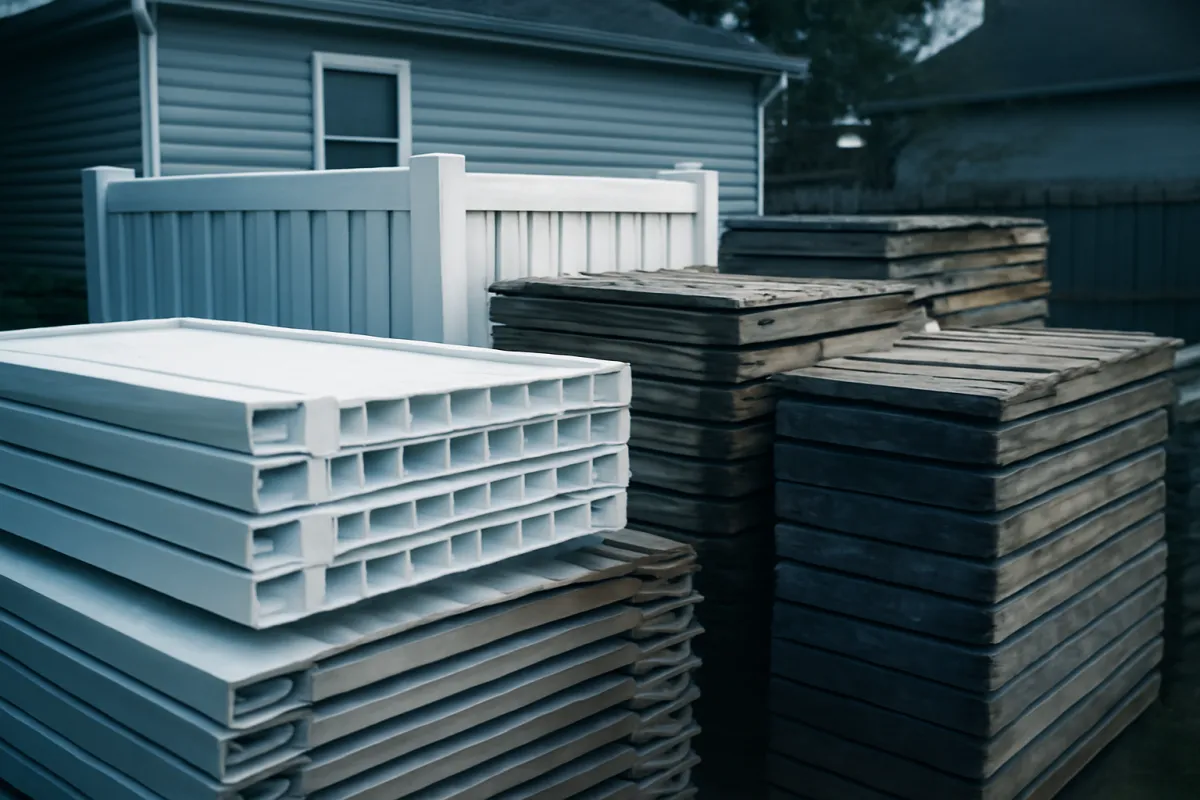
Wood, usually pressure-treated pine or cedar, is the privacy default and the middle of the market. Illustratively $20 to $40 per linear foot installed for a standard privacy or picket style. It gives real screening and a warm look, and it is the friendliest material for a capable do-it-yourselfer. The catch is maintenance: wood needs cleaning and a stain or seal every few years, it can warp, cup, and gray, and boards and posts eventually rot and need replacing.
Vinyl and aluminum are the manufactured panel systems, and both cost the most upfront while erasing most of the upkeep. Illustratively vinyl runs $30 to $55 and aluminum $40 to $60 per linear foot installed. Vinyl gives solid privacy with no painting or staining ever; aluminum gives an ornamental, see-through look that suits pool codes and sloped yards because its panels rack to follow grade. Composite and wrought iron sit at the top: composite around $45 to $70 for a premium low-maintenance privacy look, and true or ornamental iron from $50 to $120 and up for the highest-end, longest-lived appearance.
What actually drives the price of a fence
Six levers set the total, and knowing their order of impact is most of the budgeting battle. First is the material, which can swing the per-foot cost by a factor of three or more between chain-link and wrought iron. Second is height, because a six or eight-foot fence needs more panel, taller and deeper-set posts, and more labor than a four-foot line, and the jump is not linear. Third is the gate and corner count, priced per unit rather than per foot, so a short fence loaded with access points costs far more per foot than a long plain run.
Fourth is ground condition. Posts must reach below the frost line, and rock, clay, tree roots, a steep slope, or poor drainage can turn a routine dig into hours of labor and extra concrete per hole. Fifth is old-fence removal and disposal, a line item that appears only if something is already there. Sixth, and often weakest, is the raw length, which matters mainly because it scales the panel material and the number of posts, the two things that grow smoothly with the perimeter while everything else grows in steps.
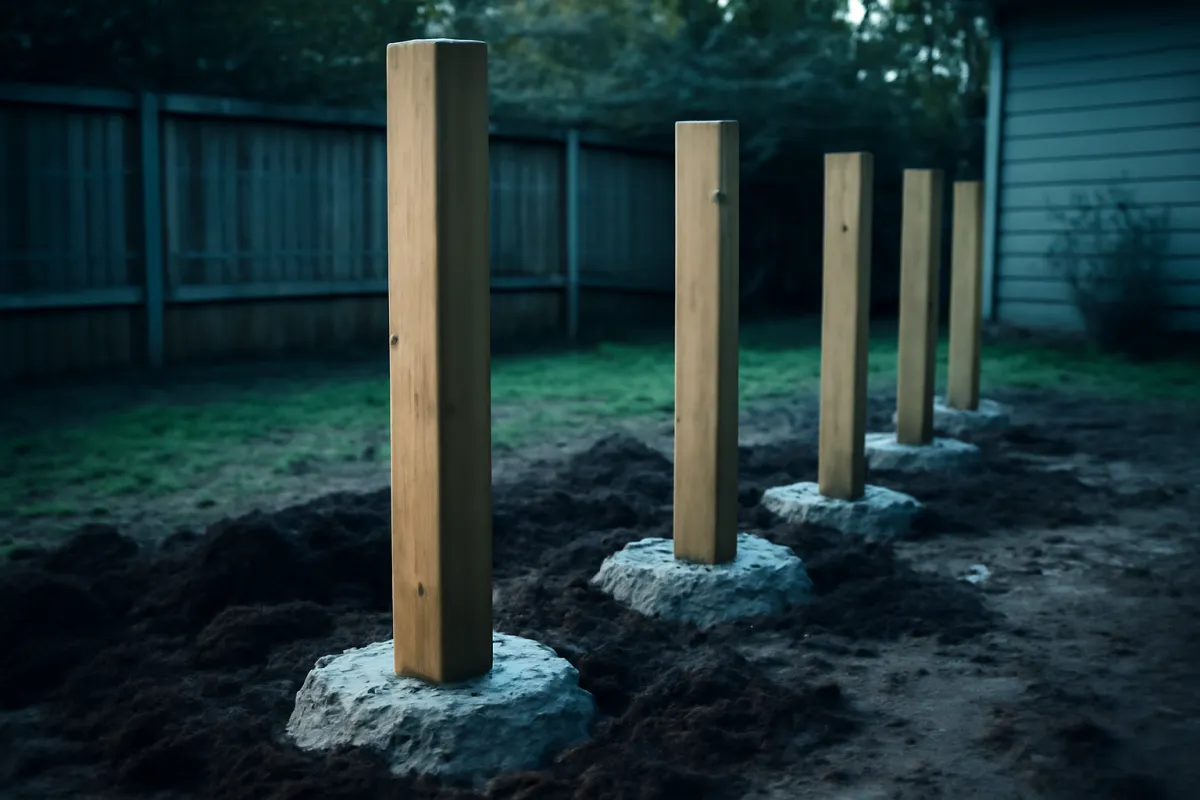
The practical takeaway is to price the levers in that order. Decide the material, then the height, then count the gates and corners, then have someone walk the actual ground, and only then let length fine-tune the number. A homeowner who reverses that order, starting from a per-foot figure and treating everything else as a rounding detail, ends up with a budget that the first real quote demolishes.
Labor versus materials: where a fence budget splits
Across the whole job, labor typically lands between 40 and 55 percent of a fence’s installed cost, close enough to half that “roughly even” is a fair planning figure. Fences sit near the middle of home projects on labor intensity: the panels themselves go up relatively fast on a straight run, but the post-setting underneath, digging, plumbing, and concreting every post, is slow, physical work that dominates the hours when the ground fights back.
Our contractor cost file broke every price into labor, materials, overhead, and profit; the fence version of that lesson is that your local labor rate and your ground conditions are the two levers that move the labor half, and only one of them is in your control. In a high-rate market the same fence can cost half again what it does in a lower-rate one with identical panels, which is why national averages mislead and local quotes rule.
The mix also shifts with your material choice, in a way that surprises people. Choose cheap chain-link and the labor share of the total rises, because the same hours of post-setting now sit on top of a smaller material bill. Choose expensive vinyl or aluminum and the material share rises instead, even though the crew did nearly the same digging. So a “labor is 50 percent” rule of thumb is really a range, and where your job lands inside it tells you which lever to press if the total comes back too high.
Gates and corners: the cost multipliers
The base fence is posts and panels in a straight line. Gates and corners are where budgets drift, because each one is priced as its own small project rather than by the foot. A gate is a hinged, latched, self-supporting assembly on heavier posts, and it commonly adds an illustrative few hundred dollars for a simple walk gate to well over a thousand for a wide double drive gate, before any automation. A yard that “just needs a couple of gates” can carry a four-figure gate bill that has nothing to do with its length.
Corners and ends cost more than line posts too. A corner post takes bracing in two directions, an end or terminal post takes bracing in one, and both use more concrete and labor than the simple line posts between them. A yard shaped like a plain rectangle has four corners; a yard that jogs around a shed, a patio, and a garden bed can have a dozen, and each one is a slower, sturdier post than the run it interrupts.
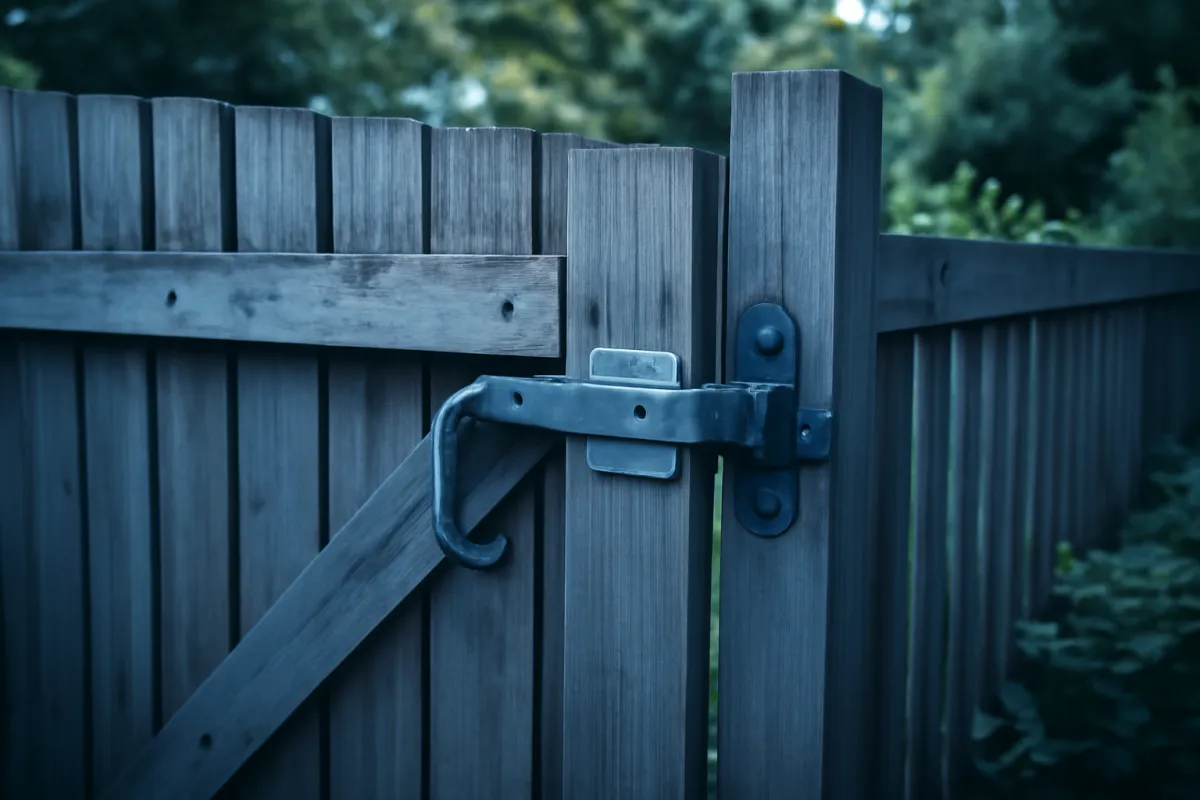
The discipline is to count gates and corners before anyone quotes, and to price them as separate lines, so you can see what each access point and each jog costs and decide it on purpose. A homeowner who says “fence the yard” and leaves the gate count vague meets those costs later as change orders, at worse prices and with no competitive pressure. Sketch the layout, mark every gate and corner, and make every bidder price the same map.
Terrain, slope, and rocky ground
The single most underestimated cost swing in fencing is what lies underground and how the land tilts. Rocky, clay, or root-filled soil turns post-setting from a quick auger job into a slow grind, and a contractor facing it may need a heavier auger, a breaker, or extra crew, all of which land in the bid. Difficult ground can double or triple the labor per hole, and because a fence has a post every six to eight feet, that surcharge multiplies across the whole run.
Slope adds its own cost on top. A fence on a hillside cannot simply follow a flat line; it must either step down in stair-stepped level sections, which leaves triangular gaps that some materials fill and others do not, or be racked so the panels parallel the grade, which suits aluminum and some wood but not rigid vinyl. Both approaches take more layout, more labor, and sometimes more material than a straight run across flat ground, and a steep or uneven yard can add a real premium per foot.
A high water table, buried utilities, old tree stumps, and existing concrete all belong in the same category: things that slow the digging and were invisible in the first phone estimate. Standing trees are the same story at larger scale: a trunk in the fence line or a heavy canopy over the run means a tree removal or trimming line before the digging starts. This is exactly why a quote given over the phone or from a satellite image is worth less than one given after the contractor walked the yard. When you compare bids, confirm that each one priced your actual ground, because a bid that quietly assumed flat soft soil will look cheaper for a reason that has nothing to do with value.
Post depth and the frost line: why cheap installs fail
The part of a fence that decides whether it stands straight for twenty years or leans within one winter is the part no one sees: how deep the posts go and what holds them. In any climate that freezes, the ground heaves as water in the soil freezes and expands, and a post set too shallow gets pushed upward a little more each winter until the whole fence tilts and racks. The defense is depth: posts set below the local frost line, commonly a third of the post’s above-ground height plus footing and often two to four feet down in cold regions, and anchored in concrete that spreads the load.
This is where the cheapest bids quietly cut, because depth is invisible on the day the fence goes up and only reveals itself a winter or two later. A crew that digs shallow holes, skimps on concrete, or tamps dirt instead of setting posts properly can finish faster and bid lower, and the fence will look identical the week it is done. The failure shows up as leaning posts, gates that stop latching, and panels that pull apart, and by then the low bidder is long gone.
That is the practical reason to ask every bidder how deep they set posts and how much concrete they use per hole, and to be suspicious of a total far under the pack. Proper post depth is not a luxury upgrade; it is the difference between a fence and a slow-motion repair bill. The saving on a shallow install is real for exactly as long as it takes the first hard freeze to arrive.
Permits, property lines, and the neighbor reality
Before a single post goes in, two questions decide whether the project is smooth or a nightmare: does the fence need a permit, and exactly where is the property line. Many jurisdictions require a permit for a new fence, especially above a set height, and permit fees are usually modest, an illustrative few tens to a few hundred dollars. The bigger trap is the line itself. Setback rules dictate how far from the boundary, the sidewalk, and the corner sight-lines a fence must sit, and those rules vary street by street.
The property-line question is where fences turn into disputes. A fence built even a few inches onto a neighbor’s land can trigger a demand to move it, a boundary survey, or a legal fight, and “we always thought the line was the old hedge” is not a defense that holds up. If there is any doubt where the line runs, an illustrative $400 to $1,000 professional survey is cheap insurance against a mistake that can cost many times that to undo, especially once concrete has set around the posts.
The neighborly move, beyond the legal one, is to talk to the people on the other side before you build, because a fence is a structure you both live with for decades. Some jurisdictions and many shared-fence situations involve cost-sharing or notice rules, and a conversation up front prevents the worst outcome, a finished fence that a neighbor’s later survey forces you to tear out and rebuild a foot to your side. Confirm the permit, the setback, and the line with your local building department and your neighbor before anyone digs.
The per-foot math by yard size
Because so much of a fence’s cost rides on material and ground, the total scales with length in a predictable way once you fix the other levers, and the shapes are worth carrying in your head. A small yard, roughly 100 linear feet of perimeter, is the entry size: illustratively $1,500 to $3,000 in chain-link, $2,000 to $4,000 in wood, and $3,000 to $5,500 in vinyl, on level ground before gates. It is the cheapest total but often a higher cost per foot, because the fixed work of gates and corners does not shrink with the length.
A medium yard, roughly 150 linear feet, is the workhorse size this cost file prices throughout: illustratively $2,500 to $4,500 in chain-link, $3,000 to $6,000 in wood, and $4,500 to $8,000 in vinyl, with height and gates moving it inside those bands. A large yard, roughly 300 linear feet, roughly doubles the material and post count and lands illustratively $5,000 to $9,000 in chain-link, $6,000 to $12,000 in wood, and $9,000 to $16,000 in vinyl. An acreage or irregular lot breaks the tidy math, because long runs, many corners, and varied terrain add labor out of proportion to the footage.
The planning insight is that per-foot figures mislead in both directions: small yards look expensive per foot and cheap in total, large ones the reverse, and a jagged perimeter with many corners can cost far more per foot than a plain rectangle of the same length. Budget by picking a material, a height, and a gate count together, then use the perimeter only to scale the panel and post lines. The estimator treats length and material as separate questions for exactly this reason.
Fence installation cost by height: four, six, and eight feet
Height is the second-strongest lever on fence installation cost after the material itself, and it is the one homeowners most often change late, after the quotes are already in. A four-foot fence, the common front-yard and pet-containment height, uses the least panel area and the shortest posts, and it sits near the bottom of every per-foot band quoted above. A six-foot fence is the backyard privacy standard and the height most figures in this cost file assume. An eight-foot fence, where local code and any association allow one at all, is a different animal entirely.
The jump between them is not proportional to the height, and that surprises people who expect a fence half again as tall to cost half again as much. Going from four feet to six adds fifty percent more panel area, but it also demands longer posts set deeper, because a post generally carries something like a third of its above-ground height below grade plus its footing, and it puts noticeably more wind load on every panel, which pushes the rail count, the post size, and the fastener schedule up with it. As an illustrative rule of thumb, six-foot panels tend to land ten to twenty percent above four-foot ones per linear foot in the same material, and eight-foot panels can add another twenty to forty percent on top of that, because at that height the post diameter, the footing depth, and often the bracing all step up a grade at once.
Height also changes what is legal, which can matter more than what it costs. Many jurisdictions cap front-yard fences at three or four feet for sight-line reasons and backyard fences at six, and require a separate permit, a setback variance, or an engineered detail above that. Those approvals carry their own fees and their own weeks, and they are the reason an eight-foot privacy fence sometimes never gets built at all. Decide the height before you gather quotes, confirm it against the code and the association rules, and price the same height with every bidder, because a quote for six-foot panels and a quote for four is not a comparison. Set the height explicitly in the estimator rather than accepting a blended figure.
HOA and material restrictions
Before you fall in love with a material, check who else gets a vote. A homeowners association or a local overlay district can dictate the fence height, the material, the color, the style, and even which side of the yard may be fenced at all, and building against those rules can force a costly redo. Many associations prohibit chain-link in front yards, cap heights at four or six feet, require a specific picket style or color, or demand that the “finished” side of a wood fence face the street or the neighbor.
These restrictions matter to the budget in two ways. First, they can push you off the cheapest material that would have done the job, turning a chain-link plan into a mandated wood or vinyl one and the price with it. Second, an HOA usually requires written approval before you build, and starting without it risks a stop-work order or a demand to tear out non-compliant work, which is the most expensive way to learn the rules.
The move is to pull the association’s architectural guidelines and the local fence code before you gather quotes, so the material and height you price are the ones you can actually build. A good fence contractor will know the common local rules, but the responsibility to comply is yours, and an approval in writing before the first post goes in is worth the week it takes to get it. Confirm the rules first, then design to them, not the other way around.
Maintenance cost over the fence’s life
The install price is the beginning of a fence’s cost, not the end, and the material you choose sets the upkeep bill for the next twenty years. A wood fence keeps billing you after the crew leaves: cleaning and a stain or seal every few years to hold off graying and rot, the occasional warped board or heaved post to replace, and eventually a section rebuild as the oldest posts give out. That is real money and real weekends, repeated across the life of the fence.
Put illustrative numbers on it. Suppose staining or sealing a wood fence costs a few hundred dollars in materials and a weekend of labor, or several hundred dollars paid to a crew, every three to five years. Over fifteen years that is an illustrative $1,500 to $4,000 in upkeep, plus board and post replacement, none of which a vinyl or aluminum fence incurs, since both ask for little more than an occasional hose-down. Chain-link sits in between, essentially maintenance-free in galvanized form but offering no privacy, and composite joins vinyl and aluminum on the low-upkeep side.
The decision, then, is not only what a fence costs to install but what it costs to own. A homeowner staying five years and comfortable with a stain brush may rationally pick wood and keep the upfront cash. One staying twenty years who dreads upkeep is often buying real value with vinyl or aluminum despite the sticker, because the maintenance stream they skip narrows the gap meaningfully over the fence’s life. Run both through the estimator and weigh the totals against your own timeline.
Fence installation cost by region and season
Two things no homeowner controls move fence installation cost more than most material upgrades do: where the yard is and when the crew comes. Regional labor rates are the larger of the two. The same six-foot wood fence, same panels, same post spacing, can cost meaningfully more in a high-cost metro than in a smaller market a few hours away, because the crew hours behind it are priced by the local market rather than by the fence. That is why a national per-foot average is a starting point and a walked local quote is an answer.
Climate rides along with geography. Northern markets carry a deeper frost line, which means deeper post holes, more concrete per hole, and more machine time on every single post across the run. Southern markets skip much of that but may add their own conditions, from caliche and rock to expansive clay that demands wider footings. Neither is a surcharge a contractor invented; both are the ground telling the crew how long the job will take. Ask any bidder what post depth the local code and frost line require, because that single figure explains a large share of the regional spread.
Season is the smaller lever but the one you can actually use. Fence work clusters in spring and early summer, when yards dry out and everyone decides at once, and a crew booked solid in May has no reason to sharpen a bid. Late fall and the shoulder weeks of winter are quieter in most markets, and a contractor filling a gap in the schedule is a contractor more likely to negotiate, provided the ground is not frozen where you live. Frozen ground is the counterweight: digging post holes through frost is slow, sometimes impossible, and a winter install in a cold climate can cost more rather than less, or simply get postponed. Material prices add their own timing wrinkle, since lumber in particular moves with the market, so confirm current pricing rather than budgeting from a figure you heard last year.
Where a fence budget goes
Assemble the lines and the shape of a typical fence budget becomes visible. The proportions below are illustrative for a mid-range residential fence with a gate or two on ordinary ground, labor of all the work gathered into one band and post-setting broken out to show its weight.
Where a fence budget goes
Illustrative shares for a mid-range fence with a gate or two on ordinary ground.
The mix shifts with choices: vinyl or aluminum grows the materials band, rocky or sloped ground grows labor and posts, and extra gates or a tear-out grow the last band. Posts stay modest in share but decide whether the fence stands.
Two readings matter. First, materials and labor together are the great bulk of the job, roughly three quarters, so the two decisions that set them, which material and how difficult the ground, deserve the most attention. Second, the posts-and-concrete band is small on paper but load-bearing in fact: it is the segment cheap bids cut, and it is the one that decides whether the fence stands straight or leans. Budget from the whole bar, and never let a low bid thin the part you cannot see.
What you can honestly do yourself
The internet is full of weekend fence builds, and some of them are real: a chain-link line or a simple wood fence on flat, soft ground is genuinely within reach of a determined homeowner with a helper, a post-hole digger or a rented auger, a level, and a weekend or two, and building it yourself can save the labor half of the budget. That is the honest high end of fence do-it-yourself, and for the right person and the right straightforward yard it is money well kept.
The parts that punish mistakes are the ones underground and out of square. Post depth and spacing must be right, because posts set too shallow heave in the first freeze and posts spaced wrong leave panels that do not fit, and both errors are locked in concrete before you notice them. Alignment matters more than it looks: a run of posts even slightly out of line makes every panel fight you and every gate hang crooked. Heavy vinyl and aluminum panel systems, long runs, rocky ground, and any slope are where the labor, the tooling, and the margin for error all rise past the comfortable do-it-yourself line.
A sensible middle path on a bigger or harder job is to let a crew set the posts, the slow and unforgiving part, and take on the panel installation or the finish staining yourself. The comfortable pure-DIY slices are the cosmetic and additive ones: staining or sealing a wood fence, adding post caps or lattice toppers, and building simple gates once the line posts are true. Whatever you build, still check the permit and the property line first, because an unpermitted fence over the line is the one mistake that can force a full teardown no amount of sweat equity can save.
The removal and disposal line
If a fence already stands where the new one will go, the budget has a line item many homeowners forget: removal and disposal of the old one. It commonly adds an illustrative $3 to $8 per linear foot, or a few hundred to a couple thousand dollars on a typical yard, and the spread depends entirely on how the old fence was set. A chain-link fence pulls out relatively fast; old wood or vinyl posts encased in concrete have to be dug or broken out, which is slow, heavy work, and the debris then carries dump fees on top.
This line is a classic reason two quotes differ for no visible reason. One contractor folds tear-out and haul-away into the main bid; another quotes only the new fence and adds removal separately, or assumes you will clear the old one yourself. Compared side by side without reading the fine print, the second looks cheaper until the old fence is still standing on install day and the change order arrives. It is the same silent-exclusion problem that any quote can hide.
The move is to ask every bidder, in writing, whether removal and disposal of the existing fence are included, how the old posts were set, and whether concrete footings will be dug out or left in the ground. Leaving old footings can save money but complicates the new post layout, so it is a real decision, not a detail. Price the removal as its own line, and the new-fence quotes suddenly compare cleanly.
How to read a fence quote
Everything our quote-comparison manual teaches applies to fence bids, which hide their differences in three specific places: the material spec, the post detail, and the silent exclusions. A quote that just says “install 150 feet of fence, $5,000” is not a quote you can compare, because it has not told you the material grade, the height, how deep the posts go, how many gates, or whether removal is in the number, and each of those can move the honest price by thousands.
Make the material and post spec explicit. The bid should name the panel product and grade, the height, the post size and material, the post depth and concrete per hole, the number and type of gates, and the fastener and hardware type, because “wood fence” spans a wide price range and “posts set in concrete” spans an even wider one. Two bids that both say vinyl can be pricing panels a tier apart, and two that both say “posts in concrete” can mean two feet deep or ten inches. Ask each bidder to quote the same named products and the same post depth, and watch the totals converge when they do.
Then read the exclusions. The classics on fences: removal and disposal of the old fence, permit fees, extra labor for rock or roots the crew did not foresee, slope handling, gate hardware and automation, and any grading or line clearing. A bid that leaves those silent is not cheaper, it is early. Hold every quote against your own sketched total from the estimator, and when one comes in far under the pack, the material spec, the post depth, and the exclusion list are the first three places to find the missing money.
A worked example: one 150 linear foot yard, two materials
Take one ordinary yard with 150 linear feet of perimeter, six feet tall for privacy, four corners, one walk gate, on reasonably level soil with no old fence to remove, and cost it two ways. Every figure is illustrative; the structure is the lesson.
Wood, about $5,700. Posts and concrete footings $900; framing rails and pickets, the panel material, $2,400; gate assembly and hardware $450; fasteners and caps $250; permit $150; labor across layout, post-setting, panel hanging, and the gate $1,550. Total about $5,700, roughly $38 per linear foot, with labor near 27 percent on paper because the moderate material cost makes the labor share look smaller than the hours really are.
Vinyl, about $8,100. The same posts, footings, permit, and most of the labor, because the digging underneath is identical: posts and concrete $900; permit $150; labor $1,650 (vinyl panels take a touch longer to set true). What changes is the surface and its hardware: vinyl privacy panels and rails $4,000; a matching vinyl gate and heavier hardware $1,000; caps and fasteners $400. Total about $8,100, roughly $54 per linear foot, with the extra $2,400 over the wood build living almost entirely in the panels, the gate, and the hardware.
The lesson is in what did not change. The posts, the footings, the permit, and most of the labor cost the same in both fences, because a vinyl fence is a fence on the same posts with a different, pricier skin. The premium is the skin, and the case for paying it is the maintenance you skip, no staining or sealing for the life of the fence, not any difference in what holds the panels up. Run your own yard through the estimator and hold your quotes against the same two-material structure.
Fence installation cost versus repairing the fence you have
Not every failing fence needs replacing, and the honest comparison is worth running before you commit to a full fence installation cost. Repair prices by the piece rather than by the foot: resetting or replacing a single leaning post, swapping a handful of rotted pickets, rehanging a gate that has stopped latching, or rebuilding one sagging section are each small jobs, commonly a few hundred dollars apiece illustratively, and a fence with two bad posts and a tired gate is a repair, not a teardown.
The line between repair and replacement is usually drawn by the posts, not the panels. Panels are the visible, replaceable, relatively cheap layer; posts are the structural, buried, expensive layer, and a fence whose posts are heaving, rotting at grade, or leaning across the whole run is a fence that will keep asking for money no matter how many boards you swap. A workable rule of thumb: if the failures are isolated, in a minority of the run, and the posts elsewhere are still plumb and solid, repair. If more than roughly a third of the line is failing, or the posts themselves are the problem, replacement is usually cheaper per year of remaining life than a rolling series of patches.
There is a cosmetic tax on repair worth naming, because it catches people out. New pickets set into a weathered wood fence do not match, and they will not match for a year or more, so a repair that is structurally right can still look wrong from the street until the new boards gray in. Staining the repaired section, or the whole fence, closes that gap and belongs in the repair budget. A middle path many homeowners take is staged replacement: rebuild the street-facing side or the worst run this year and the rest next, which spreads the cost across two budgets at the price of a slightly higher total, since a crew mobilizing twice charges for mobilizing twice. Price both paths against the same yard before deciding.
Common fence-installation mistakes
The recurring failures, collected for prevention.
- Budgeting by length alone. Material, height, gates, and ground move the price far more than footage; a per-foot number from a neighbor’s fence tells you almost nothing about yours.
- Ignoring the property line. A fence even inches over the line can force a survey, a dispute, or a full teardown; confirm the line and the setback before anyone digs.
- Comparing bids without a material and post spec. “Wood” and “posts in concrete” each span a wide range; make every bidder quote the same named products and the same post depth.
- Underpricing gates and corners. These are priced per unit, not per foot, and two or three of them can rival a long stretch of plain panel.
- Letting a low bid thin the posts. Shallow post depth and skimpy concrete are invisible on install day and reveal themselves as a leaning fence one winter later.
- Forgetting removal and disposal. Tearing out and hauling the old fence is a real line item; ask whether it is included and how the old posts were set.
- Skipping the permit and the HOA approval. Both are cheap up front and expensive to fix after the concrete sets, and an unpermitted or non-compliant fence can be ordered out.
Each mistake is cheap to avoid before signing and expensive to fix after the concrete sets, which is the general shape of building wisdom: the leverage is all at the beginning.
The bottom line
A fence costs what its material, its height, and your local ground and labor market say it costs: illustratively $15 to $30 per linear foot for chain-link, $20 to $40 for wood, $30 to $55 for vinyl, and $40 to $60 for aluminum, which puts a typical 150-foot yard somewhere between roughly $3,000 and $8,000 for common materials before gates, terrain, and removal adjust it. Labor is close to half of any of those totals, rocky and sloped ground drives it up faster than any material choice, and gates, post depth, permits, and old-fence removal are the lines most likely to surprise you.
Then buy the project like a professional: pick the material and the height first, confirm the property line and the permit before anyone digs, count and price the gates and corners on separate lines, name the exact products and the post depth in a written scope handed to every bidder, and ask directly whether removal is included and how deep the posts go. The homeowners who come out of a fence build happy are not the ones who found a magic per-foot price; they are the ones who understood that a fence is posts, panels, and gates set in concrete along a line that has to be exactly where the law says it can be, priced every layer on purpose, and never let a low bid thin the part underground. That is the whole recipe, and none of it requires luck.
This cost file exists to explain how fence pricing is built, not to price your fence, and nothing in it replaces professional advice from a licensed fencing contractor, a surveyor, or your local building department. Every dollar figure, range, and per-linear-foot number above is illustration only: real costs shift with your region, your labor market, material prices, your soil and slope, your fence height, and the season you build in. Because a fence sits on a legal boundary, the property line and the setback are not budget details but the difference between a finished project and one a survey forces you to tear out, so confirm the line, the permit, and any HOA rules with the proper authority before committing a dollar, insist on licensed and insured installers, and gather several detailed written quotes on the same written spec, post depth included, before you sign.
Frequently asked questions
How much does it cost to install a fence?
The honest answer is a per-linear-foot range rather than one number, because material, height, and terrain move the total far more than length alone. As an illustrative guide, an installed chain-link fence commonly runs about $15 to $30 per linear foot, a wood or pressure-treated fence about $20 to $40, vinyl about $30 to $55, and aluminum about $40 to $60. A typical 150-linear-foot yard therefore lands somewhere between roughly $3,000 and $8,000 for most residential materials, before gates, slope, and old-fence removal adjust it. Your real price shifts with local labor rates, ground conditions, fence height, and how many gates and corners the layout carries, so treat every figure here as a starting range and gather detailed local quotes before you budget.
How much does a fence cost per foot?
Per linear foot installed is the most portable way to hold a fence budget, and the figure depends almost entirely on the material and the height. Illustratively, chain-link runs about $15 to $30 per linear foot, wood about $20 to $40, vinyl about $30 to $55, aluminum about $40 to $60, composite about $45 to $70, and ornamental wrought iron anywhere from $50 to $120 and up. Those bands assume a standard height of four to six feet on reasonably level ground; taller panels, rocky or sloped terrain, and premium grades push every one of them higher. Multiply your yard's perimeter by the band that matches your material to get a rough total, then add gates and any removal separately.
Why is a vinyl or aluminum fence so much more expensive than chain-link?
The material itself is the biggest reason: a vinyl or aluminum panel costs several times more per linear foot than chain-link fabric, and that premium carries straight through to the installed price. Chain-link is essentially galvanized steel wire on steel posts, one of the cheapest ways to enclose a yard, while vinyl and aluminum are manufactured panel systems with a finished look and far less maintenance. What the higher price buys is time and appearance, not just privacy: vinyl never needs painting or staining and aluminum resists rust for decades. The lifetime-cost argument is where the pricier materials narrow the gap, because the upkeep you skip over fifteen or twenty years offsets part of the upfront difference, though it rarely erases it.
What is the labor cost to install a fence versus the materials?
On a typical fence the split lands close to even, with labor commonly running about 40 to 55 percent of the installed total once post-setting, panel hanging, and gates are all counted. Labor climbs as a share whenever the ground is rocky or sloped, because digging and setting posts is the slow, physical heart of the job and difficult ground multiplies the hours. A cheaper material like chain-link shifts the mix toward labor, while an expensive vinyl or aluminum panel shifts it toward materials, but neither side vanishes. Our contractor cost file breaks down how any trade price is assembled from labor, materials, overhead, and profit, and a fence follows that same anatomy exactly.
Do I need a permit and a survey to install a fence?
Many jurisdictions require a permit for a new fence, especially above a certain height, and almost all have setback rules that dictate how close to the property line and the street a fence may sit. Permit fees are usually modest, an illustrative few tens to a few hundred dollars, but the property-line question is the one that causes real trouble. A fence built even a few inches over the line can trigger a neighbor dispute, a survey demand, or an order to move it entirely at your expense. If you have any doubt where your line runs, an illustrative $400 to $1,000 professional survey is cheap insurance against a five-figure mistake. Confirm both the permit and the setback with your local building department before anyone digs.
Does rocky or sloped ground really raise the price?
Yes, and the surcharge can be significant. Setting fence posts means digging holes below the frost line and filling them with concrete, and that job is quick in soft soil and slow in rock, clay, tree roots, or a high water table. Rocky ground can double or triple the labor per post, and a contractor may need to rent an auger or bring in extra crew, all of which lands in the bid. A sloped yard adds its own cost, because the fence must either step down in level sections or be racked to follow the grade, both of which take more labor and sometimes more material than a straight run on flat ground. When you compare quotes, confirm every bidder walked the actual yard rather than pricing a flat rectangle.
How much does it cost to remove and dispose of an old fence?
Removal and disposal is a real line item that many homeowners forget, and it commonly adds an illustrative $3 to $8 per linear foot, or a few hundred to a couple thousand dollars on a typical yard, depending on how the old fence was set. A chain-link fence pulls out relatively fast, while old wood or vinyl posts set in concrete have to be dug or broken out, which is slow, and the debris then carries dump fees. Some contractors fold removal into the main bid and some quote it separately, so it is a classic place for two quotes to differ for reasons that have nothing to do with the new fence. Always ask whether tear-out and haul-away of the existing fence are included, and get the answer in writing.
Which parts of installing a fence can I do myself?
The honest DIY list depends on the material and your tolerance for hard digging. A chain-link or a simple wood fence on flat, soft ground is genuinely within reach of a determined homeowner with a helper, a post-hole digger or rented auger, and a weekend or two, and doing it yourself can save the labor half of the budget. The parts that punish mistakes are post depth and alignment: posts set too shallow heave in the first freeze, and posts out of line make every panel fight you. Rocky ground, long runs, heavy vinyl or aluminum panel systems, and any slope are where hiring out earns its price. Whatever you build, still check the permit and the property line first, because an unpermitted fence over the line is the one mistake that can force a full teardown.
What is the average fence installation cost for a typical yard?
There is no single average worth budgeting from, but a usable illustrative shape is this: a typical 150-linear-foot residential yard lands somewhere around $3,000 to $8,000 installed for the common materials, which works out to roughly $20 to $55 per linear foot depending on whether the fence is chain-link, wood, vinyl, or aluminum. Front-yard runs at four feet sit lower in that band and six-foot backyard privacy fences sit higher. What pushes a real job outside the band is almost never the length: it is a tall panel height, several gates, rocky or sloped ground, an old fence that has to come out, or a premium material like composite or ornamental iron. Treat the band as a sanity check on the quotes you gather, not as a price.
Does fence installation cost more in winter?
It depends entirely on whether your ground freezes. In mild climates the winter months are the quiet season for fence crews, and a contractor with gaps in the schedule is more likely to sharpen a bid than one booked solid through spring, so an off-season install can genuinely save money. In climates with real frost, the opposite applies: digging post holes through frozen ground is slow and sometimes impossible, so a winter install either carries a labor surcharge or gets pushed to spring anyway. The broader point is that fence demand is seasonal almost everywhere, peaking when yards dry out in spring, so booking outside that peak is one of the few levers on price that costs you nothing but patience. Ask local contractors when their slow weeks fall rather than assuming a season.