What's on this page
- What it costs to paint kitchen cabinets
- Cost to repaint kitchen cabinets: DIY versus pro
- How pros price it: per door, per foot, per project
- Cabinet painting cost by kitchen size
- What drives the price of a cabinet repaint
- Prep work: where the labor actually goes
- Brushed, rolled, or sprayed: the finish decision
- Painting wood, MDF, laminate, and thermofoil doors
- Where the money goes on a professional repaint
- Illustrative cost by approach
- Painting versus refacing versus replacing
- How a repaint fits a kitchen refresh budget
- Hardware, hinges, and the small add-ons
- Hiring a cabinet painter: getting honest quotes
- A worked example: one medium kitchen repainted
- How long a painted finish lasts
- How to save on cabinet painting
- Common mistakes when repainting cabinets
- The bottom line
Short answer: A professional repaint of a typical kitchen with roughly 25 to 30 doors and drawer fronts commonly runs an illustrative $2,200 to $7,000, while doing it yourself commonly runs $200 to $700 in materials plus 40 to 60 hours of labor. Pros price per piece at an illustrative $75 to $175 per door and $30 to $75 per drawer front, and prep is most of the labor and all of the durability.
The cost to repaint kitchen cabinets is one of the most pleasant surprises in home improvement pricing, and one of the most misquoted. Pleasant, because paint is the rare kitchen project measured in hundreds or a few thousand dollars instead of tens of thousands: the same room that costs an illustrative $30,000 to $55,000 to remodel can change character for a fraction of that when the boxes are sound and only the finish is tired. Misquoted, because “painting cabinets” spans a weekend of brushwork and a multi-day professional spray job, and homeowners comparing a $600 DIY plan against a $5,000 pro bid are not comparing the same product.
This cost file prices the job both ways and every way pros quote it: per door and drawer front, per kitchen, brushed versus sprayed, and DIY versus hired out, with the prep work that actually decides whether the finish lasts. It also places paint honestly against its two bigger siblings, refacing and full replacement, so you can tell which tier your kitchen actually needs. The figures here stay consistent with our kitchen remodel cost file, where cabinets are the largest line in the whole budget, and the job cost estimator turns the ranges into a ballpark for your own kitchen as you read.
Key takeaways
- A professional repaint of a typical kitchen, roughly 25 to 30 doors and drawer fronts, commonly runs an illustrative $2,200 to $7,000; DIY commonly runs $200 to $700 in materials plus 40 to 60 hours of your labor.
- Pros price per piece: an illustrative $75 to $175 per door and $30 to $75 per drawer front, with frames and box sides quoted alongside, so counting your doors is the fastest way to sanity-check a bid.
- Prep is most of the labor and all of the durability: degreasing, sanding, and bonding primer are what keep a kitchen finish from chipping, and they are where cheap bids cut.
- Paint only fixes finishes, not cabinets: sound boxes with a tired look are the perfect case, while swollen or delaminating boxes need refacing or replacement money instead.
- Every figure here is illustrative and varies by region, condition, and finish level. Get itemized local quotes that count the same pieces before comparing anything.
What it costs to paint kitchen cabinets
Start with the honest overall picture. For a typical medium kitchen, the professional version of this job commonly lands in an illustrative $2,200 to $7,000 band. The bottom of the band is a straightforward brush-and-roll repaint of sound cabinets in a lower-cost market; the top is a full doors-off sprayed finish with meaningful prep, a color change, and high-cost-market labor. Small kitchens with fewer doors can come in under the band, and large kitchens with islands and tall pantry runs can push past it. The do-it-yourself version of the same job commonly costs an illustrative $200 to $700 in paint and supplies, with the difference paid in your own weekends.
The reason the professional band is wide is that this is a labor job wearing a paint job’s name. The gallon of cabinet enamel is a small, fixed line; the hours of removing, cleaning, sanding, priming, coating, and reinstalling scale with every door and every year of cooking grease on it. That is why this cost file spends so much time on how the work is counted and quoted: once you understand that you are buying prep hours and finish quality, per door and per drawer, the spread between bids stops being mysterious and starts being readable.
Cost to repaint kitchen cabinets: DIY versus pro
The first fork in this project is who holds the brush, and it moves the price by an order of magnitude. How much it costs to repaint kitchen cabinets yourself is mostly a materials question: an illustrative $200 to $700 buys degreaser, sandpaper or deglosser, a quality bonding primer, cabinet-grade enamel, brushes and foam rollers or a rented sprayer, painter’s tape, and drop cloths. The real spend is time. A typical kitchen commonly absorbs 40 to 60 working hours spread over two or more weekends, and most of those hours are not painting: they are washing, sanding, priming, and waiting out cure times between coats while your kitchen sits doorless.
Hiring it out buys three things: those hours back, a controlled finish, and accountability. A professional crew compresses the same job into several days, sprays doors in a controlled space, and warranties the result, at the illustrative $2,200 to $7,000 discussed above. The honest decision framework is the same one our DIY versus hire walkthrough applies to every trade: value your hours honestly, be realistic about your patience for prep, and weigh how much a visibly imperfect result would bother you in the room you use most. Cabinet painting is genuinely DIY-able, unlike most kitchen work, but it punishes impatience more than almost any other paint project in the house.
How pros price it: per door, per foot, per project
Understanding the quoting conventions turns you from a price-taker into a bid-reader. The most common convention is per piece: an illustrative $75 to $175 per cabinet door and $30 to $75 per drawer front, with the face frames, visible box sides, and any open shelving either folded into the piece rates or quoted as their own line. Count your doors and drawer fronts before anyone visits, because that count times the piece rates is the skeleton of every bid, and a “cheap” per-door rate applied to a scope that quietly skips the frames is not cheap.
Some painters quote by the linear foot of cabinet run instead, commonly an illustrative $90 to $260 per foot counting uppers and lowers together, which lands a 25-foot kitchen in the same $2,200 to $7,000 band as the per-piece math, as it should. Others simply quote the project as a lump sum after a site visit. Any of the three can be fair; what matters is that the quote itemizes what is counted, states the prep steps and products, and names the number of finish coats. Our manual on reading a contractor estimate applies here in miniature: the line items are where a low bid reveals what it left out, and on this job the missing line is almost always prep.
Cabinet painting cost by kitchen size
Size scales this project more cleanly than most, because the work really is proportional to the doors. The table below sketches illustrative professional ranges by kitchen size, with the piece counts that define them. Read the figures as starting points that move with condition, finish level, and region, not as quotes, and note how the bands overlap: a small kitchen in rough condition can cost more than a big one in good shape.
| Kitchen size | Typical doors and drawer fronts | Illustrative pro range |
|---|---|---|
| Small kitchen | 15 to 20 pieces | $1,500 to $4,000 |
| Medium kitchen | 25 to 30 pieces | $2,200 to $7,000 |
| Large kitchen with island | 35 or more pieces | $4,000 to $10,000 |
Two notes make the table useful rather than just tidy. First, tall pieces count double in practice: pantry doors and full-height built-ins carry more surface than a standard door, and careful bidders price them that way. Second, the island is its own little project, often in a contrasting color, always in the middle of the room where masking and overspray control take extra care, so kitchens with islands sit high in their band for reasons beyond the piece count. Measure your kitchen in doors, not square feet, and the table becomes a sanity check you can run before the first bid arrives.
What drives the price of a cabinet repaint
Four forces place your kitchen inside its band, and every one of them is visible before a drop cloth is laid. The first is condition. Years of cooking deposit a film of grease and residue that paint will not bond through, so kitchens that have lived hard need more washing and sanding hours, and doors with dings, chips, or previous bad paint need repair and stripping time. The second is the color change. Painting light over light is the easy case; covering dark stain with white, or making any dramatic shift, commonly adds a coat and the hours that come with it.
The third force is the finish level you choose, brushed versus sprayed, standard versus furniture-grade, covered in its own section below because it is the biggest single lever after size. The fourth is your local labor market: this is skilled-hours work, so the same kitchen prices differently by region for the same reason every trade does, a pattern our house painting cost file shows at whole-home scale. There is a fifth, quieter force worth naming: the material your doors are made of. Wood and MDF take paint gracefully; laminate and thermofoil need specific primers and sometimes are not good candidates at all, which is the subject of its own section later. When a bid surprises you in either direction, one of these five forces, or a miscounted scope, is almost always the reason.
Prep work: where the labor actually goes
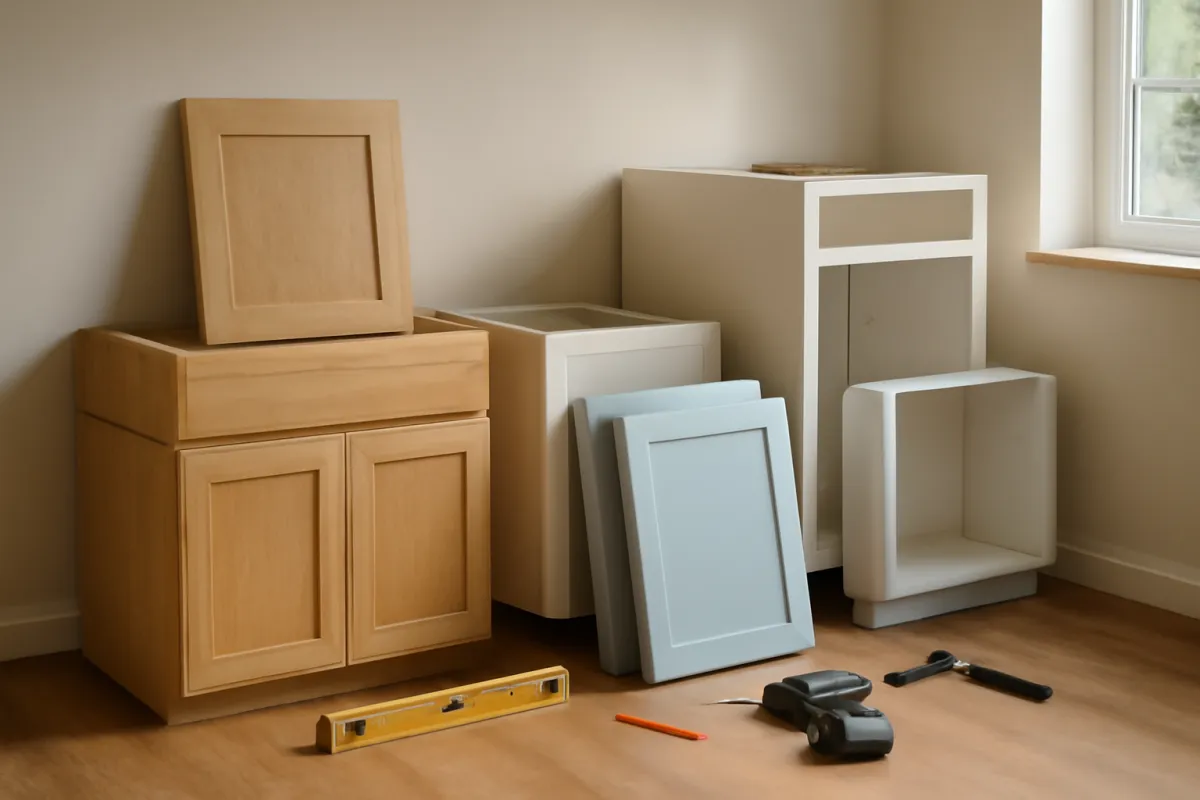
If this cost file convinces you of one thing, let it be this: cabinet painting is a preparation job with a painting step at the end. A durable kitchen finish requires removing every door and drawer front, labeling hinges and hardware so everything returns home, emptying and masking the boxes, degreasing every surface until it squeaks, scuff-sanding or chemically deglossing so the primer has something to grip, filling dings and old hardware holes, vacuuming and tack-clothing the dust, and only then priming with a bonding primer built for slick surfaces. Skip or rush any of those steps and the finish fails the way failed cabinet paint always fails: chipping around handles, peeling at the sink, grease bleeding through the white.
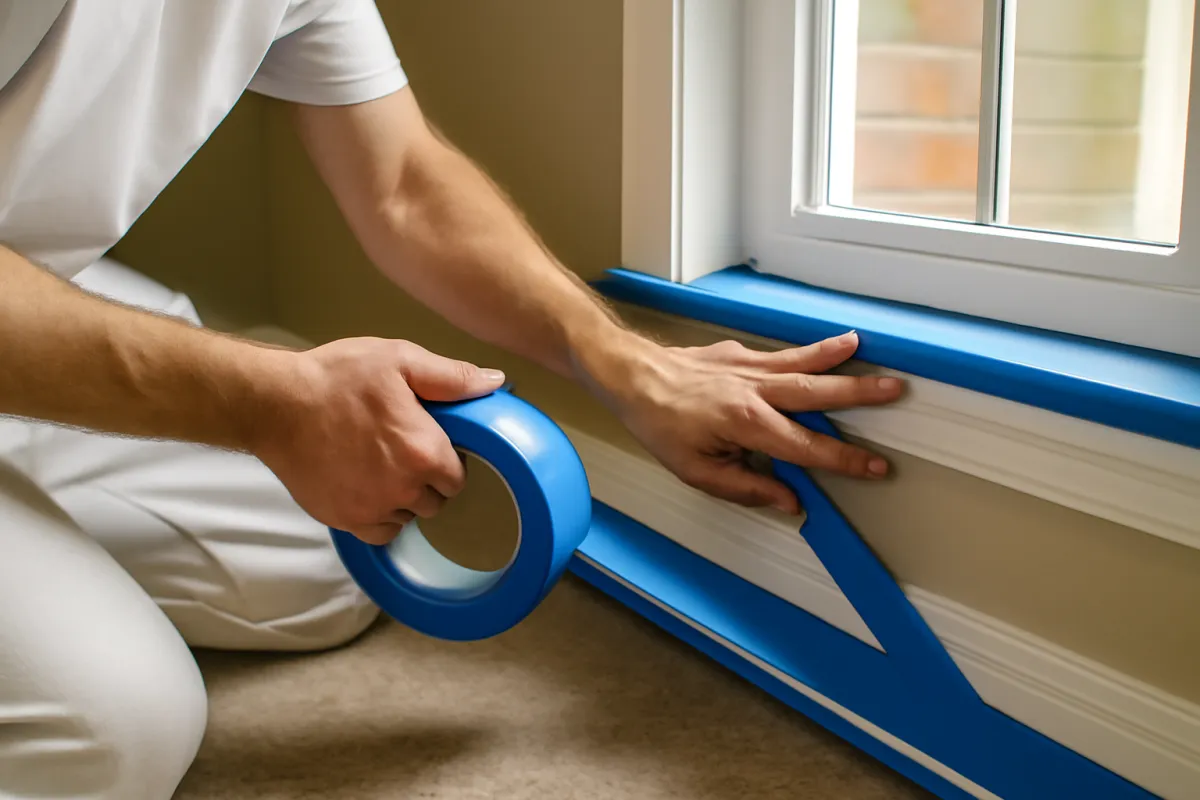
This is also the honest explanation of the professional price. When a pro bid seems high against the cost of a gallon of paint, the gap is these hours: a crew commonly spends well over half the project on prep, and the good ones itemize it, naming the degreaser step, the sanding, the primer product, and the coat count. It is equally the explanation of most DIY disappointment, because the prep is boring and the painting is fun, and the finish quality is decided entirely during the boring part. Whichever route you choose, judge it on prep. A bidder who cannot describe their prep sequence, or a weekend plan that jumps straight to the color coat, is the same mistake at two different prices.
Brushed, rolled, or sprayed: the finish decision
The finish method is the biggest price lever after kitchen size, and it is a genuine quality fork rather than an upsell. Spraying is the factory look: atomized coats lay down glass-smooth with no brush marks, which is why furniture-grade cabinet work is sprayed, usually doors off-site in a controlled booth or tented space while the frames are masked and sprayed or hand-finished in place. The equipment, masking time, and skill push sprayed bids toward an illustrative $4,800 midpoint on a typical kitchen. Brush-and-roll is the craft look: a quality enamel laid on with good brushes and foam rollers, leveling well but keeping a faint hand-applied character, commonly landing near an illustrative $3,300 midpoint for the same kitchen.
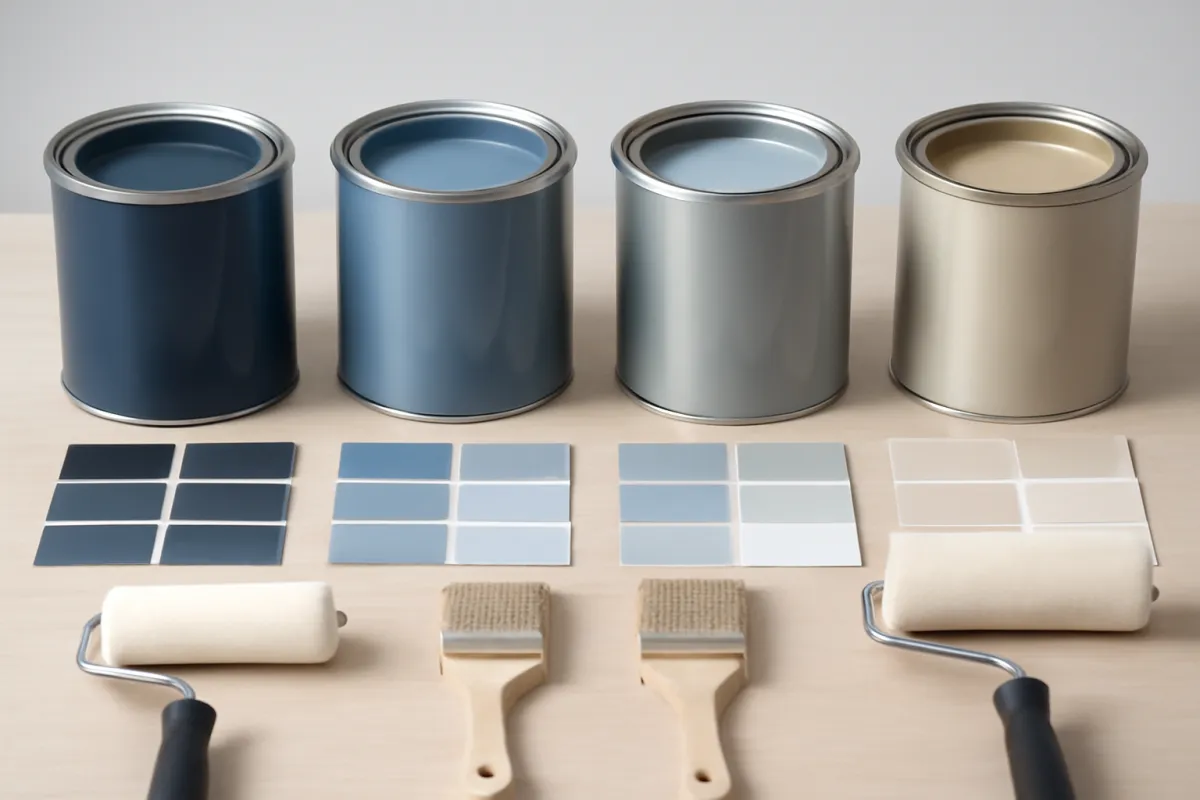
Neither is wrong. A careful brush-and-roll job with modern self-leveling enamels can look very good, and some homeowners prefer its slight texture in traditional kitchens; a sprayed finish is the right answer when you want the doors to read as factory-new, especially in flat modern styles where every ripple shows. Two cautions keep the choice honest. First, the method cannot rescue the prep: a sprayed coat over grease fails exactly like a brushed one, only smoother. Second, confirm what product is going on, because cabinet-grade enamels and catalyzed finishes are formulated for gripping hands and scrubbing, and ordinary wall paint on cabinet doors is the classic durable-looking failure. Ask every bidder both questions, method and product, and weigh the answers together.
Painting wood, MDF, laminate, and thermofoil doors
What your doors are made of quietly decides how paintable they are, and it is worth identifying before you price anything. Solid wood and wood veneer are the ideal case: they sand, they take primer, and they hold paint for years, with only open-grained species like oak needing a decision about whether to fill the grain for a smooth look or let it show through. MDF and painted factory finishes are nearly as friendly, provided any exposed edges are sealed properly. These are the kitchens where the full illustrative bands in this cost file apply straightforwardly.
Laminate and thermofoil are the complicated cases. Laminate’s slick plastic face gives paint nothing to bite without careful deglossing and a dedicated bonding primer, and even done right it is less forgiving of impact chips than painted wood. Thermofoil, the vinyl skin heat-wrapped over MDF on many builder-grade doors, adds a failure mode of its own: the foil can peel at edges and around heat sources, and paint applied over lifting foil goes with it. A candid painter will tell you when doors are poor candidates, and the honest alternatives are replacing just the doors and painting the frames to match, or stepping up to refacing. If a bidder quotes your thermofoil kitchen without mentioning any of this, that bid is not cheaper; it is just earlier in its failure timeline.
Where the money goes on a professional repaint
To make the labor story concrete, here is an illustrative breakdown of a professional cabinet repaint, summing to 100. The exact shares shift with the job, a heavy-grease kitchen grows the prep band, a sprayed finish grows the finishing band, but the shape is the constant: materials are a sliver, and hours are the bill.
Where the money goes on a professional cabinet repaint
Illustrative share of a typical doors-off repaint, summing to 100. Prep and finishing hours dominate; the paint itself is a small slice.
Shares are illustrative and vary by job. A rough, greasy kitchen tilts the bar toward prep; a premium sprayed finish tilts it toward the painting and finishing band.
Read the bar as your bid-comparison key. When two quotes on the same kitchen differ sharply, the difference lives almost entirely in the two big labor bands, and the cheaper bid has usually thinned one of them, fewer prep steps or fewer coats. Since the materials slice is small and similar everywhere, asking each bidder to describe exactly what happens inside the prep and painting bands is the fastest way to find out what you are actually being quoted.
Illustrative cost by approach
Stacking the approaches side by side puts the whole decision on one chart, from a DIY weekend budget to the full cabinet replacement that a repaint is usually trying to avoid. Each bar is an illustrative midpoint for a typical medium kitchen; your size, condition, and market set where you land around it.
Illustrative midpoint cost by approach, typical kitchen
Midpoint estimates for a medium kitchen of 25 to 30 doors and drawer fronts. The repaint options sit an order of magnitude below replacement.
Illustrative midpoints, not quotes. The DIY bar excludes the 40 to 60 hours of your own labor, which is the real price of that option.
Two readings matter. First, the giant step in the chart is not between brushing and spraying; it is between painting anything and replacing anything, which is why confirming your boxes are sound is worth more than any other cost decision on this page. Second, the DIY bar is honest only if your time is free and your patience is real: priced at even a modest hourly value, 50 hours of your labor quietly lifts that bar into the professional range. Sketch your own version of this chart with the job cost estimator before you pick a lane.
Painting versus refacing versus replacing
Paint is the first rung of a three-rung ladder, and choosing the right rung matters more than optimizing the price on the wrong one. Painting, this cost file’s subject, changes the finish and nothing else: same boxes, same doors, same layout, new color, at an illustrative $2,200 to $7,000 professionally. Refacing keeps the boxes but replaces what you touch and see, new doors and drawer fronts with veneer over the frames, commonly an illustrative $4,000 to $10,000, and it is the answer when the doors themselves are worn, dated in profile, or made of failing thermofoil while the boxes underneath remain square and solid.
Replacement is the remodel rung. As our kitchen remodel cost file details, new stock cabinets commonly run an illustrative $100 to $300 per linear foot before installation, semi-custom and custom climb steeply from there, and a typical kitchen’s cabinet line alone reaches from a few thousand dollars to well past twenty thousand, which is why cabinets anchor the whole remodel budget. The diagnostic for choosing your rung is simple and physical: open the doors and check the boxes. Swollen particleboard around the sink, delaminating panels, racked frames, or drawers that never tracked right are structural problems paint cannot fix, and spending repaint money on them is the classic false economy. Sound boxes, tired finish: paint. Sound boxes, failed doors: reface. Failed boxes: budget for the remodel conversation instead.
How a repaint fits a kitchen refresh budget
Zooming out one level shows why cabinet paint earns its reputation as the highest-leverage move in a kitchen refresh. In our kitchen remodel cost file, a minor cosmetic refresh, keeping the layout and the boxes while updating what shows, commonly runs an illustrative $12,000 to $25,000, and cabinet repainting is one of its anchor moves alongside new counters, hardware, backsplash, and lighting. Within that bundle, the illustrative $2,200 to $7,000 repaint is the line doing the most visual work per dollar, because the cabinet faces are most of what the eye reads as “the kitchen.”
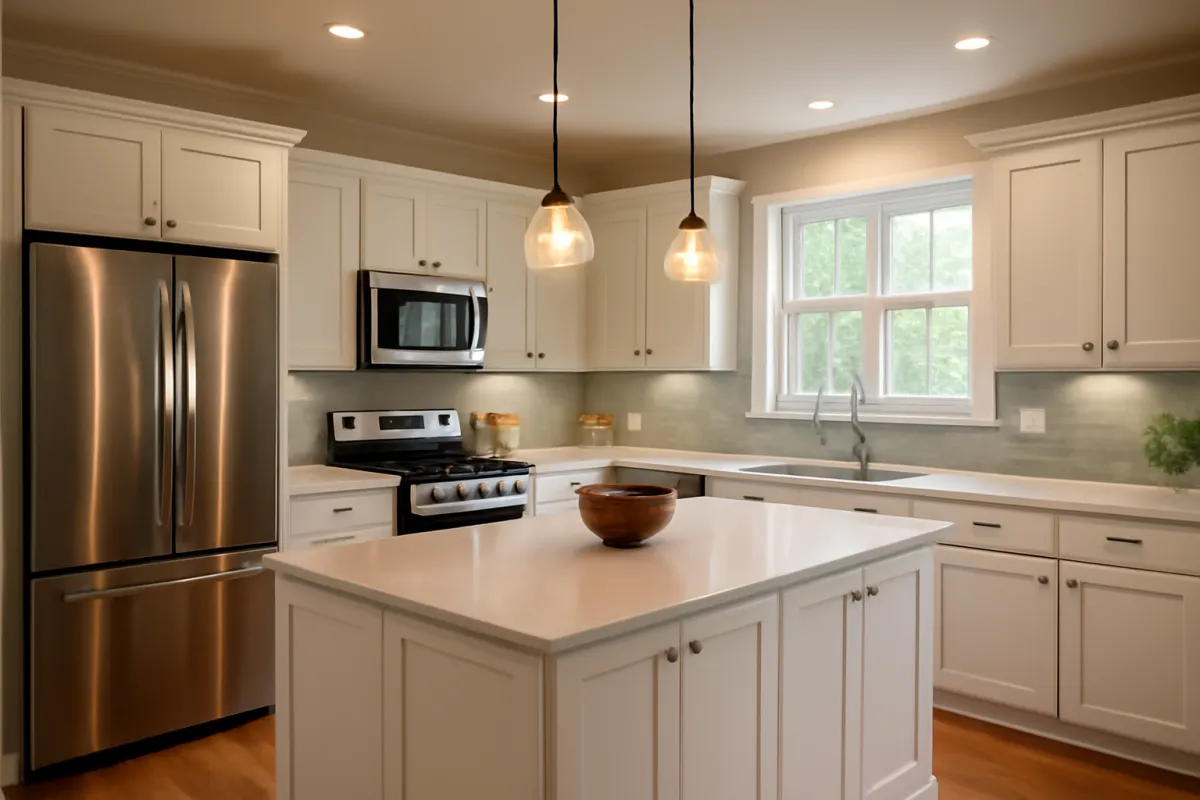
The same logic scales down to a paint-only refresh: repainted cabinets, new knobs and pulls, and a repainted room, our room painting cost file prices the walls at an illustrative few hundred dollars, can shift a dated kitchen for well under five figures all in. It also travels to other rooms: bathroom vanities are small cabinet runs with the same logic and smaller bills, and a vanity repaint is a common line inside the refresh tier of our bathroom remodel cost file. The planning discipline is to decide which tier you are actually in before spending: a repaint that was quietly hoping to fix bad boxes becomes wasted money, while a full remodel bought when paint would have satisfied you is the most expensive version of the same regret.
Hardware, hinges, and the small add-ons
A repaint is the natural moment for the small decisions that ride along with it, and pricing them consciously keeps the project from drifting. Hardware is the big one. New knobs and pulls commonly run an illustrative $2 to $15 apiece at the mainstream tier, so re-hardwaring a 30-piece kitchen is commonly an illustrative $100 to $400, a small line that multiplies the visual effect of the paint more than any other dollar on the project. If the new pulls use the same hole spacing as the old, installation is minutes per door; a different spacing means filling and redrilling every door, which is exactly the kind of repair work to fold into the painter’s prep while the doors are off and flat.
Hinges deserve the same glance. Old self-closing hinges that sag or slam undermine a fresh finish’s feel, and swapping to soft-close hinges commonly adds an illustrative few dollars per door in parts, plus modest labor while everything is already apart. Interiors are a scope decision to make explicitly: most repaints leave box interiors alone, and painting them adds real hours for surfaces nobody sees, but glass-front and open shelving interiors show, so count those cabinets into the painted scope by name. Crown molding, light rails, and toe kicks are the trim pieces bidders sometimes count and sometimes silently exclude, so ask. None of these add-ons is expensive alone; the discipline is simply naming each one in the scope before bids are compared, because a quote that includes redrilling, soft-close hinges, and two glass-cabinet interiors is honestly more expensive than one that includes none of them, and you want to know which one you are reading.
Hiring a cabinet painter: getting honest quotes
The hiring mechanics for this trade are the standard ones, compressed to a smaller job. Get two or three bids from painters who do cabinets specifically, not just walls, and who will visit the kitchen rather than quote from photos alone. A real bid counts the pieces, doors, drawer fronts, frames, and end panels, names the prep sequence and the primer and finish products, states whether doors are sprayed off-site, gives the coat count, and covers the practical questions: how many days, whether the kitchen stays usable, and what the warranty covers, chipping and peeling being the ones that matter.
Then make the bids comparable before comparing them, the core discipline of our manual on comparing contractor quotes: same piece count, same finish method, same product tier. Ask each bidder to walk you through a recent kitchen, because photos of their actual finish work, especially close-ups around handles and sink doors a year later, tell you more than any adjective. Pricing signals travel the same as any trade: a bid dramatically below the field has usually thinned prep or coats, and a premium bid should be able to say what the premium buys, typically off-site spraying, a catalyzed finish, or heavier repair work. Weekday scheduling flexibility and off-season timing can genuinely move the price, since this is indoor work crews love to fill winter calendars with.
A worked example: one medium kitchen repainted
Walk one illustrative kitchen through the whole framework. The kitchen is a typical medium galley plus island: 18 doors, 12 drawer fronts, sound wood-veneer boxes, one previous owner’s worth of cooking film, going from honey oak to white, which is the demanding direction. The homeowner counts pieces first, so every bid gets the same scope: 30 pieces plus frames and island sides.
Three bids arrive. A brush-and-roll bid prices doors at an illustrative $100 each and drawer fronts at $40, plus $1,000 for frames, masking, and setup: $1,800 for doors, $480 for drawers, $1,000 for the rest, roughly $3,300 all in. A sprayed bid prices $150 per door and $60 per drawer front with $1,380 for frames and setup, doors finished off-site: about $4,800. A third bid comes in at $2,100 flat with a one-day timeline, which the piece math exposes immediately: 30 pieces plus frames in one day means prep is being skipped, and the homeowner declines it. Both real bids sit inside the illustrative $2,200 to $7,000 band; the grease and the dark-to-white change put this kitchen mid-band rather than low. The homeowner picks the sprayed bid for the flat-panel island and the factory look, accepts a four-day timeline with the kitchen semi-usable, and holds back a labeled jar of finish paint for future touch-ups. Rebuild the same math on your own piece count with the estimator and the companion on this page.
How long a painted finish lasts
Durability is where cabinet paint earns or loses its reputation, and the honest answer is that the finish lasts as long as the prep underneath it. A properly degreased, sanded, primed, and top-coated kitchen in a quality cabinet enamel commonly gives many years of normal service, aging gracefully into minor wear at the grab points rather than failing. A rushed job announces itself early: chips blooming around handles inside the first year, peeling on the sink base where water and hands meet, grease shadows bleeding through the color. Same paint, same kitchen, different prep.
Living with a painted kitchen has its own small disciplines that stretch the finish. Give fresh paint its full cure time, commonly a few weeks, before scrubbing or leaning objects against it, because enamel that is dry to the touch is not yet at full hardness. Clean with mild soap rather than abrasives, wipe steam and splatter zones rather than letting film rebuild, and treat the sink base and dishwasher edge as the wear zones they are. Keep a labeled jar of the finish paint and a small artist’s brush; a five-minute touch-up habit keeps grab-point wear invisible for years. And when the time comes, a painted kitchen repaints far more easily the second time, since the surface is already a known, primed quantity, which is a quiet long-term economy of choosing paint in the first place.
How to save on cabinet painting
The savings on this project come from scope and sequencing, not from talking a painter down. These are the levers that reliably move the bill without moving the quality.
- Count your pieces and fix the scope first. Bids on an identical counted scope compete honestly, and you catch the low bid that got low by counting fewer doors.
- Do the demolition-grade labor yourself. Some painters will discount meaningfully if you remove doors, pull hardware, and degrease before they arrive. Confirm it in the bid rather than assuming.
- Keep the color change modest. Staying in the same tonal family can save a full coat across every surface. The dark-to-white transformation is beautiful and priced accordingly.
- Choose brush-and-roll where it suits the style. In a traditional kitchen with detailed door profiles, a quality enamel hand finish looks right and commonly saves an illustrative four figures against spraying.
- Time it for the off-season. Interior cabinet work fills painters’ winter calendars, and flexible scheduling is worth asking about directly.
- Pair it with hardware, not with everything. New knobs and pulls cost little and multiply the paint’s effect. Resist letting a repaint snowball into an unplanned refresh; sequence the counters and backsplash as their own decisions.
- Spend the savings on prep, never take savings from it. Any bid that gets cheap by thinning the prep bands is deferring its cost into a finish that fails early.
The pattern across all seven: the paint job is cheap leverage on an expensive room, and it stays cheap when the scope stays disciplined.
Common mistakes when repainting cabinets
The failures on this project are so consistent that a short list prevents most of them.
- Painting over grease. The single most common failure. Kitchen film is invisible until the finish peels; degrease until the rag comes away clean, then degrease the sink base again.
- Skipping the bonding primer. Finish paint applied straight to cabinet surfaces, especially slick factory finishes, chips at the first fingernail. The primer is the adhesion; the color coat is just the color.
- Using wall paint. Ordinary latex never hardens enough for hands and scrubbing. Cabinet-grade enamel costs a little more per gallon on a project where the gallon is the smallest line.
- Painting doors in place. Hinged doors painted vertically drip, bridge at the hinges, and miss the edges. Doors off, labeled, and finished flat is the professional standard for a reason.
- Rushing cure times. Recoating early and rehanging early are how a good finish gets fingerprinted and stuck. The calendar is part of the recipe.
- Painting doomed doors. Peeling thermofoil and swollen particleboard fail under any coating. Diagnose the material first, and move to the reface or replace rung when the doors, not the finish, are the problem.
- Comparing uncounted bids. A flat number without a piece count and prep description cannot be compared with a real bid, and the one-day miracle quote in a thirty-door kitchen is telling you exactly where the day went missing.
Every one of these is avoidable at the cost of patience, which is the true currency of this project at every price point.
The bottom line
The cost to repaint kitchen cabinets runs on two honest tracks: an illustrative $200 to $700 in materials plus 40 to 60 hours if you do it yourself, and an illustrative $2,200 to $7,000 for a professional job on a typical kitchen, per-piece rates of roughly $75 to $175 per door and $30 to $75 per drawer front doing the counting. The spread inside those bands is prep, finish method, condition, color change, and your local labor market, and the spread between them is your weekends. Either way, the money buys hours and adhesion, not pigment, which is why the prep sequence is the part of any plan or bid worth interrogating.
Keep the ladder in view before optimizing any rung: paint transforms sound boxes with tired finishes, refacing rescues sound boxes with failed doors at an illustrative $4,000 to $10,000, and failing boxes need remodel money, not enamel. Count your pieces, fix the scope, gather comparable bids or an honest materials list, and give the boring steps their full time. Every figure in this cost file is illustrative and varies by kitchen, region, and condition, so let counted, itemized local quotes, held against the framework here, be the numbers you act on.
ProsNook offers this cost file as general education on how cabinet painting is priced, not as professional advice, a quote, or a promise of results in your kitchen. Every dollar figure, per-piece rate, percentage, and timeline is illustrative and will vary with your cabinets’ material and condition, your finish choices, your region’s labor rates, and the specifics a painter finds on site, so rely on written itemized local bids rather than any range printed here. Paint products, strippers, and solvents carry their own handling and ventilation precautions worth following exactly, older homes can involve legacy finishes that deserve professional assessment before sanding, and questions about lead or other hazards belong with qualified local professionals. Where structural cabinet problems, plumbing, or electrical work surface mid-project, bring in the appropriate licensed trades rather than painting past them.
Frequently asked questions
How much does it cost to repaint kitchen cabinets?
For a typical medium kitchen with roughly 25 to 30 doors and drawer fronts, a professional repaint commonly runs an illustrative $2,200 to $7,000, with the spread set by the finish level, the condition of the cabinets, your local labor rates, and how much prep the surfaces need. A small kitchen can come in under that band and a large kitchen with an island can run past it. Doing the work yourself commonly costs an illustrative $200 to $700 in paint and supplies, traded against several long weekends of labor. Every figure is illustrative, so let written local quotes set your real number.
How much does cabinet painting cost per door?
Per-piece pricing is the most common way pros quote this work, and illustrative figures commonly run about $75 to $175 per cabinet door and $30 to $75 per drawer front, with the frames and visible box sides priced alongside, often bringing a typical kitchen to a low-to-mid four-figure total. Sprayed finishes, heavy grease or damage, a dark-to-light color change, and high local labor rates all push toward the top of the per-piece range. When you compare bids, confirm each one counts the same doors, drawer fronts, and frames, because a low per-door rate over a smaller counted scope is not actually cheaper.
Is it cheaper to paint cabinets or replace them?
Painting is dramatically cheaper, which is exactly why it anchors the budget end of a kitchen refresh. An illustrative professional repaint of a typical kitchen runs $2,200 to $7,000, while refacing, new doors and veneer over the existing boxes, commonly runs $4,000 to $10,000, and new stock cabinets installed commonly start around five figures for the same kitchen. The catch is that paint only makes sense on boxes that are sound: water-swollen, delaminating, or badly built cabinets do not become good cabinets with a new color. Sound boxes and a tired finish are the case paint was made for.
Can I paint my kitchen cabinets myself?
Yes, and it is one of the few kitchen projects where DIY genuinely holds up, if you respect the prep. The materials commonly run an illustrative $200 to $700, degreaser, sandpaper, primer, quality cabinet paint, and either good brushes and foam rollers or a rented sprayer, and the real price is time: a typical kitchen commonly absorbs 40 to 60 working hours across two or more weekends, most of it cleaning, sanding, priming, and waiting on cure times. The DIY finishes that fail were almost always rushed through prep. If you can be patient with the boring steps, DIY cabinet paint can look genuinely good.
Why is professional cabinet painting so expensive?
Because almost none of the money is paint. A proper professional job removes every door and drawer front, labels the hardware, degreases years of cooking film, sands or deglosses, repairs dings, sprays or brushes bonding primer, then applies multiple finish coats, often spraying doors off-site in a controlled space while the boxes are masked and finished in place. That is skilled labor across several days, and labor is most of the bill, an illustrative pattern consistent across trade work. A finish that survives daily grabbing, steam, and scrubbing is what you are buying, and it is the prep hours, not the gallon of paint, that deliver it.
How long does painted cabinet finish last?
A properly prepped and painted finish on sound doors commonly holds up for many years of normal kitchen use, while a rushed one can start chipping around handles and sink edges within the first year or two, which is why prep quality is the whole game. Longevity also depends on the coating used, how hard the kitchen lives, and whether the doors were sprayed with a durable cabinet-grade product or coated with ordinary wall paint, which is the classic shortcut failure. Treat touch-up as normal maintenance: keeping a labeled jar of the finish paint lets you fix wear spots in minutes for years.
Do painted cabinets need to be sprayed, or is brushing okay?
Both are legitimate, and the choice moves the price and the look. Spraying lays down a smooth, factory-like film with no brush marks and is the standard for high-end results, but it demands masking, equipment, and skill, so sprayed bids commonly run higher, an illustrative $4,800 midpoint against roughly $3,300 for quality brush-and-roll on a typical kitchen. A careful brush-and-roll job with a quality enamel and foam rollers can look very good, with a slight hand-applied texture some homeowners actually prefer. What matters more than the method is the prep underneath it, so judge bidders on their prep process first and their spray rig second.
Does painting kitchen cabinets add value to a home?
It is one of the more commonly cited high-leverage cosmetic updates, because the kitchen carries outsized weight with buyers and paint transforms its look for a fraction of remodel money. That said, treat any specific return-on-investment percentage you hear with caution, since real outcomes vary by market, execution quality, and color choices, and a chipping or drippy paint job can subtract appeal rather than add it. The honest framing: on sound boxes, a well-executed repaint is a modest spend that makes a dated kitchen read as cared-for, which helps a sale without pretending to be a renovation.