What's on this page
- What a garage door replacement costs
- Single door versus double door
- Cost by door material
- Steel doors and what gauge means
- Aluminum and full view glass doors
- Wood and wood composite doors
- Fiberglass and vinyl doors
- Single layer, two layer and three layer construction
- What R-value means for an attached garage
- Window inserts and glass options
- Decorative hardware and carriage house overlays
- The opener is a separate line
- Chain, belt and direct drive compared
- Can you reuse the opener you already have
- The spring system, torsion versus extension
- Track, headroom and the geometry of the opening
- Labor, the crew, and how long the day takes
- Old door removal and haul away
- Structural surprises that change the price
- Wind load rated doors and local code
- Permits, inspections and HOA rules
- Where a replacement budget goes
- Repair or replace, how to tell
- What a broken spring actually costs
- Two single doors versus one double
- Weather seals and the rest of the opening
- A worked example on a 16 by 7 steel door
- Regional and seasonal price swings
- DIY versus hiring an installer
- What a good garage door quote itemizes
- Red flags in a garage door pitch
- The bottom line
Short answer: A standard double width steel garage door installed with a fresh spring system and the old door hauled away commonly lands around an illustrative $1,300 to $3,600, while a single width door of the same construction sits nearer $750 to $2,000. Construction moves the price more than appearance, with single, two and three layer sections being different products. The opener is a separate line at an illustrative $250 to $1,200 installed.
Garage door replacement cost is one of those numbers that looks simple from the driveway and stops being simple the moment somebody measures the opening. The door itself is a stack of hinged sections, but what you are actually buying is an assembly: sections, hinges, rollers, track, a counterbalance spring system sized to the exact weight of your door, brackets bolted into the jambs, seals around the perimeter, and, on most quotes, a motor hanging from the ceiling that is technically a separate product entirely. Two bids on the same garage can differ by more than a thousand dollars purely on which of those pieces each one included.
Illustratively, a standard double width steel door installed with a fresh spring system and the old door hauled away commonly lands somewhere around $1,300 to $3,600, while a single width door of the same construction sits nearer $750 to $2,000. This cost file prices the job the way an installer builds it up: width first, then material, then how many layers the sections are made of, then the opener as its own line, then the spring system, the labor, the disposal and the surprises hiding behind the trim. Our cost file on building a garage covers the structure the door hangs in, and our estimate reading walkthrough explains how to pull these lines apart on a written bid. Price your own opening in the job cost estimator as you read.
Key takeaways
- Width is the first fork: illustratively a double width steel door installed runs around $1,300 to $3,600, and a single width version of the same door around $750 to $2,000.
- Construction moves the price more than appearance does, with single layer, two layer and three layer sections representing three different products rather than three trim levels.
- The opener is a separate purchase, illustratively $250 to $1,200 installed depending on drive type, and a bid that omits it is not cheaper, it is smaller.
- Springs, cables, rollers, a bent track section and a dead opener are repairs in the low hundreds, not reasons to replace a sound door.
- Rotted jambs, an out of square opening, insufficient headroom and locally mandated wind load ratings are the four surprises that most often move a quote after the tape measure comes out.
What a garage door replacement costs
Priced honestly, a garage door replacement is a width figure multiplied by a construction figure, with a short list of add ons that either apply to your opening or do not. As an illustrative guide, a standard double width steel door in ordinary two layer insulated construction, installed with new track, new rollers, a new torsion spring system and the old door removed, commonly falls somewhere near $1,900 at the midpoint, inside a band of roughly $1,300 to $3,600 across the range of steel options. A single width door in the same construction commonly lands near $1,150, inside a band of roughly $750 to $2,000.
What sits outside those bands is worth naming immediately, because it is where bids diverge. The opener is outside. Window inserts are outside. Decorative overlays and hardware are outside. Any repair to the jambs, header or floor slab at the opening is outside. Any wind load rated assembly your jurisdiction requires is outside. None of those are padding, and all of them are things a careful installer will have looked at before writing a number.
The practical move is to ask for the price in layers rather than as one figure. Door and hardware, spring system, labor, disposal, opener and opening repairs are six different things, and a quote that collapses them into a single line is almost impossible to compare against another quote built differently. The estimator keeps width, material, opener and opening condition as separate fields for exactly that reason.
Single door versus double door
Width is the first fork because it changes almost everything downstream. A single width door is commonly 8 or 9 feet wide, occasionally 10, and typically 7 or 8 feet tall. A double width door is commonly 15, 16 or 18 feet wide at the same heights. The double is not simply twice the material: it is a wider span that needs a heavier top section, a longer torsion tube, more substantial spring sizing and, on wider or heavier doors, sometimes a strut across the top section to keep it from flexing.
As a rule of thumb that holds reasonably well across materials, a single width door costs illustratively around 55 to 65 percent of the equivalent double, not half. The fixed costs of the job, meaning the trip, the setup, the removal, the spring calculation and the final adjustment, do not shrink with the opening. This cost file uses roughly 60 percent for single width figures throughout, and around 115 percent for extra wide 18 foot openings, which is why a single door rarely feels like the bargain the square footage suggests.
Height matters less than width but is not free. An 8 foot tall door adds a section, adds weight, and on some models moves you into a different spring package. If you are replacing a 7 foot door with an 8 foot door to fit a taller vehicle, that is a structural change to the opening rather than a door order, and it belongs in the same conversation as the header. Measure the existing opening at three points across and three points down before anybody quotes.
Cost by door material
Material is the second fork, and the spread is wide enough that it dwarfs almost every other decision. The chart below uses illustrative installed midpoints for the same standard double width opening, including track, rollers, a spring system and removal of the old door, and excluding the opener in every case so that the comparison is like for like.
Illustrative installed midpoints by material, standard double width door
Door, track, hardware, spring system, labor and haul away of the old door. Opener, window inserts, decorative overlays and any repair to the opening are excluded from every bar.
Illustrative midpoints only. Multiply by roughly 0.6 for a single width opening and by roughly 1.15 for an extra wide one. Real quotes move with local labor rates, opening condition, glass content, finish and any wind load requirement.
Two readings matter more than the individual bars. First, the three steel rows are not three grades of the same door: they are three different constructions, and most of the money between them buys insulation and rigidity rather than a nicer surface. Second, everything from vinyl upward is a smaller market with fewer stock sizes, which means longer lead times and less room to negotiate.
The other thing worth noticing is how much of the range sits inside steel alone. A homeowner who decides on steel has already made the biggest cost decision, and the remaining choices, meaning layers, windows and hardware, move the number within a band rather than across bands. That is why the sensible sequence is material first, construction second, appearance last.
Steel doors and what gauge means
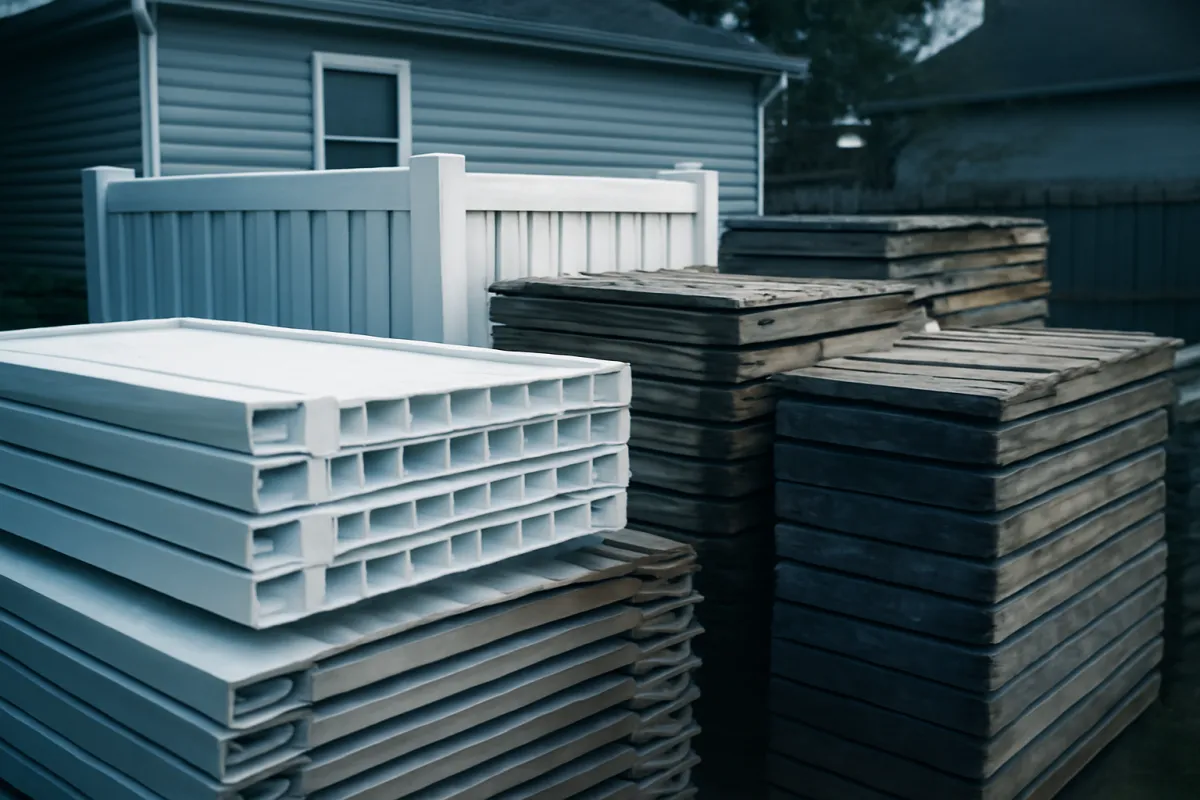
Steel is the default for good reasons: it is the cheapest way to get a durable door, it takes a factory finish well, it is available in every common size from stock, and it can be built as a single skin or as an insulated sandwich. Illustratively, a steel double width door installed runs from around $1,300 for plain single layer construction up to around $2,700 for a well built three layer door, which is the widest useful range of any material on the list.
Gauge is the specification that separates a flimsy steel door from a solid one, and it is counterintuitive because the number counts down as the steel gets thicker. Economy doors are commonly built from 25 or 27 gauge skins, mid range doors from around 24 gauge, and heavier residential doors from 21 or 20 gauge. The practical difference shows up as dent resistance, as how the door sounds when it closes, and as how well it holds its shape over a wide span. Ask for the gauge in writing, because two doors that look identical in a showroom photo can be built from noticeably different steel.
One caution: gauge is stated by the manufacturer and is not always measured the same way across brands, and on an insulated door the stated gauge often refers only to the exterior skin. That is not a reason to ignore it, it is a reason to treat gauge as one comparison point alongside construction, warranty terms you have read yourself, and the weight of the door, which the installer can tell you because the spring system depends on it.
Aluminum and full view glass doors
Aluminum doors in residential use most often mean a full view or contemporary door: an aluminum frame holding glass or acrylic panels, sometimes clear, sometimes obscure, sometimes tinted. Illustratively, a double width aluminum and glass door installed commonly runs somewhere around $3,400 at the midpoint, and considerably more with insulated or specialty glazing.
The appeal is obvious and the trade offs are real. Aluminum is light, which is easy on the opener and the spring system, and it does not rust the way an untreated steel edge can. It is also soft, which means it dents more readily than heavy gauge steel, and a frame full of glass is a poor insulator no matter what the frame is doing. If you want daylight in the garage and the garage is detached and unconditioned, this is a reasonable choice. If the garage is attached to living space in a cold climate, understand that you are trading thermal performance for light.
Glass content is where the price runs away. Clear tempered glazing is the baseline, and insulated units, laminated units, frosted or seeded glass and tinted glass each add cost per panel across a door that may hold twenty or more panels. Ask for the price of the frame and the price of the glazing separately, because the same frame with different glass can be two very different quotes.
Wood and wood composite doors
Real wood is the most expensive common option and the most demanding to own. A custom solid wood double width door installed can illustratively reach around $7,500 and beyond, and the number is genuinely open ended because these are made to order rather than pulled from stock. What you get for it is a door with depth and grain that no printed finish reproduces, in whatever species, stain and panel layout you specify.
What you also get is a maintenance schedule. Wood moves with humidity, holds moisture at the bottom rail where it meets a wet slab, and needs refinishing on a cycle that depends on sun exposure and climate. A south facing wood door in a hot dry climate is a different ownership proposition from a north facing one under an overhang. Budget for refinishing the way you would budget for painting the house, and read our house painting cost file for how that kind of recurring exterior work gets priced.
Wood composite sits in between and is often the smarter buy. A composite door uses an engineered core with a wood or wood look overlay, which gets you the carriage house appearance and the visual depth with far less movement and far less refinishing. Illustratively, a double width wood composite door installed commonly runs around $4,600 at the midpoint. It is heavier than steel, so the spring sizing and the opener rating both need to account for it.
Fiberglass and vinyl doors
Fiberglass doors use a molded fiberglass skin over a frame, frequently with an insulated core, and they exist mainly to solve two problems: they can be molded to imitate wood grain convincingly, and they do not rust, which matters in coastal air. Illustratively, a double width fiberglass door installed commonly runs around $3,900 at the midpoint. The trade off is brittleness in cold weather and a finish that can fade with heavy sun exposure over many years.
Vinyl doors are built around a vinyl skin, usually over an insulated core and a steel or aluminum frame, and their selling point is that they do not dent, do not rust and do not need painting because the color runs through the material. Illustratively, a double width vinyl door installed commonly runs around $2,900 at the midpoint. The color palette is narrow, the panel styles are limited, and vinyl becomes less impact tolerant in very cold temperatures.
Both of these sit in the same part of the market: more expensive than ordinary steel, cheaper than wood, and chosen for a specific durability reason rather than for price. If nobody at the house is going to repaint a door, and the local air is salty or the sun is brutal, that reason is real. If the door is under a deep overhang in a mild climate, it is harder to justify the premium over a good three layer steel door.
Single layer, two layer and three layer construction
This is the specification that decides how a door performs, and it is described in three tiers. A single layer door is one skin of steel with nothing behind it, stiffened only by the shape pressed into the panel. A two layer door adds a bonded insulation board, most often polystyrene, behind that skin. A three layer door sandwiches insulation, usually injected polyurethane, between two skins so the section becomes a rigid composite panel.
The differences show up in four places at once. Insulation value rises through the tiers. Rigidity rises sharply, because a sandwich panel resists twisting in a way a single skin cannot. Noise falls, both the drumming sound of the door itself and the amount of street noise reaching the garage. And weight rises, which is why the spring system has to be sized to the finished door rather than to the opening.
Illustratively, moving from single layer to two layer on a double width steel door adds around $600, and moving from two layer to three layer adds around $800 more. On an attached garage that money is doing several jobs at once, which is why the two layer door is the most common sensible default and the three layer door is the upgrade that most often pays for itself in feel rather than in arithmetic.
What R-value means for an attached garage
R-value on a garage door is a manufacturer stated number measured at the center of a panel, and understanding that phrasing is the whole trick. It describes the panel, not the door, and certainly not the opening. Commonly cited figures put two layer polystyrene doors somewhere around R-6 to R-9 and three layer polyurethane doors somewhere around R-12 to R-18, with a bare single layer steel door contributing essentially nothing.
For an attached garage the number is only useful in context. Heat moves through the door, but it also moves around the perimeter where the seals meet the jambs, under the bottom seal where it meets an uneven slab, and through the shared wall and ceiling between the garage and the house. A three layer door in an opening with a torn bottom seal, hung under an uninsulated ceiling below a bedroom, will not deliver what its rating implies. If the goal is a warmer room above the garage, the door is one of three or four things to fix, and our attic insulation cost file explains how the same reasoning works for the ceiling plane.
There is a second reason to care about insulated construction that has nothing to do with energy. An insulated garage buffers the house from outdoor temperature swings, keeps a laundry or a mechanical room in the garage from freezing, and makes the space usable as a workshop for more of the year. Those are the benefits homeowners actually report, and none of them appear in the R-value.
Window inserts and glass options
Windows are priced per opening, not per door, which is why a top row across a double width door adds up quickly. Illustratively, plain stock glazing in a standard insert commonly adds around $50 to $150 per window, and decorative, obscure, insulated or grilled glass commonly adds around $100 to $400 per window. A four window top row on a double door therefore lands somewhere around $200 to $800 as a line item.
Beyond price, windows change three things. They add light, which is the reason people want them. They add weight in the top section, which the spring calculation has to absorb. And they add a thermal weak point in an otherwise insulated door, which is a real consideration on an attached garage in a cold climate, though insulated glazing narrows the gap.
There is a practical decision hiding here about placement and privacy. A top row of obscure or seeded glass gives daylight without giving the street a view of the garage contents, and it puts the glass above the height most likely to take a stray ball or a snow shovel. Clear glass in a lower section looks striking and is the most exposed part of a door. Ask what glazing the quote assumes, because a quote that says only “windows” has not told you which of those two you are buying.
Decorative hardware and carriage house overlays
Decorative hardware means the strap hinges, handles, clavos and pull rings that make a modern sectional door read as an old side hinged carriage door. It is genuinely inexpensive: a set for a double door illustratively runs around $40 to $150 in materials, with installation usually folded into the door labor because it happens on the ground before the sections go up.
Overlays are a different order of expense. A true carriage house overlay is an applied layer of trim board and cladding on the face of the sections, and it adds material, weight and factory labor. Illustratively, an overlay package commonly adds around $600 to $2,000 over a plain door of the same construction on a double width opening. The weight is not trivial, and again it flows into the spring sizing and the opener rating.
The judgement call is where visual return sits against cost. Hardware alone changes the character of a plain door for very little money and is the single best value cosmetic upgrade on this list. A full overlay is a much larger commitment that mostly makes sense when the door faces the street and dominates the front elevation, which on many houses it does. If you are also pricing exterior work, our siding replacement cost file is a useful companion, since door and siding decisions are usually made together.
The opener is a separate line
The single most common source of confusion in garage door quotes is that the opener is a separate product. The door is a mechanical assembly balanced by springs, and a person can lift a properly balanced door by hand. The opener is a motor that does the lifting for you and holds the door closed. They are bought separately, installed separately, warranted separately and, importantly, they fail separately.
Illustratively, an opener installed alongside a new door runs around $250 to $500 for a chain drive, around $350 to $750 for a belt drive, and around $500 to $1,200 for a wall mounted direct drive unit. Those figures assume the crew is already on site for the door, which removes a separate trip charge and is why the same opener bought as a standalone service call tends to sit higher in its band.
Accessories are their own small lines. A wireless keypad for the exterior illustratively adds around $40 to $90, a smart or wifi module where it is not built in around $50 to $120, and additional remotes a modest amount each. Battery backup is built into many current units rather than sold separately, and in some jurisdictions it is required, which is one more thing to confirm locally rather than assume.
Chain, belt and direct drive compared
Chain drive openers pull the door with a metal chain running along a rail. They are the cheapest, they are mechanically simple, they last a long time, and they are the loudest. On a detached garage, or an attached garage with no bedroom above it, the noise is a non issue and the savings are real.
Belt drive openers replace the chain with a reinforced rubber belt. They are noticeably quieter, which is the entire point, and they cost illustratively a hundred to two hundred dollars more installed. If there is a bedroom over the garage or a shared wall with a living room, this is the upgrade most homeowners are happiest with after the fact.
Direct drive units, including wall mounted jackshaft designs that sit beside the door rather than on the ceiling, move the motor onto the torsion tube or onto a stationary chain. They are quiet, they free up ceiling space entirely, and they are the answer in a garage with a cathedral ceiling, an overhead storage rack or a car lift. They cost the most, they require a torsion spring setup rather than extension springs, and they need a solid mounting point beside the opening. If the opener needs a new circuit or a new ceiling receptacle, that is electrical work priced separately, and our electrician cost file covers how those small jobs get billed.
Can you reuse the opener you already have
Frequently yes, and reusing a sound opener is one of the more effective ways to keep a replacement project small. The installer disconnects it from the old door, hangs the new door, and reconnects the arm to the new top section. The labor is minor and often already inside the door price.
Four tests decide it. Does the unit run smoothly and quietly now, without hesitation or grinding? Do the photo eye sensors and the safety reversal work correctly when tested? Is the unit rated for the weight of the new door, which matters most when you are moving from a thin single layer door to a heavy three layer or overlay door? And is the installer willing to reconnect it and stand behind that connection rather than disclaiming it in the contract?
If any of those is a no, replacing the opener while the crew is already on site is the cheap moment to do it. A separate service call later carries its own trip charge and its own scheduling. That said, an opener that passes all four tests does not need replacing simply because the door is new, and a salesperson who insists otherwise is selling rather than diagnosing.
The spring system, torsion versus extension
The springs are the part of the assembly that actually lifts the door, and understanding which type you have changes both the cost conversation and the safety conversation. Torsion springs are mounted on a shaft above the opening and store energy by twisting. Extension springs run along the horizontal tracks on each side and store energy by stretching.
Torsion is the better system and is standard on most current installations. It balances the door more evenly, it wears more predictably, it takes up no side room along the tracks, it is required by wall mounted direct drive openers, and when it fails it fails contained on its shaft. Extension springs are cheaper and are still found on many older single width doors, but a failing extension spring can whip, which is why safety containment cables through the springs are considered essential on any extension setup.
Springs are rated in cycles, one cycle being one open and one close. Commonly cited standard ratings sit around 10,000 cycles, with high cycle upgrades rated substantially higher, and an upgrade illustratively adds around $50 to $200 to a new door. That arithmetic is worth doing: a household that opens the door six times a day works through cycles far faster than one that opens it twice, and on a heavy door the labor of a future spring visit is the same either way.
Track, headroom and the geometry of the opening
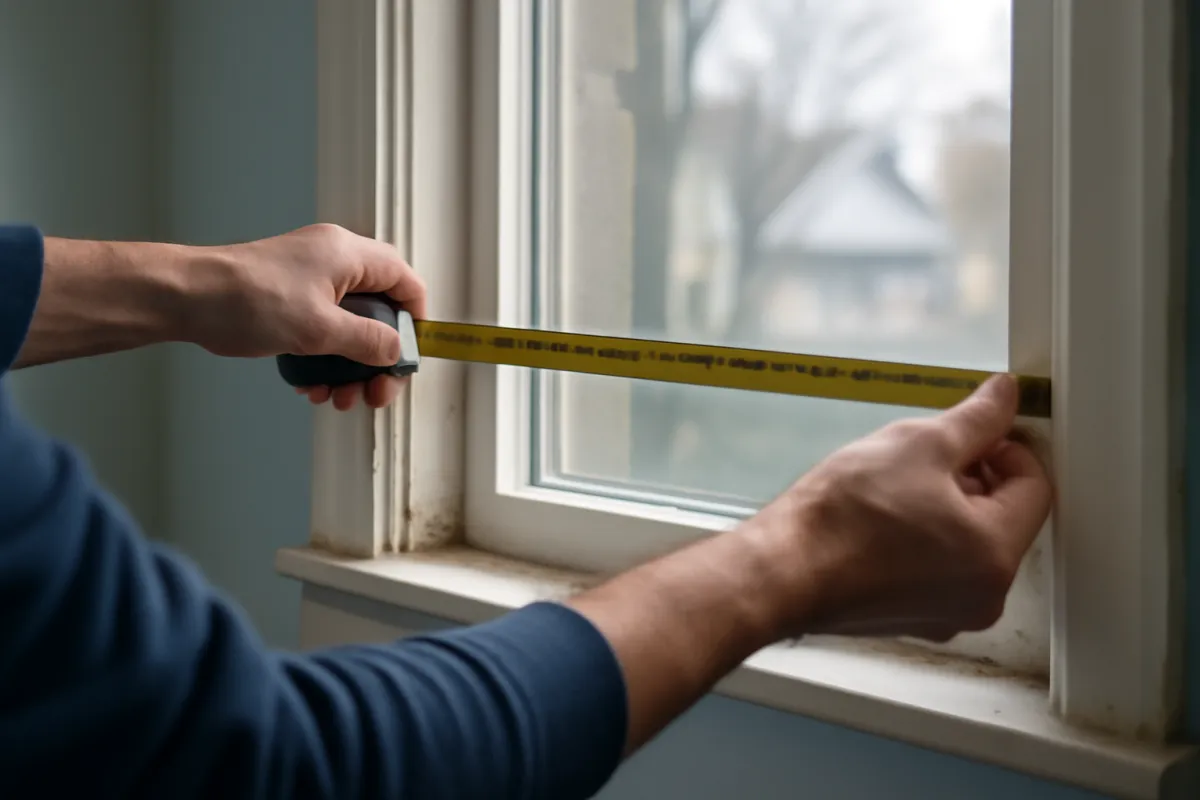
Before anything is ordered, the installer measures four things: the opening width and height, the headroom above the opening, the backroom depth into the garage, and the side room on each side of the opening. Those four numbers decide which track configuration your garage can accept, and they occasionally decide that the door you wanted is not the door you can have.
Commonly cited requirements put standard lift track at roughly 12 to 15 inches of headroom above the opening, low headroom track kits at roughly 4.5 to 10 inches, backroom at the door height plus roughly 18 inches, and side room at roughly 3.75 to 6 inches on each side depending on the track and hardware. A low headroom kit, which typically uses a double horizontal track or a rear mounted torsion shaft, illustratively adds around $150 to $500. High lift and vertical lift configurations exist for garages with tall walls or car lifts and are a specialty order.
Side room is the constraint people forget. A garage with the electrical panel, a water heater or a stair stringer tight against the opening may not have room for standard track brackets, and a wall mounted opener specifically needs a clear mounting area beside the door. Send photographs of both jambs with the measurements when you request quotes, because a bid written without them is a bid that can change on installation day.
Labor, the crew, and how long the day takes
A straightforward replacement on a sound opening is a same day job. Two technicians commonly take somewhere around three to five hours for a double width door: strip out the old sections and track, check and repair the jambs, set the new track, stack and pin the sections, install and wind the torsion springs, hang and connect the opener, then adjust the travel limits, the force settings and the safety reversal.
Illustratively, the labor portion of a double width replacement lands somewhere around $300 to $700, and it is usually embedded in the installed price rather than shown separately. On the two layer steel door used as this cost file’s reference case, labor works out to roughly 31 percent of the installed door price, sections and hardware to roughly 50 percent, the spring system to roughly 12 percent and removal and disposal to roughly 7 percent.
Two things extend the day. The first is discovering rot or an out of square opening once the old door is off, which turns a swap into a repair plus a swap. The second is an opener that will not cooperate on reconnection, which is exactly the situation where crews recommend replacing it. Neither is a scam; both are reasons to have agreed in advance what happens, and at what rate, if either occurs. Our walkthrough on comparing contractor quotes covers how to get that written down before work starts.
Old door removal and haul away
The old door has to come out and go somewhere, and that is a line item even when it is not shown as one. Illustratively, removal and disposal of a residential door commonly runs around $50 to $150 on a double width opening, most often folded into the installed price by companies that do this every day.
Two things can change that. A door with any suspect material at the opening, which occasionally means older adhesives, coatings or infill in a house of a certain age, is not a casual disposal question, and our asbestos removal cost file explains why testing rather than guessing is the standard for anything in that category. And a homeowner replacing a door as part of a larger project may already have a dumpster on site, in which case the disposal charge should come off.
If a company quotes removal separately, that is fine and arguably clearer. What is not fine is a quote that says nothing about removal at all, because the failure mode is a crew that finishes the install and leaves the old sections leaning against the side of the house. Get the words “removal and disposal of the existing door included” onto the paperwork, or get the exclusion stated so you can plan for it.

Structural surprises that change the price
The four common surprises all live in the same place: the wood and masonry immediately around the opening, which has spent years taking splash from the driveway and weather off the roof.
Rotted jambs or stop molding are the most frequent. The vertical jambs carry the track brackets and the perimeter seal, and soft wood will not hold a lag bolt. Illustratively, replacing rotted jamb and stop material runs around $150 to $600 depending on how far up the damage goes. An out of square opening is the second: older garages settle, and a door hung in an out of square opening will show a light gap along one edge and wear unevenly. Shimming and adjusting the track to correct it illustratively adds around $100 to $400.
A sagging or damaged header is the serious one, because it is structural rather than cosmetic. That is a contractor scope rather than a door installer scope, and it can range from a few hundred dollars of reinforcement to several thousand for a rebuilt header, which is the same category of work described in our load bearing wall removal cost file. A degraded slab edge at the door line is the fourth, and it matters because the bottom seal has to meet something flat. Ask the installer to photograph all four before they quote, and expect an allowance rather than a firm number if the old door is still in place.
Wind load rated doors and local code
In many coastal and high wind jurisdictions, a garage door is treated as a structural element rather than as a finish, because a door that blows in pressurizes the building and can lift the roof. Where that applies, local code may require a wind load rated door assembly, matched rated track and brackets, documented product approval for the specific model and size, and an inspection.
The requirement and its details are determined locally, so the only reliable source is your own building department or the current adopted code for your jurisdiction, not a national figure and not a salesperson’s summary. What is worth knowing in advance is that the requirement attaches to the whole assembly. A rated door hung on unrated brackets is not a rated installation, which is why the paperwork matters as much as the product.
Illustratively, a wind load rated package commonly adds around $300 to $1,200 on a double width door, and more on wide openings or in the highest design pressure zones. Reinforcement kits sold as a retrofit for an existing door exist and are a different thing from a rated door, so if your goal is code compliance rather than reassurance, confirm which one you are being offered. Insurance carriers sometimes have their own interest in this, which is a separate conversation worth having.
Permits, inspections and HOA rules
Whether a permit is required for a like for like door swap is a local question with genuinely different answers in different places. Some jurisdictions treat it as maintenance and require nothing. Others require a permit whenever the opening is altered, whenever the header is touched, or whenever a wind load rated assembly is mandated. Our building permit walkthrough covers how the process usually works once you know it applies.
The reliable move is a two minute call to the building department before you order, because a custom door built to your specification is rarely returnable and a stop work notice is an expensive way to learn the rule. Ask specifically whether the replacement is exempt, whether an inspection is required, and whether product approval documentation must be submitted.
Homeowner associations are a separate layer that has nothing to do with code and everything to do with your ability to install what you chose. Associations commonly govern color, panel style, window placement and whether decorative hardware is permitted at all. Approval can take weeks. If you are in an association, start there before you start collecting quotes, because it may narrow the options enough to change which quotes are worth collecting.
Where a replacement budget goes
The chart below splits the reference project used throughout this cost file: a standard double width two layer insulated steel door, on a sound opening, with a new belt drive opener installed at the same visit.
Where an illustrative double width replacement budget goes
Shares of a roughly $2,260 project: a two layer insulated steel door on a sound opening, with a new belt drive opener fitted during the same visit.
Shares move with the job: reusing a sound opener removes the third band entirely, an overlay or heavy wood door enlarges the first, and jamb repair or a wind load package adds a band this bar does not contain.
Two readings are useful. The door itself, meaning sections and hardware, is under half the project, which is why comparing bids on the door model alone misses most of the money. And the opener, at roughly a sixth, is large enough that its presence or absence explains most of the gap between two quotes that otherwise look similar.
The spring system looks small at a tenth of the total, and that is misleading in an important way. It is the part most likely to need attention again within the life of the door, and the part where a cheap sizing decision produces a door that never balances properly. Ask what spring cycle rating is included rather than treating that band as settled.
Repair or replace, how to tell
The clean dividing line is whether the failure is in a wearing part or in the door itself. Wearing parts fail on schedule, cost a few hundred dollars, and say nothing about the condition of the door. The door fails structurally, and no amount of parts fixes it.
Repair territory covers a broken spring, a frayed or snapped cable, worn rollers, a bent section of track, a loose or cracked hinge, a torn bottom seal, and an opener that has stopped working. Every one of those is a service call. Replacement territory covers multiple damaged or crushed sections, rust perforation along the bottom rail, delaminated or rotted wood, a door so old that replacement sections are no longer manufactured, and a door that is fundamentally the wrong specification for what you now want, whether that means insulation, quiet operation or appearance.
The middle case is a single damaged panel. If the model is still made, a replacement section illustratively runs around $300 to $800 installed, which is a fraction of a new door. If the model is discontinued, which happens faster than people expect, a color and profile match is unlikely and you are choosing between a visibly mismatched door and a replacement. That single question, whether the section is still available, decides more repair versus replace calls than any other.
What a broken spring actually costs
Because a broken spring is the most common reason a garage door suddenly stops working, it deserves its own numbers. Illustratively, replacing a pair of torsion springs commonly runs around $200 to $450 including the visit, and a pair of extension springs around $150 to $350. Springs are replaced in pairs even when one has visibly failed, because the surviving spring has the same cycle history and the same remaining life, and a mismatched pair balances the door badly.
The other common repairs sit in the same range. A snapped cable illustratively runs around $150 to $300. A full set of replacement rollers illustratively runs around $120 to $250. A bent track section illustratively runs around $150 to $350. An opener logic board or motor repair illustratively runs around $150 to $400, at which point replacing the whole opener for $350 to $750 is often the better value.
Two warnings belong here. First, a wound torsion spring stores a large amount of energy and is not sensible do it yourself work, whatever a video suggests. Second, a broken spring is a favorite entry point for high pressure sales, because the homeowner is stuck with a car inside and a door that will not move. A spring failure is not evidence that the door needs replacing, and our file on avoiding contractor scams describes the pattern in detail.
Two single doors versus one double
Some garages present a choice: one wide opening with a single double door, or two separate openings each with its own single door. If the structure already exists, the choice is made for you. If you are building, or altering the opening, it is worth pricing both.
Two single doors cost more than one double, typically by illustratively 20 to 40 percent on the door work alone, and the reason is that almost everything doubles: two spring systems, two sets of track, two sets of rollers and hinges, two openers if you want both powered, and two installations. Against that, each door is lighter, easier to handle, and cheaper to repair or replace individually, and the center post between them carries load that a single wide header would otherwise carry alone.
The single wide door wins on cost, on clear opening width for a large vehicle, and on simplicity. It loses on redundancy, since one failure closes the whole garage, and on the header span, which on a new build is a real structural cost. If you are pricing a new structure rather than a replacement, our garage build cost file puts that header decision in context with the rest of the shell.
Weather seals and the rest of the opening
A new door does not fix a bad opening on its own, and the sealing parts are cheap enough that skipping them is a false economy. The bottom seal, a flexible strip in a retainer along the bottom rail, is the part that meets the slab, and it is normally supplied with a new door. On an uneven slab a taller or double contact seal is worth asking for, illustratively adding a modest amount.
The perimeter stop, meaning the trim along both jambs and across the head with a flexible flap that meets the door face, is often original and often shot. Replacing it illustratively runs around $100 to $300 on a double width opening and is frequently the single largest improvement in draft and light infiltration. If jamb repair is happening anyway, this is the moment to do it.
Two other items round out the opening. Threshold seals bonded to the slab help where water runs toward the garage and where the slab edge has degraded, and they are a real option worth asking about. And the pedestrian door and the wall between the garage and the house have their own requirements, which in many jurisdictions include fire rating and self closing hardware. Those are locally determined and worth confirming rather than assuming, particularly if the garage is being reworked more broadly, as our epoxy floor cost file discusses for the slab itself.
A worked example on a 16 by 7 steel door
Take a common case: a 16 foot by 7 foot double width opening on an attached garage, sound jambs, standard headroom, an existing chain drive opener that is fifteen years old and noisy. The homeowner chooses a two layer insulated steel door with no windows and replaces the opener with a belt drive at the same visit.
Door sections and hardware. The sections themselves plus hinges, rollers, track and brackets come to an illustrative $950, which is about half the installed door price and the largest single line.
Spring system. A torsion shaft, a pair of springs sized to the finished door weight, cables, drums and bearings come to an illustrative $225.
Installation labor. Two technicians for roughly four hours, including strip out, track setting, section stacking, spring winding and final adjustment, comes to an illustrative $590.
Removal and haul away. Taking out the old sections and track and disposing of them comes to an illustrative $135.
Those four lines total $1,900, which is the double width two layer steel figure used throughout this cost file. The opener adds an illustrative $360 for a belt drive unit supplied and installed while the crew is already on site, which sits near the bottom of the $350 to $750 band precisely because there is no separate trip.
Total: roughly $2,260. Notice that the door sections are only about 42 percent of it. That is the most useful thing in this example, and it explains how a $1,500 quote and a $2,300 quote on the same garage can both be honest bids for genuinely different scopes. Run your own width, material, opener choice and opening condition through the estimator and the same worked example rebuilds itself around your opening.
Regional and seasonal price swings
Two forces move garage door prices regionally. Labor rates vary the way they do for every trade, so the same door installed can differ meaningfully between a dense metro and a rural county. And local code requirements vary, which in wind load jurisdictions means the baseline product is a more expensive product before anyone chooses an upgrade.
Seasonality is milder here than in roofing or concrete, because the work is short and largely weather independent, but it is not absent. Spring and early summer are the busy season for exterior improvement work generally, which lengthens lead times and reduces the incentive to sharpen a price. Late fall and winter are quieter for replacement work and busier for spring repairs, since cold weather is when tired springs tend to give up.
Material costs are the third input and the least predictable. Steel doors track steel prices, and lead times on non stock sizes, custom colors and glass packages move independently of anything local. The honest planning advice is to collect quotes with stated lead times as well as stated prices, and to treat a quoted price as good only for the period the quote itself states.
DIY versus hiring an installer
Parts of this job are genuinely accessible and parts of it are not, and the line between them is unusually sharp. Replacing a bottom seal, replacing worn rollers on an extension spring door, adjusting an opener’s travel limits and force settings, lubricating hinges and testing the safety reversal are all reasonable homeowner tasks with ordinary tools.
Installing a complete door is a different proposition. The sections have to be stacked plumb and level in an opening that may not be either, the track has to be set so the door runs without binding, and the torsion springs have to be sized to the finished door weight and then wound under tension with the correct bars. That last step is where the risk lives, and it is the reason most experienced homeowners who could do the rest still call somebody for the springs.
The economics rarely favor doing it yourself either. A double width steel door bought at retail illustratively runs a few hundred dollars less than the same door installed, because installers buy at trade pricing and the labor is only a few hours. Add the spring tools, the disposal problem, a helper for a day and the absence of any installation warranty, and the saving becomes thin. Our file on deciding between DIY and hiring a pro works through that comparison in a general way that applies well here.
What a good garage door quote itemizes
A quote you can actually compare states the specification rather than describing the outcome. It should name the door: manufacturer’s model or series, panel style, construction layers, steel gauge if applicable, stated insulation value if any, color and finish, and the exact size in width by height. It should state the windows, meaning how many, in which section, and what glazing.
It should name the hardware and springs: track type and configuration, whether low headroom hardware is needed, roller type, spring type, and the cycle rating of the springs supplied. It should name the opener explicitly, including drive type and whether it is included or excluded, and it should list keypads, remotes and any wifi module separately. It should state whether removal and disposal of the existing door is included.
Then it should state the opening work: what happens to the jambs, the stop molding and the perimeter seal, and whether any allowance covers repair discovered after the old door comes off. Finally the ordinary contract items apply exactly as they do on any trade work: license and insurance you have verified yourself rather than taken on trust, a written scope, a payment schedule not weighted heavily toward the deposit, a change order process in writing, and a workmanship warranty stated separately from any manufacturer warranty. Our contractor vetting file covers the verification step, and it applies to a $2,000 door job as much as to a kitchen.
Red flags in a garage door pitch
Garage door work attracts a specific kind of pressure because a broken door is an urgent problem with a car trapped behind it. The clearest red flag is a very low advertised service price followed by an on site finding that the whole door must be replaced today. A spring failure is a spring failure. Ask for the failed part to be shown to you, and ask what specifically about the door, rather than the spring, requires replacement.
The second is a price good only today, or a crew that happens to be in the neighborhood with one door left on the truck. Real doors are ordered to a size and a color. A door already on a truck is a door that fits somebody else’s garage, and fitting it to yours involves compromises nobody is describing.
The third is a single lump sum with no model, no construction, no gauge, no spring rating and no statement about the opener, which is unquotable against and unverifiable afterwards. The fourth is a quote that omits the opener silently so it undercuts a complete bid. And the fifth is any refusal to put in writing what happens if rot or an out of square opening is found once the old door is off, since that is the most predictable surprise on this job and a professional will already have an answer.
The bottom line
Garage door replacement cost is a width figure multiplied by a construction figure, with a short list of add ons that either apply to your opening or do not. Illustratively, a double width steel door installed with a new spring system and the old door hauled away runs around $1,300 to $3,600, a single width version around $750 to $2,000, and the material ladder climbs from there through vinyl, aluminum and glass, fiberglass, wood composite and custom wood. The opener is a separate purchase at an illustrative $250 to $1,200 installed, and the difference between two bids that look otherwise similar is usually whether it is in there.
Then buy the work the way a professional would. Measure the opening, the headroom, the backroom and the side room before you call anybody. Decide material first, construction second and appearance last, because that is the order in which those choices move money. Ask every bidder to state model, layers, gauge, spring cycle rating, opener drive type, disposal and jamb allowance as separate lines. Confirm permit and wind load requirements with your building department and any restrictions with your association before you order, since a custom door is rarely returnable. And keep the repair versus replace line clear in your head: a broken spring, a frayed cable or a dead opener is a few hundred dollars of service work, and none of them is a verdict on the door.
This cost file describes how garage door replacement projects are generally scoped and priced, not what your particular opening requires, and it is not a substitute for an on site measurement and a written estimate from a licensed, insured installer. Every dollar figure, band, percentage share, R-value, gauge, cycle rating and dimension above is illustration only: your real numbers move with local labor rates, door availability, opening condition, glass and overlay content, disposal costs and material pricing at the time you order. Torsion spring work stores and releases substantial energy and should be left to a trained technician regardless of anything read here. Permit requirements, inspection requirements, wind load and product approval rules, fire separation requirements at the wall between an attached garage and the house, and opener safety provisions are all set locally and change over time, so confirm every one of them with your building department and, where relevant, your homeowner association before ordering a door or beginning work.
Frequently asked questions
How much does a garage door replacement cost?
The honest answer is a band rather than a number, because width and construction move the price more than anything else. Illustratively, a standard double width steel door installed with a new spring system and the old door hauled away commonly runs somewhere around $1,300 to $3,600, while a single width door of the same construction lands nearer $750 to $2,000. Wood, full view glass and heavily insulated three layer doors sit above those bands, in some cases several times above. The opener is a separate line item that is not included in any of those figures.
Is an insulated garage door worth the extra cost?
It depends almost entirely on whether the garage is attached to conditioned space, and on what you use the room for. On an attached garage that shares a wall or a ceiling with living space, or that holds a laundry, a workshop or a mechanical room, the step from a single layer door to a two layer insulated door illustratively adds a few hundred dollars on a double width and buys a genuinely warmer buffer zone. On a detached garage that stores a lawnmower, the same money buys mostly quieter operation and a stiffer door. Insulated construction also makes the door itself more rigid and less prone to denting, which is a durability argument as much as an energy one.
Does a new garage door include a new opener?
Usually not, and a quote that appears cheap next to another one is often cheap because the opener is absent from it. The door, its track, its hinges, its rollers and its spring system are one scope, and the powered opener that lifts it is another, priced separately and installed separately. Illustratively, a chain drive opener installed alongside a new door runs somewhere around $250 to $500, a belt drive around $350 to $750, and a wall mounted direct drive unit around $500 to $1,200. Ask every bidder to state explicitly whether an opener is included, and if so which drive type.
Can I keep my existing garage door opener?
Often yes, and reusing a sound opener is a legitimate way to keep the project smaller. The practical tests are whether the unit still runs quietly, whether its safety reversal and photo eye sensors work correctly, whether it is rated for the weight of the new door, and whether the installer is willing to reconnect it and stand behind the result. An older opener that is already noisy, that hesitates, or that predates modern safety reversal requirements is worth replacing while the ceiling is open and the crew is there. If the new door is substantially heavier than the old one, which is common when moving from a single layer to a three layer door, the weight rating is the check that matters most.
How much does a garage door spring replacement cost?
A spring replacement is a repair rather than a door replacement, and it is priced accordingly. Illustratively, replacing a pair of torsion springs commonly runs somewhere around $200 to $450 including the visit, and a pair of extension springs somewhat less, around $150 to $350. Springs are replaced in pairs even when only one has failed, because the surviving one has the same cycle history and will follow shortly. This is not sensible do it yourself work: a wound torsion spring stores a large amount of energy and releases it violently if handled wrongly, which is exactly why the service call exists.
What R-value should a garage door have?
Garage door R-values are manufacturer stated figures measured at the center of a panel, so they describe the panel rather than the whole opening, and that distinction matters more than the number itself. Commonly cited figures put two layer polystyrene doors somewhere around R-6 to R-9 and three layer polyurethane sandwich doors somewhere around R-12 to R-18, with a bare single layer steel door offering essentially nothing. For an attached garage, the more useful question is how well the perimeter seals, the bottom seal and the wall between the garage and the house perform, since a high R-value door in a leaky opening under an uninsulated ceiling will not deliver what the number implies. Treat the rating as one input to a decision about the whole assembly.
Should I repair or replace my garage door?
The useful dividing line is whether the failure is in a wearing part or in the door itself. Broken springs, frayed cables, worn rollers, a bent track section and a failed opener are all repairs, frequently in the low hundreds, and none of them are reasons to replace a sound door. A door with a single crushed bottom panel can often take a replacement panel if the model is still available, which illustratively runs around $300 to $800. Replacement earns its keep when several panels are damaged, when the sections are rusted or delaminated, when the door is so old that parts are no longer made, or when you want insulation, quieter operation or a different appearance that no repair can produce.
Do I need a permit to replace a garage door?
Permit requirements for a like for like door swap are set locally and vary widely, so the only reliable answer comes from your own building department rather than from any article. Some jurisdictions treat a straight replacement as maintenance and require nothing, others require a permit whenever the opening is structurally altered or whenever a wind load rated assembly is mandated, and coastal and high wind areas commonly require documented product approval and an inspection. Homeowner associations add a separate layer that has nothing to do with code, often governing color, panel style and window placement. Confirm both before you place an order, since a door that has been manufactured to your specification is rarely returnable.