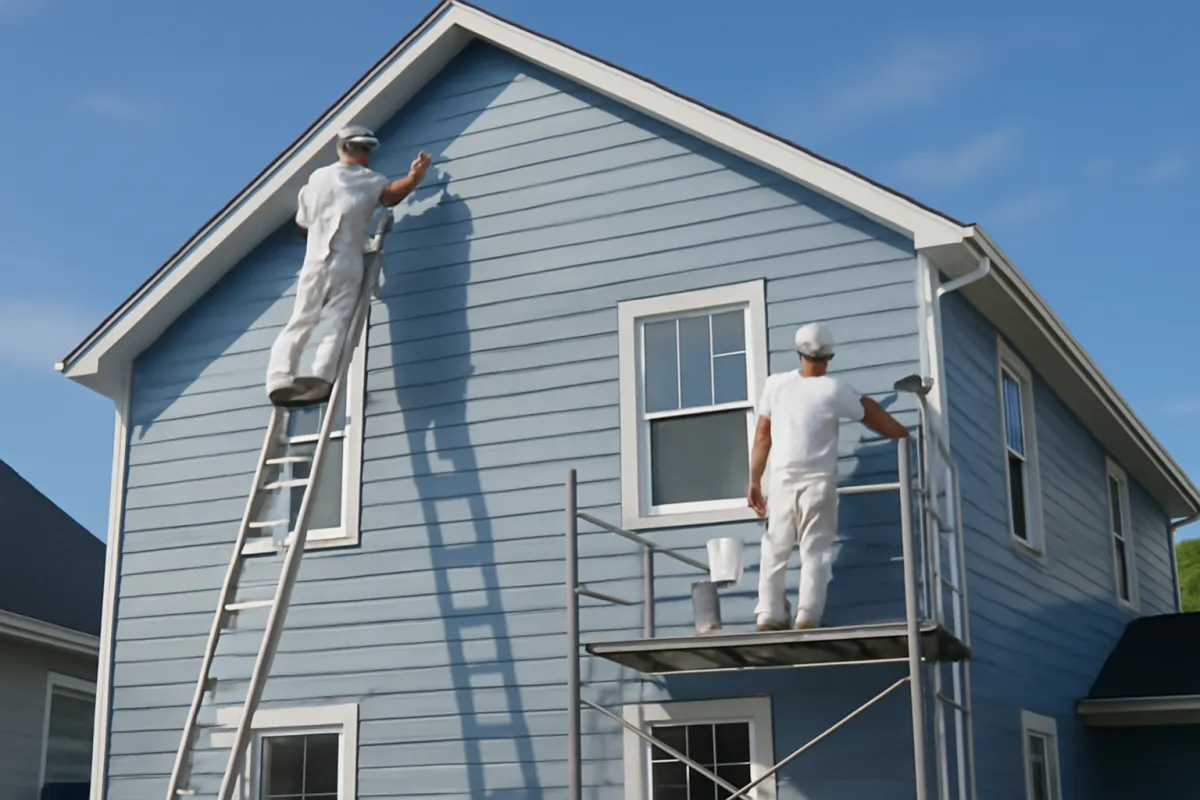
What's on this page
- Gutter cleaning versus gutter installation: two different jobs
- Illustrative gutter cleaning cost by home profile
- Gutter cleaning cost per linear foot
- What a professional gutter cleaning includes
- How stories and roof pitch price the job
- How to measure your gutter linear feet
- Downspouts: the clogs that actually cause damage
- Gutter guards and what they do to cleaning cost
- Where a gutter cleaning fee goes
- Minimum charges and why small homes pay more per foot
- How often gutters need cleaning
- Fall timing: the visit that matters most
- The add-ons that appear on a cleaning invoice
- What clogged gutters actually cost you
- DIY gutter cleaning: tools, time, and honest savings
- Ladder safety and when to stop
- Cleaning, repair, or replacement: telling them apart
- How to read a gutter cleaning quote
- Subscription and seasonal-plan pricing
- A worked example: one two-story home for a year
- Regional and seasonal price differences
- Common gutter cleaning mistakes
- The bottom line
Short answer: One professional gutter cleaning visit on a typical single-family home commonly lands at an illustrative $100 to $300. The rate runs roughly $0.70 to $1.50 per linear foot on a single-story home, $1.25 to $2.50 on a two-story and $2.00 to $4.00 on three stories or difficult access, so height is the main driver. Most households buy two visits a year, which illustratively costs $200 to $400.
Gutter cleaning cost is one of the smallest recurring numbers in home maintenance and one of the most expensive to skip. Whether you search the cost of gutter cleaning, the average price for gutter cleaning, or a per-visit quote, you land on the same number: for a typical single-family home, one professional visit commonly runs an illustrative $100 to $300, and most households buy two of them a year. What makes the arithmetic worth understanding is not the size of the bill but its shape: it is a rate per linear foot, multiplied by your gutter run, multiplied again by how high off the ground the work happens, plus a short list of add-ons that either apply to your house or do not.
This cost file prices the whole visit: the per-foot rates by number of stories, what a real cleaning includes, how to measure your own linear footage, what downspouts and gutter guards do to the number, how often the job actually needs doing, the honest do-it-yourself math including the ladder risk, and what a year of neglect costs when water starts landing on fascia and foundation instead of running to a downspout. Cleaning is a maintenance service, not a construction job, so if you are pricing new gutters instead, our gutter installation cost file is the one you want. Set your own footage and stories in the job cost estimator as you read.
Key takeaways
- Illustrative pricing: roughly $0.70 to $1.50 per linear foot on a single-story home, $1.25 to $2.50 on a two-story, and $2.00 to $4.00 on three stories or difficult access, which puts most visits at $100 to $300.
- Height, not gutter footage, is the main price driver. The same 180 feet of gutter costs meaningfully more to clean at second-story level, because the ladder work, setup, and risk all rise while the footage stays the same.
- Twice a year is the common rhythm, late spring and fall, with heavy tree cover pushing three or four visits and open lots sometimes managing one. Two cleanings illustratively cost $200 to $400 a year.
- Gutter guards raise the price of an individual visit, illustratively $0.35 to $1.00 per foot to remove and reinstall, while lowering how many visits a year you need. They reduce cleaning, they do not end it.
- Cleaning is maintenance and installation is construction. If the troughs are sagging, rusted through, or pulling off the fascia, you are shopping for a different job at a very different price.
Gutter cleaning versus gutter installation: two different jobs
These two searches get mixed up constantly, and the confusion costs people money in both directions. It is worth separating them cleanly before any number makes sense.
Gutter cleaning is recurring maintenance. Nothing is removed from the house and nothing new is attached to it. A crew arrives with ladders, clears leaves, seed pods, shingle grit, and sludge out of the troughs, clears or flushes the downspouts, checks that water actually runs to the outlets, and hauls the debris away. It is priced per linear foot at an illustrative $0.70 to $2.50 depending on height, most visits land between $100 and $300, and it happens once to four times a year for as long as you own the house.
Gutter installation is a construction job. Old gutter comes down, new material goes up, hangers and outlets are set, downspouts are run, and the whole system is pitched to drain. It is priced per linear foot too, but at a completely different order of magnitude by material and complexity, and it happens roughly once a generation. Our gutter installation cost file prices that job by material, stories, downspouts, guards, and tear-out.
The practical distinction is what a bad system does to each. A cleaning quote assumes your gutters are sound and just full. If the troughs sag between hangers, hold standing water after they are cleared, leak at every seam, or have pulled away from the fascia, cleaning them does not fix the problem, because the problem is not debris. That is when a cleaning visit should turn into a repair quote or a replacement conversation. A good company will tell you that on the first visit; the tell is that the report names specific runs and specific defects rather than recommending a wholesale replacement of a system that mostly works.
Illustrative gutter cleaning cost by home profile
Most quotes reduce to a per-foot rate times your run, so the fastest way to sanity-check a number is by home profile.
Illustrative cost of one professional gutter cleaning
Midpoints of common ranges by home profile. Debris load, guards, and access move every band.
Midpoints for illustration only. Common ranges run about $100 to $300 for most single-family homes, with three-story and difficult-access work at $400 to $600 or more. Guard removal, downspout clearing, and heavy debris are separate lines on top.
Read the bands as an audit tool rather than as your price. A quote far below the low end usually means a shorter scope, blowing debris onto the roof and lawn rather than bagging it, or skipping the downspouts, which is the part that matters most. A quote far above the high end should be able to name the reason: three stories, a steep roof requiring roof access rather than ladder work, guards to remove, gutters that have not been touched in years, or an unusually long run for the home’s footprint.
The last row deserves a note. Once a job needs roof access, harnesses, or long extension ladders on uneven ground, the pricing stops behaving like a per-foot service and starts behaving like specialty work. That is not padding; the setup genuinely takes longer and the insurance genuinely costs more.
Gutter cleaning cost per linear foot
The per-foot rate is the honest unit for this trade, and there are effectively three of them.
Single story, illustratively $0.70 to $1.50 per linear foot. A stable ladder reaches everything, the technician can reposition quickly, and an average job takes one person an hour or two.
Two stories, illustratively $1.25 to $2.50 per linear foot. Taller ladders, longer setup for each position, more time spent moving and stabilizing, and materially more risk. This is where most single-family homes land.
Three stories or difficult access, illustratively $2.00 to $4.00 per linear foot. Specialty ladders, roof access, or fall protection, plus a slower pace on every foot.
Note what is not in that list: the amount of debris does not usually change the rate, it changes the time, so heavy accumulation appears either as a higher quoted rate for your specific house or as a stated add-on after someone looks. Companies handle it differently and both are legitimate, as long as it is disclosed before the work.
Multiply the rate against your footage and compare it against the profile chart above. An average two-story home with 180 feet at $1.40 per foot prices at about $250, which is exactly where the middle band sits. When a quote does not reduce to that arithmetic within a reasonable margin, ask what else it includes, because something in it is doing work you have not been told about.

What a professional gutter cleaning includes
A real cleaning has a predictable shape, and knowing it lets you tell a thorough visit from a fast pass.
The crew works section by section along the gutter run, removing debris by hand or with a scoop into a bucket or bag rather than flinging it onto the roof and the flower beds. The trough is then cleared of the fine sludge that hand removal leaves behind, commonly by flushing with a hose, which also confirms the gutter is pitched correctly and actually drains toward its outlets.
Downspouts get checked next. Each outlet should be confirmed clear, either by flushing water through and watching it exit at the bottom or by clearing a blockage where one exists. A cleaning that stops at the trough is half a job, because the blockage that causes overflow is more often in a downspout elbow than in the gutter itself.
The visit should end with debris removed from the property or bagged, roof debris cleared from valleys and the roof edge where it feeds back into the gutter, and a walk of the ground below to make sure the mess left with the crew. Good companies also report what they saw: loose hangers, seams that leak, sections holding standing water, rust, damaged fascia, or a downspout that discharges right against the foundation.
What is normally not included: any repair, resealing, rehanging, guard installation, roof cleaning beyond the edge, underground drain line clearing, or fascia work. Those are separate lines, and they should appear as separate lines with prices rather than as a vague adjustment on the total.
How stories and roof pitch price the job
Height is the biggest single lever on a cleaning quote, and the reason is worth understanding because it changes how you shop.
The gutter itself is identical at any height. What changes is everything around it: a taller ladder takes longer to set, must be footed more carefully, is moved in shorter increments, and cannot be repositioned casually. What takes a crew four ladder placements on a ranch takes a dozen careful ones on a two-story with landscaping and uneven ground below. Add the insurance and equipment cost of working higher and the rate roughly doubles from the first tier to the second.
Roof pitch matters for a related reason. On a walkable low-slope roof, a technician can often work from the roof itself, which is faster than laddering. On a steep roof, roof access is off the table without fall protection, which pushes everything back to ladders or into specialty pricing. Complex rooflines with many gables, dormers, valleys, and porch roofs cost more for a third reason: more separate gutter sections, more corners, more setups, and more debris because valleys concentrate what the roof sheds.
Landscaping is the quiet fourth factor. Beds, shrubs, decks, air conditioning units, and sloped ground under an eave all make ladder placement slower and sometimes impossible from the obvious spot. If a company walks your house before quoting, that is what they are looking at, and a phone quote given from a square-footage number has seen none of it.
How to measure your gutter linear feet
You can get within a useful margin from the ground in about fifteen minutes, and having your own number changes every conversation with a bidder.
Walk the perimeter and measure the horizontal runs where gutter actually hangs, which is along the eaves, the low edges of the roof. Sloped gable ends usually have no gutter, so they do not count. Add the porch roof, the garage, any bump-outs, and any dormer or lower-roof sections that drain into their own trough. If pacing is easier than a tape, a normal adult stride is close enough to three feet for an estimate you will refine anyway.
As a sanity check, a simple rectangular single-story home is often close to its footprint perimeter minus the gable ends, which for many ranch houses lands between 100 and 160 feet. Average two-story homes with a garage and a porch commonly land between 150 and 220 feet. Homes with complicated rooflines run well above what their square footage suggests, which is precisely why per-foot pricing beats per-square-foot pricing in this trade.
While you are walking, count two more things. Count downspouts, because each is a potential clog and a potential add-on line, and homes commonly have one for every 30 to 40 feet of gutter. Count how many separate roof sections drain into their own runs, because each is its own setup. Those three numbers, footage, downspouts, and sections, are what a good estimator wants anyway, and offering them up front usually produces a tighter quote.
Downspouts: the clogs that actually cause damage
If gutters are the collection system, downspouts are the delivery system, and delivery is where most failures happen. Debris that washes down the trough gathers at the outlet and in the first elbow, where the pipe turns and narrows. A trough can look perfectly clean from a ladder while the outlet beneath it is packed solid.
Symptoms are specific. Water pouring over the gutter edge near a downspout during rain, rather than along the whole run, points at a downspout blockage. A downspout that sounds hollow when tapped near the top and dull lower down is holding debris. Water staining or erosion in one spot below the eave, ice buildup in one column in winter, or a downspout that stays dry during a real downpour all say the same thing.
Illustratively, clearing a blocked downspout runs $50 to $100 per downspout as an add-on during a cleaning visit. Accept it. A cleaned trough draining into a blocked pipe still overflows, which means you bought the visit and kept the problem.
Underground drain lines, the buried pipes that carry downspout water away from the house, are a different scope. When those clog, clearing them commonly requires augering or hydro jetting and is quoted separately after inspection. It is worth knowing whether your downspouts terminate above ground or into a buried line before you call, because the answer changes what a company can promise over the phone.
The last downspout question is where the water lands. A perfectly clear system that discharges against the foundation is still delivering roof water exactly where you do not want it. Extensions and splash blocks are cheap, and moving discharge several feet away from the wall is among the highest-value small fixes in home maintenance.
Gutter guards and what they do to cleaning cost
Guards, screens, and covers change the economics of cleaning in both directions, and honest math on them requires holding both directions at once.
The direction that raises cost: most guard systems must be removed to clean the trough properly, then reinstalled. Screens that lift out are quick. Systems screwed under the shingle course or fastened to the front lip take real time. That work commonly adds an illustrative $0.35 to $1.00 per linear foot to a visit, or a flat $75 to $200 on an average home. Some companies decline to service certain guard systems at all, and some will only clean what they can reach without removal, which is a shortcut worth asking about.
The direction that lowers cost: good guards on a home that was cleaning three or four times a year commonly move it to one visit, because the bulk debris never enters the trough. That is a real reduction, and it is why guards make the most sense on tall homes with heavy tree cover, where each visit is both expensive and hazardous.
What guards do not do is end cleaning. Fine grit, shingle granules, pine needles, and seed casings pass or accumulate on top of nearly every system, and debris piling on the guard surface can shed water right over the edge, which produces the confusing situation of a home with guards overflowing during rain. Any pitch that promises you will never clean gutters again is overselling a real product.
Guard installation itself is priced as installation work, not maintenance, and belongs with the numbers in our gutter installation cost file. The relevant question here is only what your existing guards do to a cleaning quote, which is why any company should ask about them before pricing.
Where a gutter cleaning fee goes
The composition of a small service bill explains why the price has a floor and why bundling saves money.
Where an illustrative $250 gutter cleaning goes
A rough composition of one visit on an average two-story home.
Illustrative composition. Height grows the labor and equipment bands, guards grow labor, long drives grow travel, and heavier insurance in this trade is why margin is a thin slice of a small bill.
Two conclusions follow. First, insurance is a real share of a small invoice in a trade where the primary hazard is falling, which is part of why a licensed insured company cannot match the price of a person with a ladder and a truck. Second, since travel and setup are already spent once someone is at your house, add-ons bought during a scheduled visit, a downspout clear, a small reseal, a second structure, cost less than the same work as its own appointment.
Minimum charges and why small homes pay more per foot
Nearly every company carries a service minimum, commonly an illustrative $75 to $125, because sending a person and a vehicle to your address costs money before anyone touches a gutter. On a small home the minimum, not the footage, often sets the price, which is why a 90-foot ranch and a 120-foot ranch can be quoted the same.
That produces the same per-unit distortion as every trade with a floor: the smallest jobs are the most expensive per linear foot, and the mid-size jobs are the best value. It is not a padded bid, it is arithmetic, and the levers that actually work against it are the ordinary ones.
Bundle work into the visit. A detached garage, a shed with gutters, downspout clearing, or a small repair all get cheaper when the setup is already paid for. Bundle with neighbors, since a company already parked on your street will often price the house next door tighter than a standalone booking. Bundle across seasons by buying two visits at once, which many companies discount as a plan. And book off-peak, because a company filling a slow week prices differently than one triaging a two-week backlog in October.
How often gutters need cleaning
Frequency is the part of this budget you actually control, and it is driven by trees rather than by the calendar.
Twice a year is the common baseline: once in late spring after seeds, blossoms, and catkins fall, and once in fall after the leaves are down. That is the rhythm most homes on ordinary lots settle into, and at illustrative rates it means roughly $200 to $400 a year.
Three or four times a year fits homes under heavy tree cover, especially pines and other evergreens that shed year round and drop needles that mat into a dense, water-blocking layer. It also fits homes downwind of a wooded lot even when their own yard is clear.
Once a year can be enough on an open lot with no overhanging branches, provided the single visit is thorough and the downspouts are confirmed clear.
Ignore the schedule when the house tells you otherwise. Water spilling over the front edge during rain, plants sprouting in the trough, visible sag between hangers, staining down the siding under a specific section, or a downspout that stays dry in a downpour all mean overdue regardless of the date. In freeze-prone climates, going into winter with full gutters is the specific mistake, because trapped water freezes, expands, adds weight, and contributes to ice dams at the roof edge.
Fall timing: the visit that matters most
Of the two annual visits, the fall one carries most of the value, and its timing is specific: after the leaves are mostly down, before the first hard freeze. Too early and you clean a gutter that fills again in three weeks. Too late and you are booking into the trade’s busiest and coldest stretch, competing with everyone who waited for the same signal.
The fall visit matters more than the spring one because of what winter does to a full gutter. Wet debris holds water, water freezes, ice adds weight that pulls hangers loose and can bend the trough, and blocked drainage at the roof edge contributes to ice dams that push water back under the shingles. A clogged gutter in July is an overflow. A clogged gutter in January can be a roof leak.
That is why gutter cleaning belongs alongside the other pre-winter jobs rather than on its own errand. The same weeks are right for a chimney visit, a furnace tune-up, and an irrigation blow-out, which our fall home maintenance checklist organizes into a single pass. If you are already scheduling a chimney sweep, booking the gutters in the same window saves you the second round of phone calls and gets both done while companies still have open dates.
The add-ons that appear on a cleaning invoice
Most add-ons on a cleaning invoice are legitimate, and knowing the common ones prevents both surprise and overpayment.
- Downspout clearing, illustratively $50 to $100 each. The add-on most worth buying, because a clear trough into a blocked pipe still overflows.
- Guard removal and reinstallation, illustratively $0.35 to $1.00 per linear foot or $75 to $200 flat. Depends entirely on the system; screens are quick, fastened covers are not.
- Roof debris removal, illustratively $50 to $150. Clearing valleys and the roof edge so the debris does not simply wash into the gutter you just cleaned.
- Minor resealing at joints and end caps, illustratively $10 to $25 per joint or $75 to $200 for a small run. Cheap while a ladder is already there, and it prevents the drips that stain siding.
- Rehanging a sagging section, illustratively $75 to $200. New hangers or repositioning so the run drains again.
- Gutter face brightening or exterior washing, illustratively $1 to $2 per linear foot. Cosmetic, removing the black tiger stripes from the front of the trough. Genuinely optional.
- Detached garage, shed, or second structure, priced at the same per-foot rate with the minimum waived because the setup is already there.
The rule of thumb is that add-ons offered during a scheduled visit are the cheapest way to buy that work, and add-ons that turn into a large unexpected total should be quoted and approved before anyone starts rather than after.
What clogged gutters actually cost you
The reason a small recurring bill is worth paying is what happens when it stops being paid. A gutter system that cannot move water sends it somewhere else, and the destinations are all expensive.
Fascia and soffit rot. Water backing up in a full trough sits against the fascia board behind it. Replacing rotted fascia and soffit is carpentry priced by the foot and is commonly a four-figure repair on one elevation.
Siding and trim damage. Overflow runs down the wall, stains it, and works into seams and behind trim. Our siding replacement cost file covers what that repair costs when it spreads.
Foundation and basement water. This is the big one. Roof water dumped at the base of a wall saturates the soil against the foundation, which is the most common source of basement seepage and can contribute to settlement in expansive soils. Waterproofing and drainage remediation is a five-figure category of work.
Ice dams and roof edge damage. In cold climates, blocked drainage at the eave contributes to ice buildup that forces water back under the shingle edge, which is a leak inside the house rather than outside it.
Gutter damage itself. Wet debris and ice are heavy. Weight pulls hangers out of the fascia, bends the trough, and separates seams, converting a maintenance customer into a replacement customer, which is when our gutter installation cost file becomes the relevant reading.
Framed against those, two visits a year at an illustrative $200 to $400 is one of the better ratios in home maintenance: a small predictable cost defending several large unpredictable ones.
DIY gutter cleaning: tools, time, and honest savings
Doing it yourself is real money saved, and it is worth pricing honestly rather than romantically.
The kit: a stable extension or multi-position ladder, which is the expensive item at an illustrative $150 to $300 and the one worth buying well; a plastic gutter scoop at roughly $10; heavy gloves; a bucket with a hook or a bag; a hose with a curved gutter attachment at roughly $20 to $40; and safety glasses. Call it an illustrative $200 to $400 the first year, most of it one-time, and near zero after that.
The time: two to four hours for an average home including cleanup, longer the first time and longer with guards to remove. The technique is straightforward. Work in sections, move the ladder rather than reaching, scoop the bulk into a bucket, flush the trough toward the outlet, confirm each downspout runs, and check the ground discharge while you are down there.
The honest savings: against two professional visits a year at an illustrative $150 to $250 each, doing both yourself saves roughly $300 to $500 a year on an average home, and more on a large or heavily wooded one. Over a decade that is real money.
The honest costs: your Saturday, a genuinely unpleasant job, and the risk. Ladder falls are among the most common serious home-maintenance injuries, and the rate that makes a two-story job cost more professionally is priced against exactly that hazard. Our note on drawing the do-it-yourself line applies here more literally than usual: the skill required is low, the consequence of one bad moment is not.
Ladder safety and when to stop
If you do the work yourself, a short list of habits covers most of the risk, and one of them is knowing when to quit.
Set the ladder on firm level ground, never on a deck rail, a slope, or soft soil after rain, and use a stabilizer bar that rests against the roof or the fascia rather than against the gutter itself, which will deform under the load. Keep the four-to-one angle, one foot out for every four feet of height. Keep your belt buckle between the rails and move the ladder instead of reaching, which is the single most violated rule and the most common way people fall. Wear gloves, because gutters hide screws, sharp metal edges, and worse. Work with someone home, and do not do this alone if you can help it.
Stop and hire out when any of the following is true: the work is above the second story, the ground below is uneven or sloped, the roof is steep enough that roof access is required, the gutters are attached to a structure you cannot safely reach with the ladder you own, there is any electrical service drop near the work, or you are not fully comfortable at height. Discomfort at height is not a character flaw; it is a reasonable risk assessment, and the recurring price of hiring is small next to the cost of an injury.
Cleaning, repair, or replacement: telling them apart
A cleaning visit is often when a homeowner first learns their gutters need more than cleaning. Sorting the three categories keeps you from either overspending or patching a lost cause.
Cleaning territory. Sound gutters that are simply full. Debris comes out, water runs, the system does its job again.
Repair territory. A leaking seam or end cap, one sagging run, a few pulled hangers, a downspout that has separated, or a section that has come loose from the fascia. These are commonly illustrative $75 to $300 fixes done during or shortly after a cleaning visit, and they are the right spend when the rest of the system is sound.
Replacement territory. Widespread rust or corrosion, gutters that hold standing water along most runs because the pitch is wrong, sections separating in multiple places, fascia damage behind the gutter, or a system that is simply undersized for the roof it serves. At that point, more repairs are money into a system that will keep failing, and the numbers in our gutter installation cost file are the ones to run.
A trustworthy company distinguishes these for you, names the specific runs and specific defects, and shows you photographs. A company that recommends full replacement after one look at a clogged but sound system is doing something else. If a replacement recommendation arrives, treat it like any construction bid: get it in writing, get a second opinion, and use our note on comparing contractor quotes to make the two bids describe the same work before comparing totals.
How to read a gutter cleaning quote
For a small service, the quote should still answer five questions in writing.
Footage and rate. Your linear feet and their per-foot rate, or a flat price with the footage stated. This is what makes two quotes comparable.
Height and access assumptions. Which stories, and whether roof access is needed. A quote given over the phone has assumed something; make it explicit.
Debris handling. Whether debris is bagged and hauled away or blown onto the ground and lawn. This is the most common quiet difference between a cheap quote and a normal one.
Downspouts. Whether clearing and flushing every downspout is included or billed per unit.
Guards. Whether removal and reinstallation is included, extra, or refused.
Add two questions on the phone: whether they carry liability and workers compensation insurance, which matters enormously in a trade whose main hazard is falling from your house, and whether they will report and photograph any damage they find. Our contractor vetting playbook covers the broader version of the same checks.
Subscription and seasonal-plan pricing
Many companies now sell cleaning as a plan rather than a visit, and the plans are worth understanding because they are usually a modest discount in exchange for scheduling certainty.
A typical structure prices two visits a year, spring and fall, at a combined rate below two individually booked cleanings, commonly an illustrative 10 to 20 percent off. Some include a mid-season downspout check or a small repair allowance. The company gets a predictable route and a filled calendar; you get a lower rate and, more valuably, a scheduled fall date before the October rush.
The things to check before signing: whether the price is locked for the term, what happens if you need an extra visit, whether guards are included or surcharged, whether there is an early cancellation term, and whether the plan auto-renews at a different rate. Plans are a good deal for homes that genuinely need two or more visits a year and a poor deal for open-lot homes that need one.
For heavily wooded properties the plan math is usually favorable, since the alternative is booking three or four visits at full price during the seasons when everyone else is calling too.
A worked example: one two-story home for a year
A 2,100 square foot two-story house with an attached garage and a covered front porch, on a lot with four mature deciduous trees, two of them overhanging the back roof. Measured gutter run is about 185 linear feet with six downspouts and no guards.
Spring visit, about $250. 185 feet at roughly $1.35 per foot for two-story work, debris bagged and hauled, all six downspouts flushed and confirmed clear.
Downspout clear, about $70. One rear downspout is packed at the elbow, which explains the erosion trench the owners noticed under the back eave. Cleared during the same visit as an add-on.
Fall visit, about $250. Booked in early September for a mid-November date, after leaf drop and before the first hard freeze. Same scope.
Small reseal, about $120. A leaking end cap and one dripping seam, sealed while the ladder is already up.
Year one total, about $690. In an ordinary following year without the one-time repairs, the recurring number is about $500 for two visits, or roughly $42 a month spread out.
The comparison that matters is what those visits defend. The rear downspout that was blocked had been sending roof water against the foundation wall of a finished basement, which is the opening move of a five-figure problem. The alternative do-it-yourself version of this year prices at roughly $300 in one-time tools plus two long Saturdays on a two-story ladder, and saves about $500 a year afterward. Both are defensible; they are just different trades of money for time and risk. Rebuild the same math on your own footage in the estimator.
Regional and seasonal price differences
Two homes with identical footage get different quotes for reasons that have nothing to do with the gutters.
Tree cover and climate. Heavily wooded regions support more companies and more frequent service, which tends to normalize pricing but raises annual spend because of visit count. Arid regions with few deciduous trees may have fewer specialist companies, and cleaning is often sold as part of a broader exterior service.
Labor market. High-cost metros price above the bands here for the same reason every trade does, a dynamic our general contractor cost file explains in detail.
Freeze exposure. In cold climates the fall visit is compressed into a few weeks between leaf drop and hard freeze, which concentrates demand and firms up prices in exactly that window.
Housing stock and height. Neighborhoods of tall older homes with complex rooflines carry higher average prices than tracts of single-story ranches, independent of the local labor rate.
Time of year. The most controllable factor. Mid-summer and late winter are the slow weeks in most markets, and a company filling a gap prices differently than one working through a backlog.
Use the bands here as the shape of the market, then let two or three local written quotes set your actual number.
Common gutter cleaning mistakes
The recurring errors, collected for prevention.
- Cleaning the troughs and ignoring the downspouts. The blockage that causes overflow is more often in an elbow than in the gutter, and a cleaning that skips it solves nothing.
- Booking the fall visit too early. Cleaning before leaf drop finishes buys a gutter that refills in three weeks and a second bill.
- Blowing debris onto the roof and the beds. It washes right back into the gutter, and it is the quiet difference behind an unusually cheap quote.
- Treating guards as a permanent solution. They reduce frequency, they do not end cleaning, and debris on top of a guard can shed water over the edge.
- Pressure washing the inside of a gutter. High pressure at the roof edge can force water under the shingles and can damage seams and hangers.
- Reaching from the ladder instead of moving it. The most common way people fall, and it saves perhaps forty seconds.
- Leaning the ladder against the gutter itself. The trough deforms under the load and the pitch is ruined, which turns a cleaning into a repair.
- Ignoring where the water ends up. A perfectly clean system that discharges against the foundation is still delivering roof water exactly where you least want it.
- Buying replacement when repair was the answer. One sagging run and two leaking seams are a small fix on a sound system, not a reason to replace 185 feet of gutter.
Every one of these is cheap to avoid in September and expensive to discover after the first winter storm.
The bottom line
Gutter cleaning cost is arithmetic you can do yourself: an illustrative $0.70 to $1.50 per linear foot on one story, $1.25 to $2.50 on two, and $2.00 to $4.00 on three or on difficult access, times your measured run, plus $50 to $100 per blocked downspout and $0.35 to $1.00 a foot if guards have to come off. That puts most single-family visits at $100 to $300 and most households at $200 to $400 a year for the twice-yearly rhythm, with heavy tree cover pushing the count higher and open lots pulling it lower.
Buy it the way you would buy any recurring service: measure your own footage, get the per-foot rate in writing, insist that downspouts and debris removal are included rather than assumed, bundle the small repairs into the visit while the ladder is already up, and schedule the fall date in early September rather than in the November scramble. Then keep the distinction straight between maintenance and construction. Cleaning is what keeps a sound system working; when the troughs sag, hold water, or pull off the fascia, you have crossed into the very different budget in our gutter installation cost file, and no amount of cleaning will move you back.
This cost file is educational reading about how gutter cleaning is priced, not an inspection, a quote, or professional advice, and none of its figures price your particular home. Every rate, range, and share above is illustrative and varies with your region, roofline, gutter condition, debris load, access, and local labor market. Working at height carries genuine injury risk, and the do-it-yourself figures here assume proper equipment, stable footing, and a clear-eyed judgment about your own comfort on a ladder, which only you can make. Water intrusion, fascia rot, and foundation problems require on-site evaluation, so hire qualified, insured local professionals for cleaning, repair, or drainage work rather than relying on any general figure.
Frequently asked questions
How much does gutter cleaning cost?
For a typical single-family home, one professional cleaning commonly runs an illustrative $100 to $300, with roughly $175 sitting near the middle in most markets. The number is really a rate per linear foot times your gutter run, so a small single-story ranch with about 120 feet of gutter lands near the bottom of that band and an average two-story home with about 180 feet lands near the top. Three-story homes, steep or complex rooflines, and gutters buried under heavy debris price above it, illustratively $400 to $600 or more. Every figure here is illustrative, so get two or three written local quotes before booking.
What is gutter cleaning per linear foot?
Per-foot pricing is how most companies actually build the quote, and it commonly runs an illustrative $0.70 to $1.50 per linear foot on a single-story home, $1.25 to $2.50 on a two-story, and $2.00 to $4.00 on three stories or on rooflines that need special access. Height is the main driver because it changes the ladder work, the setup time, and the risk rather than the amount of gutter. Ask any company to state their per-foot rate and your measured footage, because a quote that reduces to that arithmetic is easy to audit and easy to compare against a second bid.
How often should gutters be cleaned?
Twice a year is the commonly cited rhythm for most homes, once in late spring after seed and blossom drop and once in fall after the leaves come down. Homes with heavy tree cover, especially pines that shed year round, often need three or four visits, while homes on open lots with few overhanging trees can sometimes go to one thorough annual cleaning. The honest test is not the calendar but the evidence: water spilling over the front edge during rain, plants growing in the trough, granules and shingle grit piled up, or sagging sections all say the gutters are overdue. Skipping cleanings is what turns a small recurring bill into fascia, siding, and foundation repairs.
Is gutter cleaning worth paying for?
The case is not that the job is difficult but that the failure is expensive and the work is dangerous. Gutters exist to move roof water away from the fascia, the siding, and the foundation, and a clogged system delivers that water directly onto all three. Illustratively, two professional cleanings a year cost roughly $200 to $400, while fascia repair, soffit rot, siding damage, or water in a basement runs into four and five figures. There is also the ladder question: falls from ladders are a serious household injury source, and for a two-story home many people are honestly better off paying someone whose job is being on one.
Does gutter cleaning cost more with gutter guards?
Usually yes for a given visit, and usually less over a year. Most guard systems have to be unclipped or unscrewed to clean the trough underneath, then reinstalled, which commonly adds an illustrative $0.35 to $1.00 per linear foot to the visit, or a flat $75 to $200 on an average home. What guards buy in return is frequency: many homes with good guards move from three or four cleanings a year to one inspection and light service. Guards do not eliminate cleaning, and any company promising they will is overselling; fine grit, shingle granules, and pine needles still accumulate.
What does it cost to clear a clogged downspout?
Clearing a blocked downspout commonly runs an illustrative $50 to $100 per downspout as an add-on during a cleaning visit, and more if the blockage is in an underground drain line rather than the visible pipe. It is the add-on most worth accepting, because a clean trough draining into a blocked downspout still overflows, which means you paid for the cleaning and kept the problem. Underground drain lines are a different job, commonly requiring augering or hydro jetting, and are usually quoted separately after someone has looked at the run.
Should I clean gutters myself or hire a pro?
For a single-story home with safe ladder footing and a manageable roofline, do-it-yourself cleaning is reasonable and the tool kit, a stable ladder, gutter scoop, gloves, bucket, and a hose attachment, illustratively runs $200 to $400 the first year and lasts for many. Expect two to four hours for an average home, plus cleanup. For two stories and up, the calculation changes: the height that makes a pro cost more is the same height that makes the fall consequential, and the recurring $150 to $250 a visit buys someone with the right ladder, the right footwear, and insurance. A common compromise is to do the spring pass yourself and hire the heavier fall visit.
Does gutter cleaning include repairs?
Normally not. A standard cleaning covers clearing the troughs, flushing or clearing the downspouts, checking that water runs, and bagging or hauling the debris. Resealing a leaking joint, rehanging a sagging run, replacing damaged hangers, or fixing a section that has pulled away from the fascia are separate lines, commonly an illustrative $75 to $200 for a small repair during the same visit. That is a fair way to buy it, since the setup is already paid for, but the work should appear as its own item on the invoice with a stated price rather than a vague adjustment.