What's on this page
- What an electrician costs per hour
- Apprentice, journeyman, and master electrician rates
- Illustrative electrician hourly rate by tier
- Hourly billing versus flat-rate pricing
- The service call fee and the minimum charge
- Emergency and after-hours electrician rates
- Permits and inspections for electrical work
- Common electrical jobs and what they cost
- Outlet and switch replacement cost
- Adding a new outlet or a dedicated circuit
- Ceiling fan installation cost
- Recessed lighting cost per light
- EV charger circuit cost
- Troubleshooting a dead circuit
- Electrical panel upgrade cost
- Where the money goes on a panel upgrade
- Service upgrades and why they are a different price class
- Whole-house rewire cost
- Old wiring types and why they add hours
- Finished walls, access, and the fishing problem
- What moves an electrician’s rate up or down
- Independent electricians versus large service companies
- Materials, markup, and who supplies the fixture
- A worked example: a three hour electrical call
- What is safe to do yourself and what is not
- Backup power, transfer switches, and generator wiring
- How to lower what you pay an electrician
- Common mistakes when hiring an electrician
- Questions to ask before you book
- The bottom line
Short answer: Ordinary residential electrical work sits in an illustrative $65 to $140 an hour, with a common midpoint near $100; apprentices sit below that band and master electricians and large flat-rate companies above it. The rate is never the whole bill: a service call fee of an illustrative $50 to $150, a minimum charge, materials and a permit of roughly $50 to $350 where required sit on top.
Electrician cost is the kind of number people look up twice: once when a switch stops working, and again years later when a panel, an EV charger, or a room addition turns a small annoyance into a four figure decision. The two situations sit at opposite ends of the same trade, and quoting a single hourly rate for both is what makes electrical pricing feel arbitrary. An electrician’s hourly figure is real, but it explains only a fraction of what lands on the invoice.
This cost file takes the invoice apart. It puts illustrative ranges on the hourly rate, on the apprentice, journeyman, and master tiers behind it, on the service call fee, on the minimum charge that catches small jobs, and on the permit and inspection costs that show up more often in electrical work than in most trades. Then it prices the jobs homeowners actually call about, from a dead outlet to a whole-house rewire. The plumber rate file covers the same ground for water work, and the job cost estimator turns any of these ranges into a ballpark for your own call.
Key takeaways
- Ordinary residential electrical work sits in an illustrative $65 to $140 an hour, with a common midpoint near $100. Apprentices sit below that band, master electricians and large flat-rate companies sit above it.
- The rate is never the bill. A service call fee of an illustrative $50 to $150, a minimum charge, materials, and a permit where local rules require one all sit on top of it.
- Permits and inspections are required far more often in electrical work than homeowners expect, with an illustrative $50 to $350 residential fee and more for panel or service work.
- Device jobs live in the low hundreds; panel upgrades, service upgrades, and rewires live in a different price class because they touch the whole system rather than one circuit.
- Every figure in this cost file is illustrative and varies by region, access, and wiring age. Get an itemized written quote and verify the licence before approving anything.
What an electrician costs per hour
The honest answer is a band, not a number, because “electrician” describes several skill levels working out of very different businesses. For ordinary residential service work, the illustrative range most homeowners meet runs roughly $65 to $140 an hour for the person actually doing the work, with a midpoint near $100 in many markets. Hold that midpoint as your reference point and read every quote against it.
Around that centre sit predictable outliers. A helper or apprentice working under supervision bills at an illustrative $40 to $80, a master electrician handling code-sensitive or permitted work bills at an illustrative $95 to $185, and a large branded company using flat-rate pricing typically works out to an effective $110 to $230 an hour once you divide the flat price by the hours spent on site.
Regional cost of living moves the whole band together. A rate that looks steep in a small rural county can be routine in a dense metro where every trade competes for the same crews, so comparing a local quote against a national figure tells you almost nothing useful about whether you are being treated fairly.
Apprentice, journeyman, and master electrician rates
Electrical is a tiered trade, and those tiers appear in the rate whether or not the invoice names them. The broad structure is consistent almost everywhere even though the exact titles and requirements are set locally: an apprentice works under supervision while accumulating hours, a journeyman works independently on ordinary installation and repair, and a master carries the highest credential and usually the responsibility for pulling permits, signing off on plans, and supervising others.
The illustrative rate ladder follows that structure directly. Apprentice or helper time bills at roughly $40 to $80 an hour, journeyman time at roughly $65 to $140, and master time at roughly $95 to $185. On larger jobs you may be billed for two people at different rates, commonly a journeyman at full rate with a helper at a reduced one, which is frequently cheaper for you than one person taking twice as long on work that genuinely needs two sets of hands.
One caution belongs with any description of tiers, including this one. Licensing for electrical work is set by state, county, and municipal authorities rather than nationally, and what each tier may legally do without supervision differs from place to place. Verify an electrician’s licence status directly with the body that issues it in your area, which is the only source that can actually answer the question. Our vetting walkthrough covers how to run that check without taking anything on trust.
Illustrative electrician hourly rate by tier
Stacking the tiers side by side shows the shape of the market better than any single average. The chart below uses an illustrative midpoint for each level and setting, so the useful information is the relative spacing rather than the exact dollars. The gap from the cheapest line to the most expensive is close to three times, which is exactly why a quoted rate means little until you know who is doing the work and when they are doing it.
Illustrative electrician hourly rate by who does the work and when
Midpoint hourly figures for residential service work. Your region, the size of the shop, and the hour you call decide where you actually land.
Illustrative midpoints, not quotes. The flat-rate figure is an effective rate: divide a flat-priced job by the hours actually spent on site and this is roughly what it implies.
Two readings matter. First, the after-hours line shows a journeyman crossing above a master working normal hours purely because of the clock, which makes the hour you place the call a pricing decision in its own right. Second, the flat-rate line is not proof that big companies overcharge: their number bundles the trip, the diagnosis, the guarantee, and the risk of the job running long, so setting it beside a bare hourly rate compares two different products. Run your own figures through the estimator to see how the pieces combine on your job.
Hourly billing versus flat-rate pricing
Many electrical companies do not sell hours at all. They sell jobs. A flat-rate shop looks up “install a ceiling fan on an existing rated box” in its own price book, quotes one number before starting, and that number does not move whether the work takes forty minutes or two hours. An hourly shop quotes a rate, starts a clock, and bills what the job takes plus materials.
The difference is not really about price. It is about who carries the risk of the job running long. Hourly billing keeps that risk with you, so a smooth job is cheap and a stubborn one is not. Flat-rate billing moves the risk to the electrician, who prices in a cushion for the calls that go sideways. Averaged over many jobs the two structures land closer together than most homeowners assume.
There is a practical rule. Well-defined, repeatable work suits flat rate, because both sides know what is involved and you buy certainty for free. Diagnostic and open-ended work suits hourly, because a flat quote on an unknown either carries a large cushion or turns into a change order the moment reality differs from the price book. Electrical has an unusually high share of the second kind, since nobody knows what is inside a wall until it is open. Our walkthrough on comparing quotes explains how to normalize two bids priced in different structures.
The service call fee and the minimum charge
Nearly every electrical shop charges something to show up. Trip fee, service call, dispatch charge: the names differ, the logic does not. Sending a stocked van and a qualified person across town costs real money before a single wire is touched. The illustrative amount commonly falls between $50 and $150, with something near $80 typical for a scheduled daytime visit in many markets, and more for evenings, weekends, or long drives into rural areas.
Sitting alongside it is the minimum charge, usually written as a one-hour minimum on labor or a flat first-hour price that already bundles the trip. In illustrative terms that floor commonly lands between $125 and $300 all in, which is why replacing a two dollar switch can still produce a bill in the low hundreds. The minimum is not a trick: the drive, the van stock, the scheduling, the invoicing, and the liability insurance behind the visit cost the same whether the fix takes five minutes or fifty.
The two questions worth asking on the phone are whether the trip fee is credited toward approved work and what the minimum actually covers. If the fee is credited, a second opinion costs you two uncredited diagnostic visits. If it is not, the second opinion costs one more fee, which on a panel-sized job is money well spent. Either way, the useful response to a minimum charge is to fill the visit rather than resent it.
Emergency and after-hours electrician rates
Electrical emergencies are less frequent than plumbing ones but more consequential when they are real, and pricing reflects the availability rather than the drama. Two structures dominate. The first is a multiplied labor rate: an illustrative 1.5 times the standard rate for evenings and weekends, and roughly 2 times for overnight, holiday, or immediate-dispatch calls. Applied to a $100 midpoint that is an illustrative $150 and $200 an hour. The second is a flat emergency surcharge in the low hundreds added on top of otherwise normal rates.
Which structure applies changes the total more than people expect. On a short call a flat surcharge is punishing and a multiplier is mild. On a long one the multiplier compounds while the flat fee fades into the bill. Ask before dispatch, and ask whether the service call fee is also elevated after hours, because it frequently is.
The harder question is whether you have an emergency at all. A burning smell, visible scorching at a device, a panel that is hot or buzzing, arcing, a wire down on your property, or a total loss of power with no utility outage are genuine emergencies where the premium is worth paying without hesitation. A single dead receptacle, one tripped breaker that resets and holds, or a light fixture that stopped working can safely become a scheduled morning appointment at standard rates. Knowing which breaker feeds what, and being able to switch a suspect circuit off and leave it off, converts many panicked calls into ordinary ones.
Permits and inspections for electrical work
Electrical work is permitted and inspected more consistently than most home trades, and homeowners who assume permits are optional paperwork are usually surprised. The reason is straightforward: an electrical failure is not merely inconvenient, it can burn a house down years after the work was signed off, so jurisdictions treat inspection as the mechanism that catches the connection nobody would ever see again.
The rules themselves are local. States, counties, and municipalities each define what requires a permit, who may pull it, and what is inspected, and those definitions differ enough that a rule from one town is not evidence about the next. The building department or permit office for your address is the authority, and one phone call to them settles questions no article can. The general pattern most homeowners encounter is that like-for-like device swaps often do not need a permit, while adding circuits, altering the panel, changing the service, and any rewiring commonly do.
Where a residential electrical permit is required, the illustrative fee frequently falls between $50 and $350, with panel and service work reaching several hundred dollars once inspection is included. Normally the electrician pulls the permit and passes the cost through as a line on the invoice, which is the arrangement you want, because the permit holder is the party accountable for the work passing inspection. Be wary of a contractor who suggests you pull it as the homeowner to save money, and much more wary of one who suggests skipping it. Our note on getting a building permit covers the process step by step.

Common electrical jobs and what they cost
The table below covers the jobs homeowners call about most, with illustrative all-in ranges that include the service call fee, the labor to do the work, and minor materials. Fixtures, appliances, and charging units you supply yourself sit outside these figures unless noted. Read every number as a starting point that moves with your region, your wiring age, and how much has to be opened up to reach the work, never as a quote for your home.
| Job | What it involves | Illustrative all-in range |
|---|---|---|
| Replace a receptacle or switch | Like-for-like device swap on existing wiring | $125 to $300 |
| Install a GFCI receptacle | Device swap plus testing of protected outlets | $150 to $350 |
| Add an outlet on an existing circuit | New box cut in, cable run from a nearby point | $175 to $450 |
| Add a dedicated 20 amp circuit | New breaker, cable run, box and device fitted | $300 to $900 |
| Replace a light fixture | Swap on an existing box, fixture supplied by you | $125 to $350 |
| Recessed lighting, per light | Cut in, wire, and trim one fixture in a finished ceiling | $150 to $400 |
| Ceiling fan on an existing rated box | Remove old fixture, mount and balance the fan | $200 to $500 |
| Ceiling fan where no wiring exists | New rated box, cable run, switch and control | $400 to $900 |
| Troubleshoot a dead circuit | Trace the fault, isolate it, and report the fix | $150 to $450 |
| Hardwired smoke and CO alarm replacement | Swap interconnected units on existing wiring | $150 to $400 |
| Bathroom exhaust fan with new wiring | Fan fitted, circuit and switch run, vented out | $350 to $900 |
| Whole-house surge protection | Device fitted at the panel and tested | $300 to $700 |
| EV charger circuit, short run | 240 volt circuit from a panel with a free slot | $600 to $1,600 |
| EV charger circuit, long or complex run | Long run, trenching, or a subpanel to make room | $1,500 to $4,000 |
| Generator transfer switch | Manual or automatic switch fitted and tested | $800 to $2,500 |
| Add a subpanel | Feeder run, subpanel mounted, circuits moved over | $1,000 to $3,000 |
| Panel upgrade to 200 amp | Panel replaced, circuits reterminated and labelled | $2,000 to $5,000 |
| Service upgrade with mast and meter | Panel, meter socket, mast, grounding, utility coordination | $3,000 to $7,000 |
| Whole-house rewire | Branch circuits replaced throughout, devices renewed | $8,000 to $25,000 |
The ranges cluster into three groups, and recognizing which group your job belongs to is most of the work of reading a quote. Device-level work sits in the low hundreds because it is under two hours with cheap parts. Anything that requires running new cable through a finished structure jumps into the high hundreds or low thousands because access is the expensive part. And anything touching the panel, the service, or the whole branch circuit system is its own class entirely. The sections below take the most common of these one at a time.
Outlet and switch replacement cost
Swapping a tired receptacle or a switch that no longer clicks is the smallest job an electrician does, and the illustrative $125 to $300 all-in range is mostly the service call fee and the minimum charge with a little labor on top. The device itself costs a few dollars. What you are buying is a qualified person confirming the circuit is dead, checking that the existing wiring is sound, making the terminations correctly, and testing before they leave.
Two things push this job upward. The first is what is found in the box. Backstabbed connections that have loosened, scorched terminals, an ungrounded two-wire circuit that needs a GFCI solution rather than a straight swap, or aluminum branch wiring all change the job from a swap into a repair. The second is quantity, but in the opposite direction: the fifth device on the same visit costs a fraction of the first, because the fixed costs are already paid.
That asymmetry is the practical lesson. If one outlet has failed, walk the house before you book and note every loose device, every switch that behaves oddly, and every cover plate that has cracked. Batch them into one appointment. Ten devices in one visit routinely costs less than half what ten separate visits would, and it converts a service call into genuine maintenance.
Adding a new outlet or a dedicated circuit
Adding an outlet is a different job from replacing one, and the difference is cable. If a new box can be cut into a wall within easy reach of an existing circuit, and the cable can be fished without opening much drywall, the illustrative $175 to $450 range covers it. If the run crosses a fire block, climbs from a basement into a second storey, or has to cross a finished ceiling, the labor multiplies quickly.
A dedicated circuit is bigger again, with an illustrative $300 to $900 range, because it starts at the panel. A new breaker is installed, a home run of cable travels from the panel to the new location, and the panel must have a free slot and enough capacity to accept it. That last condition is the one homeowners rarely check and electricians always do, and it is the reason a request for one new circuit sometimes returns a quote for a subpanel or a panel upgrade instead.
Dedicated circuits are worth the money in the specific cases that need them: a kitchen appliance that trips a shared circuit, a garage freezer, a window air conditioner, a workshop tool, or a home office that browns out when the printer fires. Sharing a circuit is not merely inconvenient. A repeatedly overloaded circuit is a heat problem, and the breaker tripping is the system doing its job rather than a fault to be worked around.
Ceiling fan installation cost
Ceiling fan pricing splits cleanly on one question: is there already a fan-rated box in the ceiling. If there is, the electrician removes the old fixture, mounts the fan, connects it, and balances it, and the illustrative $200 to $500 range covers it with the fan supplied by you. Balancing and confirming the mounting is secure is a real part of the job, since a fan is a moving load rather than a static one.
If there is no wiring in that ceiling location, or the existing box is a standard fixture box not rated to carry a fan, the job changes shape. A rated box has to be installed, sometimes with a brace between joists, cable has to be run to a switch location, and the switch itself may need to become a fan and light control. That is the illustrative $400 to $900 range, and the top of it assumes finished ceilings that have to be opened and patched afterward by someone else.
The pattern here repeats across the trade. The fixture is rarely the cost. The structure behind the fixture, and the finished surfaces between the panel and the fixture, are the cost, which is why identical fans in two different rooms can carry quotes that differ by a factor of three.
Recessed lighting cost per light
Recessed lighting is usually quoted per fixture, and an illustrative $150 to $400 per light in a finished ceiling is a reasonable planning figure that includes cutting the opening, running the cable, and fitting the trim. The first light in a room costs the most because it carries the circuit and the switching; each additional light on the same run costs less, which is why a quote for six lights is rarely six times the quote for one.
Ceiling construction is the biggest variable. An accessible attic above the ceiling makes the work dramatically faster than a second storey with a finished floor above it, where every cable has to be fished blind. Insulation type, joist spacing, existing ductwork, and whether the ceiling is drywall or plaster all move the labor. Plaster and lath in particular is slower and messier to cut than modern drywall.
Two planning notes save money. First, decide the layout and the switching before anyone starts, because moving a light after the holes are cut costs the full price of both. Second, ask what the quote includes on patching, since most electrical quotes stop at the electrical work and leave drywall repair, texture matching, and paint to you or to a separate trade.
EV charger circuit cost
A level 2 charger needs a dedicated 240 volt circuit, and the cost is driven almost entirely by two things: the distance from the panel to the parking spot, and whether the panel has the room and the capacity to accept the load. A garage-mounted panel a few feet from where the car sits, with a free double slot, is the cheap case, and the illustrative $600 to $1,600 range covers the circuit with the charging unit itself supplied separately.
The expensive case is everything else. A run from a basement panel to a detached garage, an outdoor trench, a run through finished walls on the far side of the house, or a panel that first needs a subpanel to make room all push the illustrative range to $1,500 to $4,000. If the panel is genuinely at capacity, a full upgrade at an illustrative $2,000 to $5,000 sits on top of that, which is how a charger installation quietly becomes a five thousand dollar project.
Two things belong in every conversation about this work. A load calculation determines whether your existing service can carry the charger alongside everything else, and a competent electrician will do one rather than guess. And this work commonly requires a permit and an inspection, which is worth confirming with your building department, because charging equipment draws heavily for hours at a time and is exactly the sort of load inspection regimes exist to check.
Troubleshooting a dead circuit
Diagnostic work is the purest form of hourly billing, because nobody can price a fault before finding it. The illustrative $150 to $450 range for tracing a dead circuit reflects a service call plus one to three hours of methodical work: mapping what has lost power, checking the breaker and any GFCI or AFCI device that may have tripped upstream, then opening devices along the run until the failure appears.
Most faults are unglamorous. A loose backstabbed connection in a receptacle nobody thinks about, a wire nut that was never twisted properly, a damaged cable where a picture hook went in, or a device that has simply failed with age account for a large share of dead circuits. The frustration for homeowners is that the fix is often trivial once located, and they are paying for the locating rather than the repair.
Two things shorten the bill. Tell the electrician everything you know before they start: what stopped working, when, what else happened around the same time, whether anything was hung on a wall, and whether the breaker trips immediately or holds. And do not reset a repeatedly tripping breaker over and over before the visit, because a breaker that trips is protecting something, and forcing it back on turns a diagnostic call into a damage call.
Electrical panel upgrade cost
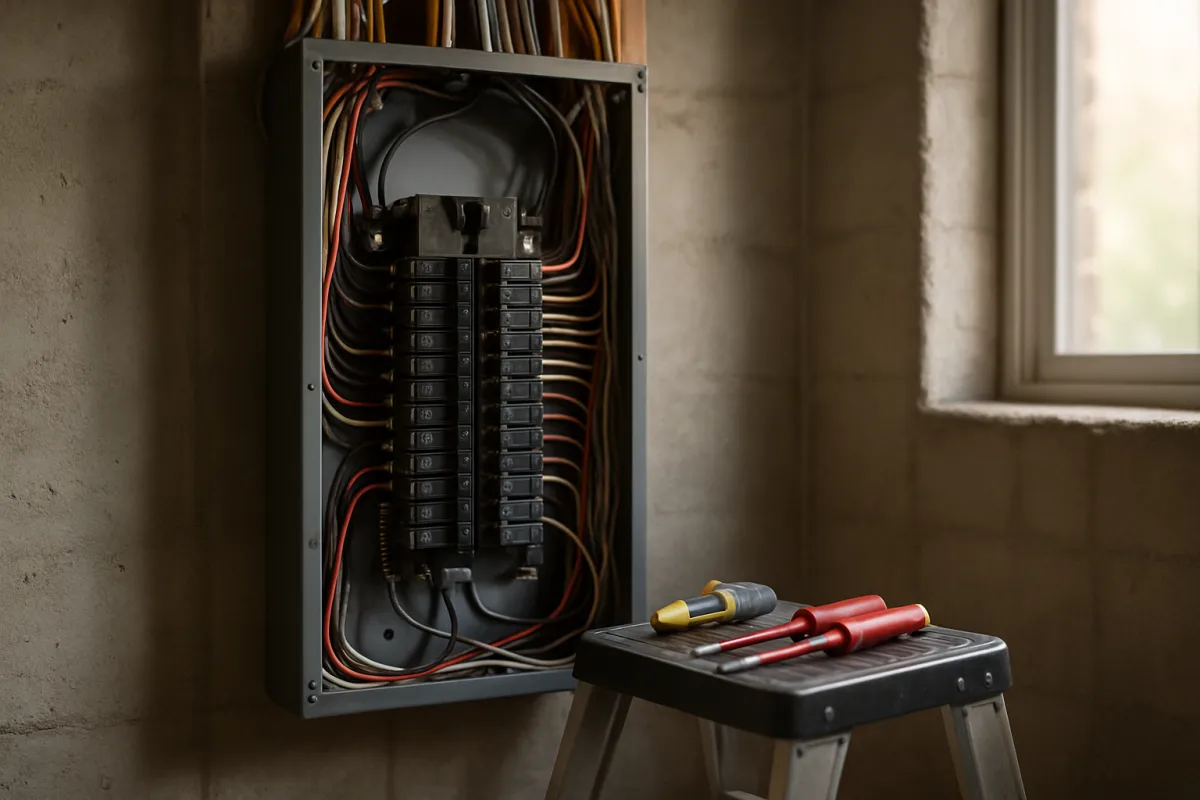
Panel work is where electrical pricing leaves the familiar hundreds. Replacing a residential panel with a modern 200 amp unit in an accessible location carries an illustrative $2,000 to $5,000 range, and the spread is mostly about circuit count, access, and what is found once the cover comes off. Every branch circuit has to be identified, disconnected, reterminated in the new panel, tested, and labelled, and that is patient work rather than fast work.
Several conditions push a panel job toward the top of the range or past it. Panels of older or discontinued designs sometimes carry no compatible parts at all, which turns a repair into a replacement. Cramped locations, panels in finished closets or behind stored belongings, and cables that arrive too short to reach new positions all add hours. So does a grounding electrode system that has to be brought up to what the inspector expects.
The word “upgrade” also hides an important distinction. Replacing the panel alone is one job. Increasing the actual electrical service to the house is another, and the two are often quoted together but priced very differently, which the next two sections separate.
Where the money goes on a panel upgrade
Putting an illustrative panel upgrade under the microscope shows why the total is what it is. The chart below splits an illustrative $3,500 panel replacement into its parts, summing to 100. The exact proportions move with your house, but the pattern holds across most quotes: labor dominates, the hardware is a minority share, and the permit is a small but non-optional line.
Where the money goes on an illustrative $3,500 panel upgrade
Shares of one illustrative residential panel replacement, summing to 100. Access, circuit count, and local permit fees move these proportions.
Illustrative shares of an illustrative total. Your quote will differ; the point is that labor and access, not the hardware, decide the number.
Two conclusions follow. First, shopping for a cheaper panel barely moves the total, because the hardware is a fifth of it. Second, a quote that omits the permit line entirely is either absorbing it silently or not pulling one, and only one of those is acceptable. Ask which, and put the answer in writing. The estimator will let you rebuild this split on the hours and rate a local electrician actually quotes you.
Service upgrades and why they are a different price class
A service upgrade is not a bigger panel job, it is a different job. Increasing the electrical service to a house can involve the meter socket, the service entrance conductors, the mast or lateral, the grounding electrode system, and coordination with both the utility and the inspector. The illustrative $3,000 to $7,000 range reflects all of that, and the upper end assumes overhead work, an awkward meter location, or a utility that requires its own scheduling.
The reason it sits in a separate price class is that the electrician does not control the whole timeline. The utility has to disconnect and reconnect, the inspector has to pass the work before power is restored, and those two appointments have to line up. A job that is six hours of actual labor can occupy several days of calendar because of sequencing, and a shop has to price that reality rather than the labor alone.
This is also the tier where several detailed written quotes genuinely pay for themselves, because the spread between electricians on the same service upgrade can be very wide, and the differences usually hide in what each one includes: permits, utility fees, the meter socket, patching, and whether temporary power is provided while the service is down. Our walkthrough on reading an estimate is the right companion when three quotes come back looking incomparable.

Whole-house rewire cost
Rewiring a house is the largest residential electrical project there is, and the illustrative $8,000 to $25,000 range is wide because it depends on the size of the house, the construction, and how much finish work is disturbed. Expressed per square foot, an illustrative $5 to $14 covers most cases, so an 1,800 square foot home commonly plans somewhere between roughly $9,000 and $25,000 for the electrical work alone.
The phrase “the electrical work alone” is the part homeowners underestimate. A rewire in a finished house means opening walls and ceilings in many places, and the drywall repair, plaster patching, texture matching, and repainting that follow are frequently a separate trade and a separate bill of real size. A rewire during a gut renovation, when walls are already open, costs dramatically less for identical electrical work, which is why timing a rewire alongside other work is the single biggest saving available.
Rewires are also almost always permitted and inspected, often in stages, with a rough inspection before the walls close and a final inspection at the end. That sequencing controls the schedule and is not something to rush. If a rewire is on your horizon, our renovation budget walkthrough helps you place it against the rest of the project rather than treating it in isolation.
Old wiring types and why they add hours
Age is the quiet multiplier in electrical quotes. Two identical requests in two houses can differ by hundreds of dollars purely because of what is already in the walls, and an electrician who has seen the wiring will quote differently from one who has only heard the description on the phone.
Several older systems complicate ordinary work. Two-wire circuits without an equipment grounding conductor mean a simple three-prong receptacle swap becomes a decision about protection and labelling instead. Cloth-insulated conductors can become brittle with age and heat, so disturbing one connection sometimes damages the next. Aluminum branch circuit wiring requires specific connection methods and materials rather than ordinary ones. Knob and tube systems, where they remain, are a category of their own and frequently trigger a wider conversation than the job you called about.
None of this makes an old house unfixable, and none of it means every quote citing old wiring is padded. It means the electrician is pricing time they can reasonably expect to spend. The useful homeowner response is to ask specifically what they found, what it changes about the job, and whether the recommendation is a repair or a wider replacement, then get that answer in writing before approving anything past the diagnostic.
Finished walls, access, and the fishing problem
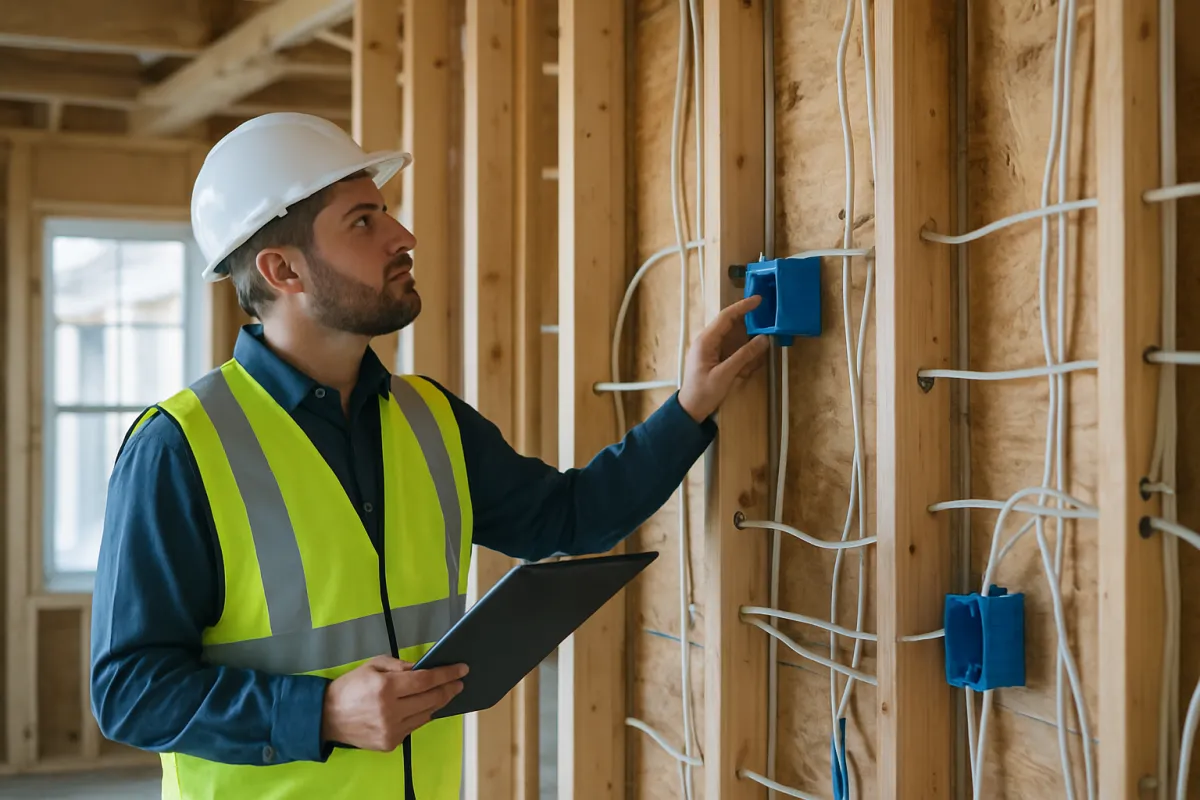
If one idea explains electrical pricing, it is that cable is cheap and getting cable somewhere is not. In open framing, a run of cable is minutes of work. Behind finished drywall, the same run means locating studs and blocking, cutting access holes, fishing the cable blind, securing it, and repairing the surface afterward, which is why identical circuits in a new build and a fifty year old house carry wildly different prices.
Several features of a house make fishing harder and therefore dearer. Fire blocking between stud bays stops a cable that would otherwise drop freely. Plaster and lath resists cutting and cracks unpredictably. Finished floors above a ceiling remove the easy route entirely. Masonry, brick, and concrete walls require surface conduit or channelling rather than concealment. Insulation, particularly blown or foam, fills the cavity a cable would have travelled through.
There is a genuine trade-off worth raising with your electrician: concealment versus cost. Surface-mounted raceway or conduit is visibly present but much cheaper to install in difficult construction, and in a basement, garage, or workshop that trade is often worth taking. In a living room it usually is not. Ask for both prices when the run is hard, since the cheaper option may be perfectly acceptable in the space you are actually wiring.
What moves an electrician’s rate up or down
Once you know the band, the useful question is what places a specific electrician inside it. Six factors do most of the work, and none are mysterious.
Region is the largest single factor, since labor rates track local cost of living and local demand, which makes comparing a quote to a national figure nearly meaningless. Business size is the second: a one-person operation carries less overhead and often quotes lower, while a company with dispatchers, a fleet, and around the clock availability charges for the infrastructure that makes those things possible.
Credential level is the third, and it matters more in electrical than in most trades because permitted work commonly has to be pulled and supervised at the master level. Specialization is the fourth: service and panel work, industrial controls, solar and battery interconnection, and low voltage systems each carry their own premium. Demand and season are the fifth, since a heat wave or a storm that damages services across a region tightens supply and stretches lead times. And the sixth is timing, because an after-hours call multiplies whatever the other five produced. The job cost estimator lets you test how far each of those levers moves a total.
Independent electricians versus large service companies
Choosing between a one-truck independent and a large branded company is a trade-off, not a question of who is cheaper. Independents typically quote lower hourly rates, an illustrative $65 to $115 against a large company’s effective $110 to $230, because they carry far less overhead. What you give up is availability, depth of stock on the van, and the ability of the business to absorb a mistake.
Large companies sell the opposite bundle. They answer the phone at unsocial hours, dispatch quickly, usually stock more parts, and typically stand behind the work with a written guarantee backed by a business with assets. They also employ salespeople and run marketing, and price accordingly. Their flat-rate books mean you know the number before work starts, which many homeowners value more than a lower hourly rate they cannot verify.
Match the choice to the job. For routine device and circuit work on a weekday, a well-reviewed independent is usually excellent value. For a permitted panel or service upgrade, or for anything where you want a guarantee that will still exist in five years, the larger firm’s premium buys something real. In both cases the non-negotiables are identical: current licence, current liability insurance, itemized written quote. Our note on finding a good contractor applies directly to electricians.
Materials, markup, and who supplies the fixture
Materials are the second line on most electrical invoices, and the way they are priced causes more friction than the labor. Electricians mark up materials above retail. This is standard across the trades and it is not dishonest on its face: the markup pays for carrying stock on the van so the job finishes today, for sourcing the right part, and for warranting it once installed.
The markup matters little on small items and a lot on expensive ones. A marked-up box connector is a rounding error. A marked-up chandelier, a premium charging unit, or a high-end dimmer system can add hundreds. That is why many homeowners supply major fixtures and equipment themselves and pay labor only, which is what most of the illustrative ranges in the table above assume.
There is a real trade-off in doing so. When you supply the item you own the warranty problem: if it fails or arrives incomplete, the electrician’s warranty typically covers only the installation, and a return trip is billable. When they supply it, the whole thing is their responsibility. Ask which model applies before you buy anything, and if you do supply the fixture, have it on site, unboxed, and checked for missing parts before the appointment starts.

A worked example: a three hour electrical call
Walk one illustrative scenario end to end to see how the lines combine. A garage freezer keeps tripping the circuit it shares with the washer, two receptacles in the house have gone loose, and a hallway switch no longer holds. None of it is urgent, so the homeowner books a scheduled weekday appointment rather than calling after hours, which is the first and largest saving available.
The shop charges an $80 service call fee and bills journeyman time at $100 an hour with a one-hour minimum. The electrician runs a dedicated 20 amp circuit to the garage from a panel with a free slot, then replaces the two receptacles and the switch while on site. Total time is three hours and materials come to $95. The arithmetic is simple: labor of 3 hours at $100 is $300, plus the $80 service call fee, plus $95 of materials, for a total of $475. Because quotes on identical work vary, a sensible planning band is roughly $404 to $594.
The number worth noticing is the effective rate. Divide $475 by three hours on site and you get about $158 an hour, well above the $100 headline. That is not a hidden markup. It is what happens when a fixed service call fee and materials are spread across a short visit, and it is precisely why comparing shops on hourly rate alone misleads.
Now change one variable. Suppose the same work happens at 8pm on a Sunday. The labor rate is multiplied by an illustrative 1.5, so three hours bill at $450 rather than $300, and the total moves to roughly $625, an effective rate near $208 an hour. Same electrician, same work, same materials, and about $150 of difference bought by nothing except the hour on the clock. If your local rules require a permit for the new circuit, add its illustrative $50 to $350 on top of either version. Rebuild both on your own numbers using the companion on this page.
What is safe to do yourself and what is not
Electrical DIY sits in a different category from most home projects, and it is worth being blunt about why. Two hazards run in parallel. The first is immediate: contact with an energized conductor can injure or kill, and a circuit you believed was off is the most common way that happens. The second is delayed: a connection that is loose, undersized, or made with the wrong device can heat quietly inside a wall for months or years before it starts a fire, and nothing about the work looks wrong on the day.
That second hazard is what makes confident amateurs dangerous in this trade specifically. A leaking pipe announces itself. A bad electrical connection does not. It is also why inspection regimes exist for electrical work in a way they do not for painting or tiling, and why insurers and buyers ask about unpermitted electrical work at claim time and at sale.
Some homeowners are genuinely competent to replace a light fixture or a receptacle after confirming with a tester that the circuit is dead, and in many places that work is legal for an owner to perform. Anything involving the panel, the service, aluminum branch wiring, or work that would require a permit belongs with a licensed electrician regardless of confidence. Rules on what an owner may legally do, and what must be inspected, vary by jurisdiction, so ask your building department rather than assuming. Our framework for deciding what to attempt yourself is worth reading before you either call or reach for a screwdriver.
Backup power, transfer switches, and generator wiring
Standby and portable generator wiring is electrical work with an extra requirement: the connection has to make it impossible to feed power back onto the utility line, which is a hazard to line workers and to your own equipment. That function is what a transfer switch provides, and it is the reason improvised generator connections are both unsafe and, in most places, not permitted.
The illustrative $800 to $2,500 range for a transfer switch covers a fair spread of arrangements, from a manual switch feeding a handful of essential circuits up to an automatic switch tied into a permanently installed unit. The lower end assumes a simple installation next to an accessible panel; the upper end assumes an automatic switch, a longer feeder, and more circuits brought under backup. The generator itself is a separate purchase and a separate cost, covered in our whole-house generator cost file.
Two points belong in every generator conversation. This work is commonly permitted and inspected, and for a permanently installed unit there may be fuel and clearance requirements involving other trades and other approvals. And the size of the switch has to match a realistic assessment of what you actually need running, since backing up the whole house costs considerably more than backing up a furnace, a refrigerator, a well pump, and some lighting.
How to lower what you pay an electrician
Reducing electrical cost is mostly about arranging the work well rather than negotiating hard. A short list of habits does the heavy lifting.
- Batch small jobs into one visit. You pay the service call fee and the minimum charge once, then buy additional time at the marginal rate. Walk the house and list every dead outlet, failing switch, and dated fixture before you call.
- Schedule rather than emergency-call whenever it is safe. An illustrative 1.5 or 2 times multiplier on labor is the most expensive routine mistake in this trade, and most electrical faults can be isolated at the breaker and left until morning.
- Ask the four phone questions before booking. What is the service call fee, is it credited toward approved work, what is the minimum charge, and does the rate change outside business hours.
- Time bigger electrical work to open walls. Rewiring, adding circuits, and moving devices cost a fraction during a renovation when the framing is already exposed compared with the same work in a finished house.
- Get an itemized written quote on anything past the minimum. Labor, materials, service call fee, and permit on separate lines is what makes two quotes comparable at all.
- Supply your own fixtures when it suits. Paying labor only on a fan, a chandelier, or a charging unit avoids markup, provided you accept the warranty trade-off and have the item on site and checked.
- Clear access before the electrician arrives. Empty the closet in front of the panel, move the storage away from the attic hatch, and unpark the car in the garage. Every minute spent shifting your belongings is billed at their rate.
None of these push an electrician’s price down. They buy fewer visits, at better hours, with less time wasted on site, which is where the real money sits.
Common mistakes when hiring an electrician
Most of what homeowners overpay traces back to the same short list, and every item on it is avoidable once you can see it.
- Comparing hourly rates instead of totals. A shop with a low rate, a high service call fee, and a two-hour minimum can easily cost more than a higher-rate shop with neither.
- Describing the job on the phone and expecting a firm price. Nobody can price what is inside your wall without looking. Treat phone figures as ranges and expect the written quote to differ.
- Repeatedly resetting a tripping breaker. The breaker is doing its job. Forcing it back on until something else fails converts a diagnostic call into a repair call.
- Skipping the permit to save a few hundred dollars. Unpermitted electrical work surfaces at sale, at insurance claim time, and at the next inspection, and by then the walls are closed.
- Approving open-ended hourly work with no written scope. Agree a scope and a check-in point, or the bill becomes whatever the day produced.
- Skipping the licence and insurance check. The saving is real and small; the exposure, in a trade whose failures cause fires, is real and large.
- Treating the cheapest quote as the same job. A number well below the others usually differs in scope, in what it excludes, or in what the business carries. Find out which before calling it a bargain.
The discipline behind all of them is the same: understand what the total is made of, agree the scope in writing, and reserve premium hours for genuine emergencies. Our note on avoiding contractor scams covers the sharper end of what can go wrong.
Questions to ask before you book
The most valuable five minutes of any electrical job happen on the phone before a van is dispatched. Ask these and write the answers down.
Start with the money structure. What is the service call fee, and is it credited toward the repair if I approve the work? What is the minimum charge or first-hour rate? Do you bill hourly or flat rate for this job, and if hourly, what is the rate and does it change after hours or at weekends? Those four answers make quotes comparable in a way nothing else does.
Then ask about the work itself. Who will attend, at what tier, and at what rate? Does the rate change if a second person comes? Will you provide an itemized written quote before starting? Does this job require a permit in my jurisdiction, will you pull it, and is the fee included or passed through? Who is responsible for drywall repair afterward? What warranty covers the labor, what covers the materials, and for how long?
Finish with credentials. Confirm the business is licensed as your local authority requires, ask for the licence details so you can verify them with the issuing body rather than taking a number on trust, and ask for proof of current liability insurance sent directly by the insurer. A legitimate shop supplies all of this without friction, and hesitation on any of it is itself an answer.
The bottom line
Electrician cost per hour is a real figure, an illustrative $65 to $140 for ordinary residential work with a midpoint near $100, but it is never the figure you pay. The bill is the rate multiplied by hours, plus a service call fee of an illustrative $50 to $150, plus a minimum charge that catches short jobs, plus materials, plus a permit where local rules require one, and all of it multiplied again if you called at midnight instead of Tuesday morning. Panel upgrades, service upgrades, and rewires then sit in an entirely separate class because they touch the whole system rather than one circuit.
The habits that protect your budget repeat across every job: batch small work into one visit, schedule rather than emergency-call whenever it is safe, time bigger work to open walls, ask the four pricing questions before booking, insist on an itemized written quote, and verify the licence and insurance with the bodies that issue them. Every number in this cost file is illustrative and shifts with your region, your access, and the age of what is already in your walls, so let the written quotes for your own home be the figures you act on.
ProsNook publishes this cost file so homeowners can read an electrical quote with confidence, and it is educational material rather than professional, electrical, safety, or legal advice. Every hourly rate, job price, fee, multiplier, and percentage here is illustrative and will move with your region, the shop you call, the age and construction of your home, and what is found once a wall or a panel cover comes off, so treat them as a way to ask better questions rather than as a quotation. Licensing, permitting, and inspection requirements for electrical work are set by state, county, and municipal authorities and are not uniform anywhere, so your local building department and licensing board are the only bodies that can say what applies at your address. Electricity carries a genuine risk of shock injury and of fire from faults that stay hidden for years, so scorching, burning smells, arcing, a hot or buzzing panel, or a downed line should be treated as urgent and handed to qualified professionals or your utility rather than investigated yourself. Confirm current local pricing and credentials with licensed electricians before committing to any work.
Frequently asked questions
How much does an electrician cost per hour?
Ordinary residential electrical service work falls in an illustrative band of roughly $65 to $140 an hour for the person actually doing the work, with a common midpoint near $100 in many markets. Apprentices and helpers working under supervision sit below that at an illustrative $40 to $80, master electricians sit above it at an illustrative $95 to $185, and large flat-rate companies work out to an effective $110 to $230 an hour once you divide a flat-priced job by the time spent on site. Every one of those figures is illustrative and moves with your region, the size of the shop, and how specialized the work is. The only number that matters for your home is a written quote from a licensed local electrician.
What is an electrician's service call fee, and is it credited?
A service call or trip fee covers dispatching a stocked van and a qualified person to your address, which the business pays for whether or not you approve any work. The illustrative amount commonly falls between $50 and $150, with something near $80 typical for a scheduled daytime visit and more for evenings, weekends, and long drives. Some shops credit that fee toward the repair when you approve the work with them, which turns it into a deposit, while others keep it as a separate diagnostic charge because diagnosis is itself skilled work. Ask which policy applies when you book, because the answer decides what a second opinion really costs you.
How much does it cost to replace an outlet or a light switch?
Swapping a standard receptacle or switch on existing wiring is one of the smallest electrical jobs there is, and the illustrative all-in range of $125 to $300 is mostly the service call fee and the minimum charge rather than the work. A GFCI receptacle costs a little more in parts and testing, with an illustrative $150 to $350 all in. The reason a five minute task can generate a bill in the low hundreds is that the drive, the van stock, the insurance, and the paperwork cost the same regardless of how long the device takes to change. The practical response is to batch several small devices into one visit so you buy the minimum charge once.
How much does an electrical panel upgrade cost?
Replacing a residential panel sits in a different price class from device work, with an illustrative $2,000 to $5,000 range for a straightforward change to a modern 200 amp panel in an accessible location. If the meter socket, service mast, grounding electrode system, or the utility connection also has to change, the job becomes a service upgrade with an illustrative $3,000 to $7,000 range, because coordination with the utility and the inspector stretches the timeline as well as the labor. Panels with aging or obsolete equipment, cramped access, or a long list of circuits to relabel and reterminate push toward the upper end. Panel and service work almost always requires a permit and an inspection, so confirm what your local building department requires before comparing quotes.
Do I need a permit for electrical work, and what does it cost?
Permit rules are set by state, county, and municipal authorities rather than nationally, so your own building department is the only source that can answer for your address. As a broad pattern, like-for-like device swaps such as replacing a receptacle or a light fixture often do not require a permit, while adding circuits, altering the panel, changing the service, and rewiring commonly do. Where a residential electrical permit is required, the illustrative fee frequently falls between $50 and $350, with panel and service work reaching several hundred dollars once inspection is included. Electrical permits are enforced more consistently than many homeowners expect because the inspection exists to catch the failures that start fires, and an electrician who suggests skipping a required one is telling you something important.
How much does it cost to install an EV charger circuit?
A level 2 charger needs a dedicated 240 volt circuit, and the price is driven almost entirely by the distance from the panel and whether the panel has room. A short run from a garage-mounted panel with a free double slot commonly lands in an illustrative $600 to $1,600 all in for the circuit itself, with the charger unit separate. A long run through finished walls, an outdoor trench, or a panel that first needs a subpanel or an upgrade to make room pushes the illustrative range to $1,500 to $4,000, and a full panel upgrade alongside it adds its own $2,000 to $5,000. Load calculations and permits are commonly required for this work, so ask any quoting electrician to confirm both.
Is electrical work safe to do myself?
Electrical work carries two hazards that most home repairs do not: immediate shock injury while you are working, and a fire risk that appears months or years later from a connection that looked fine on the day. That combination is why electrical DIY sits in a different category from painting or basic plumbing. Some homeowners are competent to change a light fixture or a receptacle after confirming the circuit is genuinely dead with a tester, but anything involving the panel, the service, aluminum branch wiring, or work that would require a permit belongs with a licensed electrician. Local rules on what a homeowner may legally perform, and on what must be inspected, vary by jurisdiction, so check with your building department rather than assuming.
How can I tell if an electrician's quote is fair?
Ask for the quote in writing with labor, materials, the service call fee, and any permit broken out separately, because a lump sum hides the one line you most want to compare. Then divide the labor figure by the hours the electrician expects to be on site and check whether the implied rate is plausible for your market against the illustrative bands. On anything past a few hundred dollars, collect two or three quotes written to the same scope so you are comparing like with like rather than guessing at what each one includes. A fair quote is one you can read line by line and explain back, from a licensed and insured business that answers questions without pressure.