What's on this page
- Why two decks the same size cost worlds apart
- The headline ranges: illustrative cost per square foot
- What actually drives the price of a deck
- Material by material: what you are really buying
- The lifetime-cost argument: composite premium versus maintenance
- Size math: how totals scale from 10x10 to a wraparound
- How to calculate your own deck cost with a free calculator
- Labor versus materials: where a deck budget splits
- Ground level versus elevated: the framing jump
- The features that quietly add up
- Where a deck budget actually goes
- Permits, inspections, and why they protect you
- What you can honestly build yourself
- How to read a deck quote
- The contingency for rot and grading surprises
- Will a deck pay for itself at resale
- A worked example: one 12x16 deck, two materials
- Common deck-building mistakes
- The bottom line
Short answer: Building a deck commonly runs an illustrative $25 to $35 per square foot installed in pressure-treated wood, $35 to $45 in cedar and $50 to $70 in composite or PVC, before elevation and features. A standard 12 by 16 deck of 192 square feet lands roughly $5,000 to $8,000 in treated wood and $9,000 to $14,000 in composite. Labor is typically a fifth to a third of the total, and height, railings and stairs move the budget.
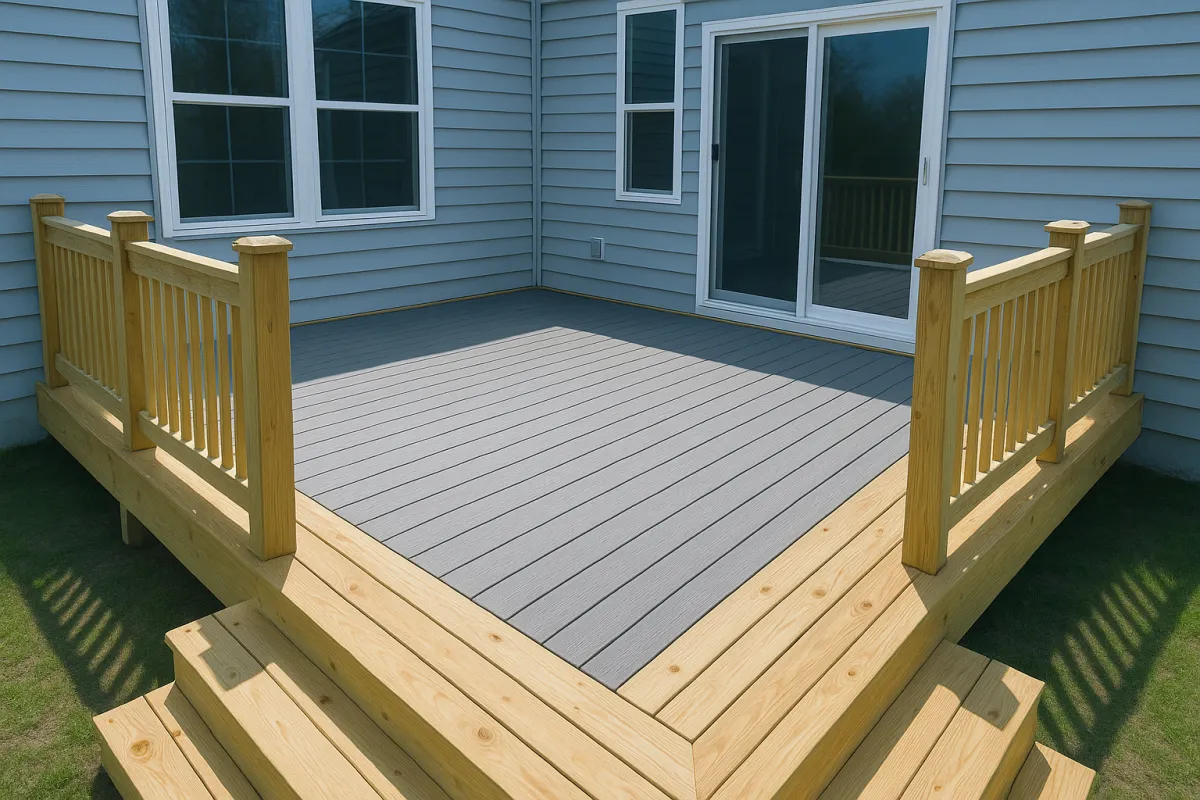
Ask what a deck costs and the answers scatter from “a couple grand and a weekend” to “we spent as much as a small kitchen.” Both can be true, because a deck is not one product. It is a foundation of footings, a frame of beams and joists, a surface of boards, and a perimeter of railings and stairs, and the price depends entirely on what each of those layers is made of and how high off the ground it all sits. A 12x16 deck built four different ways is four different prices, and none of them is wrong.
This cost file prices the job from the footings up. The honest per-square-foot ranges by material, what actually drives the total, why composite costs more upfront and less over its life, how the price scales with size, where the labor and materials split falls, and a full worked example of one 12x16 deck costed in two materials side by side. Our earlier contractor cost file explained how any trade price is assembled; this one applies that machinery to decks specifically. Sketch your own deck in the job cost estimator as you read, and the ranges below turn into your numbers.
Key takeaways
- Illustrative installed ranges: pressure-treated about $25 to $35 per square foot, cedar $35 to $45, composite and PVC $50 to $70, before elevation and features.
- A standard 12x16 deck of 192 square feet lands roughly $5,000 to $8,000 in treated wood and $9,000 to $14,000 in composite, illustratively.
- Labor is typically a fifth to a third of the total, well under half, and elevation drives it up faster than any material choice does.
- Composite's premium is really a maintenance trade: you pay more upfront and skip the annual staining, sealing, and board replacement of wood.
- Height, railings, and stairs are the quiet budget movers, and footings for an elevated deck are the single biggest labor jump.
Why two decks the same size cost worlds apart
Homeowners often start with a square-foot number in mind, a friend’s deck cost this, so mine should too, and then the quotes arrive thousands apart and the friend’s figure turns out to be useless. The reason is that square footage is the least important variable in deck pricing. Two decks that are both 12x16 can differ by more than double, because one is a ground-level treated platform and the other is an elevated composite deck with a full railing, a staircase, and built-in seating.
The variables that actually move the price are, in rough order of impact: the decking material, the height off the ground, the length and complexity of the railings and stairs, the ground conditions the footings have to reach through, and finally the raw square footage. A homeowner who fixes on area first has anchored on the weakest lever and will be surprised by every other one.
Every dollar figure in this cost file is illustrative, because your market, your yard, and your design set the real numbers. But the structure of the cost, what the money buys and in what proportion, is stable across markets, and once you see the structure, a wild spread between deck quotes stops being a mystery and becomes a short list of specific questions about material, height, and features.
The headline ranges: illustrative cost per square foot
The most useful way to hold a deck budget in your head is per square foot installed, because it travels between deck sizes better than any total does. Installed means everything in place: footings, framing, decking, fasteners, and a basic railing, with the labor to build it. As an illustrative national-ish guide before local rates and elevation adjust it, pressure-treated lumber runs about $25 to $35 per square foot, cedar about $35 to $45, composite about $50 to $65, and premium PVC about $55 to $70 and up.
Illustrative installed cost per square foot by material
A basic ground-level deck with a simple railing. Every market and design differs.
Midpoint figures for illustration. The bars measure the surface material's effect on an otherwise identical build; height, railing style, and stairs push every one of them higher.
Read those bars as a starting point, not a quote. The per-square-foot figure climbs the moment the deck leaves the ground, gains a longer railing run, or adds a staircase, because those additions cost real money while adding little or no floor area to divide it across. That is exactly why small elevated decks look expensive per foot and large ground-level ones look cheap. Anchor on the material band that matches your taste, then adjust upward for every complication your design carries. The estimator lets you set your own local rate rather than a blended one.
What actually drives the price of a deck
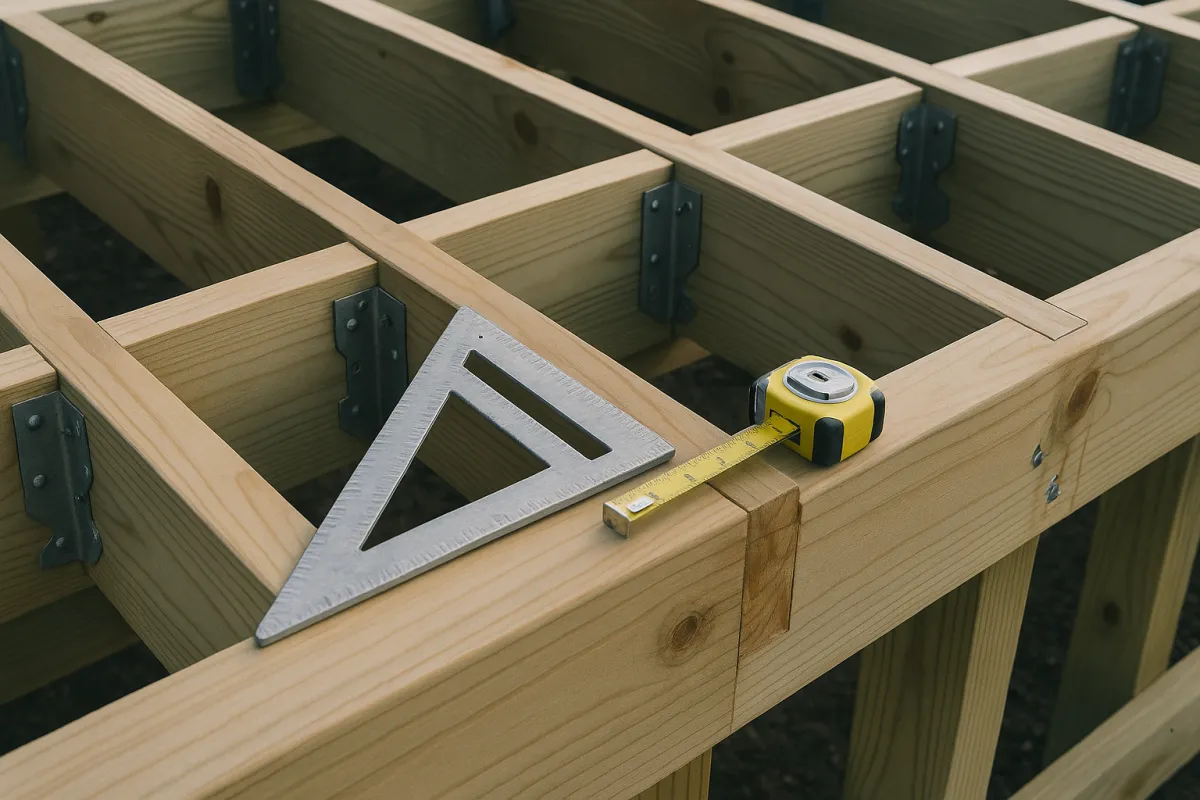
Five levers set the total, and knowing their order of impact is most of the budgeting battle. First is the decking material, which can swing the surface cost by a factor of three between treated pine and PVC. Second is height, because an elevated deck multiplies footing depth, framing size, and stair length all at once. Third is the railing and stair package, which is priced by the linear foot and the flight, not the square foot, so it scales with perimeter and access rather than area.
Fourth is ground condition. Footings must reach below the frost line in cold climates, and rock, clay, a steep slope, or poor drainage can turn a routine dig into hours of labor and extra concrete. Fifth, and weakest, is the raw square footage, which matters mainly because it scales the decking material and the framing, the two things that grow smoothly with area while everything else grows in steps.
The practical takeaway is to price the levers in that order. Decide the material, then the height, then the railing and stair design, then have someone assess the ground, and only then let square footage fine-tune the number. A homeowner who reverses that order, starting from area and treating everything else as a rounding detail, ends up with a budget that the first real quote demolishes.
Material by material: what you are really buying
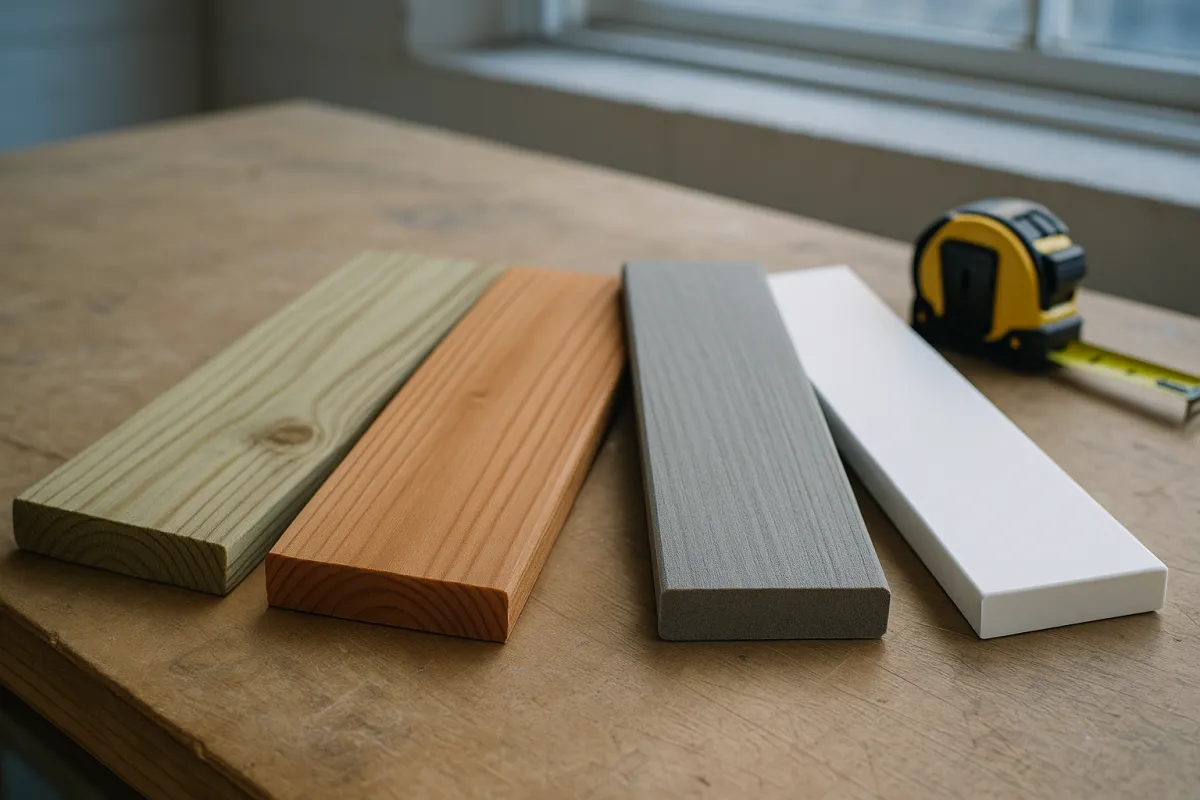
Pressure-treated lumber is the default and the value leader. It is real wood, chemically treated to resist rot and insects, and it costs the least per board of any decking. Illustratively $25 to $35 per square foot installed. The catch is maintenance: it needs cleaning and a stain or seal roughly every year or two, it can crack, cup, and splinter as it weathers, and a well-kept treated deck lasts perhaps fifteen to twenty years before boards start needing replacement.
Cedar is the natural-wood upgrade. It resists rot and insects on its own without chemical treatment, it stays cooler underfoot, and it has a warmth that many homeowners prefer to treated pine. Illustratively $35 to $45 per square foot installed. It is softer and can weather to gray without regular sealing, and like all wood it asks for ongoing maintenance to hold its color and surface.
Composite boards are a blend of wood fiber and plastic, and PVC boards are all-plastic. Both cost the most upfront, illustratively $50 to $70 per square foot installed, and both largely erase the maintenance chore: no staining, no sealing, strong resistance to rot, splinters, insects, and fading, and lifespans commonly quoted at twenty-five years or more with warranties to match. The trade is purely money now for time later, which is the argument the next section takes apart.
The lifetime-cost argument: composite premium versus maintenance
The sticker gap between wood and composite is real, but comparing only the install price is comparing the wrong thing. A wood deck keeps billing you after the crew leaves: cleaner and stain or sealer every year or two, an afternoon or a paid pressure-washing and staining service each cycle, and eventually a run of cracked or cupped boards to pull and replace. A composite deck asks for a hose and mild soap and little else for decades.
Put illustrative numbers on it. Suppose staining and sealing a treated deck costs $300 to $600 in materials and a day of labor, or several hundred dollars paid out, every other year. Over fifteen years that is roughly $2,500 to $5,000 in upkeep, plus some board replacement, none of which the composite deck incurs. That maintenance stream does not fully close the upfront gap on most decks, but it narrows it meaningfully, and it converts the composite premium from pure luxury into a partly rational trade.
The decision, then, is not really wood versus composite; it is how long you plan to own the house and how much you value weekends not spent staining. A homeowner staying five years and comfortable with maintenance may rationally pick treated wood and keep the cash. One staying twenty years who dreads upkeep is often buying real value with composite despite the sticker. Run both through the estimator and weigh the totals against your own timeline.
Size math: how totals scale from 10x10 to a wraparound
Because so much of a deck’s cost rides on material and height, size scales the total less dramatically than people expect, but it still scales it, and the shapes are worth carrying in your head. A small 10x10 deck, 100 square feet, is the entry size: illustratively $2,500 to $3,500 in treated wood at grade, more with composite or elevation. It is the cheapest total and often the highest cost per square foot, because the fixed work of footings and a stair does not shrink with the floor.
A 12x16 deck, 192 square feet, is the workhorse size this cost file prices throughout: illustratively $5,000 to $8,000 in treated wood, $9,000 to $14,000 in composite, with height and railings moving it inside those bands. A 16x20 deck, 320 square feet, roughly doubles the surface and lands illustratively $8,000 to $13,000 in wood and $16,000 to $22,000 in composite. A wraparound or multi-level deck breaks the tidy math entirely, because corners, level changes, and long railing runs add labor out of proportion to the square footage, easily pushing past $25,000 to $40,000 or more.
The planning insight is that per-square-foot figures mislead in both directions: small decks look expensive per foot and cheap in total, large ones the reverse, and a complex shape can cost far more per foot than a plain rectangle of the same area. Budget by picking a size, a material, and a height together, then use area only to scale the surface and framing lines. The estimator treats size and material as separate questions for exactly this reason.
How to calculate your own deck cost with a free calculator
Reach for a tape measure before you reach for a quote, and a homeowner can build a genuinely useful estimate in four multiplications rather than waiting on a callback. Multiply length by width for the deck’s square footage. Multiply that figure by the per-square-foot rate band for the material you want, using the ranges above rather than a single blended number. If the deck is elevated rather than ground level, add roughly 20 to 50 percent to account for deeper footings and taller framing. Then add a features percentage for railings, stairs, and any extras, commonly another 15 to 30 percent on top.
Take an 8x12 deck, 96 square feet, ground level, in cedar. Ninety-six square feet times an illustrative $40 per square foot lands near $3,840 before railings and stairs. Add a modest 15 percent for a basic railing and a short flight of steps and the total runs closer to $4,400. That is the same arithmetic a free deck calculator runs behind the scenes, and running it yourself before a contractor visits means you can spot a bid that is oddly high or suspiciously low before you have committed to anything.
The job cost estimator above builds exactly this formula in, with your size, material, height and features as separate fields, so you never have to do the multiplication by hand more than once.
Labor versus materials: where a deck budget splits
Across the whole job, labor typically lands somewhere between a fifth and a third of a deck’s installed cost, well under half, because footings, framing lumber, decking, railings, and fasteners are real physical goods that add up fast even on a modest build. Decks sit lower than many home projects on labor intensity: the framing and footings are skilled, physical work, but the decking surface goes down relatively fast on a simple rectangle, which keeps materials, not labor, as the larger line.
Our contractor cost file broke every price into labor, materials, overhead, and profit; the deck version of that lesson is that your local labor rate and your design’s complexity are the two levers that move the labor line, and only one of them is in your control. In a high-rate market the same deck can cost meaningfully more than it does in a lower-rate one with identical lumber, which is why national averages mislead and local quotes rule.
The mix also shifts with your material choice, in a way that surprises people. Choose cheap treated lumber and the labor share of the total rises, because the same hours of framing and installation now sit on top of a smaller material bill. Choose expensive composite and the material share rises further, even though the crew did nearly the same work. So “labor is a third of the total” is really a range that runs lower for composite and higher for treated wood, and where your job lands inside it tells you which lever to press if the total comes back too high.
Ground level versus elevated: the framing jump
The single largest structural cost swing in decking is height. A ground-level or floating deck sits low enough that it may not need deep footings or a guardrail at all: precast concrete blocks or shallow footings, short framing, and a step or two to the yard. It is the cheapest deck to build per square foot and the friendliest to a capable DIYer.
An elevated deck, off a raised first floor or a full second story, changes species. Footings must go deep, below the frost line in cold climates and often two or more feet down, which means more digging, more concrete, and inspection. Posts get tall, beams get heavier, and the whole perimeter now needs a code-height guardrail, which on an elevated deck is a structural safety system, not a decoration. A staircase down to grade, sometimes a long one, adds a whole labor category of its own.
Stack those additions and an elevated deck can cost an illustrative 20 to 50 percent more per square foot than the same deck at grade, with the premium concentrated in footings, framing, and the railing and stair package rather than the deck surface. Height almost always triggers a permit and a structural inspection as well. When you compare quotes, the first thing to confirm is that every bidder priced the same height and the same footing depth, because a bid that quietly assumed a lower deck will look cheaper for a reason that has nothing to do with value.
The features that quietly add up
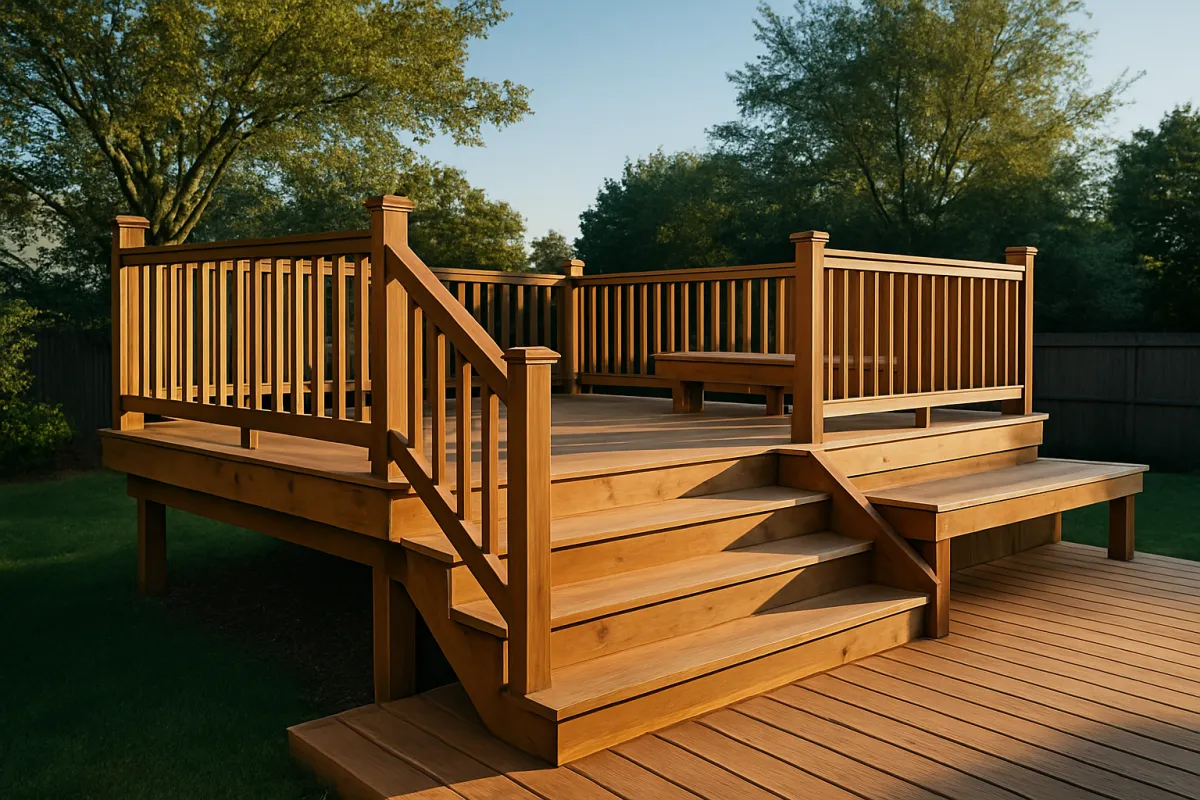
The base deck is a platform. The features are where budgets drift, because each one sounds small and several of them together are not. Railings are priced by the linear foot and vary enormously by material: a basic treated wood railing is modest, while an aluminum, cable, or glass railing system can cost more per linear foot than the deck boards themselves. On a deck with a long perimeter, the railing can be a surprisingly large slice of the total.
Stairs are priced by the flight and the run, and a tall elevated deck may need a long staircase or even a landing, which is framing, treads, stringers, and its own railing all at once. Built-in seating and planters turn deck boards and framing into furniture and add labor accordingly. Lighting, whether low-voltage post caps and stair lights or a full wired system, adds an electrical line item. A pergola, privacy screen, or built-in grill station each add their own budget on top.
The discipline is to price the base deck and the features as separate lines, so you can see what each wish costs and decide it on purpose. A homeowner who lumps “and maybe some built-in benches and nice lighting” into a vague total meets those costs later as change orders, at worse prices and with no competitive pressure. Decide the feature list before anyone quotes, and make every bidder price the same list.
Where a deck budget actually goes
Assemble the lines and the shape of a typical deck budget becomes visible. The proportions below are illustrative for a mid-range deck with a standard railing and a set of stairs, labor of all the work gathered into one band.
Where a deck budget goes
Illustrative shares for a mid-range deck with railing and stairs.
The mix shifts with choices: composite grows the materials band further, an elevated design grows labor, and a long railing or a tall staircase grows the features band. Permits stay small but rarely optional.
Two readings matter. First, materials are the largest single band by a wide margin, roughly half the job on their own, so the decisions that set that line, which board and how much structure the height demands, deserve the most attention. Second, the features band is real and elastic: it is the segment that grows fastest when a wish list expands, and on a deck with a long railing run or a tall staircase it can rival the labor line itself. Budget from the whole bar, and watch the features segment the way you watch a shopping cart at the register.
Permits, inspections, and why they protect you
Whether a deck needs a permit depends on height and jurisdiction, but the working rule is simple: a deck attached to the house, or a freestanding deck above a modest height, almost always needs one, and any elevated deck certainly does. Permit fees are usually modest, an illustrative one to several hundred dollars, and they buy something valuable: an inspector who checks the footings, the ledger board bolted to your house, and the guardrails, which are precisely the elements that fail catastrophically when built wrong.
Deck failures are not a minor category. The ledger connection, where the deck attaches to the house, is the classic point of collapse when it is nailed instead of properly bolted and flashed, and those collapses tend to happen when the deck is full of people. An inspection is a second set of expert eyes on exactly that connection and on the footings you will bury and never see again. The permit is cheap insurance against the one deck failure mode that hurts people.
Skipping permits also tends to bite at resale. A buyer’s inspector notices a deck, asks whether the structural work was permitted, and unpermitted construction becomes a negotiation lever, sometimes a demand for retroactive permitting and inspection at your expense, occasionally a deal-breaker for a cautious buyer or lender. Ask each bidder directly whether the scope needs a permit, who pulls it, and whether its cost sits in the bid, and get the answer in writing.
What you can honestly build yourself
The internet is full of weekend deck builds, and some of them are real: a low, ground-level, freestanding platform on precast blocks is genuinely within reach of a careful DIYer with a circular saw, a drill, and a helper, and building it yourself can save the labor line of the budget, commonly a fifth to a third of the installed total. That is the honest high end of deck DIY, and for the right person and the right simple deck it is money well kept.
The parts to hand to professionals are the ones that carry a safety load. The ledger attachment to the house must be bolted and flashed correctly or it becomes the collapse point described above. The footings must reach the right depth and bear properly or the deck settles and racks. The guardrail on any elevated deck must meet code height and resist a real horizontal load, because it is the thing between a guest and a fall. None of that is mystical, but all of it is unforgiving, and the failure modes are the dangerous kind rather than the merely ugly kind.
The comfortable DIY slices are the finish and cosmetic work: staining or sealing a wood deck, installing skirting or lattice below, adding low-voltage lighting after any electrical rough-in, and building simple planters or a bench once the structure is sound and inspected. A sensible middle path on a bigger or elevated deck is to let a crew build and pass inspection on the structure, then take on the finishing yourself. And whatever you build, still pull the permit, because unpermitted structural work follows you to the closing table.
How to read a deck quote
Everything our quote-comparison manual teaches applies to deck bids, which hide their differences in two specific places: the material spec and the silent exclusions. A deck quote that just says “build a 12x16 deck, $9,000” is not a quote you can compare, because it has not told you the board, the railing, the height, or the footing depth, and each of those can move the honest price by thousands.
Make the material spec explicit. The bid should name the decking product and grade, the railing system, the fastener type, and the framing lumber, because “composite” spans a wide price range and “railing” spans an even wider one. Two bids that both say composite can be pricing boards a factor apart. Ask each bidder to quote the same named products, or at least the same tier, and watch the totals converge when they do.
Then read the exclusions. The classics on decks: demolition and disposal of an old deck, permit fees, footings deeper than assumed if the ground surprises them, lighting, stairs beyond a single short flight, and any grading or drainage work. A bid that leaves those silent is not cheaper, it is early. Hold every quote against your own sketched total from the estimator, and when one comes in far under the pack, the material spec and the exclusion list are the first two places to find the missing money.
The contingency for rot and grading surprises
Replacing an old deck, or building on ground that has never been dug, invites surprises, and the defense is arithmetic rather than optimism. On a replacement, the crew may pull up the old boards and find the framing or the ledger rotted, the footings undersized or heaved, or old flashing that let water into the house wall behind the deck. On new construction, the ground itself can surprise: rock that slows the footing dig, a high water table, a slope steeper than it looked, or soil that needs deeper or wider footings than planned.
Hold a contingency of 10 to 15 percent of the project cost, separate from the bid, and treat it as spoken for until the footings are in and the structure is proven sound. On an illustrative $10,000 deck that is $1,000 to $1,500 in reserve. Older decks, homes on slopes, and any project where the ground condition is unknown earn the top of that range. The reserve does not make surprises cheaper; it makes them boring, which is the best any construction project offers.
This is also where the change-order process from our contractor cost file does its work. A hidden-condition fix, a rotted ledger that must be rebuilt, footings that must go deeper, should arrive as a written change order with a price, approved before the work proceeds, drawn against the reserve you already hold rather than sprung as a verbal surprise. A deck built on a bad ledger or shallow footing is a deck that fails, so this is not a corner to let a low bid quietly cut.
Will a deck pay for itself at resale
Somewhere in the planning a voice will suggest the deck pays for itself when you sell. Decks are among the better-recovering outdoor projects, but they still do not return the full spend, and pretending otherwise leads to overbuilding. Commonly cited remodeling-value studies put deck cost recovery somewhere around half to two thirds at resale, with modest wood decks generally recouping a higher percentage than elaborate composite showpieces whose cost outruns what the market will pay back.
The honest frame is that a deck is outdoor living with a partial rebate, not an investment. You are buying years of use, summer dinners, morning coffee, a place for the household to spread out, and recovering a portion of the cost at sale, and both halves of that are good deals when the spend is sane relative to the house. Where decks do punch above their weight is at the modest end: a clean, well-built, sensibly sized deck adds usable living space that buyers can see and stand on, which shows better per dollar than a sprawling multi-level structure that overwhelms a modest yard.
The rules that keep the resale math honest: match the deck’s scale and material to the home’s market position rather than exceeding it, favor a simple durable design over a complicated one, and never justify a budget overage with resale value, because the buyer who repays your splurge is a hope, not a line item. Build the deck for how you will use it, and let any sale-day bump be the bonus it actually is.
A worked example: one 12x16 deck, two materials
Take one ordinary 12x16 deck, 192 square feet, ground level with a standard railing on the open sides and a short set of stairs to the yard, and cost it two ways. Every figure is illustrative; the structure is the lesson.
Pressure-treated, about $6,300. Footings and posts $700; framing lumber, beams and joists and hangers, $1,100; treated decking boards $1,300; railing materials $600; stair materials $300; fasteners and hardware $200; permit $200; labor across footings, framing, decking, railing, and stairs $1,900. Total about $6,300, roughly $33 per square foot, with labor near 30 percent, the top of the typical range, because the cheap decking board leaves proportionally less material cost for the same hours of framing and install work to sit on top of.
Composite, about $10,400. The same footings, framing, permit, and labor, because the structure underneath is identical: footings and posts $700; framing $1,100; permit $200; labor $2,100 (composite installs a touch slower). What changes is the surface and its hardware: composite decking $3,600; a composite or aluminum railing $1,800; composite stair treads $500; hidden fasteners $400. Total about $10,400, roughly $54 per square foot, with the extra $4,100 over the treated build living almost entirely in the boards, the railing, and the fasteners.
The lesson is in what did not change. The footings, the framing, the permit, and most of the labor cost the same in both decks, because a composite deck is a wood-framed deck with a different skin. The premium is the skin, and the case for paying it is the maintenance you skip over the next twenty years, not any difference in the structure holding you up. Run your own deck through the estimator and hold your quotes against the same two-material structure.
Common deck-building mistakes
The recurring failures, collected for prevention.
- Budgeting by square footage alone. Material and height move the price far more than area; a per-foot number from a friend’s deck tells you almost nothing about yours.
- Comparing bids without a material spec. “Composite” and “railing” each span a wide price range; make every bidder quote the same named products before you compare totals.
- Underpricing the railing and stairs. These are priced by the linear foot and the flight, not the square foot, and on a long or tall deck they can rival the deck surface itself.
- Assuming ground level when the design is elevated. Footings, taller framing, guardrails, and a staircase make an elevated deck a different and dearer animal.
- Letting a low bid thin the structure. The ledger, footings, and guardrail are the safety-critical parts; a discount hiding there is the kind that fails dangerously.
- Skipping the permit. It is cheap, it buys an inspection of exactly the parts that fail, and unpermitted structural work haunts resale.
- Building for an imaginary buyer. Resale recovers part of the spend; build for how your household will use the yard and keep the scale matched to the home.
Each mistake is cheap to avoid before signing and expensive to fix after the concrete sets, which is the general shape of building wisdom: the leverage is all at the beginning.
The bottom line
A deck costs what its material, its height, and your local labor market say it costs: illustratively $25 to $35 per square foot for pressure-treated, $35 to $45 for cedar, and $50 to $70 for composite or PVC, which puts a standard 12x16 deck somewhere between roughly $5,000 and $14,000 depending on how you build it. Labor is typically a fifth to a third of any of those totals, well under half, elevation drives it up faster than any board choice, and the railing and stair package is the feature line most likely to surprise you.
Then buy the project like a professional: pick the material and the height first, name the exact products in a written scope handed to every bidder, price the base deck and the features on separate lines, pull the permit and welcome the inspection, and hold 10 to 15 percent for what the ground and the old structure might hide. The homeowners who come out of a deck build happy are not the ones who found a magic per-foot price; they are the ones who understood that a deck is a frame, a surface, and a railing stacked on footings, priced every layer on purpose, and left the safety-critical connections to hands that will pass inspection. That is the whole recipe, and none of it requires luck.
This cost file exists to explain how deck pricing is built, not to price your deck, and nothing in it replaces professional advice from a licensed contractor or your local building department. Every dollar figure, range, and per-square-foot number above is illustration only: real costs shift with your region, your labor market, lumber and composite prices, your ground conditions, and the season you build in. A deck is a structure that holds people above the ground, so treat the footings, the ledger attachment, and the guardrails as safety systems rather than budget lines, confirm permit and code requirements with your local authority, insist on licensed and insured builders, and gather several detailed written quotes on the same written spec before committing a dollar.
Frequently asked questions
How much does it cost to build a deck?
The honest answer is a per-square-foot range rather than one number, because material, height, and features move the total far more than square footage alone. As an illustrative guide, a simple ground-level pressure-treated deck commonly runs about $25 to $35 per square foot installed, a cedar deck about $35 to $45, and a composite or PVC deck about $50 to $70. A standard 12x16 deck of 192 square feet therefore lands somewhere between roughly $5,000 and $13,000 depending on the material and complexity you choose. Your real price shifts with local labor rates, ground conditions, and how many railings, stairs, and add-ons the design carries, so treat every figure here as a starting range and gather detailed local quotes before you budget.
Why is a composite deck so much more expensive than pressure-treated?
Composite boards cost two to three times more per board than pressure-treated lumber, and that material premium is the single biggest reason the installed price jumps. The framing underneath is usually the same treated lumber in both cases, so the difference lives almost entirely in the decking surface and the fasteners. What the higher price buys is time, not just looks: composite and PVC do not need annual staining or sealing and resist rot, splinters, and fading for decades. The lifetime-cost argument is where composite earns its premium, because the maintenance you skip over fifteen or twenty years can offset a large share of the upfront gap, though it never fully disappears.
How much does it cost to replace a 12x16 deck?
Replacing a 12x16 deck, about 192 square feet, illustratively runs roughly $5,000 to $8,000 in pressure-treated lumber, $7,000 to $9,000 in cedar, and $9,000 to $14,000 in composite or PVC, with the spread driven by material, height, and railing style. Replacement can cost a little less than new construction if the existing footings and ledger are sound and reusable, or a little more if the old structure must come out and be hauled away first. Demolition and disposal of the old deck commonly add a few hundred to a couple thousand dollars on their own. Always have the contractor inspect the footings and ledger board before assuming anything below the boards can be saved.
What is the labor cost to build a deck versus the materials?
Labor is the smaller half of a typical deck budget, commonly running about a fifth to a third of the installed total, with footings, framing lumber, decking, railing, and fasteners making up the larger remaining share. Labor climbs as a share whenever the deck is elevated, because footings, taller framing, and stairs are labor-intensive work that adds hours without adding much visible surface. A cheaper material like pressure-treated shifts the mix toward labor, while an expensive composite shifts it further toward materials, but neither side vanishes. Our contractor cost file breaks down how any trade price is built from labor, materials, overhead, and profit, and a deck follows that same anatomy, just with materials carrying more of the weight than they do on some other trades.
Does an elevated deck really cost more than a ground-level one?
Yes, and the jump can be substantial. A ground-level or floating deck needs shallow footings or precast blocks and short framing, while an elevated deck off a second story needs deep frost-depth footings, taller posts, heavier beams, longer stairs, and code-required guardrails all the way around. Those additions are labor-heavy and material-heavy at once, so an elevated deck can cost an illustrative 20 to 50 percent more per square foot than the same deck at grade. Height also usually triggers a permit and structural inspection where a low ground-level deck might not. When you compare quotes, confirm that every bidder priced the same height and footing depth.
Do I need a permit to build a deck?
In most jurisdictions any deck attached to the house, or any freestanding deck above a certain height, requires a building permit and one or more inspections, though the exact thresholds vary by city and county. Permit fees are usually modest, often an illustrative one to several hundred dollars, and the inspections that come with them check the footings, the ledger attachment, and the guardrails, which are exactly the parts that fail dangerously when done wrong. Skipping a permit tends to surface at resale, when a buyer's inspector flags unpermitted structural work and the negotiation turns against you. Ask each contractor who pulls the permit and whether its cost is included in the bid, and get the answer in writing.
Which parts of building a deck can I do myself?
The honest DIY list is the finish and cosmetic work: staining or sealing a wood deck, installing skirting or lattice, adding lighting after the electrical rough-in, and building simple planters or benches. Some experienced DIYers tackle a low ground-level deck end to end, and that can genuinely save the labor line of the budget, commonly a fifth to a third of the installed total. The parts to leave to professionals are the ones that carry a safety load: the ledger attachment to the house, the footings, and the guardrail system, because a failure there is the kind that makes the news. Unpermitted structural deck work can also complicate a future sale, so if you build it yourself, still pull the permit and pass the inspection.
Will a new deck pay for itself when I sell the house?
A deck is one of the better-recovering outdoor projects, but it still does not pay for itself in full, so treat any pitch that promises a profit with skepticism. Commonly cited remodeling-value studies put deck cost recovery somewhere in the range of half to two thirds at resale, with modest wood decks generally recouping a higher percentage than elaborate composite showpieces. The honest frame is that you are buying years of outdoor living plus a partial return at sale, not making an investment. Build the deck for how your household will actually use the yard, keep the spend sane relative to the home's value, and count any resale bump as a bonus rather than a plan.
Is there a free deck calculator I can use before I get quotes?
Yes, the estimator embedded in this cost file is exactly that: enter your deck's length and width, pick a material, height and feature level, and it multiplies out an illustrative installed total and a cost per square foot using the same bands this cost file quotes. The quick version you can run in your head is the same arithmetic: length times width for square footage, multiplied by the per-square-foot rate for your material, with an add-on for elevation and another for railings, stairs, and extras. Treat the result as a planning number rather than a bid, since ground conditions, local labor rates, and the exact design a contractor proposes will move the real total. Its real value is catching a wildly off quote before you sign anything, not replacing the written estimate itself.