What's on this page
- What spray foam insulation actually costs
- Open cell foam: what it is and what it costs
- Closed cell foam: what it is and what it costs
- New construction walls and additions
- Garage conversions
- Rim joists
- Crawl space and basement walls
- What actually drives the cost of a spray foam job
- Where a spray foam budget goes
- Thickness, R-value, and how much foam you actually need
- Access and job complexity
- Fire and ignition barrier requirements
- Spray foam versus batts and blown insulation
- Payback and how to think about energy savings
- Safety during and after application
- Regional and seasonal price variations
- Financing a larger spray foam project
- DIY versus hiring a pro
- How to read a spray foam insulation quote
- A worked example: one addition costed two ways
- Where spray foam earns its cost most reliably
- Common mistakes
- The bottom line
Short answer: Spray foam insulation commonly runs an illustrative $1.50 to $3.00 per square foot for open cell foam and $3.00 to $5.50 per square foot for closed cell foam, measured over the cavity area. Closed cell costs more because it adds structural rigidity and its own moisture barrier, which is why it is the standard for rim joists, crawl spaces, and basement walls. Most jobs carry a minimum call out fee on small scopes.
Spray foam insulation cost is one of those numbers that looks simple on a per square foot basis and then scatters the moment you price an actual job, because the foam type, the application, and the access all move the figure in different directions at once. A homeowner pricing a garage conversion and a homeowner pricing a crawl space wall are both buying “spray foam,” and the two jobs can land at very different per square foot rates for reasons that have nothing to do with either contractor padding the bid.
This cost file prices spray foam from the chemistry up: the honest per square foot ranges for open cell and closed cell, what each type is actually for and why closed cell costs more, what drives the total beyond the foam itself, how new construction walls, garage conversions, rim joists, and crawl space walls each price differently, and a full worked example of one addition costed both ways. Our attic insulation cost file covers spray foam applied to a roof deck to convert an attic into conditioned space specifically; this file covers everything else foam is used for. Sketch your own project in the job cost estimator as you read, and the ranges below turn into your numbers.
Key takeaways
- Illustrative installed ranges per square foot of cavity area: open cell about $1.50 to $3.00, closed cell about $3.00 to $5.50, before access and job size adjust them.
- Closed cell costs more because it is denser, adds real structural rigidity, and is itself a vapor and moisture barrier, which is why it is the standard for rim joists, crawl spaces, and basement walls.
- A whole set of new construction walls on an addition or garage conversion commonly lands in the low four figures with open cell and the mid four to low five figures with closed cell.
- Foam's real advantage over batts is air sealing irregular framing and penetrations in one pass, not raw R-value per inch, so it earns its premium most where air leakage, not insulation value alone, is the problem.
- Small jobs carry a minimum call out fee, so a rim joist section or a single small cavity often costs more per square foot than a full set of walls.
What spray foam insulation actually costs
Spray foam insulation has no single price because it is really two different products sold under one name, applied across several very different job types. Open cell foam, the lighter and cheaper of the two, commonly runs an illustrative $1.50 to $3.00 per square foot of cavity area. Closed cell foam, denser, stronger, and its own moisture barrier, commonly runs $3.00 to $5.50 per square foot. Those per square foot figures are the building block; the total job cost depends on how much area you are filling and which application you are filling it for.
A small rim joist job might total a few hundred dollars because the area is small, even though the per square foot rate for that specific access can run higher than a large open wall due to the minimum job charge that covers mobilizing a rig for any size job. A full set of new construction walls on an addition or garage conversion, by contrast, spreads that fixed mobilization cost across far more square footage and commonly totals in the low to mid four figures for open cell or the mid four to low five figures for closed cell, depending on the size of the space. The sections below work through each application on its own terms.
Illustrative installed cost per square foot by foam type and application
Measured over the cavity area being filled. Every job and market differs.
Midpoint figures for illustration. Below grade and moisture exposed applications price at the top of the closed cell band because of the extra prep and moisture detailing involved.
Open cell foam: what it is and what it costs
Open cell foam is the lighter, softer, cheaper of the two products, expanding into a texture closer to a dense sponge than a rigid board. Illustratively $1.50 to $3.00 per square foot of cavity area installed, it air seals effectively and delivers a solid R-value per inch, generally enough to fill a standard wall cavity to a good insulation level in a single pass. It is also a sound deadener, noticeably quieting interior walls compared to either batts or closed cell, which is a real secondary benefit some homeowners choose it for specifically.
The limitation that matters is moisture. Open cell is vapor permeable, meaning moisture can pass through it, which makes it the wrong choice anywhere it could trap water against untreated wood or masonry without a way to dry, such as directly against a below grade foundation wall with any history of dampness. For ordinary above grade interior stud walls in a conditioned space, this limitation rarely matters in practice, which is why open cell is the default, lower cost choice for new construction walls and additions.
Closed cell foam: what it is and what it costs
Closed cell foam is denser, harder, and meaningfully more expensive, illustratively $3.00 to $5.50 per square foot installed, and the extra cost buys real additional capability rather than just a premium label. It is itself a vapor barrier and an air and moisture barrier in one material, it adds genuine structural rigidity and racking strength to the wall or roof assembly it fills, and it achieves a higher R-value per inch than open cell, which matters in a thinner cavity where every inch counts.
These properties are why closed cell is the standard, often the required, choice anywhere moisture, structure, or a true vapor barrier is part of the job: rim joists, crawl space and basement walls, below grade applications generally, and any exterior wall assembly where the foam itself needs to do double duty as the air and moisture barrier rather than relying on a separate house wrap layer. Paying the closed cell premium on an ordinary above grade interior wall with no moisture exposure is usually money spent on capability the application does not need.
New construction walls and additions
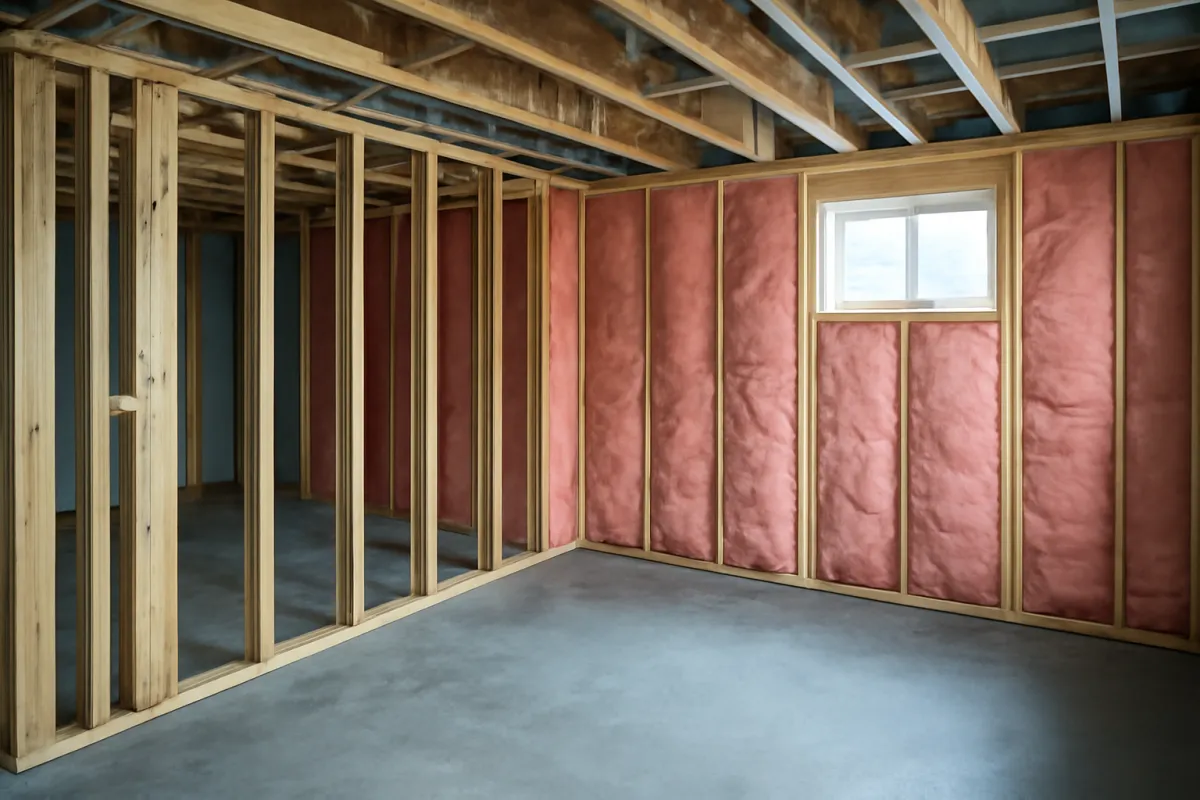
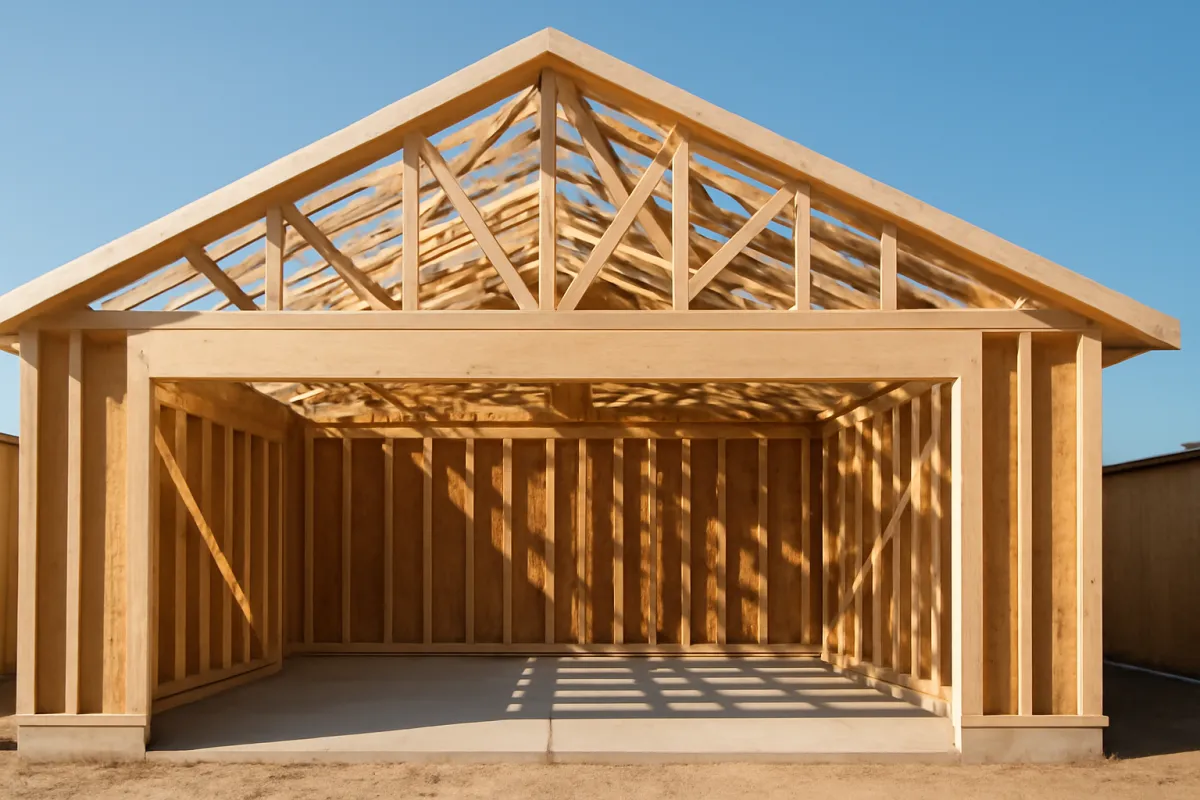
A full set of open stud bay walls, the framing exposed with no drywall yet, is the easiest and most cost-efficient application for spray foam, because the crew has clean, unobstructed access to every cavity with nothing to mask or protect. An addition or a new room built from scratch commonly uses open cell for standard interior walls at the lower end of the per square foot range, since the straightforward access keeps labor time down and lets the fixed mobilization cost of bringing out the rig spread across meaningful square footage.
Illustratively, a modest 400 to 600 square foot addition’s wall cavities commonly total $1,500 to $3,000 in open cell foam, scaling up toward $3,500 to $6,500 if the choice is closed cell throughout instead. The practical decision point is usually not whether to foam at all, since the open access makes this the ideal moment to do it properly, but which foam type, and the answer is almost always open cell unless a specific wall faces unusual moisture exposure or needs the added rigidity.
Garage conversions
Converting a garage into living space is one of the more common reasons homeowners spray foam a meaningful amount of wall area at once, because a garage’s walls and often its ceiling were never insulated to a living space standard in the first place. The open framing, similar to new construction, makes access straightforward, but garages commonly carry fire and ignition barrier code requirements on exposed spray foam that a converted living space does not get a pass on simply because it used to be a garage.
Illustratively, foaming a typical one or two car garage’s walls and ceiling runs $2,000 to $4,500 in open cell or $4,000 to $8,000 in closed cell, depending on square footage and whether the ceiling, often the larger and more complex surface, is included. Our garage conversion cost file covers the full conversion project beyond just the insulation line, including the permit and code questions a living space conversion raises that a simple insulation retrofit does not.
Rim joists
The rim joist, the band of framing that sits on top of the foundation wall and under the first floor’s exterior wall, is one of the most common standalone spray foam jobs because it is a notoriously leaky, hard to insulate area with a batt, and it is almost always treated with closed cell specifically because it sits directly against masonry with real moisture exposure. Illustratively, a typical home’s full perimeter of rim joist foam runs a few hundred dollars to around $800, the job size driven more by linear footage around the foundation than by true square footage.
The reason this small job does not scale down proportionally from the per square foot rates above is the minimum job charge: mobilizing a spray rig and crew for any job carries a fixed cost, and a rim joist job’s modest total area means that fixed cost is a larger share of the final price than it would be on a full set of walls. Ask whether your quote includes a stated minimum job charge so you understand why a seemingly small job does not come in proportionally cheap.
Crawl space and basement walls
Spraying closed cell foam directly onto crawl space or basement foundation walls is an alternative, sometimes a complement, to a vapor barrier liner system, and it is almost always closed cell given the direct masonry contact and moisture exposure in a below grade space. Illustratively, foaming the walls of a modest crawl space or basement commonly runs $1,500 to $4,000 depending on square footage and how much surface preparation the existing walls need before foam will adhere properly.
This application overlaps with, but is distinct from, the liner based encapsulation approach our crawl space encapsulation cost file prices in full; some contractors combine a floor vapor barrier liner with foamed walls, and some use foam alone on the walls with a separate ground cover. If you are pricing a full crawl space project rather than foam specifically, that dedicated cost file covers the complete scope, including the moisture control and drainage questions that decide whether foam alone is sufficient or a fuller encapsulation is the right call.
What actually drives the cost of a spray foam job
Beyond the foam type itself, several forces move the final number, and separating them turns a confusing quote into a readable one. Square footage of actual cavity area is the largest lever, since the job is priced per square foot of surface being filled, not per square foot of the room or building overall. Access is the second lever: open, unobstructed framing prices lowest, while a finished space requiring removal and later replacement of drywall, or a tight crawl space requiring the crew to work lying down, adds labor that lands directly on the bid.
Thickness is the third lever, since a deeper cavity or a job targeting a higher R-value needs more material per square foot, and foam is sold and priced by the inch of depth as much as by the square foot of area. The fourth is whether masking and protection of surrounding finished surfaces is needed, since overspray control on an occupied or partially finished space takes real time the open-framing jobs above do not. The fifth is the minimum job charge, which decides whether a small job prices efficiently or carries a premium for its size.
Where a spray foam budget goes
Assemble the pieces of a typical spray foam job and the shape of the budget becomes visible. The proportions below are illustrative for a standard new construction wall job with reasonably straightforward access.
Where a spray foam budget goes
Illustrative shares for a standard job with reasonably straightforward access.
The mix shifts with access: a finished space requiring masking and later drywall repair grows the prep and labor bands well beyond this new-construction baseline.
The reading that matters is that the chemical itself, not the labor, is the largest single slice on an accessible new-construction job, which flips on a harder access job where masking, protection, and careful cleanup eat into that share. A quote that seems high relative to a simple per-square-foot expectation is worth checking against this structure before assuming it is simply overpriced.
Thickness, R-value, and how much foam you actually need
Spray foam is applied to a specified thickness to hit a target R-value, and the thickness, not just the square footage, is what the contractor is really pricing when the chemical cost is counted. Open cell typically needs roughly five and a half to seven inches to reach a wall-grade insulation target, while closed cell, with its higher R-value per inch, reaches a similar target in roughly three to four inches, which is part of why closed cell can be the practical choice in a shallow cavity even before its moisture properties enter the decision.
The honest caveat is that more thickness is not free and is not always the right call simply because it is available. A standard wall cavity has a fixed depth set by the framing, and filling it to the framing depth with the appropriate foam type hits the sensible target; paying for extra thickness beyond what the cavity can hold is not possible, and under filling a deep cavity to save money on a shallow job gives up real performance. Confirm the quoted thickness and the R-value it is meant to deliver, not just the square footage and the price.
Access and job complexity
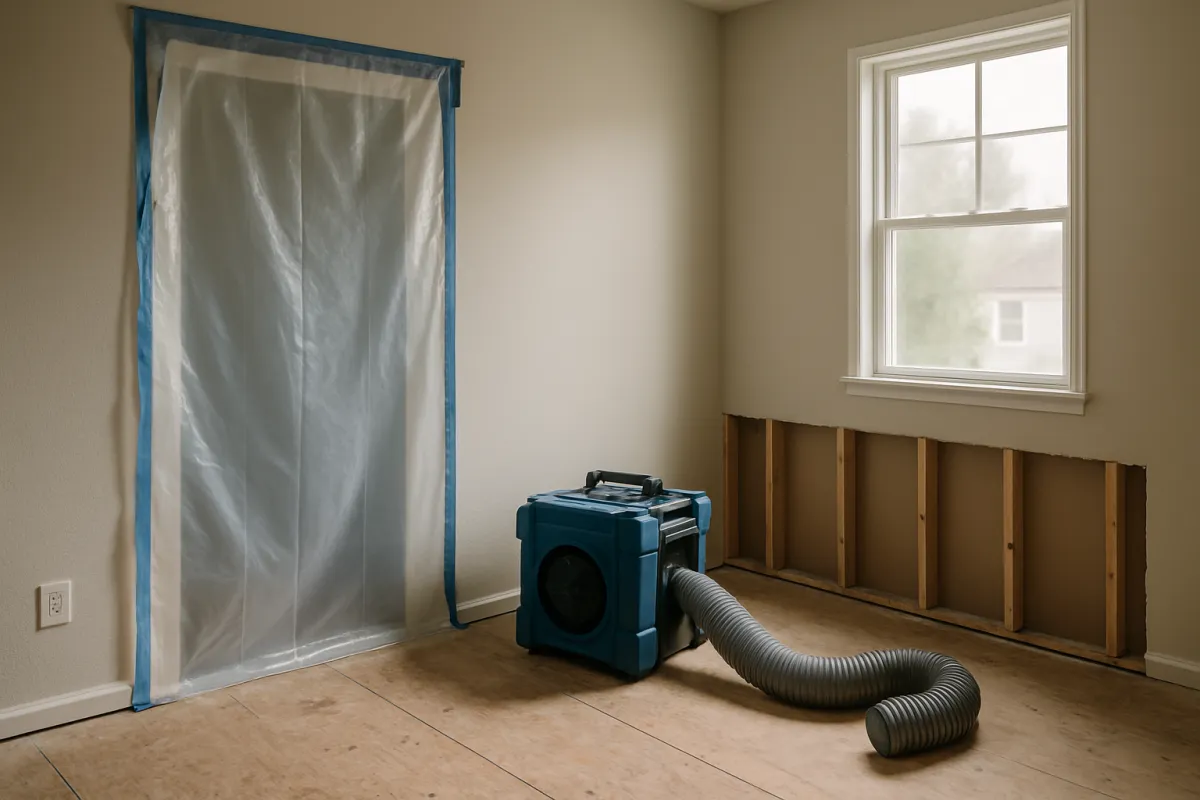
The single biggest hidden cost swing in spray foam work is how hard the crew has to work to reach the cavity, and it is easy to underestimate from the outside. Open, unobstructed stud bays with nothing nearby to protect are the fast, efficient case this cost file’s lower figures assume. A finished space requiring drywall removal before foaming and replacement after, a tight or low crawl space requiring the crew to work lying on their backs for hours, or an occupied home requiring careful masking of furniture and finished surfaces from overspray, all add labor hours that show up directly in the bid regardless of the square footage being filled.
The practical lesson is to describe your actual access honestly when getting quotes rather than assuming a flat per square foot rate applies regardless of how hard the space is to reach. A contractor who walks the actual job before quoting will price the access correctly from the start; a phone quote based only on square footage is the one most likely to grow once the crew arrives and sees the real conditions.
Fire and ignition barrier requirements
Exposed spray foam, meaning foam left visible rather than covered by drywall or another approved finish, commonly triggers fire and ignition barrier code requirements in many jurisdictions, particularly in garages, attics, and other spaces where the foam might otherwise be left uncovered permanently. These requirements exist because foam, like most insulation and building materials, has specific fire behavior that codes address through either an approved ignition barrier coating or a covering material like drywall.
This matters to the budget because an ignition barrier coating, or the drywall that would otherwise cover the foam, is an added cost that a quote focused purely on the foam application itself can leave out. Ask specifically whether your project triggers this requirement and whether the quote includes the ignition barrier treatment or assumes you are covering the foam with drywall as part of a larger finishing scope, since the two paths carry different costs.
Spray foam versus batts and blown insulation
The honest comparison against cheaper alternatives is not that foam is simply better, it is that foam solves a different problem. Batts and blown insulation add thermal resistance efficiently and cheaply in a regular, unobstructed cavity, but neither one air seals the way foam does, since both rely on a separate air barrier layer to stop air movement that foam provides inherently by filling every gap and penetration as it expands. In a space with irregular framing, many electrical and plumbing penetrations, or genuine air leakage problems, foam’s single-step air sealing and insulating is worth real money.
In a simple, regular cavity with few penetrations and no particular air leakage problem, a batt achieves a comparable R-value for meaningfully less money, and foam’s air sealing advantage matters less because there was less air leakage to seal in the first place. The decision is application specific rather than a blanket upgrade, and a contractor recommending foam everywhere regardless of the specific cavity’s condition is worth a second opinion, much like any upsell our note on avoiding contractor scams cautions against.
Payback and how to think about energy savings
Spray foam’s energy case rests mostly on air sealing rather than raw R-value, and that distinction decides whether the payback math is fast or slow for your specific home. A drafty older home with irregular framing, an exposed rim joist that was never insulated, or a garage that leaked conditioned air into the house has real air leakage for foam to eliminate, and sealing that leakage produces a measurable, sometimes fast energy saving on top of the insulation value itself. A newer home that was already reasonably air sealed during construction has less leakage left to seal, so upgrading a wall from batts to foam specifically can take many years to pay back the price premium through energy savings alone.
The honest approach is to ask a contractor to assess your actual air leakage, sometimes with a blower door test, rather than accepting a generic payback timeline quoted for foam in the abstract. Treat the comfort improvement, a noticeably draft free room, a quieter wall, a garage that no longer feels like an uninsulated box, as a real benefit worth something even where the energy math alone would not justify the premium over batts, and let your own climate and energy prices decide how much that comfort is worth paying for.
Safety during and after application
Spray foam is a two-part chemical reaction, and the application process generates fumes that require the installing crew to wear protective equipment and the space to be ventilated during spraying. Reputable contractors follow a standard re-entry time before the treated space is safe to occupy normally, commonly ranging from a few hours to about a day depending on the foam product, the ventilation available, and how much area was sprayed, and that waiting period should be stated in your contract rather than left to a verbal assurance on the day of the job.
Once fully cured, spray foam is considered a stable, inert material with no ongoing off-gassing under normal conditions, which is part of why it is approved for use inside occupied homes in the first place. The safety consideration that matters to a homeowner is almost entirely about the application day itself: confirm the contractor’s stated re-entry time, keep pets and family out of the treated area and ideally the adjoining rooms until that time has passed, and ask what ventilation the crew will run during and immediately after the spray.
Regional and seasonal price variations
Spray foam pricing moves with the same regional labor market forces that affect any skilled trade, so the same job can cost noticeably more in a high labor cost metro than in a smaller market, independent of the foam chemistry itself. Climate also plays a role on the demand side: homes in colder regions more commonly spray foam rim joists and crawl spaces specifically for the air sealing benefit against a harsher heating season, which can mean more competition and sharper pricing in markets where the work is routine, and less competition in markets where few contractors specialize in it.
Season affects scheduling more than price directly, since spray foam application is less weather dependent than many trades, being done indoors in a controlled space. The practical timing lever is booking ahead of the fall rush, when many homeowners address drafty rim joists and crawl spaces at the same time they handle the rest of their seasonal home prep, which can mean better contractor availability and sharper pricing in late summer than in October once demand peaks.
Financing a larger spray foam project
A full new construction wall set or a garage conversion’s insulation can represent a meaningful line item inside a bigger project budget, and most homeowners finance it as part of that larger renovation rather than as a standalone expense. If spray foam is the whole project, say a standalone crawl space or basement wall job, financing options are more limited than for a kitchen or bathroom remodel, since lenders view insulation work as a smaller, lower collateral-value project, but a home equity line of credit or a contractor-offered payment plan are both common paths.
Energy efficiency rebate programs occasionally apply to insulation upgrades including spray foam, particularly where air sealing is the explicit goal of the program, but availability, eligibility, and dollar amounts vary by location and change over time, so confirm current programs with your utility or local energy office directly rather than budgeting around a rebate you read about once. Our home renovation loan options file covers the broader financing landscape for a project that includes insulation as one line among several.
DIY versus hiring a pro
Small consumer kits for gap filling, sealing a handful of penetrations, or treating an isolated rim joist section are genuinely within a confident do it yourselfer’s reach, and using one for a small, contained scope can save real money on a minor job. Full wall cavity insulation, an addition, or a garage conversion is a different undertaking, because the professional two-part chemical foam used at scale requires mixing and applying equipment that maintains precise temperature and pressure, conditions a consumer kit cannot reliably replicate, and an improperly applied foam can shrink, crack, cure incorrectly, or simply underperform for the life of the building.
Beyond equipment, the chemicals involved require protective equipment and proper ventilation during application and cure that a casual DIY setup is unlikely to provide safely. For anything beyond a small, isolated gap, a licensed insulation contractor is the honest recommendation, and the labor-dominated nature of the per square foot price above reflects exactly why: you are paying mostly for correctly handled equipment and chemistry, not for a commodity material.
How to read a spray foam insulation quote
A spray foam quote hides its real differences in three places: the foam type, the measured area, and what is included beyond the spray itself. A quote that just says “spray foam insulation, $3,500” has not told you whether that is open or closed cell, how many square feet it actually covers, what thickness it targets, or whether masking, cleanup, and any required ignition barrier coating are included, and each of those can shift the honest comparison against a competing bid by thousands.
Make every bidder state the foam type, the measured square footage of cavity area, the target thickness and R-value, and whether masking, cleanup, and code-required coverings are included in the price. Two quotes that both say “spray foam” can be pricing a different product entirely, and the gap closes once both bidders are naming the same specification.
A worked example: one addition costed two ways
Take one 500 square foot addition with open stud bay walls totaling roughly 1,200 square feet of actual cavity area once window and door openings are subtracted, on a reasonably straightforward, easily accessed job site. Every figure is illustrative; the structure is the lesson.
Open cell, about $2,400. 1,200 square feet at an illustrative $2.00 per square foot midpoint rate for open access new construction walls. No ignition barrier is required since the walls will be drywalled as part of the addition’s finishing scope regardless.
Closed cell, about $4,500. The same 1,200 square feet at an illustrative $3.75 per square foot midpoint rate, chosen instead because the homeowner wanted the added structural rigidity and the higher R-value per inch in a slightly shallower cavity than the home’s other walls.
The roughly $2,100 difference between the two buys real additional capability, structure, a built-in vapor barrier, and higher R-value per inch, that this particular addition’s straightforward above-grade walls did not strictly require, which is exactly the decision point this cost file keeps returning to: price both options for your specific cavity and let the actual moisture and structural needs of that cavity decide, not a blanket preference for the pricier product. Run your own square footage and application through the job cost estimator to compare both foam types side by side.
Where spray foam earns its cost most reliably
Across every application this cost file has priced, a pattern holds: foam earns its premium most reliably wherever a batt simply cannot do the job, rather than wherever it is merely an upgrade. Rim joists top that list, because the irregular, penetration-heavy framing at a rim joist is genuinely difficult to insulate well with a batt, and the closed cell foam used there is also solving a real moisture problem against the foundation, not just adding R-value. Crawl space and basement walls sit next for the same reason: a batt has nothing to adhere to on masonry and no way to serve as a vapor barrier the way foam does inherently.
New construction walls and garage conversions sit a step below those two in terms of how clearly foam earns its cost, because a batt can, in fact, do a competent job in a simple, regular stud bay with few penetrations, and the choice there is more genuinely a comfort, sound dampening, and air sealing upgrade than a job only foam can do. None of this means foam is the wrong choice for walls, only that the honest case for it there rests on the specific cavity’s irregularity and air leakage rather than an assumption that foam always outperforms a cheaper alternative by the same margin everywhere.
Common mistakes
The recurring failures, collected for prevention.
- Choosing closed cell everywhere by default. It costs roughly double open cell; reserve it for rim joists, below grade walls, and anywhere moisture or structure genuinely calls for it.
- Pricing by room square footage instead of cavity area. The quote should measure the actual surface being sprayed, not the floor area of the room.
- Ignoring the minimum job charge on small scopes. A rim joist job or a single small cavity often prices higher per square foot than a full set of walls for this reason, not because anyone is overcharging.
- Skipping the fire and ignition barrier question on exposed foam. Garages and other spaces with exposed foam commonly need a coating or a covering that a foam-only quote can leave out.
- Assuming more thickness is always better. Foam fills to the framing depth available; paying for thickness the cavity cannot hold is not a real option, and the quoted thickness should match a stated R-value target.
- Hiring based on price alone without confirming licensing. Improperly mixed or applied foam can fail years into its life in ways that are expensive and disruptive to correct after drywall is up.
- Treating a payback estimate as a promise. Energy savings depend heavily on how leaky the space was before the foam went in; ask for an honest, situation specific estimate rather than a generic number.
Each mistake is cheap to avoid before the rig arrives and expensive to fix after the foam has cured, which is the general shape of insulation economics: the decisions worth the most money are made before anyone sprays anything.
The bottom line
Spray foam insulation costs what the foam type, the square footage, and the access say it costs: illustratively $1.50 to $3.00 per square foot for open cell and $3.00 to $5.50 for closed cell, with new construction walls and garage conversions landing in the low to mid four figures for a typical scope, rim joists running a few hundred dollars because of the minimum job charge, and crawl space or basement walls running $1,500 to $4,000 for a typical space. Closed cell earns its premium specifically where moisture, structure, or a built-in vapor barrier matter; open cell is the right default everywhere else.
Buy the job with that distinction in mind: match the foam type to what the specific cavity actually needs rather than defaulting to the pricier option everywhere, confirm the measured square footage, target thickness, and any required ignition barrier coating in writing, and hire a licensed contractor for anything beyond a small isolated gap, since the labor and equipment behind a correct application is most of what you are actually paying for. That is the whole decision, and none of it requires guessing.
This cost file exists to explain how spray foam insulation pricing is structured, not to price your specific project, and nothing in it replaces an on-site assessment and written quote from a licensed insulation contractor. Every dollar figure, per square foot range, and total above is illustration only: real costs shift with your region, your cavity’s size and access, the foam type and thickness chosen, and local labor rates. Fire, ignition barrier, and building code requirements for spray foam are set locally and vary by jurisdiction and by whether the foam will be left exposed, so confirm current requirements with your building department before work begins, and verify any contractor’s licensing and insurance before signing.
Frequently asked questions
How much does spray foam insulation cost?
Spray foam insulation commonly runs an illustrative $1.50 to $3.00 per square foot for open cell foam and $3.00 to $5.50 per square foot for closed cell foam, measured over the cavity area being filled, before any job minimum or access premium is added. A full set of new construction walls on an addition or a garage conversion commonly lands in the low to mid four figures with open cell and the mid four to low five figures with closed cell, depending on square footage. Rim joists alone, a smaller and common standalone job, commonly run a few hundred dollars. Your real price shifts with square footage, foam type, and how accessible the cavity is, so treat every figure here as a starting range and get a written, measured quote before budgeting a specific project.
What is the real difference between open cell and closed cell spray foam?
The core difference is density and what that density buys. Open cell foam is lighter, softer, and roughly half the price per square foot, and it still air seals effectively and insulates well, but it is vapor permeable and should generally stay on the interior, conditioned side of a wall rather than anywhere it could trap moisture against wood or masonry. Closed cell foam is denser, costs more, adds meaningful structural rigidity to the wall it fills, and is itself a vapor barrier and moisture barrier, which is why it is the standard choice for rim joists, basement walls, crawl space walls, and any application touching masonry or exposed to dampness. The honest rule is open cell for ordinary above grade interior walls where cost matters most, closed cell wherever moisture, structure, or a vapor barrier is part of the job.
Is spray foam insulation worth the extra cost compared to batts or blown insulation?
For the right application, yes, because spray foam does something batts and blown insulation cannot: it air seals and insulates in the same step, filling every gap, penetration, and irregular space a batt cannot conform to. That matters most in an application with a lot of irregular framing, penetrations, or where air leakage is the real performance problem rather than just insulation value. For a simple, regular stud bay with few penetrations, a batt achieves a similar R-value for meaningfully less money, and the air sealing advantage matters less. The honest comparison is application by application rather than foam being universally better; it earns its premium where air sealing and moisture control are doing real work, not on every wall in the house by default.
Can I spray foam insulate my own walls as a DIY project?
Small kits exist for minor gap filling and air sealing, and those are genuinely within reach of a confident do it yourselfer for isolated gaps, rim joist sections, or small penetrations. Insulating full wall cavities, an addition, a garage conversion, or any area of meaningful square footage is a different undertaking entirely, because professional spray foam rigs mix and apply the two-part chemical at controlled temperature and pressure that consumer kits cannot reliably match, and an improperly mixed or applied foam can shrink, crack, off-gas longer than it should, or simply fail to perform. Beyond the equipment, the job requires protective equipment and proper ventilation during application and cure. For anything beyond a small isolated gap, hiring a licensed insulation contractor is the honest recommendation.
Does spray foam insulation pay for itself in energy savings?
It can, but the honest answer depends heavily on your climate, your energy prices, and what you are replacing. Spray foam's advantage over batts is mostly about air sealing rather than raw R-value per inch, so the energy savings are largest in a home with real air leakage, drafty, irregular framing, exposed rim joists, which is common in older construction and additions. In a newer, already well air sealed home, the incremental energy savings from upgrading to foam specifically can take many years to offset the price premium over batts. Ask any contractor quoting the job for an honest estimate of your home's current air leakage rather than a generic payback number, since the real return depends entirely on how leaky the space was before the foam went in.
Do I need a permit for spray foam insulation?
Requirements vary by jurisdiction and by the scope of the work, so this is a question for your local building department rather than a national rule. Insulation work alone in an existing finished space sometimes needs no permit, while insulation that is part of a larger scope, a garage conversion, an addition, or any project that also involves electrical, plumbing, or structural changes, commonly falls under that larger project's permit. Fire and ignition barrier codes also apply to exposed spray foam in certain spaces, particularly garages and attics, and those requirements are set locally and enforced at inspection. Our building permit guide covers how to ask the right question of your specific building department before work begins.
How long does spray foam insulation take to install?
A straightforward job, a set of new construction walls on an addition or a single garage conversion, commonly takes one day for the spraying itself, though the crew needs to mask and protect surrounding surfaces first and the foam needs curing time afterward before the space is safe to occupy normally. A larger whole house job or one with more complex access, multiple rooms, or extensive masking around finished surfaces, can take two to three days. Ask your contractor for both the on-site working time and the total calendar time including cure, since the two numbers answer different planning questions and quotes sometimes state only the faster one.
Does spray foam insulation affect my homeowners insurance or home value?
Spray foam itself is a routine insulation upgrade and does not typically require special insurance disclosure the way some other renovations do, though any contractor working in your home should carry their own liability insurance, which you should verify before work begins rather than after. On value, insulation upgrades are generally viewed favorably in an energy efficiency context, but spray foam specifically does not carry a widely cited resale premium the way a kitchen or bathroom remodel does, so the honest case for the project is comfort and energy performance you live with, not a resale number to count on. Treat any claimed resale figure the way our cost files treat all such figures: illustrative at best, never a guarantee.