What's on this page
- What a sump pump installation costs, honestly
- Why two quotes on the same pit come back so different
- Pedestal versus submersible, and what the price gap buys
- Horsepower, head height, and sizing against the water you actually get
- Replacing a pump in an existing pit
- Cutting a new pit through an existing slab
- The basin, the gravel, and why the hole is priced separately
- Battery backup systems, and what they actually protect
- Water powered backups, and the trade you are making
- Combination units, one basin and one control board
- The dedicated circuit, and where an electrician enters the price
- Check valves, alarms, and the failures nobody hears
- Discharge line routing, and where the water is allowed to go
- Freeze protection, and the winter failure mode
- Illustrative installed cost by scope
- What drives the price inside every band
- Where a new pit budget actually goes
- Lifespan, and the replacement number worth planning for
- Running cost, cycling, and the power bill
- Emergency replacement versus a planned one
- What a sump pump quote should itemize
- Permits, inspections, and who signs off
- The honest DIY boundary
- A worked example: a failed pump in a sound existing pit
- How to compare sump pump quotes
- What a sump system does and does not do for resale
- The bottom line
Short answer: Sump pump installation has two answers. Swapping a pump into a sound existing pit runs an illustrative $350 to $1,700 depending on type and horsepower, while cutting a new pit through an existing slab adds an illustrative $1,300 to $3,200 before the pump is counted. A battery backup lands near $900 to $2,200 installed, a water powered backup near $700 to $1,900, and a combination unit near $1,300 to $2,700.
Sump pump installation cost is a question with two completely different answers, and which one applies to you is settled before anybody quotes a price. If a pit already exists in your basement floor, you are buying a pump and an hour or two of labor. If it does not, you are buying a small excavation that happens to take place indoors, through a concrete slab, in a room with one narrow exit. The pump is the same object in both cases. The invoice is not.
This cost file prices the job by type rather than as a single average. It covers pedestal against submersible, the two kinds of backup and what each one actually buys, combination units, replacing a pump in an existing pit against cutting a new one, the discharge line and its freeze problem, the dedicated circuit an electrician may need to run, horsepower sized against the water you actually get, and the replacement lifespan that turns this from an emergency into a line in a maintenance budget. Our basement waterproofing cost file covers the wider system a sump often sits inside, and our foundation repair cost file covers the structural half of below grade work. Price your own version in the job cost estimator as you read.
Key takeaways
- Illustratively, swapping a pump into a sound existing pit runs near $350 to $1,700 depending on type and horsepower, while cutting a new pit through an existing slab adds an illustrative $1,300 to $3,200 before the pump is counted.
- A battery backup lands near an illustrative $900 to $2,200 installed and a water powered backup near $700 to $1,900, and the storms that flood basements are the same storms that cut the power.
- A combination unit that puts a primary and a battery backup in one basin, near an illustrative $1,300 to $2,700, is usually cheaper than buying the two separately because it is one basin, one trip and one control board.
- The discharge line is the line item most often missing from a quote, at an illustrative $10 to $35 per linear foot for a new run, and freeze protection on it is a separate detail worth asking about by name.
- Plan a pump as a wear item on a rough 6 to 12 year cycle rather than a fixture, and a backup battery on a rough 3 to 5 year cycle, so the next replacement is budgeted rather than urgent.
What a sump pump installation costs, honestly
The useful way to hold this number is as two stacked questions. First, does a hole exist. Second, what goes in it.
If a sound pit already exists with a working discharge line and a suitable receptacle beside it, the whole project is a pump, a check valve, some fittings and a service call. As an illustrative framework that lands near $350 to $800 for a pedestal pump installed, near $450 to $1,100 for a smaller submersible, near $500 to $1,300 for a mid sized submersible, and near $650 to $1,700 for a larger or heavier duty submersible. Those bands are wide because they are absorbing three different variables at once: the quality tier of the pump, the local labor rate, and whether anything beyond the pump itself has to be replaced while the plumber is standing there.
If no pit exists, add the hole. Coring the slab, excavating below it, setting and gravelling a basin, patching the concrete and carrying the spoil out lands illustratively near $1,300 to $3,200 on its own, and that figure assumes reasonable access and a slab of ordinary thickness. Add the pump on top of it.
Then add whatever else the situation demands: a backup, a dedicated circuit, a new discharge run, an alarm. Each of those is a real line with a real number, and each of them is a place where two quotes on the same basement quietly diverge.
Why two quotes on the same pit come back so different
Spread on this job is not usually dishonesty. It is scope, and the scope is invisible unless you ask for it in writing.
The first source of spread is what gets replaced alongside the pump. One contractor swaps the pump and reuses the existing check valve, discharge fittings and basin lid. Another replaces all of them on the reasonable argument that a twenty year old check valve is the next thing to fail and that returning to redo it costs everybody more. Neither is wrong. They are quoting different amounts of work.
The second is pump tier. The word submersible covers a plastic bodied unit at one end and a cast iron bodied unit with a serviceable switch at the other, and the price difference between those two is a large fraction of the whole job. A quote that names only a horsepower rating has told you almost nothing about which end of that range it sits at.
The third is what the visit turns into. A plumber who arrives to find the pit half full of silt, a discharge line pitched back toward the house, and the pump plugged into an extension cord running to a bathroom outlet is not doing the job that was quoted over the phone. Our contractor quote comparison walkthrough covers the mechanics of forcing three proposals onto one scope so that price is the only thing left moving.

Pedestal versus submersible, and what the price gap buys
This is the first real fork in the decision, and it is less about performance than most sales conversations suggest.
A pedestal pump puts the motor on top of a column, well above the water, with only the intake down in the pit. Because the motor never gets wet it tends to be the longer lived of the two, and because it is simpler it usually costs less to buy. It is also the easier one to service, since diagnosing a switch or a motor means looking at something at knee height rather than hauling a wet unit out of a hole. The costs are noise, which is real and carries through a floor, height, which matters in a low headroom basement, and appearance, which matters in a finished one. A pedestal also needs a pit wide enough to accept the column and its float travel.
A submersible pump sits at the bottom of the pit, underwater, usually under a sealed lid. The water muffles it, so it is markedly quieter, and the sealed lid also helps with humidity and with radon control where that is part of the picture. It fits narrower pits. It is generally more expensive to buy, and because the motor lives in water it is generally the shorter lived of the two. Servicing means lifting a wet pump out.
Illustratively the pedestal option sits near $350 to $800 installed in an existing pit against near $500 to $1,300 for a comparable mid sized submersible. That gap is the cost of quiet and of a sealed lid, which in a finished basement is money well spent and in an unfinished utility corner may not be.
Horsepower, head height, and sizing against the water you actually get
Horsepower is the specification most often oversold and least often explained. Bigger is not automatically better, and a pump that is too large for its pit cycles on and off in short bursts, which is harder on a motor and on a switch than running steadily.
What actually matters is the combination of three things. Inflow is how fast the pit refills during the worst weather you get, which is something you can observe yourself by timing the refill during a storm rather than guessing. Head height is the vertical distance the pump has to lift the water, from the bottom of the pit to the highest point in the discharge line. Friction is everything the water fights on the way, meaning pipe length, diameter, elbows and the check valve.
The important thing to understand about a pump’s rating is that it is a curve, not a number. Manufacturer performance tables state flow at a series of lift heights, and output falls substantially as lift increases, so a headline capacity quoted at minimal lift is not the capacity you will get with ten feet of vertical rise and forty feet of horizontal run. Ask for the flow figure at your actual lift, not the number on the box.
The practical shape of the decision is this: a basement that sees occasional storm inflow at modest lift is usually a smaller pump job, a basement with a high water table and a pump that cycles through the wet season is usually a mid sized one, and a deep basement with a long lift or a high inflow rate is where the larger units earn their price. Illustratively the step from a smaller to a larger submersible adds near $150 to $600 to the installed figure, which is a modest premium to pay in the cases where it is genuinely needed and a waste in the cases where it is not.
Replacing a pump in an existing pit
This is the common case and the cheap one. The pit exists, the discharge line exists, and the work is a swap.
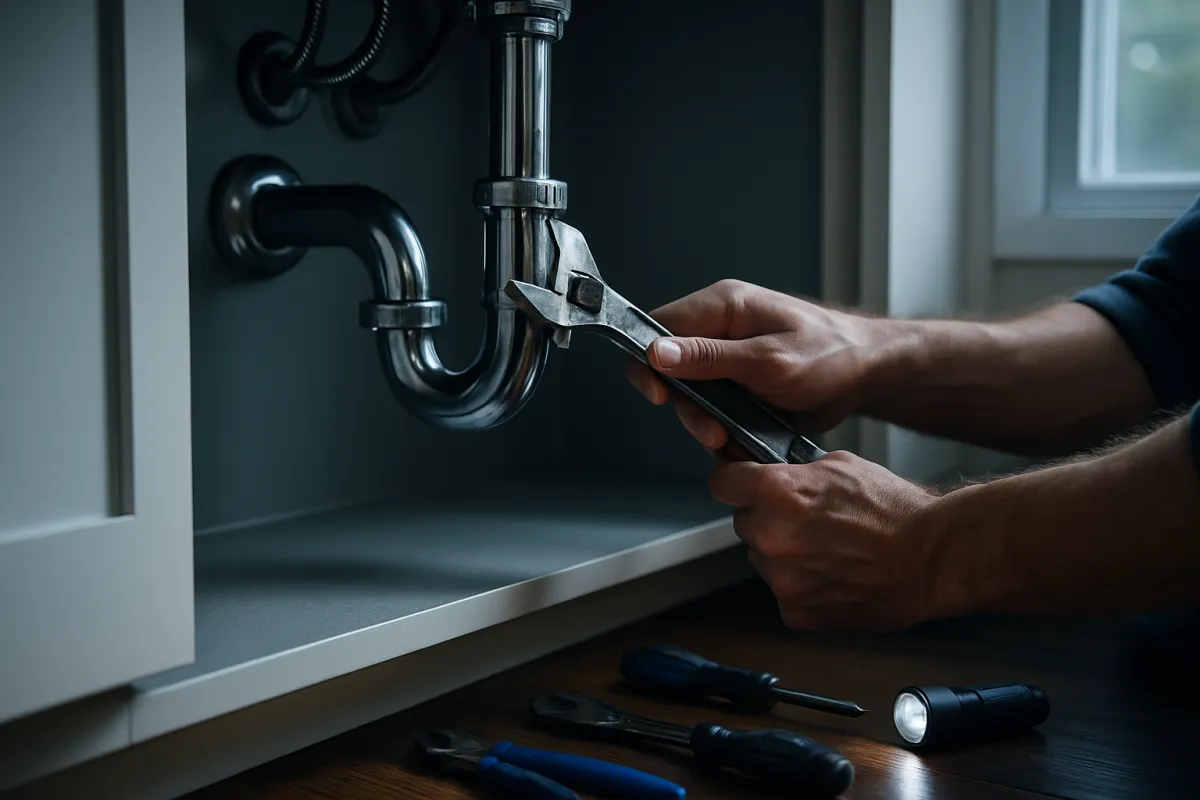
A straightforward replacement involves shutting off power, disconnecting the discharge union above the check valve, lifting the old pump out, checking and cleaning the basin, setting the new pump on a level base clear of the bottom so it does not draw silt, fitting a new check valve, remaking the discharge connection, setting the float travel, and testing the cycle by filling the pit with a bucket.
Two extras come up often enough to expect them. The first is the check valve, which on its own is illustratively $120 to $300 replaced and which is close to free when done during a pump swap because the line is already open. The second is the float switch arrangement, since a tethered float needs pit width that a vertical float does not, and an old pit sized for one may not suit the other. A separate float switch replacement is illustratively $150 to $400.
Where a replacement stops being cheap is when the basin itself has failed. A cracked, collapsed or badly silted basin means a new basin set into the existing hole, illustratively $200 to $550 in labor and materials, and that is a much better outcome than needing a new hole. Run your own version of this in the job cost estimator with and without the basin line to see how much it moves.
Cutting a new pit through an existing slab
If there is no pit, this is the project, and it is worth understanding why it costs what it costs.
The sequence is roughly: locate a low point in the floor near the perimeter and away from footings, verify that nothing is buried in the path, core or cut an opening through the slab, break out the concrete, excavate below the slab to accept the basin and a gravel bed, set the basin plumb and at the right depth, backfill around it with clean gravel, cut the inlet and the discharge penetrations, patch the slab back around the basin, and carry every bucket of concrete and spoil up the stairs.
Almost none of that is plumbing. It is demolition and excavation, in a confined space, with the debris leaving by hand. That is why the illustrative band, near $1,300 to $3,200 for the pit work alone, is so much wider than the pump band and why it is so sensitive to details that sound minor. A thicker slab, a reinforced slab, a long carry to the door, a finished floor that has to be protected, or a basement reachable only by a tight stair all push it upward.
Two things move it further. Cutting a pit in a finished basement means removing and rebuilding flooring and possibly a section of wall, which is its own line and belongs in the quote rather than in a conversation on the day. And a pit that is being cut because water is coming through the floor and wall joint along a whole wall may not be a sump problem at all but a drainage one, in which case the pit is one component of the system priced in our basement waterproofing cost file rather than a standalone job.
The basin, the gravel, and why the hole is priced separately
The basin is the plastic or fibreglass liner that holds the pump and receives the water. It is inexpensive as an object and consequential as an installation, because a basin set too shallow gives the pump nowhere to sit below the inlet, a basin set out of plumb makes float travel unreliable, and a basin surrounded by soil rather than clean gravel silts up and shortens the life of everything in it.
Perforations in the basin wall are what let groundwater in from the surrounding gravel, and the gravel is what keeps fines out of the basin. A basin sitting in raw soil will fill with silt, and silt in a pit is the single most common cause of a pump that runs but does not move water, or a float that sticks open.
The lid matters more than it looks. A sealed lid with a grommeted discharge penetration and a gasketed cord entry cuts noise, cuts humidity coming off an open pit, keeps objects and small animals out, and is often part of a radon strategy where one is in place. Our radon mitigation cost file covers the case where the pit is also a soil gas entry point, which changes the lid from a nicety into a requirement.
None of these components is expensive. All of them are places where a cheap installation and a good one diverge, and none of them shows up in a quote that says only “install sump pump” with a number beside it.
Battery backup systems, and what they actually protect
A backup pump is not a bigger pump. It is a second, independent pump with its own power source, sitting slightly higher in the pit, that does nothing at all until the primary fails or the power goes.
The case for one is a timing argument rather than a reliability argument. Severe storms produce the groundwater that makes a basement flood, and severe storms also take down power lines. The primary pump is therefore most likely to be unpowered at exactly the moment its work is most needed. A backup exists for that overlap and for the other common case, which is a primary pump that fails silently on an ordinary Tuesday while nobody is home.
Illustratively a battery backup added to an existing system lands near $900 to $2,200 installed. Inside that figure are the backup pump itself, a deep cycle battery, a charger and controller, a battery box, a second discharge connection into the existing line, and the labor to fit it all into a pit that was sized for one pump.
The important honesty about a battery backup is its runtime. A battery holds a fixed amount of energy, so the answer to “how long will it run” is always “it depends on how often the pump cycles”, and a system that cycles constantly in a high water table basement will exhaust a battery far faster than one that runs occasionally. Ask for a runtime estimate stated against an assumed cycling rate rather than a single headline hours figure, and treat a second battery as the way to extend it. Batteries are also consumables, commonly planned on a 3 to 5 year replacement at an illustrative $200 to $450 each.
Water powered backups, and the trade you are making
The other kind of backup runs on municipal water pressure instead of electricity. It uses a venturi arrangement, where a flow of supply water through a fitting creates suction that lifts groundwater out of the pit and sends both to the discharge line.
The advantages are genuine. There is no battery to charge, degrade, or replace. There is no runtime limit as long as the water supply holds, which in a multi day outage is a meaningful difference. There are no electronics to fail. Maintenance is close to nothing.
The trade-offs are equally genuine. It consumes potable water to move groundwater, at a ratio that varies by unit and by supply pressure, and that consumption appears on the water bill precisely when the pump is running hardest. It requires adequate supply pressure to work properly. It requires a backflow prevention arrangement so that pit water can never reach the drinking supply, and that arrangement is exactly the kind of detail local plumbing rules govern. Some jurisdictions restrict or prohibit these systems for water conservation or cross connection reasons, so this belongs in a phone call to the building department before it belongs in a quote. And it is not an option for a house on a private well, because the well pump needs the same electricity that just went out.
Illustratively a water powered backup lands near $700 to $1,900 installed where it is permitted and where supply pressure supports it.
Combination units, one basin and one control board
A combination unit packages a primary pump and a battery backup as a single assembly with shared controls, designed to fit one basin.
The reason to consider it is arithmetic. Buying a mid sized submersible at an illustrative $900 midpoint and adding a separate battery backup at an illustrative $1,450 midpoint totals about $2,350, while a combination unit lands illustratively near $1,300 to $2,700 with a midpoint around $1,900. The saving is not magic. It is one basin penetration instead of two, one discharge tie in, one trip, one control board and one set of labor hours.
The reason to hesitate is coupling. A combination unit means the primary and the backup share a controller and a physical assembly, so a controller failure can in principle affect both, and a replacement later is a replacement of the whole unit rather than of one half. Independent pumps from independent sources fail independently, which is the entire point of redundancy.
Neither consideration decides it by itself. In a pit that is tight on width, a combination unit is often the only way to fit two pumps at all. In a generous pit where independence is the priority, two separate units are the more conservative build. What matters is that you know which one you are being quoted, because the words on a proposal frequently do not distinguish them.
The dedicated circuit, and where an electrician enters the price
A sump pump is a motor in a wet location that has to run unattended. That combination is why the electrical side of this job deserves its own line rather than being folded into “installation”.
Whether a dedicated circuit is strictly required is set by the electrical code adopted in your jurisdiction and by the inspector who enforces it, and requirements around receptacle type, protection and grounding in basements have changed over successive code cycles. Because those rules are local and they move, confirm what applies at your address rather than trusting a general statement, including one written here.
The practical argument for a dedicated circuit does not depend on code at all. A sump sharing a circuit with a chest freezer, a workshop outlet, a dehumidifier or a bathroom can be knocked offline by something entirely unrelated tripping the breaker, and nobody discovers it until there is water on the floor. A dedicated circuit removes every one of those failure paths.
Illustratively, running a new dedicated circuit lands near $250 to $800 where the panel has a spare slot and the route to the pit is short and accessible. It lands nearer $600 to $1,800 where the run is long, the ceiling is finished, or the panel is full and needs a subpanel or a tandem arrangement to make room. Our electrician cost file covers how that hourly and per job pricing is built. What you should never accept is a pump on an extension cord, which is a temporary arrangement that has a way of becoming permanent.
Check valves, alarms, and the failures nobody hears
Three small components account for a disproportionate share of sump failures, and all three are cheap to get right at installation.
The check valve sits in the discharge line above the pump and stops the column of water in the pipe from draining back into the pit when the pump shuts off. Without one, the pump re-pumps the same water on every cycle, which wastes runtime and cycles the motor unnecessarily. A worn check valve is also the source of the loud clunk that many homeowners assume is the pump itself. Replaced on its own it is illustratively $120 to $300, and it is nearly free when done during a pump swap.
The float switch decides when the pump runs, and it is the component most likely to fail before the motor does. Tethered floats need width, vertical floats need less, and electronic sensors have no moving part at all. A float that hangs up against the basin wall or a cord that snags is a pump that never starts.
The high water alarm is the cheapest useful thing in this entire cost file. A basic float alarm that sounds when the water rises above the normal switching level is illustratively $60 to $250 installed, and a version that sends a phone notification is illustratively $250 to $600. The value is not that it fixes anything. It is that it converts a silent failure into a known one while there is still time to act.
Discharge line routing, and where the water is allowed to go
The discharge line is the part of this system most likely to be missing from a quote and most likely to be the reason a properly working pump still leaves you with a wet basement.
Two things have to be true. The water has to leave the house, and it has to end up somewhere it will not come straight back. A discharge that terminates two feet from the foundation is a recirculating loop with extra steps: the water soaks in, returns to the drain path, and arrives back in the pit. The general principle is to get the outlet well away from the wall and to a point that is lower than where it started, using the grade you have rather than fighting it.
The line itself is priced by the foot. A new run is illustratively $10 to $35 per linear foot, with the low end being surface pipe across a lawn and the high end being buried pipe with a proper trench, a bedding layer, and a considered termination. Crossing a driveway, a patio or a mature root zone pushes it higher again, in the same way that trenching costs move in our gutter installation cost file.
Where the water is allowed to go is genuinely local. Many places prohibit discharging groundwater into a sanitary sewer, some restrict discharge across a property line or into a street, and some require a dry well, a specific setback, or a tie in to a storm system. These rules are set by municipalities and they differ substantially between neighbouring towns, so the reliable answer comes from your building or public works department before the trench is dug. Our building permit walkthrough covers how to ask that question productively.
Freeze protection, and the winter failure mode
A discharge line full of water in freezing weather is a discharge line that can plug with ice, and a plugged discharge line turns a working pump into a pump that runs continuously against a closed pipe until something gives.
The mechanisms that address it are all about not leaving standing water in the exposed section. Pitch is the first and the cheapest: a line that drains itself completely after each cycle has nothing left in it to freeze. Burial below the local frost depth for the buried portion is the second, and frost depth is a local figure your building department can confirm. Diameter helps, because a larger exposed pipe takes longer to close off. And a freeze relief fitting, sometimes described as an escape or air gap fitting, placed near the house gives the pump somewhere to push water if the far end of the line is blocked, at an illustrative $50 to $200.
The failure worth understanding is the compound one. Ice blocks the line, the pump cannot move water, the pit rises, and either the pump burns out running against a dead head or the water simply comes over the top of the basin. Either way the first symptom is often water on the floor in January, which is the least convenient month to discover a discharge problem. Our fall home maintenance checklist treats checking the discharge outlet before the first freeze as a seasonal task rather than a repair.
Illustrative installed cost by scope
Laid side by side, the shape of this market is easier to see than to describe. The chart below prices each common scope at an illustrative midpoint, with the pump figures based on a mid sized submersible in an existing pit unless the label says otherwise.
Two patterns are worth taking from it. The first is that the hole costs more than the pump in every case where a hole has to be made, which is why the single most useful question before you get a quote is whether a pit already exists. The second is that redundancy, meaning a backup of either kind, costs roughly as much as the primary installation it protects, which is a much easier decision to make deliberately than to make during a storm.
Illustrative sump pump cost by scope, at midpoints
Midpoint installed figures for each scope. Pump lines assume a mid sized submersible dropped into a sound existing pit. New pit lines include coring, excavation, basin, gravel and the concrete patch.
Illustrative midpoints, not quotes. Bar widths are drawn from each value against the $4,950 top of the range. Discharge line runs, finished floor removal and rebuild, alarms and permit fees sit outside these figures.
What drives the price inside every band
Four variables do most of the work within any of those bars, and they are worth naming because they are the things you can actually ask about.
Access is the largest and the least discussed. Every bucket of concrete and soil from a new pit leaves the basement by hand, up the stairs, through the house or through a bulkhead. A basement with a walkout or a wide bulkhead door is materially cheaper to excavate in than one reached by a narrow interior stair with a turn in it.
Slab thickness and reinforcement decide how long the concrete part takes. An ordinary residential slab cuts quickly. A thicker slab, one with wire mesh, or one with rebar takes longer and dulls more blades, and none of that is visible until the first cut. Our concrete slab cost file covers why slab work is priced by difficulty rather than by area.
Distance and lift on the discharge side set both the pipe cost and the pump sizing. A pit near an exterior wall with a short run and modest lift is the easy case. A pit in the middle of a basement, a long horizontal run, and a high exit point all add pipe, fittings, friction and horsepower.
What has to be put back is the variable most often left out. A pit cut through a finished floor means flooring removed and replaced, possibly a wall section opened, and possibly furniture moved and protected. On an unfinished basement that line is zero. On a finished one it can rival the pit work itself, and it belongs in the written scope, exactly as it does in our basement finishing cost file.
Where a new pit budget actually goes
Understanding the split helps you judge whether a quote is high because it includes more or high because it charges more. On a new pit installation, labor is the biggest single share, and most of that labor is concrete and excavation rather than plumbing. The pump, which is the thing everybody focuses on, is a minority of the total.
Where a new sump pit installation budget goes
Illustrative share of a new pit installation total, summing to 100. Concrete cutting, excavation and spoil removal dominate, because the hardest part of this job is making a hole indoors and carrying it out by hand.
Shares are illustrative and move with slab thickness, carry distance, discharge run length and whether a backup is included. Finished floor removal and rebuild sit outside this split entirely.
Lifespan, and the replacement number worth planning for
The most useful mental shift in this whole cost file is to stop treating a sump pump as a fixture and start treating it as a wear item, like a water heater or a roof.
As a planning assumption rather than a promise, a pedestal pump is commonly planned around a 8 to 12 year life and a submersible around a 6 to 10 year life, with the spread inside those bands driven mostly by cycling. A pump in a basement with a high water table that runs several times an hour through a wet season accumulates far more motor hours per calendar year than one that runs during storms only, and motor hours rather than years are what actually wear it out. Silt in the pit shortens both figures. A backup battery is shorter lived again and is commonly planned around 3 to 5 years at an illustrative $200 to $450 per battery.
Turn that into a number. A mid sized submersible replaced at an illustrative $900 on an eight year cycle is about $113 per year set aside. A backup battery at an illustrative $325 on a four year cycle is about $81 per year. Together that is roughly $194 per year as a replacement reserve for a primary and battery system, which is a small and entirely plannable figure.
The reason to plan it is that an unplanned replacement costs more. It happens during a storm, often outside business hours, sometimes with water already on the floor, and every one of those conditions moves the price and narrows the choices. The job cost estimator below carries this annual reserve alongside the installed figure so you can see both at once.
Running cost, cycling, and the power bill
A sump pump is an intermittent load, so its running cost is set by how many hours it actually runs rather than by its horsepower badge.
The mechanism is simple enough to do yourself. Find the running wattage on the pump’s data plate, which for common residential units sits in the range of a few hundred watts to around a kilowatt. Multiply by the fraction of an hour it runs. Multiply by the rate on your own electricity bill. A pump that runs a few minutes an hour during a wet week is a trivially small number. A pump that runs nearly continuously through a wet season in a high water table basement is a visible one, though still small next to heating or cooling.
The more useful thing that cycling tells you is diagnostic rather than financial. A pump that has always cycled twice an hour in wet weather and now cycles every four minutes is telling you that either the inflow has changed or the pump is no longer moving what it used to move, and both of those are worth investigating before a failure. A pump that runs continuously when the ground is dry usually means a stuck float or a failed check valve letting the same water back down.
Emergency replacement versus a planned one
There is a real price difference between the two, and it is worth quantifying so that the planning argument above has teeth.
A planned replacement is a scheduled visit during business hours, with the pump selected in advance, the parts on the truck, and time to compare two quotes. An emergency replacement is a call during or after a storm, frequently outside hours, with whatever unit is available rather than the one you would have chosen, and often with water already in the basement.
Illustratively, after hours and emergency work commonly carries either a call out premium near $150 to $400 or an elevated labor rate, and the practical effect on a job of this size is meaningful rather than catastrophic. The larger cost is usually not the plumber. It is the water. Drying equipment, damaged flooring, ruined stored belongings and in the worst case remediation of what grows afterward, which our mold remediation cost file prices, all dwarf the difference between a scheduled and an unscheduled pump swap.
This is the strongest argument for both an alarm and a backup. Neither one prevents a pump from failing. Both convert the failure from a flood into an errand.
What a sump pump quote should itemize
A proposal you can actually compare has these things on it, and most of them are not prices.
The pit, meaning whether one exists, whether the basin is being reused or replaced, and if it is new, the depth and diameter being installed. The pump, named by type, horsepower and body material, with the performance figure stated at your actual lift rather than at zero lift. The switch, meaning tethered float, vertical float or electronic. The check valve, stated as new or reused. The discharge, meaning pipe size, material, total length, whether any of it is buried, the depth of burial, the termination point, and any freeze relief fitting.
The electrical, meaning whether an existing receptacle is being used or a new dedicated circuit run, and by whom. The backup, if any, named as battery, water powered or combination, with the runtime assumption for a battery stated against a cycling rate. The restoration, meaning the concrete patch and any flooring or wall work. Permits and fees, if any apply. The warranty, split between the manufacturer’s cover on the pump and the contractor’s cover on the labor, which are different documents with different lengths.
Our contractor estimate walkthrough covers how to read what a proposal leaves out, which on this job is usually the discharge line and the electrical work.
Permits, inspections, and who signs off
Whether this job needs a permit depends entirely on where you live and on what exactly is being done, and the honest answer is that it varies more than homeowners expect.
The general shape of it is that a like for like pump replacement in an existing pit is frequently treated as maintenance, while cutting a new penetration through a slab, running a new electrical circuit, or making a new connection to a municipal storm or sewer system is frequently treated as permitted work. Frequently is not always, and the categories differ by jurisdiction. Discharge location rules in particular are set locally and are the detail most likely to catch a homeowner out after the fact.
The practical approach is a single phone call to your building department before work starts, describing what is being installed, where the pipe will terminate, and whether new wiring is involved. That call is free, it takes ten minutes, and it is a great deal cheaper than being told to relocate a buried discharge line. A contractor who tells you no permit is needed may well be right, but the person who decides is the building department rather than the contractor.
The honest DIY boundary
The line here is clearer than in most trades, which makes this an easier decision than usual.
Reasonable homeowner work: replacing a like for like pump in a sound existing pit where the discharge plumbing is in good condition and a proper receptacle already exists, cleaning silt out of a basin, testing the pump by pouring a bucket into the pit, checking that the discharge outlet is clear before winter, replacing a battery in an existing backup, and fitting a basic high water alarm.
Not homeowner work: coring or breaking a slab, excavating below a floor, setting a new basin, running any new electrical circuit, making a connection to a municipal storm or sewer line, or fitting a water powered backup with its backflow arrangement. The first three are structural and heavy. The rest are governed work in a wet location where the failure modes are electrical or cross connection rather than merely inconvenient.
The honest middle case is worth naming, because it catches people. A homeowner pump swap that was going to take twenty minutes becomes a much longer afternoon the moment the check valve crumbles, the discharge union will not break loose, or the new pump’s float needs more width than the old pit gives it. Our DIY or hire decision walkthrough covers how to think about that risk before you start rather than halfway through.
A worked example: a failed pump in a sound existing pit
Take a house with an unfinished basement, an existing pit in reasonable condition with a sound basin, and a fifteen year old pump that has stopped running. The homeowner wants a submersible for the noise, a battery backup because the last two outages both came with storms, a dedicated circuit because the pump currently shares one with a freezer, and about thirty feet of new buried discharge line to move the outlet away from the foundation.
Start with the pump. A mid sized submersible into the existing pit at an illustrative midpoint of about $900, which includes a new check valve and fittings. Add the backup. A battery backup beside the primary at an illustrative midpoint of about $1,450, including battery, charger and the second discharge tie in. Add the electrical. A dedicated circuit at an illustrative midpoint of about $500, on the assumption the panel has a spare slot and the run is short. Add the discharge. Thirty feet of new buried line at an illustrative $20 per foot midpoint, or about $600.
At midpoint that totals about $3,450. Carried out to a realistic band it lands near $2,760 to $4,485 all in. Alongside it sits an annual replacement reserve of about $194, being roughly $113 a year for the pump on an eight year cycle and roughly $81 a year for the battery on a four year cycle.
Change the assumptions and the total moves hard. Take away the backup and the circuit and it is a $1,500 job. Discover there is no pit and add the excavation, and it clears $5,000 before the discharge run. That is exactly the sketch the companion below lets you rebuild with your own pit situation, pump type, backup choice and footage.
How to compare sump pump quotes
Get three, and normalise them before you compare a single dollar figure.
First, separate the pit from the pump. If one quote includes a new basin and another reuses the old one, they are not the same job. Ask each contractor to state explicitly which they are doing.
Second, compare the pumps by specification rather than by name. Type, horsepower, body material, switch type and flow at your actual lift. A cast iron submersible with a serviceable switch and a plastic bodied unit of the same horsepower are different products at different prices, and only one of them may be in front of you.
Third, check whether the discharge line is in or out. This is the single most common omission, and it is the one that produces the largest surprise later, because the pipe is priced by the foot and the footage is real.
Fourth, check the electrical. A quote that assumes an existing receptacle and a quote that includes a new circuit differ by an illustrative several hundred dollars for reasons that have nothing to do with the pump.
Fifth, read the warranty split. The manufacturer covers the pump for one period, the contractor covers the labor for another, and the second is usually much shorter. Ask what happens in year three if the pump fails: who pays for the part and who pays for the visit.
What a sump system does and does not do for resale
A working sump with documentation is not a feature buyers pay a premium for. A wet basement is something they discount heavily or walk away from. That asymmetry is the honest frame, and it is the same one that applies to a roof or a furnace.
Two things carry value at sale. Documentation is the first: the invoice, the pump specification, the discharge route, the electrical permit if one was pulled, and photographs of the installation before the patch went in. An inspector who finds a fresh concrete patch and a sump will ask what happened, and a folder answers that better than a memory. A backup and an alarm are the second, because they tell a buyer that the previous owner took the water seriously rather than reacting to it once.
What does not help is an undocumented pit and a pump that nobody can describe. A buyer’s inspector who finds a sump running in dry weather, or a discharge line terminating three feet from the foundation, will read both as unresolved problems and price accordingly. Disclose what you know, keep the paperwork, and let the installation speak for itself.
The bottom line
Sump pump installation cost splits cleanly on one question: does a pit already exist. If it does, you are looking at an illustrative $350 to $1,700 for the pump depending on pedestal against submersible and on horsepower, plus whatever you choose to add. If it does not, add an illustrative $1,300 to $3,200 for cutting, excavating, setting and patching the hole, because that part is demolition rather than plumbing and it is priced by how hard the hole is to make and carry out.
The three lines most often missing from a quote are the discharge run at an illustrative $10 to $35 per linear foot, the dedicated circuit at an illustrative $250 to $800, and the restoration where a finished floor is in the way. The two lines most often worth adding are a backup, at an illustrative $900 to $2,200 for a battery version or $700 to $1,900 for a water powered one, and a high water alarm at an illustrative $60 to $600, which is the cheapest useful thing in the whole project.
Then plan the replacement instead of waiting for it. A pump on a rough 6 to 12 year cycle and a battery on a rough 3 to 5 year cycle turn into a reserve of roughly a couple of hundred dollars a year, which buys you a scheduled visit at a chosen price rather than an emergency call during the storm that exposed the problem.
ProsNook publishes this cost file to explain how sump pump work is scoped, specified and priced in general terms, and it is educational material rather than plumbing, electrical, structural or engineering advice. Nothing written here assesses your basement or your pump: the reason a pit fills, the reason a pump fails and the right response to either can only be established by a qualified professional who has inspected the property in person. Every dollar figure, per foot rate, share, lifespan assumption and scenario total above is illustration only, and your real cost will move with pit condition, slab thickness, access, discharge distance, panel capacity, pump tier and local labor rates. Performance figures printed on a pump describe flow at a stated lift, so read the curve for your own lift rather than the headline number. Electrical requirements for receptacles, protection and dedicated circuits are set by the code adopted in your jurisdiction and change between code cycles, so confirm what applies with your electrician and your building department rather than relying on any summary. Permit obligations and the rules governing where a sump may legally discharge are decided locally and differ substantially between neighbouring municipalities, so ask before the pipe is buried. Obtain several detailed written scopes on one defined pit and pump specification, verify licensing and insurance directly with the issuing bodies, and treat urgency during a storm as a reason to fit a temporary measure rather than a reason to sign whatever is put in front of you.
Frequently asked questions
How much does sump pump installation cost?
It depends almost entirely on whether a hole already exists. As an illustrative framework, dropping a new pump into a sound existing pit lands somewhere near $350 to $1,700 depending on type and horsepower, while cutting a brand new pit through an existing basement slab adds an illustrative $1,300 to $3,200 for the coring, excavation, basin, gravel and concrete patch before the pump is bought. Backups, a dedicated circuit and a new discharge run are separate lines on top of both. A straightforward like for like replacement is a short visit. A new pit is a small excavation project happening indoors.
Is a pedestal or a submersible sump pump better?
They solve the same problem with different trade-offs rather than one being better. A pedestal pump keeps the motor on a column above the pit, which makes it cheaper to buy, easier to service without reaching into water, and generally longer lived because the motor stays dry. It is also louder, taller, more exposed in a finished room, and it needs a pit wide enough to accept the column. A submersible sits in the water, runs much quieter under a sealed lid, handles a narrower pit, and usually costs more to buy and replace. In a finished or frequently used basement most people choose submersible for the noise alone. In an unfinished utility space a pedestal is a perfectly sensible choice.
Do I need a battery backup sump pump?
Ask what happens if the pump stops for six hours. If the answer is a damp floor in an unfinished storage space, a backup is optional. If the answer is water into a finished basement, a furnace, or stored belongings, a backup is the cheapest insurance in the project. The reason it matters is timing: the storms that produce the most groundwater are the same storms that knock the power out, so the primary pump is most likely to be unpowered exactly when it is most needed. As an illustrative figure a battery backup added to an existing system commonly lands near $900 to $2,200 installed, and the battery inside it is a consumable that is typically replaced every few years.
What does a water powered backup sump pump cost?
Illustratively near $700 to $1,900 installed where it is permitted and practical, which puts it in the same neighbourhood as a battery backup. It runs on municipal water pressure rather than electricity, so it never needs charging and has no battery to replace, and it will keep going for as long as the water supply holds. The trade is that it consumes potable water to move groundwater, which shows on the water bill and which some jurisdictions restrict or prohibit outright. It also needs adequate supply pressure and a backflow prevention arrangement. It is not an option for a house on a well, because the well pump needs the same electricity the sump pump just lost.
How long does a sump pump last?
Treat it as a wear item rather than a fixture. A useful planning assumption is roughly 8 to 12 years for a pedestal pump and roughly 6 to 10 years for a submersible, with a pump in a high water table basement that cycles constantly landing at the short end and a pump that runs a few times a season landing at the long end. Backup batteries are shorter lived again and are commonly planned around a 3 to 5 year replacement. The practical takeaway is to budget a replacement reserve rather than treating the next failure as an emergency, because an emergency replacement costs more and always happens during a storm.
Does a sump pump need its own circuit?
Whether a dedicated circuit is strictly required is decided by the electrical code adopted where you live and by the inspector enforcing it, so confirm the requirement locally rather than assuming. The practical argument for one is independent of code: a sump pump sharing a circuit with a freezer, a shop outlet or a bathroom can be taken offline by something entirely unrelated tripping the breaker, and nobody finds out until there is water on the floor. Adding a dedicated circuit is illustratively $250 to $800 where the panel has spare capacity and a reasonable route, and more where it does not.
Where is a sump pump allowed to discharge?
That is a local question with genuinely different answers from town to town. Many places prohibit discharging groundwater into a sanitary sewer, some restrict discharge onto a neighbouring property or into a street, and some require a specific setback, a dry well, or connection to a storm system. Because the rules are set locally and change, the only reliable answer comes from your building or public works department before the pipe is buried, not after. What is universal is the physics: the water has to end up far enough from the foundation, and low enough, that it does not simply return to the pit it came from.
Can I replace a sump pump myself?
Swapping a pump into an existing pit is one of the more approachable homeowner jobs when the pit is sound, the discharge plumbing is in good condition, a proper receptacle already exists and the replacement is a like for like fit. Cutting a new pit through a slab is not, because it involves coring concrete, excavating below the floor, and creating a permanent penetration in a structural element. Running a new circuit is electrical work in a wet location and belongs with a licensed electrician. The honest middle case is that a homeowner replacement that turns out to need a new check valve, new discharge fittings and a different float arrangement stops being a fifteen minute job very quickly.