What's on this page
- What a new driveway costs
- Why size is the first number that matters
- Gravel driveway cost
- Asphalt driveway cost
- Plain concrete driveway cost
- Stamped and colored concrete driveway cost
- Paver driveway cost
- What “installed” actually includes
- Excavation and base prep: the line hidden inside every quote
- Drainage and grading on a difficult lot
- New driveway versus resurfacing an old one
- Illustrative installed cost by material
- Where a new driveway budget goes
- Permits and setback rules
- How width and length change the number
- Edging, borders and finish options
- Lifespan and maintenance by material
- DIY versus hiring a pro
- How to compare driveway installation quotes
- What a driveway contract should include
- Red flags on a driveway bid
- A worked example: an 800 square foot asphalt driveway
- The bottom line
Short answer: At a standard 800 square foot reference size, a new driveway commonly runs an illustrative $2,000 for gravel, $4,800 for asphalt, $7,200 for plain concrete, $13,600 for stamped concrete, and $14,400 for pavers, all as typical midpoints before excavating a new base or adding drainage on a difficult lot. The material is the biggest single lever on price, and base preparation underneath it decides whether any of those materials actually lasts.
Driveway installation cost is really two separate decisions wearing one price tag: which surface you want, and how much work the ground underneath needs before that surface can go down. Two homeowners pricing what they both call “a new driveway” can be looking at a $2,000 gravel regrade and a $15,000 paver installation, and the gap has almost nothing to do with either one getting a worse deal. It has to do with the material.
This cost file compares the common driveway surfaces side by side at one reference size, then walks through the base preparation, drainage and permit work that sits underneath every one of them regardless of which material you pick. It is a different question from maintaining a driveway you already have, which the driveway sealing cost file covers, and a different question from pricing a generic concrete pour, which the concrete slab cost file covers across patios, garages and sheds as well as driveways. This file is specifically about choosing a material and installing a new driveway from the ground up. Price your own dimensions in the job cost estimator as you read.
Key takeaways
- At an illustrative 800 square foot reference size, material alone spans gravel near $2,000 up through pavers near $14,400, a difference driven almost entirely by labor intensity rather than raw material cost.
- Base preparation, not the surface material, is what actually decides whether a driveway lasts. A thin or poorly compacted base fails under any material within a few seasons.
- Asphalt and gravel are the cheapest to install and the most maintenance intensive over time; concrete and pavers cost more upfront and need far less attention afterward.
- Permits, setback rules and drainage requirements are set locally and vary widely, so the building department for your address is the only reliable source before you design the layout.
- Resurfacing a sound existing driveway is almost always cheaper than full removal and installation. The decision turns on whether the base underneath has actually failed.
What a new driveway costs
Priced honestly, a new driveway is a size and material number rather than a flat fee, and the material drives most of the spread. As an illustrative guide, using a standard 800 square foot reference size, roughly a 20 by 40 foot driveway, installed cost by material commonly runs somewhere around $2,000 for gravel, $4,800 for asphalt, $7,200 for plain concrete, $13,600 for stamped or colored concrete, and $14,400 for pavers, all as illustrative midpoints.
Those figures assume a reasonably straightforward lot with standard base preparation already included in the per square foot rate. They do not include excavating a new base where none exists, correcting a poor draining lot, or any permit fees, each of which is priced separately later in this file. Build your own number in layers using the estimator below, and treat every figure here as a starting band to compare quotes against rather than a quote itself.
Why size is the first number that matters
Before material enters the conversation, size does the heaviest lifting on the final price, because every material here is quoted per square foot. A single car driveway at roughly 10 by 20 feet, 200 square feet, and a long double driveway at 20 by 60 feet, 1,200 square feet, are not a modest difference, they are a sixfold difference in area, and the total scales with it even though the per square foot rate stays roughly flat.
What does not scale as cleanly is the fixed cost every driveway carries regardless of size: mobilizing equipment, setting up the work zone, and the minimum crew day a paving or concrete crew needs on site. That is why a very small driveway sometimes prices higher per square foot than a large one, the same pattern that shows up on the concrete slab cost file’s comparison of a shed pad against a driveway. Measure your own driveway in length and width before reading further, since every band in this file is more useful once you have your own square footage to multiply it by.
Gravel driveway cost
Gravel is the least expensive common driveway surface and the simplest to install, which is why it remains the default on long rural driveways and secondary parking areas. Illustratively, gravel commonly runs $1.50 to $3.50 per square foot installed, with roughly $2.50 as a typical midpoint, putting the 800 square foot reference driveway near $2,000.
Most of that cost is grading and compacting a proper base in layers, typically a larger crushed stone at the bottom for drainage and stability and a smaller, more compactable stone on top for the driving surface, rather than the stone itself. The honest tradeoff is ongoing maintenance: gravel migrates, ruts form under regular vehicle traffic, and a driveway left unattended for several years commonly needs a fresh top-up layer and regrading to stay functional. Edging, whether steel, timber or simply a mowed strip, keeps the stone from spreading into the lawn and is worth pricing as its own small line.
Asphalt driveway cost
Asphalt is the most common upgrade from gravel and the default choice in much of the country for a reason: it installs relatively quickly, handles vehicle weight well, and costs meaningfully less than concrete or pavers for a comparable size. Illustratively, asphalt commonly runs $4 to $8 per square foot installed, with about $6 as a typical midpoint, putting the reference driveway near $4,800.
The quality variable that matters most is thickness and base, not the asphalt mix itself. A driveway poured at 2 to 3 inches over a properly compacted gravel base commonly outperforms a thicker pour over a thin or poorly compacted base, because the base is what resists the rutting and alligator cracking that eventually fail an asphalt surface. Fresh asphalt also needs time to cure, commonly several months to a year, before its first seal coat, and the driveway sealing cost file covers that ongoing maintenance once the surface is ready for it.
Plain concrete driveway cost
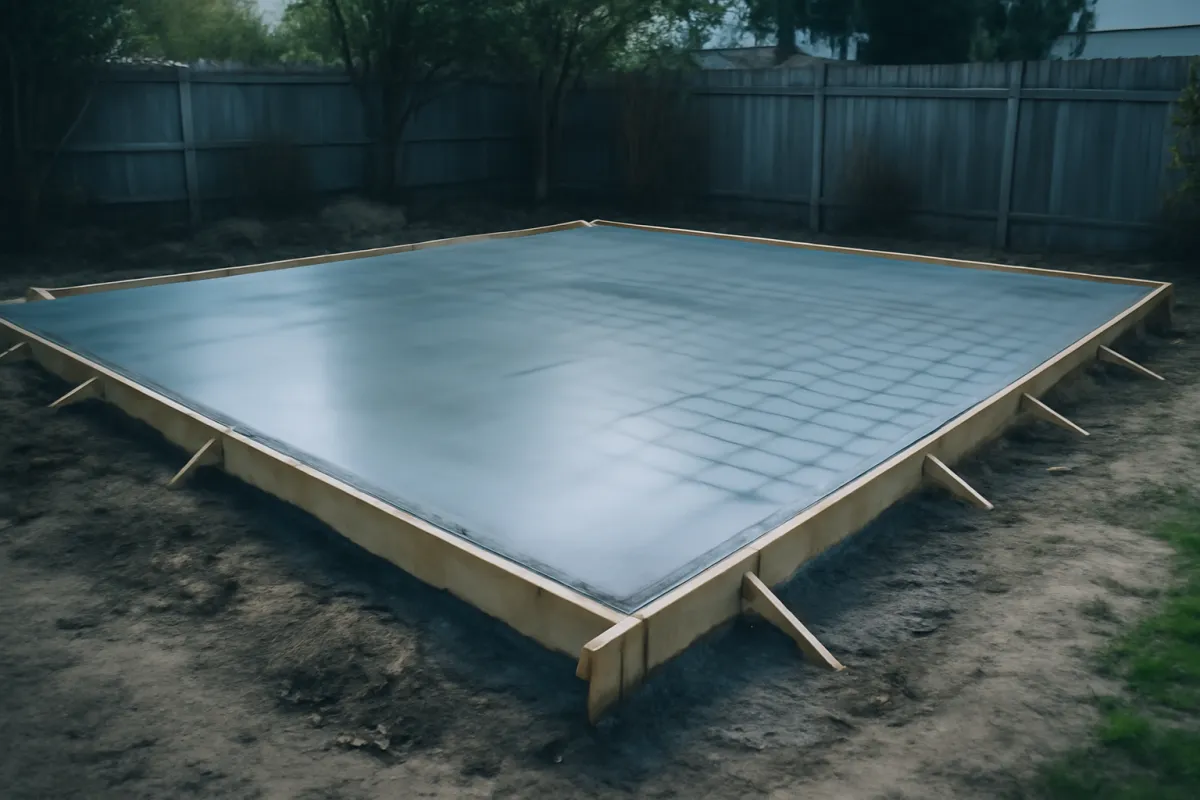
Concrete costs more than asphalt to install and commonly lasts longer with less upkeep, which is the trade most homeowners are actually weighing when they compare the two. Illustratively, a plain concrete driveway with a standard broom finish commonly runs $6 to $12 per square foot installed, about $9 at the midpoint, putting the reference driveway near $7,200.
Thickness and reinforcement move you inside that band the same way they move a slab’s cost on the concrete slab cost file: a driveway carrying regular vehicle weight commonly wants a 5 to 6 inch slab with steel reinforcement or wire mesh, thicker than a patio or walkway needs. A broom finish, which textures the surface for slip resistance, is the standard economical finish and is included in the base rate; anything decorative is priced separately below. Control joints, cut or tooled at regular intervals, are what keep the inevitable shrinkage cracking organized into straight lines rather than random ones, and a quote that skips them is quietly setting up a future repair.
Stamped and colored concrete driveway cost
Decorative concrete prices well above plain concrete because the pattern work and the color process both add real labor on top of the same base pour. Illustratively, stamped or colored concrete commonly runs $12 to $22 per square foot, about $17 at the midpoint, putting the reference driveway near $13,600, roughly double the plain concrete figure for the same footprint.
Color can be integral, mixed into the concrete itself before the pour, or applied as a surface release and stain after stamping, and the two approaches age differently: integral color fades evenly as the surface wears, while a surface applied color can wear unevenly in high traffic wheel paths. Stamping itself is done while the concrete is still plastic, pressing a textured mat into the surface to mimic brick, stone or tile, which is why timing and crew experience matter more on a decorative pour than on a plain one. Sealing a stamped surface on a regular schedule protects both the color and the texture, and skipping it is the most common reason a decorative driveway looks tired well before a plain one would.
Paver driveway cost
Pavers sit at the top of the common material range because each unit is set individually, over a compacted base and a leveled bedding layer of sand or stone dust, rather than poured or rolled as one continuous surface. Illustratively, pavers commonly run $12 to $25 per square foot, about $18 at the midpoint, putting the reference driveway near $14,400, the highest figure in this file.
What that premium buys is repairability and a long service life. A section of pavers that settles, stains, or cracks can be lifted, the base corrected underneath, and the same or matching units reset, without touching the surrounding surface or leaving a visible patch the way a concrete or asphalt repair does. Edge restraints, a rigid border set along the perimeter, are what keep the field of pavers from spreading outward under vehicle load over time, and a bid that omits them is omitting the detail that most often causes a paver driveway to fail at its edges first.
What “installed” actually includes
A quoted per square foot rate for any material commonly bundles several steps that are worth naming so a quote can be read line by line rather than trusted as a single number. Excavation removes existing sod, soil or old pavement to the depth the new surface and its base require. Base preparation places and compacts crushed stone in layers to create a stable, well draining foundation, the single biggest factor in how long any surface above it actually lasts. Grading shapes that base to shed water away from the house and any structures nearby.
Forming or edging sets the boundaries of the work, wooden forms for a concrete pour, edge restraints for pavers, or simply the graded extent for asphalt or gravel. Installation of the surface material itself follows, then finishing, texture or stamping on concrete, compaction and joint sand on pavers, rolling and compacting on asphalt. Cleanup and haul away of excavated material and debris closes out the job. A quote that lists only “driveway install” as a single line is not wrong, but it is unmeasurable, and the walkthrough on reading a contractor estimate covers how to ask for the breakdown.
Excavation and base prep: the line hidden inside every quote
Base preparation is the part of a driveway nobody sees once it is finished and the part that decides whether the job was worth doing. Where a sound, properly compacted base already exists, perhaps under an old driveway being resurfaced in a different material, that work is largely skipped and the per square foot rates above apply close to as stated. Where no usable base exists, meaning raw ground, a failed old driveway being fully removed, or soil that will not compact reliably without amendment, full excavation and new base construction is its own substantial line.
Illustratively, full excavation and new compacted base construction adds somewhere around $1 to $1.50 per square foot on top of the surface material rate, which on the 800 square foot reference driveway adds roughly $800 to $1,200. Soil type matters here more than almost anywhere else in this file: sandy, well draining soil needs less correction than dense clay, which can require a thicker base or geotextile fabric to keep the stone from migrating into the subgrade over time. Ask any bidder what they found when they test dug the site, since that single answer explains more about the final number than any material comparison.
Drainage and grading on a difficult lot
Water is the enemy of every driveway material eventually, and a lot with poor natural drainage needs that problem solved before the surface goes down rather than discovered afterward. A flat lot with standard grading away from the house is the easy case and is commonly included in standard base preparation. A sloped lot, a low spot that collects water, or a driveway that pitches toward a garage or a house foundation needs active drainage, commonly a trench drain, a catch basin tied to a storm line, or in some cases regrading the whole approach.
Illustratively, adding a drainage solution to a difficult lot commonly runs somewhere around $800 to $2,500, depending on whether it is a single trench drain at a low point or a more extensive system across the full length of the driveway. Skipping this step on a lot that genuinely needs it is one of the most expensive mistakes in this entire cost file, because water that pools or flows the wrong way undermines a base from below in a way no surface material, however expensive, can resist from above.
New driveway versus resurfacing an old one
Not every project that feels like “I need a new driveway” actually requires one. Resurfacing, meaning a fresh layer of asphalt over a sound existing base, or patching and sealing an existing surface, is almost always the cheaper path when the base underneath is still structurally sound, because it skips the excavation and new base construction that make up a real share of a full installation’s cost.
The deciding question is the base and the subgrade, not how tired the surface looks. Surface staining, minor cracking that has been maintained, and dulled color are all cosmetic and point toward resurfacing or a deep clean and reseal, which the driveway sealing cost file prices in full. Broad alligator cracking, potholing, visible heaving or settling, and standing water that was not there originally point toward a failed base, and resurfacing over a failed base is money spent on a surface that fails again on roughly the same timeline as the one underneath it.
Illustrative installed cost by material
Set the common materials side by side at one reference size and the shape of this decision becomes much easier to read. The figures below are illustrative midpoints for installation only, at the standard 800 square foot reference size used throughout this file, before excavation of a new base or drainage work on a difficult lot.
Illustrative driveway installation cost by material, 800 sq ft
Standard base prep included. Full excavation, a new base, and drainage on a difficult lot price separately.
Illustrative midpoints, not quotes. Bar widths are drawn from each value against the $14,400 top of this set. Excavation of a new base and drainage work are priced separately in the sections above.
Where a new driveway budget goes
Assemble a complete project rather than a single material rate and the proportions shift in a way worth seeing before you compare bids. The shares below are illustrative for a mid range asphalt or concrete installation that needs a new compacted base.
Where a new driveway budget goes
Illustrative shares for a mid range installation needing full excavation and a new base.
Shares move with the job: a sound existing base shrinks the first band toward nothing, a difficult drainage lot enlarges it, and pavers shift weight from material toward labor.
Permits and setback rules
Whether a new driveway needs a permit depends almost entirely on local rules rather than on anything about the driveway itself. Many jurisdictions require a permit where the driveway crosses a public right of way or sidewalk, where it changes the grading or drainage pattern on the lot, or where it adds a meaningful amount of new impervious surface that affects stormwater calculations. A straightforward like for like replacement of an existing driveway in the same footprint sometimes does not require one, but that exemption is exactly the kind of assumption worth confirming rather than guessing.
Setback and placement rules are a separate, equally local question: minimum distance from a property line, restrictions near a street corner for sightline safety, and in some neighborhoods design or material restrictions tied to a homeowners association. The building permit walkthrough covers the general permitting process; for the driveway specific requirements, the public works or building department for your address is the only source that can actually answer, and one phone call before the design is finalized is far cheaper than redesigning after a rejected application.
How width and length change the number
Every figure in this file assumes the 800 square foot reference size, and your own driveway almost certainly is not that. A single car driveway, commonly around 10 to 12 feet wide, scales down proportionally from the reference figures. A double or two car driveway, commonly 18 to 24 feet wide, scales up. Length matters just as much as width and is the dimension homeowners most often underestimate, since it runs from the street or garage all the way to wherever the driveway actually ends, which on a long setback lot can be considerably more than the width suggests.
Width also interacts with turning and maneuvering room in a way that is easy to miss on paper. A driveway sized exactly to a vehicle’s width looks adequate in a drawing and feels cramped in use, particularly where two vehicles need to pass or where a turn into a garage is involved. Adding even 2 feet of width across a long driveway adds real square footage and real cost, so settling on width early, with the actual vehicles and turning movements in mind, avoids a mid project change order.
Edging, borders and finish options
Edging is the detail that separates a driveway that ages well from one that erodes at its margins regardless of how good the main surface is. Asphalt and plain concrete are commonly left without a separate edging material, relying on the surface’s own edge, though a mow strip or a contrasting border is a common upgrade. Pavers require a rigid edge restraint, steel, aluminum or a concrete curb, set into the base along the entire perimeter, without which the field of pavers spreads under vehicle load over time.
Borders as a deliberate design choice, a contrasting paver band along a concrete driveway’s edges, or a soldier course of brick along an asphalt driveway, add a finish upgrade on top of the base material cost, illustratively somewhere around $8 to $20 per linear foot of border depending on the material chosen. They are a cosmetic and functional upgrade rather than a structural necessity on most materials, and worth pricing as an explicit optional line so it does not quietly inflate a base quote you were comparing against a plainer one.
Lifespan and maintenance by material
Lifespan is where the upfront cost comparison in this file needs a second axis, because the cheapest material to install is not the cheapest material over the life of the driveway. Gravel needs the most ongoing attention, commonly a top-up and regrading every few years, though the base itself, properly built, can last indefinitely under fresh stone. Asphalt commonly lasts fifteen to twenty-five years with regular sealing on the schedule the driveway sealing cost file covers, shorter without it.
Plain and stamped concrete commonly last twenty-five to forty years, since cured concrete resists weathering and vehicle load well, with cracking and settling as the main long term risks rather than surface wear. Pavers commonly last thirty years or more, and because individual units can be lifted and reset rather than requiring a full resurfacing, a well maintained paver driveway rarely needs full replacement the way the other materials eventually do. Weigh the lifespan difference against the installation cost difference using your own planning horizon, since a driveway installed for a house you plan to sell in five years is a different decision than one installed for a forever home.
DIY versus hiring a pro
A gravel driveway is the one material in this file within reach of a capable, patient homeowner, and doing it yourself can meaningfully lower the cost, since labor is a large share of any of these totals. Renting a plate compactor, sourcing and spreading base and surface stone in the correct layers, and grading for drainage are all learnable tasks, though the result depends heavily on getting the compaction and grading right, which is easy to shortcut and hard to fix once stone is down.
Asphalt, concrete and pavers are a different proposition. Asphalt paving requires specialized equipment most homeowners do not own or know how to rent sensibly. A concrete pour has a narrow working window once the truck arrives, and a mistake made during that window is expensive to correct after the concrete cures. Pavers are the most homeowner feasible of the three hard surfaces, since the work is methodical rather than time pressured, but base preparation underneath still has to be right, and a DIY paver driveway that skips proper base compaction fails the same way a professionally installed one does when that step is skipped. The walkthrough on deciding between doing it yourself and hiring a pro works through that decision in more general terms.
How to compare driveway installation quotes
Driveway quotes are hard to compare at face value because the same word, driveway, covers five genuinely different products at five genuinely different price points. The fix is to stop comparing totals and start comparing scope. Ask every bidder for the material and finish specifically, the thickness and reinforcement for concrete or the base depth for gravel, asphalt or pavers, and whether excavation and a new base are included or assumed to already exist.
Then ask for the line items separately: excavation and haul away, base material and compaction, the surface material and its installation, any drainage work, edging or borders, and permit fees if applicable. A single lump sum quote is not automatically dishonest, but it hides exactly the comparison you need, and the walkthrough on comparing contractor quotes covers the mechanics of forcing several bids onto one common, comparable scope.
What a driveway contract should include
Because most of a driveway’s quality lives in work that gets buried or covered within days of being installed, the contract is the only durable record of what you actually paid for. It should state the dimensions and square footage, the material and finish, including thickness and reinforcement for concrete or depth for gravel and asphalt base layers, and whether excavation and new base construction are included.
It should name drainage work, if any, as its own line with what it actually solves. It should state the cure or set time before the driveway can be driven on, since rushing that timeline is one of the most common and most preventable sources of early failure. And it should cover cleanup and haul away of excavated material, warranty terms, stating what is covered and for how long, and who pulls any required permit. The walkthrough on reading a contractor estimate covers reading documents like this one line by line before you sign.
Red flags on a driveway bid
A driveway project draws its share of door to door and high pressure sales, particularly for asphalt sealing and resurfacing work, and some of the same tactics show up on new installation bids. A same day price with a discount that expires if you do not sign immediately is a pressure tactic rather than a genuine limited time offer, and a legitimate driveway project is rarely so urgent that a second quote tomorrow changes the outcome. The general playbook on avoiding contractor scams covers these tactics in more depth.
Specific red flags worth naming on a driveway bid: a refusal to specify base depth or thickness in writing, a quote with no mention of excavation or base work on a lot that clearly needs it, a demand for full payment before work begins, and a crew that shows up without the equipment the bid described, substituting hand tools for a plate compactor on a job that genuinely needs mechanical compaction. None of those automatically means the work will fail, but each is a reason to ask a direct question before the truck shows up with material.
A worked example: an 800 square foot asphalt driveway
Take one ordinary project and cost it in layers so the structure of the number becomes concrete. Every figure is illustrative and the method is the lesson. Assume a homeowner is replacing a cracked, failed driveway on a flat, well draining lot with a new asphalt driveway at 20 feet wide by 40 feet long, 800 square feet, and the old driveway’s base is too far gone to reuse, so a full excavation and new compacted base are needed.
Start with the surface material. At the illustrative $6 per square foot midpoint for asphalt, 800 square feet prices at about $4,800. That covers the asphalt itself, standard grading, and installation labor at a typical rate for this material.
Add excavation and a new base. Because the old base is being fully removed and rebuilt rather than reused, this illustratively adds about $1,000 at the midpoint of the $1 to $1.50 per square foot band for full excavation and new base construction.
Drainage is not needed. The lot is flat and well draining, so no additional drainage line applies in this example, keeping the project to the two lines above.
Put it together and the project runs roughly $4,930 to $7,250 all in, with about $5,800 as a typical midpoint, of which the asphalt and its installation labor make up the larger share and the new base makes up the rest. Change the material selector in the estimator to concrete or pavers at the same dimensions, or toggle the base and drainage fields to match your own lot, and the same worked example reprices itself around your own driveway.
The bottom line
Driveway installation cost is unanswerable as a single figure and very answerable once the material, the size and the base condition are on the table. Illustratively, at an 800 square foot reference size, gravel runs near $2,000, asphalt near $4,800, plain concrete near $7,200, stamped concrete near $13,600 and pavers near $14,400 as midpoints, before excavation of a new base or drainage work on a difficult lot adds its own line. The material decides most of the spread, and the base underneath decides whether whichever material you pick actually lasts.
Buy the project in the right order and most of the risk drains out of it. Confirm what the base and subgrade are actually like before comparing material bids, since that single answer changes every quote’s real total. Weigh installation cost against lifespan and maintenance rather than upfront price alone, since the cheapest material to install is rarely the cheapest material over the years you will own the driveway. Confirm permit and setback rules with your own building department before the layout is finalized. And when a bid sounds too good against the bands in this file, ask what it is leaving out before you assume you found a deal.
ProsNook publishes this cost file to help homeowners understand how driveway installation is priced, not to quote your project or to serve as professional, structural, engineering or legal advice. Every dollar figure, per-square-foot range and percentage above is illustrative and general, and your real cost moves with your region, soil and drainage conditions, the size and shape of your driveway, material and finish choices, and current market conditions. Permit requirements, setback rules and drainage regulations are set locally and differ widely, so verify all of them with your own building or public works department before you design or budget. Before you commit, get detailed written quotes from licensed, insured contractors, have any drainage or grading question assessed by a qualified professional, and verify current pricing for your own area.
Frequently asked questions
How much does it cost to install a new driveway?
The honest answer is a price per square foot that depends almost entirely on the material, because installed rates vary by a factor of seven or more across the common options. As an illustrative guide, at a standard 800 square foot reference size, a gravel driveway commonly runs around $2,000, asphalt around $4,800, plain concrete around $7,200, stamped or colored concrete around $13,600, and pavers around $14,400, all as midpoints before excavation of a new base or drainage work on a difficult lot. Measure your own driveway and treat those figures as a starting band rather than a quote.
How much does a gravel driveway cost?
Gravel is the least expensive common driveway surface, illustratively running about $1.50 to $3.50 per square foot installed, with roughly $2.50 as a typical midpoint, which puts an 800 square foot driveway near $2,000. Most of that cost is the base material and the labor to grade and compact it correctly rather than the stone itself. The honest tradeoff is maintenance: a gravel surface needs periodic regrading and top-up stone, commonly every few years, which a harder surface does not.
How much does an asphalt driveway cost?
Asphalt commonly runs an illustrative $4 to $8 per square foot installed, with about $6 as a typical midpoint, putting an 800 square foot driveway near $4,800. Most of that price is the base preparation and the paving crew's time rather than the asphalt itself, which is why a thin, poorly compacted base produces a driveway that looks fine on day one and cracks within a couple of seasons. Fresh asphalt needs time to cure before its first seal coat, which the driveway sealing cost file on this site covers as the maintenance side of this same surface.
How much does a concrete driveway cost?
Plain concrete with a standard broom finish commonly runs an illustrative $6 to $12 per square foot installed, about $9 at the midpoint, putting an 800 square foot driveway near $7,200. Stamped or colored decorative concrete prices well above that, illustratively $12 to $22 per square foot, about $17 at the midpoint, because of the extra labor and materials the pattern and color work require. The concrete slab cost file on this site prices the pour itself in more general terms across several project types; this file builds that out specifically for a driveway's thickness, reinforcement and finish choices.
How much does a paver driveway cost?
Pavers are the most expensive common driveway surface to install, illustratively $12 to $25 per square foot, about $18 at the midpoint, putting an 800 square foot driveway near $14,400. Most of that premium is labor, since each paver is set individually over a compacted base and bedding layer rather than poured or rolled in place. The return on that labor is repairability: a damaged section of pavers can be lifted and reset without touching the surrounding surface, which is not true of a cracked slab of asphalt or concrete.
Do I need a permit to install a new driveway?
Many jurisdictions require a permit for a new driveway, particularly where it crosses a public right of way, changes drainage, or adds impervious surface area, while a straight like for like replacement of an existing driveway sometimes does not. Rules are set locally and vary widely, including setback distances from the property line and restrictions near a street corner, so the building department or public works office for your address is the only reliable source. The building permit walkthrough on this site covers the general process; confirm the driveway specific requirements with your own department before you design the layout.
How long does a new driveway last?
Lifespan varies by material and by how well the base underneath was prepared, which matters more than the surface material itself. Gravel is the shortest lived as a finished surface, needing regular top-up, though the base itself can last indefinitely. Asphalt commonly lasts somewhere in the range of fifteen to twenty-five years with regular sealing. Plain and stamped concrete commonly last twenty-five to forty years, since the material itself resists weathering well once cured. Pavers commonly last thirty years or more, and because individual units can be reset, a paver driveway rarely needs full replacement the way the other surfaces eventually do.
Is it cheaper to resurface an old driveway or install a new one?
Resurfacing, meaning a new layer of asphalt over a sound existing base, or patching and re-sealing an existing surface, is almost always cheaper than full removal and installation, because it skips the excavation and base work that make up a real share of a new driveway's cost. The deciding question is the base and the subgrade underneath: if they are sound, resurfacing is the better value, and the driveway sealing cost file on this site covers that maintenance path. If the base has failed, meaning broad cracking, potholing, or visible movement, resurfacing over it is money spent on a surface that will fail again, and full removal and installation is the honest answer even though it costs more upfront.