What's on this page
- How much does it cost to paint a room?
- Cost to paint a room by size
- Cost to paint a bedroom
- Cost to paint a living room
- Cost to paint a bathroom
- DIY cost versus hiring a painter
- What drives the cost of painting a room
- Ceiling height changes the price
- Prep and repairs: the hidden cost
- The number of coats and color changes
- Trim, doors, and ceilings as separate surfaces
- Paint quality and what you pay for
- How much paint you need: the coverage math
- Cost per square foot for a single room
- Where a room paint job’s cost goes
- How to save on painting a room
- A worked example: one 12 by 12 bedroom
- Painting several rooms at once
- Common room-painting mistakes
- The bottom line
Short answer: Painting one room commonly runs an illustrative $300 to $1,000 hired out, set mostly by size, ceiling height and trim rather than by color. A standard bedroom lands near $300 to $700, a living room near $600 to $1,200 and a bathroom near $150 to $600, illustratively. Doing it yourself often costs only $60 to $150 in paint and supplies, because labor is the largest part of a professional bill.
Ask what it costs to paint a room and the honest answer is a range, not a number, because a room is really a bundle of surfaces that each cost their own way. The walls are the easy part, a roller and a couple of coats. It is the ceiling height, the trim and doors, the condition of the plaster, and the fixtures a brush has to cut around that separate a $300 bedroom from a $1,000 one of nearly the same floor size. A gallon of quality paint costs about as much as a couple of takeout meals, yet the finished job can cost ten times that, and neither figure is wrong: what sits between them is almost entirely labor.
This cost file prices a single room from the prep up. It gives illustrative ranges by room size and type, splits the do-it-yourself cost of paint and supplies from the cost of hiring a professional, shows what actually drives the number, and walks the simple coverage math for how much paint a room needs. If your project is the whole house rather than one room, our house-painting cost file prices interior and exterior at the whole-home scale; this article stays deliberately at the level of one room, where the numbers are the most predictable. Sketch your own room in the job cost estimator as you read, and the ranges below turn into figures you can plan around.
Key takeaways
- The cost to paint one room commonly runs an illustrative $300 to $1,000 hired out, set mostly by size, ceiling height, and trim rather than by color.
- A standard bedroom lands near $300 to $700, a living room near $600 to $1,200, and a bathroom near $150 to $600, illustratively, before prep and height adjust them.
- Doing it yourself often costs only $60 to $150 in paint and supplies per room, because the labor you replace is the largest part of a professional bill.
- Prep, coats, ceiling height, and the trim, doors, and ceiling are the real cost drivers; the paint grade moves the total far less than people expect.
- One gallon covers about 350 to 400 square feet per coat, and most rooms need two coats, so a typical bedroom takes roughly two gallons for the walls.
How much does it cost to paint a room?
The cost to paint a room commonly runs an illustrative $300 to $1,000 when you hire a professional, and that wide band is honest because a room is not one thing. At the bottom sits a small or standard bedroom with smooth, sound walls, a plain 8-foot ceiling, and little trim, the kind of room a crew can mask, cut in, and roll in a few hours. At the top sits a large room with a tall or vaulted ceiling, extensive trim and doors, built-ins, or walls that need real patching before a drop of color goes on. The same paint and the same color can produce either bill.
The reason the range is so wide is that painting is a labor trade, and labor scales with the awkward parts, not the pretty ones. Two rooms of identical floor area can differ by hundreds of dollars because one has a cathedral ceiling and crown molding while the other is a simple box. That is why any single average you see quoted is a starting point at best.
The useful move is to place your room inside the band rather than chase one number. Is it small or large, plain or detailed, smooth or damaged, tall or standard? Each answer nudges you up or down. The sections that follow break the room down by type and by the drivers that set the price, so you can build a figure that fits your room instead of a stranger’s. Run your own dimensions through the estimator to anchor that figure before you gather quotes.
Cost to paint a room by size
Size is the first lever, because a bigger room simply has more wall to cover, and the totals move in a predictable way as the room grows. A small room such as a nursery, home office, or compact bedroom, roughly 8 by 10 feet, is the entry point: illustratively $250 to $500 hired out, because there is little wall and it rolls quickly. A standard room around 10 by 12 or 12 by 12 feet, the typical bedroom, lands illustratively $300 to $700 for smooth walls and a standard ceiling.
A large room of roughly 14 by 16 feet or more, a primary bedroom or a family room, runs illustratively $600 to $1,200, both because the wall area is larger and because bigger rooms more often carry taller ceilings and more trim. An open or great room that combines living and dining space, or rises to a two-story ceiling, breaks the tidy math entirely, because height and volume add labor out of proportion to the floor plan.
Illustrative cost to paint one room by type
Professionally painted walls, mid-grade paint, two coats, sound surfaces, before heavy prep or tall ceilings. Every room and market differs.
Illustrative midpoints for a mid-grade, two-coat wall repaint. Tall or vaulted ceilings, extensive trim and doors, bold color changes, and walls that need patching push every bar higher.
Read those bars as a frame, not a quote: they assume smooth walls, a straightforward color, and walls only, not the ceiling, trim, and doors a full repaint often adds. Notice that the bathroom sits lowest in total even though it is one of the priciest rooms per square foot, simply because it is small. Size sets the total; the room type sets the cost per foot. The estimator lets you enter your own dimensions instead of picking a size band.
Cost to paint a bedroom
A bedroom is the friendliest room to budget and the most common one homeowners tackle themselves. A standard bedroom of roughly 10 by 12 feet with smooth, sound walls and a plain 8-foot ceiling commonly costs an illustrative $300 to $700 to paint professionally. Most of the room is open wall a roller covers quickly, the trim is usually simple, and the only real detail is cutting in around a window or two, the door, and the closet. That predictability is exactly why painting a bedroom is so often a first do-it-yourself project.
The number climbs in a few familiar ways. A primary bedroom is larger, so it takes more paint and more time, landing illustratively $500 to $900. A vaulted or tray ceiling adds height and geometry, meaning ladders and slower work. A walk-in closet is a separate little room with its own cutting-in, and accent walls or a dark-to-light color change can add a coat. Each of these is additive, so a detailed primary suite can cost more than double a plain guest room.
Done yourself, the same standard bedroom often costs only $60 to $120 in paint and basic supplies, because a bedroom rarely needs more than a gallon or two of wall paint plus tape, rollers, a tray, and a drop cloth. The entire gap between the do-it-yourself figure and the hired figure is labor, which is the honest reason a bedroom is where so many people start. If you are weighing whether to hire this one out, our DIY versus hire decision manual walks the same trade-off in detail.
Cost to paint a living room
A living room commonly costs an illustrative $600 to $1,200 to paint professionally, landing above a bedroom for two straightforward reasons: it is usually larger, and it more often carries taller ceilings and more wall to reach. The walls themselves are efficient, because a living room tends to be open, so much of the area is uninterrupted surface a roller covers fast. Per square foot, an open living room is often cheaper than a small, fixture-crowded bathroom, even though its total is higher.
The cost drivers in a living room are mostly about height and connection to the rest of the house. Many living rooms open into a two-story entry, a stairwell, or a vaulted ceiling, and reaching those high walls safely means ladders or scaffolding and careful, slower work at every pass. A fireplace surround, built-in shelving, crown molding, or wainscoting each adds detailed cutting-in that a plain box wall does not. Large windows are friendly, because glass is area you do not paint, but the trim around them still needs a brush.
As a do-it-yourself job, a living room often runs $100 to $200 in paint and supplies, more than a bedroom because the larger wall area needs more gallons. The open walls make it a rewarding room to roll, but the high sections over a stairwell are where an amateur job most often stalls or turns risky, so a common and sensible split is to paint the reachable walls yourself and hire out only the tall, awkward reaches.
Cost to paint a bathroom
A bathroom flips the usual logic: it is often the smallest room in the house yet one of the most expensive per square foot to paint. A bathroom commonly costs an illustrative $150 to $600 professionally, low in total because there is little wall, but high per foot because almost none of that wall is simple. The paintable surface is broken up by the vanity, mirror, medicine cabinet, tile, towel bars, and the tub or shower surround, and cutting in cleanly around every one of them is slow, exacting brushwork rather than fast rolling.
Two extra factors push a bathroom’s cost. First, moisture: a bathroom wants a paint formulated to resist humidity and mildew, and careful edges where paint meets tile, because a sloppy line shows in a small, bright, tiled room far more than in a bedroom. Second, ventilation and drying: a small enclosed room with fixtures in the way is simply fiddlier to work in, which is labor. A powder room with no shower is the cheap exception, closer to a tiny bedroom in difficulty.
As a do-it-yourself project a bathroom is cheap in materials, often $40 to $90, because it drinks so little paint, frequently under a gallon for the walls. What it asks for is patience rather than money: the value of a professional here is a crisp, clean-edged result around all that tile and fixture detail, not the paint itself. If you have a steady hand and time, a bathroom is very doable; if you want showroom edges, it is a room where hiring out buys a visible difference.
DIY cost versus hiring a painter
Because labor is the largest part of a professional painting bill, the do-it-yourself saving on a single room is dramatic and worth seeing side by side. The table below pairs an illustrative do-it-yourself cost, paint plus basic supplies, against a typical hired range for the same room. The do-it-yourself figures assume you already own or can cheaply buy rollers, brushes, tape, a tray, and a drop cloth, and that the walls are in sound shape.
| Room | DIY (paint plus supplies) | Hiring a professional |
|---|---|---|
| Small bathroom or powder room | $40 to $90 | $150 to $350 |
| Full bathroom | $50 to $110 | $250 to $600 |
| Standard bedroom (10 by 12) | $60 to $120 | $300 to $700 |
| Primary bedroom (large) | $80 to $160 | $500 to $900 |
| Living room | $100 to $200 | $600 to $1,200 |
| Open great room | $150 to $300 | $900 to $1,800 |
The pattern is the whole lesson: for most rooms, doing it yourself costs roughly a fifth to a third of the hired price, and the difference is the labor you supply. Painting is the most do-it-yourself-friendly trade in a home, because the tools are cheap, mistakes are recoverable, and a single ordinary room is a genuine weekend project. That is why so many homeowners paint their own bedrooms and hire out only the hard rooms.
The honest counterweight is time and the parts that do not show on day one. A professional brings speed, clean cut-in lines, proper prep, and a crew that masks and cleans up once. Skipped prep, wandering edges, and an unplanned third coat are the common self-inflicted costs of the do-it-yourself route. Price your own hours honestly, because a room that swallows a weekend has a real cost even when no one invoices you, and weigh the tall or detailed rooms differently from the simple ones.
What drives the cost of painting a room
Several levers set a room’s painting total, and knowing their order of impact is most of the budgeting battle. First is size, the wall area to cover, which scales the whole job. Second is surface condition and prep: smooth, sound, previously painted walls are quick, while walls that need patching, sanding, caulking, and priming can add hours that rival the painting itself. Third is ceiling height, because a tall or vaulted room means ladders, extension poles, or scaffolding and slower work at every pass.
Fourth is the number of coats, since each coat is a full pass of labor plus more paint, and a real color change or a light-over-dark job often needs a primer plus two finish coats. Fifth are the extras hiding inside “paint the room”: the ceiling, the trim, the doors, and the closet, each a separate surface with its own cutting-in time. Sixth is paint grade, which moves the material cost but, because paint is a small share of the bill, moves the total less than people expect.
The practical takeaway is to price those levers in order. Fix the wall area, honestly assess the prep, account for height, decide on coats and which extra surfaces are included, and only then worry about paint grade. A homeowner who starts from the paint aisle, comparing can prices, has anchored on the smallest lever while the big ones go unexamined. The same anatomy that our contractor cost file lays out for any trade applies here, with painting leaning harder on labor than almost any other job in the home.
Ceiling height changes the price
Ceiling height is the quiet driver that explains why two rooms of the same floor size can cost very differently. A standard 8-foot ceiling is the baseline every illustrative range here assumes. Step up to a 9 or 10-foot ceiling and the wall area grows, but more importantly the top band of every wall now needs an extension pole or a ladder, which slows both the cutting-in and the rolling. Step up again to a vaulted, cathedral, or two-story ceiling and the job changes character entirely.
At real height, painting stops being a roller-and-tray job and becomes a ladder-and-scaffolding job. Reaching the peak of a vaulted wall or the top of a stairwell safely means setting up equipment, moving it repeatedly, and working carefully at height, all of which is labor and some of which is genuine risk. This is why a living room that opens to a two-story entry can cost more than a larger single-story room: the square footage is similar, but the access is not.
The budgeting move is to treat height as its own line rather than folding it into the room type. If your room has anything above a standard ceiling, expect the total to sit in the upper part of its range, and expect it to be one of the least do-it-yourself-friendly parts of the house. Working high off a tall ladder over a hard floor or a staircase is exactly where an amateur job most often turns dangerous, and it is a common reason to hire out a single tall room even when you would happily paint the rest yourself.
Prep and repairs: the hidden cost
If a room’s painting cost is going to surprise you, prep is almost always where it happens. Prep is everything that comes before the finish color: filling nail holes and cracks, patching damaged drywall or plaster, sanding rough or glossy surfaces, caulking gaps around trim, priming bare or stained spots, and masking off everything that should not get painted. It is invisible in the finished room and it is a large share of the hours, which makes it the classic place for a cheap-sounding quote to hide what it left out.
The trap has two shapes. The first is a homeowner who prices only the painting and forgets the walls need work first, then meets the prep as a change order once a painter arrives and sees the cracks, water stains, or peeling old paint. The second is a bidder who quietly assumes light prep, or none, to post a low headline number, then either adds the real prep later or rolls a thin coat over flaws that telegraph straight through the fresh paint within a season.
The defense is to make prep an explicit, itemized part of every conversation and quote. If you are hiring, ask each bidder what level of prep the price includes and how bare, damaged, or stained surfaces will be handled, and get it in writing. If you are doing it yourself, be honest about the walls before you buy paint, because the patching and sanding are the tedious hours that decide whether the finished coat looks smooth or shows every flaw the light catches.
The number of coats and color changes
The number of coats is one of the quieter cost drivers, because each coat is a full pass of labor plus more paint. Most repaints need two coats for an even, durable finish, and that is the assumption behind every illustrative figure in this cost file. One coat can look acceptable when you are painting a similar color over a sound, previously painted wall, but it is the exception, not the plan.
Color changes are where the coat count grows. Covering a dark color with a light one often needs a primer coat plus two finish coats, because a single pale coat lets the old color ghost through. Chasing a rich, saturated color, deep reds, bright yellows, and strong blues especially, can also take extra coats to build even, full color, because the pigments cover unevenly. Going over fresh patched drywall or new plaster wants a primer first so the repaired spots do not flash a different sheen. Each of these turns a two-coat room into a three-coat room, and a third coat is real added labor.
The practical rule is to plan the coats before you plan the color. A refresh in the same family over sound walls is the cheapest path, because it may cover in two coats and skip the primer. A dramatic transformation is one of the quieter ways a room budget grows, so if you are set on a bold color, price it as a three-coat job from the start. If you are gathering quotes, confirm how many coats each bid includes, because two bids for the same room can differ mostly on that one line.
Trim, doors, and ceilings as separate surfaces
The phrase “paint the room” hides a decision that moves the price a lot: which surfaces are actually included. The walls are the default and the fastest to cover. The ceiling is a separate surface, often a separate paint, and painting it means working overhead with a pole or ladder, which is slower and messier than walls. The trim, baseboards, window casings, and crown molding, is slow, detailed brushwork that can take as long as the walls despite covering a fraction of the area.
Doors are their own small projects, each with two faces, edges, and often a frame, and a room with several doors and a closet adds up quickly. Windows add trim to cut around, and built-ins or wainscoting add even more detailed surface. None of these is difficult on its own, but each is additive labor, which is why a quote to paint “the walls” and a quote to paint “the room, top to bottom” can differ by hundreds of dollars for the same space.
The budgeting move is to decide surface by surface rather than assuming everything is included. A common cost-saver is to freshen the walls while leaving sound, clean trim and a good ceiling alone, which cuts real hours. If you are comparing quotes, make every bidder list exactly which surfaces the price covers, because the walls-only bid will always look cheaper than the full-room bid until you notice they are pricing different jobs. Everything our quote-comparison manual teaches applies directly here.
Paint quality and what you pay for
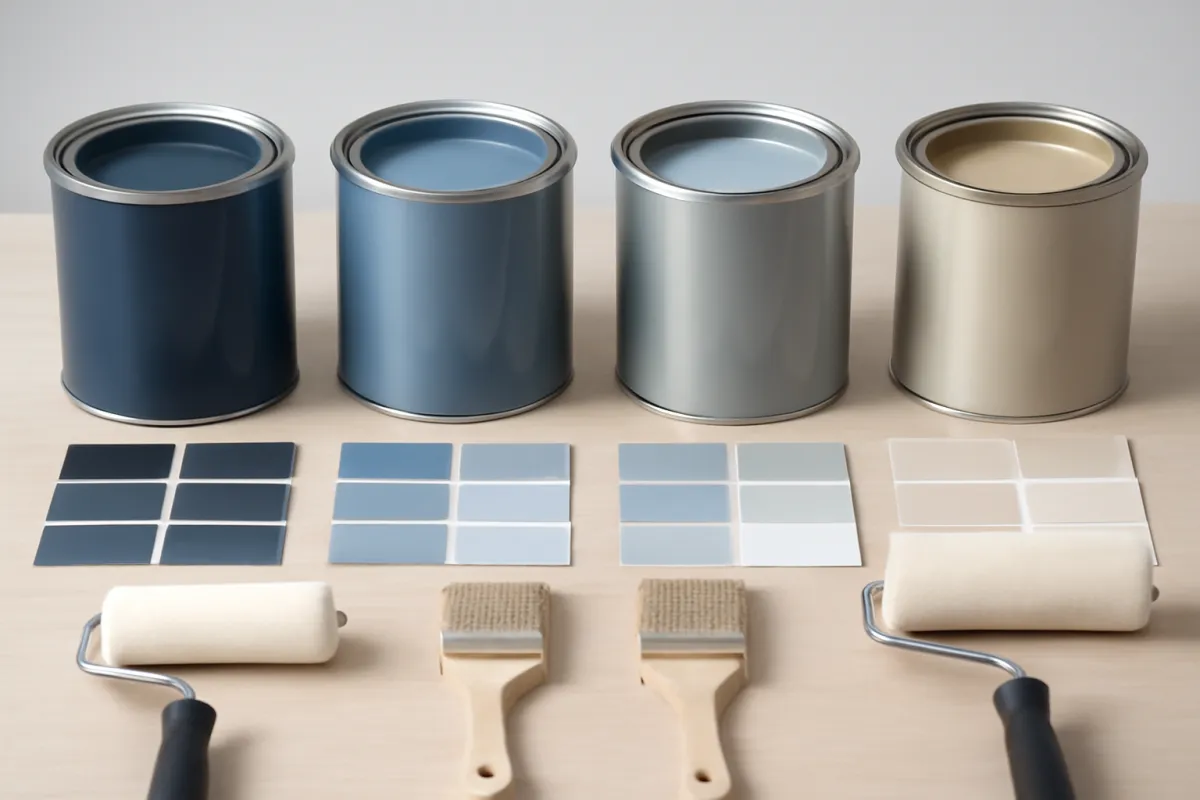
Paint sells in rough tiers, and the differences are real even though the material is a small share of a room’s cost. Economy paints are the cheapest per gallon and can be a false economy, because thinner formulas cover less per coat and may need an extra pass to look even, and that extra pass is labor. Mid-grade paints are the sensible default for most rooms, balancing price against good coverage, washability, and durability. Premium paints cost the most per gallon but often cover in fewer coats, resist scrubbing and fading longer, and hold a richer color, which can quietly save labor on tricky jobs.
The concept that ties price to performance is coverage, usually expressed as square feet per gallon. A paint that covers more per gallon and hides the old surface in fewer coats reduces both the material you buy and, more importantly, the hours spent rolling. That is why a premium paint that costs more per gallon can end up cheaper on the wall when it saves a whole coat across a room, and why chasing the lowest can price can backfire into more coats and more time.
The practical rule is to let the surface pick the tier. Deep or saturated colors, walls going from dark to light, and high-traffic rooms that need scrubbing reward a better paint that covers in fewer coats and holds up. A low-traffic ceiling or a closet can take an economy line without regret. Because paint is the small line on a room’s cost, upgrading it is often the least expensive way to improve how the finished room looks and lasts.
How much paint you need: the coverage math
Estimating paint for a room is simple arithmetic, and doing it yourself avoids both overbuying and the worse problem of running short mid-wall. Start with the wall area: measure the perimeter of the room by adding up the length of every wall, then multiply by the ceiling height. A 10 by 12 room has a perimeter of 44 feet, and at an 8-foot ceiling that is 352 square feet of wall before you subtract anything.
Next, subtract for openings. A standard door is about 20 square feet and an average window about 15, so knock off a rough allowance for each, which typically trims 10 to 20 percent from the raw wall area. Then apply coverage: one gallon of wall paint covers about 350 to 400 square feet in a single coat. Divide your net wall area by the coverage figure to get gallons per coat, then multiply by the number of coats. For the 10 by 12 bedroom, roughly 300 net square feet at two coats works out to about 600 square feet of coverage, or close to two gallons.
Two habits make the estimate reliable. First, treat the ceiling, trim, and doors as their own calculations with their own paint, because they use different products and areas. Second, round up and buy a little extra, because a partial gallon in reserve for touch-ups is cheap insurance, and returning mid-job for a freshly mixed batch risks a slightly different shade that leaves a visible seam. The estimator turns your own room dimensions into both a paint quantity and a cost so you can order once and correctly.
Cost per square foot for a single room
Per square foot is the portable way to hold a room’s painting budget, but it hides a useful truth: not all square feet cost the same. Interior painting is commonly quoted at an illustrative $2 to $4 per square foot of floor area for walls, which is a fair sanity check for a whole room. The trouble is that the average smooths over the difference between an open, smooth-walled bedroom, which is cheap per foot because a roller covers ground fast, and a small bathroom or kitchen of the same area, which is expensive per foot because of all the cutting in around fixtures.
That is why a whole-room number and a room-by-room number can both be right and still disagree. A large, plain living room might come in near the low end per foot despite a high total, while a tiny, detail-heavy bathroom lands near the high end per foot despite a low total. Ceiling height, heavy trim, and walls that need patching all push the per-foot figure up, so the same $3 per square foot that fairly prices a plain bedroom would underprice a tall, ornate room.
The best practice is to hold both numbers at once: a per-square-foot figure to sanity-check the total, and a sense of the room’s difficulty to catch where that average misleads. When you compare quotes, a bidder who priced by room and a bidder who priced by the foot can land far apart on a bathroom, and knowing why lets you ask the right question instead of just chasing the lower number.
Where a room paint job’s cost goes
Assemble the pieces and the shape of a room’s painting cost becomes clear, and it looks different from most home projects because the material band is so thin. The proportions below are illustrative for a typical single-room repaint with ordinary prep and two coats, with the application labor, the prep labor, and the paint and materials shown as their own bands so you can see where the money actually lives.
Where a room paint job's cost goes
Illustrative shares for a typical single-room repaint with ordinary prep and two coats.
Prep is drawn as its own band, but it is labor too, so labor-type work is about three-quarters of the job. Heavy prep, a tall ceiling, and extra coats grow the two blue bands; upgrading the paint grade barely moves the light one.
Two readings matter. First, the two labor bands together, application and prep, are roughly three-quarters of the bill, which is the whole reason painting is the trade where doing it yourself saves the most and downgrading the paint saves the least. Second, the paint-and-materials band is the smallest slice, so spending a little more on a better paint that covers in fewer coats can actually shrink the labor bands and pay for itself. Budget from the whole bar, and never let a low bid quietly shrink the prep band, because that is the part you cannot see once the color is on.
How to save on painting a room
Because labor is the bill, the real savings come from reducing labor honestly, not from buying cheaper paint. The largest lever is doing some or all of the work yourself. Even if you hire out the tall or detailed parts, taking on the prep, moving and covering furniture, patching, sanding, and taping, before a crew arrives can trim their hours. Painting the easy rooms yourself and hiring out only the hard ones splits the job at its natural seam.
The second lever is scope: painting the walls and leaving a sound ceiling and clean trim alone cuts real surfaces and real hours. The third is keeping the color close to what is already there, because a similar shade over a sound wall can sometimes cover in two coats and skip the primer, and every coat you avoid is a full pass of labor saved. A fourth is bundling rooms: having several rooms painted in one visit spreads the crew’s setup, masking, and cleanup across the whole job instead of paying it per room.
The false economies to avoid are the ones that cut the parts you cannot see. Thinning the prep and dropping to a single coat both lower the cost and both fail within a season, showing flaws, roller marks, and old color through the fresh paint. Buying the cheapest paint saves little, because paint is the small band, and can cost more in extra coats. The smart cuts reduce surfaces and coats and shift labor to yourself; the costly cuts hide in the prep and the coat count, exactly where the room looks fine on day one and disappoints by the next season.
A worked example: one 12 by 12 bedroom
Take one ordinary 12 by 12 bedroom with 8-foot ceilings and cost it two ways, hired and do-it-yourself. Every figure is illustrative; the structure is the lesson. The room has a perimeter of 48 feet, so at 8 feet high the raw wall area is about 384 square feet, and after subtracting for a door, a closet opening, and two windows, call it roughly 320 net square feet of wall.
Hired, about $450. A painter prices this as a mid-grade, two-coat wall repaint on sound surfaces: a few hours of masking and cutting in, two rolled coats, and cleanup, landing near the middle of the standard-bedroom range. Add the ceiling, and the trim and door as separate surfaces, and the number climbs toward $650 to $800 for a top-to-bottom room. Of the walls-only figure, paint and materials are only around $80 to $120, and the rest is labor, which is why the hired total sits where it does.
Do-it-yourself, about $90. The same 320 square feet at two coats needs roughly 640 square feet of coverage, or about two gallons of wall paint, plus a small kit of tape, a roller and tray, brushes, and a drop cloth. At mid-grade paint prices that is an illustrative $70 to $110 in materials, and the cost of the labor is your own weekend. The gap between $90 and $450 is not the paint, which is nearly identical in both; it is the hours. Run your own room through the estimator, set the size, grade, and prep, and it will pencil out the same split for your walls.
Painting several rooms at once
The per-room figures in this cost file assume a room painted on its own, but the economics shift when you paint several rooms in one project, almost always in your favor. A painting crew has fixed costs every time it shows up: driving to the job, unloading, protecting floors and furniture, mixing paint, and cleaning up at the end. Spread those fixed costs across one room and they inflate the per-room price; spread them across five rooms in a single visit and the per-room cost usually falls.
This is why a whole-interior repaint often works out cheaper per room than the same rooms priced one at a time, and why a bidder may quote a better rate for “the upstairs” than for a single bedroom. It is also why the smallest jobs, one powder room, one closet, can feel expensive relative to their size: the fixed setup does not shrink to match a tiny room. If you have several rooms on the list, bundling them into one job is one of the simplest ways to lower the average cost.
The same logic rewards planning your colors and scope together. Choosing a shared wall color for connected rooms, or a single trim color throughout, lets a crew work faster and waste less paint than a house where every room is a different custom mix. If your project is really the whole home rather than a room or two, step up to our house-painting cost file, which prices the interior and exterior at that scale and shows how the per-room math rolls up into a whole-home number.
Common room-painting mistakes
The recurring failures, collected for prevention, because each is cheap to avoid before the work starts and expensive to fix after the coat is on.
- Budgeting only for the walls. The ceiling, trim, doors, and closet are separate surfaces with their own labor; decide which are included before you price the room.
- Underestimating prep. Patching, sanding, and priming are a large, invisible share of the cost and the place a low estimate turns into a bigger final number.
- Ignoring ceiling height. A tall or vaulted room is a ladder-and-scaffolding job, not a roller job, and it is the least do-it-yourself-friendly part of the room.
- Planning a bold color as a two-coat job. Dark-to-light changes and rich, saturated colors often need a primer plus two coats; price the third pass from the start.
- Chasing the cheapest paint. Paint is the small band on the bill; a better paint that covers in fewer coats often saves more in labor than it costs at the register.
- Running short on paint mid-job. Measure first, buy a little extra, and avoid a mid-wall trip for a freshly mixed batch that leaves a visible seam.
- Comparing quotes without matching scope. A walls-only bid and a top-to-bottom bid are different jobs; make every bidder list the surfaces before you compare totals.
Each mistake shares a shape: the leverage is in the scope and the prep, decided before the first roller touches the wall. A room painted with the surfaces, the coats, and the prep settled in advance almost never surprises you at the end.
The bottom line
A room costs what its size, its surfaces, its ceiling height, and your local labor market say it costs, which is why the honest answer is a range. Illustratively, budget around $300 to $700 for a standard bedroom, $600 to $1,200 for a living room, and $150 to $600 for a bathroom when you hire it out, with tall ceilings, heavy prep, and a full top-to-bottom scope pushing every figure higher. Across every room, labor and prep are roughly three-quarters of the bill and the paint is the small remainder, which is the single fact that should shape every decision you make.
Then decide the job on purpose. Because painting is the most do-it-yourself-friendly trade, a single ordinary room is often worth painting yourself for a fraction of the hired price, keeping the professional for the tall, detailed, or high-stakes rooms. Whether you hire or do it yourself, settle the surfaces, the number of coats, and the prep before you start, measure the room so you buy the right amount of paint once, and treat any bid far below the others as a question to ask rather than a bargain to grab. The homeowners who come out of a room repaint happy are not the ones who found the cheapest can; they are the ones who understood that a good paint job is mostly the hours before and during the color, and priced those hours on purpose.
This cost file exists to explain how the price of painting a single room is built, not to price your specific project, and nothing in it replaces a written estimate from a painter who has seen your walls. Every dollar figure, range, and per-square-foot number above is illustration only: your real cost shifts with your region and labor market, the size and shape of the room, the ceiling height, the condition and texture of the surfaces, the number of coats, the paint grade, and which surfaces beyond the walls you choose to include. Painting at height, over a stairwell or a hard floor, carries real safety risk and is worth judging honestly before you take it on yourself, so gather several detailed written quotes on the same scope, surfaces and coats and prep included, and treat any figure here as a planning frame rather than a quote for your room.
Frequently asked questions
How much does it cost to paint a room?
The cost to paint a room commonly runs an illustrative $300 to $1,000 when a professional does it, and far less if you paint it yourself. Where a specific room lands inside that range depends mostly on its size, the ceiling height, and how much trim and detail it carries rather than on the color you pick. A standard bedroom with smooth, sound walls sits near the low end, while a large room with tall ceilings, extensive trim, or walls that need real patching climbs toward the top. Treat every figure here as a starting frame, because your real price shifts with your local labor rate, the number of coats, and how much prep the walls need before any color goes on.
How much does it cost to paint a bedroom?
Painting a standard bedroom of roughly 10 by 12 feet with smooth walls commonly costs an illustrative $300 to $700 when hired out, making it one of the most predictable rooms to budget. A larger primary bedroom, or one with a vaulted ceiling, a walk-in closet, or a lot of trim and doors, runs higher because each of those is extra surface and extra cutting-in time. If you paint the bedroom yourself, the same job often costs $60 to $120 in paint and basic supplies, since a bedroom rarely needs more than a gallon or two of wall paint plus tape, rollers, and a drop cloth. The gap between those two figures is almost entirely labor, which is why a bedroom is a common first do-it-yourself painting project.
How much does it cost to paint a living room?
A living room commonly costs an illustrative $600 to $1,200 to paint professionally, more than a bedroom mainly because it is larger and often carries taller ceilings and more wall to cover. The cost climbs when the room opens into a two-story entry or a stairwell, because reaching those high walls safely means ladders or scaffolding and slower, more careful work. Done as a do-it-yourself project, a living room often runs $100 to $200 in paint and supplies, since the larger wall area needs more gallons than a bedroom. The room's open walls are efficient to roll, so per square foot a living room is often cheaper than a small, fixture-filled bathroom of the same area.
How much does it cost to paint a bathroom?
A bathroom commonly costs an illustrative $150 to $600 to paint professionally, and although the room is small, it often costs more per square foot than a bedroom. The reason is that the paintable wall is broken up by the vanity, mirror, tile, and fixtures, and cutting in cleanly around all of it is slow, exacting work. Bathrooms also want a moisture-resistant paint and careful edges around tile and the tub or shower surround. As a do-it-yourself job a small bathroom is cheap in materials, often $40 to $90, because it needs little paint, but the fiddly cutting-in still takes patience, so budget time rather than money.
Is it cheaper to paint a room yourself?
Yes, painting a room yourself is meaningfully cheaper, because labor is the largest part of a professional painting bill and doing the work replaces exactly that share. A room you might pay $300 to $700 to have painted often costs only $60 to $150 in paint, tape, rollers, and drop cloths when you do it yourself, an illustrative saving of most of the total. Painting is the most do-it-yourself-friendly trade in a home: the tools are cheap, the material forgives mistakes because you can recoat, and a single ordinary room is a manageable weekend project. The honest catch is time and the parts that do not show up on day one, mainly skipped prep and wandering cut-in lines, so the savings are real when you are willing to prep properly and work patiently.
How much paint do I need to paint a room?
As a rough rule, one gallon of wall paint covers about 350 to 400 square feet in a single coat, and most rooms need two coats, so a standard 10 by 12 bedroom with 8-foot ceilings usually takes about two gallons for the walls. You can estimate your own room by measuring the perimeter of the floor, multiplying by the ceiling height to get the wall area, subtracting a little for doors and windows, then dividing by the coverage figure and multiplying by the number of coats. Ceilings, trim, and doors are separate surfaces with their own paint, so add for each of those if you are painting them too. Buying a little extra is wise, because running out mid-wall and returning for a slightly different mixed batch can leave a visible seam.
What is the cost to paint a room per square foot?
Interior painting is commonly quoted at an illustrative $2 to $4 per square foot of floor area, or sometimes per square foot of wall surface, which is a useful sanity check but hides an important truth: not all square feet cost the same. An open, smooth-walled room is cheap per square foot because a roller covers ground fast, while a small bathroom or kitchen of the same area costs more per foot because of all the cutting in around fixtures. Tall ceilings, heavy trim, and walls that need patching all raise the per-foot figure. Use per square foot to check a whole-room total, but budget the detail-heavy rooms by the room, because the average quietly underprices the slow, fiddly spaces.
Does painting a room add value to a home?
A fresh, neutral coat in a room is one of the cheapest improvements that makes a home read as clean and cared-for, which supports both the price and the speed of a sale. The value shows up most when the current paint is a visible negative: scuffed walls, a bold or dated color, or a child's bright accent wall that a buyer would want to repaint. Repainting those rooms in broadly appealing neutral tones commonly returns more than the modest cost, because it removes an objection rather than adding a luxury. Painting a room that already looks fresh rarely moves the price much, so the resale case is strongest when the existing color is actively working against the room.