What's on this page
- What a ductless mini split actually costs
- Single-zone mini split cost
- Multi-zone mini split cost
- The electrical circuit, and when it gets bigger
- Cold-climate versus standard efficiency equipment
- What actually drives ductless mini split cost
- Line set length and routing complexity
- Indoor head style and placement
- Ductless versus extending ductwork
- Running cost compared to central air and furnaces
- Maintenance and the long-term cost of ownership
- Where a mini split budget goes
- A worked example: one zone versus three
- Sizing a mini split correctly for each room
- Permits for a mini split installation
- Financing a mini split installation
- How to compare mini split quotes
- DIY and why professional installation matters here
- Regional and seasonal price variation
- A second worked example: standard versus cold-climate equipment
- Common mistakes
- The bottom line
Short answer: A single-zone ductless mini split commonly runs an illustrative $3,000 to $6,000 installed, and a multi-zone system with two to four indoor heads commonly runs $6,000 to $14,000 or more. A dedicated electrical circuit typically adds $300 to $800 unless a panel upgrade is also needed. Zone count and line set length are the two biggest levers on the final price.
Ductless mini split cost is easy to misjudge because the system scales in a way most home comfort equipment does not: adding a second, third, or fourth room to the same outdoor compressor is not simply “the same job twice,” it is a meaningfully different, and meaningfully cheaper per additional zone, project than the first zone alone. A homeowner pricing one room and a homeowner pricing a whole upper floor are both buying “a mini split,” and the per zone math between them can look very different for entirely legitimate reasons.
This cost file prices mini splits the way the equipment actually scales: the honest ranges for single-zone and multi-zone systems, what the electrical circuit adds and when a panel upgrade enters the picture, how cold-climate rated equipment changes the decision, what actually drives the total beyond zone count, and a full worked example comparing a one-zone and a three-zone system for the same home. Our new HVAC system cost file covers central, ducted systems including heat pumps in full; this file covers the ductless path specifically. Sketch your own zone count in the job cost estimator as you read, and the ranges below turn into your numbers.
Key takeaways
- Illustrative installed ranges: a single-zone system about $3,000 to $6,000, a multi-zone system with two to four heads about $6,000 to $14,000 or more.
- Each additional zone on a shared outdoor compressor commonly costs noticeably less than the first zone, since the outdoor unit and its electrical groundwork are already in place.
- A dedicated electrical circuit is typically a separate line, an illustrative $300 to $800 if the panel has room, with a full panel upgrade adding its own cost if it does not.
- Line set length and routing complexity, especially multi-story runs, is the other major lever beyond zone count and equipment tier.
- A mini split is commonly cheaper than extending ductwork into a space that never had it, which is the core reason it dominates additions, conversions, and older homes.
What a ductless mini split actually costs
A ductless mini split has no single price because the system scales by zone, and each zone added to the same outdoor compressor is a cheaper decision than the first one was. A single-zone system, one outdoor compressor matched to one indoor head, commonly runs an illustrative $3,000 to $6,000 installed, covering the equipment, the line set connecting indoor and outdoor units, and the labor to mount both and commission the system. A multi-zone system, the same outdoor compressor type but sized to feed two to four indoor heads in different rooms, commonly runs $6,000 to $14,000 or more, with the per zone cost falling as the zone count rises because the outdoor unit, its mounting, and its electrical groundwork are shared across every zone rather than duplicated.
A dedicated electrical circuit, required for essentially every mini split regardless of zone count, is commonly priced as its own line: an illustrative $300 to $800 if your electrical panel already has room and capacity, rising meaningfully if a panel upgrade is also needed to support the new continuous electrical load. The sections below price single-zone and multi-zone systems on their own terms, then work through the electrical question, cold-climate equipment, and what else moves the final number.
Illustrative installed cost by zone count
Standard efficiency equipment, a short line set run. Every home and market differs.
Midpoint figures for illustration. Notice the per-zone cost falls as zone count rises, since the outdoor unit and electrical groundwork are shared rather than duplicated.
Single-zone mini split cost
A single-zone system is the simplest version of this equipment: one outdoor compressor unit sized to one indoor head, connected by a line set carrying refrigerant lines, a condensate drain, and electrical control wiring through a small hole in the wall. Illustratively $3,000 to $6,000 installed, the figure covers the equipment itself, mounting both the outdoor and indoor units, running the line set, and commissioning the system, which includes evacuating air and moisture from the line set and verifying the correct refrigerant charge.
This is the common choice for a single room addition, a garage conversion, a home office, or any one space that needs independent heating and cooling without extending ductwork into it. Equipment capacity, measured in BTU and sized to the specific room rather than a generic rule of thumb, and the distance and routing complexity of the line set are the two biggest levers inside this single-zone range, covered in more depth in the sections below.
Multi-zone mini split cost
A multi-zone system connects one larger outdoor compressor to two, three, or four indoor heads, each capable of independent temperature control in its own room, which is the core appeal over several separate single-zone systems: one outdoor unit, one electrical circuit, and one commissioning visit cover multiple rooms. Illustratively $6,000 to $14,000 or more depending on zone count, the per zone cost falls as zones are added, since the outdoor unit, its mounting pad or bracket, and its electrical groundwork are a shared, mostly fixed cost spread across however many indoor heads it feeds.
The practical ceiling on zone count is both the outdoor compressor’s rated capacity, which can only feed so many indoor heads before needing a larger or second outdoor unit, and diminishing returns on independent control, since a four or five zone system covering a whole floor sometimes makes more sense as three zones with slightly larger coverage per zone than as five separate small zones. Walk your actual rooms and decide which genuinely need independent control before settling on a zone count, since adding a zone later to an already-sized outdoor unit is rarely as simple or as cheap as including it in the original design.
The electrical circuit, and when it gets bigger
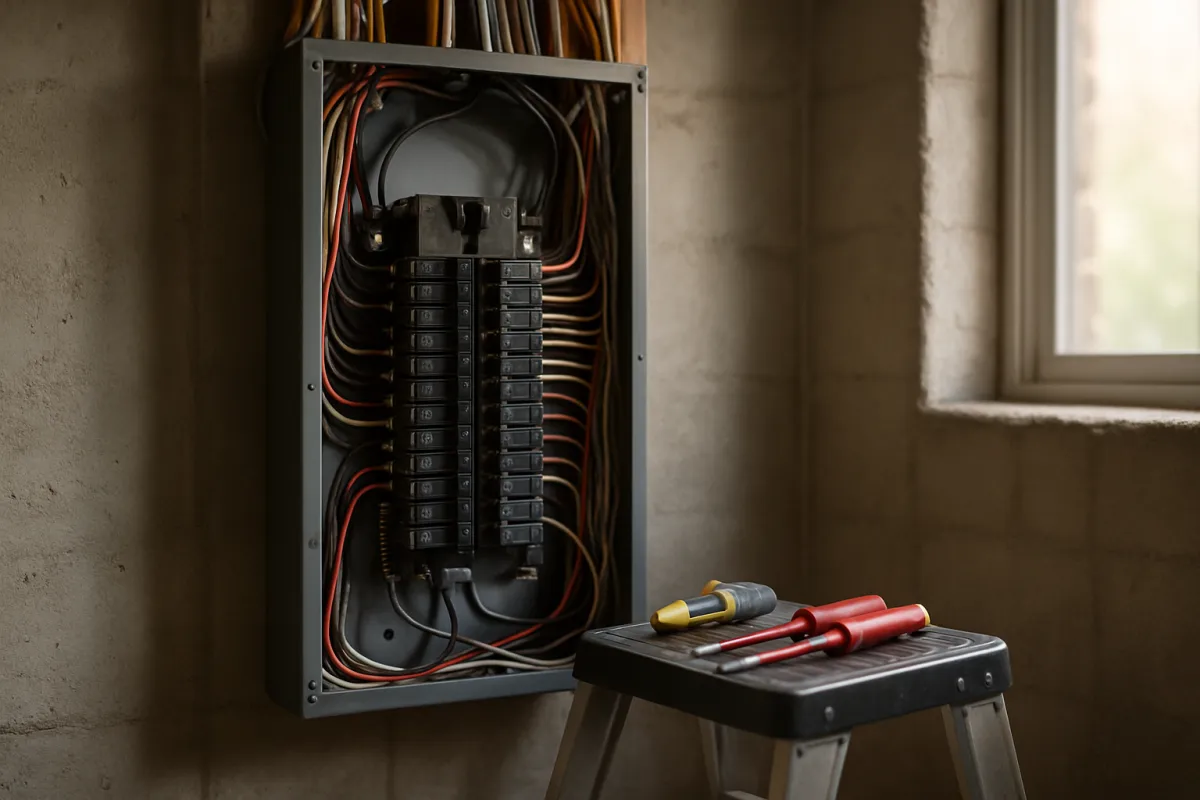
Every mini split, single-zone or multi-zone, needs its own dedicated electrical circuit sized to the equipment’s voltage and amperage requirements, commonly 208 or 240 volt, along with a weatherproof disconnect switch mounted near the outdoor unit as most electrical codes require. If your electrical panel already has an open slot and enough spare capacity, this circuit commonly runs an illustrative $300 to $800, covering the breaker, the wiring run from the panel to the outdoor unit, and the disconnect.

If a load calculation shows the panel does not have the capacity for the new continuous electrical load a mini split represents, the job grows to include a panel upgrade, which our electrical panel upgrade cost file prices in full. A mini split is exactly the kind of large, continuous load that can be the single item pushing an otherwise adequate panel from sufficient to insufficient, so confirming panel capacity before finalizing the mini split quote avoids an unpleasant surprise mid-project.
Cold-climate versus standard efficiency equipment
Standard efficiency mini splits lose meaningful heating capacity as outdoor temperatures drop well below freezing, which is a real limitation in genuinely cold climates. Cold-climate rated equipment is specifically engineered to maintain a much higher share of its rated heating output at low outdoor temperatures, and it commonly carries an illustrative 15 to 30 percent price premium over standard efficiency equipment of similar capacity, reflected in the tier pricing behind the zone-count ranges above.
The decision is regional and personal rather than universal. In a genuinely cold climate, cold-climate rated equipment is usually worth the premium if the mini split is meant to be a primary heat source rather than supplemental comfort. In a milder climate, or where the mini split is explicitly a secondary system backing up an existing furnace, standard efficiency equipment is often the more cost-effective choice, since the coldest-weather performance the premium buys matters less when backup heat is already in place for the rare extreme day. Ask any installer quoting a cold-climate system for its specific rated output at your region’s design temperature rather than a general marketing claim about cold weather performance, since that single number is what actually tells you whether the equipment can carry your home through its coldest typical week on its own.
What actually drives ductless mini split cost
Beyond zone count and equipment tier, several forces move the final number inside each category above. Line set length and routing is the largest additional lever: a short, simple run through one exterior wall with the outdoor unit placed nearby costs less than a long run, a multi-story run between floors, or a route that has to navigate around structural obstacles, since every added foot of line set and every complication in routing it adds material and labor.
Indoor head style is the second lever, since the common wall-mounted head is the least expensive style, while ceiling cassette, floor-mounted, and fully concealed ducted-style heads cost more both in equipment and in the more involved installation each requires. Outdoor unit placement is the third lever, since a unit placed at ground level near an exterior wall is the straightforward case, while a unit requiring a wall bracket at height, a roof mount, or placement far from the indoor heads it serves adds labor. The fourth is condensate drainage, since a straightforward gravity drain to the outside costs little while a location requiring a condensate pump to move drainage uphill or around an obstacle adds a real line item.
Line set length and routing complexity
The line set, the insulated bundle of refrigerant lines, electrical control wiring, and condensate drain connecting the outdoor and indoor units, has a maximum rated length set by the manufacturer, and running it near that maximum or through a complicated path costs meaningfully more than a short, straightforward run. A single-zone system with the indoor head and outdoor unit on roughly the same exterior wall, a run of perhaps ten to fifteen feet, sits at the efficient end of the cost range above.
A line set that has to travel a long horizontal distance, route between floors in a multi-story installation, or navigate around structural framing and finishes adds both material, since line set length itself is priced per foot, and labor, since a longer or more complex run takes more time to fish through walls or ceilings and more care to insulate and seal correctly along its length. Ask any installer quoting your specific layout to walk the proposed line set route with you, since this is the detail a phone estimate is least likely to price accurately.
Indoor head style and placement
The standard wall-mounted indoor head, a rectangular unit mounted high on a wall, is the least expensive and most common style, and it is the assumption behind this cost file’s baseline figures. Ceiling cassette heads, which mount flush into the ceiling and distribute air in multiple directions, and floor-mounted heads, which sit low on a wall like a baseboard unit, both cost more in equipment and take more careful installation, commonly adding an illustrative several hundred dollars per head over the standard wall-mounted style.
Fully concealed, ducted-style indoor units, which hide in a ceiling or soffit cavity and distribute air through short duct runs to one or more registers, cost the most and blur the line between a ductless and a mini-ducted system, but they solve the aesthetic objection some homeowners have to a visible wall unit. The style choice is worth deciding room by room based on both the look you want and the ceiling or wall space actually available, rather than defaulting to the cheapest option in every room regardless of fit.
Ductless versus extending ductwork
The core reason mini splits dominate additions, garage conversions, and older homes lacking ducts in a specific area is the comparison against the alternative: running new ductwork into a space that never had it. Extending ducts means cutting into finished ceilings and walls, framing chases to route the new duct runs, and often adding capacity to an existing air handler or installing a dedicated one, all of which commonly costs more than a mini split covering the same square footage, sometimes substantially more once the finished-space repair work is counted.
A mini split’s line set is dramatically less invasive, typically requiring only a small hole through one wall rather than a network of ductwork woven through the structure, which is why a bonus room over a garage, a finished basement with no existing supply registers, or a sunroom addition so often gets a mini split rather than an extension of the home’s central system. The tradeoff, a visible indoor head on the wall or ceiling rather than a hidden supply register, is the aesthetic cost of the ductless path, and most homeowners find it an easy trade for the lower installed price and the independent zone control that comes with it.
Running cost compared to central air and furnaces
Mini splits are heat pumps, moving heat rather than generating it, which makes them generally efficient, and they avoid a specific energy loss central systems commonly suffer: duct losses, meaning conditioned air that leaks out of ductwork before it ever reaches the room, which research and field measurement consistently find to be a meaningful share of a ducted system’s energy use in many homes. A mini split delivers air directly into the room with no duct run to lose it along the way.
Against a modern, well-sealed, well-insulated ducted system, the efficiency gap narrows, and the honest comparison depends heavily on the specific ductwork’s condition rather than a blanket claim that mini splits always run cheaper. The practical running-cost advantage most homeowners actually experience is zone-level control: a mini split conditions only the rooms you are using, so a system covering just the occupied rooms of a home can cost less to run day to day than heating or cooling a whole home’s ductwork to deliver the same comfort in those same rooms.
Maintenance and the long-term cost of ownership
A mini split’s ongoing maintenance is modest compared to a central system: periodically cleaning or replacing the washable filters in each indoor head, keeping the outdoor unit’s coil clear of debris and vegetation, and an occasional professional check of the refrigerant charge and electrical connections. Illustratively, a basic annual service visit runs a modest flat fee per system, similar in scale to a central system’s seasonal tune-up, our HVAC maintenance guide covers maintenance cadence and what each visit should include across any home comfort equipment, mini splits included.
The long-term cost advantage beyond routine maintenance is that a mini split has no ductwork to develop leaks, no ductwork to clean, and no air handler blower motor shared across a whole home’s conditioning, so several specific failure points a central system can develop over its life simply do not exist on a ductless system. The tradeoff is that each indoor head has its own fan and coil to maintain, so a multi-zone system has more individual components spread across the home than one central air handler, even though each component is simpler.
Where a mini split budget goes
Assemble the pieces of a typical multi-zone mini split job and the shape of the budget becomes visible. The proportions below are illustrative for a standard efficiency system with a reasonably straightforward installation.
Where a mini split budget goes
Illustrative shares for a standard multi-zone system with a reasonably straightforward installation.
The mix shifts with the job: a long or multi-story line set run grows the labor band, and a panel upgrade grows the electrical band well beyond this baseline share.
The reading that matters is that equipment is the largest single slice but not an overwhelming majority, which is why a quote focused only on the brand and model of the equipment while glossing over the labor, electrical, and permit lines is not pricing the whole job. A homeowner comparing two quotes with similar equipment but a meaningful price gap should ask specifically where the other three bands differ, since that is usually where the real explanation for the gap lives.
A worked example: one zone versus three
Take one home adding comfort to a bonus room over the garage, considering whether to cover just that one room or extend the same project to two upstairs bedrooms that also run warm in summer and cold in winter. Every figure is illustrative; the structure is the lesson.
One zone, about $3,600. Covering only the bonus room with a standard efficiency single-zone system, a short line set run through the nearest exterior wall, and a dedicated electrical circuit with room available on the existing panel.
Three zones, about $7,740. The same bonus room plus the two upstairs bedrooms, on one larger outdoor compressor sized for three heads, with a longer combined line set run reaching all three rooms and the same electrical circuit sized up to handle the larger outdoor unit’s load.
The roughly $4,100 difference covers two additional indoor heads, the larger outdoor unit, and the longer line set run, averaging out to about $2,050 per additional zone, well under the roughly $3,600 the first zone cost alone. The lesson is the one this cost file keeps returning to: decide zone count by walking your actual rooms and asking which ones genuinely need independent comfort control, then let the shared-equipment math work in your favor for every zone past the first. Run your own zone count and tier through the job cost estimator to see your own per-zone figure.
Sizing a mini split correctly for each room
Correct capacity, measured in BTU and matched to the specific room rather than a generic square-footage rule of thumb, is as important on a mini split as it is on any heating and cooling equipment, and it is worth understanding before you let a quick online calculator pick your equipment size. An oversized unit cools and heats the room quickly but cycles on and off too often to properly control humidity, which leaves a room feeling clammy even at the right temperature, while an undersized unit runs constantly and never quite catches up on the hottest or coldest days.
A proper sizing calculation weighs the room’s square footage alongside ceiling height, window count and orientation, insulation level, and how many exterior walls the room has, since a sunny west-facing bonus room with two exterior walls needs meaningfully more capacity than an interior room of the same square footage. Ask your installer to walk through this calculation for each zone specifically rather than quoting a capacity based on floor area alone, and be skeptical of a quote sized entirely over the phone with no questions asked about the room’s specific exposure and construction.
Permits for a mini split installation
Many jurisdictions require a permit for the electrical portion of a mini split installation, the new dedicated circuit and disconnect, and some also require a mechanical permit for the equipment installation itself, particularly where the work includes modifying the structure to route the line set. Requirements vary enough by jurisdiction that assuming either way is a mistake; our permit guide covers how to confirm what your specific project needs before work begins.
Skipping a required permit does not just carry a legal risk; it also means no inspector verified the electrical circuit was sized and installed correctly, which matters more on a mini split than on many smaller electrical additions because the circuit carries a real continuous load for hours at a time. A permitted job costs a modest fee and a scheduling step; an unpermitted one that fails an inspection later, say at a home sale, can cost far more to correct after the fact than it would have cost to do right the first time.
Financing a mini split installation
A mini split project commonly lands in a price range that many homeowners pay from savings or a general home improvement loan rather than treating as a major financed purchase the way a full central system replacement sometimes is. For a multi-zone system at the higher end of this cost file’s range, financing options mirror any mid-size home improvement project: a personal loan, a home equity line of credit, or a payment plan many HVAC contractors offer directly, often through a third-party financing partner.
Energy efficiency rebate programs, where available, can meaningfully offset the cost, particularly for cold-climate rated equipment that utilities sometimes specifically incentivize as part of electrification programs. As with any rebate, confirm the current, specific program rules with your utility or a tax professional rather than budgeting around a number you read somewhere once, since availability and amounts change over time and by location. Our home renovation loan options file covers the broader financing landscape if the mini split is one piece of a larger project.
How to compare mini split quotes
A mini split quote hides its real differences in the same places most HVAC quotes do: equipment specification, scope, and what is included beyond the equipment itself. A quote that just says “three-zone mini split, $8,500” has not told you the equipment tier, whether it is cold-climate rated, the line set length and routing for each zone, or whether the dedicated electrical circuit and any permit fees are included, and each of those can shift the honest comparison against a competing bid by thousands.
Make every bidder name the specific equipment model or at least its tier and rated capacity per zone, state the line set length and routing for each indoor head, and confirm whether electrical work, permits, and commissioning are included in the quoted price or billed separately. Two quotes that both say “three-zone system” can be pricing meaningfully different equipment and scope, and the gap closes once both bidders are describing the same specification, the same discipline our note on comparing contractor quotes recommends for any home service bid.
DIY and why professional installation matters here
Mini splits are sometimes marketed with simplified DIY installation kits using pre-charged line sets that skip the refrigerant handling a traditional installation requires, and for a single, very short, straightforward run, a confident and careful homeowner can occasionally manage the mechanical mounting correctly. The electrical circuit is a different matter entirely: a dedicated 208 or 240 volt circuit sized correctly and terminated with a proper disconnect is licensed electrical work in essentially every jurisdiction, and getting it wrong carries real safety risk, not just a performance shortfall.
Beyond the electrical question, correct refrigerant charge, proper line set evacuation to remove air and moisture before charging, and correct mounting that keeps the line set properly sloped for condensate drainage are all details that affect the system’s performance and lifespan in ways that are not obvious at installation but show up as reduced efficiency or early equipment failure years later. For the great majority of homeowners, the labor-dominated price in this cost file reflects exactly what you are paying for: a licensed professional’s correct handling of refrigerant, electrical work, and commissioning, not a markup on a box you could easily install yourself.
Regional and seasonal price variation
The same mini split system costs more in a high labor cost metro than in a smaller market, independent of the equipment itself, because installation labor is priced by the local market. Climate affects the equation differently than it does most HVAC equipment: demand for cold-climate rated systems concentrates in colder regions specifically, which can mean more installer experience and more competitive pricing on that equipment tier in markets where it is the routine choice, and less familiarity and sharper pricing variance in markets where standard equipment is the norm and cold-climate systems are a less common request.
Season affects availability more than price directly, since mini split installation, like most indoor-and-exterior-wall work, is less weather-dependent than ductwork or roofing. The practical timing lever is booking ahead of the season you most need the comfort, since installers scheduling a cooling-focused install right before summer or a heating-focused one right before winter are busiest exactly when demand peaks, and a homeowner planning several months ahead of the season they need relief in often finds better scheduling and sharper pricing than one calling in the first week of a heat wave or cold snap.
A second worked example: standard versus cold-climate equipment
Take one single-zone installation in a cold-winter region, where the homeowner is deciding between standard efficiency and cold-climate rated equipment for a bonus room that will serve as a home office year round. Every figure is illustrative; the structure is the lesson.
Standard efficiency, about $3,600. The equipment, line set, and electrical circuit priced at this cost file’s standard baseline. This system performs well through most of the year but loses meaningful heating output once outdoor temperatures drop well below freezing, which matters in this region’s coldest weeks.
Cold-climate rated, about $4,350. The same scope with cold-climate equipment carrying an illustrative 20 percent premium, chosen because this room is a daily-use home office with no backup heat source of its own, making reliable heating performance on the coldest days worth more than the roughly $750 price difference.
The lesson mirrors the one in the open cell versus closed cell foam decision elsewhere on this site: the premium tier is worth paying specifically where the capability it adds matches a real need, in this case daily reliance on the room with no backup heat, rather than as a default upgrade applied to every zone regardless of how the room is actually used.
Common mistakes
The recurring failures, collected for prevention.
- Pricing zones as if each one duplicates the first zone’s cost. The outdoor unit and electrical groundwork are shared; each additional zone costs meaningfully less than the first.
- Forgetting the electrical circuit is a separate line. A quote for equipment and mechanical installation alone is incomplete without the dedicated circuit and disconnect.
- Not confirming panel capacity before finalizing the quote. A mini split is a large continuous load that can be the item pushing an adequate panel into upgrade territory.
- Choosing standard efficiency equipment for a genuinely cold climate primary heat source. The cold-weather performance gap is real and matters most exactly where backup heat is not already planned.
- Underestimating a long or multi-story line set run. This is the detail most likely to be mispriced on a phone estimate rather than an in-person walk of the actual route.
- Picking the cheapest indoor head style in every room regardless of fit. Ceiling or floor mounted styles cost more but solve a real aesthetic or space constraint a wall unit cannot.
- Assuming a rebate figure before confirming the current program. Incentive availability and amounts change over time and by location; confirm with the utility or program administrator directly.
Each mistake is cheap to avoid before signing and expensive to discover mid-project, which is the general shape of mini split economics: the zone count and the electrical question decided up front are worth more than any discount decided later.
The bottom line
A ductless mini split costs what the zone count, the equipment tier, and the line set routing say it costs: illustratively $3,000 to $6,000 for a single zone and $6,000 to $14,000 or more for a multi-zone system covering two to four rooms, with a dedicated electrical circuit adding $300 to $800 unless a panel upgrade enters the picture. Each additional zone on a shared outdoor compressor costs meaningfully less than the first, which is the core economic argument for a multi-zone system over several standalone units.
Buy the project with that structure in mind: walk your actual rooms and decide zone by zone which ones need independent control, confirm your electrical panel has the capacity before finalizing a quote, choose cold-climate equipment specifically where it is doing real work rather than as a default upgrade, and get every bidder to price the same zone count, equipment tier, and line set route so the comparison is honest. That is the whole decision, and none of it requires guessing which configuration your specific home actually needs, only an honest room-by-room walk-through before anyone commits to a zone count.
This cost file exists to explain how ductless mini split pricing is structured, not to price your specific project, and nothing in it replaces an on-site assessment and written quote from a licensed HVAC contractor and, for the electrical portion, a licensed electrician. Every dollar figure, range, and total above is illustration only: real costs shift with your region, your zone count and layout, equipment tier, and local labor rates. Electrical code and permit requirements are set locally and vary by jurisdiction, so confirm current requirements with your building department before work begins, and verify any contractor’s and electrician’s licensing and insurance before signing.
Frequently asked questions
How much does a ductless mini split cost to install?
A single-zone system, one outdoor compressor paired with one indoor head, commonly runs an illustrative $3,000 to $6,000 installed for a standard efficiency unit. A multi-zone system, one outdoor compressor feeding two to four indoor heads, commonly runs $6,000 to $14,000 or more depending on the number of zones and the tier of equipment. A dedicated electrical circuit is commonly a separate line, an illustrative $300 to $800 if your panel has room, more if a panel upgrade is needed. Your real price shifts with zone count, equipment tier, and how far the line set has to run between the outdoor unit and each indoor head, so treat every figure here as a starting range and gather a few written local quotes before budgeting a specific system.
How many zones do I actually need?
The honest answer is one zone per room or open area you want independently heated and cooled, not one zone per square foot of the house. A single room addition, a garage conversion, or a home office needs exactly one zone. A home adding comfort to several separate rooms, bedrooms on a second floor without ductwork, for example, needs one zone per room if independent control matters, or you can connect fewer zones to larger open spaces and accept shared temperature control across that whole area. Oversizing on zone count adds real cost for comfort control you may not use; undersizing by combining rooms that actually want different temperatures creates a comfort complaint no amount of airflow fixes. Walk your actual rooms and decide zone by zone rather than guessing a number first.
Is a mini split cheaper than running new ductwork?
For most additions, conversions, and retrofits into a home with no existing ducts in that area, yes, meaningfully so. Running new ductwork into a space that never had it, cutting into finished ceilings and walls, framing chases, and connecting back to an existing air handler, commonly costs more than a mini split system covering the same space, before you even add the cost of a larger central system or air handler capacity to serve the new area. A mini split's line set, a thin refrigerant and electrical conduit typically three inches or less in diameter, is far less invasive to install than full ductwork, which is the core reason mini splits dominate additions, conversions, and older homes without existing ducts in the area needing comfort.
Do I need an electrician for a mini split install?
Yes, for the electrical portion specifically. A mini split system needs a dedicated electrical circuit sized to the equipment, commonly 208 or 240 volt depending on the unit, along with a properly rated disconnect near the outdoor unit, and that work falls under licensed electrical work in essentially every jurisdiction. Many HVAC installers hold the licensing to do both the mechanical and electrical portions themselves, while others subcontract the electrical piece to a dedicated electrician, so ask upfront whether your quote includes licensed electrical work or assumes you are arranging it separately, since a quote missing this line is quietly incomplete.
Can a cold-climate mini split really replace a furnace?
A cold-climate rated mini split is specifically engineered to maintain heating output at low outdoor temperatures that would cripple a standard heat pump, and in many moderate-to-cold climates it can serve as a home's primary heat source. The honest caveat is regional and personal: in the very coldest climates, or for homeowners who want a guaranteed backup regardless of an unusual cold snap, pairing a cold-climate mini split with a furnace or other backup heat source, used only on the rare extreme days, is a common and sensible middle path rather than an all-or-nothing choice. Ask any installer quoting a cold-climate system for its actual rated heating capacity at your region's design temperature, not just a marketing claim that it works in cold weather generally, since the useful number is the specific output at your coldest typical day, not a general description of how the equipment performs in cold weather somewhere.
What is the running cost of a mini split compared to central air?
Mini splits are generally more efficient than older central systems and meaningfully more efficient than window units or electric resistance heat, because they move heat rather than generating it and avoid the energy losses that leaky or poorly insulated ductwork causes in a central system. Against a modern, well ducted central system, the efficiency gap narrows, and the honest comparison depends on your specific ductwork's condition more than a blanket mini split versus central claim. The bigger practical running cost factor for most homeowners is that a mini split heats or cools only the zones you actually use, so a system serving just the rooms you occupy can cost less to run day to day than conditioning a whole home's ductwork for the same comfort in those same rooms.
How long does a mini split installation take?
A single-zone system in a straightforward location, a short line set run through an exterior wall with the outdoor unit placed nearby, commonly takes about half a day to a full day. A multi-zone system with several indoor heads and longer line set runs to different rooms, sometimes through multiple floors, commonly takes one to two full days. Ask your installer for both the on-site working time and when the electrical circuit will be completed, since the electrical work is sometimes scheduled separately from the mechanical installation depending on whether the same company handles both.
Do mini splits qualify for any rebates or tax credits?
Heat pump equipment, which includes ductless mini splits, is commonly among the equipment categories eligible for utility rebates and energy efficiency incentive programs, particularly higher efficiency and cold-climate rated models, but program availability, eligibility rules, and dollar amounts vary by location, change over time, and should never be assumed or budgeted around without confirming the current, specific rules for your area. Ask your installer and your utility directly which programs currently apply, and confirm final eligibility with the official program administrator or a tax professional before relying on any rebate figure to make the purchase decision.