What's on this page
- Why one patio costs twice what another does
- The headline ranges: illustrative cost per square foot by material
- Paver patio cost (the most common upgrade from concrete)
- Poured concrete patio cost (the budget hard surface)
- Flagstone and natural stone patio cost
- Gravel and decomposed granite patio cost
- What actually drives patio cost beyond square footage
- Base preparation: the line that decides whether a patio lasts
- Edge restraints and borders
- Site access, grading, and drainage slope
- Patio shape, pattern, and cutting complexity
- Labor versus materials: where a patio budget splits
- Patio size: small seating area to full backyard
- What you can honestly do yourself
- Common mistakes that cause a patio to heave or settle
- Where a patio budget goes
- How to read and compare patio installation quotes
- Permits, setbacks, and HOA rules for a patio
- Patio cost by region and season
- A worked example: one 200-square-foot patio, two materials
- Mixing materials: pavers, concrete, and stone on one patio
- Patio versus a deck: which costs less
- Patio maintenance and lifespan by material
- The bottom line
Short answer: Patio installation commonly runs an illustrative $6 to $40 per square foot installed: gravel about $6 to $12, plain poured concrete $7.50 to $12.50, pavers $12 to $25, and flagstone or natural stone $20 to $40 and up. A typical 200-square-foot patio lands roughly $1,500 to $8,000 across those materials, with base preparation, pattern complexity, and site access moving the number further within each band.
Patio installation cost is a number people try to pin down with a single figure, a friend’s patio cost this much per foot, and then the quotes land everywhere from a few hundred dollars to a small car’s worth of money. The reason is that “patio” describes a use, a flat outdoor surface to sit and walk on, not a product, and four genuinely different construction methods all answer to that same word: individual pavers set in sand, a single poured and finished concrete slab, irregular stone fitted by hand, or compacted gravel contained by an edge. Each one prices on its own logic, and the material you pick moves the total more than almost anything else about the job.
This cost file prices a patio the way a hardscaping contractor actually builds one: the four common surfaces by square foot, what drives the price beyond the material itself, why the base underneath matters more than the surface on top, how pattern and shape add labor, and a full worked example of one patio costed in two materials side by side. Our earlier concrete slab cost file priced a plain poured patio slab on its own; this one widens the lens to compare it against pavers, stone, and gravel. Sketch your own patio in the job cost estimator as you read, and the ranges below turn into numbers you can plan around.
Key takeaways
- Illustrative installed ranges per square foot: gravel about $6 to $12, plain poured concrete $7.50 to $12.50, pavers $12 to $25, flagstone or natural stone $20 to $40 and up.
- A typical 200-square-foot patio lands roughly $1,500 to $8,000 for common materials, illustratively, before pattern, base conditions, and access adjust it further.
- Base preparation, excavation and a compacted gravel base, is the line that decides whether any patio stays flat for years or heaves and settles within a season or two.
- Pattern and cutting complexity, herringbone, borders, multiple sizes, or tight curves, add labor on top of the material cost, independent of square footage.
- A small patio commonly costs more per square foot than a large one, because mobilization and base equipment are largely fixed costs spread across less area.
Why one patio costs twice what another does
Homeowners often start with a square footage in mind, two hundred square feet, so it should cost about this much, and then the quotes scatter because square footage was never the dominant variable. Two 200-square-foot patios can differ by more than four times, because one is compacted gravel edged with steel on flat soil and the other is flagstone set in mortar over a poured concrete base on a site that needed grading.
The variables that actually move the price are, in rough order of impact: the surface material, the base construction underneath it, the pattern and cutting complexity, site access and grading, and finally the raw square footage. A homeowner who fixes on size first has anchored on a real but modest lever and will be surprised by every other one.
Every dollar figure in this cost file is illustrative, because your market, your site, and your exact design set the real numbers. But the structure of the cost, what the money buys and in what proportion, is stable across markets, and once you see the structure, a wide spread between patio quotes stops looking like a mystery and starts looking like a short list of questions about material, base, and pattern.
The headline ranges: illustrative cost per square foot by material
Illustrative midpoint cost per square foot installed for the four common patio surfaces on a standard base, before pattern, decorative finish, or difficult-site premiums.
Gravel or decomposed granite is the budget entry point at an illustrative $6 to $12 per square foot, because it needs no forms, no unit laying, and no curing time, only excavation, a compacted base, and an edge restraint to keep it contained. Poured concrete, at an illustrative $7.50 to $12.50 per square foot for a plain finish, is the next step up and the most common hard-surface patio material, priced close to our own concrete slab cost file’s figures for a patio-scale pour.
Pavers sit in the middle-upper tier at an illustrative $12 to $25 per square foot, priced for the individually laid units, the sand setting bed, and the labor to cut and fit them around the patio’s edges. Flagstone and natural stone top the range at $20 to $40 and up, priced as much for the time a mason spends fitting irregular stone as for the material itself.
Paver patio cost (the most common upgrade from concrete)
A paver patio uses manufactured concrete, and sometimes clay or porcelain, units laid individually over a compacted gravel base and a leveling layer of bedding sand, with polymeric sand swept into the joints to lock the units together. Illustratively it runs $12 to $25 per square foot installed, with the spread driven mostly by the paver product, a basic rectangular concrete paver at the low end and a tumbled, textured, multi-size, or porcelain paver at the high end, and by the pattern chosen.
The practical advantage pavers hold over poured concrete is repairability: because the surface is built from individual units rather than one continuous pour, a single cracked, stained, or settled paver can be lifted and replaced without leaving the visible patch a concrete repair always does, and the whole surface can be lifted and reset later if the base ever needs attention. That flexibility is a real part of what the higher price buys, on top of the wider range of colors, shapes, and patterns pavers offer that a poured slab cannot easily match.
Poured concrete patio cost (the budget hard surface)
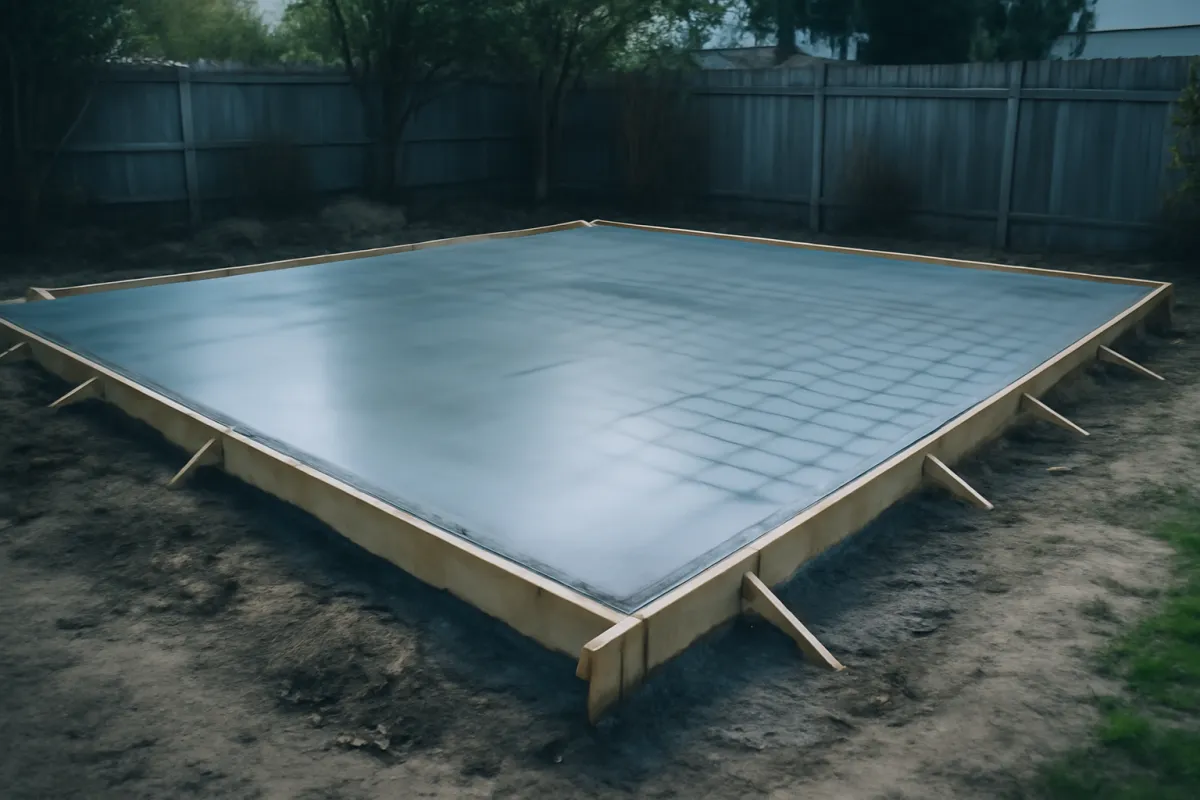
A poured concrete patio is the same construction our concrete slab cost file prices in detail: forms set, a gravel base and often wire mesh or rebar placed, concrete poured, and the surface finished. For a plain broom or trowel finish, that file puts a modest patio-scale slab at an illustrative $1,500 to $2,500 total, which at a typical 200-square-foot size works out to roughly $7.50 to $12.50 per square foot, the figure this cost file carries forward.
Where this cost file goes further is the decorative finish question, since a patio is the project where homeowners most often choose to upgrade a slab’s surface. Stamped concrete, pressed with a pattern to mimic stone or brick, colored or stained concrete, and exposed aggregate finishes all add labor and skill on top of the structural slab, pushing a decorative patio toward an illustrative $12 to $20 per square foot. The underlying slab cost barely changes; the finish is a separate, optional line you can decide after the structural numbers are set.
Flagstone and natural stone patio cost
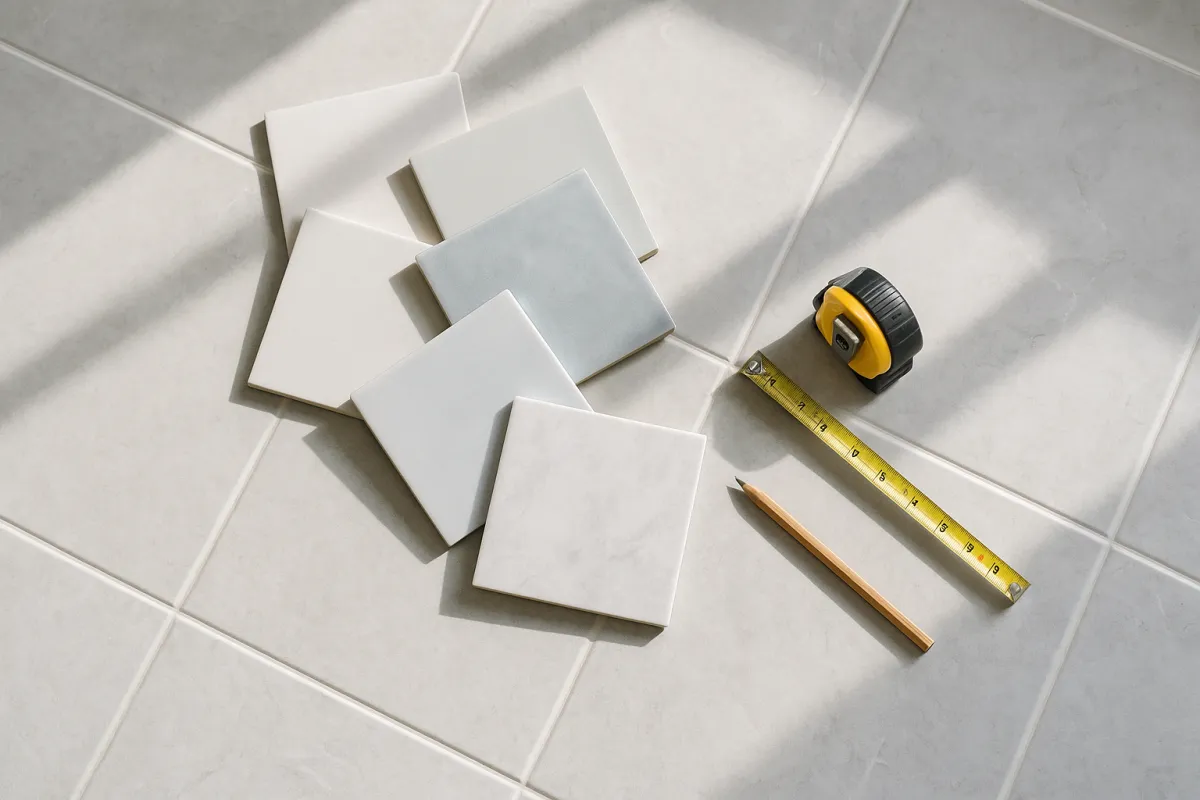
Flagstone, irregular flat quarried stone, and other natural stone products are laid either dry, set directly into a sand or gravel base with the joints filled with sand or soil, or mortared over a poured concrete base for a more formal, permanent surface. Illustratively this tier runs $20 to $40 per square foot and up, the highest common band, because fitting irregular pieces so the joints read evenly takes real time and skill that a uniform manufactured paver does not require.
Dry-laid flagstone sits at the lower end of the band and suits a casual, garden-adjacent patio where small joint gaps and slight unevenness read as character rather than a flaw. A mortared stone patio over a concrete base sits at the top, delivering a flatter, more formal surface closer to an indoor floor, at a price that reflects both the stone and the additional concrete work underneath it. Either way, what you are buying is a non-repeating, natural surface that no stamped concrete or manufactured paver fully reproduces.
Gravel and decomposed granite patio cost
Gravel and decomposed granite patios skip the unit-by-unit laying entirely: excavate, compact a base, contain the area with an edge restraint, steel, timber, or paver border, and fill with the loose material, compacted in lifts. Illustratively this runs $6 to $12 per square foot, the cheapest common patio surface, because it has no forms, no curing time, and no individual-unit labor.
The honest trade-offs are a looser underfoot feel than a hard surface, a tendency to migrate outside the edge restraint over time without one, and periodic top-up or raking to keep the surface even, especially after heavy rain or regular foot traffic compacts low spots. In a dry climate, or for a casual fire-pit or seating-area patio rather than a formal dining space, those trade-offs are often a fair price for the lowest cost and the fastest install of the four options here.
What actually drives patio cost beyond square footage
Four levers set the total beyond raw size, in rough order of impact. First is the material, discussed above. Second is base preparation, the excavation depth and the compacted gravel layer underneath everything, which a good installer does not skip regardless of material. Third is pattern and cutting complexity, since a simple grid pattern lays faster than a herringbone, a running bond with a contrasting border, or a curved edge that forces constant cutting. Fourth is site access and grading, since a flat, easily reached backyard prices differently than a sloped site or one a crew can only reach by hand-carrying material.
The practical takeaway is to decide the material first, confirm the base depth is not being shorted, choose a simple pattern if budget is tight, and have someone walk the actual site before comparing per-square-foot numbers across bids.
Base preparation: the line that decides whether a patio lasts
Underneath every patio, regardless of surface material, sits a compacted base, typically several inches of crushed gravel, compacted in layers, that provides a stable, well-draining foundation and keeps the surface from heaving with frost or settling unevenly under foot traffic and furniture. This work is invisible in the finished photo and is where a cut-rate bid is most tempted to shortcut, either by skipping compaction passes or by using too shallow a base.
A patio built on an undersized or poorly compacted base can look identical to a properly built one on install day and then develop low spots, cracking, or heaving within one or two seasons, especially in a climate with real frost. Asking every bidder how deep the base will be, what material it uses, and how it will be compacted is one of the most useful questions you can put to a patio contractor, because the answer is invisible once the patio is finished and is also the single biggest factor in whether it still looks good in five years.
Edge restraints and borders
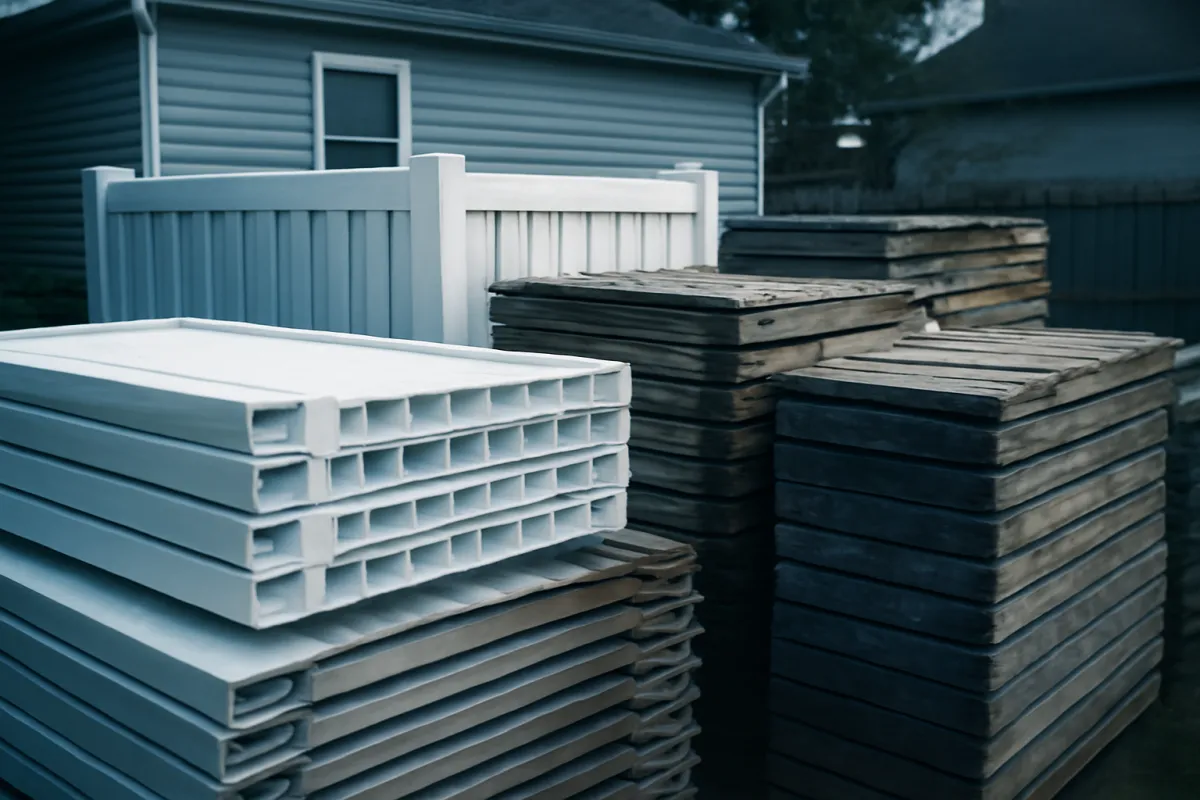
A patio surface made of individual units, pavers, flagstone, or gravel, needs an edge restraint, a buried plastic, metal, or concrete border that keeps the units or the loose material from spreading outward over time under foot traffic and seasonal ground movement. A poured concrete patio does not need a separate edge restraint, since the slab itself is continuous, which is one of the quiet reasons it costs less than pavers or gravel at the same footprint.
A decorative border, a contrasting paver or stone band around the patio’s perimeter or along a step line, is a common upgrade that adds a visible design element and a modest amount of extra cutting and labor, usually priced as a smaller add-on rather than a separate per-square-foot rate. Borders are also where many cut patios develop the most waste, since perimeter and curved cuts use more material per finished square foot than a straight field of units.
Site access, grading, and drainage slope
A patio needs a slight slope away from the house, commonly cited as roughly a quarter inch of drop per foot, so that rainwater runs off the surface instead of pooling against the foundation or standing on the patio itself. Getting that slope right is part of the base and grading work, not an afterthought, and a patio that was built flat or sloped the wrong direction is a drainage problem that surfaces the first heavy rain after installation.
Site access affects cost the same way it does on a retaining wall or a fence: a yard a compact excavator or skid steer can reach directly prices differently than a narrow side yard or a sloped lot that forces a crew to move gravel, sand, and paving material by wheelbarrow. When you gather quotes, confirm every bidder actually walked your site, since access and existing grade are exactly the kind of variables a phone estimate or a satellite-image quote misses.
Patio shape, pattern, and cutting complexity
The base per-square-foot rates in this cost file assume a straightforward rectangular or simple-shaped patio laid in an easy pattern. A running bond or basket-weave pattern in a simple rectangle is the fastest and cheapest layout to install for any unit-based material. A herringbone pattern, multiple paver sizes, a curved edge, or a design that wraps around steps, a tree, or a utility cover all add labor through additional cutting and fitting, independent of the total square footage.
The practical move is to decide early how much pattern complexity actually matters to you. A simple field with a contrasting border captures much of the visual upgrade a full herringbone pattern offers at meaningfully less labor, which is a useful compromise when budget is tight but a plain grid feels too basic.
Labor versus materials: where a patio budget splits
Across a typical paver or concrete patio, labor commonly runs close to half to a bit more than half of the installed total once excavation, base compaction, and the actual laying or pouring and finishing are counted, because patio work is fundamentally hands-on, unit-by-unit or finish-by-finish labor rather than a job that scales efficiently with machinery the way a larger paved area might. Gravel patios shift the mix somewhat toward materials and equipment time, since there is no unit-laying labor, while flagstone shifts hard toward labor, paying for a mason’s time fitting irregular stone rather than for the stone itself.
Our contractor cost file broke any trade price into labor, materials, overhead, and profit; the patio version of that lesson is that your local labor rate and the pattern complexity you choose move the labor half more than the material grade does, which is why two patios in the same material can still land meaningfully apart in price.
Patio size: small seating area to full backyard
Patio size scales cost close to proportionally once you are past a certain minimum, but the relationship is not perfectly linear at either end. A very small patio, a compact seating nook under roughly 100 square feet, commonly costs more per square foot than this cost file’s figures, because delivery minimums, a crew mobilized for a single day, and base-prep equipment are largely fixed costs spread across very little area. A large patio of 400 square feet or more can land somewhat below the per-square-foot figures here, since those same fixed costs spread across much more surface.
The practical implication is to treat the ranges in this cost file as a mid-size planning guide, roughly 150 to 300 square feet, and to expect a genuinely small or genuinely large project to shift toward the edges of or outside those bands for reasons that have nothing to do with the material chosen.
What you can honestly do yourself
A gravel or paver patio on flat, easily reached ground is a realistic DIY project: excavating, compacting a gravel base with a rented plate compactor, screeding a level sand bed, and laying pavers or spreading gravel within an edge restraint are all within reach of a determined homeowner with a weekend or several, patience, and a helper for the heavier material moving. Interlocking paver systems are specifically designed around this scale of project.
Poured concrete is the hardest of the four materials to DIY successfully, because once the concrete is mixed or delivered, it has to be placed, leveled, and finished within a limited working window with no good way to pause partway through, and a botched finish or a poorly timed edging job is difficult to correct after the fact. Flagstone sits in between: dry-laying a few stones is approachable, but achieving an evenly joined, professional-looking full patio takes real practiced skill. Whatever the material, getting the base depth and compaction right is the step that most determines whether a DIY patio stays flat, and it is worth not rushing regardless of which surface goes on top of it.
Common mistakes that cause a patio to heave or settle
- Skipping or undersizing the compacted base. This is the single most common cause of an uneven, heaving, or settling patio, and it is invisible once the surface goes down.
- Building it flat instead of sloped away from the house. A patio with no drainage slope pools water against the foundation or on its own surface after rain.
- Skipping the edge restraint on pavers or gravel. Without a buried border, units spread and gravel migrates outward within a season or two of foot traffic.
- Choosing a complex pattern to save money on labor. A herringbone or multi-size pattern laid by an inexperienced crew in a rush often costs more in redo work than paying for the skilled labor up front.
- Pouring concrete too close to the frost line without control joints. Without planned joints, a slab cracks wherever it wants to rather than along a hidden, planned line.
Each mistake is cheap to avoid before the base goes in and expensive, sometimes a full tear-out and rebuild, to fix afterward, which is the same lesson every hardscaping project teaches: the leverage is almost entirely at the beginning, underground, before the finished surface is visible.
Where a patio budget goes
Where a patio budget goes
Illustrative shares for a mid-range paver patio of ordinary shape on reasonably accessible ground.
The mix shifts with choices: flagstone grows the labor band further, gravel removes the base-material share into a thinner overall bar, and a complex pattern grows labor at the expense of the other bands' share.
Two readings matter. First, labor is the single largest band on most patio projects, more so than on a comparable fence or wall, because unit-by-unit laying or hand-finishing a slab simply takes time that does not shrink much with cheaper materials. Second, the base-and-excavation band is small on paper but decides whether the rest of the budget holds up; it is the segment a rushed or cut-rate bid is most likely to thin, and it is the one you cannot inspect once the surface is down.
How to read and compare patio installation quotes
Hold every bid against the same written scope: the exact material, product, and color or finish, the base depth and material, the pattern, the edge restraint type, and whether grading and drainage slope are explicitly included. A bid that comes in well under the others on the same patio usually means one of those lines was thinned, most often the base depth, rather than a genuinely better price for identical work.
Ask directly how many inches of compacted base the bid assumes and whether the quote includes excavation and haul-away of the removed soil, since that is a line some bidders fold in and others charge separately. As with any trade price, our contractor cost file and quote-comparison guide cover the general discipline of reading an estimate; the patio-specific version is to insist that base depth and drainage slope are named, not assumed.
Permits, setbacks, and HOA rules for a patio
Many jurisdictions treat a ground-level patio more leniently than a deck or an addition, and a simple paver, gravel, or small concrete patio often does not need a building permit at all, but this varies enough by location that it is worth a quick call rather than an assumption. What more commonly triggers a permit or at least a check-in with the local building department is a patio that includes a structure above it, a pergola, an outdoor kitchen, or a fire feature, or one that sits close enough to a property line to run into a setback rule.
HOA rules, where they apply, are frequently stricter than the municipal permit threshold, governing the allowed materials, colors, and sometimes the exact footprint or distance from a fence line, independent of whether the city requires a permit at all. Confirming both the permit requirement and any HOA approval before a contractor breaks ground is a cheap step compared with the alternative, the same logic our permit guide lays out for structural work generally, and it is worth doing even on a project that feels too simple to need paperwork.
A patio that changes drainage patterns, directing more water toward a neighboring lot or a public easement, can also draw scrutiny even where the patio itself needs no permit, so it is worth mentioning your drainage plan to the building department if your site has any history of water issues nearby.
Patio cost by region and season
Local labor rates move patio cost the same way they move any hardscaping project, and the same patio in the same material can run meaningfully more in a high-cost labor market than in a lower-cost one, even with identical material prices. Material sourcing matters for stone specifically: flagstone quarried regionally tends to cost less delivered than stone trucked a long distance, which can narrow or widen the gap between stone and the other materials depending on where you live.
Season affects both scheduling and, in some climates, the work itself. Pouring concrete in freezing temperatures requires extra precautions or simply has to wait, and a saturated spring site is a difficult time to excavate and compact a proper base for any material, since wet soil compacts poorly and can slump before the base is finished. In regions where hardscaping demand is highly seasonal, peaking as soon as yards dry out in spring, booking outside that peak, in late fall or winter where the ground allows it, is one of the few cost levers that costs nothing but patience, since a contractor with open calendar space is more likely to sharpen a bid than one booked solid through the summer season.
A worked example: one 200-square-foot patio, two materials
Picture a 200-square-foot patio, a common size for a modest backyard seating and dining area, built in a simple rectangular shape on reasonably accessible, flat ground. Using illustrative midpoint rates:
Plain poured concrete, at an illustrative $10 per square foot midpoint, prices the patio at about $2,000, with a realistic range of roughly $1,500 to $2,500, matching our own concrete slab cost file’s figure for a patio of this scale. Upgrading to a stamped or colored finish at an illustrative $16 per square foot midpoint moves the same patio to about $3,200, roughly $2,600 to $4,000.
Pavers, at an illustrative $18 per square foot midpoint, price the same 200 square feet at about $3,600, with a realistic range of roughly $2,800 to $4,800 depending on the exact paver product and pattern. Stepping up to flagstone at an illustrative $30 per square foot midpoint lands near $6,000, roughly $4,500 to $8,000.
Rebuild this example with your own size, material, and pattern complexity in the estimator to see how your specific patio compares.
Mixing materials: pavers, concrete, and stone on one patio
Many real patios are not built from one material edge to edge. A common cost-conscious approach is a field of plain poured concrete or basic pavers with a border or accent band of a pricier material, stone or a premium paver, framing the perimeter or marking a step line, which captures much of the visual upgrade a full premium surface would offer at a fraction of the cost, since the expensive material covers only a small share of the total square footage.
The reverse combination also shows up: a concrete base poured first, with flagstone or pavers set in mortar over the top, which is really a mortared-stone or mortared-paver build using concrete as the structural layer rather than as the finished surface. This approach costs more than either material priced alone against a standard gravel base, because it stacks both the concrete work and the stone-setting labor, but it produces an exceptionally flat, stable, long-lived surface that is harder to achieve with a stone patio set directly over compacted gravel.
Pricing a mixed-material patio is mostly a matter of estimating each material’s share of the total square footage separately against its own per-square-foot band, then adding them together, rather than averaging the two rates across the whole area. A contractor quoting a mixed design should be willing to break the bid down the same way, by material and by area, so you can see exactly what the accent band or the mortared layer is adding to the base surface’s cost.
Patio versus a deck: which costs less
On a flat, accessible, ground-level site, a patio is typically the less expensive outdoor living surface compared with a deck, because it skips the structural framing, footings, and railings an elevated wood or composite deck needs, trading that for base preparation and surface material instead. The comparison flips on a sloped site or where the outdoor space needs to be elevated to meet a door threshold, since a patio built on a significant grade needs real excavation, retaining, or fill, while a deck simply frames up to whatever height it needs over the existing ground.
The honest framing is that a patio and a deck solve the same basic need, usable outdoor living space, with different structural approaches, and the better value genuinely depends on your site’s grade and how close to ground level your door already sits, not on one material being universally cheaper than the other.
Patio maintenance and lifespan by material
A gravel patio needs the most ongoing attention: periodic raking to keep the surface even, occasional top-up material, and weed management along the edges. Pavers need relatively little: an occasional sweep of fresh polymeric sand into joints that have washed out, and the option to lift and reset an individual unit if one settles, without ever needing to patch a visible repair. Poured concrete needs the least routine maintenance of the hard surfaces but carries the opposite risk: once a crack appears, it is there for the life of the slab, since there is no way to lift and reset a single section the way pavers allow.
Flagstone, whether dry-laid or mortared, needs occasional joint maintenance, resanding or regrouting as joints settle or weather, but like pavers it offers the option of lifting and resetting an individual stone that has shifted, a repair path poured concrete does not have.
The bottom line
A patio costs what its material, its base, and its pattern say it costs: illustratively $6 to $12 per square foot for gravel, $7.50 to $12.50 for plain poured concrete, $12 to $25 for pavers, and $20 to $40 and up for flagstone or natural stone, which puts a typical 200-square-foot patio somewhere between roughly $1,500 and $8,000 before decorative finishes, pattern complexity, and site access adjust it. Base preparation is the quietly decisive line across every material, and a small patio costs more per square foot than a large one for the same reason almost every construction project does: fixed costs spread across less area.
Buy the project like a professional: pick the material first, choose a pattern that matches your budget rather than your Pinterest board if money is tight, confirm the base depth and the drainage slope in writing on every bid, and ask directly whether grading, excavation haul-away, and an edge restraint are included. The homeowners who come out of a patio build happy are not the ones who found the lowest per-square-foot number; they are the ones who understood that a patio is mostly base and drainage hidden under a surface they will walk on for decades, and insisted on seeing those details in writing before the first load of gravel arrived.
This cost file exists to explain how patio installation pricing is built, not to price your patio, and nothing in it replaces professional advice from a licensed hardscaping or concrete contractor. Every dollar figure, range, and per-square-foot number above is illustration only: real costs shift with your region, your labor market, material prices, your site’s grade and soil, your chosen pattern, and the season you build in. Confirm any permit or setback rules with your local building department before work begins, insist on licensed and insured installers, and gather several detailed written quotes on the same written scope, base depth and drainage slope included, before you sign.
Frequently asked questions
How much does patio installation cost?
The honest answer is a per-square-foot range by material rather than one number, because what the surface is made of moves the total more than the size does. As an illustrative guide, gravel or decomposed granite commonly runs $6 to $12 per square foot installed, a plain poured concrete patio $7.50 to $12.50, interlocking concrete pavers $12 to $25, and flagstone or natural stone $20 to $40 and up. A typical 200-square-foot patio therefore lands somewhere between roughly $1,500 and $8,000 depending on the material, before base conditions, pattern, and site access adjust it. Treat every figure as a starting range and gather local quotes before you budget.
How much does a paver patio cost per square foot?
Illustratively, interlocking concrete pavers commonly run $12 to $25 per square foot installed, which prices a typical 200-square-foot patio at roughly $2,400 to $5,000. The spread is driven mostly by the paver product, a basic rectangular concrete paver at the low end and a premium tumbled, textured, or porcelain paver at the high end, and by the pattern: a simple running bond costs less to lay than a herringbone or a multi-size mosaic pattern that requires far more cutting. Base preparation is included in that range and is not an area to shop down.
How much does a concrete patio cost?
A plain, broom-finished poured concrete patio commonly runs $7.50 to $12.50 per square foot installed, illustratively, which is why a modest 200-square-foot patio often lands around $1,500 to $2,500, our own concrete slab cost file's figure for that scale of project. A decorative finish, stamped, colored, or exposed aggregate, pushes the same patio toward $12 to $20 per square foot, since the finish adds labor and skill without changing what the slab itself can carry. Concrete is usually the cheapest hard-surface option after gravel, which is a large part of why it remains the most common patio material.
How much does a flagstone patio cost?
Flagstone and natural stone patios run the highest of the common materials, illustratively $20 to $40 per square foot installed and sometimes more for a premium stone set in mortar over a concrete base. A dry-laid flagstone patio on a sand or gravel base sits at the lower end of that band, while a mortared stone patio over a poured slab sits at the top, priced largely for the mason's time fitting irregular pieces rather than for the stone itself. What that premium buys is a natural, non-repeating surface that no manufactured paver or stamped concrete fully replicates.
What is the cheapest way to build a patio?
Gravel or decomposed granite is typically the cheapest patio surface, illustratively $6 to $12 per square foot installed, because it skips the forms, the concrete, and the unit-by-unit laying that every other material needs. It is a genuine, attractive option for a casual seating area or a fire-pit patio, especially in a dry climate, but it is loose underfoot, needs an edge restraint to stay contained, and typically needs periodic topping up and occasional weeding, trade-offs a hard surface does not carry.
Do pavers or poured concrete last longer?
Both can last decades when built on a proper compacted base, so the more useful comparison is how each one ages and how each one is repaired. A poured concrete slab is a single continuous surface, so a crack, once it appears, is visible for the life of the patio and difficult to repair invisibly. Pavers are individual units over a flexible base, so they can heave slightly with frost and settle a little over time, but a single damaged or stained paver can simply be lifted and replaced without a visible patch, which concrete cannot do. Neither is strictly longer-lived; they fail and get repaired in different ways.
Can I install a patio myself?
A gravel or paver patio on flat, accessible ground is a realistic DIY project for a determined homeowner with a rented plate compactor, a level, and patience, especially at a modest size like a small seating area. Poured concrete is the hardest common material to DIY successfully, because the pour has to be placed, leveled, and finished correctly before it sets, with no good way to pause partway through, which is why most homeowners who DIY a patio choose pavers or gravel instead. Whatever the material, base preparation, excavating to the right depth and compacting a proper gravel base, is the step that most determines whether a DIY patio stays flat for years or heaves within one winter.
Does patio size change the cost per square foot?
Yes, in the same direction as most construction projects: a small patio commonly costs more per square foot than a large one, because delivery minimums, a crew mobilized for the day, and base preparation equipment are largely fixed costs that a bigger patio spreads across more area. A very small patio, under roughly 100 square feet, can run noticeably above the per-square-foot figures in this cost file for that reason, while a large patio of 400 square feet or more can land somewhat below them. Use the illustrative per-square-foot bands as a mid-size planning guide and expect the edges to shift at the extremes.