What's on this page
- Why chimney sweep cost is really two prices
- Illustrative chimney sweep cost by service and appliance
- What a standard chimney sweep actually includes
- Chimney inspection levels: what the tiers commonly mean
- Chimney sweep cost by fireplace and appliance type
- Creosote: the condition line that moves your price
- Where a chimney sweep fee goes
- Multiple flues, minimum charges, and travel
- Common add-ons priced at the same visit
- Chimney repair costs that a sweep visit uncovers
- How often to sweep and inspect a chimney
- Fall timing: why September beats December
- Gas fireplaces and the assumption that they need nothing
- Wood stoves, inserts, and pellet appliances
- Dryer vent cleaning, the other flue
- What certification, insurance, and licensing buy
- Red flags: the chimney scam pattern
- How to read a chimney sweep quote
- DIY chimney sweeping: what it saves and what it risks
- A worked example: one wood-burning fireplace, costed
- Regional and market differences in sweep pricing
- Common chimney sweep mistakes
- The bottom line
Short answer: A chimney sweep bundled with a basic visual inspection commonly runs an illustrative $150 to $400 for an ordinary wood-burning fireplace, with roughly $250 in the middle, about $100 to $250 for a gas appliance, and about $200 to $450 for a wood stove or insert that must be partly disassembled. A camera inspection with a written report runs $250 to $600, and hard glazed creosote pushes a cleaning to $600 to $1,500.
Chimney sweep cost is one of the easier home-service prices to understand once you see that you are usually buying two things at once: a cleaning, which is labor and mess control, and an inspection, which is trained eyes on parts of your house you never see. For an ordinary wood-burning fireplace in ordinary condition, the bundle commonly lands at an illustrative $150 to $400, with roughly $250 in the middle. The four-figure quotes people talk about almost always trace to one of three things: a different appliance, a much worse condition, or a repair that the cleaning uncovered.
This cost file prices the whole visit from the firebox up: what a standard sweep includes, how the commonly cited inspection tiers differ and what each is normally for, prices by appliance from open fireplaces to inserts to pellet stoves, what creosote condition does to the bill, the add-ons that show up on the same invoice, the repair ranges an inspection can trigger, how often to actually do this, and why booking in early fall costs less and stresses you less than booking in December. Because a chimney sits at the roofline, it shares access and weather exposure with the roof itself, which our roof replacement cost file covers in detail, and it belongs on the same seasonal list as our fall home maintenance checklist. Set your own appliance and condition in the job cost estimator as you read.
Key takeaways
- Illustrative pricing: a sweep bundled with a basic visual inspection runs about $150 to $400 for an open wood-burning fireplace, roughly $100 to $250 for a gas appliance, and about $200 to $450 for a wood stove or insert that has to be partly disassembled.
- Inspection tiers are the most misread line on a quote: a basic visual check commonly runs $100 to $250 alone, a camera scan with a written report commonly runs $250 to $600, and the invasive tier is rare and quoted case by case.
- Condition, not the calendar, sets the price. Light soot is included in a normal sweep; hard glazed creosote commonly runs an illustrative $600 to $1,500 because it needs chemicals, rotary tools, and sometimes repeat visits.
- Book in late spring or summer. The trade's calendar fills from September into December, which is when lead times stretch, discounts vanish, and any repair you discover has to happen in a hurry.
- The cleaning is rarely the expensive part. The cap, crown, flashing, damper, and liner findings are, which is why the inspection is the line worth paying for even in a year you do not need a sweep.
Why chimney sweep cost is really two prices
Almost every confusing chimney quote makes sense the moment you split it into the two products inside it. The first product is the sweep: rods, brushes, a high-filtration vacuum, drop cloths, and a technician who removes soot and creosote from the flue, the smoke shelf, and the firebox without redecorating your living room in black dust. That work is priced like any skilled labor call, by time on site plus the equipment and containment it requires.
The second product is the inspection: a trained person looking at the cap, the crown, the flashing, the flue liner, the smoke chamber, the damper, and the clearances, and telling you which of those is fine, aging, or unsafe. That work is priced by depth. A quick visual check on accessible parts is inexpensive. A camera run up the full flue that produces documented images and a written report costs more, because it takes longer and needs equipment.
Companies bundle these differently, which is the entire reason two quotes for “chimney cleaning” can differ by triple. One may be a sweep with a courtesy visual look. Another may be a sweep plus a full camera scan with a report you can hand to a buyer or an insurer. Neither is dishonest; they are different scopes. Before comparing any two numbers, make each one answer the same two questions: what cleaning is included, and what inspection depth is included. Once both quotes describe the same work, the remaining difference is genuinely price.
Illustrative chimney sweep cost by service and appliance
The bands below cover the large majority of residential visits. Read them as midpoints of common ranges rather than as quotes, because appliance, condition, market, and scope all move the number.
Illustrative chimney service cost by job type
Midpoints of commonly cited ranges. Condition, market, flue count, and access move every band.
Midpoints for illustration only. A basic sweep commonly ranges $150 to $400, a camera inspection $250 to $600, and glazed creosote work $600 to $1,500 or more depending on coverage and the number of visits.
Two patterns in that chart do most of the explaining. First, appliances that must be taken apart cost more than appliances you can reach through an open firebox, which is why inserts and stoves sit above fireplaces even when the flue is identical. Second, the top bar is not a cleaning at all in the normal sense; it is a remediation job that happens to start with a brush. If a quote arrives near that top band, the right question is not “why so expensive” but “show me the buildup you are pricing”, because a photograph should exist.
The bands also give you an audit tool. A quote far below the low end usually means a shortened scope, no containment, or no real inspection. A quote far above the high end should be able to name the appliance, the condition, the flue count, or the access problem that justifies it, in writing, before you agree.
What a standard chimney sweep actually includes
A professional visit on an open wood-burning fireplace normally follows a predictable sequence, and knowing it lets you tell a real service from a fast pass. The technician protects the room first, laying drop cloths and setting a high-filtration vacuum at the firebox so negative pressure keeps dust from escaping into the house. Skipping containment is the single fastest way to make a cleaning cheaper and a living room dirtier.
Next comes the mechanical cleaning: rods and brushes sized to the flue, worked from the top down, from the bottom up, or both, removing soot and creosote from the liner walls. The smoke shelf and smoke chamber get cleaned as well, since that is where debris collects, and the firebox is cleaned out at the end. A careful technician bags the debris rather than sweeping it toward your hearth rug.
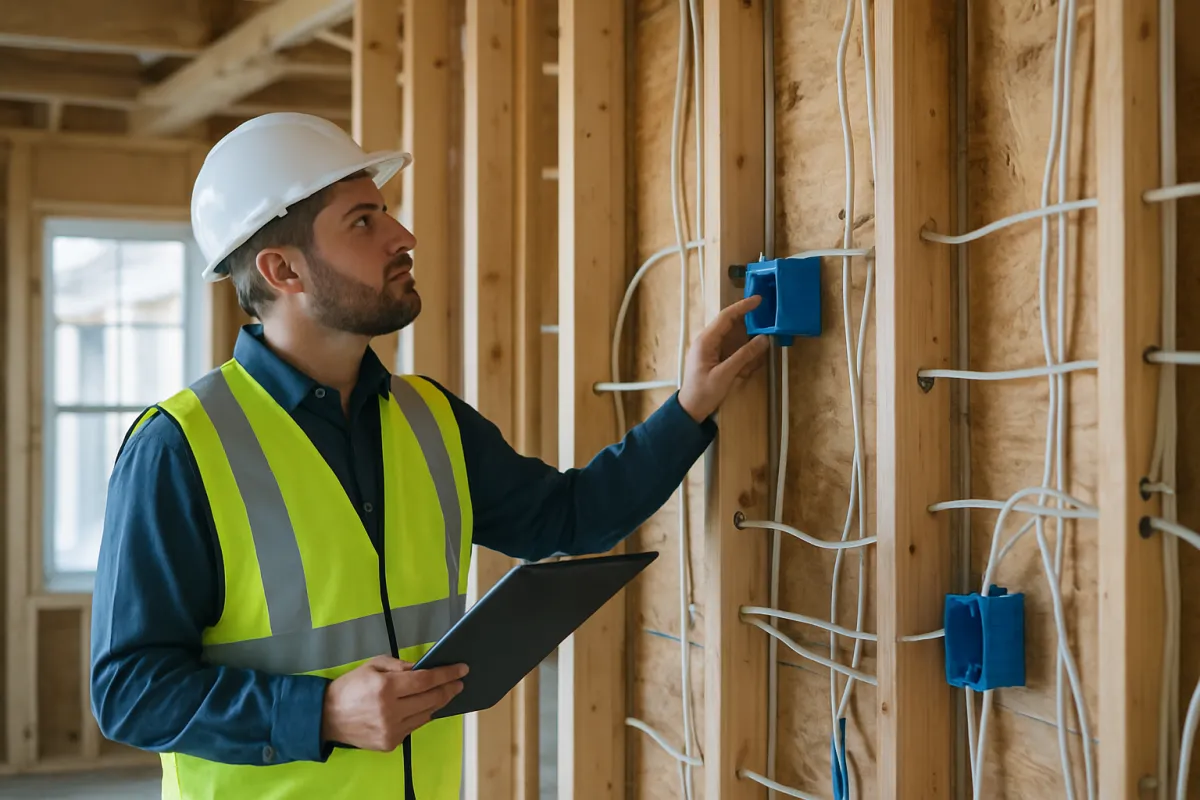
The visual inspection normally runs alongside the cleaning. That means checking the cap and spark arrestor, looking at the crown for cracks, checking the flashing where the chimney meets the roof, examining the liner for gaps or damage where it is visible, testing the damper for operation and seal, and noting clearances and obvious masonry problems. Good companies finish with a short verbal walkthrough and a written summary that separates what is fine, what to watch, and what needs work.
What is normally not included: any repair, cap or damper parts, waterproofing, relining, animal removal beyond simple debris, and appliance disassembly beyond what the cleaning requires. Those are separate lines with separate prices, which is exactly how they should appear on the invoice.
Chimney inspection levels: what the tiers commonly mean
The trade commonly describes inspections in three tiers, and understanding them prevents both overpaying and underbuying. Treat the descriptions below as the widely used framing rather than a legal standard, and ask any company to state in writing what their quoted inspection includes.
The first tier is the routine annual look. It covers readily accessible parts: the firebox, the visible flue, the accessible exterior, the cap, and the basic structure, with no special tools and nothing taken apart. It suits a chimney in continued service with no changes and no known problems, and it is what most sweeps bundle into a normal cleaning visit at an illustrative $100 to $250 as a standalone.
The second tier adds accessible areas that the first tier skips, most notably a camera scan of the flue interior along its full length, plus attic, crawlspace, and roof access where relevant. It is the tier commonly recommended when a home is being sold, when an appliance or fuel type changes, or after an event like a chimney fire, an earthquake, or a serious storm. Illustratively it runs $250 to $600 as a standalone, and the deliverable is documentation as much as opinion.
The third tier is invasive. It exists for cases where a suspected hazard cannot be evaluated without removing parts of the chimney or the building, such as opening a chase wall to reach a hidden section. It is uncommon, it is quoted case by case, and it can reach four or five figures because the price includes destruction and reconstruction, not just looking. Nobody should be sold this tier casually, and a homeowner who is offered one without a specific documented reason should get a second opinion.
Chimney sweep cost by fireplace and appliance type
The appliance at the bottom of the flue changes both the labor and the price, and this is where a homeowner comparing quotes for “a chimney” often compares two different jobs.
Open masonry fireplace. The baseline case at an illustrative $150 to $400 for a sweep plus visual inspection. Access is straightforward through the firebox, and most of the labor is cleaning and containment.
Prefabricated metal fireplace. Similar pricing to masonry in most markets, sometimes slightly less cleaning time, but the inspection matters more because manufactured units have specific parts, panels, and clearances that fail in specific ways.
Wood stove or fireplace insert. Commonly $200 to $450, because reaching the flue often means pulling the appliance forward or removing baffles and internal plates, cleaning them, and reassembling correctly. That is real added labor and real added risk if done carelessly.
Pellet stove. Commonly $150 to $300. The venting is different and the ash is different, and the service is as much appliance maintenance, cleaning the burn pot, heat exchanger, and exhaust path, as chimney work.
Gas fireplace or log set. Commonly $100 to $250. There is little to no creosote, so the visit is about the venting path, the pilot and valve operation, the glass and gaskets on a direct-vent unit, and the log placement, which matters more than people expect for correct burning.
Furnace or water-heater flue. Commonly $125 to $275 when done as a standalone, less as an add-on to another visit. Older masonry flues serving modern appliances are a classic source of surprise findings.
Creosote: the condition line that moves your price
Creosote is the residue of incomplete combustion, and it arrives in stages that the trade commonly describes as light, moderate, and glazed. Which stage is inside your flue is the biggest single swing factor in what your visit costs, and unlike your appliance or your market it is something you control.
Light and moderate buildup is normal, expected, and included in a standard sweep price. It brushes off as flaky soot or crumbly deposits, the technician bags it, and the visit takes the time it was quoted for.
Glazed creosote is the expensive case. It is hard, shiny, tar-like, and effectively fused to the liner, and brushes will not remove it. Removal commonly requires chemical modifiers applied and left to work, sometimes across more than one visit, followed by rotary removal with specialized heads. That is why the illustrative range jumps to $600 to $1,500 or more, and why a homeowner who has skipped several seasons can get a number that feels absurd for “cleaning”.
The prevention is boring and cheap. Burn seasoned wood with low moisture content, since wet wood smolders and smolder is what deposits creosote. Run hot, bright fires instead of damping a fire down to smolder overnight. Do not close the air supply to choke a fire to sleep. Sweep on a real schedule rather than waiting until performance drops. Households that follow those four habits mostly stay in the ordinary price band their whole ownership.
Where a chimney sweep fee goes
The composition of the bill explains why the price has a floor that surprises people. A sweep visit is a truck, a trained person, and a load of equipment arriving at your house for an hour or two, and none of that scales down when your flue turns out to be clean.
Where an illustrative $250 sweep visit goes
A rough composition of a routine residential cleaning and visual inspection.
Illustrative composition. The shares shift with the job: heavy buildup grows the labor band, long drives grow travel, and a camera inspection grows the equipment band.
Two takeaways follow from that mix. First, negotiating the price down does not shrink margin much, because margin is a thin slice; it shrinks time on site, which is the part you actually wanted. Second, bundling work into one visit is genuinely efficient, since travel and setup are already paid for, which is why a second flue or a dryer vent costs less as an add-on than as its own appointment.
Multiple flues, minimum charges, and travel
Many homes have more than one flue in the same chimney stack: a fireplace flue and a furnace flue is the classic pair. Each flue is a separate cleaning and a separate inspection, so each carries its own price, but the second one is cheaper than the first because the truck, the setup, and the drive are already there. Illustratively, an additional flue at the same visit commonly adds $75 to $150 rather than a full second service price.
Minimum charges work the same way and for the same reason. Most companies carry a service minimum in the illustrative $125 to $175 range, which is the honest floor for sending a person and a vehicle to your address. If your job is genuinely small, an inspection on a gas insert for example, the minimum may be what sets your price rather than the task itself. That is not a padded bid; it is arithmetic.
Travel charges appear in rural service areas and at the edges of a company’s territory. Some companies fold a zone charge into the quoted price, others add a line for mileage beyond a set radius. Neither is unusual, but it should appear before the visit, not after it. Ask about a service radius when you call, because a company forty minutes away that quotes the same base price as one ten minutes away is either absorbing the drive or planning to add it.
The scheduling lesson is to batch. If you know you want the fireplace flue cleaned, the furnace flue checked, and the dryer vent done, ask for all three in one appointment and ask for the bundled price. Our note on comparing contractor quotes applies here in miniature: make every company price the same bundle, or you are comparing shapes rather than numbers.
Common add-ons priced at the same visit
These are the lines that most often turn a $250 appointment into a larger invoice, and most of them are legitimate.
- Dryer vent cleaning, illustratively $100 to $200. Many chimney companies offer it because the equipment overlaps, and lint accumulation is its own fire risk. As an add-on to a scheduled visit it is usually the cheapest way to buy it.
- Chimney cap installation, illustratively $150 to $500 installed. A cap keeps rain, birds, squirrels, and debris out of the flue. Missing or damaged caps are among the most common findings and among the highest-value cheap fixes.
- Animal or nest removal, illustratively $100 to $400. Priced by difficulty and by whether the animal is still in residence. Some situations require a wildlife specialist rather than a sweep, and timing rules may apply for nesting birds in some jurisdictions.
- Waterproofing the masonry, illustratively $300 to $800. A vapor-permeable sealer applied to brick and mortar to reduce water absorption. Sensible in freeze-thaw climates on sound masonry, useless as a cover for cracks that need repair.
- Smoke guard or damper adjustment, illustratively $75 to $250. Small hardware fixes for a fireplace that smokes into the room.
- Camera scan upgrade, illustratively $150 to $350 on top of a sweep. Worth buying when you have bought the home recently, changed appliances, had a chimney fire, or simply have never seen inside your own flue.
The pattern is that add-ons priced during a scheduled visit are cheaper than the same work as a separate call, because the expensive part, getting a trained person and a truck to your house, has already been paid for.
Chimney repair costs that a sweep visit uncovers
The inspection is where the four-figure numbers actually come from, and it helps to know the common repair ranges in advance so a finding does not feel like an ambush. All of the following are illustrative and vary widely by height, access, masonry type, and market.
Chimney cap replacement, $150 to $500 installed. The cheapest protective part on the whole structure and the one most often missing.
Crown repair or rebuild, $200 to $1,500. The crown is the concrete or mortar slab at the top that sheds water off the chimney. Hairline cracks can be sealed inexpensively; a failed crown needs rebuilding.
Flashing repair or replacement, $200 to $600. The metal that seals the joint between chimney and roof. This is a shared boundary with roofing work, which is why it often gets bundled with a roof job.
Tuckpointing or repointing, $500 to $2,500. Grinding out and replacing failed mortar joints. Priced by area and access, and a tall exterior stack with staging is at the top of the band.
Damper replacement, $200 to $600 for a standard throat damper, $300 to $900 for a top-mount unit. A rusted-open damper is a year-round heating and cooling leak.
Smoke chamber parging, $500 to $1,500. Smoothing and sealing the transition above the firebox, which improves draft and closes gaps.
Flue relining, $2,500 to $7,000 or more. A stainless liner installed through the existing chimney. This is the big one, usually triggered by a cracked or deteriorated liner found on camera, and it is the finding worth a second opinion because of its size.
A useful posture with all of these: cleaning findings should come with photographs. A reputable company will show you the crack, the gap, or the rust rather than describe it. If a large repair is recommended, get an independent inspection from a company that will not do the repair, exactly as our note on vetting a contractor recommends for any large scope.
How often to sweep and inspect a chimney
The commonly cited guidance separates the two activities, and the separation is the useful part. Inspection is annual for any chimney in service. Cleaning is condition-driven, with roughly an eighth of an inch of creosote as the widely used trigger, measured rather than guessed.
In practice, households sort into a few patterns. Regular wood burners who go through a cord or more each winter usually need an annual sweep, because they hit the trigger every season. Occasional burners with a dozen fires a year may go two seasons between cleanings, but should still have the annual look. Gas fireplace owners rarely need cleaning in the creosote sense at all, but need the annual venting, valve, and glass check, and gas users are the group most likely to skip service entirely, which is a mistake for a different reason: venting problems are invisible and involve combustion gases.
Certain events reset the clock regardless of schedule. Buying a home, changing the appliance or the fuel, a chimney fire however small, a severe storm or an impact, an animal getting in, or a long period of disuse all justify an inspection before the next fire. So does any change in behavior: a fireplace that suddenly smokes into the room, a smell that was not there before, or a damper that will not seat is the chimney telling you something.
Fall timing: why September beats December
Chimney work has one of the sharpest seasonal demand curves in home services. Almost nobody thinks about a flue in June, and almost everybody thinks about it during the first cold snap, which means the trade’s calendar goes from open to weeks-deep within a few autumn weeks.
Booking early buys four concrete things. It buys availability, since you can choose a date instead of taking one. It buys attention, because a technician who is not racing three more appointments works differently. It commonly buys a better price, since off-peak weeks are when discounts exist and peak weeks are when they do not. And most importantly it buys repair time: if the inspection turns up a failed crown or a liner problem, you have weeks of decent weather to get quotes and schedule masonry work instead of choosing between a cold house and the first available bidder.
That last point is the whole argument for treating this as an early-fall task rather than a first-frost task. Masonry repairs need temperatures above freezing to cure properly, so a December finding often cannot be fixed until spring, which can mean a winter without using the fireplace at all. The same logic drives the rest of the seasonal list in our fall home maintenance checklist, and it is why chimney service sits near the top of that list rather than at the bottom.
If you are already booking seasonal work, batch it. The same weeks that are right for a chimney visit are right for a gutter cleaning, a furnace tune-up, and an irrigation blow-out, and doing them together is how the whole season stops being a scramble.
Gas fireplaces and the assumption that they need nothing
Gas appliance owners are the most likely to skip service, on the theory that a gas fire has no smoke and therefore no problem. The creosote logic is right and the conclusion is wrong.
A gas fireplace still vents combustion products, and the venting path still matters. Direct-vent units rely on a sealed coaxial pipe where a blocked or damaged termination can affect combustion. Vented gas log sets rely on an open flue with the damper locked open, and a blocked flue there is a carbon monoxide question. Beyond venting, service covers the pilot assembly and thermocouple, the valve and its operation, the burner ports, the glass and its gasket on sealed units, and the placement of the logs, which is not decorative: logs sitting wrong can cause sooting and poor combustion in an appliance designed to produce none.
Prices reflect the lighter work. An illustrative $100 to $250 covers a normal service visit, and it is one of the more reliably worthwhile small maintenance spends in a house, mostly because the failure modes are quiet. Add a working carbon monoxide alarm on every level of the home to the list, since detection is the backstop for everything a visual inspection can miss.
Wood stoves, inserts, and pellet appliances
Freestanding stoves and fireplace inserts are the appliances most often underpriced by phone quotes, because the caller says “fireplace” and the company quotes an open firebox. The difference is disassembly. Reaching the flue on many inserts means pulling the unit partly out of the fireplace opening or removing a surround, and cleaning the appliance itself means taking out baffles, plates, and sometimes a catalytic component, brushing them, and reassembling correctly.
That is why an illustrative $200 to $450 is the honest band for stove and insert service, and why the technician’s familiarity with your specific appliance matters. Ask on the phone whether the quote includes appliance disassembly and reassembly, and mention the make if you know it.
Pellet appliances are their own category. They burn processed fuel with a motorized feed, so service is closer to appliance maintenance than to chimney sweeping: cleaning the burn pot, the heat exchanger surfaces, the ash traps, the venting path, and often checking gaskets and the exhaust blower. Illustratively $150 to $300 covers a normal annual service, and manufacturers commonly specify a maintenance interval by tonnage burned. Skipping it shows up as poor combustion and hard starts long before it shows up as a safety problem, so pellet owners usually feel the neglect in performance first.
Dryer vent cleaning, the other flue
It is not a chimney, but it shares the same physics, and most chimney companies sell the service for that reason. A dryer vent is a duct that carries hot moist air and lint out of the house, lint is flammable, and a partly blocked vent makes the dryer run longer and hotter, which is both an efficiency and a fire question.
Illustratively, professional dryer vent cleaning runs $100 to $200 as a standalone and less as an add-on to a chimney visit. Signs you are overdue include drying times that keep climbing, clothes that come out hot and damp, a laundry room that gets warm and humid during a cycle, and visible lint around the outside termination. Long vent runs, runs with several elbows, and roof terminations accumulate faster and cost slightly more to service.
The reason to mention it in a chimney cost file is scheduling economics. The travel and setup share of the bill, which the chart above puts at roughly a fifth of a visit, is already spent once someone is at your house. Add-ons bought during a scheduled appointment cost less than the same work bought as its own trip, and this is the most common add-on there is.
What certification, insurance, and licensing buy
Chimney work is one of the trades where credentials carry real information, because the inspection half of the job is judgment. Certification programs exist in the trade and reputable companies commonly advertise them; the point is not the acronym on the van but that the technician has been trained in a standard body of knowledge rather than learning by imitation.
Insurance matters for the ordinary reason: someone is climbing your roof and working with a vacuum inside your house, and if either goes wrong you want it to be their carrier’s problem. Ask for a certificate of insurance rather than a verbal assurance, exactly as you would for any roof or exterior contractor, a habit our contractor vetting playbook covers in full.
Licensing varies enormously by jurisdiction. Some places license chimney and masonry work, many do not license sweeping at all, and repair work often falls under general contractor or masonry rules instead. That patchwork is exactly why credentials, insurance, references, and a written scope do more work here than a license lookup alone.
The price implication is honest: a certified, insured company with trained staff, containment gear, and cameras costs more than a seasonal operator with a brush and a truck, and the chart above shows where that money goes. If you are buying only cleaning on a simple flue, the cheap option is often fine. If you are buying an opinion about whether your chimney is safe, you are buying the credentials, and that is the part worth paying for.

Red flags: the chimney scam pattern
Chimney service has a recognizable scam pattern, and it is worth naming because it exploits the one thing homeowners cannot check: what is inside the flue.
The setup is usually an unusually cheap advertised special, well below the illustrative bands above. The visit is short. The report is alarming: a cracked liner, a dangerous condition, a house that should not have a fire lit in it, delivered urgently and with a same-day repair quote in the thousands. Sometimes there is a photograph, but of a chimney that may not be yours.
The defenses are simple and they work. Insist that any claimed defect be shown to you, on your chimney, with the camera on your screen or with photographs that include recognizable context. Refuse same-day decisions on four-figure repairs; nothing about a chimney that has stood for decades requires a signature this afternoon. Get an independent second opinion from a company that does inspections and would not perform the repair. Check the business the ordinary way: real address, real reviews across time, real insurance certificate. And treat the phrase “we can start right now” as a reason for caution rather than convenience.
None of this means alarming findings are fake. Real liners crack and real crowns fail, and a good technician who finds one will be happy to prove it, because proof is how they earn the repair. The scam pattern is distinguished by urgency without evidence. Our note on avoiding contractor scams covers the broader version of this same playbook.
How to read a chimney sweep quote
A quote worth comparing answers six questions on paper, and most disputes trace to one of them being unstated.
Which appliance and how many flues. A price for “the chimney” on a house with a fireplace flue and a furnace flue is ambiguous by construction.
What cleaning is included. Flue only, or flue plus smoke chamber and firebox, and does it include appliance disassembly on a stove or insert.
What inspection depth is included. A visual check on accessible parts, or a camera scan of the full flue with a written report. This is the biggest hidden difference between two quotes.
What the deliverable is. Verbal summary, written report, photographs, or a documented report suitable for a real estate transaction.
What is explicitly excluded. Parts, repairs, waterproofing, animal removal, and caps should be named as exclusions rather than assumed.
Trip minimums and travel. Whether a minimum charge or a zone fee applies to your address.
Ask for that in writing before the visit, and compare quotes line against line rather than total against total. Our walkthrough on reading a contractor estimate applies the same discipline to bigger jobs, and the habit is identical: the cheapest number and the cheapest job are rarely the same thing.
DIY chimney sweeping: what it saves and what it risks
Cleaning a straightforward straight flue is genuinely within reach for a capable homeowner. The kit is a poly or wire brush sized to your flue, a set of connecting rods, a shop vacuum with fine filtration, drop cloths, a respirator, and gloves, which illustratively runs $75 to $200 as a one-time purchase and lasts for years. The technique, working the brush through the flue from either end and cleaning the smoke shelf and firebox afterward, is not difficult to learn.
The savings are real: an annual $150 to $400 line disappears from the budget. The costs are less obvious. The first is access risk, since top-down cleaning means being on a roof, commonly a steep one, with rods and a brush. Falls are the serious hazard in this trade and they are not hypothetical. The second is mess, because containment is the difference between a clean flue and a gray living room, and household vacuums are not filtration vacuums. The third and largest is the inspection you are not performing: liner condition, crown cracks, smoke chamber gaps, and flashing failures are exactly the findings a homeowner is not equipped to see, and they are the findings that matter most.
The sensible middle ground for many households is a split: do your own light seasonal cleaning if the flue is simple and accessible from below, and buy a professional inspection on a regular cycle so someone trained has seen the parts you cannot. The same logic our do-it-yourself versus hiring decision note applies to bigger projects applies cleanly here: do the labor you can do safely, buy the judgment you cannot.
Hard stops for do-it-yourself work: heavy glazed creosote, offset or unusually tall flues, inserts and stoves needing disassembly, any suspicion of a chimney fire, any appliance you did not install and do not understand, and any roof you would not otherwise climb.
A worked example: one wood-burning fireplace, costed
A 1,900 square foot two-story house with one open masonry fireplace and one furnace flue in the same stack. The owners burn most weekends through the winter, roughly a cord of wood a season, and it has been two seasons since the last service. They call in early September.
Sweep plus visual inspection, about $250. The standard midpoint for an open fireplace: containment set at the firebox, flue brushed, smoke shelf and chamber cleaned, firebox cleaned out, and the accessible parts of the system checked.
Condition adjustment, about $90. Two seasons of regular burning left moderate buildup rather than light seasonal soot, which adds roughly a third to the cleaning time. Total cleaning line, about $340.
Second flue at the same visit, about $110. The furnace flue cleaned and checked while the truck is already there, priced as an add-on rather than a second service call.
Findings. The camera-free visual check finds a rusted-through cap and a hairline crack in the crown. The cap gets replaced the same week at about $250 installed. The crown crack is sealed rather than rebuilt at the low end of its band, an estimated $250, scheduled for the following week while temperatures are still mild.
Season one total, about $950. Of that, roughly $450 is recurring service and roughly $500 is one-time repair the inspection surfaced. In an ordinary following year, with the same burning habits and the cap and crown now sound, the recurring number is about $340 to $450 depending on whether both flues need cleaning.
The instructive part is the split. The cleaning was never the expensive item; the findings were, and they were cheap findings caught early. A cap that had gone unreplaced for another three winters would have delivered water into the flue all season, and water in a chimney turns cheap repairs into liner and masonry money. Rebuild the same math on your own appliance and condition in the estimator.
Regional and market differences in sweep pricing
Prices in this trade move with the same forces as any other local service, and knowing which ones apply to you makes the bands more useful.
Climate and burning culture. In cold regions where wood heat is common, there are more sweeps, more competition, and more standardized pricing, but also a shorter and more crowded season. In mild regions where fireplaces are decorative, there are fewer companies, longer drives, and prices that lean on minimums.
Labor market. The same forces that make every trade expensive in high-cost metros apply here, and our general contractor cost file covers the underlying labor-rate logic that drives all of them.
Chimney stock. Regions with older masonry housing produce more repair findings and more relining work, so the average invoice runs higher even when the sweep price is identical.
Density and drive time. Urban companies service more homes per day and can price the base visit tighter; rural companies carry drive time into every job, which is where zone charges come from.
Season within the year. The most controllable factor. The same company in the same market commonly prices and schedules differently in July than in November, so the calendar is a lever you own.
Use the bands in this cost file as the shape of the market rather than the price of your job, then let two or three local written quotes set the actual number.
Common chimney sweep mistakes
The recurring errors, collected for prevention.
- Comparing prices without comparing inspection depth. A sweep with a visual check and a sweep with a full camera scan are different products; the cheaper one is not always the worse buy, but it is a different buy.
- Waiting for the first cold night. Calling in November means the longest lead time, the least scheduling leverage, and no comfortable window to complete any repair the visit uncovers.
- Skipping years of service on a wood burner. Buildup is not linear in cost: light soot is included in the base price, glazed creosote is a four-figure remediation.
- Burning unseasoned or damp wood. The single biggest driver of expensive buildup, and entirely within your control.
- Damping fires down to smolder overnight. Smoldering deposits creosote; hot clean fires do not.
- Assuming a gas appliance needs nothing. No creosote does not mean no venting problem, and venting problems are invisible.
- Accepting a four-figure repair recommendation without proof or a second opinion. Ask to see the defect, then get an independent look before signing.
- Ignoring the cap. The cheapest protective part on the chimney, and the one whose absence causes the most expensive water damage.
- Cleaning without inspecting. The cleaning removes what you can see; the inspection covers everything that actually decides whether the chimney is safe.
Every one of these is cheap to avoid in September and expensive to discover in January, which is the whole rhythm of this trade.
The bottom line
Chimney sweep cost is a two-part price with a small number of honest drivers. A routine cleaning with a basic visual inspection on an open wood-burning fireplace lands at an illustrative $150 to $400, near $250 in the middle; gas appliances price lower at roughly $100 to $250, stoves and inserts higher at roughly $200 to $450, and a camera inspection adds a documented look for an illustrative $250 to $600. Additional flues at the same visit commonly add $75 to $150, service minimums put a floor near $125 to $175, and the only figure that truly explodes is hard glazed creosote at $600 to $1,500 or more, which is the price of skipped years rather than the price of cleaning.
Buy it like a professional: state your appliance and flue count when you call, get the inspection depth in writing, insist that any alarming finding be shown to you before a repair is authorized, batch the dryer vent and the second flue into the same visit, and book in late summer or very early fall when the calendar is open and masonry repairs can still cure. The households that spend the least on chimneys over a decade are not the ones who found the cheapest sweep; they are the ones who burned dry wood, kept a good cap on top, and let a trained person look every year while the problems were still small.
This cost file is educational reading about how chimney service is priced, not a safety assessment, an inspection, or professional advice, and nothing in it can evaluate your particular chimney. Every price, range, and share above is illustrative and varies with your region, appliance, chimney construction, condition, and local labor market. Chimney and venting work involves fire and combustion gas risks that only an on-site evaluation by a qualified professional can judge, and local codes, licensing rules, and manufacturer requirements differ by jurisdiction and appliance. Keep working smoke and carbon monoxide alarms, stop using any appliance you suspect is unsafe, and hire qualified, insured local professionals for inspection and repair work.
Frequently asked questions
How much does a chimney sweep cost?
For an open wood-burning fireplace in normal condition, a professional sweep bundled with a basic visual inspection commonly runs an illustrative $150 to $400, with roughly $250 sitting in the middle of that band in most markets. The spread comes from your appliance, how much buildup is inside, how many flues the technician has to service, and how busy the local calendar is when you call. A gas fireplace service visit commonly prices lower, around $100 to $250, while a wood stove or fireplace insert commonly prices higher, around $200 to $450, because the appliance has to be partly disassembled to reach the flue. Every figure here is illustrative, so gather two or three written local quotes before you book.
How much does a chimney inspection cost by itself?
A basic visual inspection with no cleaning commonly runs an illustrative $100 to $250, and many companies discount or waive it when you book a sweep at the same visit, which is why the bundled price is usually the better buy. The next tier up adds a camera scan of the flue interior and commonly runs $250 to $600, because it takes longer, needs equipment, and produces a documented report. The most invasive tier, which involves opening walls or removing parts of the structure to reach a hidden problem, is rare, quoted case by case, and can reach four or five figures once the repair access is included. Ask which tier a quote covers before comparing prices, because the same word can describe very different work.
How often should a chimney be swept?
The commonly cited rhythm is an inspection every year and a sweep whenever the buildup calls for it, which for many households that burn regularly means annually. The practical trigger sweeps use is roughly an eighth of an inch of creosote on the flue walls, which a technician measures rather than guesses. A household that burns a cord or more of wood each winter usually hits that trigger every season, while an occasional weekend fire may not, and a gas fireplace almost never builds creosote at all but still needs its venting, valves, and logs checked. Burning green or damp wood accelerates buildup dramatically, so how you burn matters as much as how often.
Why do chimney sweep quotes vary so much?
Three things explain most of the spread. First, scope: one company quotes a sweep plus a visual check while another quotes a sweep plus a camera scan and a written report, and those are different products at different honest prices. Second, condition: light seasonal soot brushes out quickly, while hard glazed creosote needs chemical treatment, rotary tools, and repeat visits, which can multiply the price several times over. Third, overhead: a certified, insured company with trained technicians, containment equipment, and real vehicles carries costs that a seasonal operator with a brush does not. Compare the written scope line by line and the strange spread usually resolves into sensible differences.
Is chimney sweeping worth the money?
For any appliance that burns wood, the honest case is safety rather than savings: creosote is flammable, buildup is what fuels a chimney fire, and a blocked or damaged flue can push combustion gases back into the house. Framed as an illustrative $250 a year against the cost and consequence of a flue fire or a carbon monoxide problem, the habit prices like inexpensive insurance on a system most homeowners cannot see inside of. There is a maintenance benefit as well, since a technician catches a cracked crown, a failing cap, or a rusted damper while those are still small repairs. For a gas appliance the fire risk is lower, but the venting check still matters and the visit costs less.
What does creosote removal cost?
Light and moderate buildup is normally included in a standard sweep price, because brushing it out is the job. Hard, shiny, glazed creosote is the expensive case: it resists brushes, commonly requires chemical modifiers applied over one or more visits plus rotary removal, and illustratively runs $600 to $1,500 or more depending on how much of the flue is coated and how many trips it takes. That is the single most common reason a homeowner expecting a $250 bill hears a four-figure number instead. The prevention is unglamorous and cheap: burn seasoned wood, keep fires hot rather than smoldering, and do not skip years.
When is the cheapest time to book a chimney sweep?
Late spring through late summer, for the plain reason that demand collapses once nobody is thinking about fires. Chimney companies commonly run their busiest stretch from September into December, when calendars fill, lead times stretch to weeks, and discounting disappears. Booking in the off season commonly buys faster scheduling, more attention on site, and sometimes a modest seasonal discount, and it leaves time to complete any repair the inspection uncovers before the first cold night. The worst time to call is the week you want a fire, which is exactly when most people call.
Can I sweep my own chimney?
A determined homeowner with the right brush, rod set, shop vacuum, and drop cloths can clean a straightforward straight flue, and the tool kit commonly runs an illustrative $75 to $200 as a one-time purchase. The honest limits are inspection and access: the cleaning is the easy half, while spotting a cracked liner, a failed crown, a gap in the smoke chamber, or a flashing leak is the half that requires training and a camera. Roof work adds real fall risk, and offset flues, inserts, and heavy glazed buildup are past the do-it-yourself line. Many households compromise by doing their own light seasonal cleaning and paying for a professional inspection on a regular cycle.