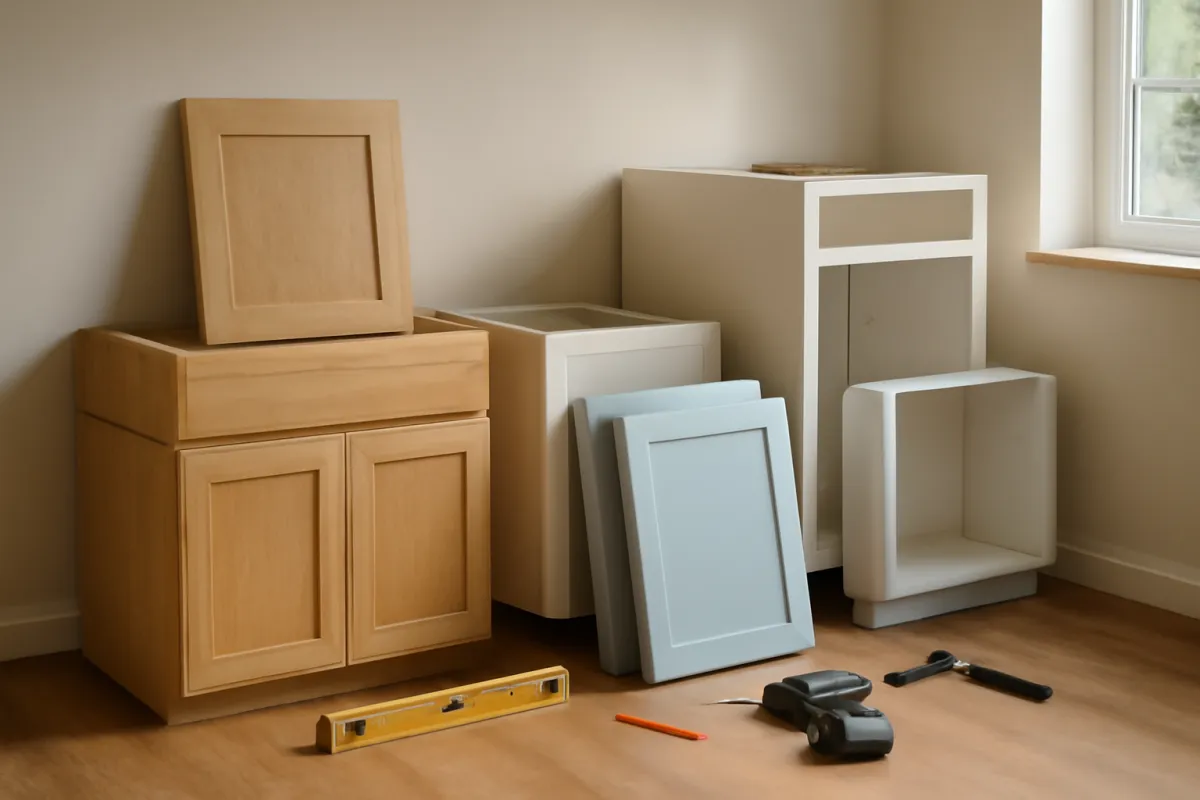
What's on this page
- Refacing, painting, or replacing: the quick comparison
- What cabinet painting costs
- What cabinet refacing costs
- What cabinet replacement costs
- Illustrative cost by approach
- Where refacing money goes
- The box test: the one diagnostic that decides this
- When painting is the right call
- When refacing is the right call
- When replacement is the right call
- Timeline: days, weeks, or months
- How long each option lasts
- Resale value and buyer perception
- Materials and finish options by approach
- Mixing approaches in one kitchen
- Living through the project
- Hidden costs each approach can trigger
- Getting comparable quotes across three different trades
- A worked example: one kitchen, three bids
- Questions to ask before you choose
- Common mistakes when choosing between the three
- The bottom line
Short answer: Painting a typical kitchen commonly runs an illustrative $2,200 to $7,000 professionally, refacing commonly runs $4,000 to $10,000, and full replacement commonly starts around five figures and climbs from there. The right choice runs through one diagnostic before it runs through budget: open the doors and check whether the boxes themselves are sound. Sound boxes with a tired finish call for paint, sound boxes with worn or dated doors call for refacing, and failing boxes call for replacement no matter how good a deal the other two look.
Refacing, painting, or replacing is the decision almost every kitchen eventually forces, and the three options sit a full order of magnitude apart in price while all three can leave you with a kitchen that looks genuinely new. That spread is exactly why picking the wrong rung is expensive twice: once in the money spent, and again in the money that should have been spent differently. A homeowner who reaches for a full replacement when the boxes were fine overpays for a problem that did not exist, and a homeowner who paints over failing boxes pays again a year later when the real problem resurfaces.
This decision guide puts the three approaches side by side honestly: what each one costs, what each one actually changes, how long each takes, and the single diagnostic that should decide between them before price even enters the conversation. It treats our cabinet repainting cost file as the deep dive on the painting rung, and builds out refacing and replacement with the same rigor, so you can compare all three on the same terms. Use the job cost estimator alongside the companion on this page to sketch your own kitchen’s numbers as you read.
Key takeaways
- Painting commonly runs an illustrative $2,200 to $7,000 professionally, refacing $4,000 to $10,000, and replacement commonly starts around five figures for a typical kitchen, roughly an order of magnitude from top to bottom.
- One diagnostic decides the rung before budget does: open the doors and check the boxes. Sound boxes with a tired finish mean paint, sound boxes with worn doors mean refacing, failing boxes mean replacement.
- Refacing keeps the layout and the boxes while changing everything the eye reads as the kitchen, new doors, new drawer fronts, new veneer, which is why it sits between painting and full replacement on both price and scope.
- Timelines scale with the money: painting commonly runs a few days, refacing commonly runs under a week, and replacement commonly runs several weeks once cabinets are on site.
- Every figure here is illustrative and varies by region, door style, box condition, and material. Get itemized local quotes from a painter and a cabinet installer before comparing anything.
Refacing, painting, or replacing: the quick comparison
Start with the three approaches lined up against each other, since seeing them together is what makes the decision legible. Painting changes only the finish: same boxes, same doors, same layout, a new color, commonly an illustrative $2,200 to $7,000 for a typical kitchen professionally, or $200 to $700 in materials if you do it yourself. Refacing keeps the boxes but replaces what you touch and see: new doors, new drawer fronts, and veneer applied over the visible box surfaces, commonly an illustrative $4,000 to $10,000. Replacement removes everything and starts over: new boxes, new doors, often a new layout, commonly starting around five figures for a typical kitchen and climbing well past that with custom cabinetry.
| Approach | What changes | Illustrative cost, typical kitchen | Illustrative timeline |
|---|---|---|---|
| Painting | Finish only | $2,200 to $7,000 | 2 to 5 working days |
| Refacing | Doors, fronts, visible surfaces | $4,000 to $10,000 | 3 to 7 working days |
| Replacement | Everything, often the layout too | Five figures and up | 2 to 6 weeks |
The table is a starting map, not a verdict. Three forces move any kitchen off these midpoints: the piece count, the material and style you choose, and above everything else, the actual condition of the boxes, which is the subject of its own section below because it matters more than any other variable in this decision.
What cabinet painting costs
Painting is the budget anchor of this comparison, and our dedicated cost file on repainting kitchen cabinets covers it in full detail, so this section summarizes rather than repeats. A professional repaint of a typical kitchen, roughly 25 to 30 doors and drawer fronts, commonly runs an illustrative $2,200 to $7,000, priced per piece at roughly $75 to $175 per door and $30 to $75 per drawer front. Doing it yourself commonly costs an illustrative $200 to $700 in materials, traded against 40 to 60 hours of your own labor across prep, priming, and finish coats.
What paint cannot do is change the doors themselves. A dated door profile, a style you have grown tired of, or a door material that will not take a good finish stays exactly as dated, tired, or unpaintable after the repaint, because paint changes color, not shape or material. That limitation is the entire reason refacing exists as its own rung rather than just being a fancier paint job.
What cabinet refacing costs
Refacing is the middle rung, and it is worth understanding as its own project rather than as expensive painting. The job removes and replaces every door and drawer front with new units in your chosen style and material, then applies matching veneer to the visible box faces, end panels, and face frames, so every surface you see reads as brand new while the boxes underneath, and the plumbing, electrical, and layout around them, stay exactly where they are. New hinges and hardware are part of the standard scope.
For a typical medium kitchen, refacing commonly runs an illustrative $4,000 to $10,000, with illustrative per-door figures in the $150 to $400 range depending on the door style and material you choose, simple shaker profiles toward the bottom and raised-panel or premium wood species toward the top. Drawer fronts commonly add an illustrative $75 to $200 each. A flat charge for veneer application, box prep, and hardware commonly adds a mid four-figure amount regardless of piece count, which is why small kitchens sit relatively higher in their band than small painting jobs do: refacing carries more fixed cost per project than painting does.

What cabinet replacement costs
Replacement is the remodel rung, covered in depth in our kitchen remodel cost file, where cabinets are consistently the largest line item in the budget. New stock cabinets commonly run an illustrative $100 to $300 per linear foot before installation, semi-custom climbs from there, and full custom cabinetry can run several times the stock price. For a typical kitchen, that commonly lands a full cabinet replacement starting around five figures and climbing well past it with upgraded materials, a different layout, or custom storage features.
The reason replacement costs what it does is that it is not a finish or a surface job, it is a construction job. Old cabinets come out entirely, which often exposes wall and flooring repairs behind them, plumbing and electrical sometimes need to move if the layout changes, and new boxes have to be leveled, secured, and scribed to the room before any door ever gets hung. Replacement is the only rung of the three that can change your kitchen’s actual layout, which is the capability you are paying the premium for.
Illustrative cost by approach
Putting all three approaches, plus DIY painting, on one chart shows the real shape of this decision: two relatively close options at the bottom and a much larger step up to full replacement.
Illustrative midpoint cost by approach, typical kitchen
Midpoint estimates for a medium kitchen of roughly 25 to 30 doors and drawer fronts. Painting and refacing sit in the same order of magnitude; replacement is the real step up.
Illustrative midpoints, not quotes. The DIY bar excludes the 40 to 60 hours of your own labor, which is the real price of that option.
Read the chart as two decisions stacked on top of each other. The first decision, paint versus reface, is mostly about whether your doors themselves need to change. The second decision, reface versus replace, is mostly about whether your boxes do. Conflating the two is the single most common way homeowners overspend on this project.
Where refacing money goes
Refacing’s price breaks down differently than painting’s, since materials carry far more of the bill here than they do in a paint job.
Where the money goes on a typical cabinet refacing project
Illustrative share of a typical refacing job, summing to 100. Unlike painting, new materials are most of the bill here.
Shares are illustrative and vary by job. A premium door material or a raised-panel profile grows the doors-and-fronts share further.
Compare this to painting’s cost breakdown, where prep and labor dominate and materials are a small slice. The two charts together explain the price gap between the approaches: painting is mostly buying hours, refacing is mostly buying new parts plus the labor to fit them.
The box test: the one diagnostic that decides this
If this decision guide leaves you with one habit, make it this one. Open every cabinet door and drawer in the kitchen and look at the box itself, not the finish, not the door style, the actual plywood or particleboard structure underneath. Check for water staining or swelling, especially around the sink base and dishwasher. Press on any soft-looking panel. Check that door and drawer openings are still square and that face frames have not racked or separated from the box sides. Look at drawer boxes for sagging bottoms or loose joints.
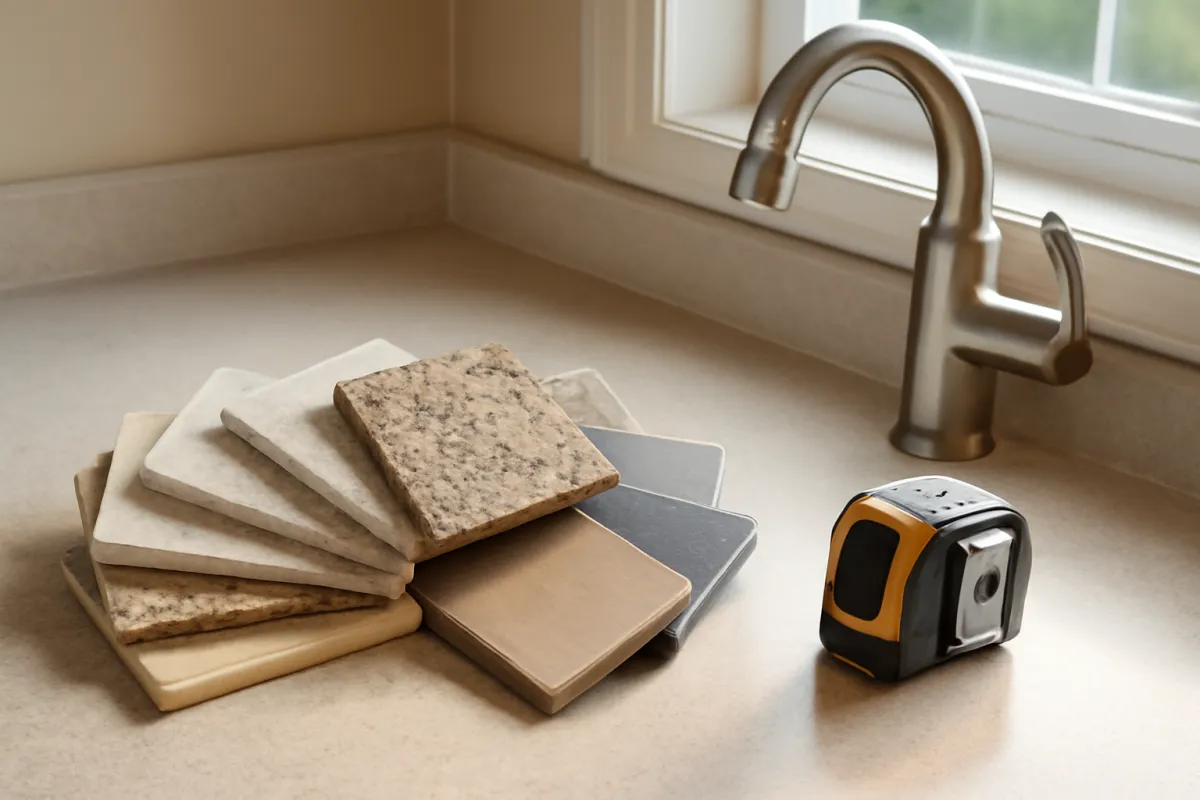
Sound boxes, meaning solid material, square corners, and secure attachment to the wall and to each other, are eligible for either paint or refacing, and the choice between those two becomes a question of whether the doors themselves are worth keeping. Failing boxes are not eligible for either: no amount of new veneer or a fresh coat of paint fixes particleboard that has absorbed water, and spending refacing or painting money on a failing box is the classic false economy this decision runs on. If you are not confident reading your own boxes, a cabinet installer can assess them in minutes during a quote visit, before you commit a dollar to any of the three approaches.
When painting is the right call
Paint is the right call when the boxes are sound, the doors are sound, and the only thing wrong with the kitchen is the color or the finish condition. A kitchen with solid wood or well-built MDF doors in a style you still like, just worn, yellowed, or simply the wrong color for your taste, is exactly the case paint was built for. It is also the right call when budget is the binding constraint and the kitchen is otherwise structurally and stylistically fine, since it delivers the largest visual change per dollar of the three approaches.
Paint is the wrong call when the doors themselves are the problem, a dated profile, a material that will not hold finish well, or visible damage beyond what filling and sanding can fix, because you will have spent real money and still dislike the doors afterward. It is also the wrong call on failing boxes, covered in the box test above, no matter how tempting the low price looks.
When refacing is the right call
Refacing earns its place on the ladder specifically when the boxes are sound but the doors, drawer fronts, or overall style are not, a kitchen where the cabinet carcasses are solid and well-positioned but the door profile reads as dated, the material has not aged well, or you want a genuinely different look, a different wood species, a different panel style, a shift from dark stain to white, that paint alone cannot deliver as convincingly. It is also the right call when you like your current layout and do not want the disruption of a full teardown, since the boxes and their plumbing and electrical connections never move.
Refacing is the wrong call when the boxes are failing, since new doors on a swollen or racked box just puts a new face on an old problem, and it is arguably the wrong call when a style you dislike extends to wanting a different layout entirely, since refacing cannot relocate a box or change a kitchen’s footprint. In that case the extra money for replacement is buying a capability refacing simply does not have.
When replacement is the right call
Replacement is the right call whenever the boxes themselves are the problem, water damage, swelling, racking, or simple old age and poor original construction, because no surface treatment fixes a structural issue. It is also the right call when you want to change the layout, add or remove cabinetry, change counter heights or depths, or reconfigure the kitchen’s footprint, since boxes are the one thing refacing and painting both leave untouched. And it is the right call when you are doing a fuller kitchen remodel anyway, where new counters, backsplash, flooring, and appliances are already part of the plan, since new cabinets coordinate with those other changes more cleanly than refaced ones sometimes do.
Replacement is the wrong call, financially, whenever the boxes are sound, since you would be paying construction-grade money to solve a cosmetic problem that painting or refacing solves for a fraction of the cost. The box test above is the entire argument against reaching for replacement by default.
Timeline: days, weeks, or months
Time is the fourth variable in this decision, and it tracks the money closely. Professional painting commonly takes an illustrative 2 to 5 working days for a typical kitchen, with the kitchen semi-usable throughout since the boxes stay mounted and only doors come off in batches. Refacing commonly takes an illustrative 3 to 7 working days, slightly longer than painting because new doors and veneer have to be measured, ordered or fabricated, and then installed, sometimes with a lead time between the initial measure visit and the installation date. Full replacement commonly takes an illustrative 2 to 6 weeks once cabinets are on site, and often longer when custom cabinetry is ordered, since lead times for custom boxes alone can run 6 to 12 weeks before installation even starts.
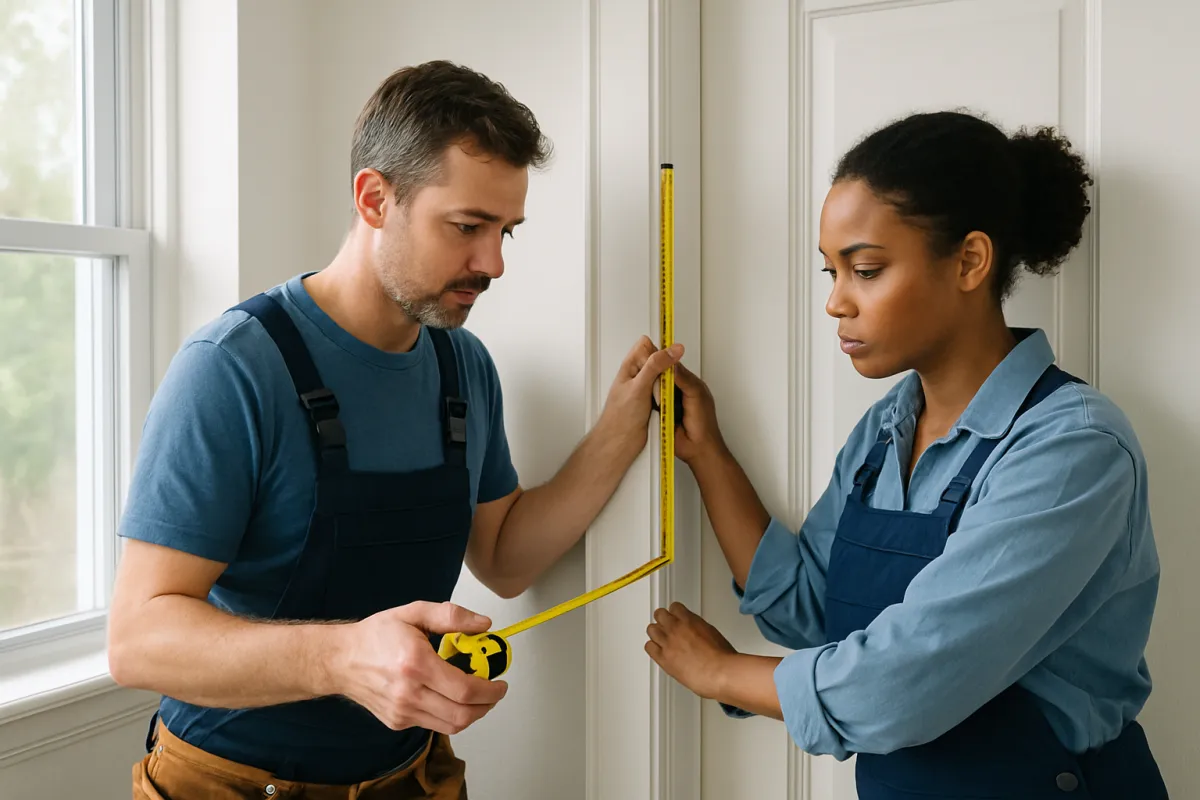
If your kitchen needs to stay functional on a tight calendar, that timeline gap is sometimes the deciding factor on its own, independent of price. A family that cannot be without a working kitchen for a month has a real reason to lean toward refacing or painting even when replacement would otherwise be the ideal fix for a borderline box.
How long each option lasts
Durability scales differently than price does. A properly prepped and painted finish commonly holds up for many years of normal use, with the caveat that it is still the original boxes and doors underneath, aging as they would regardless of the fresh color. Refaced cabinets commonly last as long as new cabinets would on their visible surfaces, since the doors, fronts, and veneer are genuinely new materials, while the boxes underneath carry whatever remaining life they had before the project, which is exactly why the box test matters: refacing bets years of new finish life on boxes that were already judged sound. Full replacement resets the clock on everything, boxes included, which is the structural case for its higher price on a kitchen where the boxes were genuinely failing.
The practical takeaway: if your boxes are young and sound, refacing is a confident bet, since you are refreshing a structure with plenty of life left. If your boxes are already decades old but technically still sound, refacing is still valid, but it is worth being honest that you are extending the life of an aging structure rather than resetting it, which is fine as long as the decision is made knowingly.
Resale value and buyer perception
All three approaches are commonly cited as reasonably efficient ways to modernize a kitchen’s appearance for a sale, since buyers respond to how a kitchen looks and feels far more than to the age of the boxes behind the doors. Treat any specific return-on-investment percentage for any of the three approaches with real caution, since outcomes vary by market, by execution quality, and by what comparable homes in your area already have. A chipping paint job, a refacing job with a visible material mismatch, or cabinets installed with a cut-rate finish can all subtract appeal rather than add it, so quality of execution matters more to resale than which of the three rungs you chose.
The honest framing that holds across all three: a kitchen that looks current and well cared for helps a sale, and the rung that gets you there without overspending on a problem you do not have is the right one for resale purposes too. Our home improvement ROI data covers how kitchen projects are commonly weighed against sale price in more detail.
Materials and finish options by approach
Each approach offers a different menu of material choices, and it is worth knowing the range before you start comparing bids. Painting’s menu is mostly about the finish product and sheen, cabinet-grade enamels in a near-unlimited range of colors, with the underlying door material unchanged. Refacing’s menu is wider: real wood veneer in multiple species, laminate veneer in a broad color and texture range, and entirely new doors in whatever material and profile you choose, since the doors are being replaced outright even though the boxes are not. Replacement’s menu is the widest of the three, since box material, box construction method, door material, and finish are all being chosen from scratch, which is also why replacement’s price range stretches furthest from stock to full custom.
A practical note on refacing specifically: the veneer applied to the box surfaces should closely match the new door material and finish, since a visible seam between old box material and new door material is the most common refacing complaint, and it is entirely avoidable with a careful installer who samples the match before committing to the job.
Door style alone carries more of the visual change than most homeowners expect going in. Swapping a dated raised-panel profile for a clean shaker or slab front can shift a kitchen’s entire character even before a color decision is made, which is why it is worth browsing door styles before fixating on a paint color, especially if your underlying motivation for this whole project is that the kitchen feels dated rather than simply worn.
Mixing approaches in one kitchen
None of these three approaches has to apply to the whole kitchen uniformly, and mixing them is a legitimate way to control cost on a kitchen with mixed conditions. A common pattern: reface the runs where doors are genuinely worn or dated, and paint the runs where the existing doors are sound and only the color needs to change, or reface the main kitchen while leaving a pantry or laundry cabinet run untouched if its condition and style are still acceptable. The island, often the kitchen’s style focal point, sometimes gets the premium treatment, a different door material or color, while perimeter cabinets get the more economical approach.
The practical requirement for mixing is a deliberate boundary and a close finish match where the approaches meet, since new veneer and existing material can take color slightly differently even in the same nominal shade. Plan the boundary at a natural break, an end panel, a corner, or a change in cabinet run, rather than mid-run, and ask whichever contractor is doing the matching work to confirm the finish match before full installation rather than after.
Living through the project
Disruption scales with scope, the same way price and timeline do. Painting keeps the kitchen mostly usable throughout, since doors come off and go back in batches and the boxes, counters, and appliances never move; expect a kitchen with some doors missing and a faint paint smell for a few days. Refacing is similar in daily disruption, since the boxes stay put, though the kitchen may be fully inaccessible for one or two days during the door swap itself. Replacement is the real disruption: counters typically come off with the old boxes, which commonly means no functioning kitchen at all for some stretch of the project, and many households set up a temporary cooking space elsewhere in the home for the duration.
If an uninterrupted kitchen matters more to your household than it does to most, that reality alone is a legitimate reason to lean toward painting or refacing over replacement, even on a kitchen where replacement would otherwise be a defensible choice.
Hidden costs each approach can trigger
Each rung has its own list of costs that a simple headline number can miss. Painting’s hidden costs are mostly about surface honesty: thermofoil or laminate doors that turn out to be poor paint candidates, more repair filling than expected once doors are stripped bare, or a color change dramatic enough to need an extra coat across every surface. Refacing’s hidden costs commonly include box repairs discovered once old doors come off, a style change that also calls for new hardware, hinges, or even crown molding to look finished, and lead time surprises if doors are custom-ordered rather than stocked. Replacement’s hidden costs are the largest category: wall or flooring repairs behind removed cabinets, plumbing or electrical work triggered by a layout change, countertop replacement forced by new box dimensions, and permit requirements in some jurisdictions for significant kitchen work.
Our home renovation budgeting guide covers contingency planning in more depth, and the short version applies directly here: hold back an illustrative 10 to 20 percent of whichever approach’s budget for the surprises its own category tends to produce, higher for replacement, lower for painting.
Financing is worth planning alongside the number itself, not after a bid surprises you. Painting and refacing commonly sit comfortably within cash-flow range for many households, while full replacement, especially bundled into a larger kitchen remodel, is where our renovation loan options file becomes relevant, since financing a five-figure project changes the monthly math in a way a few-thousand-dollar repaint rarely does. Knowing which approach you can pay for outright versus which would require financing is itself a useful input into which rung actually makes sense for your household this year.
Getting comparable quotes across three different trades
One practical wrinkle in this decision is that the three approaches are not always quoted by the same kind of contractor. Painters quote painting, cabinet refacing companies or some general contractors quote refacing, and cabinet installers, kitchen designers, or general contractors quote replacement. Getting genuinely comparable numbers means reaching out to the right specialist for each approach rather than asking one contractor to estimate all three from a single visit, since estimating outside your core trade tends to be less precise.
Our manual on comparing contractor quotes applies here with one addition: because you are comparing different scopes of work rather than different bidders on the same scope, normalize by what you are actually getting, same piece count, same material tier, before comparing dollar figures across the three approaches. A refacing quote that seems shockingly close to a painting quote is worth a second look at what materials and door style it actually includes, since that closeness is unusual rather than typical.
A worked example: one kitchen, three bids
Walk one illustrative kitchen through all three approaches. The kitchen has 18 doors and 12 drawer fronts, 30 pieces total, with sound boxes throughout and no water damage or racking anywhere the homeowner checks. The doors themselves are a dated oak raised-panel style the homeowner wants gone, not just recolored, which rules out painting from the start even though the boxes would support it.
A painting bid, included for comparison even though it is not the chosen approach, comes in at an illustrative $3,850 for a sprayed finish, light grease, no dramatic color change assumed. A refacing bid prices 18 new shaker-style doors and 12 drawer fronts with matching veneer at roughly $250 per door and $100 per drawer front, plus a $1,300 flat charge for veneer application, box prep, and new hardware: $4,500 for doors, $1,200 for drawer fronts, $1,300 flat, totaling $7,000. A full replacement quote for new stock cabinets in the same footprint, including installation, comes in around $12,000, reflecting the roughly 25 linear feet this kitchen represents at an illustrative $100 to $300 per linear foot before extras.
The homeowner picks refacing. The boxes passed the test, the doors were the actual complaint, and the $3,150 gap between painting and refacing bought a style change that no paint color could deliver, while the $5,000 gap between refacing and replacement would have bought box capacity nobody needed. Rebuild this same math on your own piece count and box condition with the estimator and the companion on this page.
Questions to ask before you choose
A short list of questions, asked before any bid is accepted, heads off most regret on this project.
- Are the boxes actually sound? Ask whoever quotes any of the three approaches to specifically assess the boxes, not just the doors or the overall look, before you commit to a rung.
- What exactly is included? Confirm whether hardware, hinges, end panels, and interior shelving are part of the quoted scope for refacing or replacement, since these commonly ride along as separate line items.
- What is the lead time? Custom doors for refacing and custom or semi-custom cabinets for replacement can carry weeks of lead time before installation even begins, which affects your project calendar more than the installation days themselves.
- How disruptive is it day to day? Ask specifically whether the kitchen stays usable, since the answer differs meaningfully between the three approaches and matters more to some households than the price does.
- What is the warranty? Painting, refacing, and new cabinetry should each carry some workmanship warranty, and knowing what it covers before the project starts is worth more than finding out after a problem appears.
Common mistakes when choosing between the three
The regrets on this decision cluster around a short, repeatable list.
- Skipping the box test. Choosing based on how tired the kitchen looks rather than what is structurally true underneath leads straight to either overspending on replacement or underspending on a box that will fail anyway.
- Comparing bids across approaches on price alone. A refacing quote and a painting quote are different products, not competing prices for the same job, and treating them as directly comparable misses what each one actually buys.
- Choosing replacement to fix a style you dislike. If the layout is fine and only the doors bother you, refacing delivers the same visual reset for meaningfully less money and disruption.
- Choosing refacing on boxes that are actually failing. New doors on a swollen or racked box is money spent on a problem that will resurface, often within a year or two.
- Ignoring the timeline when the kitchen has to stay usable. A household that cannot tolerate weeks without a kitchen should weigh that constraint alongside price, not discover it mid-project.
- Not planning the hardware and trim together. New doors with old, mismatched hardware, or a reface that stops short of matching end panels, undercuts the finished look that justified the spend.
The bottom line
Cabinet refacing, painting, and replacing sit on one ladder, and the rung that fits your kitchen is decided by box condition first and budget second. Painting, an illustrative $2,200 to $7,000, is the right call on sound boxes with sound, simply tired doors. Refacing, an illustrative $4,000 to $10,000, is the right call on sound boxes with doors or a style you genuinely want to change. Replacement, commonly starting around five figures, is the right call when the boxes themselves are failing or when you want a different layout, and it is the only one of the three that can deliver either.
Open the doors, check the boxes honestly, count your pieces, and get quotes from the right specialist for the rung you are actually considering. Every figure in this decision guide is illustrative and varies by region, material, door style, and condition, so let itemized local quotes, held against the box test and the framework here, be the numbers you actually act on.
ProsNook offers this decision guide as general education on how cabinet refacing, painting, and replacement are commonly priced and chosen between, not as professional advice, a quote, or a promise of results in your kitchen. Every dollar figure, per-piece rate, percentage, and timeline is illustrative and will vary with your cabinets’ material and condition, your chosen door style, your region’s labor and material rates, and the specifics a contractor finds on site, so rely on written itemized local bids rather than any range printed here. Where structural box damage, plumbing, or electrical work surfaces during any of these projects, bring in the appropriate licensed trades rather than proceeding past them, and treat any assessment of your cabinets’ structural condition printed here as a starting checklist, not a substitute for an in-person professional look.
Frequently asked questions
What is cheaper, refacing or painting kitchen cabinets?
Painting is reliably the cheaper of the two. A professional repaint of a typical kitchen commonly runs an illustrative $2,200 to $7,000, while refacing, new doors and drawer fronts with veneer over the existing boxes, commonly runs $4,000 to $10,000, because you are buying new materials and installation labor rather than just a new finish. The gap narrows on a small kitchen and widens on a large one, since refacing scales with piece count the same way painting does, just from a higher starting price per piece. Paint wins on cost whenever the boxes and doors are both sound, which is the condition it was built to fix.
How much does cabinet refacing cost?
For a typical medium kitchen with roughly 25 to 30 doors and drawer fronts, cabinet refacing commonly runs an illustrative $4,000 to $10,000, with new doors, drawer fronts, and matching veneer applied to the visible box surfaces, plus new hardware and hinges. Illustrative per-door figures commonly land in the $150 to $400 range depending on door style, material, and whether the boxes need any veneer repair first, with simpler shaker-style doors nearer the bottom and raised-panel or custom profiles nearer the top. Every figure here is illustrative, so count your own doors and drawer fronts and hold the total against written local quotes before deciding.
Is refacing worth it compared to replacing cabinets entirely?
Refacing is worth it specifically when your cabinet boxes are structurally sound and only the doors, drawer fronts, and visible surfaces look dated or worn, because it keeps the layout and the box cost while updating everything the eye reads as the kitchen. Full replacement earns its higher illustrative cost, commonly starting around five figures for a typical kitchen, when the boxes themselves are failing, when you want a different layout, or when you want different box depths or configurations that refacing cannot change. Refacing cannot fix a layout you dislike or boxes that are falling apart, so the decision runs through box condition first and budget second.
Can you reface cabinets that have already been painted?
Yes, a sound painted box refaces the same way an unpainted one does, since refacing covers the visible surfaces with new veneer and swaps the doors and drawer fronts regardless of what finish is underneath. The painted finish itself does not need to be removed first in most cases, since it is being covered rather than painted over. What matters is the same box test that applies to any kitchen: solid, square, properly attached boxes reface well, while swollen, delaminating, or racked boxes need replacement money no matter what finish is currently on them.
How do I know if my cabinets need replacing instead of refacing?
Open every door and drawer and look for water damage, particleboard swelling, soft or crumbling spots around the sink base, panels separating from their frames, and drawers or doors that no longer sit square. Any of those is a structural problem that a new door or a coat of veneer cannot solve, and it is the signal to budget for replacement rather than refacing. Sound boxes that simply look dated, with square corners, solid attachment, and doors that still close evenly, are exactly the candidates refacing was built for. When in doubt, a cabinet installer can assess the boxes in minutes during a quote visit, before you commit to either rung.
How long does cabinet refacing take compared to replacement?
Refacing a typical kitchen commonly takes an illustrative 3 to 7 working days, since the boxes stay in place and only the visible surfaces and doors are being swapped. Full replacement commonly takes an illustrative 2 to 6 weeks for a typical kitchen once cabinets are on site, since it involves demolition, possible plumbing and electrical adjustments, new box installation, and often countertop coordination. Painting sits below both at an illustrative 2 to 5 working days professionally, or several of your own weekends if you do it yourself. The timeline gap is a real factor if your kitchen needs to stay usable.
Does refacing cabinets add home value the way full replacement does?
Refacing is commonly cited as a reasonably efficient cosmetic update because it changes the kitchen's appearance for well under replacement money, and buyers generally respond to a kitchen that looks current rather than to knowing whether the boxes are original. Treat any specific return-on-investment percentage for either approach with caution, since real outcomes vary by market, execution quality, and what buyers in your area expect. The honest framing: on sound boxes, both refacing and a quality repaint make a dated kitchen read as cared-for, while full replacement is the move when the layout or the boxes themselves are the problem, not just the look.
Can I mix refacing and painting in the same kitchen?
Yes, and it is a common way to control cost on a kitchen with mixed conditions, refacing the runs where doors are worn or the style is dated while painting runs where the existing doors are sound and you just want a new color. The practical requirement is a close finish match where the two approaches meet, since new veneer and existing wood can take stain or paint slightly differently, so plan the boundary at a natural break, like an end panel or a change in cabinet run, rather than mid-run. A cabinet installer or painter who has coordinated this split before can tell you quickly whether your kitchen's layout makes a clean boundary easy or awkward.