What's on this page
- What it costs to replace a heating system
- Furnace replacement cost by type
- Replacement, repair, or maintenance: which one you actually need
- Gas furnace replacement cost
- Electric furnace replacement cost
- Oil furnace replacement cost
- High-efficiency and condensing furnace cost
- Furnace size: how heating capacity is priced
- What drives furnace replacement cost
- The parts of the job you cannot see
- Ductwork and the add-ons that grow the bill
- Where the money goes on a furnace replacement
- Illustrative furnace replacement cost by type
- When to replace a furnace instead of repairing it
- Replacing the furnace alone versus the whole HVAC system
- A heat pump instead of a furnace
- Permits, inspection, and code
- Rebates, tax credits, and paying for it
- How to get honest furnace replacement quotes
- A worked example: replacing a gas furnace
- How to save on furnace replacement
- Common mistakes when replacing a heating system
- The bottom line
Short answer: Replacing a heating system is not one price. An electric furnace commonly runs an illustrative $2,000 to $5,500 installed, a standard gas furnace $3,500 to $7,500, and oil or high-efficiency condensing models $4,500 to $10,000. Labor, venting, connections, permits and disposal commonly make up half the bill, capacity is set by a load calculation rather than the old unit's sticker, and a failed ignitor is a repair, not a new furnace.
Furnace replacement cost is the number nobody prices until they have to, usually on the first cold week of the season when the heat will not come on and a technician has just said the words nobody wants to hear. The frustrating part is that “how much does it cost to replace a heating system” has no single answer: an electric furnace swap, a standard gas furnace, an oil unit, and a premium condensing model with new venting are genuinely different jobs with genuinely different bills, and the same replacement can move by thousands of dollars with your home’s size, your region’s labor rates, and what the install uncovers.
This cost file prices furnace replacement the way an installer builds the quote: an illustrative installed range for each furnace type, the sizing that sets the equipment, the labor and venting work that homeowners never see, and the add-ons that push a simple swap toward the top of the range. Just as important, it separates replacement from its two cheaper neighbors, because many no-heat calls end in a repair, not a new furnace: our HVAC repair cost file prices the fixes, our HVAC maintenance checklist covers the upkeep that delays this whole purchase, and the job cost estimator turns the ranges here into a ballpark for your own home.
Key takeaways
- Replacing a heating system is not one price: an electric furnace commonly runs an illustrative $2,000 to $5,500 installed, a standard gas furnace $3,500 to $7,500, and oil or high-efficiency condensing models $4,500 to $10,000.
- Replacement, repair, and maintenance are three different spends: a failed ignitor is a low-hundreds repair, not a new furnace, so a clear diagnosis comes before any replacement quote.
- Sizing drives the equipment cost: capacity is set by a load calculation, not the sticker on the old unit, and oversizing wastes money up front and comfort afterward.
- The quote is more than the box: labor, venting, gas and electrical connections, permits, and disposal commonly make up half the bill, which is why installation quality is worth paying for.
- Every figure here is illustrative and varies by home, region, and equipment. If the AC is also near the end of its life, price a full system too, then gather more than one written quote.
What it costs to replace a heating system
The most useful first move is to stop looking for one number and start looking for the ladder. At the bottom sits the electric furnace, a simple machine with no burner or flue, commonly an illustrative $2,000 to $5,500 installed. On the middle rungs sits the standard-efficiency gas furnace, the most common replacement in most markets, commonly $3,500 to $7,500 installed on existing ductwork. Above it sit the oil furnace and the high-efficiency condensing gas furnace, commonly $4,500 to $10,000, where either the fuel system or the venting adds work. And beside the ladder stands the heat pump, a different machine that heats and cools from one system, commonly $6,000 to $14,000, which this cost file treats as an alternative rather than a rung.
Where you land on that ladder is not random, and most of what follows explains the forces that place you: the furnace type and efficiency tier, the capacity your home needs, the labor and venting the swap requires, the condition of your ductwork, and your local labor market. Keep the ladder in mind as you read. The goal is never a single national number, because no honest one exists. The goal is knowing which rung your project sits on and why, so that when quotes arrive they either match your expectation or give you a specific question to ask.
Furnace replacement cost by type
The single biggest sorting decision is what kind of furnace you are buying, so this table lays the common options side by side. Every range is an illustrative installed price, meaning the equipment plus the labor to remove the old unit, set and connect the new one, and commission it on a typical home with existing ductwork. Read the figures as starting points that move with size, brand, access, and region, not as quotes. The ranges overlap on purpose, because a small, easy version of each job and a large, awkward one are different projects.
| Heating system | What the job involves | Illustrative installed range |
|---|---|---|
| Electric furnace | Simplest swap, no gas line or flue | $2,000 to $5,500 |
| Gas furnace, standard efficiency | The common replacement, existing venting reused | $3,500 to $7,500 |
| Oil furnace | Burner, oil supply, and tank considerations | $4,500 to $10,000 |
| Gas furnace, high-efficiency condensing | Premium equipment, often new venting and condensate drain | $5,000 to $10,000 |
| Heat pump (alternative) | Heats and cools from one electric system | $6,000 to $14,000 |
| Ductwork, added or replaced | Its own scope on top of any furnace | add $3,000 to $8,000 |
Two patterns are worth noticing before the type-by-type sections. First, the spread inside each row is wide, and the drivers inside the row, size, brand, access, and labor, matter as much as the row you are on. Second, the last row is the quiet budget-changer: ductwork is never included by default, and a replacement that grows duct repairs is a different project from the one you thought you were pricing.
Replacement, repair, or maintenance: which one you actually need
Before any replacement number matters, be sure replacement is actually the job, because three very different spends get mixed together the moment the heat stops. The cheapest is maintenance, the routine upkeep that keeps a working furnace working: filters, airflow, a clean first burn in fall, and an annual tune-up, all covered in our HVAC maintenance checklist. The middle spend is repair, a specific failed part on a furnace that is otherwise sound: an ignitor, a flame sensor, a blower motor. Our HVAC repair cost file prices those fixes, and most of them land in an illustrative low hundreds, not thousands.
Replacement, the subject of this cost file, is the third and largest spend: removing the whole furnace and installing a new one. It becomes the right answer in a few specific situations, an old unit with a large repair on the table, a cracked heat exchanger, repeated failures stacking up, or comfort and running costs that a tired furnace can no longer deliver. The order matters. A no-heat call should start with a diagnosis, because a furnace that will not light is often a cheap consumable part, and paying for a new system when a repair would do is the most expensive misread in home heating. Read this section as the gate: confirm with a clear written diagnosis which of the three spends you are actually facing, then price that one properly.
Gas furnace replacement cost
The standard-efficiency gas furnace is the reference case for this cost file because it is the most common heating replacement in most markets, and its illustrative installed range runs $3,500 to $7,500. The equipment itself is the smaller surprise: a mid-tier furnace from a mainstream brand is not an exotic purchase. What fills out the bill is everything around it, disconnecting and hauling out the old unit, setting the new one, connecting the gas line, the flue, the electrical, and the condensate path where one exists, sealing the plenum connections to the ductwork, and then commissioning the system so it actually runs the way its ratings promise.
Inside the range, the levers are consistent. A larger-capacity furnace costs more than a smaller one. A premium brand tier or a variable-speed blower pushes the equipment up. An awkward location, a tight closet, a low crawlspace, an attic, adds labor hours. And the local labor market moves everything, the same way it moves every trade price, a pattern our note on what it costs to hire a trade pro explains in depth. A like-for-like swap in an accessible basement in a mid-cost market sits near the middle of the range; the same furnace in a high-cost metro attic can touch the top without anyone padding anything. And if that basement is one you plan to finish someday, keep the mechanical area generous, because what it costs to finish a basement depends partly on preserving code clearances and service access around this exact unit.
Electric furnace replacement cost
An electric furnace is the simplest of the three machines, and its replacement is usually the cheapest, an illustrative $2,000 to $5,500 installed. There is no burner, no gas connection, no flue, and no combustion safety chain: resistance elements heat the air and a blower moves it. Less to connect means fewer labor hours and fewer trades touching the job, and the equipment itself is generally less expensive than a comparable gas unit. For homes without gas service, it is often the like-for-like default.
The honest caution belongs one step past the install price. Electric resistance heat is commonly the most expensive way to make heat in many markets, because every unit of heat is bought at full electric price. A cheaper install that costs more every winter is not automatically a bargain, and this is exactly the point where the heat pump deserves a look: it runs on the same electric supply but moves heat instead of making it, delivering far more heat per dollar in most climates. If you are replacing an electric furnace, price the like-for-like swap and a heat pump side by side before deciding, and weigh the running-cost gap over the years you plan to stay. The section on the heat pump alternative later in this cost file walks that comparison, and the job cost estimator helps you sketch both.
Oil furnace replacement cost
Oil heat is regional, common in some older housing stock and rare elsewhere, and replacing an oil furnace commonly runs an illustrative $4,500 to $10,000 installed. The equipment sits higher than a comparable gas unit, the burner assembly is more involved, and the job touches parts a gas swap never sees: the oil supply lines, the filter, and the tank. The tank is the wildcard. A sound tank stays and the job is a furnace swap; an aging, buried, or failing tank is its own project with its own costs and, in some places, its own environmental rules, and it can change the budget more than the furnace does.
The other decision an oil replacement forces is whether to stay with oil at all. Homeowners replacing an oil furnace commonly price the alternatives in the same breath: a conversion to gas where a gas line is available, or a heat pump where it is not. A conversion adds real scope, new fuel piping, venting, and sometimes a service upgrade, so it is not automatically cheaper, but it changes every future heating bill and every future replacement. There is no universal answer, because fuel prices, climate, and availability differ by region. The honest move is to get the like-for-like oil quote and at least one alternative quoted at the same visit, so the comparison is real numbers rather than assumptions.
High-efficiency and condensing furnace cost
The high-efficiency condensing gas furnace is the premium rung, commonly an illustrative $5,000 to $10,000 installed, and it is worth understanding why the gap over a standard furnace is bigger than the sticker difference on the equipment. A condensing furnace wrings extra heat out of the exhaust until the water vapor in it condenses, which is where the efficiency comes from. That design changes the install: the cooler exhaust vents through new sidewall PVC rather than the old metal flue, and the condensate needs a drain, sometimes with a pump. On a home that has never had a condensing furnace, those are new lines the installer has to run, and they are labor.
Whether the premium pays back is an honest it-depends. The colder your climate and the longer your heating season, the more each point of efficiency is worth; in a mild climate the payback stretches. The efficiency gap between the tiers, the local price of gas, and how long you plan to stay in the home all feed the math, and incentive programs, where your equipment qualifies, can shrink the up-front gap. What the premium tier is not is automatic: a well-installed standard furnace beats a badly installed premium one, because installation quality decides whether rated efficiency ever shows up in your home. Price both tiers, ask each bidder to walk you through the venting changes, and let the numbers for your own climate decide.
Furnace size: how heating capacity is priced
Capacity is the quiet driver under every equipment price, because a furnace is bought by output, measured in BTUs, and a bigger home generally needs a bigger furnace. As an illustrative sketch in a moderate climate, figure somewhere around 40 BTU per square foot, so a 2,000 square foot home pencils out near 80,000 BTU. Hold that number loosely: climate moves it a lot, and insulation, windows, ceiling height, and air leakage move it again, which is why the real answer comes from a load calculation, an in-home assessment that measures how much heat your specific house loses, not from the sticker on the dying unit or a square-foot lookup.
The expensive mistake here is oversizing, and it is common precisely because it feels safe. A too-big furnace costs more to buy, then heats in short, hard bursts, cycling on and off instead of running steadily. Short cycling wears components, heats the house unevenly, and can shorten the equipment’s life, so the extra money buys worse comfort. Matching the old unit’s size is not safe either, because the old furnace may have been oversized on day one, and insulation or window upgrades since then may have shrunk what the house actually needs. A quote built on a real load calculation is one of the clearest marks that an installer is careful, and a bidder who sizes your furnace from the driveway is telling you something about the rest of their work.
What drives furnace replacement cost
Setting sizing aside, five forces place your project inside its range, and reading a quote means seeing them separately. The first is the equipment tier: brand, efficiency, and blower type. A basic single-stage furnace, a two-stage unit, and a modulating furnace with a variable-speed blower are three price points, and the upper tiers buy quieter, steadier heat as much as efficiency. The second is labor, both the hours the swap takes and your market’s rate for them, and labor is the reason identical equipment installs for meaningfully different totals in different cities.
The third force is access and the site: a furnace in an open basement swaps quickly, while a closet, crawlspace, or attic unit adds hours, and old units sometimes leave surprises behind, corroded connections, undersized returns, a flue that no longer meets code. The fourth is the connections the new furnace needs, gas, venting, electrical, condensate, especially when a tier change means new venting. The fifth is everything administrative that a legitimate installer carries: permit, inspection, disposal of the old unit, and the overhead of a licensed company that answers the phone next winter. Cheap bids usually get cheap by trimming the fifth force, which is the one protecting you.
The parts of the job you cannot see
Much of a furnace replacement happens in places you will never look, and that hidden scope is where good installs and bad ones separate. Venting is the clearest example. A gas furnace’s exhaust has to leave the house safely, and the flue that served the old unit is not automatically right for the new one: a higher-efficiency furnace vents differently, and even a like-for-like swap can reveal a liner or clearance issue that code requires fixing. Combustion air matters the same way, because a furnace in a tight closet needs a correct air supply to burn cleanly and safely.
The connections carry the same quiet weight. The gas line and its shutoff, the electrical circuit and disconnect, the condensate drain on furnaces that produce one, and the sheet-metal transitions that mate the new furnace to your existing plenum all have to be done right, and sloppy transitions leak conditioned air into the mechanical space for the life of the system. Commissioning is the last invisible step: setting gas pressure, checking temperature rise, verifying airflow, and testing the safety chain. None of this photographs well, and none of it shows in a lowest-bid line item, which is exactly why the cheapest quote on identical equipment is not the same job. When you compare bids, ask each one what venting, combustion air, and commissioning work is included, and listen for specifics.
Ductwork and the add-ons that grow the bill
The base ranges in this cost file assume the common case: your ducts stay, and the new furnace connects to them. When that assumption breaks, the budget changes materially, because adding or replacing ductwork is its own scope, commonly an illustrative $3,000 to $8,000 on top of the furnace. Full duct replacement is the rare case; the common middle is repair work, sealing leaky runs, fixing a crushed section, adding a return, and it is worth doing when it is genuinely needed, because leaky or starved ducts will quietly waste whatever efficiency the new furnace brought.
Smaller add-ons cluster around the same visit because the labor is already in the house. A new thermostat, from basic to smart, commonly runs an illustrative $100 to $400 installed, consistent with our repair-side note. Media filter cabinets, humidifiers, and air-quality equipment each add their own line. None of these are automatically padding, and some are genuinely worth bundling into the visit. The discipline is simply visibility: every add-on should appear as a named line item you can accept or strike, and a quote that folds them silently into one number is failing the test our manual on reading a contractor estimate exists to catch. Ask what happens to the price if the ducts turn out fine, and what it becomes if they do not, and you will have found most of the spread between your bids.
Where the money goes on a furnace replacement
To make the shape of the bill concrete, here is an illustrative breakdown of a typical furnace replacement on existing ductwork. The shares shift with the job, a premium furnace grows the equipment slice, an attic install grows labor, but the pattern holds: the box itself is under half the money, and the other half buys the work and materials that determine whether the box performs.
Where the money goes on a furnace replacement
Illustrative breakdown of a standard replacement on existing ductwork, summing to 100. A venting change or duct repair shifts the bar further toward labor and materials.
Shares are illustrative and vary by job. The split matches the pattern across our HVAC cost files: the equipment is the visible half of the bill, and the installation is the half that decides how it performs.
Read the bar as the argument for weighing installers as heavily as equipment. When labor, materials, and permitting together roughly equal the equipment slice, the crew’s work is not an add-on to the furnace you picked; it is half of what you are buying. A bid that undercuts the field by trimming commissioning, venting work, or the permit is cheaper in exactly the places that cost you comfort and safety later.
Illustrative furnace replacement cost by type
Stacking the systems side by side shows the ladder at a glance. The chart uses an illustrative installed midpoint for each type; your size, brand, access, and region set where you actually land around it. The point is the shape: the electric furnace at the bottom, the standard gas furnace in the middle, oil and high-efficiency gas near the top, and the heat pump above them all because it is buying cooling as well as heat.
Illustrative midpoint cost by heating system type
Installed midpoint estimates on existing ductwork. Ranges overlap widely; the ladder, not the exact figure, is the takeaway.
Illustrative installed midpoints, not quotes, consistent with our new HVAC system cost file. The heat pump bar buys both heating and cooling, so compare it against a furnace plus an AC, not a furnace alone.
Two readings matter. First, the gap between the rungs is smaller than the spread inside each rung, which is why the drivers, size, access, venting, labor market, deserve as much attention as the type. Second, the top bar is not comparable to the others one-for-one: a heat pump replaces two machines, so its fair comparison is the combined price of a furnace and an air conditioner. Put your own inputs into the job cost estimator and the companion on this page to see where your project sits.
When to replace a furnace instead of repairing it
The replace-or-repair call is where more heating money is won or lost than anywhere else, and the honest way to make it is to price both sides rather than react to either quote alone. The commonly cited rule of thumb weighs three things: the furnace’s age against its expected service life, the size of the repair against the cost of a new unit, and the likelihood that more failures follow this one. A modest repair on a sound younger furnace is almost always worth making. A four-figure repair on a furnace deep into its expected life is the classic trigger to get a replacement quote alongside it, exactly the framework our HVAC repair cost file lays out from the repair side.
One failure sits outside the rule of thumb: the heat exchanger. A cracked heat exchanger on a gas furnace is a safety issue, because it can let combustion byproducts reach the air your home breathes, and the repair is large enough that on most aging furnaces it effectively is the replacement decision. Take a cracked-exchanger diagnosis seriously, and also verify it, since it is an expensive call that deserves a second opinion. Warranty status is the other decision-changer worth checking before you commit: a covered part can turn a replacement-level quote back into a repair-level one, but only if you ask before the work is done.
Replacing the furnace alone versus the whole HVAC system
If your home also has central air conditioning, the furnace decision has a second layer: replace the furnace alone, or the furnace and the AC together. On one invoice, the furnace alone is obviously cheaper. Over a few years, the answer depends almost entirely on the condition of the other half. The furnace and the AC share the blower and the ductwork, the equipment is designed to work as a matched pair, and the labor of opening up the system is a cost you pay once per visit. When both halves are near the end of their expected lives, replacing them together, commonly an illustrative $8,000 to $16,000 for a full system, usually beats paying for two separate replacements a year or two apart.
When the AC is younger and sound, the calculus flips, and the furnace-only swap this cost file prices is the sensible spend. The honest middle step is simply to ask: any installer quoting your furnace can quote the combined job in the same visit, and the two numbers side by side make the decision real instead of hypothetical. Our new HVAC system cost file prices the full-system path in depth, including the efficiency-tier and ductwork decisions that ride along with it, and it is the companion piece to read if your equipment is failing in pairs.
A heat pump instead of a furnace
The heat pump deserves its own stop on the ladder because it changes the question. Instead of making heat by burning fuel or running resistance elements, a heat pump moves heat from outside air into the house, and in summer it runs in reverse as the air conditioner. That is why its illustrative installed range, $6,000 to $14,000, should never be compared against a furnace alone: the fair comparison is a furnace plus a central AC, and against that combined price a heat pump is often competitive.
Whether it is the right call for you turns on climate, fuel prices, and the house. In mild and moderate climates a heat pump commonly delivers heat at a lower running cost than resistance electric and competes well with gas, and modern cold-climate models have pushed the workable range further north than older equipment ever managed. In severe climates, many homes pair a heat pump with a backup heat source, which changes the install and the math. Electricity and gas prices vary enough by region that no national answer holds, so treat this as a comparison to price, not a default to assume. If you are replacing an electric furnace, or replacing a furnace and an AC at the same time, the heat pump quote belongs on your table; incentives in many areas currently favor it, which is one more reason to ask each bidder to price it alongside the like-for-like swap.
Permits, inspection, and code
A furnace replacement is mechanical work that touches gas, venting, and electrical, and in most jurisdictions that means a permit and an inspection, a pattern our building permit walkthrough covers across trades. The permit itself is usually a modest line, commonly an illustrative low hundreds of dollars, and a legitimate installer folds pulling it into the job. The inspection that comes with it is not bureaucratic friction; it is an independent check on exactly the work you cannot audit yourself, the gas connection, the flue, the clearances, the electrical, before it is closed up and trusted for the next twenty winters.
The permit question is also one of the cleanest honesty tests you can run on a bidder. Ask each one directly: does this job need a permit here, who pulls it, and is the fee in the bid? An installer who suggests skipping the permit to save you money is offering to make their work uninspectable, which is a bad trade on a combustion appliance, and it can bite again at resale or with your insurer if unpermitted mechanical work surfaces later. Code issues the swap uncovers, an out-of-spec flue, a missing drip leg on the gas line, a clearance problem, are not upsells by definition; they are often the system being brought up to current rules, and the inspector is the neutral party confirming which is which.
Rebates, tax credits, and paying for it
Two money levers sit outside the quote itself. The first is incentives. Utilities, manufacturers, and government programs in many places offer rebates or credits on efficient heating equipment, and high-efficiency furnaces and heat pumps are the categories most often eligible. The programs, amounts, rules, and deadlines change and differ by location and year, so this cost file deliberately quotes no figure: treat incentives as a real possibility worth checking, confirm the current details with your utility and the relevant official program, and ask each installer which incentives the specific model they quoted qualifies for. Compare bids on the after-incentive price when the equipment tiers differ.
The second lever is financing, because a furnace fails on its own schedule, not your budget’s. Installer financing partners, manufacturer promotions, home improvement loans, and home equity options all appear here, each with its own rate and terms that depend on your credit and lender, so verify any number you are quoted. The discipline that protects you is comparing the total cost of borrowing rather than the monthly payment, since a long term can make an expensive loan feel cheap. Our note on home renovation loan options walks the choices in depth. Size the furnace correctly first, then pick financing that fits, and never let a payment figure talk you into a bigger system than the load calculation supports.
How to get honest furnace replacement quotes
The quote process is where everything in this cost file becomes usable, and the mechanics are simple to state. Get more than one bid, three when the timeline allows, from licensed installers who each visit the home. A real quote follows an in-home assessment and a load calculation, names the specific equipment model and its efficiency rating, states the capacity, and itemizes what is included: removal and disposal, venting work, gas and electrical connections, the permit, and the commissioning. A phone estimate from the driveway is a placeholder, not a bid.
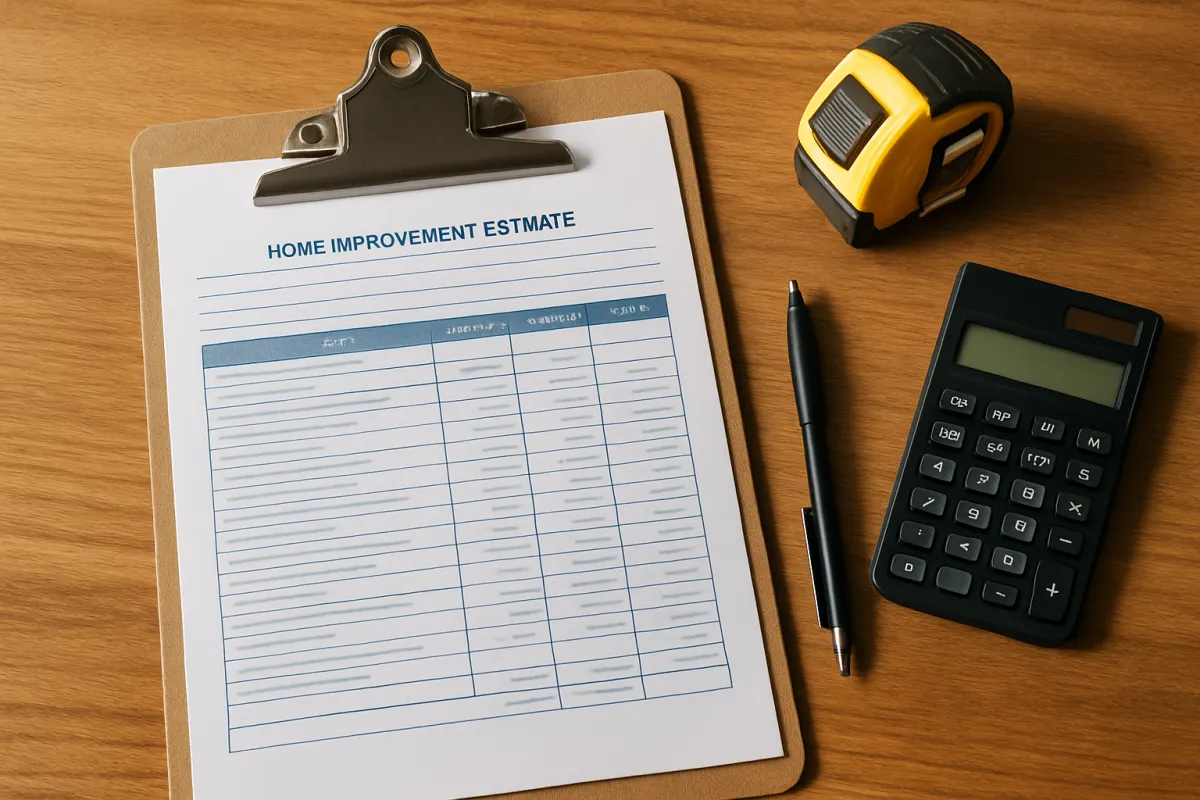
Then make the bids comparable, which is the step most homeowners skip. Ask every bidder to price the same scope, the same efficiency tier, the same add-ons, so differences reflect the installer rather than the assumptions, the discipline our manual on comparing contractor quotes builds step by step. Treat the outlier bids as questions, not answers: a dramatically low bid has usually removed something you cannot see, and a high one should be able to say what the extra buys. And weigh responsiveness, warranty terms on both the equipment and the labor, and how each bidder handled sizing, because you are choosing the company that answers the phone during the first cold snap as much as the furnace itself.
A worked example: replacing a gas furnace
Walk one illustrative project through the whole framework. A homeowner with a 2,000 square foot house in a mid-cost market has a fifteen-year-old gas furnace that quit; the diagnosis is a cracked heat exchanger, so replacement is the honest path rather than a repair. Sizing comes first: the moderate-climate sketch of roughly 40 BTU per square foot points near 80,000 BTU, and the load calculation from the first bidder lands close to that, slightly lower thanks to newer windows. The old furnace, it turns out, was a size larger than the house needs, a common find.
Three written quotes arrive for a standard-efficiency replacement on the existing ducts: an illustrative $4,600, $5,400, and $6,200, each itemizing removal, the new furnace, venting checks, permit, and commissioning, all inside this cost file’s $3,500 to $7,500 band. One bidder also prices the high-efficiency option at an illustrative $8,200, the premium reflecting the equipment tier plus new sidewall venting and a condensate drain. The homeowner checks the utility’s current incentive list, finds the condensing model qualifies for a rebate, and weighs the after-incentive gap against their heating bills and their ten-year horizon in the house. They choose the mid bid on the standard furnace, mostly on the strength of its load calculation and warranty terms, decline the duct-sealing add-on after asking what specifically it would fix, and the swap takes one day, with the inspection the following week. Rebuild the example on your own numbers with the estimator and the companion on this page.
How to save on furnace replacement
Saving money on a heating system is less about squeezing the price and more about not overbuying, not overpaying, and not paying twice. The levers below are the ones that reliably move the bill without moving the quality.
- Right-size instead of upsizing. The load calculation is the cheapest component of the whole project, and it prevents the most expensive mistake: paying more up front for a furnace that heats worse. Insist on one.
- Time the replacement when you can. A furnace replaced on your schedule in the shoulder season prices and schedules better than one replaced mid cold snap. An aging furnace flagged at a fall tune-up is your window; our maintenance checklist is how those flags get raised early.
- Get three comparable bids. The spread between installers on identical scope is commonly the largest single saving available, and it costs you three site visits.
- Match the efficiency tier to your climate and horizon. Premium efficiency pays best in cold climates and long stays. Buying the top tier for a mild climate or a two-year horizon is spending, not saving.
- Check incentives before you pick the model. Current utility and program rebates can shift which tier is actually cheapest after incentives, so look before signing, not after.
- Bundle honestly. If the AC is also at end of life, one combined replacement usually beats two separate ones. If it is sound, decline the bundle and say why.
- Keep the warranty alive. Register the equipment and keep up the required maintenance, because a covered part years from now is the quietest saving on this list.
None of these require adversarial negotiation. They are the ordinary discipline of buying a large mechanical system deliberately instead of in a panic.
Common mistakes when replacing a heating system
The expensive errors on this project repeat so consistently that naming them is most of the protection.
- Buying a replacement when the fix was a repair. A no-heat call is a diagnosis first. Ignitors, flame sensors, and blower parts fail far more often than furnaces die, and they cost a fraction as much.
- Sizing from the old sticker. The old furnace’s capacity proves nothing except what someone installed years ago. Homes change, and oversizing was common then too.
- Comparing bids that describe different jobs. A bid without a named model, capacity, and scope cannot be compared with one that has them. Make the scopes match before you compare the totals.
- Chasing the lowest number. On a bill where installation is half the value, the cheapest bid usually got cheap by trimming the half you cannot see: venting, commissioning, permit.
- Ignoring the running cost. Replacing an electric furnace with another one without pricing a heat pump, or buying premium efficiency for a climate that cannot pay it back, are both running-cost mistakes in opposite directions.
- Skipping the permit. Unpermitted gas work saves a small fee now and creates an uninspected combustion appliance in your house, plus friction at resale. It is the wrong corner to cut.
- Deciding under pressure. The cold-snap emergency is the worst buying environment there is. Anything that moves the decision to a calmer week, temporary heat, a repair that buys a season, improves every other choice on this list.
Every one of these is avoidable with the same habit: slow the decision down to the speed of a written diagnosis, a load calculation, and comparable quotes.
The bottom line
Furnace replacement cost is a ladder, not a number. An electric furnace commonly runs an illustrative $2,000 to $5,500 installed, a standard gas furnace $3,500 to $7,500, oil and high-efficiency condensing models $4,500 to $10,000, and a heat pump, which buys cooling too, $6,000 to $14,000. Where your project lands inside those bands is set by the capacity your home actually needs, the tier you choose, the venting and connections the swap requires, your ductwork, and your local labor market, which is why the same furnace installs for honestly different prices in different houses.
The decisions that matter come in order. Confirm replacement is the right spend, not a repair or overdue maintenance. Get the load calculation so the size is right. Pick the type and tier for your climate, fuel prices, and horizon, pricing the heat pump and the full-system option where they genuinely apply. Then gather comparable written quotes, weigh the installer as heavily as the equipment, and keep the permit and commissioning in the job. Every figure in this cost file is illustrative and varies by home, region, and equipment, so let the written quotes for your own house, held against the framework here, be the numbers you act on.
ProsNook publishes this cost file for education, to help homeowners understand how furnace and heating system replacement is priced, and nothing here is professional, safety, or purchasing advice for your specific home. All dollar figures, ranges, midpoints, and percentages are illustrative, will differ with your equipment, climate, region, and site conditions, and should never substitute for written quotes from licensed local installers. Work on gas lines, flues, refrigerant, and electrical circuits is regulated and genuinely dangerous, belongs exclusively with licensed professionals, and a suspected gas leak or a cracked heat exchanger warning should be treated as an immediate safety matter, not a budgeting question. Confirm current rebate, tax credit, and financing terms with the relevant official programs and qualified advisors before counting them in your budget.
Frequently asked questions
How much does it cost to replace a heating system?
There is no single number, because replacing a heating system spans an electric furnace swap and a premium condensing gas furnace with venting changes, which are genuinely different jobs. As an illustrative middle, a standard gas furnace replacement on existing ductwork commonly lands around $3,500 to $7,500 installed, with electric furnaces sitting lower and oil or high-efficiency equipment sitting higher. Home size, efficiency tier, brand, venting, access, and local labor rates all move the number, so treat every figure as a starting range and gather more than one written quote for your own home before you decide anything.
How much does a new gas furnace cost installed?
A standard-efficiency gas furnace commonly runs an illustrative $3,500 to $7,500 installed, meaning the equipment plus the labor to remove the old unit, set the new one, connect gas, venting, and electrical, and commission it. A high-efficiency condensing model commonly runs an illustrative $5,000 to $10,000 because the equipment costs more and the install often adds new PVC venting and a condensate drain. Where you land inside either range depends on the furnace size your home needs, the brand tier, how hard the old unit is to reach, and your local labor market. Every figure is illustrative, so let written local quotes set your real number.
Is it cheaper to replace an electric furnace than a gas furnace?
Usually, on the install itself. An electric furnace is a simpler machine with no burner, no gas connection, and no flue, so both the equipment and the labor tend to cost less, an illustrative $2,000 to $5,500 installed against $3,500 to $7,500 for a standard gas model. The catch is operating cost: electric resistance heat is commonly the most expensive way to make heat in many markets, so the cheaper install can cost more winter after winter. That trade is why many homeowners replacing an electric furnace at least price a heat pump, which heats far more efficiently from the same electric supply.
When should I replace a furnace instead of repairing it?
Lean toward replacement when the furnace is old and the repair is large, and toward repair when the unit is younger and the fix is modest. A commonly cited rule weighs the repair quote against the furnace's age and the cost of a new one: a four-figure repair on a furnace well into its expected service life is the classic trigger to price a replacement alongside it. A cracked heat exchanger is the clearest case, because it is a safety issue and the repair often costs a large fraction of a new furnace. Get both quotes and compare them directly rather than reacting to the repair number alone.
Does furnace replacement cost include the ductwork?
The illustrative ranges in this cost file assume your existing ductwork stays and gets reused, which is the common case in a straight replacement. If ducts need to be added, replaced, or significantly reworked, that is its own scope, commonly an illustrative $3,000 to $8,000 on top, and it changes the project more than any equipment choice. Duct condition is worth asking about in every quote: leaky or undersized ducts can undercut a new furnace's comfort and efficiency, but ductwork should be quoted as a named line item you can compare, never folded silently into the price.
How big a furnace do I need for my house?
Furnace capacity is measured in BTUs, and an illustrative rule of thumb in a moderate climate is somewhere around 40 BTU per square foot, so a 2,000 square foot home sketches out near 80,000 BTU. Treat that strictly as a sketch: real sizing comes from a load calculation that weighs your climate, insulation, windows, ceiling height, and air leakage, and two same-size homes can need genuinely different furnaces. Oversizing is the common mistake, because a too-big furnace costs more, short cycles, and heats unevenly. A quote based on a real load calculation, not a square-foot guess, is one of the clearest marks of a careful installer.
Are there rebates or tax credits for a new furnace?
Incentives for efficient heating equipment exist in many places, offered through utilities, manufacturers, and government programs, and high-efficiency furnaces and heat pumps are the equipment most often eligible. The specific programs, amounts, eligibility rules, and deadlines change and vary widely by location and year, so any figure quoted from memory can be stale. Treat incentives as a real possibility that can lower your net cost, confirm the current details through your utility and the relevant official program, and ask each installer which incentives the specific model they quoted qualifies for, since the answer differs by equipment tier.
How long does it take to replace a furnace?
A straight like-for-like replacement on existing ductwork is commonly a one-day job for a competent crew: remove the old unit, set the new one, connect gas or electrical, venting, and controls, then test and commission it. The timeline stretches when the scope grows, so a switch to a condensing furnace that needs new venting and a condensate drain, an awkward attic or crawlspace location, ductwork repairs, or a fuel conversion can push the work to two or more days. Ask each bidder how long they plan for and what could extend it, because a crew that budgets almost no time for commissioning is cutting the step that protects your comfort.