What's on this page
- What a water softener installation actually costs
- Salt-based ion exchange softener cost
- Salt-free conditioner cost
- Dual-tank softener cost
- Combination softener and filtration systems
- Why sizing is the decision that matters most
- Plumbing tie-in and the bypass loop
- The drain connection
- How hard water actually shows up around the house
- Renting a water softener versus buying one
- Iron, manganese, and other issues a softener alone will not fix
- Electrical needs, usually minor
- Water testing before you buy anything
- Where the money goes on a single-tank install
- A worked example: a four-person household on moderately hard water
- Ongoing cost: salt, water, and the resin’s working life
- Can you install it yourself
- How to compare water softener quotes
- Warranty coverage and what it typically includes
- Potassium chloride versus sodium chloride for regeneration
- Common mistakes
- Keeping a new softener working well for the long run
- The bottom line
Short answer: A whole-house water softener commonly runs an illustrative $1,500 to $4,500 installed for a standard single-tank salt-based system, with a salt-free conditioner landing a bit lower and a dual-tank system that never runs out of soft water landing meaningfully higher. Sizing, the plumbing tie-in and whether a drain is already nearby move the number more than the brand on the tank.
Water softener installation cost is really two questions stacked together: what the unit itself costs for the capacity your household needs, and what it costs to plumb that unit into a house that was not built with it in mind. ProsNook prices this the way an installer actually builds the job, starting with the water itself, moving through the system types, and finishing with the plumbing, electrical and drain work that turns a tank in a box into working equipment. Price your own household size and water hardness in the job cost estimator as you read, and the ranges below will turn into a number you can act on.
Key takeaways
- Illustratively, a standard single-tank salt-based softener commonly runs $1,500 to $4,500 installed, a salt-free conditioner $1,200 to $3,500, and a dual-tank system $3,000 to $6,500.
- Sizing is set by two numbers: your water's hardness in grains per gallon and your household's daily water use. Guessing either one is the most common reason a softener underperforms.
- The unit is usually the larger half of the bill, but the plumbing tie-in, bypass valve and drain connection are where labor and surprises actually live.
- Salt-based and salt-free solve different problems. One removes hardness minerals; the other changes how they behave. They are not interchangeable despite sitting on the same store shelf.
- Ongoing cost is real but modest: illustratively $100 to $250 a year in salt, plus a resin bed or full unit that eventually needs replacing on a decade-plus horizon.
What a water softener installation actually costs
The honest starting point is that “water softener cost” is not one number because it is not one product. A basic salt-free conditioner, a mid-capacity single-tank salt-based softener, and a dual-tank system that regenerates one tank while the other keeps serving the house are three different pieces of equipment solving overlapping but not identical problems, and they are priced accordingly.
As an illustrative framework, treat these as the shape of the market for a typical residential installation: a salt-free conditioner near $1,200 to $3,500 installed, a single-tank salt-based softener near $1,500 to $4,500 installed, a dual-tank salt-based system near $3,000 to $6,500 installed, and a combination softener-plus-filtration unit addressing both hardness and other water quality issues near $2,500 to $6,000 installed. None of these figures is a quote. They exist so that when an installer names a number, you know roughly which category it belongs to.
Salt-based ion exchange softener cost
The salt-based ion exchange softener is the default most people picture when they hear “water softener,” and it is the only common residential technology that actually removes hardness minerals from the water rather than changing their behavior. A resin bed inside the tank exchanges calcium and magnesium ions for sodium or potassium ions as water passes through, and the resin is periodically regenerated with a brine solution made from salt or potassium chloride pellets.
Illustratively, a single-tank unit sized for an average household commonly runs $1,500 to $4,500 installed, with the unit itself typically landing somewhere in a $600 to $2,200 range before labor, drain work and fittings. The spread inside that band is driven mostly by capacity, meaning how many grains of hardness the resin bed can remove between regenerations, and secondarily by control valve quality, meter-based versus timer-based regeneration, and brand.
The single-tank design has one real limitation worth knowing before you buy: during the regeneration cycle, which typically runs late at night but can be triggered at other times on a heavily used system, the house temporarily loses softened water or sees reduced flow. For most households this is a non-issue because regeneration is scheduled for low-use hours, but it is the reason dual-tank systems exist.
Salt-free conditioner cost
A salt-free system, more precisely called a conditioner or a descaler, does not remove hardness minerals. Instead it alters their crystal structure through a catalytic or template-assisted process so that the minerals are less likely to adhere to pipes, fixtures and appliances as scale, even though a laboratory hardness test on the output water would still read hard.
Illustratively, a salt-free conditioner commonly runs $1,200 to $3,500 installed, generally undercutting a comparable salt-based system because there is no brine tank, no drain connection for regeneration discharge, and often a smaller physical footprint. The appeal is real: no sodium added to the water, no salt bags to carry, no brine discharge to worry about on a septic system, and often less maintenance.
The honest limitation is that a salt-free system will not produce the slick, soap-lathering feel that salt-based softening does, because the minerals are still present, just behaving differently. Anyone expecting the traditional “soft water feel” from a salt-free unit is usually disappointed, and that mismatch between marketing and mechanism is the single biggest source of dissatisfied reviews for this category.
Dual-tank softener cost
A dual-tank system runs two resin tanks instead of one, so that while one tank regenerates, the other continues supplying softened water to the house without interruption. For households with high water use, a large family, or anyone who finds even a scheduled middle-of-the-night regeneration unacceptable, this solves a real problem.
Illustratively, a dual-tank salt-based system commonly runs $3,000 to $6,500 installed, reflecting the cost of a second tank and the more sophisticated control valve needed to manage the alternating cycle. This is a genuine upgrade in capability rather than a brand premium, and it is worth the added cost specifically for households that have actually experienced the downside of a single-tank system’s regeneration window, rather than as a default first purchase.
Combination softener and filtration systems
Many households discover during water testing that hardness is not the only issue: iron, manganese, chlorine taste, sediment or other parameters may also warrant attention. A combination unit addresses softening and one or more of these in a single cabinet, sharing a control valve and sometimes a single brine or media tank arrangement.
Illustratively, a combination system commonly runs $2,500 to $6,000 installed, moving with how many parameters it is built to address and whether it requires separate pre-filtration stages ahead of the softening resin. These systems are worth considering when a water test shows multiple issues, but they are not worth buying preemptively; test first, then size the equipment to the actual results rather than to a worst-case assumption.
Why sizing is the decision that matters most
A water softener that is undersized for its household will either regenerate so often that it wastes salt and water, or will let hard water slip through between cycles, and both failure modes get blamed on the brand rather than the sizing. Sizing is arithmetic, not guesswork, and it starts with two numbers you can actually obtain.
The first is your water’s hardness, expressed in grains per gallon, available from a home test kit, a municipal water quality report if you are on a public supply, or a laboratory panel if you are on a private well. The second is your household’s daily water use, which scales roughly with the number of people living in the house, commonly estimated around 60 to 100 gallons per person per day for planning purposes. Multiply hardness by daily use to get the grains of hardness your household generates each day, then choose a resin capacity sized to handle several days of that load comfortably rather than the bare daily minimum, so the unit regenerates on a reasonable schedule rather than constantly.
A household of four on moderately hard water, say 15 grains per gallon, generating roughly 300 to 400 gallons a day, needs to remove somewhere around 4,500 to 6,000 grains daily, which points toward a mid-capacity resin bed sized well above that daily figure. A larger household on very hard water needs meaningfully more. This is the single calculation worth getting right before anything else about the purchase, because every other decision, brand, control valve, salt type, assumes the capacity is correct.
Seasonal guests, a home-based business with added water use, or a planned addition to the household are worth building into the sizing conversation rather than sizing strictly to today’s headcount, since a unit sized with no margin at all will need replacing sooner than one sized with a reasonable buffer for how the household’s water use actually changes over a decade of ownership.
Plumbing tie-in and the bypass loop
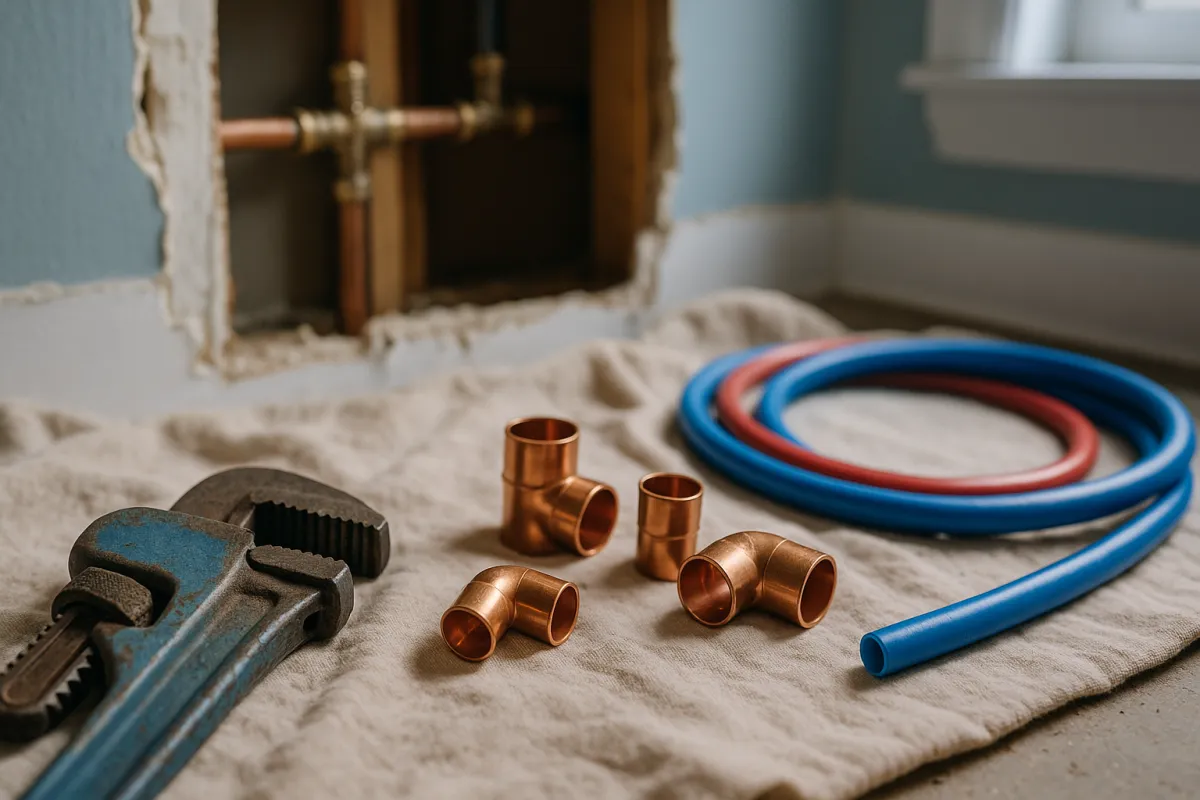
A water softener sits inline with your main water supply, typically installed where the line enters the house, before the water heater so that both hot and cold fixtures receive softened water. The physical connection requires cutting into that line, installing a bypass valve assembly so the softener can be isolated for service or bypassed entirely, and connecting the inlet and outlet to the unit.
Illustratively, this plumbing work commonly adds $300 to $900 to the installation when no existing loop is present, moving with pipe material, whether the connection is copper requiring soldering or PEX requiring crimp or push-fit connections, and how accessible the main line is. Many homes built or renovated with a softener in mind already have a bypass loop installed and simply capped, which drops this cost substantially since the plumber is connecting to existing stubs rather than opening a live line.
The drain connection
A salt-based softener needs somewhere for the brine and rinse water to go during regeneration, typically a standpipe, a floor drain, a laundry drain or a dedicated line run to an exterior discharge point where locally permitted. Illustratively, this drain connection commonly adds $150 to $500, moving mostly with distance from the unit to the nearest acceptable drain.
Many jurisdictions require an air gap at this connection to prevent backflow of drain water into the potable system, which is a small and inexpensive fitting but one worth confirming is actually present, since it is cheap insurance against a genuinely unpleasant failure mode. Salt-free conditioners have no regeneration discharge and need no drain connection at all, which is part of why their total installed cost runs lower.
How hard water actually shows up around the house
Before pricing equipment, it helps to recognize what hardness actually looks like day to day, because the symptoms are what usually prompt the purchase decision in the first place. Soap and shampoo that will not work up a rich lather, and that leave a filmy residue on skin even after rinsing, is one of the most commonly reported complaints, and it is a direct result of calcium and magnesium reacting with soap rather than letting it rinse cleanly away.
Scale buildup is the second common symptom: a chalky white or grayish crust on faucets, showerheads and inside a kettle or coffee maker, which is mineral deposit left behind as hard water evaporates or heats. Over years, that same scale accumulates inside water heaters, reducing their efficiency and shortening their working life, inside dishwashers and washing machines, and inside the pipes themselves, gradually narrowing their effective diameter. Spotting on dishes and glassware straight out of the dishwasher, and fabrics that feel stiff or look dingy after washing despite using enough detergent, round out the list of symptoms most households notice before they ever test their water formally.
None of these symptoms alone proves a specific grains-per-gallon number, which is exactly why the water test described earlier in this cost file is the step that turns a hunch into a sizing decision rather than a guess. A household noticing two or three of these symptoms has a reasonable case for testing; a household noticing none of them may be solving a problem that does not exist, or may have a different water quality issue entirely that a softener will not fix.
Renting a water softener versus buying one
Some water treatment companies offer a softener on a rental or lease basis rather than selling the equipment outright, and this is worth understanding as a genuinely different financial structure rather than simply a different way to pay for the same thing. A rental arrangement typically includes the equipment, installation, ongoing maintenance and salt delivery in some programs, for a recurring monthly fee rather than an upfront installed cost.
Illustratively, a rental program commonly runs $20 to $45 a month, which over several years adds up to meaningfully more than the purchase price of a comparable owned unit, though it avoids the upfront cost entirely and often includes service and maintenance that an owned unit’s warranty may not cover once it expires. This arrangement can make sense for a household unsure how long they will stay in a home, one that wants maintenance bundled in without separately budgeting for it, or one that cannot absorb the upfront installed cost at once.
For a household planning to stay in a home for more than a few years, buying is usually the better value over time, since the cumulative rental payments eventually exceed what ownership would have cost, often within three to five years depending on the specific rental rate and purchase price being compared. Run the actual numbers for any rental offer you receive against this cost file’s purchase ranges before deciding, rather than assuming either option is automatically the better deal.
Iron, manganese, and other issues a softener alone will not fix
Hardness is the most common water quality complaint, but it is not the only one, and a softener sized and installed correctly for hardness will do nothing for several other issues homeowners sometimes lump into the same category. Iron, which produces reddish-brown staining on fixtures, laundry and sometimes a metallic taste, requires its own treatment, commonly an iron filter or an oxidizing system, and while a standard softener resin can remove modest amounts of dissolved iron as a side effect, it is not designed or warrantied for that purpose and will foul prematurely if iron levels are significant.
Manganese behaves similarly, producing a dark brown or black staining rather than iron’s reddish tone, and also requires dedicated treatment rather than incidental removal by a softening resin. Chlorine taste and odor, common on municipal water, calls for carbon filtration rather than softening. Sediment and turbidity call for a pre-filter. And any health-related contaminant flagged by a water test, whether a specific mineral, a biological concern, or anything else, is a conversation for the testing laboratory and potentially a specialized treatment system, not a softener.
This is precisely why the water test matters more than the equipment choice. A homeowner who tests only for hardness and buys a softener accordingly may be entirely correct, or may be treating one visible symptom while an unrelated issue goes unaddressed. If your water test shows multiple parameters outside the ordinary range, the combination systems covered earlier in this cost file, or a conversation with a water treatment professional about sequencing multiple dedicated treatments, is the honest next step rather than assuming one unit solves everything a test might reveal.
Electrical needs, usually minor
Most residential softener control heads run on low-voltage power from a standard transformer that plugs into a nearby grounded outlet, so electrical work is rarely a meaningful line item. The practical question is simply whether a suitable outlet exists within reach of the planned location; if not, adding one is typically a modest add, illustratively in the $100 to $400 range depending on the run length, rather than a service-level electrical project.
Water testing before you buy anything
Buying softening equipment before testing your water is buying a solution to a guessed problem. A home test strip gives a rough hardness reading for a few dollars, while a laboratory panel, illustratively $50 to $150, gives a precise hardness figure along with iron, manganese, pH and other parameters that might change which equipment actually makes sense.
This step also answers the salt-based-versus-salt-free question more honestly than marketing copy does. If the test shows only hardness and no other issues, either technology is a reasonable candidate depending on your priorities around sodium and maintenance. If it shows iron or manganese staining alongside hardness, a combination system or a dedicated iron filter ahead of a standard softener may be the better engineering answer, and that is a conversation worth having with a water treatment professional rather than deciding from a test strip color chart alone.
Illustrative installed cost by system type
Midpoint figures for a typical residential household. Bar widths are drawn from each value against the highest, $4,800 combination system.
Illustrative midpoints, not quotes. A dual-tank or combination system costs more because it is doing more, not because it is a premium version of the same job.
Where the money goes on a single-tank install
Breaking a typical single-tank salt-based installation into its parts shows why the unit’s sticker price is only part of the story. Using an illustrative midpoint project, the resin tank and control valve account for roughly 55 percent of the total, installation labor and the plumbing tie-in for about 25 percent, the drain line and fittings for about 10 percent, electrical and bypass hardware for about 5 percent, and the initial water test and setup for the remaining 5 percent.
Where the money goes on a single-tank salt-based install
Shares of an illustrative midpoint project, summing to 100.
A home with an existing bypass loop and a nearby drain shrinks the labor and drain-line slices; a home needing both built from scratch grows them.
A worked example: a four-person household on moderately hard water
Numbers become useful stacked together. Take a fully illustrative example: a four-person household testing at 15 grains per gallon, installing a single-tank salt-based softener on an existing bypass loop with a laundry drain six feet away.
A mid-capacity unit sized for this household’s daily load runs an illustrative $900. Plumbing tie-in to the existing loop, a quick job since no new loop has to be built, runs $350. The drain connection, a short run with an air gap fitting, runs $180. No new electrical outlet is needed since one already sits nearby, so that line is $0. The water test that confirmed the 15 grains per gallon figure was a $75 lab panel. The total comes to roughly $1,505, near the bottom of the single-tank band, which makes sense given how much of the usual labor this household avoided by already having a loop and a nearby drain.
Change any one of those conditions, no existing loop, a drain twenty feet away instead of six, a larger household needing a bigger resin bed, and the total moves up the band accordingly. Run your own hardness number and household size through the estimator to see your version of this math.
Ongoing cost: salt, water, and the resin’s working life
A water softener is not a one-time purchase. The resin bed is consumed by nothing, but the salt or potassium chloride used to regenerate it is a recurring expense, illustratively $100 to $250 a year for a typical household on sodium chloride, with potassium chloride running meaningfully more per bag for the same softening. Regeneration also uses water, a modest increase most households do not notice on their bill but one worth knowing exists.
The resin bed itself has a working life, commonly discussed in terms of a decade or more with proper maintenance, though iron fouling, excessive chlorine, or running far past the resin’s rated capacity can shorten it. When a softener’s output starts testing hard despite a full salt tank and apparently normal regeneration, a spent or fouled resin bed, illustratively $200 to $500 to replace, is a common cause worth having checked before assuming the whole unit has failed.
Can you install it yourself
A capable DIYer with real plumbing experience can often handle a softener installation on an existing bypass loop, since most residential units ship with manufacturer plumbing diagrams written for exactly that homeowner. The honest risk is a leak at a poorly made joint, whether soldered copper or a push-fit connection, sitting somewhere that will not be noticed until it has done real damage, along with code compliance on the drain connection where an air gap or backflow prevention is locally required.
If your home has no existing bypass loop, needs copper soldering you are not confident performing, or the drain run is not a short, obvious path, hiring a licensed plumber removes a real risk for a labor cost that is usually the smaller half of the total project. Even a confident DIYer should budget time for the first regeneration cycle to run correctly and for checking every fitting for slow seepage over the following days, since a connection that looks dry immediately after installation can still weep slightly under real operating pressure. Our plumber rate file covers what that labor typically runs by the hour if you want to price the install-only portion of this job separately from the equipment.
How to compare water softener quotes
Softener quotes are hard to compare at a glance because dealers bundle different things into the headline price. Force every bid onto one sheet before comparing totals: the resin capacity in grains, the control valve type (meter-based regeneration is generally more efficient than timer-based), whether the quote includes the bypass loop and drain connection or assumes they already exist, the warranty terms on the tank versus the control head, which often differ, and whether an initial bag of salt and startup are included.
Be specifically alert to a quote based on a sizing assumption rather than your actual tested hardness and household size; a dealer who has not asked for your water test results and household headcount cannot have sized the unit correctly, regardless of how confident the number sounds. Our quote comparison walkthrough covers the general discipline of reading bids by what they include rather than by the total alone.
Warranty coverage and what it typically includes
Softener warranties are usually split into two separate terms that cover different parts of the system, and conflating them is a common source of confusion when something eventually goes wrong. The resin tank itself commonly carries a longer warranty, sometimes a decade or more, since the tank has no moving parts and failure is relatively rare absent physical damage or extreme fouling. The control valve and head, the part with moving components, seals and electronics that actually manage regeneration, commonly carries a shorter warranty, often a few years, since it is the part most likely to need service or replacement over the unit’s life.
Ask any installer to state both warranty terms separately in writing, along with whether the warranty is backed by the manufacturer, the dealer, or both, and what voids it. A common and reasonable condition is that the warranty requires using the manufacturer’s specified salt type and following a basic maintenance schedule; a warranty voided by using the wrong salt or by neglecting the unit for years is not an unreasonable policy, but it is one worth knowing about before you assume full coverage no matter what.
Installation labor is typically covered by the installing company’s own labor warranty, separate from the manufacturer’s equipment warranty, and this is worth clarifying too: if a fitting leaks six months after installation, is that a manufacturer defect or an installation issue, and which warranty actually applies? A reputable installer will answer this clearly before you sign rather than leaving the boundary ambiguous until something actually fails.
Potassium chloride versus sodium chloride for regeneration
Salt-based softeners can regenerate using either sodium chloride, ordinary water softener salt, or potassium chloride, a more expensive alternative chosen primarily by households wanting to avoid adding sodium to their water or their wastewater. Potassium chloride performs the ion exchange regeneration job just as effectively as sodium chloride, so the choice is about what leaves the system in the discharge water and ends up, in trace amounts, in the treated water itself, rather than about softening performance.
Illustratively, potassium chloride commonly costs two to three times as much per bag as sodium chloride for an equivalent amount of regeneration capacity, which meaningfully changes the ongoing cost estimate covered earlier in this cost file if you choose it. Households on a sodium-restricted diet for a medical reason, or concerned about sodium discharge into a septic system, are the most common reason to choose potassium chloride despite the higher ongoing cost; absent one of those specific reasons, sodium chloride is the more economical default most households use without any practical downside.
Common mistakes
A handful of errors account for most softener regret, and nearly all of them trace back to skipping the measurement step. Buying based on a square footage or bedroom count rather than actual grains per gallon and actual household water use is the most common, and it produces either an undersized unit that never keeps up or an oversized one that wastes salt and water on needlessly frequent regeneration.
Choosing salt-free when the real goal was the traditional soft-water feel is a close second, usually the result of marketing language rather than an informed choice between two genuinely different mechanisms. Skipping the water test and assuming hardness is the only issue is a third, which can mean installing a softener while an unrelated iron or pH problem goes untreated. And treating the installed price as fixed without comparing resin capacity, control valve type and what plumbing work is actually included leaves real money on the table between otherwise similar-looking bids.
A final and genuinely common mistake is placing the unit somewhere convenient for installation rather than somewhere practical for ongoing use. A softener tucked into a cramped crawl space corner or a high shelf may have been the easiest spot to plumb on installation day, but it is also the spot nobody wants to carry forty-pound salt bags to every few weeks for the next decade or more. Walk through how you will actually service the unit, salt loading, filter changes, and occasional troubleshooting, before the location is finalized, not after the plumbing is already set in place.
Keeping a new softener working well for the long run
A softener that is sized, installed and plumbed correctly on day one still needs a small amount of ongoing attention to keep performing years later. Check the salt level every few weeks until you learn your household’s actual consumption rate, and avoid letting the brine tank run completely empty for an extended stretch, since that allows hard water through unnoticed until a symptom like scale or poor lathering reappears. Keep the brine tank’s salt from forming a hard crust or bridge above the water line, which can happen with certain salt types in humid conditions and prevents proper brine formation even though the tank still looks full from above.
Periodically confirm the unit is actually regenerating on schedule rather than assuming it is, since a control valve malfunction or a programming error can leave a softener running on exhausted resin for weeks before the symptoms become obvious. Most of this is a five-minute check during an otherwise unrelated trip past the unit, and it is the difference between a softener that quietly works for fifteen years and one that disappoints its owner well before that.
The bottom line
Water softener installation cost is set first by which technology and capacity your water and household actually need, and second by how much plumbing, electrical and drain work your home requires to accept it. Illustratively, a salt-free conditioner commonly runs $1,200 to $3,500 installed, a single-tank salt-based softener $1,500 to $4,500, and a dual-tank system $3,000 to $6,500, with a combination unit addressing multiple water issues landing near $2,500 to $6,000.
Test your water before you buy anything, size the equipment to your actual hardness and household use rather than a guess, and confirm what plumbing work a quote does and does not include before comparing totals. Every figure above is illustration, and your real cost will move with your water, your existing plumbing, and the installer you choose, so let a written quote against your own tested numbers be the figure you act on.
ProsNook publishes this cost file to explain how a residential water softener is priced, sized and installed, and it is educational material rather than plumbing, water quality or health advice. No figure here is a quote: every dollar band, per-unit range, midpoint, share and worked total is illustration only, and your real cost will move with your water hardness, household size, existing plumbing, local labor rates and the brand and capacity you choose. Plumbing and drain-connection codes, including air gap and backflow requirements, are set locally and are described here in general terms only; confirm what applies at your address before work begins. Nothing on this page interprets a water test result: what a hardness or mineral reading means for your specific water is a question for the certified laboratory that ran the panel or a local water treatment professional. Gather several detailed written quotes based on your own tested hardness and household water use, verify any installer’s licensing where required, and treat a bid that skips asking for your water test as a bid that has not actually sized your system.
Frequently asked questions
How much does it cost to install a water softener?
As an illustrative guide, a whole-house water softener commonly runs about $1,500 to $4,500 installed for a standard single-tank salt-based system, with a salt-free conditioner landing a bit lower and a dual-tank system that supplies soft water continuously landing meaningfully higher. The unit itself is usually the bigger half of that number, with plumbing tie-in, a drain line and a bypass loop making up the rest. Treat any figure as a planning range rather than a quote, because your real price shifts with capacity, your existing plumbing, and whether a drain is already nearby.
What is the difference between a salt-based and a salt-free water softener?
A salt-based softener uses an ion exchange resin, regenerated with sodium or potassium chloride, to physically remove the minerals that cause hardness, and it is the only technology that actually softens water in the traditional sense. A salt-free system, more accurately called a conditioner or descaler, treats the minerals so they are less likely to form hard scale on surfaces and in pipes, but it does not remove them, so water run through one will still test hard on a mineral panel even though scaling behaves differently. People who want soap to lather and skin to feel different generally want salt-based; people avoiding sodium or a brine discharge, or who are not chasing that feel, often choose salt-free. Neither is universally better, and the right pick depends on what problem you are solving.
How is a water softener sized for a house?
Sizing starts with two numbers: your water's hardness, expressed in grains per gallon, and your household's daily water use, which scales roughly with the number of people in the house. Multiply hardness by daily gallons used to get the grains that need to be removed each day, then pick a resin capacity that can handle several days of that load between regenerations rather than one sized to the daily minimum. A household on moderately hard water with four people commonly lands on a mid-capacity unit, while a larger household on very hard water needs meaningfully more capacity or more frequent regeneration. An undersized softener is the single most common complaint installers hear, usually traced back to skipping this calculation.
Does a water softener installation need an electrician?
Usually not, in the sense of needing new wiring or a dedicated circuit, because most residential softener control heads plug into a standard grounded outlet near the unit. The real electrical question is simply whether a suitable outlet already exists within reach of where the unit will sit; if it does not, adding one is a small job rather than a full electrical project. The work that does require a licensed plumber, or at least plumbing skill, is the water line tie-in, the bypass valve and the drain connection, which is where most of the labor line on an installation quote actually goes.
Can I install a water softener myself?
A capable DIYer can often install a softener on an existing bypass loop with standard fittings, since many residential units are designed with that homeowner in mind and ship with clear plumbing diagrams. The honest caveats are code compliance for the drain connection, which some jurisdictions regulate through an air gap requirement, and the risk of a slow leak at a poorly soldered or poorly threaded joint behind a wall or under a slab. If your home has no existing loop, needs copper soldering, or the drain run is not straightforward, hiring a licensed plumber removes a real risk for a labor cost that is usually a modest share of the total project.
How much does it cost to run a water softener?
The two ongoing costs are salt or potassium chloride, replenished every few weeks to months depending on usage and capacity, and water used during the regeneration cycle itself. As an illustrative figure, most households spend somewhere around $100 to $250 a year on salt, with potassium chloride running meaningfully more than sodium chloride for the same softening. Add a modest increase in water and, where relevant, sewer charges from the regeneration discharge. Compared with the installation cost, the annual running cost is a small line, but it is a real one worth budgeting rather than discovering on the first bag purchase.
Do I need a permit to install a water softener?
Permit and code requirements for a water softener are set locally and vary by jurisdiction, most commonly around how the drain discharge is connected, whether an air gap or backflow prevention is required, and in some areas, rules around sodium discharge into a septic system or municipal sewer. Some jurisdictions treat a softener swap as routine maintenance needing no permit, while others require one for any new drain connection. Confirm what applies at your address with your local building or plumbing authority before the work begins rather than assuming the rule from a neighboring town applies to you.
Will a water softener hurt my septic system?
This is a genuinely debated question rather than a settled one, and the honest answer is that it depends on your softener's regeneration frequency, your septic system's design and your local soil conditions, so a confident universal answer from any source should be treated with suspicion. What is well established is that a softener sized correctly and regenerating only as needed adds comparatively little discharge volume to a septic system compared with normal household wastewater. If you are on a septic system and concerned, ask a local septic professional about your specific tank, drain field and the brine discharge volume of the unit you are considering before you install it.