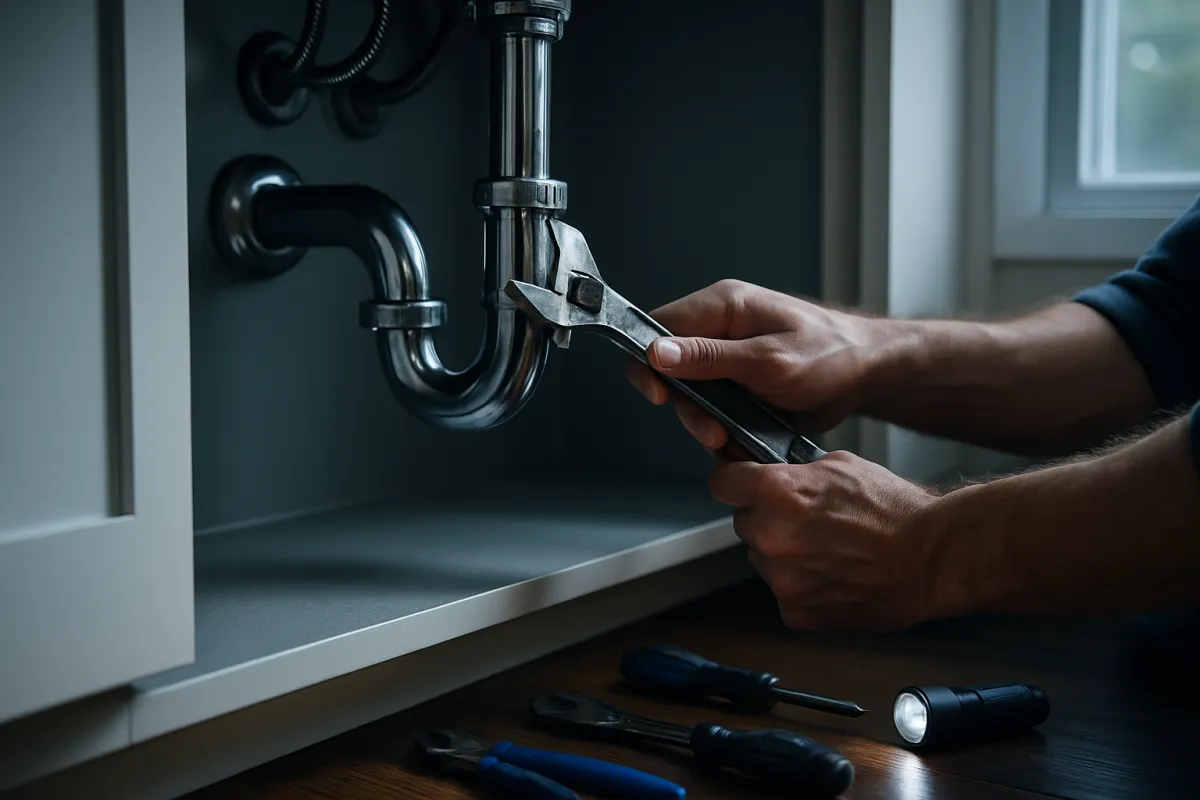
What's on this page
- What a plumber costs per hour
- Hourly rate versus flat-rate pricing
- The service call or trip fee
- Minimum charges and the first hour
- Apprentice, journeyman, and master rates
- Illustrative plumber hourly rate by tier
- What the hourly rate actually pays for
- Emergency and after-hours plumber rates
- Common plumbing jobs and what they cost
- Clogged drain cost
- Main sewer line clogs and drain cleaning
- Leaking pipe repair cost
- Running toilet and toilet repairs
- Faucet replacement cost
- Garbage disposal installation cost
- Sewer camera inspection cost
- Water line and main shutoff valve work
- Permits, inspections, and who pulls them
- What moves the hourly rate up or down
- Independent plumbers versus large service companies
- Parts, markup, and who supplies the fixture
- A worked example: a two hour service call
- How to lower what you pay a plumber
- Common mistakes when hiring a plumber by the hour
- Questions to ask before you book
- The bottom line
Short answer: Most residential service plumbing sits in an illustrative $75 to $150 an hour, with a common midpoint near $110; apprentices sit below that band and master plumbers and large flat-rate companies above it. The rate is never the whole bill: a trip fee of an illustrative $50 to $150, a one-hour minimum, parts and sometimes a permit sit on top, and after-hours work commonly runs about 1.5 times the standard rate.
Plumber cost per hour is one of those numbers homeowners only think about when water is going somewhere it should not. By the time you are looking it up, the sink is backing up or there is a damp patch spreading across the ceiling, and the figure a plumber says on the phone lands with no context at all. The trouble is that an hourly rate on its own tells you almost nothing about what you will pay, because the rate is only one of four or five lines that make up the final bill.
This cost file separates those lines. It puts illustrative ranges on the hourly rate itself, on the trip or service call fee, on the minimum charge that catches small jobs, on the difference between apprentice, journeyman, and master labor, and on the emergency premium that turns a routine hour into an expensive one. Then it prices the jobs homeowners actually call about, from a clogged drain to a sewer camera run, so you can work backward from a quoted total to whether the hours behind it make sense. Water heater work has its own economics and lives in our note on water heater repairs and the tank replacement cost file, and the job cost estimator turns any of these ranges into a ballpark for your own call.
Key takeaways
- Most residential service plumbing sits in an illustrative $75 to $150 an hour, with a common midpoint near $110. Apprentices sit below that band and master plumbers and large flat-rate companies sit above it.
- The hourly rate is never the whole bill. A trip fee of an illustrative $50 to $150, a one-hour minimum, parts, and sometimes a permit all sit on top of it.
- Many shops price common jobs flat rather than hourly. Flat rate moves the overrun risk to the plumber, hourly leaves it with you, and neither is automatically cheaper.
- Evening, weekend, and holiday work commonly runs about 1.5 times the standard rate, and a true overnight or holiday emergency can reach roughly 2 times.
- Every figure in this cost file is illustrative and varies by region, shop size, and access. Get an itemized written quote before approving anything beyond the minimum charge.
What a plumber costs per hour
The honest answer to what a plumber costs per hour is a band rather than a number, and the band is wide because “plumber” covers several different levels of skill working out of very different businesses. For ordinary residential service work, the illustrative range most homeowners encounter runs roughly $75 to $150 an hour for the person actually turning the wrench, with a midpoint near $110 in many markets. That is the figure to hold in your head as a reference point.
Around that centre sit the outliers in both directions. A helper or apprentice working under supervision bills at an illustrative $45 to $90, a master plumber handling complex or code-sensitive work bills at an illustrative $100 to $200, and a large branded service company using flat-rate pricing often works out to an effective $120 to $250 an hour once you divide the bill by the time on site. Regional cost of living moves the whole band, so a rate that looks high in a rural county can be ordinary in a dense metro. Read the number a shop quotes you against your own market, not against a national average.
Hourly rate versus flat-rate pricing
The single biggest source of confusion in plumbing pricing is that many companies do not sell hours at all. They sell jobs. A flat-rate shop looks up “clear kitchen sink drain” in its own price book, quotes you one number before starting, and that number does not move whether the work takes twenty minutes or ninety. An hourly shop quotes you a rate, starts a clock, and bills what the job takes plus parts.
The difference is not really about price, it is about who carries the risk of the job running long. Hourly billing keeps that risk with you: a smooth repair is cheap and a stubborn one is not. Flat-rate billing moves the risk to the plumber, who therefore prices in a cushion for the jobs that go sideways. Averaged across many calls, the two structures land closer together than homeowners expect, which is why arguing about the structure is less useful than reading the scope.
There is a practical rule that helps. Well-defined, repeatable jobs suit flat rate, because both sides know what is involved and you get certainty for free. Open-ended or diagnostic work suits hourly, because a flat quote on an unknown either includes a large cushion or turns into a change order the moment reality differs. If a shop quotes flat on a job nobody can define yet, ask what happens when the scope changes, and get the answer in writing. Our walkthrough on comparing quotes covers how to normalize two bids priced in different structures.
The service call or trip fee
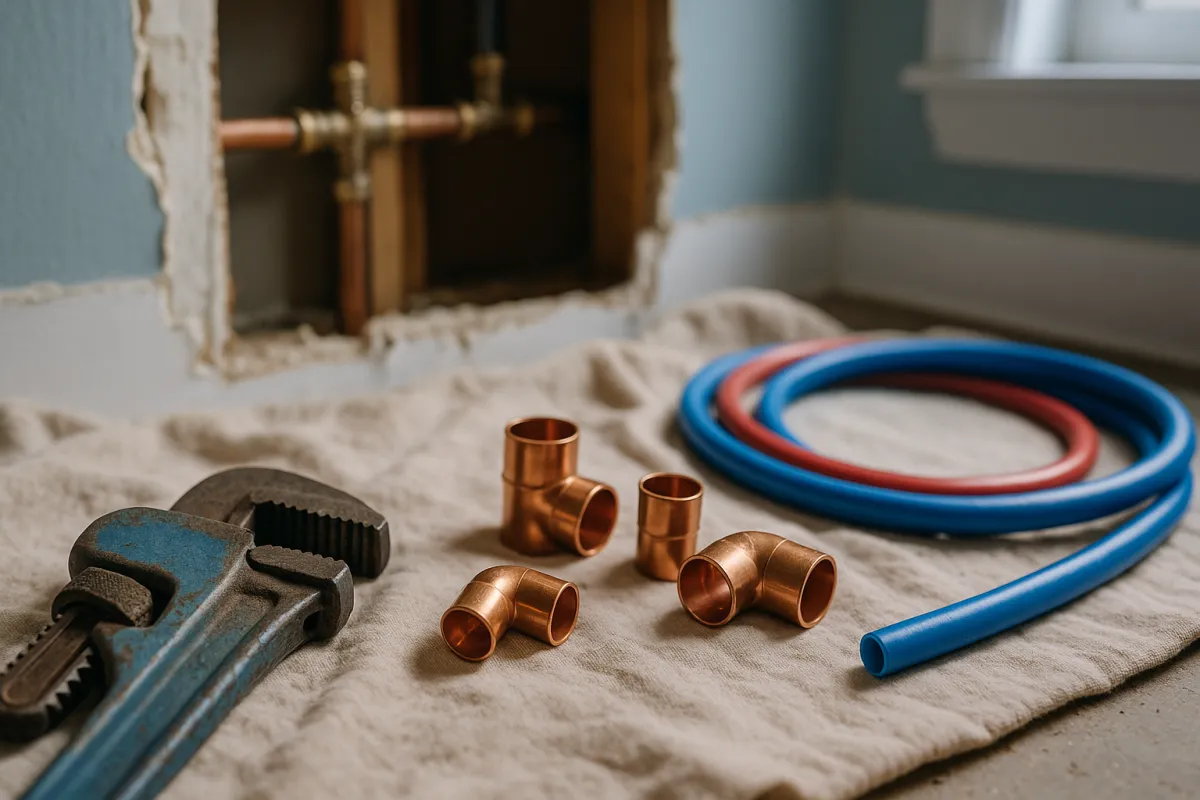
Nearly every plumbing shop charges something to show up. It goes by several names, trip fee, service call, dispatch fee, call out charge, and it exists because sending a stocked van and a trained person across town costs the business money before a single fitting is touched. The illustrative amount commonly falls between $50 and $150, with something near $75 typical for a scheduled daytime visit in many markets, and higher for evenings, weekends, or long drives into rural areas.
The question that actually matters is not the size of the fee but whether it is credited. Many shops apply the trip fee toward the repair if you approve the work with them, which makes it function as a deposit that disappears into the total. Others treat it as a separate diagnostic charge you pay regardless, on the reasoning that diagnosis is itself a service. Both policies are legitimate. What is not acceptable is finding out which one applies after the van has left, so ask on the phone when you book.
There is a second reason to ask. If the fee is credited, getting a second opinion is expensive, because you pay two uncredited diagnostic visits to end up with one repair. If it is not credited, the cost of a second opinion is simply the second fee, and on a large job that is money well spent. Knowing the policy tells you how freely you can shop the quote.
Minimum charges and the first hour
The minimum charge is where small plumbing jobs surprise people. Almost every shop has a floor, usually written as a one-hour minimum on labor or as a flat first-hour charge that already includes the trip fee. In illustrative terms that floor commonly lands somewhere between $150 and $350 all in. That is why replacing a two dollar washer can still generate a bill in the low hundreds, and why the phrase “it only took him ten minutes” is such a common complaint.
The minimum is not a trick. The drive out, the drive back, the truck stock, the scheduling, the invoicing, and the insurance behind the visit cost the same whether the fix takes five minutes or fifty. A shop that billed genuinely by the minute would have to raise its rate enormously to survive, so the minimum is the mechanism that makes a low advertised hourly rate possible at all.
The useful response is to stop thinking about the minimum as a penalty and start treating it as a purchase. You are buying one visit, so fill it. If the toilet runs, the outside tap drips, and a supply line under the bathroom sink looks tired, get all three done in the same appointment. You pay the minimum and the trip fee once and then buy additional time at the marginal rate, which is dramatically cheaper than three separate calls. Batching is the single easiest way to lower what you pay per job.
Apprentice, journeyman, and master rates
Plumbing is a trade with formal skill tiers, and those tiers show up in the rate even when the invoice does not label them. The broad structure is consistent almost everywhere even though the exact titles and requirements are set locally: an apprentice works under supervision while learning, a journeyman works independently on ordinary installation and repair, and a master carries the highest credential and typically the responsibility for permits, plan work, and supervising others.
The illustrative rate ladder follows that structure. Apprentice or helper time bills at roughly $45 to $90 an hour, journeyman time at roughly $75 to $150, and master time at roughly $100 to $200. On a two-person call you may be billed for both, often a journeyman at full rate and a helper at a reduced one, which is usually cheaper for you than a single person taking twice as long on a job that genuinely needs four hands.
One caution about credentials. Licensing rules for plumbing are set by state, county, and municipality rather than nationally, and what a given tier is permitted to do without supervision differs from place to place. Do not treat any description of tiers, including this one, as a statement of what your local rules require. Verify a plumber’s licence status with the authority that issues it in your area, which is the only source that can actually answer the question. Our vetting walkthrough covers how to run that check properly.
Illustrative plumber hourly rate by tier
Stacking the tiers side by side makes the shape of the market easier to see than any single average does. The chart below uses an illustrative midpoint for each level and setting, so the point is the relative spacing rather than the exact dollars. Notice that the gap between the cheapest and the most expensive line is close to three times, which is exactly why a quoted rate means little until you know who is doing the work and when.
Illustrative plumber hourly rate by who does the work and when
Midpoint hourly figures for residential service work. Your region, the size of the shop, and the hour you call set where you actually land.
Illustrative midpoints, not quotes. The flat-rate figure is an effective rate: divide a flat-priced job by the hours actually spent on site and this is roughly what it implies.
Two readings matter here. First, the after-hours line shows that timing alone can move a journeyman above a master working normal hours, which is why the hour you place the call is a pricing decision. Second, the flat-rate line is not evidence that big companies overcharge: their number bundles the trip, the diagnosis, the guarantee, and the risk of the job running long, so comparing it to a bare hourly rate is comparing two different products. Run your own figures through the estimator to see how the pieces combine.
What the hourly rate actually pays for
A homeowner hearing “$110 an hour” reasonably imagines the plumber pocketing $110. That is not how it works, and understanding the split defuses a lot of the resentment that plumbing invoices generate. The billed hour has to cover the tradesperson’s actual wage, the employer’s share of payroll taxes and insurance, the truck and the several thousand dollars of tools and stock inside it, the office and licensing overhead, the unbilled hours spent driving and quoting, and finally some profit or the business does not exist next year.
The chart below puts an illustrative shape on that split. The exact proportions differ enormously between a one-person operation and a company with dispatchers and a fleet, but the pattern holds: the wage in the plumber’s pocket is a minority of the number on the invoice.
Where a billed plumbing hour goes
Illustrative breakdown of what an hourly rate has to cover, summing to 100. A one-person shop carries less overhead and more of the risk; a large company inverts that.
Shares are illustrative and vary widely by business model. The takeaway is directional: roughly a third of a billed hour reaches the person holding the wrench.
This is also the honest answer to “why not just hire the cheapest rate”. A rate far below the local band usually means one of the shares above is missing, and the two most commonly missing are insurance and the profit that funds a warranty. An uninsured plumber is cheaper right up until water damage in your home becomes your problem alone, which is the scenario our note on avoiding contractor scams exists to help you spot.
Emergency and after-hours plumber rates
Plumbing is the trade most likely to generate a genuine middle-of-the-night emergency, and the pricing reflects it. Two structures dominate. The first is a multiplied labor rate: an illustrative 1.5 times the standard rate for evenings and weekends, and roughly 2 times for overnight, holiday, or immediate-dispatch calls. Applied to a $110 midpoint, that is an illustrative $165 and $220 an hour respectively. The second is a flat emergency surcharge, commonly in the low hundreds, added on top of otherwise normal rates.
The structure matters more than it looks. On a short job, a flat surcharge is punishing and a multiplier is mild. On a long job, the multiplier compounds and the flat surcharge fades into the total. Ask which structure applies before dispatch, and ask whether the trip fee is also elevated after hours, because it frequently is.
The judgment call is whether you have an emergency at all. A burst supply line, an active leak you cannot isolate, sewage backing up into the house, or no water in a home with occupants who need it are genuine emergencies where the premium is worth paying immediately. A slow drip into a bucket, a single blocked fixture in a house with another bathroom, or a running toilet you can shut off at the stop valve are not. Knowing where your main shutoff is, and that it turns, is what converts many after-hours emergencies into scheduled morning appointments at standard rates.
Common plumbing jobs and what they cost
Below is a reference table of the jobs homeowners call about most, with illustrative all-in ranges that include the trip fee, the labor to do the work, and minor parts. Major fixtures you supply yourself sit outside these figures unless noted. Read every number as a starting point that varies by region, access, and how much has to be opened up to reach the problem, not as a quote for your home.
| Job | What it involves | Illustrative all-in range |
|---|---|---|
| Clogged sink, tub, or shower drain | Hand auger or small drum machine on one fixture | $150 to $375 |
| Main line or sewer clog | Larger machine run through an outside cleanout | $300 to $800 |
| Hydro jetting a line | High-pressure scouring rather than cabling | $400 to $1,200 |
| Running toilet | Flapper, fill valve, or flush valve replaced | $100 to $300 |
| Toilet replacement, labor only | Pull, reset, new wax seal, fixture supplied by you | $200 to $500 |
| Leaking pipe repair, accessible | Cut out and repair a visible section | $175 to $600 |
| Leaking pipe repair, in wall or ceiling | Open, repair, and leave the patching to you | $400 to $1,500 |
| Faucet replacement, labor only | Remove old, fit new, new supply lines | $150 to $400 |
| Garbage disposal installation | Swap or first-time install with existing wiring | $200 to $500 |
| Shower or tub valve replacement | Access opened, valve body replaced | $350 to $900 |
| Sump pump replacement | Remove old unit, fit and test replacement | $400 to $1,200 |
| Sewer camera inspection | Camera run through the line, findings reported | $250 to $600 |
| Main shutoff valve replacement | Water isolated, valve replaced, line restored | $400 to $1,500 |
| Water service line replacement | Street or meter to house, trenched or bored | $1,500 to $5,000 |
The pattern worth noticing is that the ranges cluster into three groups. Fixture-level work sits in the low hundreds because it is under two hours with cheap parts. Repairs that require opening something, a wall, a floor, a slab, or the ground, jump into four figures because access is the expensive part. And anything touching the buried service line is its own category, priced more like excavation than plumbing. The sections below take the most common of these one at a time.
Clogged drain cost
A single blocked fixture is the most common plumbing call there is, and it is also the one where the gap between a fair price and a padded one is widest. Clearing a kitchen sink, a bathroom basin, a tub, or a shower with a hand auger or a small drum machine is usually under an hour of work with essentially no parts, which is why the illustrative all-in range of $150 to $375 is really just the trip fee plus a minimum charge with a little labor on top.
Where the price climbs is access. A clog you can reach through the fixture opening or a nearby cleanout is quick. A clog that requires pulling the trap, removing a toilet to get at the branch, or working from a cramped crawl space adds time, and time is the whole bill on this job. That is the honest reason two plumbers can quote very differently for the same symptom: they are picturing different amounts of dismantling.
Two warnings are worth carrying into the call. First, chemical drain openers frequently make the job harder and more hazardous for whoever opens the pipe afterward, and repeated use can damage older piping, so tell the plumber if you have used any. Second, a fixture that clogs again within weeks is not a clog problem, it is a line problem, and paying to clear it a third time is worse value than paying once for a camera inspection to find out why.
Main sewer line clogs and drain cleaning
When more than one fixture backs up at the same time, or a lower fixture gurgles when an upper one drains, the blockage is usually in the main line rather than a branch. This is a bigger job and a bigger machine. A plumber will normally work through an exterior cleanout if one exists, and the illustrative all-in range of $300 to $800 reflects both the equipment and the fact that the visit rarely takes under an hour.
If no accessible cleanout exists, the price rises because the plumber has to find another entry point, sometimes by pulling a toilet. If the line proves to be coated in grease or invaded by roots, cabling may clear a channel without solving the problem, and the recommendation may move to hydro jetting at an illustrative $400 to $1,200. Jetting scours the pipe wall rather than punching a hole through the blockage, which is why it costs more and lasts longer.
The decision that matters is what happens after the water runs again. A one-off blockage after an unusual event needs nothing further. A line that blocks seasonally, or that a cable keeps snagging in the same spot, is telling you about roots, a belly, or a broken section, and the next sensible spend is a camera rather than another clearing. Repeating a $500 clearing three times to avoid a $400 inspection is the most common way homeowners overspend on drains.
Leaking pipe repair cost
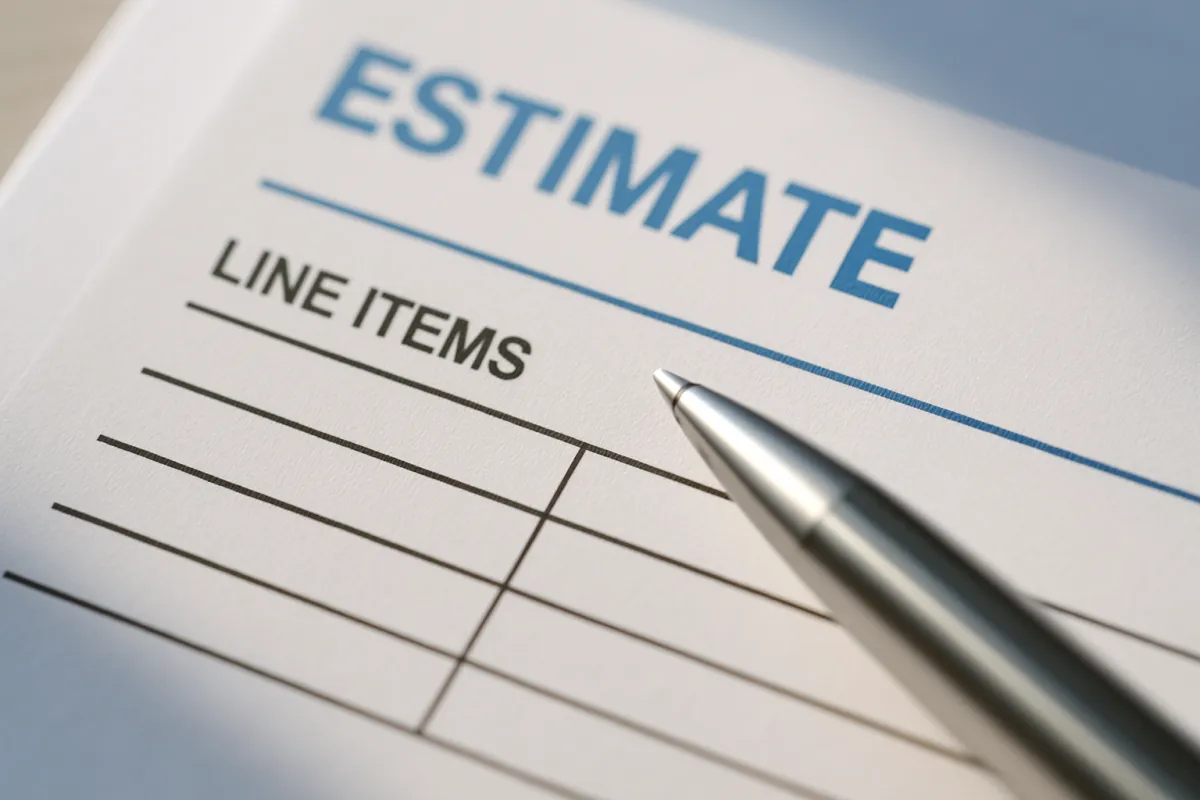
Leak repair is where hourly pricing shows its logic most clearly, because the work is genuinely unpredictable until someone looks. A visible leak on an accessible pipe, under a sink, in a basement, along an exposed run in a garage, is a contained job: isolate the water, cut out the failed section, fit a repair, test, and go. The illustrative all-in range of $175 to $600 covers most of those.
A leak inside a wall, above a ceiling, or under a slab is a different animal. Before anything can be repaired it has to be located, which may involve moisture readings, listening equipment, or simply opening drywall in the most likely place and being wrong once. Then the repair itself happens in a confined space. The illustrative $400 to $1,500 range for concealed leaks reflects that sequence, and it usually excludes the drywall, tile, or flooring restoration afterward, which is a separate trade and a separate bill.
Three factors move a leak repair up the range faster than anything else. Access is the first and largest. The age and material of the existing piping is the second, because older systems sometimes cannot be repaired in place and need a section replaced. The third is how long the leak ran, since a slow leak that soaked a joist for months turns a plumbing job into a repair project. Shutting the water off at the main the moment you find a leak is free and frequently saves four figures.
Running toilet and toilet repairs
A toilet that runs is the cheapest common plumbing complaint and one of the few genuinely worth attempting yourself. The internal parts, a flapper, a fill valve, a flush valve, are inexpensive and designed to be replaced, and a plumber doing it is usually in and out well inside the minimum charge, which is why the illustrative range of $100 to $300 is dominated by the trip and the minimum rather than the work.
Replacing the whole fixture is a step up. Pulling a toilet, cleaning the flange, fitting a new seal, setting and levelling the new unit, and confirming there is no rocking or seepage is a genuine hour or so of skilled work, and the illustrative $200 to $500 labor range assumes you supply the toilet and that the flange underneath is sound. A corroded or broken flange is the common surprise here, and repairing one adds meaningfully to both time and cost.
This is also a good example of where a service call gets efficient. If you are already paying a minimum charge to have someone out, adding two toilet rebuilds and a supply line swap costs far less than the same tasks booked separately. Our framework for deciding what to attempt yourself is worth reading before you either call or reach for the wrench.
Faucet replacement cost
Swapping a kitchen or bathroom faucet is a well-defined job, which is why it is one of the most commonly flat-priced items in a plumber’s book. The illustrative labor range of $150 to $400 assumes you have bought the faucet and that the plumber removes the old unit, fits the new one, and replaces the supply lines while access is open. Fitting new supply lines at the same time is standard good practice and worth the few dollars it adds.
The variable that moves this job is the condition of what is already there. A faucet that comes out cleanly is quick. Corroded mounting nuts in a cramped cabinet, a shutoff valve that will not close or that weeps once disturbed, or a sink that has to come out to reach the fixings can double the time. A plumber quoting flat will price in some of that risk, and a plumber quoting hourly will simply bill it, which is the structural difference in miniature.
One planning note. If your shutoff valves under the sink are old and stiff, ask for them to be replaced during the same visit. It is a small addition while the water is already off and the cabinet is already open, and it converts every future repair at that fixture from a whole-house shutdown into a two-minute isolation.
Garbage disposal installation cost
Fitting or replacing a food waste disposer is another well-defined job that most shops price flat. The illustrative $200 to $500 range covers removing the old unit if there is one, mounting the new one, connecting the drain and the dishwasher inlet, and testing, with the appliance itself usually supplied by you. A straight like-for-like swap sits at the bottom of that range.
A first-time installation sits higher and can climb out of it. A sink without an existing disposer often needs the drain plumbing reworked to suit, and if there is no switched outlet under the cabinet, an electrician rather than a plumber has to make that part happen. That is worth clarifying on the phone, because a plumber arriving to find no power available has made a trip that cannot become a repair.
The other cost driver is the unit you choose. A more powerful disposer is heavier and sometimes taller, which occasionally forces changes to the drain height under the sink. None of this is expensive individually, but it is the kind of small complication that turns a flat quote into a change order, so describe your existing setup honestly when you book.
Sewer camera inspection cost
A sewer camera inspection is diagnostic rather than corrective: a plumber feeds a camera down the line and reports what is there, ideally with recorded footage and a located depth for anything found. The illustrative all-in range of $250 to $600 reflects an hour or so of work with expensive equipment, and it is one of the few plumbing services where the deliverable is information rather than a repair.
It earns its cost in three specific situations. The first is a line that blocks repeatedly, where cabling has become a subscription rather than a fix. The second is before buying a home with mature trees, an older sewer connection, or any history of backups, since a bad line is a four or five figure problem that a few hundred dollars of inspection can reveal in advance. The third is before any significant work on the line, so the plan is based on what is actually there.
Ask two things when booking. First, whether you receive the footage and a written report, because a verbal “it looks bad” is not something you can get a second opinion on. Second, whether the inspection fee is credited against repair work if you proceed with the same company, since some shops do credit it and that changes the arithmetic of using them for the follow-up.
Water line and main shutoff valve work
Work on the main water supply is where plumbing prices leave the familiar hundreds and move into project territory. Replacing a main shutoff valve inside the house carries an illustrative $400 to $1,500 range, and the spread is mostly about whether the water can be isolated upstream easily. If the street-side valve is seized or the utility has to be involved, the coordination alone stretches the job.
Replacing the water service line from the meter or street to the house is a bigger undertaking again, with an illustrative $1,500 to $5,000 range that behaves more like excavation pricing than plumbing pricing. Length of the run, depth, what is on top of it, and whether the work can be bored rather than trenched all move the number, and restoring a driveway or mature landscaping afterward is frequently a separate cost nobody quoted.
Two practical points. Work at this level commonly requires a permit and an inspection, and it may involve the water utility as well as the municipality, so the timeline is longer than the labor suggests. And this is the tier where collecting several detailed written quotes genuinely pays, because the spread between plumbers on a service line replacement can be enormous. Our walkthrough on reading an estimate is the right companion when the quotes come back.
Permits, inspections, and who pulls them
Permits are the part of plumbing pricing where general statements are least reliable, because the rules are set locally. States, counties, and municipalities each define what requires a permit, who may pull it, and what gets inspected, and those definitions differ enough that a rule from one jurisdiction is not evidence about another. The building department or permit office for your address is the authority, and a five-minute call to them settles questions that no article can.
The general pattern most homeowners encounter is that simple like-for-like repairs, clearing a drain, swapping a faucet, rebuilding a toilet, tend not to require a permit, while work that alters the drain, waste, vent, gas, or water supply piping, or that moves a fixture, frequently does. Where a residential plumbing permit is required, the illustrative fee commonly falls between $75 and $250, with sewer or water service work reaching several hundred dollars in some places.
Normally the plumber pulls the permit and passes the cost through as a line on the invoice, and that is the arrangement you want, because the permit holder is the one accountable for the work passing inspection. Be cautious if a contractor suggests you pull it as the homeowner to save money, and be more cautious if they suggest skipping it entirely. Unpermitted plumbing work can surface later as a problem at sale, at insurance claim time, or at the next inspection. Our note on getting a building permit covers the process in more detail.
What moves the hourly rate up or down
Once you know the band, the useful question is what places a given plumber inside it. Six factors do most of the work, and none of them are mysterious.
Region is the largest single factor. Labor rates track local cost of living and local demand, so the same skill costs meaningfully more in a high-cost metro than in a rural county, and comparing a quote to a national figure is close to meaningless. Business size is the second. A one-person operation carries less overhead and often quotes lower, while a company with dispatchers, a fleet, and 24-hour availability charges for the infrastructure that makes those things possible.
Specialization is the third. Ordinary service work sits in the middle of the band, while gas fitting, backflow prevention, medical or commercial systems, and anything requiring specific certification sit above it. Demand and season are the fourth: a cold snap that bursts pipes across a city, or a storm that floods basements, tightens supply and pushes both pricing and lead times. The fifth is the specific job’s risk profile, since work that could cause water damage if it goes wrong carries more care and more insurance behind it. And the sixth is simply timing, since an after-hours call multiplies whatever the other five produced. The job cost estimator lets you test how much each of those levers moves a total.
Independent plumbers versus large service companies
The choice between a one-truck independent and a large branded company is a real trade-off rather than a question of who is cheaper. Independents typically quote lower hourly rates, an illustrative $65 to $120 against a large company’s effective $120 to $250, because they carry far less overhead. What you give up is availability, depth of stock on the truck, and the ability of the business to absorb a mistake.
Large companies sell the opposite bundle. They answer the phone at 2am, they dispatch quickly, they usually stock more parts, and they typically stand behind the work with a written guarantee backed by a business with assets. They also employ salespeople, run marketing, and price accordingly. Their flat-rate books mean you know the number before work starts, which many homeowners value more than a lower hourly rate they cannot verify.
The sensible approach is to match the choice to the job. For a routine repair on a weekday, an independent with good local reputation is usually excellent value. For a middle-of-the-night emergency, or for complex work where you want a guarantee that will still exist in five years, the larger company’s premium buys something real. In both cases the non-negotiables are identical: current licence, current insurance, itemized written quote. Our note on finding a good contractor applies directly to plumbers.
Parts, markup, and who supplies the fixture
Parts are the second line on most plumbing invoices, and the way they are priced causes more arguments than the labor. Plumbers mark up parts, typically well above what you would pay retail for the same item. This is standard practice across the trades and it is not, by itself, dishonest: the markup pays for carrying the stock on the truck so the job finishes today, for sourcing the right part, and for warranting it once fitted.
Where it becomes worth questioning is on expensive fixtures. A marked-up ten dollar fill valve is a rounding error. A marked-up premium faucet or a high-end fixture can add hundreds. That is why so many homeowners supply major fixtures themselves and pay labor only, which most of the illustrative ranges in the table above assume.
There is a real trade-off in doing so. When you supply the fixture, you own the warranty problem: if it fails or arrives with a missing part, the plumber’s warranty typically covers only the installation, and a return trip is billable. When the plumber supplies it, the whole thing is their responsibility. Ask which model applies before you buy anything, and if you do supply the fixture, have it on site, unboxed, and checked for completeness before the appointment.
A worked example: a two hour service call
Walk one illustrative scenario end to end to see how the lines combine. A kitchen sink is draining slowly and there is a slow drip from the trap underneath. It is annoying rather than urgent, so the homeowner books a scheduled weekday appointment rather than calling after hours, which is the first and largest saving available.
The shop charges a $75 trip fee and bills journeyman time at $110 an hour with a one-hour minimum. The plumber clears the branch drain, finds the trap arm corroded rather than simply loose, and replaces the trap assembly. Total time on site is two hours, and the parts come to $60. The arithmetic is straightforward: labor of 2 hours at $110 is $220, plus the $75 trip fee, plus $60 of parts, for a total of $355. Because quotes on identical work vary, a sensible planning band around that figure is roughly $302 to $444.
The number worth noticing is the effective rate. Divide the $355 total by the two hours on site and you get about $178 an hour, well above the $110 headline. That is not a hidden markup, it is simply what happens when a fixed trip fee and parts are spread across a short visit, and it is exactly why comparing shops on hourly rate alone is misleading.
Now change one variable. Suppose the same call happens at 9pm on a Sunday. The labor rate is multiplied by an illustrative 1.5, so the two hours bill at $330 instead of $220, and the total moves to roughly $465, an effective rate of about $233 an hour. Same plumber, same work, same parts, and about $110 of difference bought by nothing except the hour on the clock. Rebuild either version on your own numbers using the companion on this page.
How to lower what you pay a plumber
Reducing plumbing cost is mostly about arranging the work well rather than negotiating hard. A handful of habits do the heavy lifting.
- Batch small jobs into one visit. You pay the trip fee and the minimum charge once, then buy additional time at the marginal rate. Three small jobs in one appointment routinely costs less than half of three separate calls.
- Schedule instead of emergency-calling whenever it is safe. Knowing where your main shutoff is, and confirming it actually turns, converts many panicked after-hours calls into standard-rate morning appointments.
- Ask the four phone questions before booking. What is the trip fee, is it credited toward the work, what is the minimum charge, and does the rate change outside business hours. Those four answers explain most of the variance between quotes.
- Get an itemized written quote on anything beyond the minimum. Labor, parts, trip fee, and permit on separate lines is what makes two quotes comparable at all.
- Supply your own major fixtures when it suits. Paying labor only on a faucet, toilet, or disposal avoids markup, as long as you accept the warranty trade-off and have the item on site and checked.
- Clear access before the plumber arrives. Empty the cabinet, move the storage away from the cleanout, and unpark the car. Every minute the plumber spends shifting your belongings is billed at their rate.
- Fix small leaks immediately. A drip is a cheap repair; the same drip six months later is a cheap repair plus a joist, plus drywall, plus possibly a floor.
None of these involve pushing a plumber’s price down. They involve buying fewer visits, at better hours, with less time wasted on site, which is where the real money is.
Common mistakes when hiring a plumber by the hour
Most of what homeowners overpay traces to the same short list, and each one is avoidable once you can see it.
- Comparing hourly rates instead of totals. A shop with a low rate, a high trip fee, and a two-hour minimum can easily cost more than a higher-rate shop with neither. The total for your job is the only comparable number.
- Calling an emergency for a non-emergency. Paying an illustrative 1.5 or 2 times multiplier for something that could have waited until morning is the most expensive routine mistake in this trade.
- Approving work verbally with no written scope. Hourly billing without an agreed scope and an agreed check-in point is an open check, and it is where “it just kept going” bills come from.
- Paying to clear the same drain repeatedly. Three clearings on one line costs more than one camera inspection plus the actual fix, and the third clearing is money spent to learn nothing.
- Skipping the licence and insurance check to save money. The saving is real and small; the exposure, in a trade whose failures flood houses, is real and large.
- Ignoring the shutoff valves. Old, seized isolation valves turn every future small repair into a bigger job, and replacing them during work you are already paying for is nearly free.
- Letting a low quote go unexamined. A number well below the others usually differs in scope, in what it excludes, or in what the business carries. Find out which before treating it as a bargain.
The discipline behind all of these is the same: understand what the total is made of, agree the scope in writing, and reserve the premium hours for genuine emergencies.
Questions to ask before you book
The most valuable five minutes in any plumbing job happen on the phone before a van is dispatched. Ask these, and write the answers down.
Start with the money structure. What is the trip or service call fee, and is it credited toward the repair if I approve the work? What is the minimum charge or first-hour rate? Do you bill hourly or by flat rate for this job, and if hourly, what is the rate and does it change after hours or at weekends? Those four answers make quotes comparable.
Then ask about the work itself. Who will actually attend, and at what rate are they billed? Does the rate change if a second person comes? Will you provide an itemized written quote before starting? Does this job need a permit in my jurisdiction, and will you pull it? What warranty covers the labor, and what covers the parts, and for how long?
Finish with the credentials. Confirm the business is licensed as your local authority requires and ask for the licence details so you can verify them yourself with the issuing body rather than taking a number on trust. Ask for proof of current liability insurance sent directly by the insurer. A legitimate shop answers all of this without friction, and hesitation on any of it is itself an answer.
The bottom line
Plumber cost per hour is a real number, an illustrative $75 to $150 for most residential service work with a midpoint near $110, but it is never the number you pay. The bill is the rate multiplied by hours, plus a trip fee of an illustrative $50 to $150, plus a minimum charge that catches short jobs, plus parts, plus a permit where local rules require one, and all of it multiplied again if you called at midnight instead of Tuesday morning. A homeowner who understands those five lines can read any plumbing quote, and a homeowner who only knows the hourly rate cannot.
The habits that protect your budget are unglamorous and they repeat across every job: batch small work into one visit, schedule rather than emergency-call whenever it is safe, ask the four pricing questions before booking, insist on an itemized written quote, and verify the licence and insurance with the bodies that issue them. Every figure in this cost file is illustrative and varies with your region, your access, and your plumber, so let the written quotes for your own home, not any published range, be the numbers you act on.
ProsNook publishes this cost file so homeowners can read a plumbing invoice with confidence, and it is educational material rather than professional, plumbing, safety, or legal advice. Every hourly rate, job price, fee, multiplier, and percentage on this page is illustrative and will differ with your region, the shop you call, the age and layout of your piping, and what is found once the work is opened up, so treat them as a framework for asking better questions rather than as a quotation. Licensing, permitting, and inspection requirements for plumbing are set by state, county, and municipal authorities and are not uniform anywhere, so your local building department and licensing board are the only sources that can tell you what applies at your address. Work involving gas lines, sewage, or water under pressure carries genuine hazard, and an uncontrollable leak, a sewage backup, or a suspected gas odour should be treated as an emergency and handed to qualified professionals and your utility immediately. Confirm current local pricing and credentials with licensed plumbers before committing to any work.
Frequently asked questions
How much does a plumber cost per hour?
Most residential service plumbing falls in an illustrative band of roughly $75 to $150 an hour for the person actually doing the work, with a common midpoint near $110 in many markets. Below that band sit apprentices and helpers at an illustrative $45 to $90, and above it sit master plumbers at an illustrative $100 to $200 and large branded service companies whose flat-rate pricing works out to an effective $120 to $250 an hour once you divide the bill by the time on site. Every one of those figures is illustrative and moves substantially with your region, the size of the shop, and how specialized the work is. The only number that means anything for your job is a written quote from a licensed local plumber.
Why do plumbers charge a call out or trip fee?
A trip or service call fee covers the cost of dispatching a stocked truck and a trained person to your address, which is real expense the shop carries whether or not you approve any work. The illustrative amount commonly falls between $50 and $150, with something near $75 typical for a scheduled daytime visit and more for evenings, weekends, and holidays. Many shops credit that fee toward the repair if you approve the work with them, which turns it into a deposit rather than a pure add-on, but plenty of others keep it as a separate diagnostic charge. Ask which policy applies before you book, because the answer changes what a second opinion actually costs you.
What is a plumber's minimum charge?
Almost every plumbing shop has a floor below which it will not bill, usually expressed as a minimum of one hour of labor or as a flat first-hour charge that bundles the trip fee. In illustrative terms that floor commonly lands somewhere between $150 and $350 all in, which is why a ten-minute washer replacement can still generate a bill in the low hundreds. The minimum exists because the drive, the paperwork, and the truck stock cost the same whether the fix takes five minutes or fifty. The practical response is to batch small jobs into one visit so you buy the minimum once instead of three times.
How much more does an emergency plumber cost?
After-hours, weekend, and holiday plumbing typically carries a premium, and the two common structures are a multiplied labor rate or a flat emergency surcharge added to the normal bill. An illustrative evening or weekend multiplier sits around 1.5 times the standard rate, and a true overnight or holiday call can reach roughly 2 times, so a $110 hour becomes an illustrative $165 or $220. Some shops instead add a flat emergency fee in the low hundreds and bill the labor normally. Neither structure is dishonest, but they produce very different totals on a short job, so ask which one applies before anyone is dispatched.
Is flat-rate or hourly pricing better for the homeowner?
Neither is automatically better, because they move the risk of the job running long to different sides of the table. Hourly billing rewards you when the work goes smoothly and exposes you when a simple repair turns into an afternoon, while a flat-rate price locks the number in advance and shifts the overrun risk to the plumber, who prices that risk into the quote. Flat rate tends to suit well-defined jobs such as a faucet swap or a disposal install, and hourly tends to suit diagnostic or open-ended work such as chasing a hidden leak. What matters more than the structure is that the scope, the inclusions, and the trigger for any change order are written down before work starts.
How much does it cost to unclog a drain?
A single clogged sink, tub, or shower drain cleared with a hand auger or a small drum machine commonly runs an illustrative $150 to $375 including the trip fee, because it is usually under an hour of work with no meaningful parts. A main line or sewer clog cleared through an outside cleanout is a different job, with an illustrative $300 to $800 range because the machine is larger, the access is harder, and the visit takes longer. If the line needs hydro jetting rather than cabling, expect an illustrative $400 to $1,200. Repeat clogs in the same line usually point at a structural problem, which is when a camera inspection earns its cost rather than another clearing.
Do I need a permit for plumbing work, and what does it cost?
Permit rules are set locally rather than nationally, and they vary by state, county, and municipality, so the only reliable source is your own building department. As a general pattern, simple like-for-like repairs such as swapping a faucet or clearing a drain usually do not require a permit, while work that alters the drain, waste, vent, gas, or water supply piping often does. Where a residential plumbing permit is required, the illustrative fee commonly falls between $75 and $250, with sewer or water service work reaching several hundred dollars in some jurisdictions. The plumber normally pulls the permit and passes the cost through, and a contractor who suggests skipping a required permit is telling you something important about how they work.
How can I tell if a plumber's quote is fair?
Start by getting the quote in writing with the labor, the parts, the trip fee, and any permit broken out separately, because a lump sum hides the one line you most want to compare. Then sanity-check the labor against the illustrative hourly bands: divide the labor figure by the hours the plumber expects to be on site and see whether the implied rate is plausible for your market. For anything beyond a few hundred dollars, collect two or three quotes on the same written scope so you are comparing like with like rather than guessing. A fair quote is one you can read line by line and explain back, from a licensed and insured business that answers questions without pressure.