What's on this page
- How to find a roofing contractor near you
- Check 1: Verify the roofing license and registration
- Check 2: Confirm liability insurance and workers comp
- Check 3: Check bonding and manufacturer certification
- Check 4: Judge local reputation, reviews, and portfolio
- Check 5: Get multiple written roofing bids
- Check 6: Read the roofing estimate line by line
- Check 7: Understand the roof warranty, material vs workmanship
- What a good roofing estimate includes
- Roofing contractor red flags to walk away from
- Storm chasers and door knockers after a big storm
- How roof insurance claim coordination should work
- Questions to ask a roofing contractor before you sign
- How to avoid common roofing scams
- A worked example: hiring a contractor for a roof replacement
- Roof repair versus full replacement
- Common mistakes when hiring a roofing contractor
- The bottom line
Short answer: Hiring a roofing contractor comes down to seven checks: an active license, insurance and bonding confirmed with the insurer directly, a checkable reputation, at least three itemized bids on the same scope, a detailed estimate naming squares, material, tear-off, underlayment, flashing and a per-sheet decking rate, a written contract, and the warranty. Separate the manufacturer's material warranty from the contractor's workmanship warranty, and get more bids after any storm door-knocker.
Hiring a roofing contractor sits among the higher-stakes decisions a homeowner makes, because the roof is the one system standing between the weather and everything you own underneath it. When you go looking for a contractor for roofing work, the difficulty is that the finished job looks identical whether it was done right or done fast: fresh shingles hide the decking that was never inspected, the flashing that was reused, and the underlayment that got skipped to shave a day off the schedule. You often only learn the difference during the first hard rain a year later, long after the crew and the low bid that won them the job have moved on.
This checklist turns that gamble into a short sequence of verifications: seven checks that take a roofer from a name on a truck to a signed contract you can trust, plus what a good roofing estimate includes, the red flags that should end a conversation, how roof warranties actually work, and how to coordinate an insurance claim without getting steered. It is written to sit alongside our broader note on how to vet a contractor, which covers license and insurance verification for any trade, and our contractor cost file, which explains how a price is built. For the roofing numbers themselves, pair this with our roof replacement cost file, and start by pulling an illustrative range for your job from the job cost estimator, so every roofing conversation begins next to a realistic number.
Key takeaways
- Hiring a roofer is seven checks, not a price decision: license, insurance and bonding, reputation, multiple bids, a detailed estimate, the contract, and the warranty.
- Verify the license and get the insurance certificate directly from the insurer yourself. Roofing is height work, and an uninsured crew on your property is your liability.
- Get at least three itemized bids on the same scope. The lone quote from a door-knocker after a storm is exactly when a second and third opinion pay for themselves.
- A good roofing estimate names the squares, material, tear-off, underlayment, flashing, a per-sheet decking rate, cleanup, and both warranties in writing.
- Separate the material warranty (from the manufacturer) from the workmanship warranty (from the contractor). The workmanship warranty is the one that protects you against a bad install.
How to find a roofing contractor near you
Before you can vet anyone, you need a short list worth vetting, and where a roofing candidate comes from shapes how much you can trust them. The strongest leads are personal: neighbors who had a roof done recently and can point at the finished result, a local building supplier who knows which crews pay their bills, or a real estate agent who has watched roofers across many closings. A referral you can stand under beats any advertisement, because you are seeing the actual product rather than a promise about it.
Round the list out with your state or local contractor licensing directory, which often lists licensed roofers alongside the lookup tool you will use in Check 1, and with local reviews read the smart way. Skip the five-star raves and one-star rants and spend your time in the three- and four-star reviews, where the specifics about communication, cleanup, and how a leak callback was handled actually live. Prioritize contractors with a fixed local address and a history in your area, because a roof is a long-term relationship: the workmanship warranty is only worth something if the company is still nearby to honor it.
Aim for three to five candidates, then pre-qualify each with a short call before scheduling any inspection. Confirm they are licensed and insured, that they routinely do your kind of roof, and that they are realistically available in your window. As an illustrative filter, a roofer booked out four months when your roof is actively leaking is not a candidate no matter how good, and one who cannot answer a basic licensing question has already told you something. Deliberately avoid building the list from a single door-knock, which is the sourcing channel most likely to end in regret.

Check 1: Verify the roofing license and registration
Start with the license, because it is the check that filters out the largest share of unqualified operators, and it is the one most homeowners skip when a roof is leaking and the pressure is on. Ask each contractor for their license number directly, then look it up yourself on your state or local licensing board’s online tool, which is usually free and takes under a minute. Confirm three things rather than one: that the license is active and not expired or suspended, that its class actually covers roofing, and that the name on the license matches the exact business you are hiring. A borrowed or lapsed number registered to a different company is a classic dodge, and the name mismatch is often the only visible sign of it.
Licensing rules for roofing vary widely. Some states license roofers specifically, others fold roofing into a general contractor classification, and some leave it to local registration with no state license at all. Treat your board or building department as the authority rather than any general claim, including this one, and when you are unsure what your project needs, call and ask directly, then confirm your candidate holds exactly that. Where no license is required, the absence does not lower your diligence: it raises the weight of every other check, especially insurance and references.
Watch out for the reassuring wave-off, “I have been roofing for twenty years, do not worry about the paperwork,” which is confidence, not a license. Any roofer who resists a routine license check is handing you your answer for free. This is the same verification discipline our full contractor vetting walkthrough applies to every trade, and roofing is the trade where skipping it hurts most, because the work happens out of sight on a surface you will not climb up to inspect.
Check 2: Confirm liability insurance and workers comp
A license says a roofer is allowed to work; insurance says an accident on your property does not become your financial problem. These are separate protections, and roofing raises the stakes on both, because the work happens at height with heavy materials over your home and, often, over your neighbors’ as well. Ask for a certificate of insurance, and specifically ask that it be sent to you directly from the insurance agency rather than handed over as a photocopy or a phone photo. A certificate that arrives from the insurer is current and real by definition, while a document handed to you could be expired, altered, or created in a graphics program.
Look for two kinds of coverage. General liability insurance covers damage to your property and injury to others arising from the work, so if a bundle of shingles goes through a skylight or a passerby is hurt, the policy responds rather than your savings. Workers’ compensation covers on-the-job injuries to the crew, and it matters more in roofing than almost any other trade, because falls are a real hazard and, without workers’ comp, an injured roofer may be able to pursue a claim against you, the property owner. If a roofer genuinely works alone with no employees, ask them to say so in writing, and confirm that any subcontracted crew carries their own coverage.
Coverage limits vary, and the only number that matters is the one printed on the actual certificate for your contractor. As an illustrative example, a certificate showing a current general liability limit and active workers’ compensation for the crew size is the reassuring version; a certificate that expired two months ago, or one that lists only a low limit for a full replacement, is a conversation to have before any work starts. Watch out for the roofer who promises to “send it over later” and never does. The certificate is not paperwork you chase after signing; it is a gate you clear before it.
Check 3: Check bonding and manufacturer certification
Bonding is the third leg, distinct from both licensing and insurance. A surety bond is a limited pool of money that a bonding company will pay out if the contractor fails to complete the work or meet contractual obligations, and in many places licensed contractors must carry one as a condition of licensing. Ask whether the roofer is bonded and for the bond details, then confirm what your area actually requires, because bond rules and minimum amounts vary widely by state and trade. Understand a bond as a partial safety net for non-performance, not a full guarantee: its dollar limit may be well below what a botched roof would cost to redo.
Roofing adds a second credential worth checking that most trades do not have: manufacturer certification. Major shingle and membrane makers run programs that authorize specific contractors to install their products and, crucially, to offer the enhanced or extended manufacturer warranties that a non-certified installer cannot. A certified roofer has met the manufacturer’s training and standing requirements, which is a modest independent signal on top of your own checks, and the certification is also what unlocks the stronger system warranties on the material. Ask which manufacturers a contractor is certified with, and verify it on the manufacturer’s own contractor locator where one exists.
Do not treat either credential as a magic word that ends your diligence. A bond is a floor, not a ceiling, and a certification proves training and product access, not that this particular crew will install your roof carefully. Both are useful signals that sit alongside the license, the insurance, and the reputation check rather than replacing them. The pattern across all three of the first checks is the same: confirm each protection at its source, and let the roofer who clears them calmly separate themselves from the one who gets defensive.
Check 4: Judge local reputation, reviews, and portfolio
Credentials tell you a roofer is allowed and covered; reputation tells you what actually tends to happen when they work. Run this check in two layers. The official layer is the licensing board’s complaint and disciplinary records, your state consumer protection office or attorney general, and a business rating organization that tracks how complaints were resolved. The open layer is general review platforms, which are noisier but reveal patterns the official records miss. Read all of it for patterns rather than single dramas: every roofer with a real track record has one job that went sideways, and the telling detail is whether it was resolved or ignored.
Roofing has its own reputation tells. A brand-new business name with a sudden burst of nearly identical glowing reviews, common in the wake of a big storm when out-of-town crews spin up local-sounding entities, is a pattern worth distrusting. So is a company whose complaint trail seems to vanish exactly when it rebranded. What should reassure you instead is a steady local history: years under the same name, reviews spread naturally over time, and specific mentions of the details that matter in roofing, like a clean magnetic nail sweep and a leak callback handled without a fight.
Then look at the portfolio and the references. Ask for recent local roofs similar to yours, drive by one or two where you can, and call two or three past clients with a script that probes the failure modes: did the final cost match the bid, did the crew protect the landscaping and clean up the nails, did any leak get fixed promptly under warranty, and would you hire them again? Cross-check what references say against the reviews, looking for a consistent story. Our note on comparing contractor quotes carries this same read-for-patterns discipline into the pricing stage, where a strong reputation can justify a slightly higher number.
What to weight when choosing a roofing contractor
Illustrative weighting once the gates (license, insurance, certification) are passed.
Reputation leads for roofing because the work is hidden and the warranty is long, so who will still be here to honor it matters as much as the price. Weights are illustrative.
Check 5: Get multiple written roofing bids
With verified candidates in hand, collect at least three detailed written bids, and insist that every one prices the identical scope. This is not about grinding anyone down; it is about information. Three bids reveal the fair local range, expose an outlier that is suspiciously high or low, and give you a realistic basis for the decision. Fewer than three and you are guessing, and the single quote pressed on you by someone who knocked after a storm is the least trustworthy number of all, because it comes with no comparison and usually a countdown clock.
The condition that makes the comparison work is a defined scope. Every roofer must price the same square footage, the same material and product line, the same tear-off depth, the same underlayment and flashing, or the numbers are not comparable. A bid that assumes one layer of tear-off when another assumes two, or that quietly excludes the permit, is not cheaper, it is describing a different job. When the bids arrive, resist the instinct to rank the three totals fresh from the mailbox, because they almost never price the same work until you normalize them line by line.

Once the bids are aligned, weigh more than the number. As an illustrative example, a roof bid that is modestly higher but carries a named crew, a real workmanship warranty, an honest per-sheet decking rate, and a strong local reputation can beat a lower bid whose thin total rests on a reused-flashing shortcut and no warranty at all. Watch out for the bid that comes in far under the pack: that gap is a warning, not a win, and it almost always means something was left out that you will pay for later. Our full method for comparing contractor quotes walks through normalizing bids so the totals finally mean the same thing.
Check 6: Read the roofing estimate line by line
An estimate is a description of the work wearing a price tag, so read it as a description first. A single lump sum with no breakdown cannot be compared and hides exactly where corners get cut, which is why a detailed, itemized estimate is itself a sign of a serious roofer. Learning the roofing units helps you read it in the language it was written in: roofers quote in squares, where one square equals 100 square feet of roof surface, and the size in squares drives the material and labor lines. Our roof replacement cost file explains the square and the cost drivers in depth, and our note on reading a contractor estimate covers the general skill.
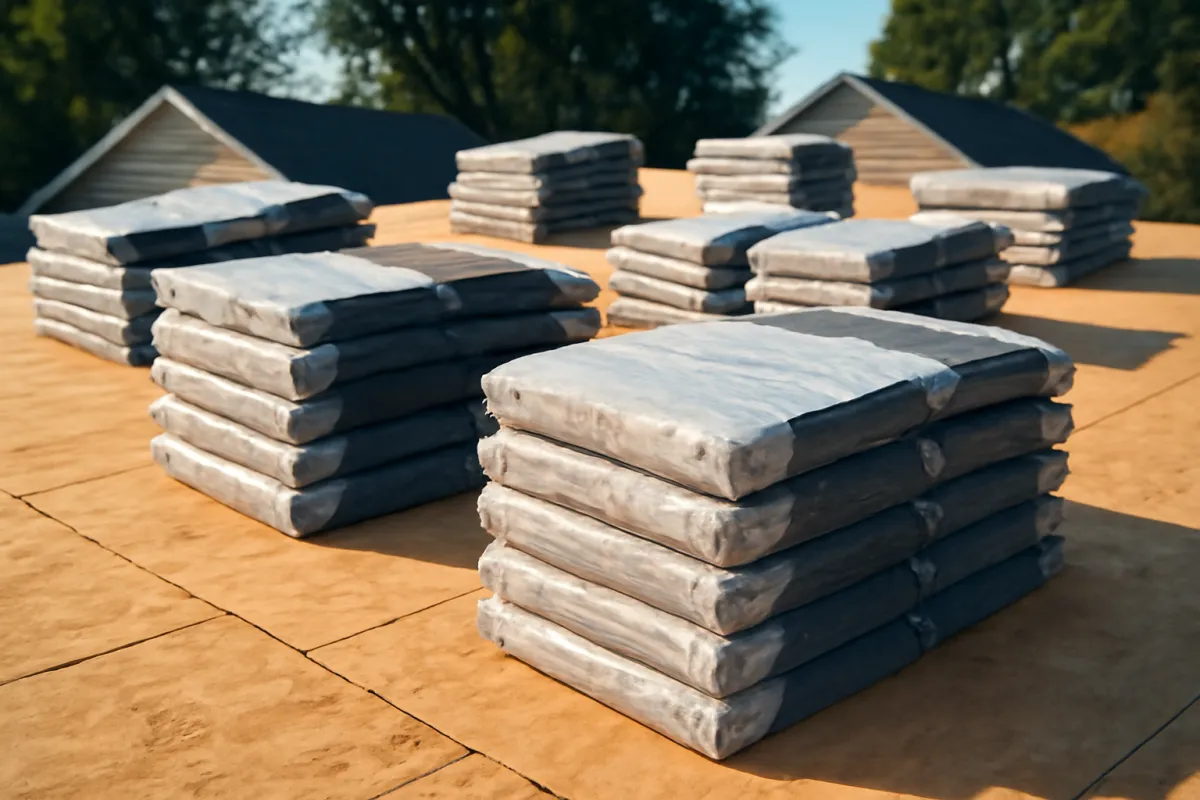
The line that surprises homeowners most is the decking. Nobody knows the condition of the plywood or board decking under the old roof until the tear-off exposes it, so a careful estimate names a per-sheet replacement rate up front for any rotten decking found, rather than leaving it as an open-ended change order priced in the heat of the job. An estimate that is silent on decking is not cheaper, it has simply moved that cost into a mid-project surprise. Ask any roofer whose bid omits it to name the rate before you sign, and treat the honest answer as a mark in their favor.
Beyond decking, read for the pieces a quick bid skips: the tear-off and disposal, the underlayment type, new flashing rather than reused, the drip edge and ridge ventilation, the cleanup and magnetic nail sweep, and the permit responsibility. As an illustrative example, two bids that look ten percent apart can be identical once you add the missing permit and realistic decking allowance to the lower one, or they can be genuinely different because one reuses flashing the other replaces. The estimate that names every line is not being fussy, it is showing you the job, and the one that stays vague is asking you to trust a promise.
Check 7: Understand the roof warranty, material vs workmanship
The warranty is where a roof job either protects you for decades or quietly leaves you exposed, and the single most important thing to understand is that a roof carries two separate warranties. The material warranty comes from the manufacturer and covers defects in the shingle or membrane itself, often for a long term or even marketed as a lifetime, though the fine print usually prorates the payout over the years and typically excludes the labor to fix the problem. The workmanship warranty comes from the contractor and covers installation errors, the leaks and failures that trace to how the roof was put on rather than to the product.
The distinction matters because the most common roofing failures are installation failures, not material defects. A perfect shingle installed with the wrong nailing pattern, over skipped underlayment, or around reused flashing will still leak, and that leak is a workmanship issue the manufacturer’s warranty will not touch. So the workmanship warranty is the one that protects you against the failures you are most likely to see, and it is only as strong as the contractor standing behind it: a long workmanship warranty from a company that vanishes next season is worth nothing, which loops directly back to the reputation and local-history checks.
Ask for both warranties in writing, and read three things in each: the term, what is covered, and what voids it. Manufacturer system warranties are often enhanced when a certified installer uses a full matched system of that maker’s components, which is one practical reason the certification in Check 3 matters. Watch for the common voiders, like installing over an existing layer, inadequate ventilation, or unpermitted work, any of which can quietly cancel coverage you thought you had. Get the workmanship term stated plainly, understand it sits separate from the material coverage, and keep both documents in the closeout file you will want if a settling ridge or a stray leak shows up a year later.
What a good roofing estimate includes
It helps to have a single picture of what a complete roofing estimate looks like, because the gap between a good one and a thin one is exactly where money leaks. A good estimate is specific enough that a second roofer could read it and know precisely what was promised. At minimum it should name the roof size in squares and the pitch, the material and its product line, the number of layers to tear off and how they will be disposed of, the underlayment and ice-and-water shield where climate requires it, and new flashing at every penetration rather than reused metal.
It should also state the fasteners and nailing approach, the drip edge, the ridge and soffit ventilation, and the per-sheet rate for replacing decking found rotten during tear-off. On the logistics side, it names the crew or whether the work is subcontracted, the timeline, who pulls and pays for the permit, how the property and landscaping will be protected, and the cleanup including a magnetic sweep for stray nails. Finally, it puts both the material and workmanship warranties in writing with their terms, and it sets a payment schedule tied to progress rather than the calendar.
As an illustrative example, imagine two bids for the same roof arriving about eight percent apart. One is a single lump sum labeled “tear off and replace roof, all materials and labor included.” The other itemizes the squares, names the shingle line, quotes underlayment and new flashing, states a decking rate per sheet, and spells out both warranties. Even if the itemized bid is the higher of the two, it is the safer hire, because the lump sum has told you nothing about where its lower number came from, and in roofing the lower number almost always came from a line that was left out. The estimate below feeds the companion on this page, which reads your own bid count and deposit back as a live readiness check.
Roofing contractor red flags to walk away from
Some warning signs justify slowing down and asking a question; a few justify ending the conversation outright. The clearest walk-away red flags in roofing cluster tightly, and any two appearing together is rarely a coincidence. A demand for a large upfront deposit, especially in cash, removes your leverage before a single shingle is touched. No verifiable license or insurance transfers the height-work risk straight onto you. A refusal to put the scope, price, and warranty in a written contract means every later dispute becomes your word against theirs.
Roofing red flags by severity
Illustrative severity ranking. Any one flag is worth a pause; two together is a walk-away signal.
The scores are illustrative and rank how much money or liability each gap puts at direct risk. The upfront-cash demand and missing insurance top the list because they are where the largest roofing losses actually happen.
The softer flags still matter. High-pressure tactics to sign today, a “today only” discount, or a warning that the price jumps tomorrow are manufactured urgency, and urgency is the enemy of every check in this article. A quote with no itemized breakdown, reluctance to provide references or proof of insurance, and a business you cannot locate at a fixed local address all point the same direction. So does an offer to handle your insurance claim in a way that sounds too generous, which the insurance section below unpacks.
Any single one of these is a reason to slow down and ask a direct question. Two or more appearing together, a large cash deposit paired with no written contract, or a storm-chaser pitch alongside a bid far under the pack, is a pattern, not a set of coincidences to explain away. The cost of hiring the wrong roofer almost always dwarfs the inconvenience of starting the search over, and our dedicated note on avoiding contractor scams goes deeper on the fraud patterns behind these flags.
Storm chasers and door knockers after a big storm
The single situation that produces the most roofing regret is the knock on the door in the days after a hailstorm or windstorm. It usually opens with a friendly offer of a free inspection, followed by a report of alarming damage you cannot see from the ground, and a push to sign a contract or an “authorization” on the spot, often framed as simply letting them handle your insurance claim. Not every door-knocker is a fraud, but this is the exact setting fraud uses, because it combines urgency, a self-generated diagnosis, and a company that may not exist locally by next season.
The defenses are simple and firm. Never sign anything on your doorstep, including a document that looks like a mere authorization to inspect or to contact your insurer, because some of these forms quietly commit you to a contract or assign your claim benefits away. Never let someone you did not invite climb onto your roof, both for liability reasons and because an unscrupulous crew can create the very damage they then report. And never hand over a deposit to a company you found only because they found you. If a real storm passed through and you suspect damage, that is a reason to call your own established local roofer for an inspection, not to trust the one who appeared uninvited.
The tell that separates the legitimate storm-response roofer from the chaser is patience. A real contractor is content to give you their license number, provide a certificate of insurance from their insurer, wait while you gather other bids, and let you file your own claim on your own timeline. The chaser needs you to move now, before you can compare anyone or verify anything, because comparison and verification are exactly what their pitch cannot survive. When the urgency is coming from the seller rather than from your actual roof, treat the urgency itself as the warning.
How roof insurance claim coordination should work
When storm or hail damage is involved, an insurance claim enters the picture, and this is where good coordination and outright fraud can look superficially similar, so the sequence matters. The honest order is yours to drive: document the damage with photos and dates, file the claim with your insurer, and let the adjuster assess what the policy covers. Your insurer, not any contractor, decides the approved scope of work. Only then does your chosen roofer scope the repair or replacement to match the approved claim, providing a detailed estimate and, ideally, meeting the adjuster on site to talk through the damage.
A reputable roofer supports that process without trying to own it. They will document damage professionally, provide the itemized estimate the adjuster needs, and help you understand the scope in plain terms. What they must never do is offer to waive or “eat” your deductible, inflate the claim with damage that is not there, promise you a “free roof,” or ask you to sign over your claim benefits to them. Those moves are illegal or fraudulent in many places, they can void your coverage, and they leave you, the policyholder, exposed if the claim is later challenged. An offer that sounds too generous to refuse is usually a cost you cannot yet see.
Two principles keep you safe. First, you choose the contractor, not the insurer and not the salesperson who knocked: even inside a claim you should gather multiple bids rather than defaulting to whoever offered to “handle everything.” Second, keep every document, and confirm that the final scope of work matches both the approved claim and your signed contract before the job proceeds and before you release payment. If a contractor’s pitch depends on the insurance company rather than on their own verifiable license, insurance, reputation, and warranty, step back and run the same seven checks you would run on any other roof, because a claim changes who pays but not who you should trust.
Questions to ask a roofing contractor before you sign
A short list of direct questions surfaces most of what the seven checks are after, and how a contractor answers them tells you as much as the answers themselves. Ask them in the site visit or the bid conversation, and listen for calm specifics rather than deflection.
- Are you licensed for roofing here, and what is your license number? You will verify it yourself, but a roofer who supplies it readily has passed the first test.
- Can your insurer send me a current certificate of insurance directly? Confirms liability and workers’ comp, and the willingness to route it through the insurer is itself the signal.
- Are you certified by the manufacturer whose shingles you are quoting? This affects both quality assurance and the enhanced material warranty you can receive.
- Will your own crew do the work, or is it subcontracted? Neither is wrong, but you want to know who is on your roof and that any subs carry their own coverage.
- What is your per-sheet rate to replace rotten decking found during tear-off? A named rate up front prevents the most common mid-job surprise.
- What does the workmanship warranty cover, for how long, and what voids it? The workmanship term is your real protection, so get it in writing.
- How do you protect the property and handle cleanup and the nail sweep? Roofing is messy, and the answer reveals how they treat a home.
- What is the payment schedule, and what deposit do you require? You want progress-based payments and a modest deposit, not a large cash demand upfront.
Write down the answers and compare them across candidates alongside the bids. As an illustrative pattern, the roofer who answers each of these plainly and puts them in the contract is usually the same one whose references check out, while the one who gets vague or impatient on the deposit and warranty questions is showing you how a real dispute would feel. Run your project through the job cost estimator before these conversations so you can weigh each answer against a realistic number.
How to avoid common roofing scams
Most roofing scams are variations on a few schemes, and recognizing the shape of each is most of the defense. The storm-chaser claim scheme, covered above, uses a free inspection and a deductible-waiver offer to capture your insurance claim. The disappearing-deposit scheme takes a large upfront payment, especially in cash, then does little or no work and moves on, which is why deposits stay modest and tied to materials actually arriving. The bait-and-switch scheme quotes a low material grade or thin scope to win the job, then upgrades the “necessary” work once the old roof is off and you have no leverage.
The manufactured-damage scheme is uglier: a crew invited onto the roof for a “free inspection” creates or exaggerates damage to justify a claim or a sale, which is one more reason not to let uninvited inspectors up there. And the phantom-company scheme trades under a local-sounding name with no fixed address, collects, and dissolves before any warranty claim can land, leaving a workmanship warranty that was never worth the paper. Each of these is defeated by the same habits: verify at the source, keep deposits small and progress-tied, insist on a written contract, and prefer an established local roofer you can find again.
The unifying thread is that scams need speed and secrecy, while legitimate hiring runs on comparison and documentation. Every check in this article, the license lookup, the certificate from the insurer, the three itemized bids, the written contract, and the local reputation, is friction that a scam cannot tolerate and a real roofer welcomes. Our dedicated walkthrough on avoiding contractor scams covers the broader patterns, and the roofing-specific lesson is simply that the roof’s height, its hidden work, and the storm-driven urgency make it the trade where these schemes concentrate. Slow the process down, and most of them fall apart on their own.
A worked example: hiring a contractor for a roof replacement
Walk the checks through one illustrative project to see how they connect. A homeowner has an aging asphalt roof, roughly 24 squares, with a slow leak over a bedroom, and pulls a rough range from the job cost estimator and the roof replacement cost file before calling anyone. They build a short list of four: two neighbor referrals, one from the state licensing directory, and one local firm with a long review history, deliberately leaving off the crew that door-knocked after last month’s hailstorm.
A round of two-minute calls drops one roofer booked out five months. The three survivors go through Checks 1 through 3: all hold active roofing-appropriate licenses matching their business names, two send current certificates straight from their insurers while the third’s certificate has lapsed and gets one chance to produce a current one, and two are manufacturer-certified for the shingle line they quote. On reputation, one candidate shows a steady four-plus review history over several years with specific praise for clean nail sweeps, while another has a thinner but clean local record.
In Check 5 the three bids arrive on the same 24-square scope at illustrative totals that land within a modest band, except the lowest, which turns out to have excluded the permit and named no decking rate. Reading the estimates line by line in Check 6, the homeowner adds the missing permit and a realistic per-sheet decking allowance to the low bid, which erases most of its apparent savings. In Check 7 the mid-priced, manufacturer-certified roofer offers the strongest workmanship warranty in writing alongside the enhanced material coverage. The homeowner hires that contractor, signs a written contract with a modest deposit and progress payments, and holds a final amount until the post-job inspection and cleanup are confirmed. Every figure here is illustrative; the sequence is the repeatable part.
Roof repair versus full replacement
The seven checks scale to the size of the job, and matching the effort to the work keeps the process from feeling like overkill on a small repair or dangerously thin on a full replacement. For a modest repair, a few damaged shingles, a flashing reseal, a small leak fix, the sequence compresses honestly: you still confirm license and insurance and still get the work and its warranty in writing, but two quotes may be enough and the contract can be a short signed work order rather than a multi-page document. The anchors hold, verified insurance and a written scope, while the ceremony around them relaxes.
A full replacement runs the other direction, and every check deepens. The scope becomes a detailed square-by-square estimate; verification adds manufacturer certification and a closer read of the licensing board’s complaint history; the bids demand full itemization and line-by-line normalization; references extend to seeing a completed local roof; and the contract grows to cover tear-off depth, decking rates, ventilation, both warranties, permits, and a progress-based payment schedule. The larger the job, the more each check earns its time, because the cost of a bad roof scales with the size of the roof it fails to protect.
The mistake in both directions is applying the wrong intensity. Homeowners who treat a full replacement like a quick patch skip the verification and paperwork a five-figure job demands, and those who demand three itemized bids and reference visits for a single flashing reseal annoy good roofers and stall a simple fix. Read the scale of your job honestly, then dial the seven checks to match, keeping the two anchors fixed at every size. Our roof replacement cost file helps you gauge which end of the scale your project sits on before you start making calls.
Common mistakes when hiring a roofing contractor
Most roofing regret traces back to the same short list of avoidable errors, and every one of them is a check the homeowner assumed rather than confirmed.
- Signing with the door-knocker. The uninvited storm-chase pitch is the single most common path to a roofing loss. Source your own candidates and never sign on the doorstep.
- Taking the lowest bid. A number far below the others is a warning, not a win, and in roofing it almost always means an excluded permit, reused flashing, a missing decking rate, or no warranty.
- Skipping the insurance check. Roofing is height work, and an uninsured fall or a bundle through your window becomes your liability. Get the certificate from the insurer, every time.
- Paying a large deposit upfront. A big, cash-only upfront demand removes your leverage before any work begins. Keep the deposit modest and tie the balance to visible progress.
- Ignoring the decking line. An estimate silent on rotten-decking pricing has not saved you money, it has hidden a mid-job surprise. Get the per-sheet rate in writing before you sign.
- Confusing the two warranties. A long material warranty means little if the workmanship warranty is thin or the contractor will not be here to honor it. Get both in writing and weigh the workmanship term.
Every one of these is prevented by the same discipline the seven checks build: verify each protection at its source, read the estimate as a description of the work, and put the whole agreement, including both warranties, in writing before any money moves.
The bottom line
Hiring a roofing contractor stops being a gamble the moment you treat it as a sequence of checks rather than a race to the lowest bid or a reaction to a knock on the door. Verify the license and registration, confirm liability and workers’ comp insurance directly from the insurer, check bonding and manufacturer certification, judge the local reputation and portfolio, gather at least three itemized bids on the same scope, read the estimate line by line, and understand both the material and the workmanship warranties before you sign. Do those seven things in order and you will have hired the way the homeowners with dry attics and honored warranties did, not the ones who trusted the friendly stranger with the clipboard.
None of it is difficult, and the whole sequence costs a few hours spread across a couple of weeks. The temptation in roofing is always to skip ahead, because the roof is leaking or the storm-chaser says the price ends today. Resist that manufactured urgency, keep the two anchors, verified insurance at the start and both warranties in a written contract at the end, and the rest of the process protects itself. Start from a realistic number with the job cost estimator, lean on our contractor vetting walkthrough for the verification detail, and let the roofer who clears every check calmly be the one who earns your signature.
ProsNook publishes this checklist to help homeowners hire a roofing contractor with confidence, not to serve as legal, insurance, or professional advice. Every dollar figure and coverage detail above is illustrative, and licensing, insurance, bonding, deposit limits, permit rules, and insurance-claim procedures vary by state, locality, insurer, and manufacturer, so treat your local licensing board, building department, and your own insurer as the authority for your situation. Before you sign or pay anything, verify each roofer’s current license and insurance yourself, read the full contract and both warranties, follow your insurer’s own claim process rather than any contractor’s shortcut, and consult a qualified professional where your project or your local rules warrant it.
Frequently asked questions
What should I look for when hiring a roofing contractor?
Look for a contractor for roofing work who is licensed where your area requires it, carries current general liability and workers' compensation insurance, and has a verifiable local track record rather than a magnetic sign and a truck. Ask for the license number and look it up yourself, request a certificate of insurance sent directly from the insurer, and read local reviews and references for patterns rather than a single rave. On the paperwork side, insist on at least three itemized written bids on the same scope, a clear written contract, and a warranty that separates the material coverage from the workmanship coverage. The contractor who clears all of those calmly is usually the one worth hiring, and the one who resists any of them is answering your question for free.
How do I check if a roofing contractor is licensed and insured?
Ask the contractor directly for their license number and their insurer's contact details, then verify both yourself rather than trusting a business card. Many states and localities run a free online contractor license lookup where you confirm the license is active, correctly classed for roofing, and registered to the exact business name you are hiring. For insurance, ask that the certificate be sent to you straight from the insurance agency, showing current general liability and, if the contractor has employees, workers' compensation coverage. Roofing is high-risk work performed at height, so an uninsured crew on your property is a liability you do not want to carry, which makes this the one check you never skip.
How many roofing estimates should I get?
Aim for at least three detailed written estimates for any roof replacement, and make sure every roofer prices the same scope so the numbers are comparable. Three bids reveal the fair local range, expose an outlier that is suspiciously high or suspiciously low, and give you real footing in the conversation. The one condition that makes this work is a defined scope: the same square footage, the same material, the same tear-off and decking assumptions, or you are comparing different jobs. Fewer than three and you are guessing whether a price is fair, and the lone door-to-door quote after a storm is exactly the situation where a second and third opinion pay for themselves.
What does a good roofing estimate include?
A good roofing estimate names the roof size in squares, the material and its product line, the tear-off and disposal, the underlayment and flashing, and a per-sheet rate for replacing any rotten decking found once the old roof comes off. It should also state the crew and timeline, the permit responsibility, the cleanup and magnetic nail sweep, and both the material and workmanship warranties in writing. A single lump sum with no breakdown hides where corners get cut, and the decking allowance is the line that most often turns a tidy quote into a surprise bill mid-job. Read the estimate as a description of the work, not just a price, and treat any missing line as a question to ask before you sign.
What is the difference between a material warranty and a workmanship warranty?
A material warranty comes from the shingle or membrane manufacturer and covers defects in the product itself, often for a long term or even a lifetime, though the fine print usually prorates the value over the years and excludes labor. A workmanship warranty comes from the contractor and covers installation errors, the leaks and failures that trace to how the roof was put on rather than to the material. The two are separate, and the workmanship warranty is the one that protects you against the most common roofing failures, because a perfect shingle installed wrong still leaks. Ask for both in writing, note the term and what voids each, and understand that a workmanship warranty is only as good as the contractor who will still be in business to honor it.
Should I hire a roofing contractor who knocked on my door after a storm?
Be cautious. Door-knocking and storm-chasing are not automatically fraud, but they are the setting in which most roofing scams happen, because the pitch relies on urgency, a free inspection that finds alarming damage, and pressure to sign before you have compared anyone. Never sign anything on the doorstep, never let someone onto your roof who arrived uninvited, and never hand over a deposit to a company you cannot find again next season. If the storm was real and you suspect damage, seek out your own local, established roofer for an inspection and read our note on avoiding contractor scams. A legitimate contractor is happy to wait while you verify them, and the one who is not is telling you why they came to your door instead of earning the referral.
How much deposit should I pay a roofing contractor?
A modest deposit to reserve a start date and order materials is normal, but a demand for a large share of the total before any work begins is a warning sign. A commonly cited comfort ceiling is around 10 percent of the job or a small fixed amount, and some areas cap contractor deposits by law, so check your local rules. Roofing can involve special-order materials that justify a materials payment, but that money should be tied to the materials actually arriving on site, not paid blind. Whatever the figure, keep the balance tied to visible progress, and treat a cash-only, large-upfront demand, especially from someone who found you rather than the other way around, as a reason to stop.
How does a roof insurance claim work with a contractor?
When storm or hail damage is involved, your insurer, not the contractor, decides what the policy covers, so the honest sequence is to document the damage, file the claim, and let the adjuster assess it, then have your chosen roofer scope the repair to the approved work. A reputable contractor will meet the adjuster, provide a detailed estimate, and help you understand the scope, but they should never offer to waive your deductible, inflate the claim, or promise a free roof, all of which are illegal or fraudulent and put you at risk. You choose the contractor, not the insurer, and you should still gather multiple bids rather than defaulting to whoever offered to handle the claim. Keep every document, and confirm the final scope matches both the approved claim and your signed contract.