What's on this page
- What mold remediation costs
- Why the affected area drives the price
- What remediation actually involves
- Containment, negative air and HEPA filtration
- Removal and disposal of porous materials
- Antimicrobial treatment and what it can and cannot do
- Reconstruction is a separate job and often the bigger one
- A small surface patch: the honest DIY boundary
- Safety if you do the small job yourself
- Bathroom mold: what a single room costs
- Bedroom and living space walls after a leak
- HVAC and ductwork contamination
- Crawl spaces and basements
- Attic mold is usually a ventilation problem
- Whole house and post flood remediation
- Illustrative prices by job type
- Where the money goes on a mold project
- Fix the moisture source or pay twice
- Testing and the conflict of interest
- Clearance testing and what finished means
- What insurance typically covers
- Health questions belong with a clinician
- How to compare mold remediation quotes
- What a remediation contract should include
- Red flags and pressure selling
- A worked example: one bedroom wall after a supply line leak
- What you can do to keep it from coming back
- The bottom line
Short answer: Mold remediation itself commonly runs an illustrative $10 to $30 per square foot of affected area, so a bathroom sits near $1,200 and a finished basement after a leak near $9,000 as typical midpoints. Reconstruction is billed separately and is frequently a quarter to a third of the total, so a quote that ends at bare studs is not the whole cost, and fixing the moisture source has to come first.
Mold remediation cost is one of the hardest numbers to pin down in home repair, not because the work is mysterious but because the phrase covers everything from wiping a shower corner to gutting a flooded house. Two homeowners can both search for the same thing and be looking at a $150 afternoon and a $25,000 project. The variable that separates them is not the presence of mold, it is how much affected area has to be contained, removed and rebuilt, and whether the water that caused it is still arriving.
This cost file prices the work the way a remediation contractor actually assembles it: by affected square footage and severity, then by location, because a bathroom, an HVAC system, a crawl space, an attic and a post flood whole house are five different jobs. It also covers the part quotes most often leave out, which is that remediation without fixing the moisture source is money spent on a problem that will return. Our crawl space encapsulation cost file is the natural sibling for below grade moisture work, and our estimate reading walkthrough explains how to tell these lines apart on a bid. Price your own affected area in the job cost estimator as you read.
Key takeaways
- Illustratively, remediation itself commonly runs around $10 to $30 per square foot of affected area, so a bathroom sits near $1,200 and a finished basement after a leak near $9,000 as typical midpoints.
- Reconstruction is billed separately from remediation and is frequently a quarter to a third of the total, so a quote that ends at bare studs is not the whole cost of the project.
- Remediation without repairing the moisture source is a cleaning, not a cure, and the growth commonly returns in the same place within months.
- Testing is most useful when the problem is hidden or disputed; when the company that tests is also the company that remediates, the incentive to find more work is built into the arrangement.
- Insurance often responds to sudden covered water damage and commonly excludes long term seepage, humidity and flooding, and many policies cap mold payouts with a specific sublimit.
What mold remediation costs
Priced honestly, remediation is an area and severity number rather than a flat fee. As an illustrative guide, the remediation portion of the work commonly runs somewhere around $10 to $30 per square foot of affected area, where affected area means the surface that has to be contained, opened, removed and cleaned rather than the floor area of the room. A wall section with growth behind the drywall might be 40 affected square feet in a 120 square foot bathroom, and the smaller number is the one that prices the job.
Severity moves you inside that band. Surface growth on hard materials that can be cleaned in place sits at the low end, often nearer $6 to $12 per square foot, because nothing has to be demolished or disposed of. Growth that has gone into porous materials sits in the middle, since drywall, insulation, carpet and pad have to come out and be bagged. Widespread contamination, or growth on structural framing that has begun to decay, sits at the top, often $18 to $45 per square foot, because containment gets larger, more material leaves the house and structural repair may follow.
What sits outside all of those bands is reconstruction, the moisture repair and testing. Those are separate scopes with separate prices, and a total that omits them is not a project cost. Build the number in layers using the estimator and the ranges below turn into a figure you can plan around rather than a range you have to trust.
Why the affected area drives the price
Remediation labor is priced by containment and handling, and both scale with area rather than with how alarming the growth looks. Setting up a sealed work zone takes roughly the same effort whether the growth inside it is dramatic or faint, which is why very small jobs have a floor price that feels high relative to the size of the stain. Most contractors have a minimum call out for a contained job, illustratively somewhere around $500 to $900, simply because the setup, the equipment and the disposal happen regardless.
Above that minimum the number climbs with the area being opened up. Every additional square foot of drywall removed is material to cut, bag, carry and dispose of, framing to clean, and cavity to dry. Each additional room brought inside containment is another barrier, another negative air path, and more filtered volume. This is why the price per square foot tends to fall as the job grows: the fixed setup spreads across more area, so a 1,200 square foot crawl space can price nearer $3 to $10 per square foot while a four square foot patch prices at a call out minimum.
The practical consequence is that early is cheap. The same leak that would have been a $1,200 bathroom job becomes a $9,000 basement job once it has run behind a wall for a season, because the affected area has grown while the underlying problem stayed the same size. Speed of response is the single largest lever a homeowner controls on this number.
What remediation actually involves
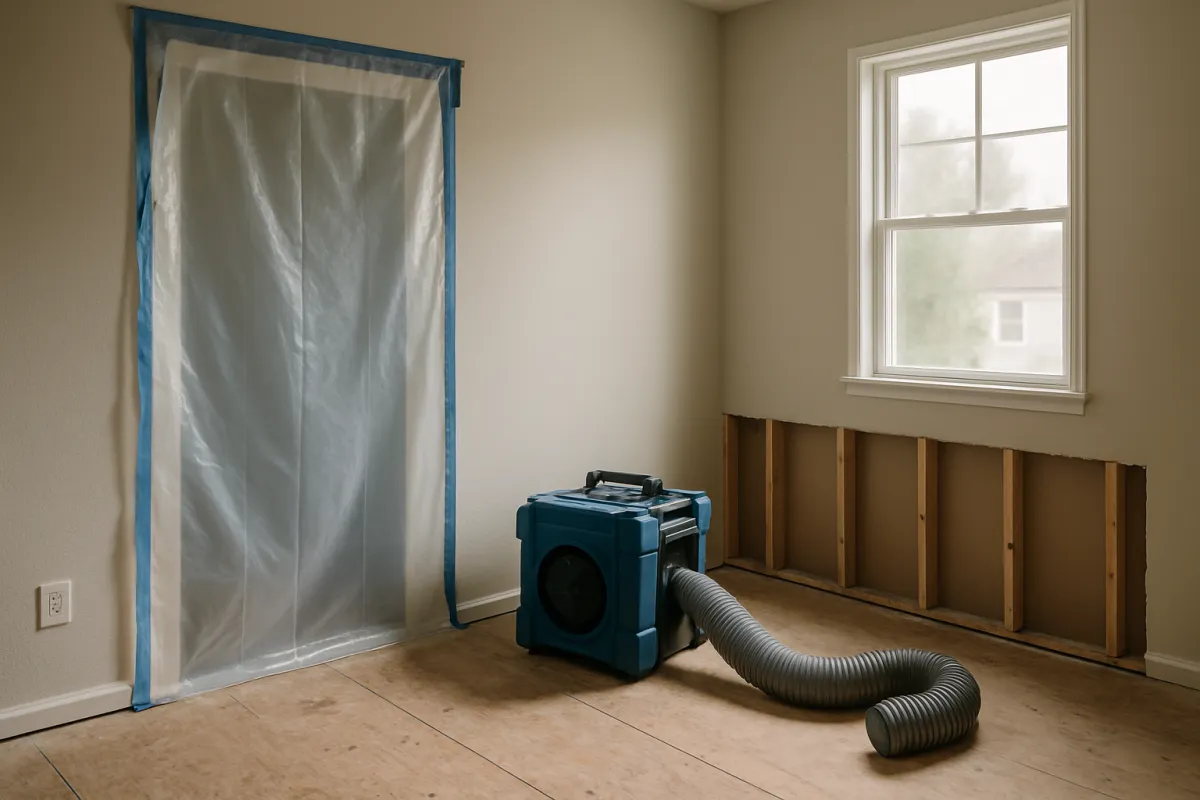
Homeowners often expect remediation to be a cleaning service and are surprised to be quoted like a small demolition project, so it helps to know what the crew is actually buying you. The first phase is containment, sealing the work area off from the rest of the house so that material disturbed during removal does not spread through the living space. The second is air management, running filtration so the contained area is kept at lower pressure than the surrounding rooms and the air inside it is filtered before it leaves.
The third phase is removal, taking out the materials that cannot be cleaned. Porous and semi porous materials that have absorbed moisture, drywall, insulation, carpet, pad, ceiling tiles, particle board, are bagged and disposed of rather than treated in place. The fourth is cleaning and treatment of what remains: framing, subfloor and hard surfaces are cleaned, vacuumed with filtered equipment, wiped, and commonly treated with an antimicrobial product. The fifth is drying, running the cavity down to a normal moisture content before anything is closed back up.
Only after all of that does reconstruction begin, and on most quotes it is either a separate line or a separate company. When you compare a $900 quote against a $4,500 quote, the first question is almost always which of these six phases each of them included, because scope explains far more of the spread than hourly rates do.
Containment, negative air and HEPA filtration
The equipment line on a remediation quote is real work rather than theatre, and it is worth understanding because it is the part most often skipped by the cheapest bidder. Containment is built from sheeting and tape, usually with a zippered entry, sometimes with a decontamination chamber on larger jobs, and it exists so that removing contaminated material in one room does not distribute it into the rest of the house. It is cheap in materials and meaningful in labor.
Negative air means running a filtered air mover so the contained space is held at slightly lower pressure than adjacent rooms, with exhaust ducted outside where possible. The effect is that air flows into the work area rather than out of it, so any material disturbed during demolition travels toward the filter instead of down the hallway. HEPA filtration, on both the air mover and the vacuums, is what makes cleaning meaningful, because ordinary shop vacuums pass fine material straight back into the room.
Illustratively, equipment and containment together commonly account for around a fifth of the remediation line, with a small confined job carrying a couple of hundred dollars of setup and a multi room job carrying several days of equipment rental across several units. A quote with no containment, no negative air and no filtered vacuum on a job that involves opening walls is not a cheaper version of the same work, it is a different and lesser scope, and worth asking about directly before you compare prices.
Removal and disposal of porous materials
The rule that decides most of a remediation scope is simple to state: hard, non porous materials can usually be cleaned, and porous materials that have absorbed moisture usually cannot. Tile, glass, metal, sealed hardwood and solid framing are cleanable in place. Drywall, fiberglass insulation, carpet and pad, ceiling tiles, upholstered furniture, cardboard and particle board are commonly removed, because the growth is inside the material rather than sitting on top of it.
That rule is why demolition dominates the labor on many jobs. Removing affected drywall is usually done well past the visible edge so that the cut lands in clean material, which is why a stain the size of a dinner plate can result in a section of wall being taken out. Insulation in the same bay comes out with it. Carpet and pad in an affected area are typically removed rather than cleaned, and the pad almost always goes even where a rug might be salvageable.
Disposal is its own cost. Bagged material is carried out through the containment, and volume drives both labor and dump fees. On a small job this is a modest line; after a flood it is a dumpster and several crew days. Illustratively, removal and disposal together account for somewhere around an eighth of a typical project total, and considerably more where a lot of finished material is being demolished.
Antimicrobial treatment and what it can and cannot do
Almost every remediation quote includes a line for antimicrobial or biocide treatment, and it is worth understanding what that line is buying. Applied to cleaned framing and hard surfaces, these products are used to treat what remains after removal. What they do not do is substitute for removal: spraying a treatment onto contaminated drywall or wet insulation does not undo the fact that the material is porous and has absorbed moisture, and any scope that leads with spraying rather than removal deserves a direct question about why.
The bleach question comes up constantly. Household bleach is largely water, and on a porous material the water can carry moisture into the substrate while the active ingredient stays near the surface. That is why it is commonly discouraged for anything but hard, non porous surfaces, and why professional scopes are built around physical removal and filtered cleaning rather than around any product. No product is a remediation strategy on its own.
The other thing treatment cannot do is prevent recurrence when the water keeps coming. A treated stud in a wall that still gets wet is a treated stud in a wall that will grow mold again. Treatment is a finishing step on a job whose real work is removal, cleaning, drying and repair, and it commonly accounts for a small share of the total rather than the bulk of it.
Reconstruction is a separate job and often the bigger one
The most common budgeting mistake on a mold project is treating the remediation quote as the project cost. Remediation ends at clean, dry, bare structure. Everything after that, hanging and finishing new drywall, replacing insulation, trim, paint, flooring, tile, a vanity or a section of cabinetry, is reconstruction, and it is either a separate line, a separate contract, or a separate company entirely.
Illustratively, reconstruction commonly runs somewhere around $12 to $30 per square foot of affected area depending on the finish level, which puts standard drywall, insulation and paint at the low end and tiled, cabineted or hardwood spaces at the high end. On a mid sized job that frequently means reconstruction is a quarter to a third of the final bill. A homeowner who budgeted only for remediation is short by exactly that amount at the least convenient possible moment.
There is also a coordination cost. Some firms do both phases, which is convenient and makes the schedule simpler; others remediate and hand you back a room of bare studs. Neither is wrong, but the difference has to be explicit in the quote, because the schedule gap between remediation ending and reconstruction starting is where projects stall for weeks. Our walkthrough on comparing contractor bids covers how to line up two quotes that stop at different points.
A small surface patch: the honest DIY boundary
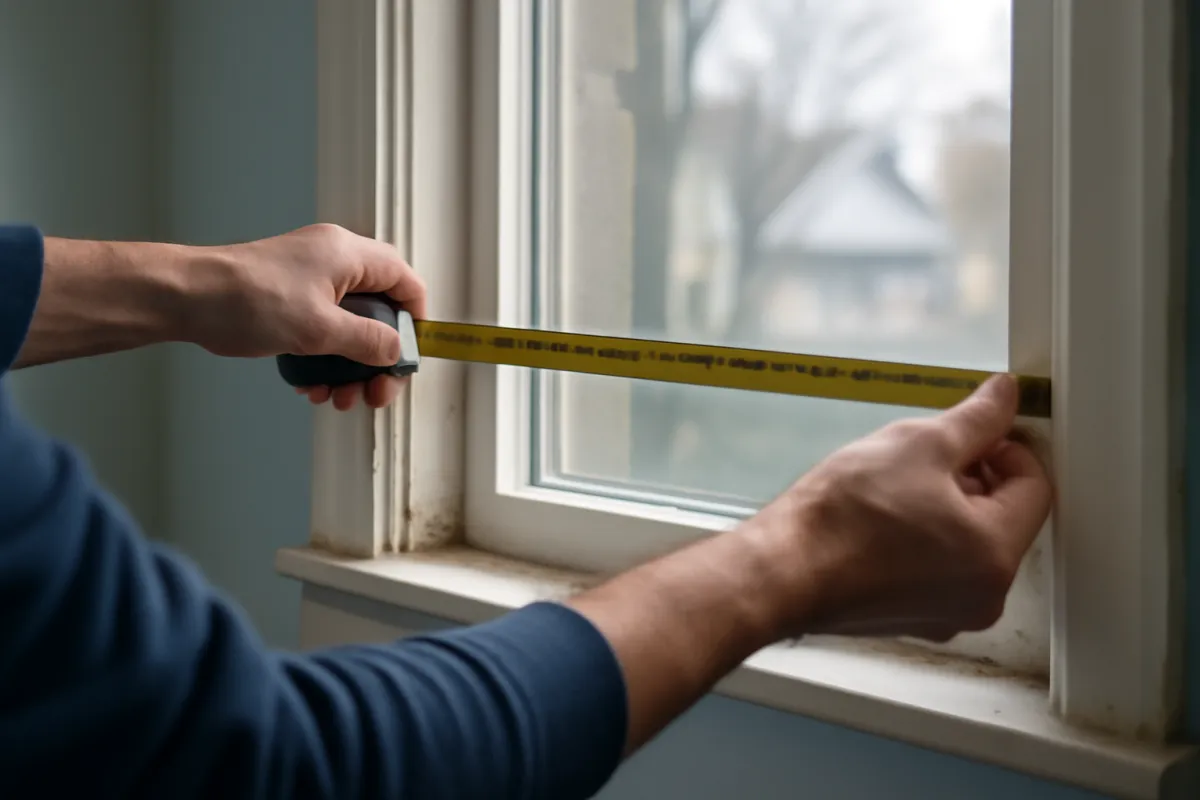
Not every spot of mold is a project. Surface growth on hard, non porous materials in a small area, the corner of a shower surround, the underside of a window sill, the grout line behind a toilet, is generally considered ordinary homeowner cleaning, and the supplies for it illustratively cost somewhere around $75 to $200 including a respirator, gloves, eye protection, plastic sheeting and cleaning materials. The most useful thing you can do in that situation is find out why that corner is wet.
The boundary is drawn by four questions rather than by square footage alone. Is the material porous, meaning it has absorbed moisture rather than merely hosted growth on its face? Is the growth spreading beyond a small confined area? Is there any chance it extends inside a wall cavity, a ceiling, or the HVAC system? Did the water involve sewage, flooding or standing water of unknown origin? A yes to any of those moves the job to a professional, regardless of how small the visible patch is.
The other input is you. Anyone with asthma, allergies, or a condition or medication that affects the immune system should not be the person doing this work, and that is a decision to make with a clinician rather than with a contractor. Our walkthrough on deciding between doing it yourself and hiring out applies here with an extra margin of caution, because the downside of getting this one wrong is spread through the house rather than confined to the room.
Safety if you do the small job yourself
If the job genuinely falls inside the homeowner boundary, treat it as a contained task rather than as wiping a counter. Shut the heating and cooling system off before you start, and cover any supply or return vent in the room, so the system is not circulating disturbed material through the rest of the house. That single step is the most commonly skipped one and the one with the widest consequences.
Wear a properly fitted respirator rather than a loose surgical or dust mask, along with gloves and sealed eye protection, and change out of the clothes you wore before moving through the rest of the house. Isolate the area with sheeting over the doorway and open a window in the work room if you can. Work damp rather than dry, since dry scrubbing and sanding lift far more material into the air, and bag what you remove inside the room rather than carrying it out loose.
Two hard stops are worth naming. If you open something up and find the affected area is substantially larger than you thought, stop, close it back up, and call a professional rather than pressing on. And if at any point you feel unwell during or after the work, leave the area and contact a clinician. Health effects vary a great deal between individuals, which is why this cost file prices work and routes symptoms to a medical professional rather than trying to interpret them.
Bathroom mold: what a single room costs
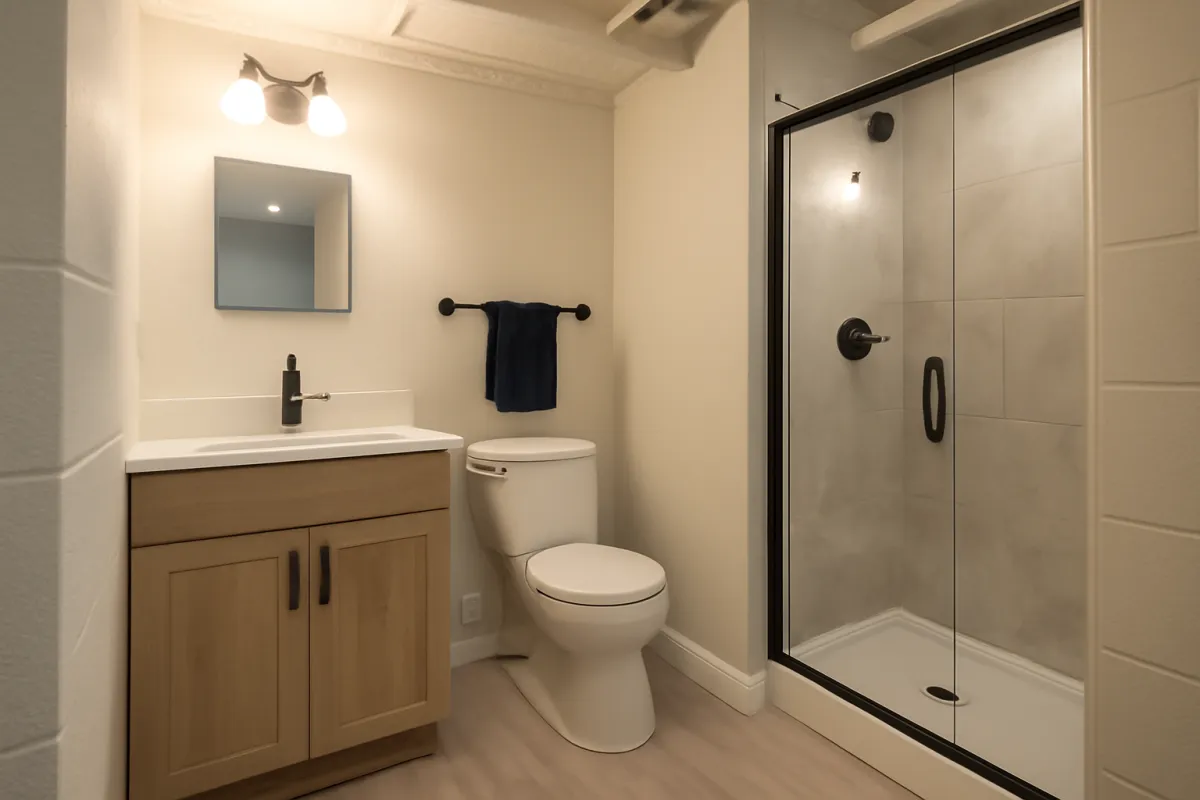
Bathrooms are where most homeowners meet this problem, and they are also among the more predictable jobs to price, because the affected area is usually confined and the causes are a short list. Illustratively, a bathroom remediation commonly lands somewhere around $600 to $1,800, with roughly $1,200 as a typical midpoint for a job that involves opening a section of wall behind a shower or under a vanity, removing the affected drywall and insulation, cleaning and treating the framing, drying the cavity, and handing it back ready for reconstruction.
What moves a bathroom to the top of that band, or past it, is tile and travel. Removing tile to reach a wet wall adds labor and turns the reconstruction into a tiling job rather than a drywall job. A shower pan or a failed waterproofing membrane behind the tile is a larger repair than a supply line fitting. And water that has been running along a joist bay into an adjoining bedroom or a ceiling below has already made this a two room job even though the visible evidence is all in the bathroom.
The cause line matters more here than anywhere else in the house, because bathrooms combine daily water with daily humidity. A fan that vents into the attic instead of outdoors, a fan that is undersized or never run, a caulk joint that has parted at the tub edge, a supply fitting weeping behind a vanity, a wax ring past its life: each is an inexpensive repair and each will regrow the problem if it is left. Price the fix alongside the remediation, not after it.
Bedroom and living space walls after a leak
A wall in a living space is the archetypal single room job, and it is usually the result of something upstream: a supply line, a radiator or heating pipe, a roof or window leak that has tracked down inside the wall, or an appliance failure in a neighbouring room. Illustratively, a single room remediation commonly runs somewhere around $1,500 to $4,500, with roughly $3,000 as a typical midpoint for a job of about 150 affected square feet at mid range severity.
The distinctive feature of these jobs is that the visible evidence understates the affected area almost every time. Water travels along the bottom plate and out through several bays, so a stain in one corner frequently means several feet of wall in both directions. Baseboards come off, drywall is cut back to clean material, insulation in the affected bays is removed, and the cavity is dried and verified before anything is closed. Flooring at the wall edge, particularly carpet and pad or an engineered floor that has swollen at the seams, is often removed too.
Reconstruction here is comparatively simple and comparatively cheap, which is the good news: drywall, insulation, trim and paint at the lower end of the reconstruction band. That is why catching a wall leak early is such a favourable outcome. The same water reaching a finished basement, a cabinet run or a hardwood floor multiplies both the remediation and the rebuild. Our plumbing rate file covers the repair side of the very leaks that create these jobs.
HVAC and ductwork contamination
Contamination inside the heating and cooling system is a different category, because the system’s job is to move air everywhere. Growth on a cooling coil, inside a drain pan that is not draining, on the insulation lining of a duct, or on a filter that has been wet, is a distribution problem rather than a localised one. Illustratively, remediation of an affected HVAC system commonly runs somewhere around $2,000 to $7,000, with roughly $4,500 as a typical midpoint depending on the extent and the duct construction.
Duct type sets much of the price. Bare sheet metal ducts can generally be cleaned. Internally lined ducts and flexible duct with a fibrous inner liner often cannot be cleaned to a satisfactory standard once contaminated, and sections of them are replaced rather than treated, which is why the same square footage can price very differently in two houses. Coil cleaning, drain pan and condensate line repair, and filter housing sealing are commonly separate lines within the same scope.
The underlying cause in these systems is almost always water that is not leaving the way it should: a blocked condensate drain, a pan that has rusted or slopes the wrong way, a coil running so cold that it sweats, or supply ducts running through a hot humid space with poor insulation. Fixing the cooling side is inseparable from the remediation. Our heating and cooling maintenance checklist covers the routine version of that upkeep, and our repair cost file prices the individual fixes.
Crawl spaces and basements
Below grade spaces produce the most common large remediation jobs, because they combine cool surfaces, humid air and, frequently, actual water. A crawl space with growth on the subfloor, the joists and fallen insulation illustratively runs somewhere around $3,000 to $12,000, with roughly $6,500 as a typical midpoint for a 1,200 square foot space. Because the area is large and open, the price per square foot falls well below what a confined room costs, often into the $3 to $10 range, while the total climbs.
Finished basements are the expensive version of the same story. Once framing, drywall, insulation, carpet and cabinetry are involved, the affected area is not the slab, it is every finished surface the water reached. Illustratively, a finished basement remediation after a leak or a backup commonly runs somewhere around $5,000 to $15,000, with roughly $9,000 as a typical midpoint, before a reconstruction bill that on a finished space can rival the remediation itself. Our basement finishing cost file shows what that rebuild involves.
These are also the spaces where remediation without a moisture strategy fails fastest. If the humidity in a sealed crawl space is never managed, or if groundwater keeps arriving because of grading and downspouts, the growth returns on a predictable schedule. That is the entire reason encapsulation and drainage exist as a category, and our crawl space encapsulation cost file prices the moisture control side of the same problem.
Attic mold is usually a ventilation problem
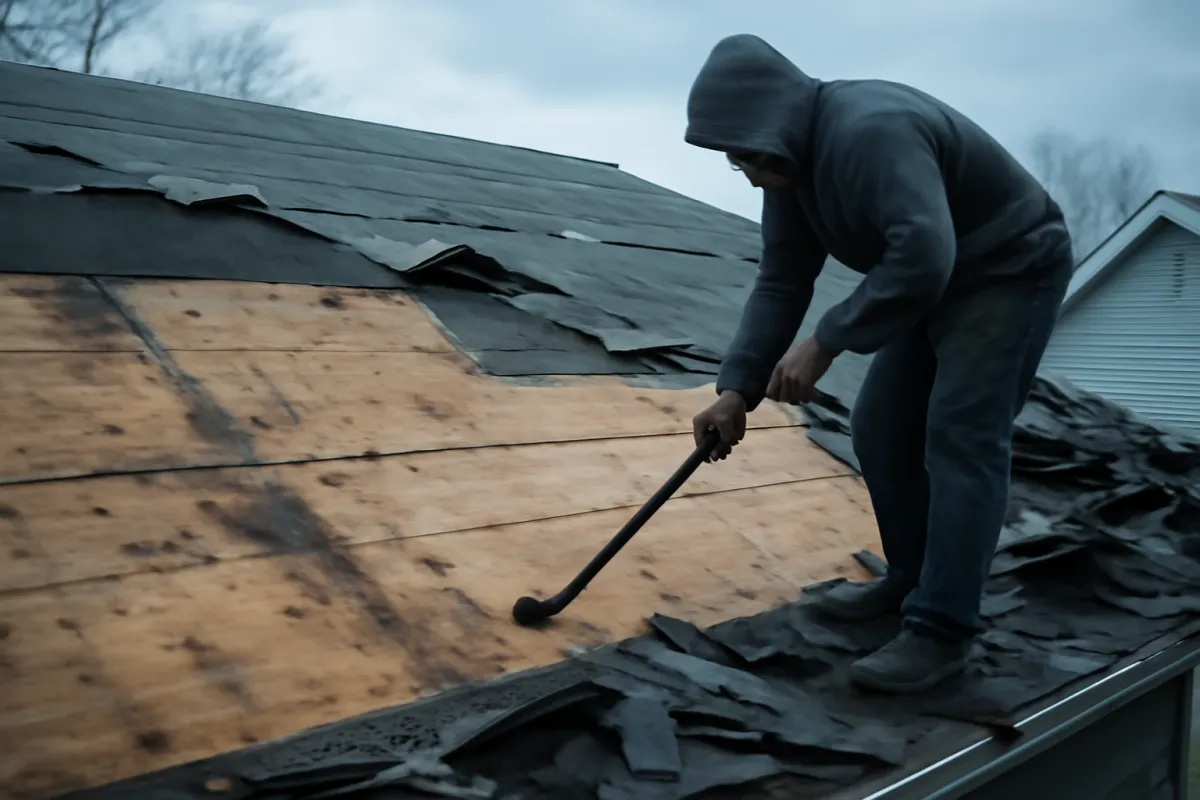
Attic growth is the case where the label is most misleading, because in most houses the attic does not have a mold problem so much as a ventilation and leak problem that expresses itself as mold. Warm moist air from the living space rises into a cold attic, hits the underside of the roof deck, and condenses. Add a bathroom fan discharging into the attic instead of through the roof or soffit, recessed lights leaking air, an unsealed attic hatch, and blocked soffit vents smothered by insulation, and the deck stays damp every winter.
Illustratively, attic remediation commonly runs somewhere around $2,500 to $9,000, with roughly $5,500 as a typical midpoint for treating the sheathing and rafters across a moderate area, removing affected insulation, and cleaning. Sheathing that is merely stained is commonly cleaned and treated in place; sheathing that has softened or delaminated is a roofing repair, which is a different trade and a different budget. Our roof replacement cost file covers what deck replacement adds.
The repair list is where the money is actually well spent. Ducting bath and kitchen fans to the outside, air sealing the ceiling plane, restoring soffit intake with baffles, correcting insulation depth and coverage, and repairing any flashing or roof leak found in the process. Do all of that and the attic dries out and stays dry. Do only the cleaning and you have bought yourself a repeat visit, usually after the next cold season.
Whole house and post flood remediation
The top of the range is a house that has been flooded or has had a major failure such as a supply line that ran unattended for days. These jobs are not larger versions of a room job, they are a different kind of project: multiple containment zones, extensive demolition, structural drying across the whole footprint, contents handling, and a reconstruction phase that amounts to rebuilding finished space. Illustratively, whole house remediation after a significant water event commonly runs somewhere around $12,000 to $40,000 or more, with roughly $22,000 as an illustrative midpoint.
Two factors push these numbers hardest. The first is water category: clean water from a supply line is a very different scope from groundwater or a sewage backup, where far more material is discarded and the handling requirements are stricter. The second is time. Water that sat for two days is a drying job; water that sat for two weeks in a closed house in summer is a demolition job, because the affected area kept growing the entire time.
The other complication is insurance and documentation. Large jobs are almost always claims, and the paperwork burden is real: moisture readings, photographs, itemised scopes, adjuster approvals, and often a supplement process when hidden damage is uncovered. Ask any contractor bidding this scale of work how they document and how they handle supplements, because on a job this size the administrative competence matters nearly as much as the technical work.
Illustrative prices by job type
Set the common scenarios side by side and the shape of this market becomes much easier to read. The figures below are illustrative midpoints for the remediation work only, before reconstruction, before the moisture repair, and before testing.
Illustrative mold remediation midpoints by job
Remediation only, before reconstruction and before repairing the source of the moisture.
Illustrative midpoints, not quotes. Bar widths are drawn from each value against the $22,000 top of this set. Reconstruction, plumbing or roofing repairs, and testing sit outside every figure here.
Where the money goes on a mold project
Assemble a complete project rather than a remediation invoice and the proportions shift in a way most homeowners do not expect. The shares below are illustrative for a mid sized single room job that includes the moisture repair, standard reconstruction, and a clearance test.
Where the money goes on a complete mold project
Illustrative shares for a single room job including the moisture repair, reconstruction and clearance testing.
Shares move with the job: a highly finished space enlarges the reconstruction band, an unfinished crawl space nearly removes it, and a roof or drainage repair can make the moisture line the largest one on the project.
Fix the moisture source or pay twice
This is the point that separates a project that ends from a project that repeats. Mold grows where there is persistent moisture, so remediation removes the result while the cause sits untouched behind it. A crew can do textbook work, hand back clean dry framing, and be entirely correct in their invoice, and the growth will still return if the same water arrives next month. Homeowners who feel they were cheated by a remediation company have frequently bought exactly the scope they agreed to, minus the only line that would have made it permanent.
The source list is short and mostly unglamorous. Plumbing leaks at fittings, valves, supply lines and drains. Roof and flashing leaks, including around chimneys, vents and valleys. Gutters that overflow and downspouts that discharge against the foundation, which our gutter cleaning cost file treats as the routine maintenance it is. Grading that slopes toward the house. Bathroom and kitchen fans that vent into an attic or not at all. Humidity in a basement or crawl space that is never managed. A water heater at the end of its life, which our water heater repair file covers.
The practical rule is to require the source to be named, priced and scheduled in the same document as the remediation. If a contractor cannot say what caused it, that is a reason to bring in the relevant trade before demolition rather than after, because the wall is going to be open and that is the cheapest moment there will ever be to fix what is behind it. Run the repair allowance through the estimator alongside the remediation and treat the pair as one number.
Testing and the conflict of interest
Testing is genuinely useful in some situations and genuinely unnecessary in others, and the difference is worth knowing before someone sells you a package. If you can see growth and you know where the water came from, sampling rarely changes the plan, because the finding is already in front of you and the response, remove the affected material and fix the leak, is the same either way. Paying several hundred dollars to confirm what your eyes established is money that would do more work as part of the repair.
Testing earns its price when the problem is hidden or contested: a persistent smell with no visible source, a question about whether contamination has travelled into ductwork or an adjoining unit, a real estate transaction, a landlord and tenant dispute, or a claim where documentation matters. It also earns its price when you want an independent scope written before contractors bid, so that every bidder prices the same defined work rather than their own diagnosis. Illustratively, an independent inspection with sampling commonly runs somewhere around $300 to $700.
Then there is the structural issue nobody in the industry likes to discuss plainly. When the company that performs the testing is the same company that sells the remediation, the incentive to find extensive work is built into the arrangement, and some regions restrict that combination for exactly this reason. The clean version is to pay an assessor who does not perform remediation, or at minimum to treat a free inspection from a remediation firm as a sales visit and get an independent second opinion before authorising a large scope. Our contractor vetting walkthrough covers verifying credentials on both sides of that relationship.

Clearance testing and what finished means
The end of a remediation job should be a defined event rather than a feeling, and the mechanism for that is clearance. In practice it means an assessor returns after the work and before reconstruction, inspects the area visually, checks that materials are dry to a normal moisture content, and commonly takes air or surface samples for comparison with an unaffected part of the house or with outdoor air. Illustratively, clearance testing commonly runs somewhere around $250 to $600.
The important honesty here is about interpretation. There is no commonly established federal exposure limit for mold in indoor air, and no agreed number that separates a passing reading from a failing one, so results are interpreted by a professional in context rather than scored against an official threshold. Interpretation of sampling is genuinely contested within the field, which is a reason to treat any confident numeric claim from a salesperson with caution and to weigh visual inspection and moisture readings heavily alongside any lab result.
What clearance does reliably give you is a documented handoff: the affected material was removed, the cavity is dry, and someone independent looked before it was closed up. That document is worth having if you sell the house, if a claim is involved, or if you simply want a record of what was done inside a wall you will never see again. Write into the contract that reconstruction does not begin until clearance is passed, because closing a wall over damp framing is how a completed job becomes a repeat job.
What insurance typically covers
Coverage on mold is one of the most misunderstood parts of a homeowner policy, and the mechanism matters more than any single answer. Policies generally respond to sudden and accidental events rather than to gradual ones. Water damage from a burst supply line, a failed appliance hose or a storm created opening is commonly the kind of cause that triggers coverage, and where mold results directly from that covered event, remediation is often paid, frequently subject to a specific mold sublimit that caps the payout regardless of the actual cost.
What is commonly excluded is the gradual side: long term seepage, a slow leak that went unnoticed, chronic humidity, condensation, deferred maintenance, and groundwater. Flooding is typically excluded from standard homeowner policies altogether and covered, if at all, by a separate flood policy. This is why the same visible growth can be fully covered in one house and entirely uncovered in the one next door, and why adjusters ask so many questions about when the problem started and what was known.
The practical steps are the same on every claim. Report promptly, because delay itself can affect coverage. Photograph and document everything before anyone removes material. Keep receipts for emergency mitigation such as drying equipment. Read your own declarations page and the mold provisions rather than relying on general statements, including this one. And ask the carrier what documentation they require before work begins, since approvals obtained after demolition are far harder to secure than approvals obtained before it.
Health questions belong with a clinician
This cost file prices work, and it deliberately does not diagnose anything. Reactions to indoor mold vary a great deal between individuals living in the same house, and people with asthma, allergies, respiratory conditions or weakened immune systems are commonly more affected than others. That variability is precisely why symptom questions belong with a clinician who can consider your own medical history, and not with a contractor who is quoting a job or with an article on the internet.
Be especially careful with confident claims about specific illnesses attributed to particular species. This is an area where marketing has outrun settled science, and where alarming language is used to sell large scopes of work. A remediation company is qualified to assess buildings, moisture and materials. It is not qualified to tell you what mold is doing to your body, and a sales presentation that centres on health outcomes rather than on building conditions is a signal to slow down and get an independent opinion.
The building side of the decision stands on its own regardless. Persistent moisture damages materials, feeds growth, attracts pests and can lead to wood decay, and those are sufficient reasons to fix a leak and remove affected material without any medical claim attached. Treat the remediation as a building repair, take any health concerns to a medical professional, and keep the two conversations separate so that neither one is used to pressure the other.
How to compare mold remediation quotes
Mold quotes are among the hardest to compare in home services, because the same three words can describe six different scopes. The fix is to stop comparing totals and start comparing definitions. Ask every bidder for the affected square footage they are pricing, the removal boundary in plain terms, meaning how far past the visible growth they will cut, and whether reconstruction is included, excluded, or handled by someone else. Two bids that differ by a factor of three usually turn out to be pricing two different jobs once those three answers are on the table.
Then ask for the line items. A useful remediation quote separates containment and equipment, demolition and disposal, cleaning and treatment, drying and monitoring, the moisture repair, testing, and reconstruction. A single lump sum is not automatically dishonest, but it is unmeasurable, and it removes your ability to price the remediation competitively while keeping one contractor for the rebuild. Our contractor bid comparison walkthrough covers the mechanics of forcing bids onto a common scope.
The last comparison is the one people skip: what happens if the crew opens the wall and the affected area is larger than assumed. That is a common outcome rather than an exotic one, so ask how change orders are handled, at what unit rate additional area is priced, and whether you approve them in writing before the work proceeds. A stated unit rate for additional square footage turns a nasty surprise into an arithmetic problem, and it is the single most valuable clause on a mold contract.
What a remediation contract should include
Because so much of this work happens inside walls and behind sheeting, the contract is the only durable record of what you bought. It should state the scope by area and location, room by room, with the removal boundary described. It should state the equipment to be used and for how long, since drying days are a real cost that can be quietly shortened. It should name the moisture source repair, who performs it, and when.
It should also define completion. Does the job end when the crew leaves, when moisture readings hit a stated target, or when an independent clearance is passed? Those are three different finish lines, and the last one is the only one that transfers any risk away from you. Tie the final payment to whichever definition you agree, and never to a date alone.
Finally, it should cover the practical items that cause disputes: contents handling, meaning who moves and who is responsible for furniture and belongings, access and hours, daily cleanup, disposal, permits where any structural or system work triggers one, and warranty, stating exactly what is warranted and for how long. Be clear eyed about that last one: a warranty against regrowth is only meaningful if the moisture source was inside the contractor’s scope. Our contractor estimate walkthrough covers reading these documents line by line.
Red flags and pressure selling
Mold sits at the intersection of anxiety and urgency, which makes it a favourite of high pressure sales. The most common pattern is the free inspection that produces a large same day proposal with a discount that expires when the salesperson leaves. Legitimate remediation is rarely so urgent that a second opinion tomorrow changes the outcome, and any pressure to sign immediately is a reason to pause rather than a reason to hurry. Our contractor scam file covers the general version of these tactics.
Specific red flags worth naming. A proposal built around health claims rather than building conditions. Testing and remediation sold as a bundle by the same company with no independent voice anywhere in the process. Spraying or fogging offered as an alternative to removal on porous materials. A refusal to describe the removal boundary or to give a unit rate for additional area. A demand for a large deposit before any work is scheduled. And a scope with no line for the moisture source, which tells you the work is not intended to be permanent.
The counterweight is procedural rather than technical. Get the growth documented and photographed before anyone quotes it. Get an independent assessment where the scope is large. Get several bids on one written scope. Verify licence and insurance directly with the issuing bodies rather than from a brochure. And keep the health conversation with a clinician, out of reach of anyone whose income depends on the size of the job.
A worked example: one bedroom wall after a supply line leak
Take one ordinary project and cost it in layers so the structure of the number becomes concrete. Every figure is illustrative and the method is the lesson. Assume a supply line fitting behind a bedroom wall shared with a bathroom that has been weeping for several weeks, discovered when the baseboard buckled. The affected area, measured after the baseboard came off, is about 120 square feet of wall and the bays behind it, at mid range severity because drywall and insulation have to be removed.
Start with the remediation. At the illustrative $10 to $30 per square foot band for mid range severity, 120 affected square feet prices at about $1,200 to $3,600. That covers containment across the doorway, negative air, removing the affected drywall and insulation, cleaning and treating the framing, and drying the cavity with monitoring.
Add the moisture repair. Replacing the failed fitting and its section of line while the wall is open illustratively runs about $600, and it is the cheapest line on the project by a wide margin because the access is already paid for. Skipping it would make every other line on this list temporary.
Add reconstruction. New insulation, drywall, taping, texture, baseboard and paint across the same 120 square feet at the low end of the illustrative $12 to $30 per square foot reconstruction band comes to about $1,440, since this is a plain painted wall rather than a tiled or cabineted surface.
Add clearance testing. An independent post work inspection with sampling before the wall is closed illustratively adds about $400. Put it together and the project runs roughly $3,600 to $6,000 all in, of which remediation is about half, reconstruction about a quarter, testing under a tenth, and the actual plumbing repair a rounding error that decides whether any of it lasts. Run your own affected area, severity and finish level through the estimator and the same worked example prices itself around your house.
What you can do to keep it from coming back
Once the project is finished, the entire question becomes whether the conditions that created it still exist, and most of that is maintenance rather than equipment. Watch the humidity. An inexpensive hygrometer in a basement, crawl space or problem room turns opinion into a reading, and a room that sits persistently high through a season is telling you something no annual inspection will catch. Managing that with ventilation or a dehumidifier is far cheaper than remediating the consequence.
Keep water away from the building. Clean gutters, downspouts that discharge well away from the foundation, and grading that falls away from the house prevent more below grade moisture problems than any interior product. Our seasonal maintenance checklist folds these into a routine you can do in an afternoon.
Run the fans and check where they go. A bathroom fan that vents into an attic is a mold machine, and it is a cheap fix. Run fans during and after showers, run kitchen ventilation while cooking, and confirm both terminate outside the building rather than into a cavity.
Respond to leaks in days rather than months. The cost curve on this problem is steep and it is driven by time. A fitting caught the week it starts weeping is a plumbing call; the same fitting caught the following spring is a remediation project with a reconstruction phase. Look under sinks, behind toilets and around the water heater a couple of times a year, and treat any stain, any warped trim or any smell as a prompt to look rather than a thing to watch.
The bottom line
Mold remediation cost is unanswerable as a single figure and very answerable once the affected area, the severity and the location are on the table. Illustratively, the remediation work commonly runs about $10 to $30 per square foot of affected area, which places a bathroom near $1,200, a single room near $3,000, an attic near $5,500, a crawl space near $6,500, a finished basement near $9,000 and a flooded house near $22,000 as midpoints, all before reconstruction that frequently adds a quarter to a third again. The number you should plan around is the whole project, not the remediation invoice.
Buy the work in the right order and most of the risk drains out of it. Find and price the moisture source first, because remediation without it is a cleaning that will be repeated. Get an independent scope where the job is large, and be alert when the company testing is the company selling. Insist that containment, removal, treatment, drying, the repair, reconstruction and testing appear as separate lines with a unit rate for additional area. Tie completion to a defined clearance rather than to a date. Read your own policy on causation and sublimits before you assume coverage either way. And keep the health conversation with a clinician, where it belongs, so that no part of this decision is made under pressure that has nothing to do with your building.
ProsNook publishes this cost file to explain how mold remediation work is scoped and priced, and it is educational material rather than medical, environmental, engineering, insurance or legal advice. Nothing here assesses your property or your health: only a qualified professional who has inspected the building can determine what is present and what should be removed, and any question about symptoms, exposure or medical risk belongs with a clinician who knows your history. Reactions to indoor mold differ substantially from person to person, and this article makes no claim about what any exposure does to anyone. Every dollar figure, per square foot band, share and scenario total on this page is illustration only, and your real cost will move with affected area, severity, materials, access, drying time, finish level and local labor rates. Sampling results are interpreted by professionals rather than measured against any commonly established federal limit, and interpretation is genuinely debated within the field. Licensing, certification, permit and disclosure rules for remediation work are set locally and vary widely, so confirm what applies at your address, obtain independent written scopes and several detailed bids before authorising major work, and treat urgency, alarm and same day pricing as reasons to pause.
Frequently asked questions
How much does mold remediation cost?
There is no single number, because remediation is priced by how much affected area has to be contained, removed and cleaned rather than by the word mold. As an illustrative guide, the remediation work itself commonly runs somewhere around $10 to $30 per square foot of affected area, which puts a single bathroom near $1,200, one bedroom wall and its surroundings near $3,000, and a finished basement after a leak near $9,000 as illustrative midpoints. Large open areas such as crawl spaces usually price lower per square foot and higher in total. None of those figures include reconstruction, which is billed separately and is often a third of the final bill.
How much does it cost to remove mold from a bathroom?
A bathroom is one of the smaller and more predictable remediation jobs because the affected area is usually confined to a wall behind a shower, a vanity cabinet, or a section of ceiling under a bad fan. Illustratively, a bathroom remediation commonly lands somewhere around $600 to $1,800, with roughly $1,200 as a typical midpoint for a job that involves removing a section of drywall, cleaning framing, and treating the cavity. The number climbs when tile has to come off, when the subfloor is soft, or when the water has been travelling into an adjoining room. The fan, the caulk line or the failed shower pan that caused it is a separate repair, and skipping it is how the same job gets bought twice.
Does homeowners insurance cover mold remediation?
Coverage usually turns on the cause and the timeline rather than on the mold itself. Damage that follows a sudden and accidental covered event, such as a burst supply line or an appliance failure, is more often paid, and many policies contain a specific mold sublimit that caps what they will pay even when the cause is covered. Damage from long term seepage, chronic humidity, deferred maintenance, groundwater or flooding is commonly excluded, and flood is a separate policy in most cases. Read your own declarations page and the mold provisions, report promptly, photograph everything before anyone removes it, and ask your carrier what documentation they want before the work starts rather than after.
Do I need a mold test before remediation?
If you can see growth and you know where the water came from, a test rarely changes what has to be done, because visible growth is already the finding. Testing earns its cost when the problem is hidden, when you need to know how far contamination has travelled inside walls or ductwork, when a sale or a dispute is involved, or when you want an independent scope written before contractors bid it. An independent inspection with sampling illustratively runs somewhere around $300 to $700, and post work clearance testing around $250 to $600. Note that there is no commonly established federal limit for mold in indoor air, so lab results are interpreted by a professional rather than scored against an official threshold.
Can I remove mold myself?
Small, clearly surface level growth on a hard, non porous surface such as tile, glass or sealed trim is generally considered a homeowner task, and the supplies commonly cost under $200. The boundary is drawn by area, by material and by what is behind it: porous materials that have absorbed moisture, growth spreading over a wall, anything inside an HVAC system, and anything involving sewage or standing water belong with professionals. If you do the small job, contain the area, wear a properly fitted respirator rather than a dust mask, use gloves and eye protection, and shut the heating and cooling system off so you are not moving material around the house. Anyone with asthma, allergies or a weakened immune system should hand the work to someone else.
Why do mold remediation quotes vary so much?
Most of the spread comes from scope rather than from rates. One company prices containment, removal of the affected drywall and insulation, HEPA cleaning and treatment; another prices spraying the visible surface; a third includes reconstruction and a fourth stops at bare studs. Until every bidder is pricing the same defined scope with the same square footage of removal and the same reconstruction assumption, the numbers are not comparable. Insist that remediation, the moisture repair, reconstruction and testing appear as separate lines, exactly as you would when reading any detailed contractor estimate.
What happens if the moisture source is not fixed?
The mold comes back, usually in the same place, and the money spent on remediation is spent again. Mold grows where there is persistent moisture, so remediation without repair is a cleaning rather than a cure, and any contractor who omits the source from the scope has left out the only part that determines whether the work lasts. The repair might be a plumbing fix, a roof or flashing repair, gutters and grading, a bathroom fan that actually vents outside, or humidity control in a crawl space or basement. Get that item named in writing, priced, and completed as part of the same project.
How long does mold remediation take?
A confined single area job is commonly a one to three day project, with containment set up and the affected material out on the first day and cleaning, treatment and drying following. A larger job across several rooms, an HVAC system, or a whole house after flooding usually runs a week or more, and reconstruction adds its own timeline afterwards. Drying is the part that cannot be rushed, because sealing up a cavity that is still wet recreates the original problem. Ask for the schedule in writing, including who does the reconstruction and when it starts, since the gap between remediation finishing and rebuilding beginning is where projects stall.